
BIOMECHANICS OF THE SPINE FSU AND FREE BODY
BIOMECHANICS OF THE SPINE: FSU AND FREE BODY DIAGRAM Christy Coyle RLH Teaching Tuesday 23 June 2013
WHAT ARE THE FUNCTIONS OF THE SPINE? WHAT IS SPINAL STABILITY? WHAT IS A FUNCTIONAL SPINAL UNIT (FSU)? DRAW A FREE BODY DIAGRAM OF THE SPINE

WHAT ARE THE FUNCTIONS OF THE SPINE? ALLOWS MOTION CARRY LOAD PROTECTS NEURAL STRUCTURES

WHAT IS SPINAL STABILITY? DEFINITION ABILITY OF THE SPINE UNDER PHYSIOLOGICAL LOADS TO LIMIIT PATTERNS OF DISPLACEMENT NOT TO DAMAGE OR IRRITATE SPINAL CORD OR NERVE ROOTS PREVENT INCAPACITATING DEFORMIITY OR PAIN CAUSED BY STRUCT

WHAT IS A FUNCTIONAL SPINAL UNIT? DEFINITION THE SMALLEST PHYSIOLOGICAL UNIT OF THE SPINE WHICH EXHIBITS BIOMECHANICAL PROPERTIES SIMILAR TO THAT OF THE ENTIRE SPINE CONSISTS OF: 2 ADJACENT VERTEBRAL BODIES INTERVERTEBRAL DISC FACET JOINTS ALL ADJOINING LIGAMENTS

WHAT IS A FUNCTIONAL SPINAL UNIT?

WHAT IS A FUNCTIONAL SPINAL UNIT? INFERIOR ARTICUL 5. PROCESS 6. FACET AND CAPSU VERTEBRAL BODY 1. 7 SUPERIOR ARTICU PROCESS 8. SPINOUS PROCES 2. INTERVERTEBRAL DISC 9. LIGAMENTUM FLAV ALL 3. 11. SUPRASPINOUS L PLL 4. 10. INTERSPINOUS LI

WHAT IS A FUNCTIONAL SPINAL UNIT? FSU = PASSIVE In general › Flexion is limited by Ligaments Facet joints and capsule Posterior intervertebral disc › Extension is limited by ALL Anterior annulus Facet joints › Rotation is limited by Facet joints Intervertebral discs

WHAT IS A FUNCTIONAL SPINAL UNIT? PASSIVE VERSUS ACTIVE › Muscles and tendons Extensor spinal muscles Intercostal muscles Abdominal wall muscles Extensor spinal muscles › 3 layers Deep Intermediate Superficial

WHAT IS A FUNCTIONAL SPINAL UNIT? THE NEUTRAL ZONE › As force is applied to the spine, initially, there is a large deformation › Small load = large displacement THE ELASTIC ZONE › As the force is increased, the system stiffens, and displacement reduces › Large load = small displacement The NEUTRAL zone, the FSU (passive) applies little resistance to movement The ACTIVE subsystem = stability in the neutral zone Therefore Free movement near the neutral position Increased resistance to movement near end of ROM Instability occurs when the neutral zone increases beyond physiological range of

WHAT IS A FUNCTIONAL SPINAL UNIT? x
FREE BODY DIAGRAM OF THE SPINE DEFINITIONS › › › VECTOR FORCE MOMENT COUPLE NEWTONS LAWS FREE BODY DIAGRAM
FREE BODY DIAGRAM OF THE SPINE DEFINITIONS › VECTORS ARE QUANTITIES THAT HAVE DIRECTION MAGNITUDE › FORCE IS A LOAD THAT ACTS ON A BODY A PUSH OR A PULL EXTERNAL OR INTERNAL IS A VECTOR › › MOMENT COUPLE NEWTONS LAWS FREE BODY DIAGRAM
FREE BODY DIAGRAM OF THE SPINE DEFINITIONS › › › VECTOR FORCE MOMENT COUPLE NEWTONS LAWS FREE BODY DIAGRAM
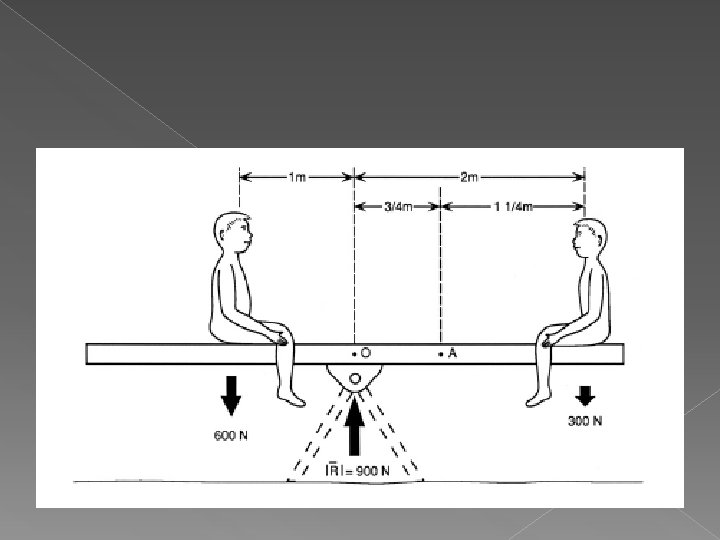
FREE BODY DIAGRAM OF THE SPINE DEFINITIONS › › VECTOR FORCE › MOMENT The effect of a force At a perpendicular distance from an axis Which results in rotational movement and angular acceleration › COUPLE › NEWTONS LAWS › FREE BODY DIAGRAM
FREE BODY DIAGRAM OF THE SPINE DEFINITIONS › › › VECTOR FORCE MOMENT › COUPLE A moment created by a pair of forces that are Equal Non colinear Parallel Oppositely directed forces › NEWTONS LAWS › FREE BODY DIAGRAM
FREE BODY DIAGRAM OF THE SPINE DEFINITIONS › › VECTOR FORCE MOMENT COUPLE › NEWTONS LAWS FIRST LAW = INERTIA REST OR CONSTANT VELOCITY UNLESS SUM OF EXTERNAL FORCES = 0 SECOND LAW = ACTION IF NON ZERO NET FORCE = ACCERLATION F = ma THIRD LAW = REACTION FOR EVERY ACTION, THERE IS AN EUQAL AND OPPOSITE REACTION › FREE BODY DIAGRAM
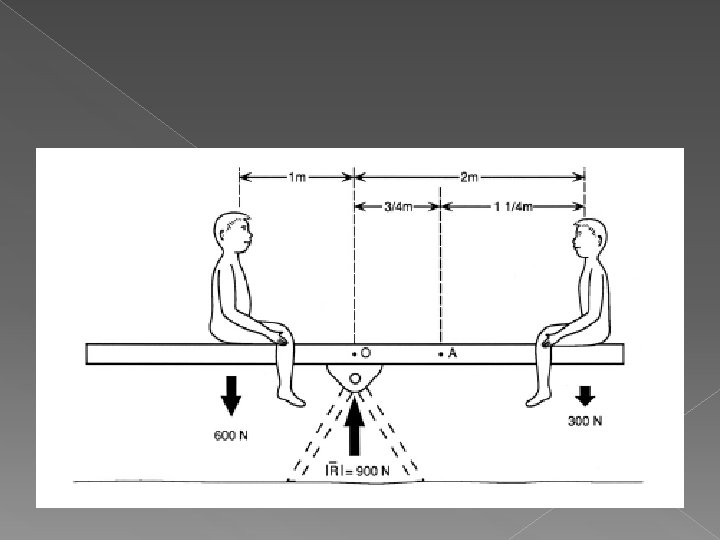
FREE BODY DIAGRAM OF THE SPINE DEFINITIONS › › › VECTOR FORCE MOMENT COUPLE NEWTONS LAWS › FREE BODY DIAGRAM A method of static analysis Determines the forces and moments acting on a body by isolating that body parts Assumptions Bones are rigid rods and joints are frictionless hinges No antagonistic muscle action Weight of the body at the centre of body mass Internal forces cancel each other out Muscles act only in tension Joint reaction forces are only compressive Joints act as a hinge
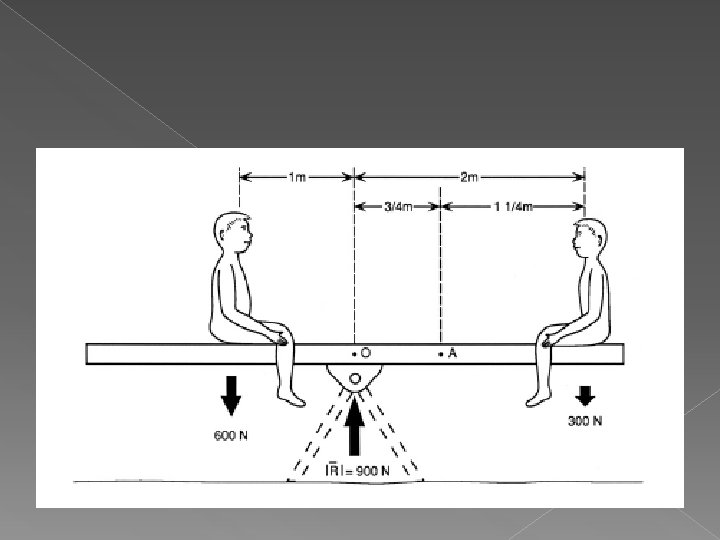
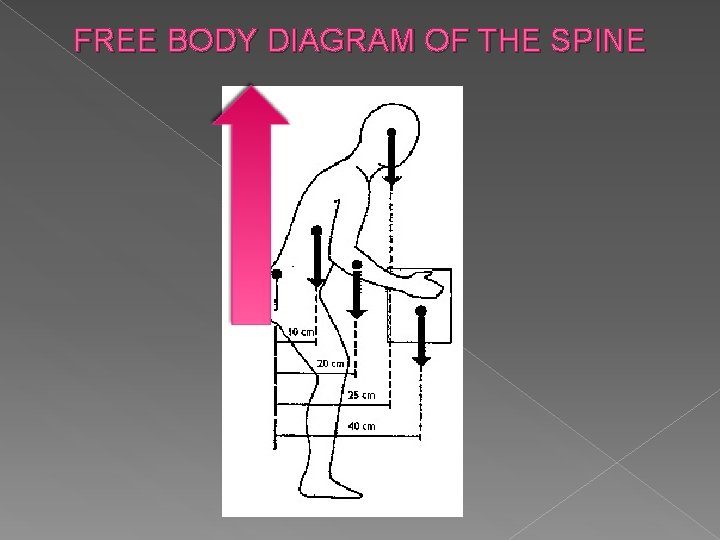
FREE BODY DIAGRAM OF THE SPINE
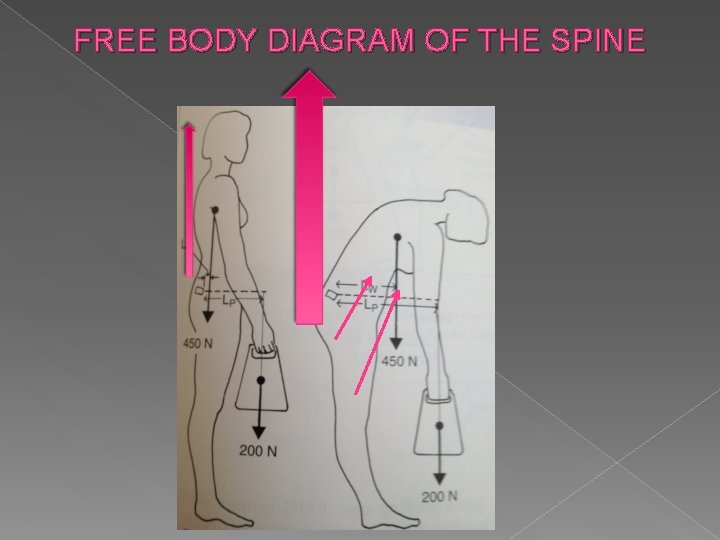
FREE BODY DIAGRAM OF THE SPINE
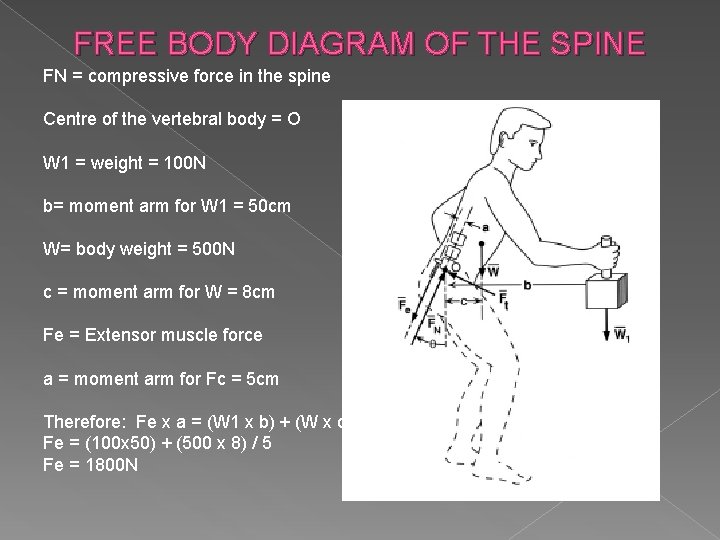
FREE BODY DIAGRAM OF THE SPINE FN = compressive force in the spine Centre of the vertebral body = O W 1 = weight = 100 N b= moment arm for W 1 = 50 cm W= body weight = 500 N c = moment arm for W = 8 cm Fe = Extensor muscle force a = moment arm for Fc = 5 cm Therefore: Fe x a = (W 1 x b) + (W x c) Fe = (100 x 50) + (500 x 8) / 5 Fe = 1800 N

THANK YOU
- Slides: 26