
Biomechanics of Removable Partial Denture DR SHAISTA AFROZ
Biomechanics of Removable Partial Denture DR SHAISTA AFROZ ASSOCIATE PROFESSOR DR Z A DENTAL COLLEGE A M U ALIGARH
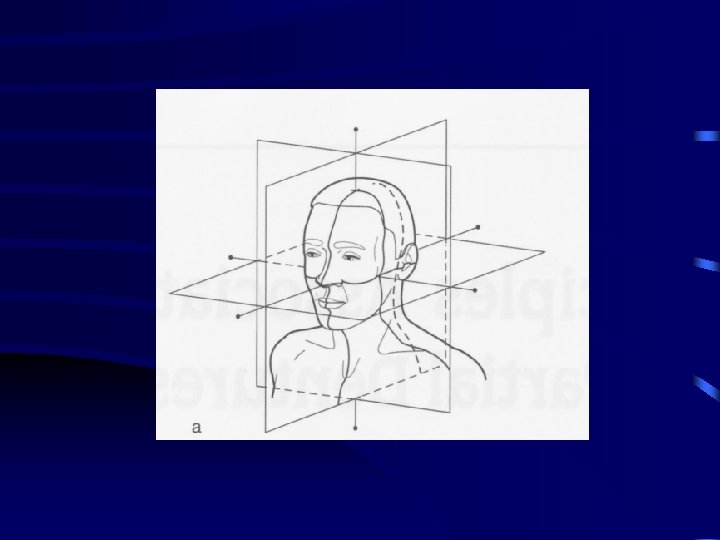
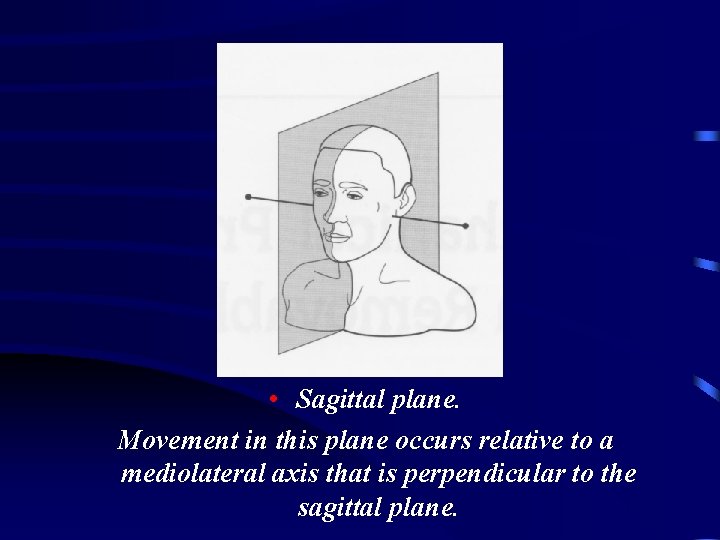
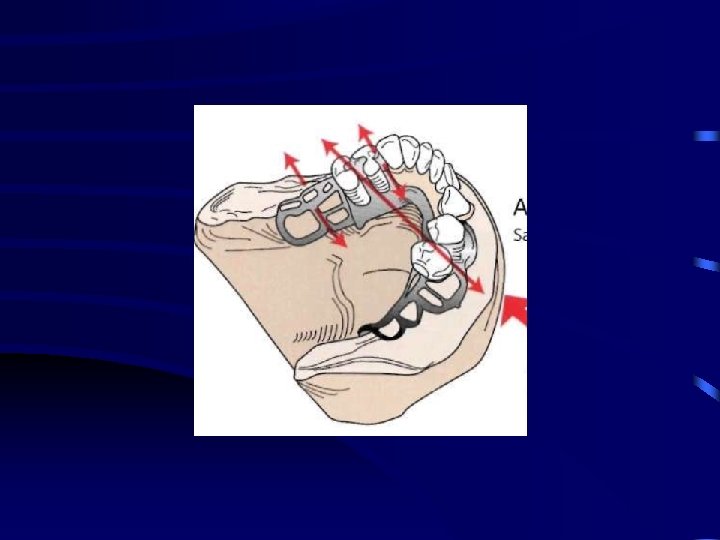
• Sagittal plane. Movement in this plane occurs relative to a mediolateral axis that is perpendicular to the sagittal plane.

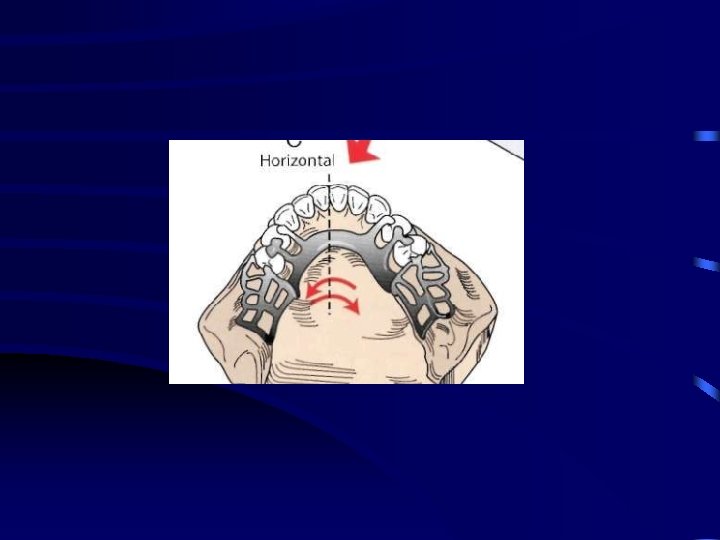
• Horizontal plane Movement in this plane occurs around a vertical axis that is perpendicular to the horizontal plane.

• Frontal plane Movement in this plane occurs relative to an anterio-posterior axis running perpendicular to the frontal plane.
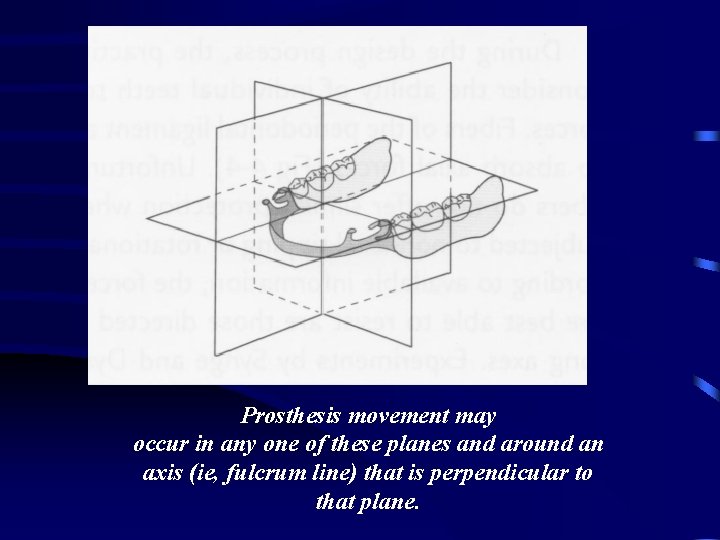
Prosthesis movement may occur in any one of these planes and around an axis (ie, fulcrum line) that is perpendicular to that plane.

Biomechanical consideration for RPD
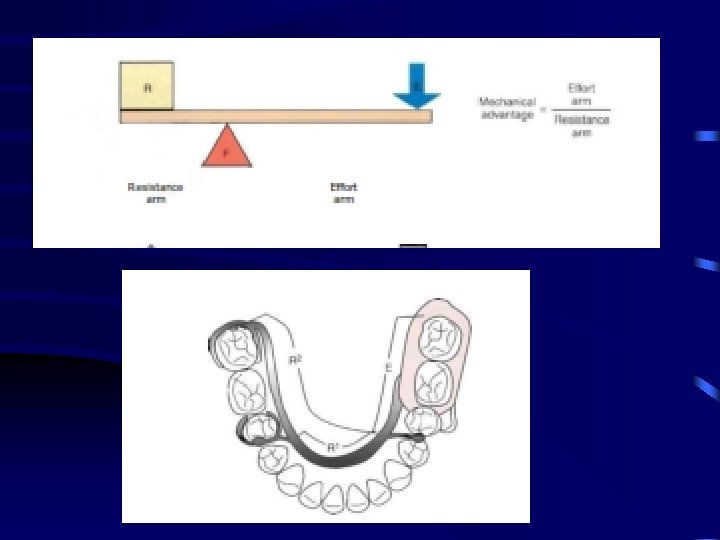
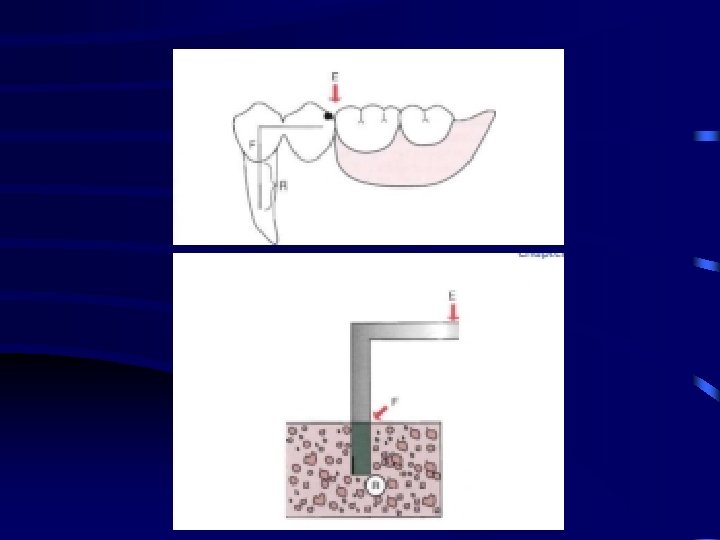
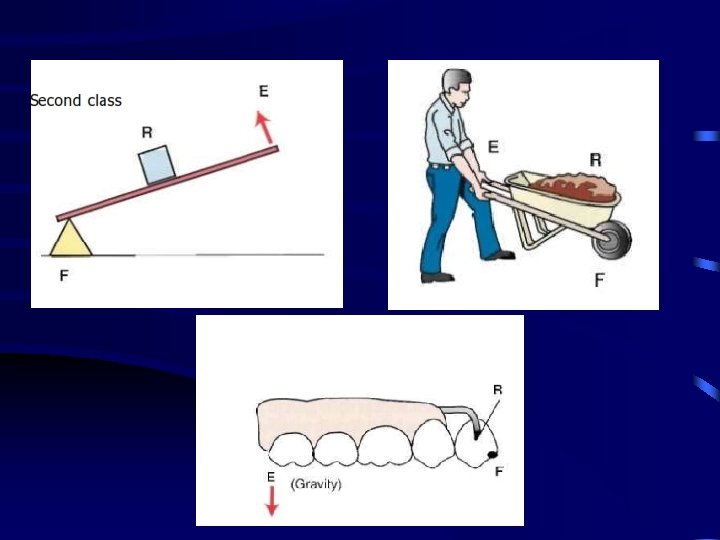
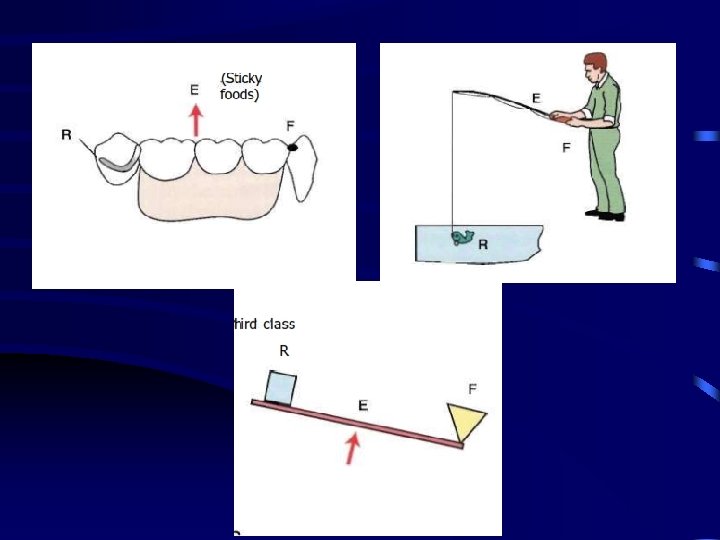
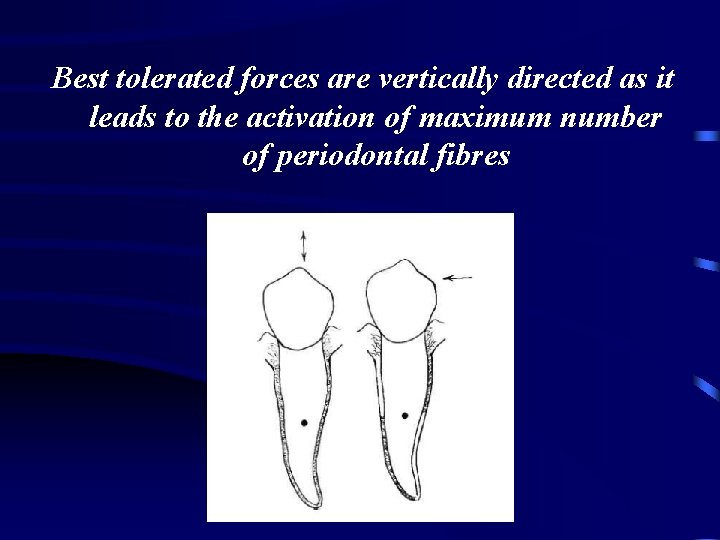
Best tolerated forces are vertically directed as it leads to the activation of maximum number of periodontal fibres
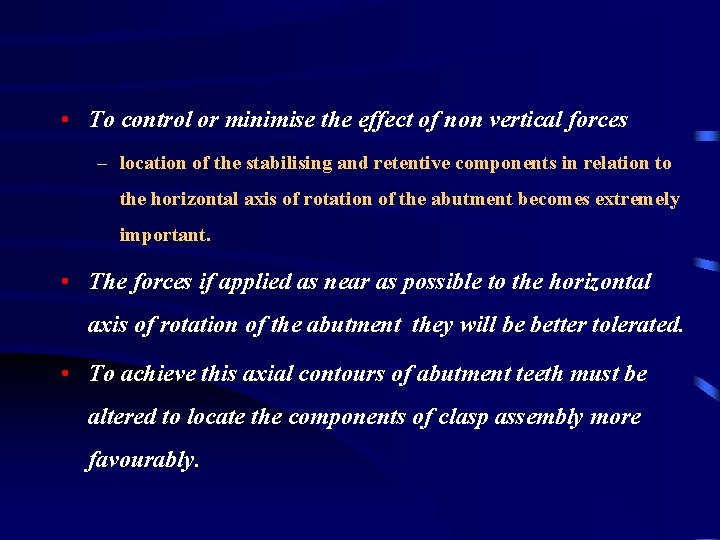
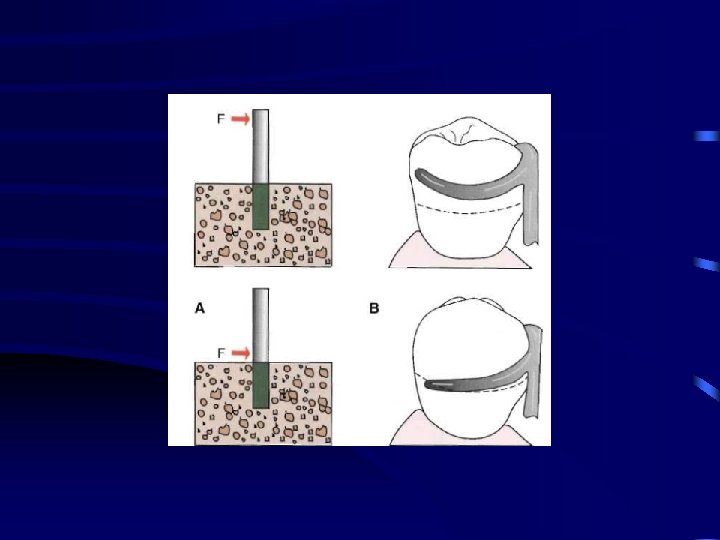
• To control or minimise the effect of non vertical forces – location of the stabilising and retentive components in relation to the horizontal axis of rotation of the abutment becomes extremely important. • The forces if applied as near as possible to the horizontal axis of rotation of the abutment they will be better tolerated. • To achieve this axial contours of abutment teeth must be altered to locate the components of clasp assembly more favourably.


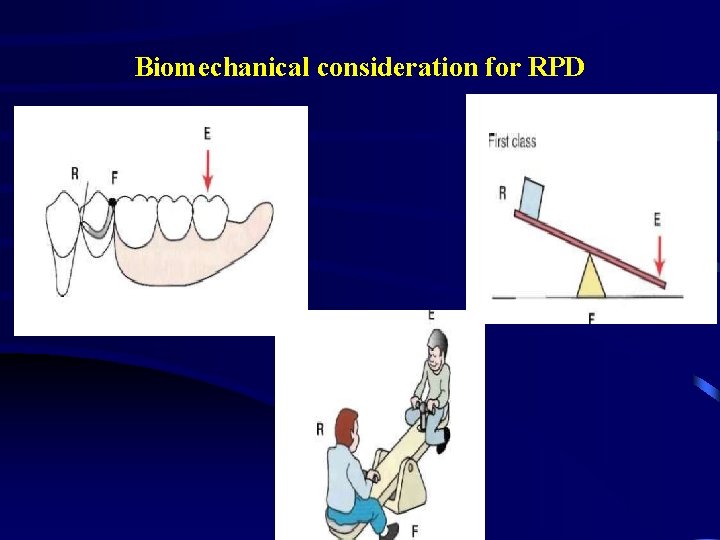
Movement of distal extension RPD Vertical tissue-ward movement of the denture base is resisted by the tissue of the residual ridge in proportion to the- • supporting quality of that tissue, • the accuracy of the fit of the denture base, • the total amount of occlusal load applied.

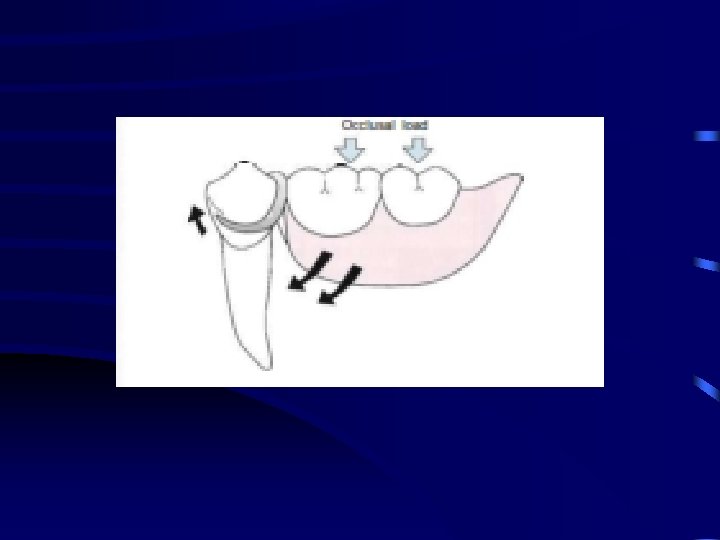
• This axis is known as fulcrum line and is the centre of rotation as the distal extension base moves toward the suppoting tissue when occlusal load is applied. • This axis is through the occlusal rest or any rigid component occlusal to the height of contour of the principal abutment.
• When the dilodging forces are away from the tissues (occuring resulting from vertical pull of food, due to moving border tissues or gravity) the fulcrum line will shift anteriorly placed componenets, occlusal or incisal to the height of contour of the abutment. • If direct retainers are functional and supportive anterior components remain seated, rotation rather than total displacement should occur.
Movement of the base in the opposite direction is resisted by • the action of the retentive clasp arms on terminal abutments • the action of stabilizing minor connectors • in conjunction with seated indirect retainers.
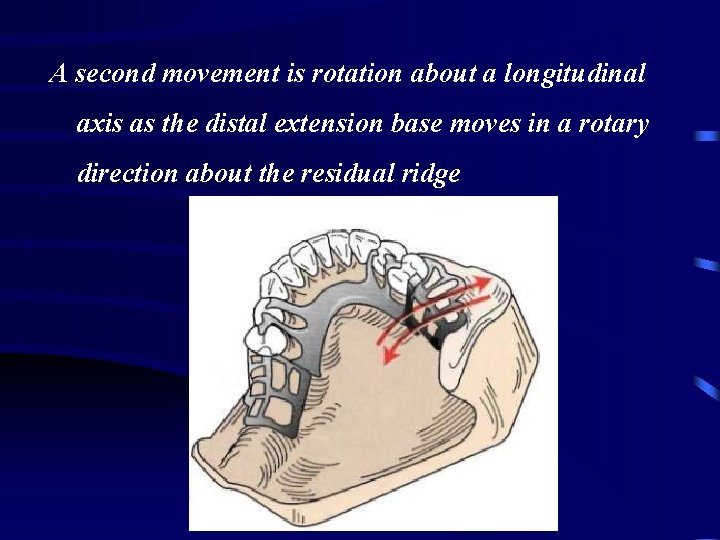
A second movement is rotation about a longitudinal axis as the distal extension base moves in a rotary direction about the residual ridge
This movement is resisted primarily by the rigidity of the major and minor connectors and their ability to resist torque. • If the connectors are not rigid or if a stress-breaker – this rotation about a longitudinal axis either applies undue stress to the sides of the supporting ridge – horizontal shifting of the denture base.
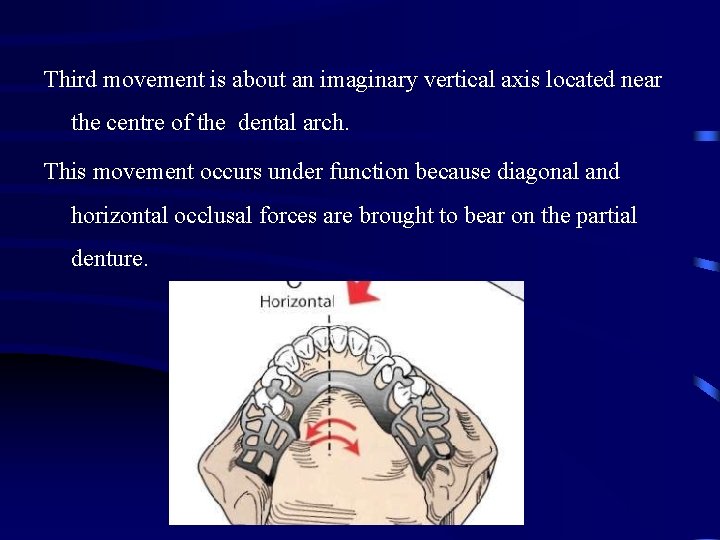
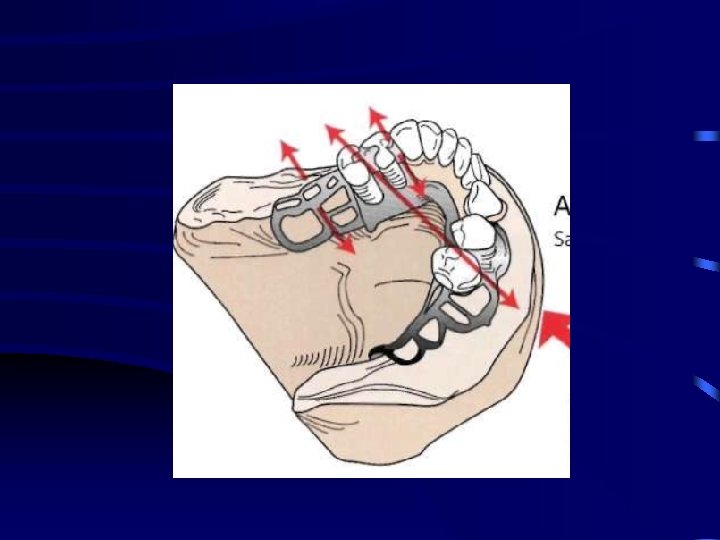
Third movement is about an imaginary vertical axis located near the centre of the dental arch. This movement occurs under function because diagonal and horizontal occlusal forces are brought to bear on the partial denture.

It is resisted by stabilizing components, – reciprocal clasp arms – minor connectors that are in contact with vertical tooth surfaces. Stabilizing components on one side of the arch act to stabilize the partial denture against horizontal forces applied from the opposite side.

Tooth supported partial denture – class III and class IV Movement of the base toward the edentulous ridge is prevented primarily by the – rests on the abutment teeth – to some degree by any rigid portion of the framework located occlusal to the height of contour.
• Movement away from the edentulous ridge is prevented by the action of – direct retainers on the abutments that are situated at each end of each edentulous space – minor connector – stabilizing components. • The first of the three possible movements can be controlled in the toothsupported denture.
The second movement, which is along a longitudinal axis, is prevented by – the rigid components of the direct retainers – by the ability of the major connector to resist torque. This movement is much less in the tooth-supported denture because of the presence of posterior abutment.
• The third possible movement occurs in all partial dentures. – Therefore stabilizing components against horizontal movement must be incorporated into any partial denture design.
• For prostheses capable of movement in three planes – occlusal rests should only provide occlusal support to resist tissueward movement. • All movements of the partial denture other than those in a tissueward direction should be resisted by components other than occlusal rests. • For the occlusal rest to enter into a stabilizing function would result in a direct transfer of torque to the abutment tooth.
Because movements around three different axes are possible in a distal extension partial denture, an occlusal rest for such a partial denture should not have steep vertical walls or locking dovetails, which could possibly cause horizontal and torquing forces to be applied intracoronally to the abutment tooth.
In the tooth-supported denture, the only movements of any significance are horizontal, and these may be resisted by the stabilizing effect of components placed on the axial surfaces of the abutments. Therefore in the tooth-supported denture, the use of intracoronal rests is permissible for – occlusal support – horizontal stabilization.
References/ Suggested readings • Mc. Cracken’s Removable Prosthodontics, 11 th Edition 2005 by Mc. Givney GP, Carr AB. Chapter 11 (Surveying) • Stewert’s clinical removable prosthodontics, 3 rd edition by Rhodney D phoenix, David R Cagna, Charles F De Freest All the text and pictures are taken from Mc. Cracken’s Removable Prosthodontics and Stewert’s clinical removable prosthodontics for the sake of student’s education.

- Slides: 38