
Biome Tundra By Mariah Hanson Hannah Sanville and
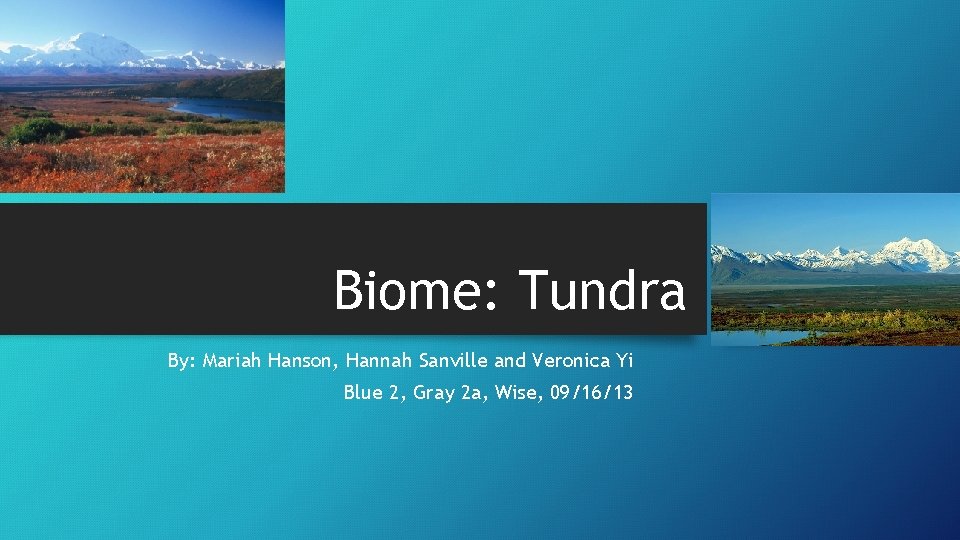
Biome: Tundra By: Mariah Hanson, Hannah Sanville and Veronica Yi Blue 2, Gray 2 a, Wise, 09/16/13
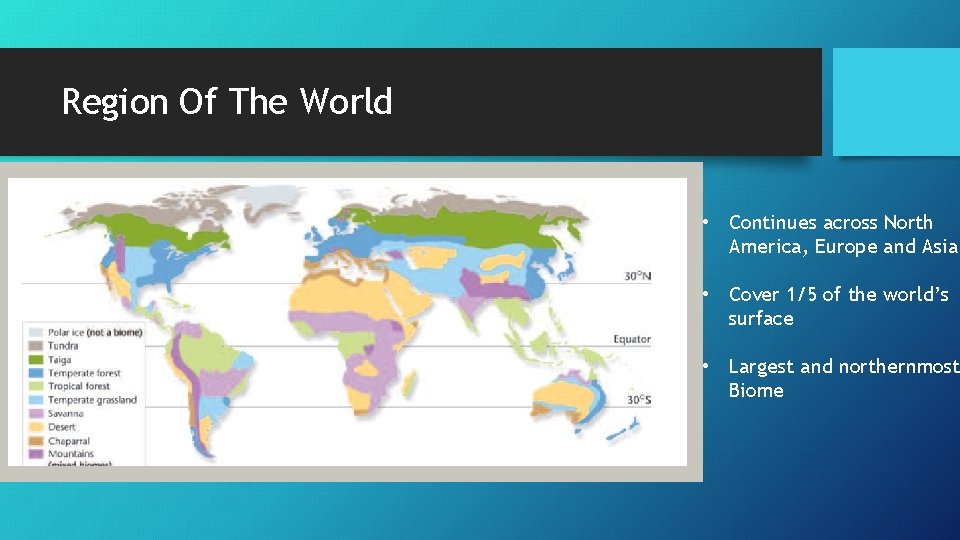
Region Of The World • Continues across North America, Europe and Asia • Cover 1/5 of the world’s surface • Largest and northernmost Biome
Abiotic Factors • Temperature range: -260 C to 120 C • Permafrost • 60 day growing season • Average yearly precipitation: <25 cm • Soil
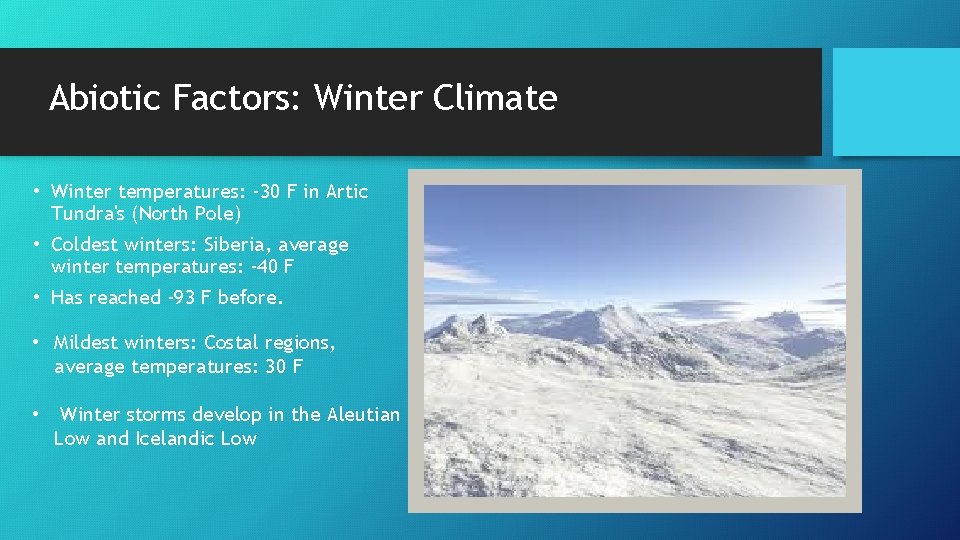
Abiotic Factors: Winter Climate • Winter temperatures: -30 F in Artic Tundra's (North Pole) • Coldest winters: Siberia, average winter temperatures: -40 F • Has reached -93 F before. • Mildest winters: Costal regions, average temperatures: 30 F • Winter storms develop in the Aleutian Low and Icelandic Low

Abiotic Factors: Summer Climate • Mild summers. Average temperatures: 45 F • Warmest summers occur in inland regions of Siberia, Alaska and Canada • July temperatures there : 60 F • Temperatures have been recorded in the 90’s F in those regions though • Artic has rain and fog in summertime • Short growing season because during the summer the Tundra doesn’t get a lot of rain
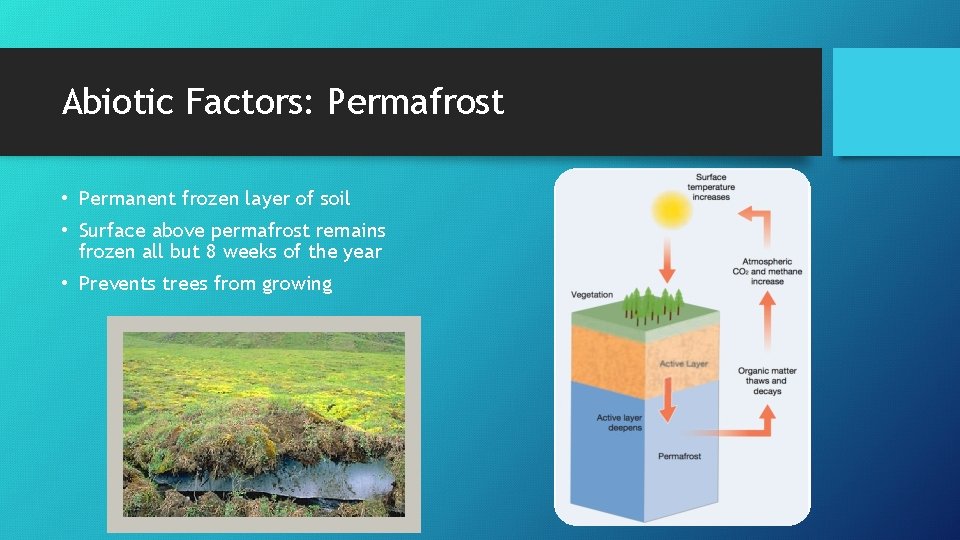
Abiotic Factors: Permafrost • Permanent frozen layer of soil • Surface above permafrost remains frozen all but 8 weeks of the year • Prevents trees from growing
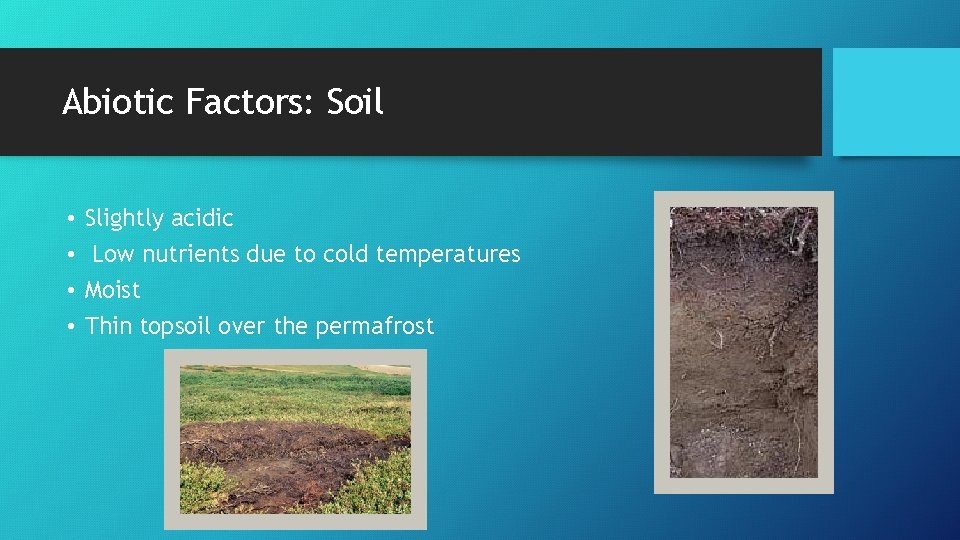
Abiotic Factors: Soil • • Slightly acidic Low nutrients due to cold temperatures Moist Thin topsoil over the permafrost
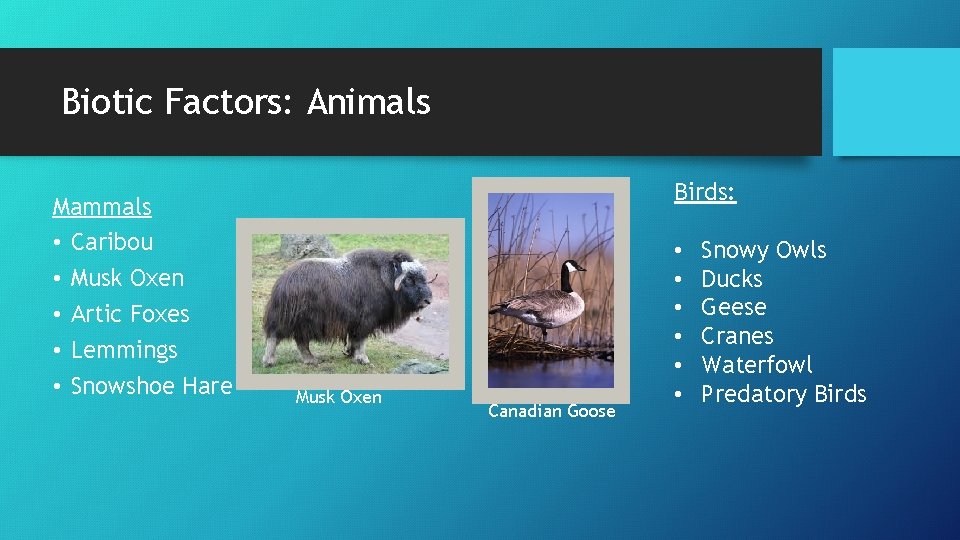
Biotic Factors: Animals Mammals • Caribou • Musk Oxen • Artic Foxes • Lemmings • Snowshoe Hare Birds: Musk Oxen Canadian Goose • • • Snowy Owls Ducks Geese Cranes Waterfowl Predatory Birds
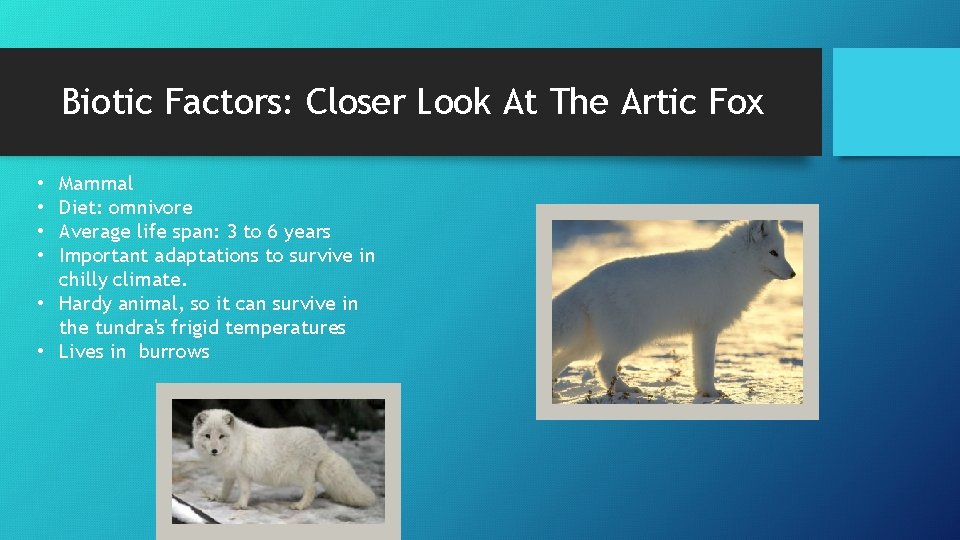
Biotic Factors: Closer Look At The Artic Fox Mammal Diet: omnivore Average life span: 3 to 6 years Important adaptations to survive in chilly climate. • Hardy animal, so it can survive in the tundra's frigid temperatures • Lives in burrows • •
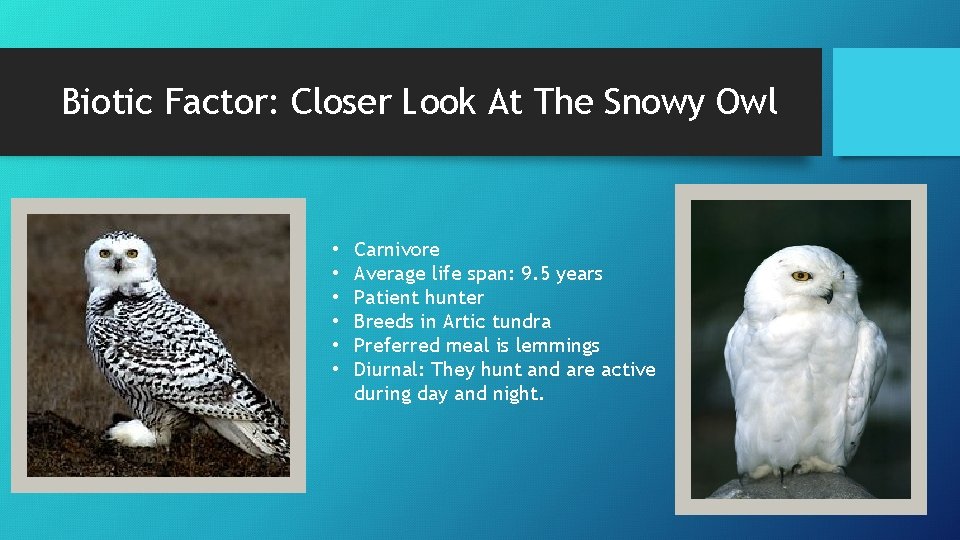
Biotic Factor: Closer Look At The Snowy Owl • • • Carnivore Average life span: 9. 5 years Patient hunter Breeds in Artic tundra Preferred meal is lemmings Diurnal: They hunt and are active during day and night.
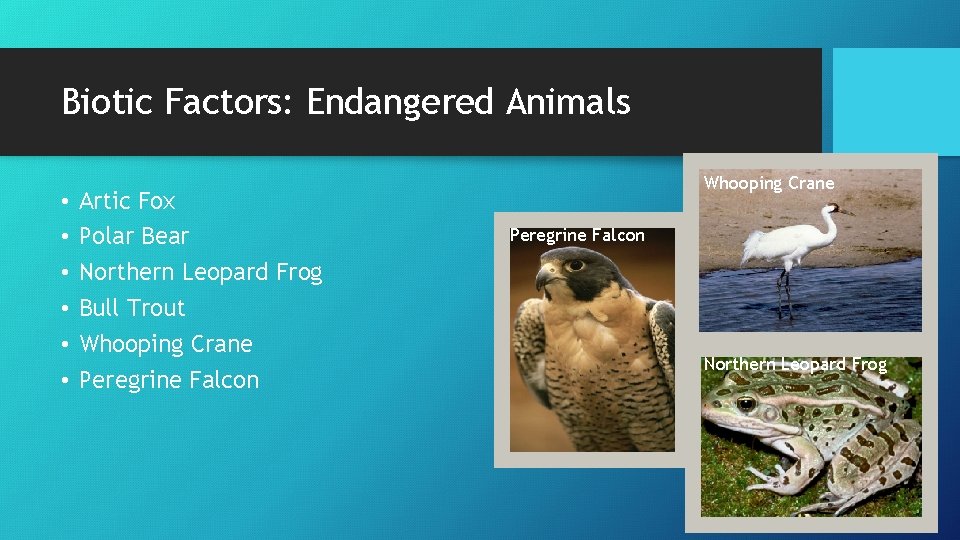
Biotic Factors: Endangered Animals • • • Artic Fox Polar Bear Northern Leopard Frog Bull Trout Whooping Crane Peregrine Falcon Northern Leopard Frog
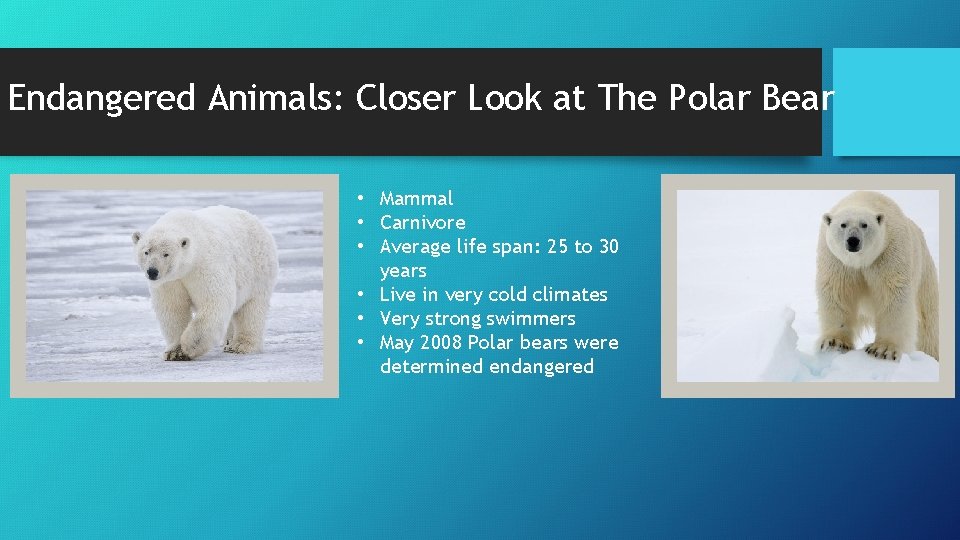
Endangered Animals: Closer Look at The Polar Bear • Mammal • Carnivore • Average life span: 25 to 30 years • Live in very cold climates • Very strong swimmers • May 2008 Polar bears were determined endangered
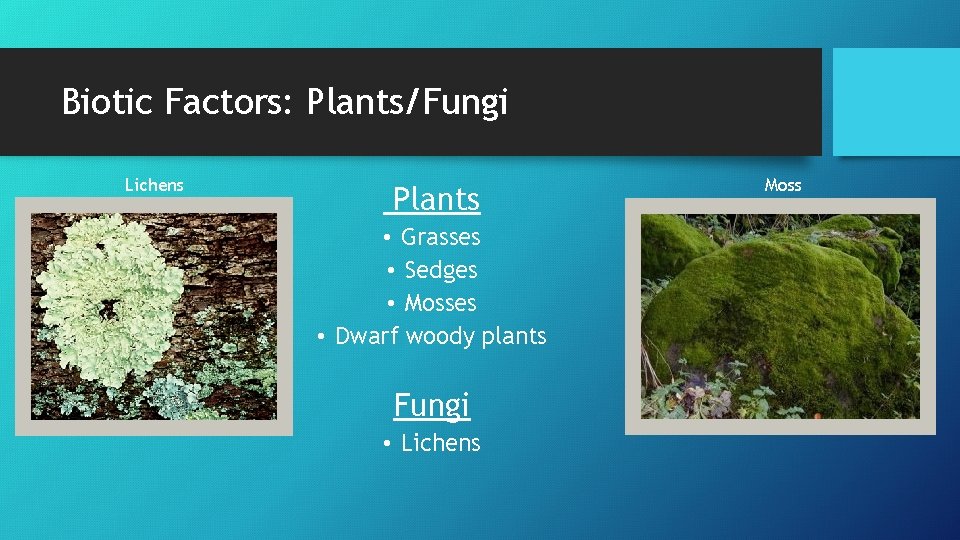
Biotic Factors: Plants/Fungi Lichens Plants • Grasses • Sedges • Mosses • Dwarf woody plants Fungi • Lichens Moss
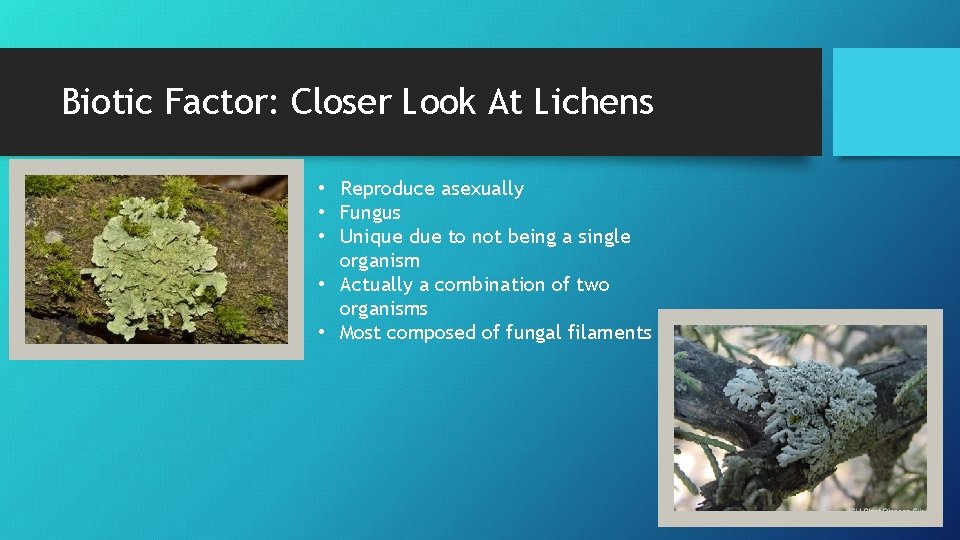
Biotic Factor: Closer Look At Lichens • Reproduce asexually • Fungus • Unique due to not being a single organism • Actually a combination of two organisms • Most composed of fungal filaments
Bibliography • "Tundra Climate. " Tundra Climate. N. p. , n. d. Web. 15 Sept. 2013. • "The Tundra Biome. " The Tundra Biome. N. p. , n. d. Web. 15 Sept. 2013. • "Arctic Fox. " National Geographic. N. p. , n. d. Web. 15 Sept. 2013. • "Snowy Owl. " National Geographic. N. p. , n. d. Web. 15 Sept. 2013. • "Polar Bear. " National Geographic. N. p. , n. d. Web. 15 Sept. 2013. • Book : Postlethwait, John H. , and Janet L. Hopson. Modern Biology. Orlando: Holt, Rinehart and Winston, 2006. Print.
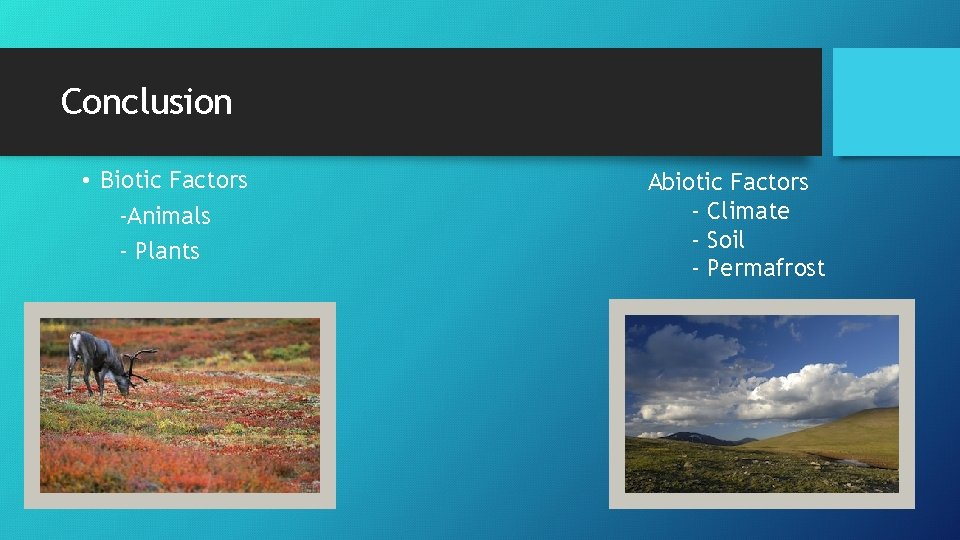
Conclusion • Biotic Factors -Animals - Plants Abiotic Factors - Climate - Soil - Permafrost
- Slides: 16