
BIOMATERIAL TECHNOLOGY CONTENT What is biomaterial Historical development
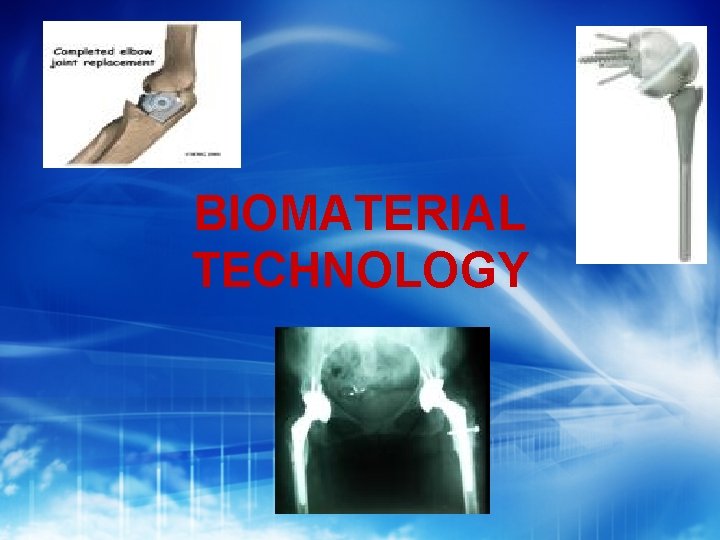
BIOMATERIAL TECHNOLOGY
CONTENT What is biomaterial? Historical development Areas of usage Biocompatibility Classification of biomaterials
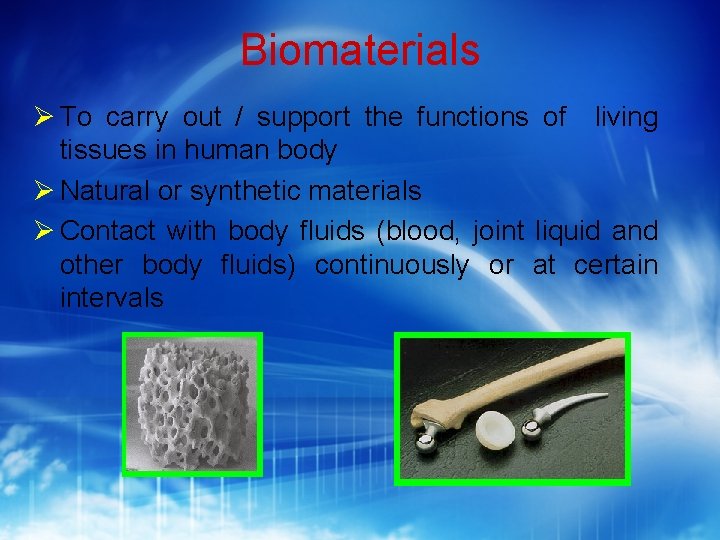
Biomaterials To carry out / support the functions of living tissues in human body Natural or synthetic materials Contact with body fluids (blood, joint liquid and other body fluids) continuously or at certain intervals
History of biomaterials Artificial eye, nose and teeth found in egypt mummies. Gold teeth were utilized 2000 years ago. Bronze and copper bone implants were used before christ. Tush prosthesis were placed in body in 1880. First metal prosthesis made with vitallium alloy were produced in 1938. Alumina and zirconium were utilized in 1972.
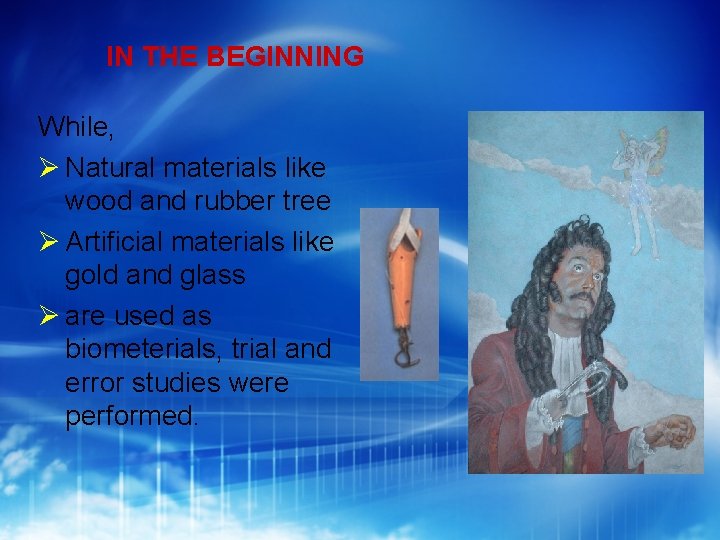
IN THE BEGINNING While, Natural materials like wood and rubber tree Artificial materials like gold and glass are used as biometerials, trial and error studies were performed.
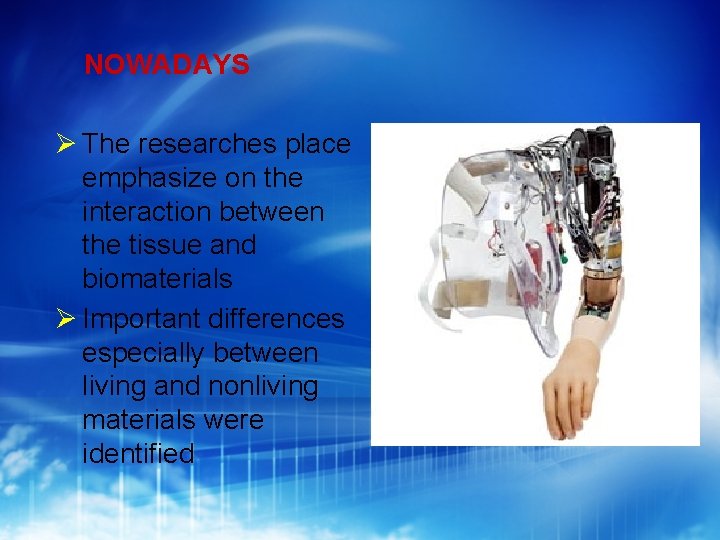
NOWADAYS The researches place emphasize on the interaction between the tissue and biomaterials Important differences especially between living and nonliving materials were identified
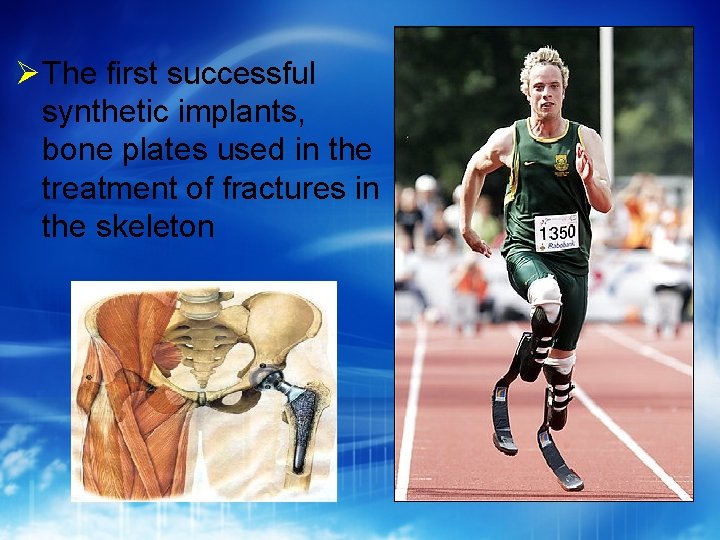
The first successful synthetic implants, bone plates used in the treatment of fractures in the skeleton
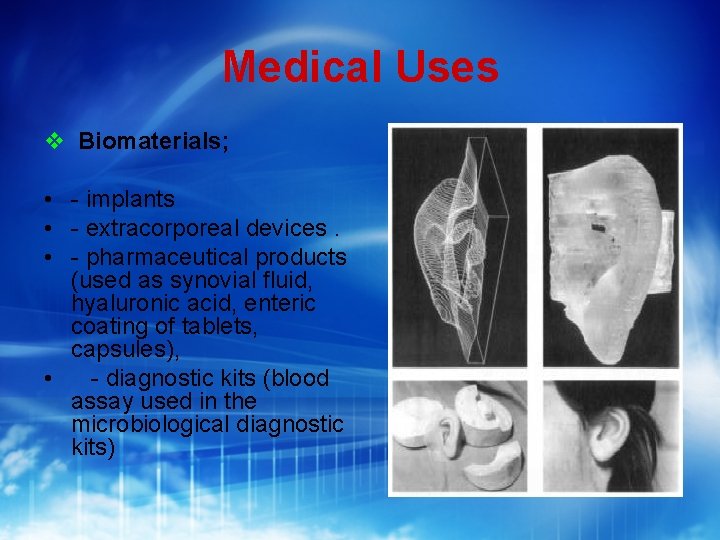
Medical Uses Biomaterials; • - implants • - extracorporeal devices. • - pharmaceutical products (used as synovial fluid, hyaluronic acid, enteric coating of tablets, capsules), • - diagnostic kits (blood assay used in the microbiological diagnostic kits)
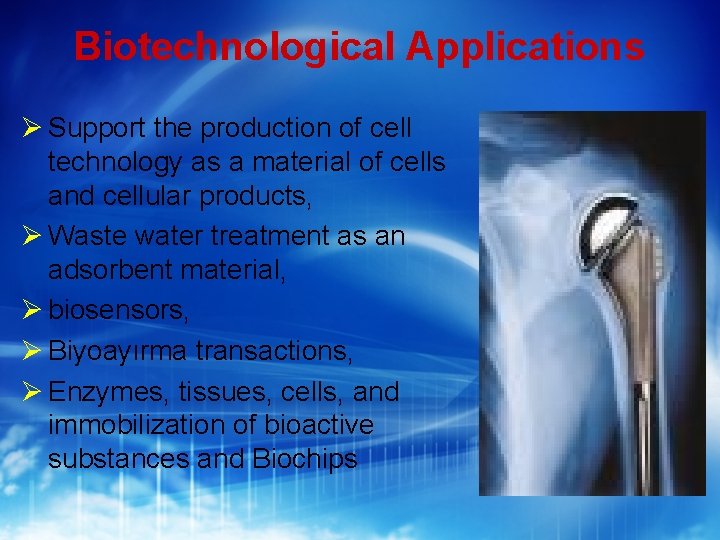
Biotechnological Applications Support the production of cell technology as a material of cells and cellular products, Waste water treatment as an adsorbent material, biosensors, Biyoayırma transactions, Enzymes, tissues, cells, and immobilization of bioactive substances and Biochips
Obstacles to overcome Biomaterials, used in the human body with a very variable conditions; – According to the different tissues of body fluids, the p. H ranged from 1 to 9 – About 4 MPa of the bones, tendons exposed to the stress value of 40 -80 MPa

Biocompatibility Biocompatibility: The ability to respond to the appropriate body system during the application of the material • The most important feature of biomaterial
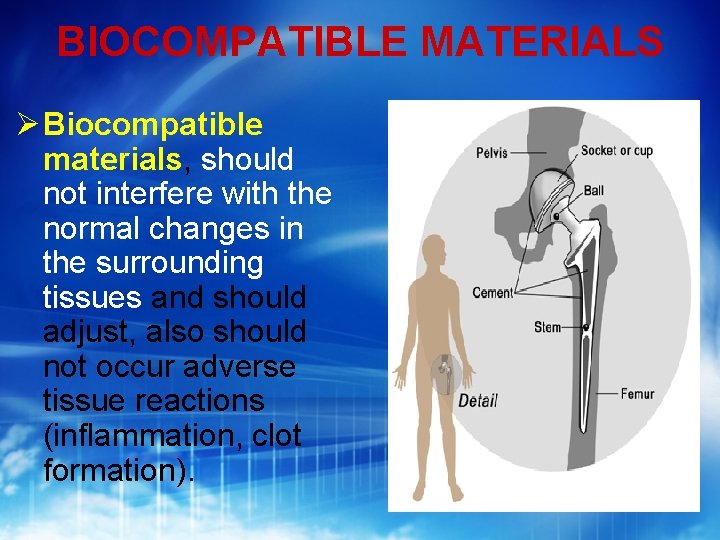
BIOCOMPATIBLE MATERIALS Biocompatible materials, should not interfere with the normal changes in the surrounding tissues and should adjust, also should not occur adverse tissue reactions (inflammation, clot formation).
Wintermantel ve Mayer BIOCOMPATIBLE Structural Compatible Surface Compatible § The optimum fit of the § The physical, chemical biomaterial body tissues to and biolagical compatance mechanical behaviours of the biomaterials with body tissues
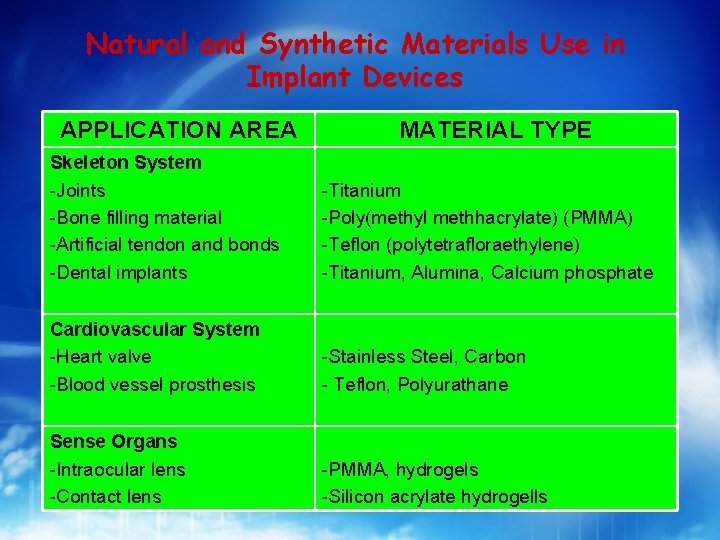
Natural and Synthetic Materials Use in Implant Devices APPLICATION AREA MATERIAL TYPE Skeleton System -Joints -Bone filling material -Artificial tendon and bonds -Dental implants -Titanium -Poly(methyl methhacrylate) (PMMA) -Teflon (polytetrafloraethylene) -Titanium, Alumina, Calcium phosphate Cardiovascular System -Heart valve -Blood vessel prosthesis -Stainless Steel, Carbon - Teflon, Polyurathane Sense Organs -Intraocular lens -Contact lens -PMMA, hydrogels -Silicon acrylate hydrogells

CLASSIFICATION OF BIOMATERIALS Drug Delivery Devices Skin/cartilage Polymers Bone replacements Orthopedic screws/fixation Metals Dental Implants Ocular implants Synthetic BIOMATERIALS Ceramics Dental Implants Implantable Microelectrodes Semiconductor Materials Biosensors

METALIC BIOMATERIALS Crystal structures and strong metallic bonds orthopedic applications material joint prosthesis and bone renewal - the face and jaw surgery Dental implant - cardio-vascular surgery Artificial heart parts, heart valve

Types of Metallic Biomaterials Synthetic; The first metal developed for use in the human body, “Sherman-Vanadyum Steel” Natural; Taken to body from outside or formed during or as a result of metabolism (Synthesis of cobalt in vitamin B 12, iron occurs as a function of cell )
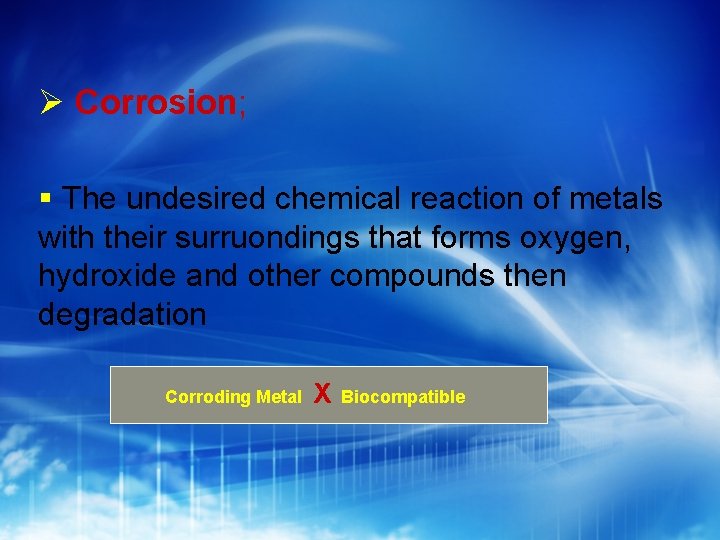
Corrosion; § The undesired chemical reaction of metals with their surruondings that forms oxygen, hydroxide and other compounds then degradation Corroding Metal X Biocompatible
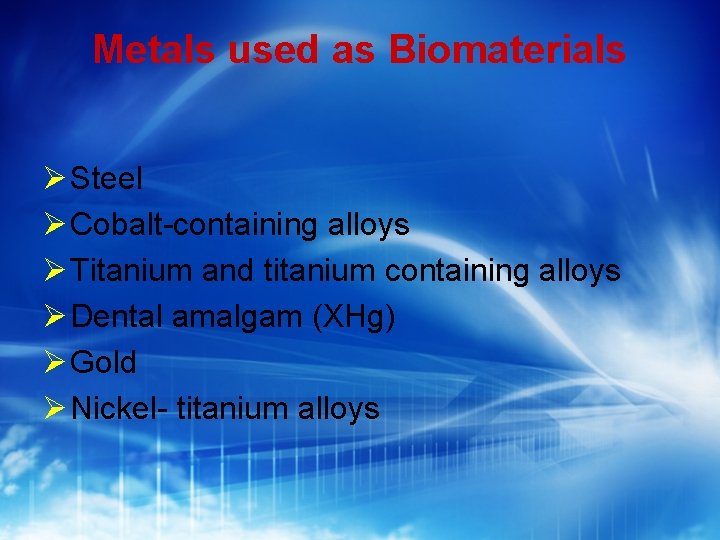
Metals used as Biomaterials Steel Cobalt-containing alloys Titanium and titanium containing alloys Dental amalgam (XHg) Gold Nickel- titanium alloys
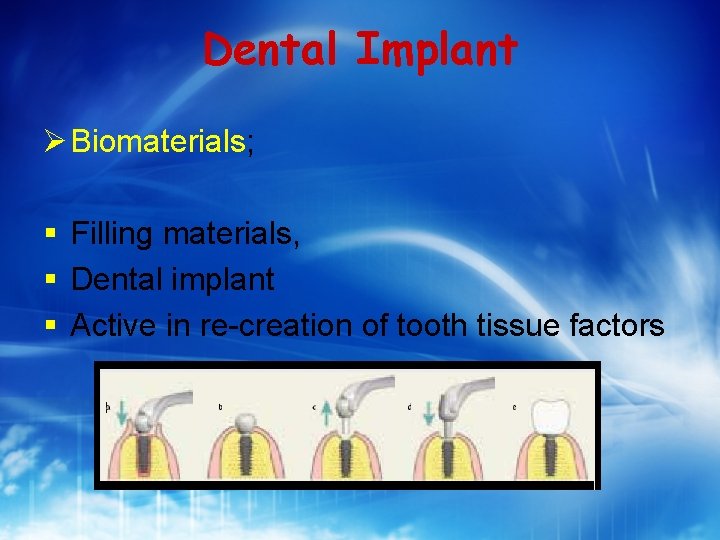
Dental Implant Biomaterials; § Filling materials, § Dental implant § Active in re-creation of tooth tissue factors
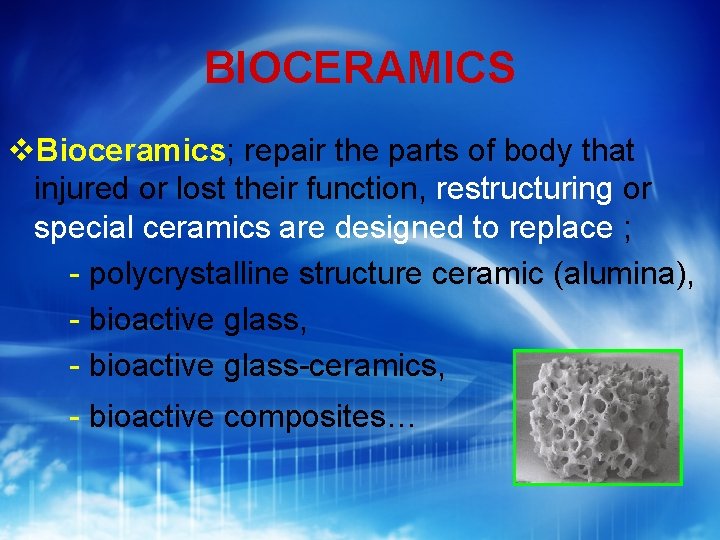
BIOCERAMICS Bioceramics; repair the parts of body that injured or lost their function, restructuring or special ceramics are designed to replace ; - polycrystalline structure ceramic (alumina), - bioactive glass-ceramics, - bioactive composites…
Using Areas of Bioceramics Glasses, Diagnostic devices, Thermometers, Tissue culture vessels. Filling materials, Gold-porcelain coating, Prosthetic parts Health Sector Dental
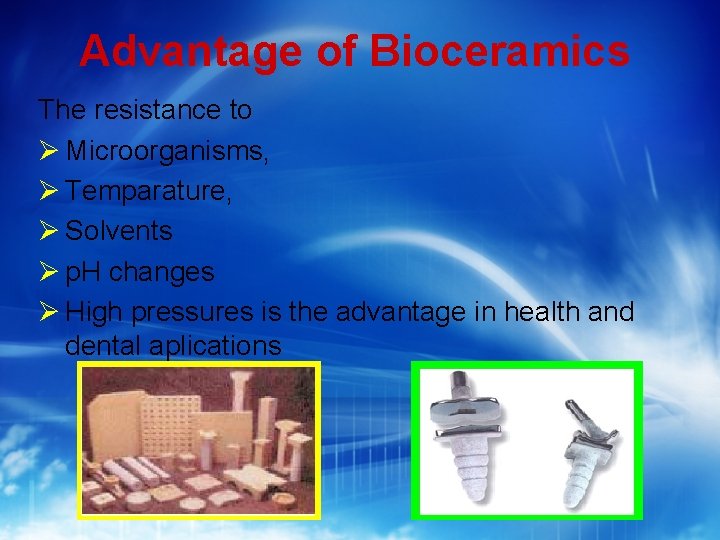
Advantage of Bioceramics The resistance to Microorganisms, Temparature, Solvents p. H changes High pressures is the advantage in health and dental aplications
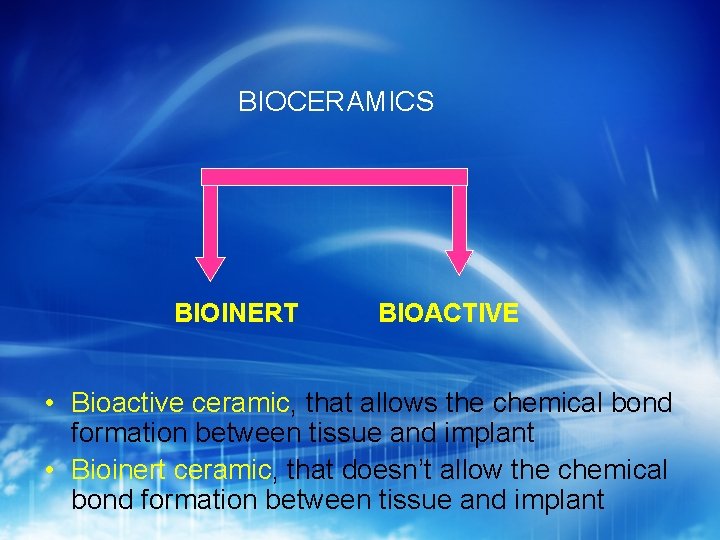
BIOCERAMICS BIOINERT BIOACTIVE • Bioactive ceramic, that allows the chemical bond formation between tissue and implant • Bioinert ceramic, that doesn’t allow the chemical bond formation between tissue and implant

Bioceramics Acoording to Structural Functions Oxide ceramics, inert structure, polycrystalline ceramics consisting of metal ions in the plane formed by the dissolution of oxygen ions Alumina (Al 2 O 3) Zirconia (Zr. O 2) orthopedic applications femoral prosthese
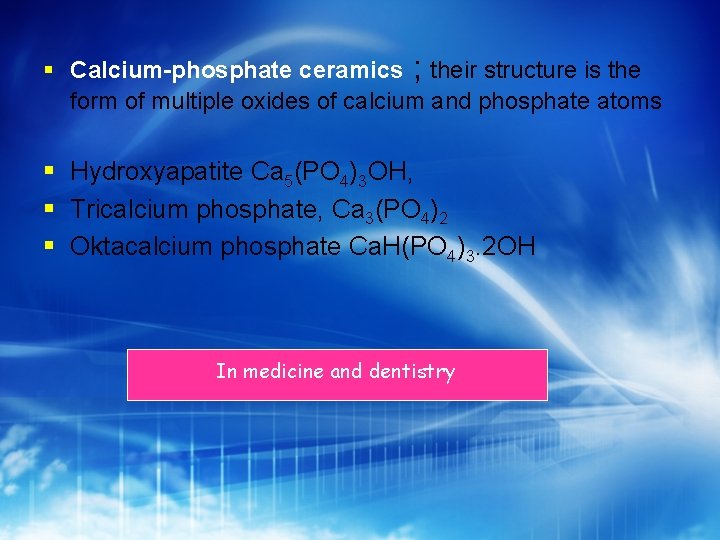
§ Calcium-phosphate ceramics ; their structure is the form of multiple oxides of calcium and phosphate atoms § Hydroxyapatite Ca 5(PO 4)3 OH, § Tricalcium phosphate, Ca 3(PO 4)2 § Oktacalcium phosphate Ca. H(PO 4)3. 2 OH In medicine and dentistry
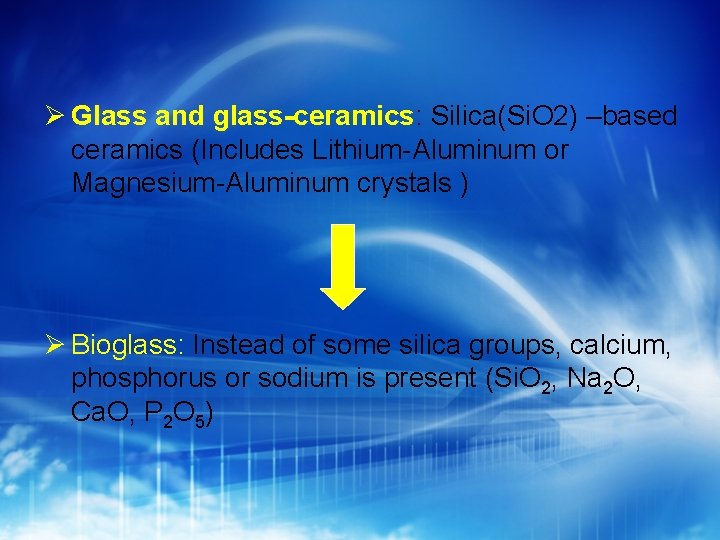
Glass and glass-ceramics: Silica(Si. O 2) –based ceramics (Includes Lithium-Aluminum or Magnesium-Aluminum crystals ) Bioglass: Instead of some silica groups, calcium, phosphorus or sodium is present (Si. O 2, Na 2 O, Ca. O, P 2 O 5)
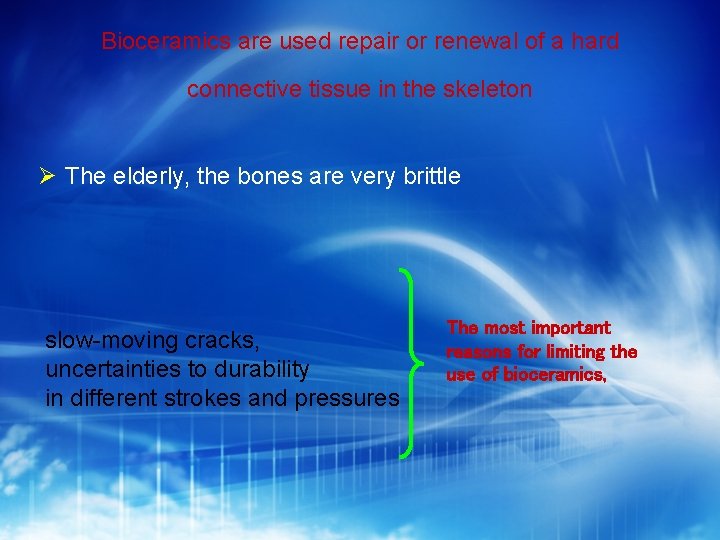
Bioceramics are used repair or renewal of a hard connective tissue in the skeleton The elderly, the bones are very brittle slow-moving cracks, uncertainties to durability in different strokes and pressures The most important reasons for limiting the use of bioceramics,
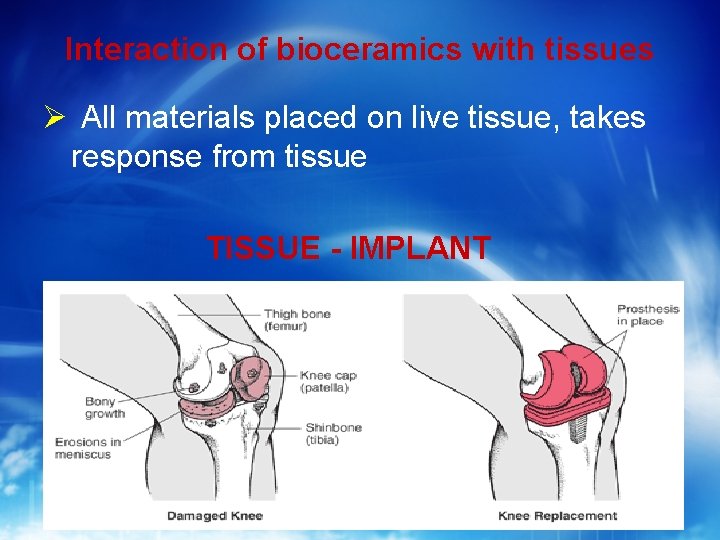
Interaction of bioceramics with tissues All materials placed on live tissue, takes response from tissue TISSUE - IMPLANT
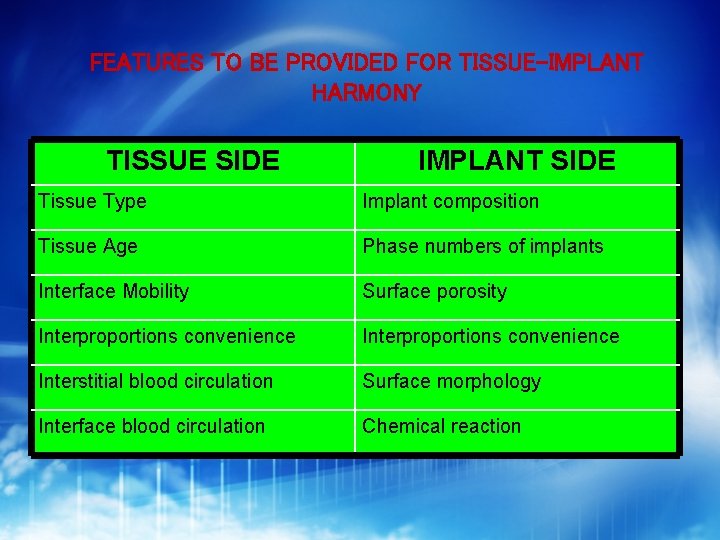
FEATURES TO BE PROVIDED FOR TISSUE-IMPLANT HARMONY TISSUE SIDE IMPLANT SIDE Tissue Type Implant composition Tissue Age Phase numbers of implants Interface Mobility Surface porosity Interproportions convenience Interstitial blood circulation Surface morphology Interface blood circulation Chemical reaction
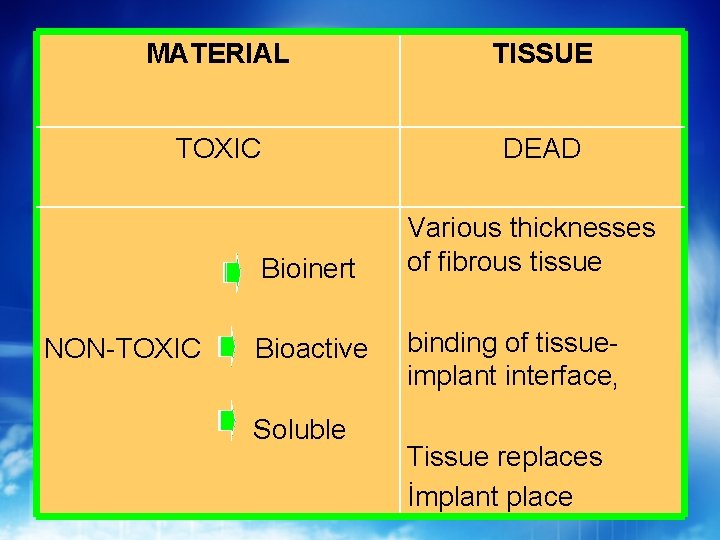
MATERIAL TISSUE TOXIC DEAD Bioinert NON-TOXIC Bioactive Soluble Various thicknesses of fibrous tissue binding of tissueimplant interface, Tissue replaces İmplant place

Classification of Bioceramics According to tissue responses Implant Type Tissue response Example Nonporous, dense and inert ceramics The formation of very fine fibrous tissue Porous inert ceramics The tissue growth in Hydroxyapatite pores Resorbable ceramics Absorption Alumina, Zirconia Tricalcium phosphate Bioactive glasses Ceramic implants are non-toxic
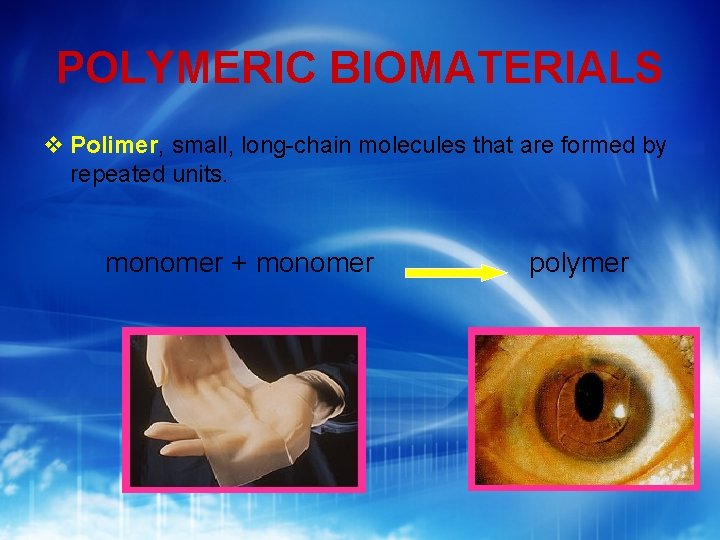
POLYMERIC BIOMATERIALS Polimer, small, long-chain molecules that are formed by repeated units. monomer + monomer polymer

Polymer chains, are in linear / branched structure Branched structure, is formed with connection of side brances to the main polymer chain If these branched sides connect with another main chain, “cross-linked” polymer is formed.
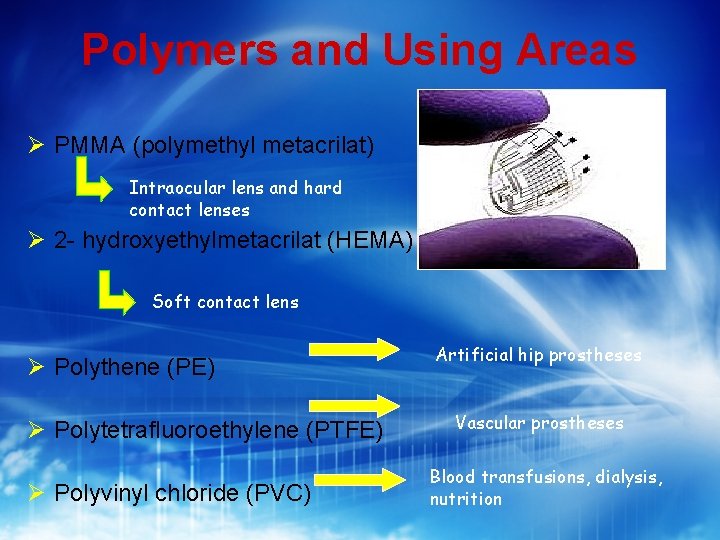
Polymers and Using Areas PMMA (polymethyl metacrilat) Intraocular lens and hard contact lenses 2 - hydroxyethylmetacrilat (HEMA) Soft contact lens Polythene (PE) Polytetrafluoroethylene (PTFE) Polyvinyl chloride (PVC) Artificial hip prostheses Vascular prostheses Blood transfusions, dialysis, nutrition
NATURAL POLYMERS Natural polymers, are biologically produced unique functional polymers * Proteins (collagen, gelatin) * Polysaccharides (cellulose, starch, hyaluronic acid) * Polynucleotides (DNA and RNA)
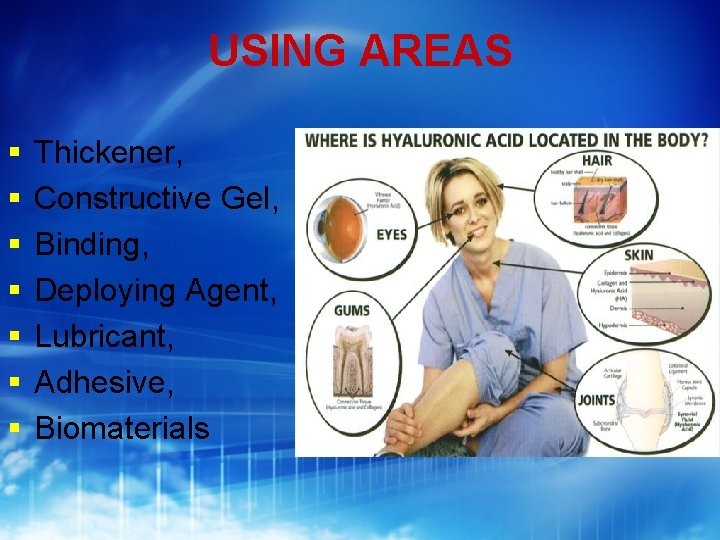
USING AREAS § § § § Thickener, Constructive Gel, Binding, Deploying Agent, Lubricant, Adhesive, Biomaterials
NATURAL POLYMERS ADVANTAGES DISADVANTAGES § Similar or identical to the biological macromolecules § Changes in composition depending on the source from which they obtained , § Decays at high temperatures § Difficulty in shape § Be immunogenic § Structural degradation in the presence of enzyme, (biodegradable)
Today, scientists are tendency to produce polymers that can tolerate alloying, blending and reactive ekstrusion. In the industrial biotechnology field, the lactic acid polymer polyactides (PLA) is usually used. Biotechnological processes such as fermentation of lactic acid is produced from natural materials , dimerization and purified. D or L lactide Polylactide RING OPENING POLYMERISATION
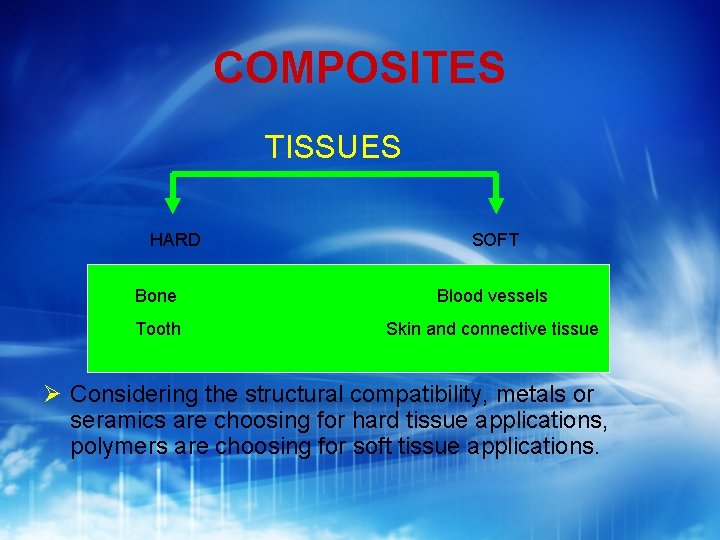
COMPOSITES TISSUES HARD SOFT Bone Blood vessels Tooth Skin and connective tissue Considering the structural compatibility, metals or seramics are choosing for hard tissue applications, polymers are choosing for soft tissue applications.
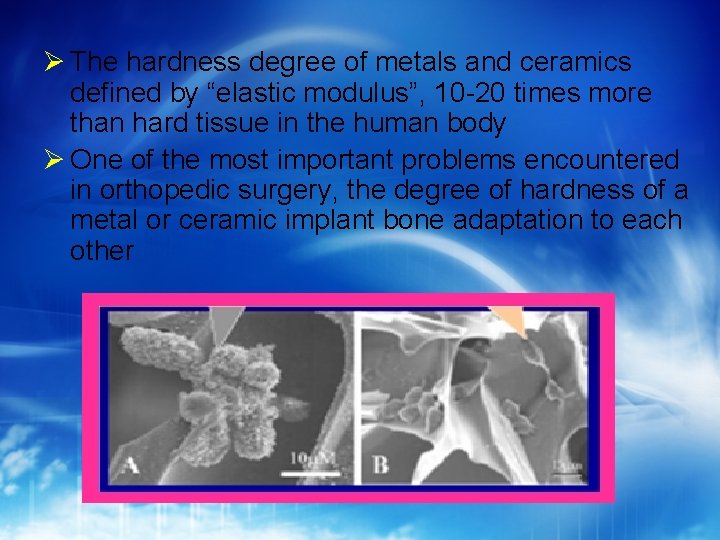
The hardness degree of metals and ceramics defined by “elastic modulus”, 10 -20 times more than hard tissue in the human body One of the most important problems encountered in orthopedic surgery, the degree of hardness of a metal or ceramic implant bone adaptation to each other
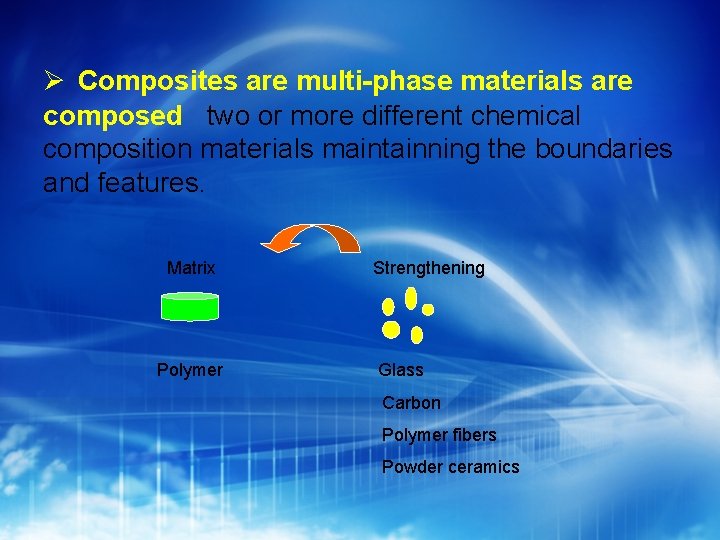
Composites are multi-phase materials are composed two or more different chemical composition materials maintainning the boundaries and features. Matrix Polymer Strengthening Glass Carbon Polymer fibers Powder ceramics
ADVANTAGES They can be used in orthopedical applications because they have high resistance and elastic modules. The changability of composite material composition Resistant to corrosion Rare metal fatigue Metal ion oscillation is not seen Less fragility
Usage Areas Composites are used as soft tissue implant in orthopedical and dental applications. Polymer composites are compatible with modern diagnosis systems like magnetic resonance (MRI) and tomography (CT) through they are not magnetic. Composites are used as structural component in X-ray radiography because they are light and they have superior mechanical features.
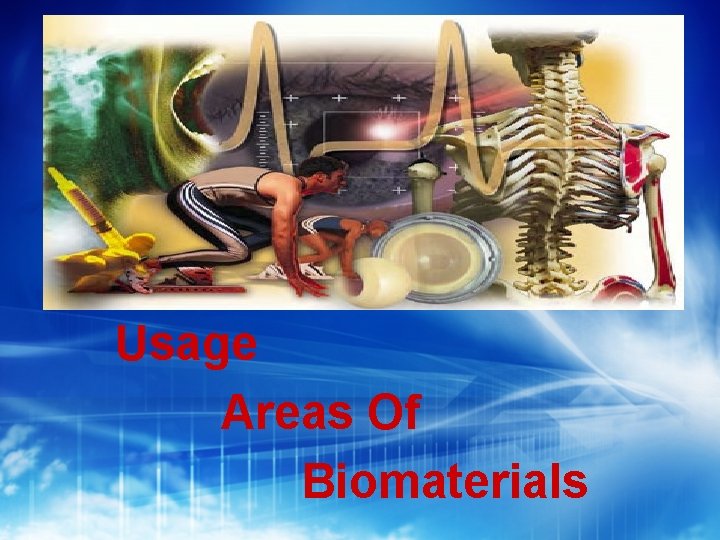
Usage Areas Of Biomaterials
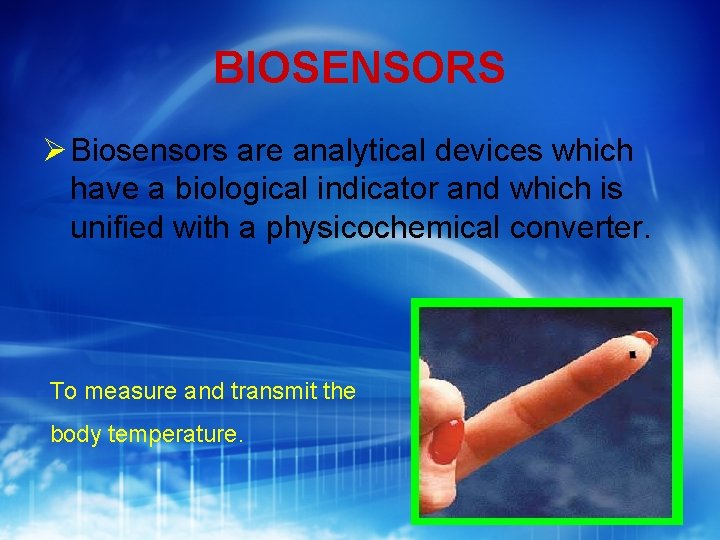
BIOSENSORS Biosensors are analytical devices which have a biological indicator and which is unified with a physicochemical converter. To measure and transmit the body temperature.
3 Basic Component Biomolecule / bioagent Converter Electronical
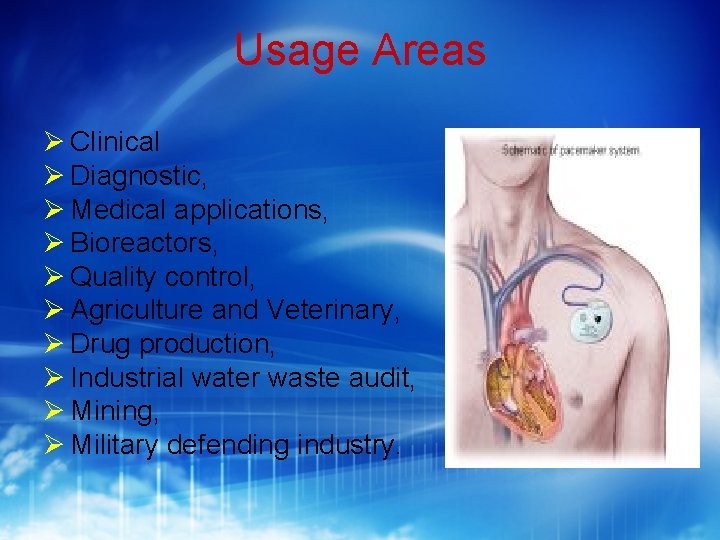
Usage Areas Clinical Diagnostic, Medical applications, Bioreactors, Quality control, Agriculture and Veterinary, Drug production, Industrial water waste audit, Mining, Military defending industry.
BIOCHIPS Biohips are defined as microprocessors that can be used biologically. A biochip can be percieved as ultraminiature test tubes. Surface area of a bipchip is not much more than a nail.
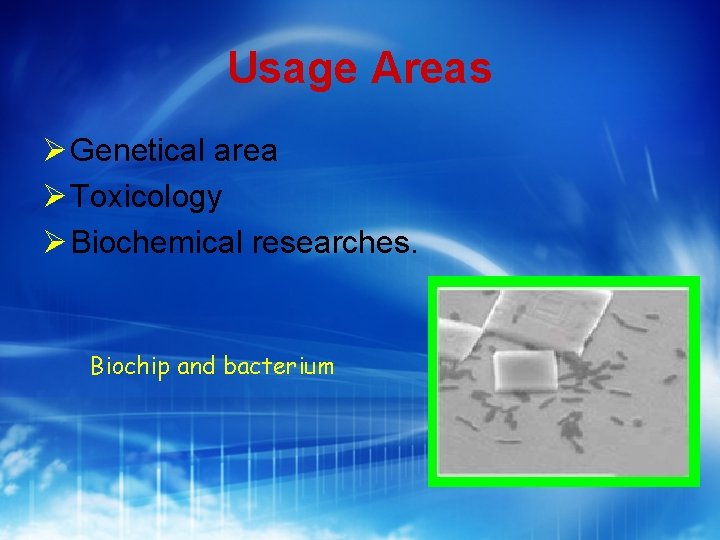
Usage Areas Genetical area Toxicology Biochemical researches. Biochip and bacterium
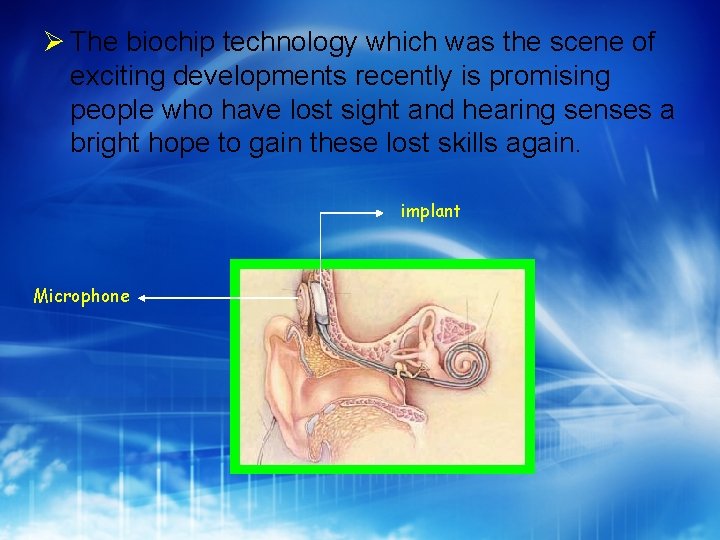
The biochip technology which was the scene of exciting developments recently is promising people who have lost sight and hearing senses a bright hope to gain these lost skills again. implant Microphone
Recent Developments Proceeding of the National Academy of Sciences(PNAS) had produced biomaterials which are supporting live neurons. It is the first peptit-based material produced at molecular level. It has no negative effect to our immunity system because it is totally biological.

REFERENCES § www. biltek. tubitak. gov. tr/bdergi/yeniufuk/icerik/biyomalz emeler. pdf § http: //www. frost. com/prod/servlet/report-brochure § http: //www. bio-pro. de/en/life//02700/index. html § http: //www. azom. com/details. asp? Article. ID=1302 § ejmt. teknolojikarastirmalar. com/sablon. doc

Thanks… Emrah KORKMAZ
- Slides: 54