
Biomass Struggling to make it workthe Canadian Experience
Biomass “Struggling to make it work”the Canadian Experience IEA Task 38 Meeting Doug Bradley- Domtar Edinburgh, Nov 12, 2001
Contents n Canadian Forest Industry Biomass Usage n Biomass success stories n Issues holding back development
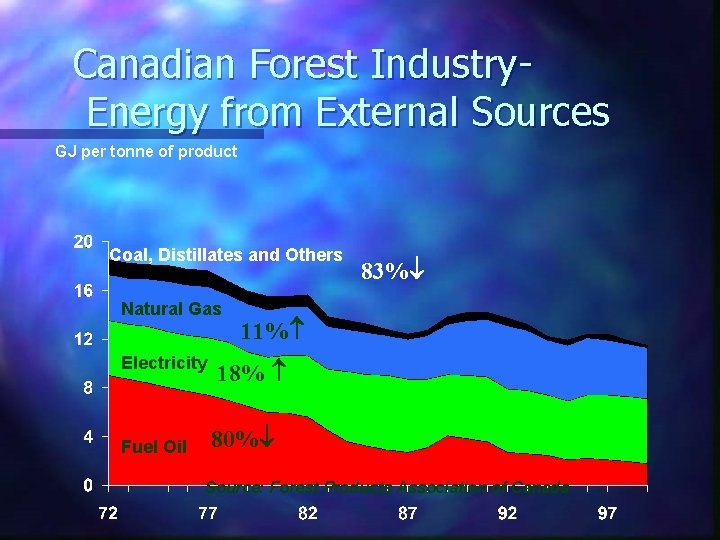
Canadian Forest Industry. Energy from External Sources GJ per tonne of product Coal, Distillates and Others Natural Gas Electricity Fuel Oil 83% 11% 18% 80% Source: Forest Products Association of Canada
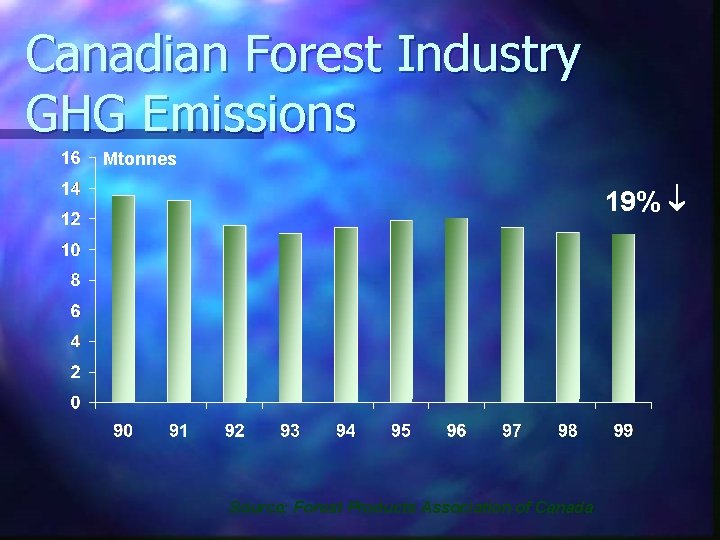
Canadian Forest Industry GHG Emissions Mtonnes 19% Source: Forest Products Association of Canada
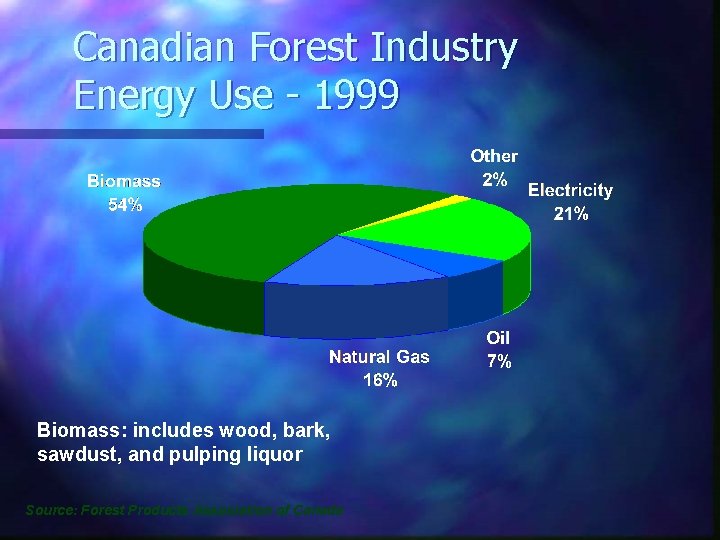
Canadian Forest Industry Energy Use - 1999 Biomass: includes wood, bark, sawdust, and pulping liquor Source: Forest Products Association of Canada
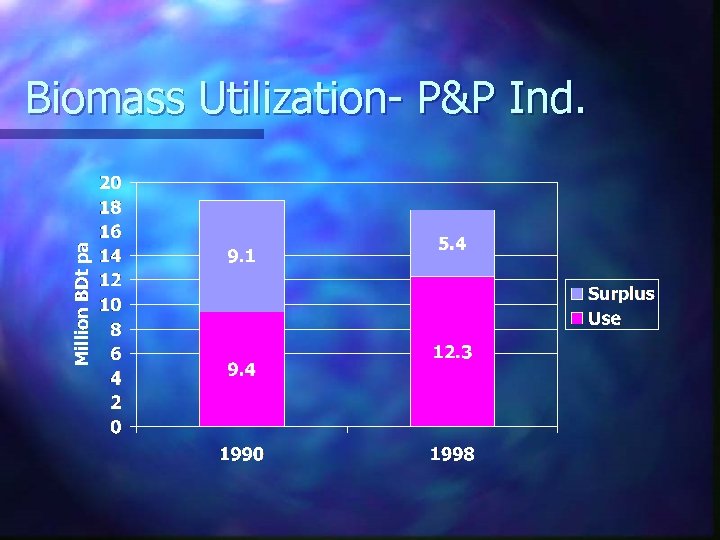
Biomass Utilization- P&P Ind.
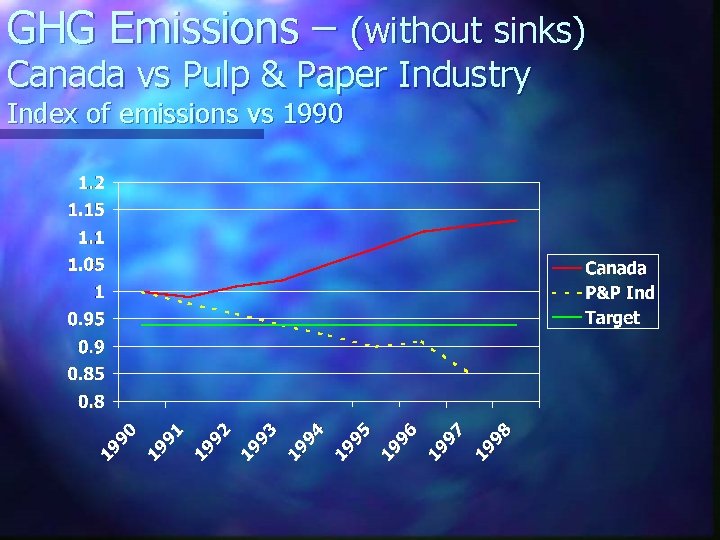
GHG Emissions – (without sinks) Canada vs Pulp & Paper Industry Index of emissions vs 1990
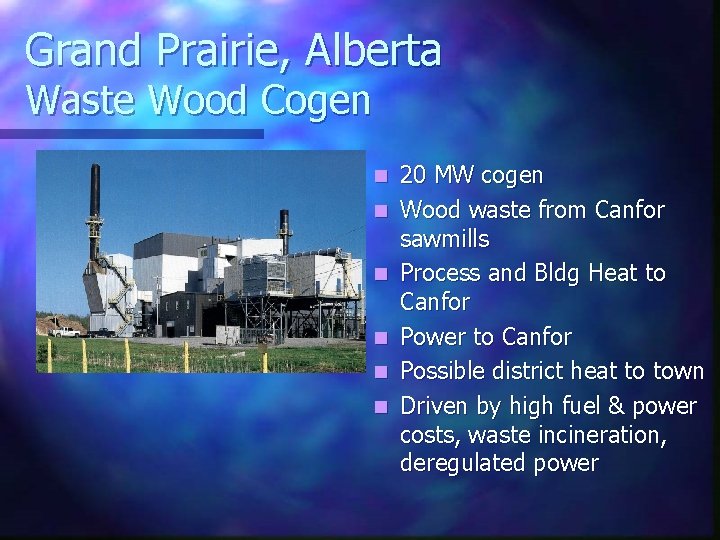
Grand Prairie, Alberta Waste Wood Cogen n n n 20 MW cogen Wood waste from Canfor sawmills Process and Bldg Heat to Canfor Power to Canfor Possible district heat to town Driven by high fuel & power costs, waste incineration, deregulated power
St. Felicien – Quebec Biomass Cogen n $63 million project n 290 k GMT/yr bark from area sawmills n 24 k lbs/hr steam to Alliance sawmill n 21. 4 MW sold to Quebec Hydro n Why? Steam host n Many bark sources n 6¢/kwh from Quebec Hydro n
Windsor, Quebec Domtar cogen n $23 MM bark cogen inaugurated Oct 26, 2001 n At 560, 000 tpa Windsor pulp/paper mill n 50% on site bark, 50% area purchases n 25 MW power and steam to mill n Displaces 3. 8¢ power from Hydro Quebec
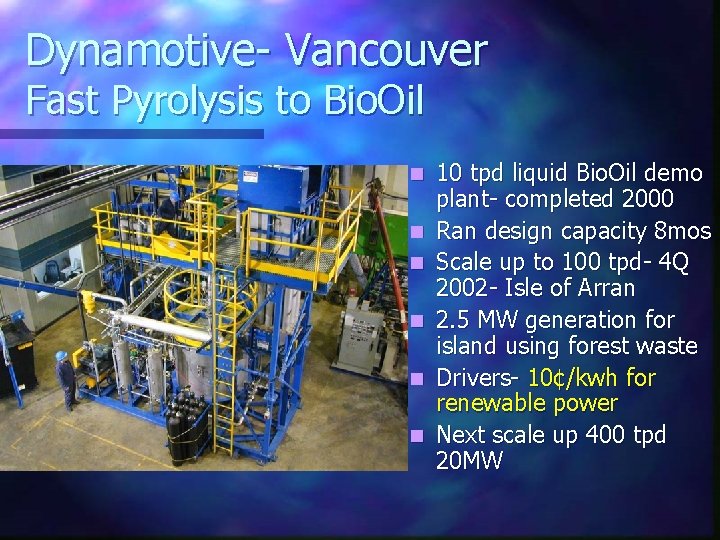
Dynamotive- Vancouver Fast Pyrolysis to Bio. Oil n n n 10 tpd liquid Bio. Oil demo plant- completed 2000 Ran design capacity 8 mos Scale up to 100 tpd- 4 Q 2002 - Isle of Arran 2. 5 MW generation for island using forest waste Drivers- 10¢/kwh for renewable power Next scale up 400 tpd 20 MW
Temiskaming- Biomass boiler n Uses spent sulfate liquor from pulp mill, bark from area sawmills n 10 MW power for pulp mill n Steam, hot water for cellulose mill n 14 MM liters ethanol Canada’s vinegar n Drivers Many area sawmills n Have sulfite mill n Limited by Quebec Hydro n
Cornwall- Ethanol Plant n n $48 million plant To use 6. 25 MM bushels corn pa To produce 66 MM litres pa ethanol Project drivers n n n Ontario elimination of “road and usage tax” on ethanol fuel Canada exempting ethanol portion of fuels from 10% excise tax Project awaiting insurance
Why do projects remain on the drawing board? n Biomass supply n Alternative fuel prices n Low Power prices n Technology n Infrastructure n Money!
Problems- Biomass Supply n Amount- Sawmill waste reduced from 9. 1 to 5. 4 million BDT pa n Haul distance- Remaining pockets of biomass smaller, further away n Location- Excess biomass at sawmills not at pulp mills which need power, steam n Alternative Uses- Higher fibre value in OSB or MDF than energy
Problems- Biomass Supply n Free trade- 19. 3% export duty shutting sawmills n Harvesting rules- Increase in delimbing at stump for nutrients n Concentration- Most excess in British Columbia where power is only 3. 5¢/kwh
Problems- Alternative Fuel Costs n Fossil fuel costs lower in Canada than Europe n Canada has large supply of oil, natural gas n Europe has carbon taxes n Low fossil fuel costs hurt “biomass economics”
Problems- Low power prices n Canada has lower prices than Europe- less opportunity for revenue n Regulated industry (provinces) Prevented wheeling of power n Limited size of biomass plants n Controlled price of power n (Alberta now deregulated, Ontario next) n
Problems- Technology n Difficulty with green biomass n Instability of Bio. Oil n Gasification- not efficient for wood n Fuel cells- not there yet
Problems- Infrastructure n Europe has infrastructure for combined heat and power systems n Canada has natural gas lines, oil infrastructure
Problems- Money!! n Rate of return usually 10% at best n Hurdle in forest industry 15 -30% n Capital limited to “core business”necessitates third party capital n Huge capital investment requires long term contracts- fuels, power, heat n Carbon credits- indirect “power savings” don’t count
Summary n Success stories- but hanging fruit gone n Need improved economic environment to promote further development Lower taxes on biomass fuels, products n More incentives for investment (capital) n Deregulated power industry- green pricing n Green power policies n Non-residual biomass sources n n Emerging technologies
- Slides: 22