
BIOMARKERS OF EXPOSURE TO HAZARDOUS SUBSTANCES PROJECT 3
BIOMARKERS OF EXPOSURE TO HAZARDOUS SUBSTANCES PROJECT 3: Immunoassays for human and environmental monitoring UC DAVIS SUPERFUND RESEARCH PROGRAM FUNDED SINCE 1987 NATALIA VASYLIEVA, Ph. D Bioanalytical Chemistry BOGDAN BARNYCH, Ph. D Organic Chemistry 04/17/2017 SRP Webinar
Outline Principle of immunoassay Position of immunoassay among other analytical tools Criteria for choosing target analytes Nanobodies® – modern reagents for immunoassay development Examples
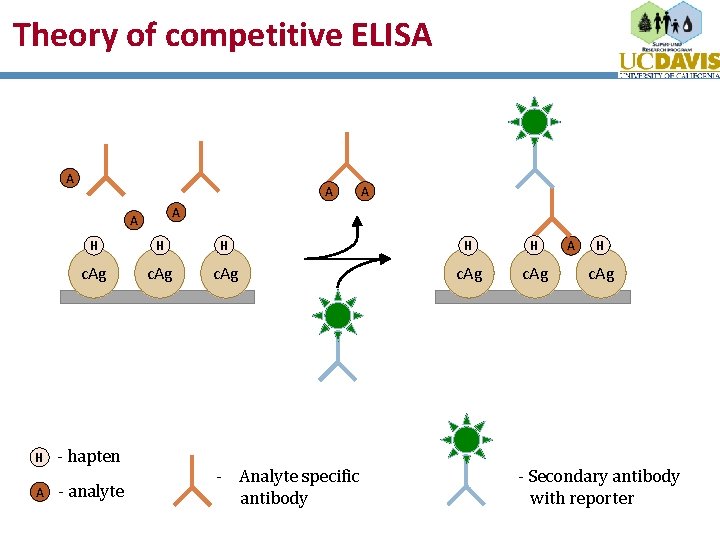
Theory of competitive ELISA A A H H H c. Ag H - hapten A - analyte - Analyte specific antibody A H c. Ag - Secondary antibody with reporter
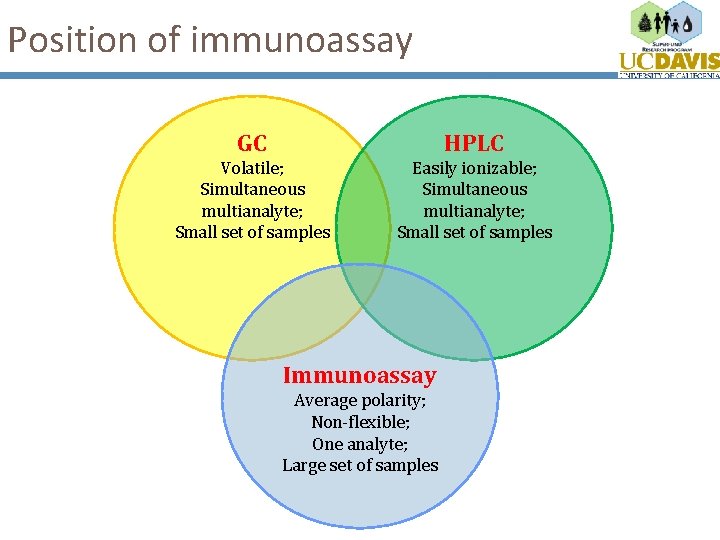
Position of immunoassay GC HPLC Volatile; Simultaneous multianalyte; Small set of samples Easily ionizable; Simultaneous multianalyte; Small set of samples Immunoassay Average polarity; Non-flexible; One analyte; Large set of samples
Target analytes
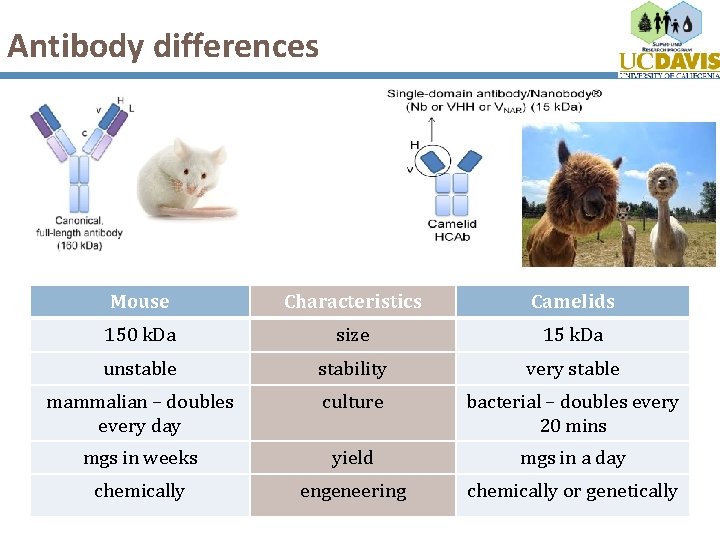
Antibody differences Mouse Characteristics Camelids 150 k. Da size 15 k. Da unstable stability very stable mammalian – doubles every day culture bacterial – doubles every 20 mins mgs in weeks yield mgs in a day chemically engeneering chemically or genetically
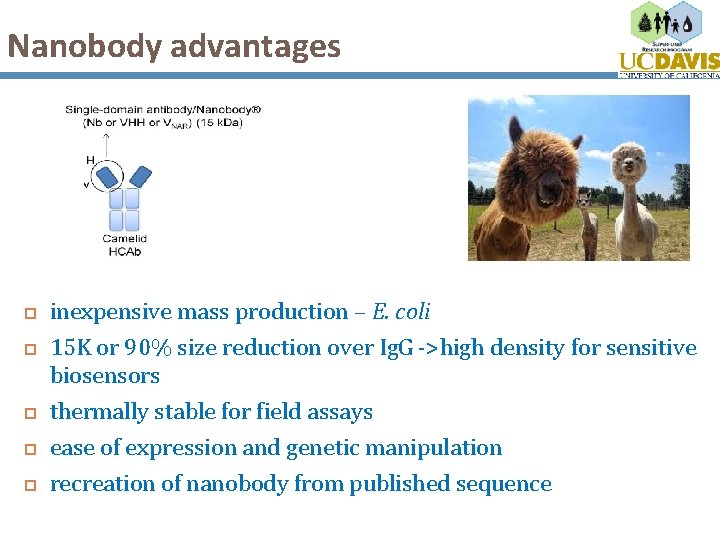
Nanobody advantages inexpensive mass production – E. coli 15 K or 90% size reduction over Ig. G ->high density for sensitive biosensors thermally stable for field assays ease of expression and genetic manipulation recreation of nanobody from published sequence
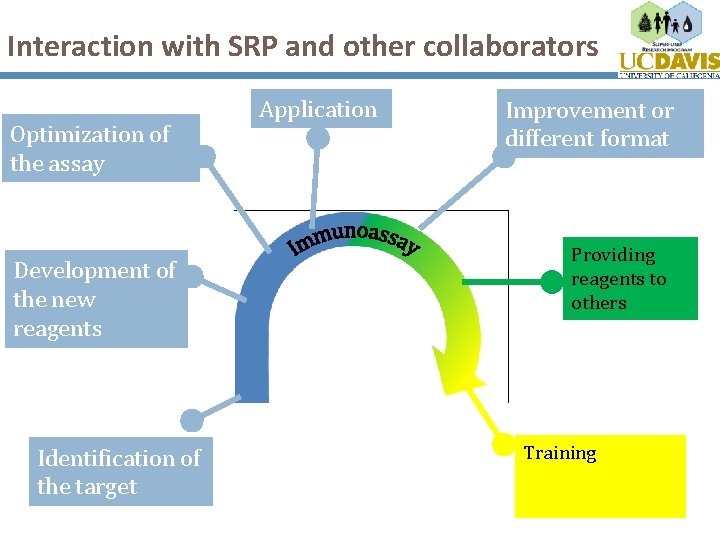
Interaction with SRP and other collaborators Optimization of the assay Development of the new reagents Identification of the target Application Improvement or different format Providing reagents to others Training
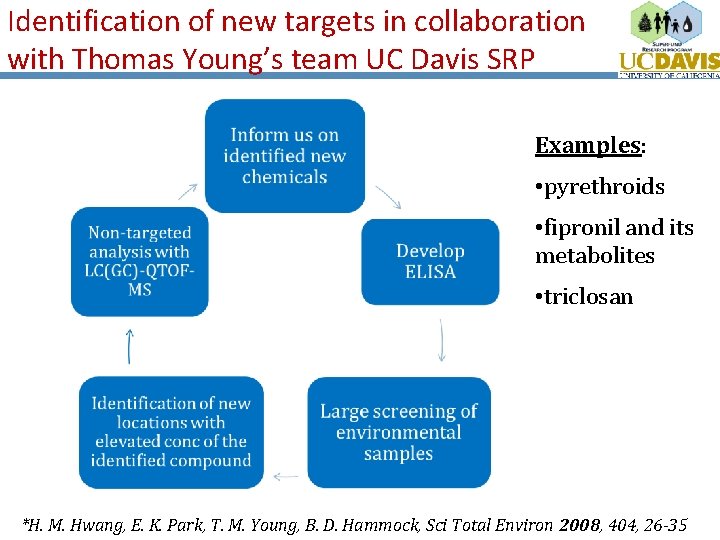
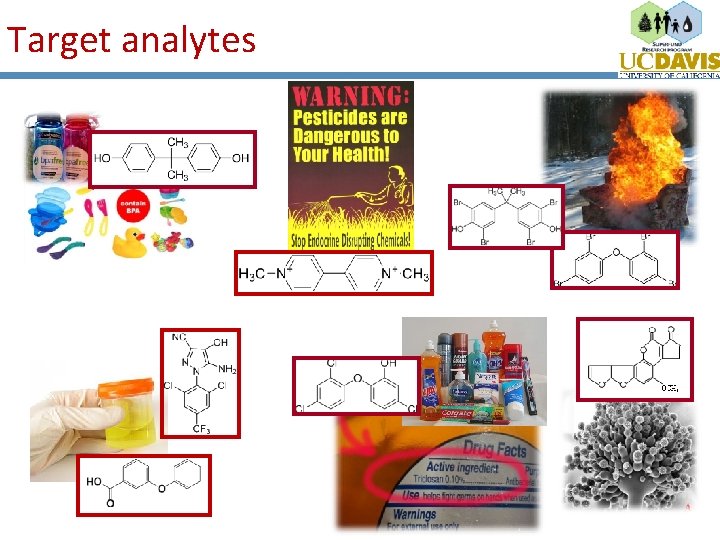
Identification of new targets in collaboration with Thomas Young’s team UC Davis SRP Examples: • pyrethroids • fipronil and its metabolites • triclosan *H. M. Hwang, E. K. Park, T. M. Young, B. D. Hammock, Sci Total Environ 2008, 404, 26 -35
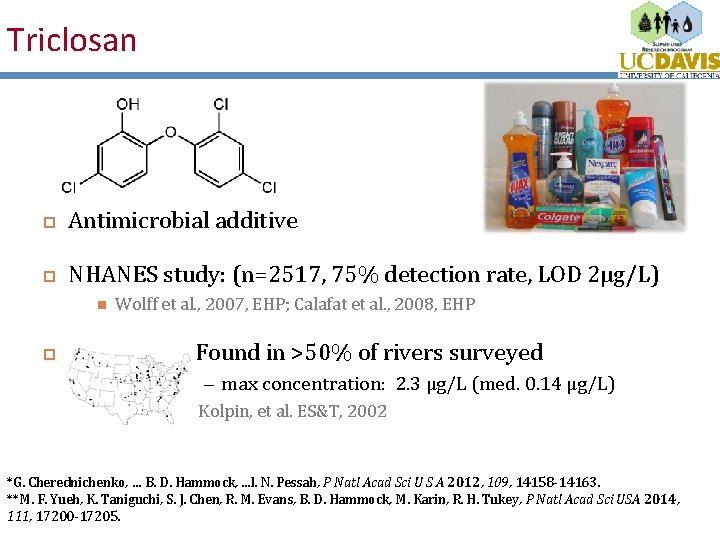
Triclosan Antimicrobial additive NHANES study: (n=2517, 75% detection rate, LOD 2µg/L) Wolff et al. , 2007, EHP; Calafat et al. , 2008, EHP Found in >50% of rivers surveyed max concentration: 2. 3 µg/L (med. 0. 14 µg/L) � Kolpin, et al. ES&T, 2002 *G. Cherednichenko, … B. D. Hammock, . . . I. N. Pessah, P Natl Acad Sci U S A 2012, 109, 14158 -14163. **M. F. Yueh, K. Taniguchi, S. J. Chen, R. M. Evans, B. D. Hammock, M. Karin, R. H. Tukey, P Natl Acad Sci USA 2014, 111, 17200 -17205.
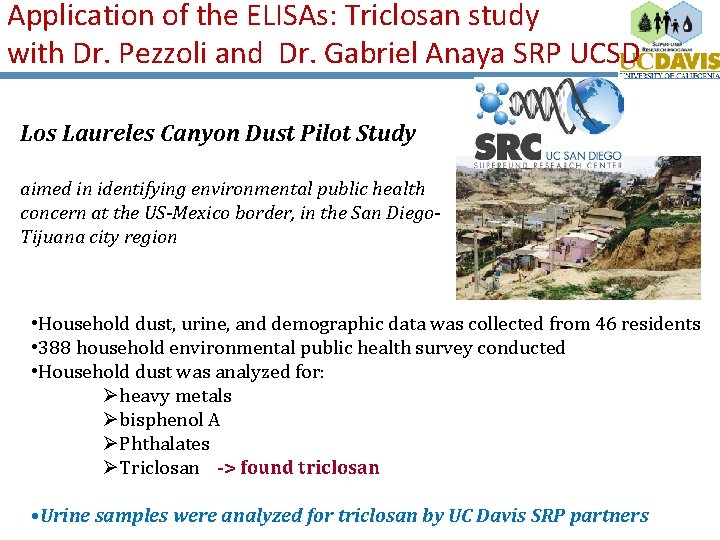
Application of the ELISAs: Triclosan study with Dr. Pezzoli and Dr. Gabriel Anaya SRP UCSD Los Laureles Canyon Dust Pilot Study aimed in identifying environmental public health concern at the US-Mexico border, in the San Diego. Tijuana city region • Household dust, urine, and demographic data was collected from 46 residents • 388 household environmental public health survey conducted • Household dust was analyzed for: Øheavy metals Øbisphenol A ØPhthalates ØTriclosan -> found triclosan • Urine samples were analyzed for triclosan by UC Davis SRP partners
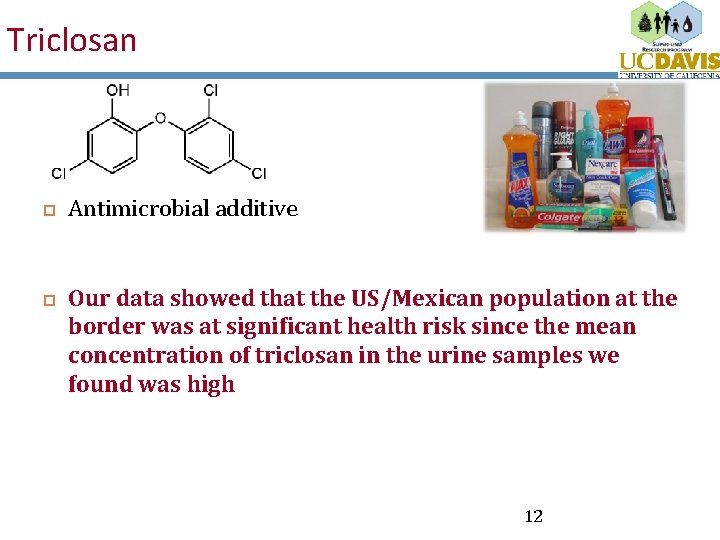
Triclosan Antimicrobial additive Our data showed that the US/Mexican population at the border was at significant health risk since the mean concentration of triclosan in the urine samples we found was high 12
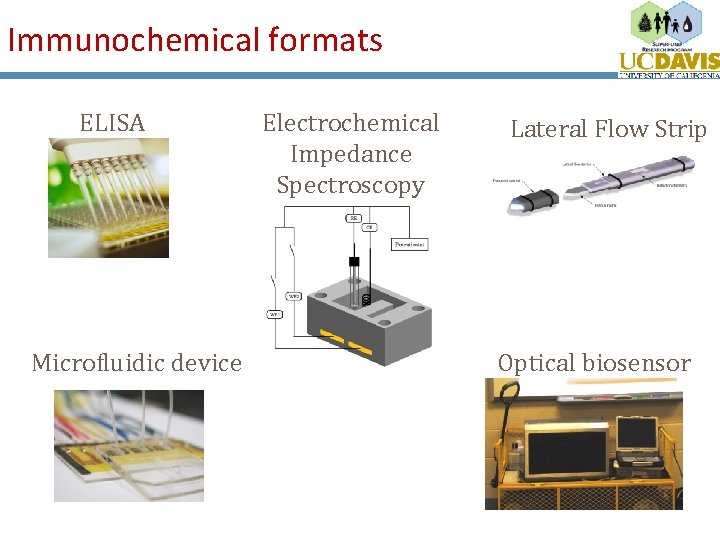
Immunochemical formats ELISA Microfluidic device Electrochemical Impedance Spectroscopy Lateral Flow Strip Optical biosensor
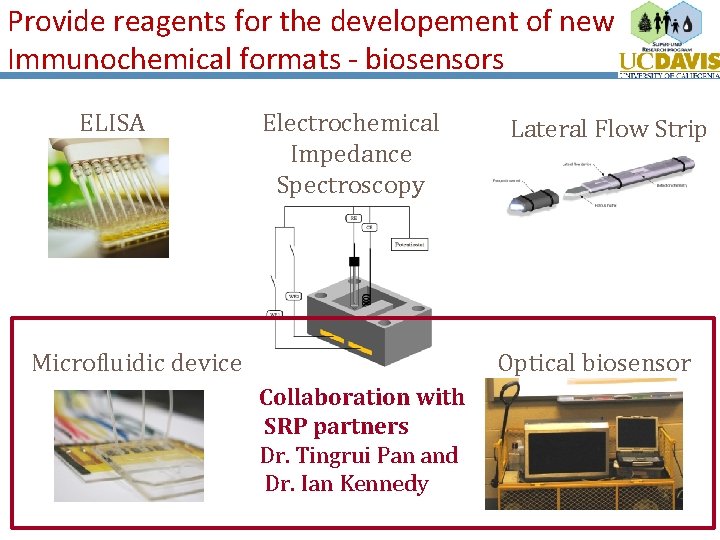
Provide reagents for the developement of new Immunochemical formats - biosensors ELISA Electrochemical Impedance Spectroscopy Microfluidic device Lateral Flow Strip Optical biosensor Collaboration with SRP partners Dr. Tingrui Pan and Dr. Ian Kennedy
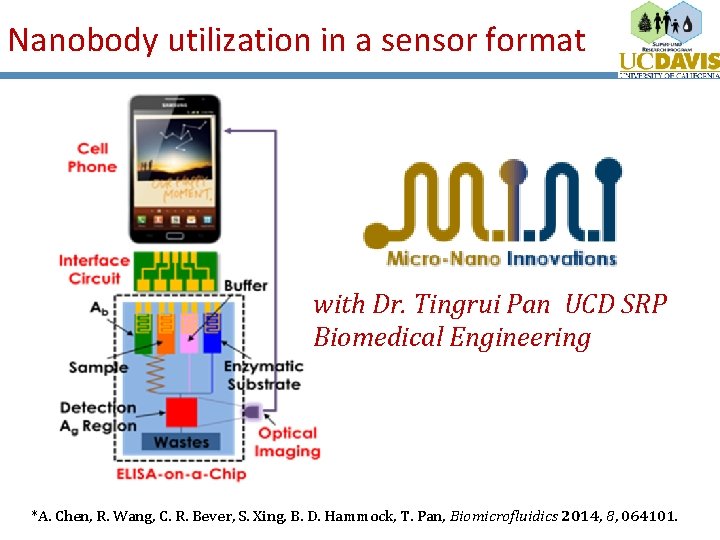
Nanobody utilization in a sensor format with Dr. Tingrui Pan UCD SRP Biomedical Engineering *A. Chen, R. Wang, C. R. Bever, S. Xing, B. D. Hammock, T. Pan, Biomicrofluidics 2014, 8, 064101.
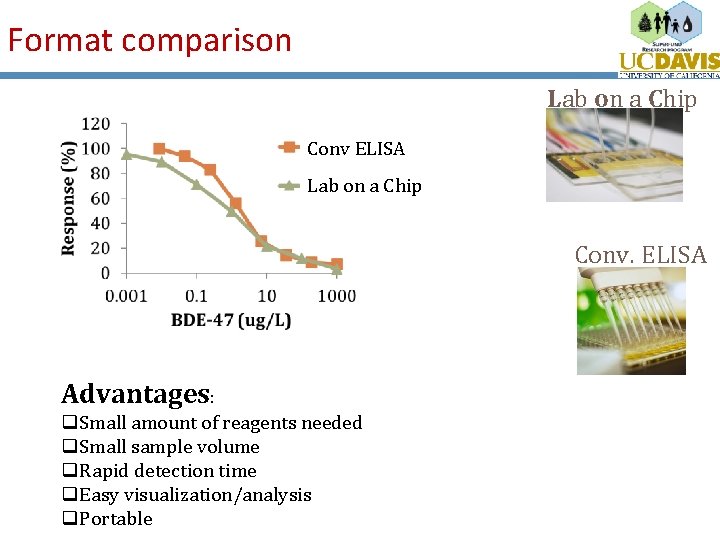
Format comparison Lab on a Chip Conv ELISA Lab on a Chip Conv. ELISA Advantages: q. Small amount of reagents needed q. Small sample volume q. Rapid detection time q. Easy visualization/analysis q. Portable
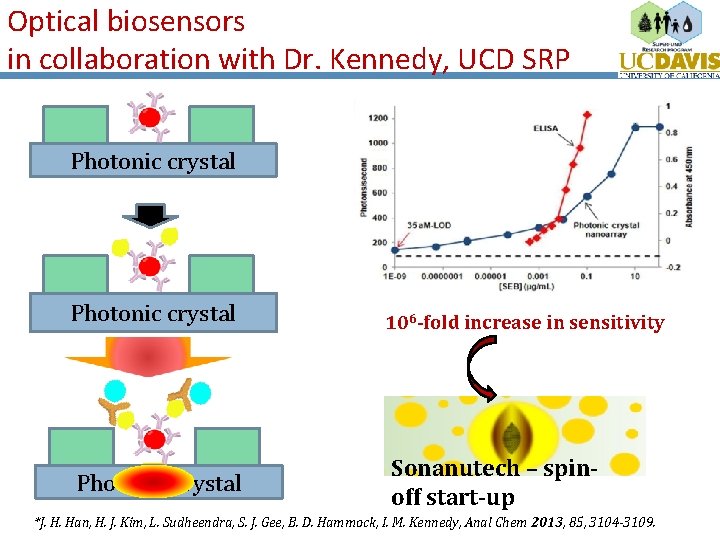
Optical biosensors in collaboration with Dr. Kennedy, UCD SRP Photonic crystal 106 -fold increase in sensitivity Photonic crystal Sonanutech – spinoff start-up *J. H. Han, H. J. Kim, L. Sudheendra, S. J. Gee, B. D. Hammock, I. M. Kennedy, Anal Chem 2013, 85, 3104 -3109.
Collaborations and training 1. Training of international scholars about immunoassays and novel antibody reagents (nanobodies) (China, Thailand, Ireland, France, USA) 2. Taught industry experts how to produce novel antibodies (Antibodies Inc) 3. Provide reagents and research support to academic (USA, UK, USEPA) and private laboratories (Mars Inc, Man. Ros Therapeutics)
Acknowledgments Hammock lab : http: //www. biopestlab. ucdavis. edu/ Natalia Vasylieva nvasylieva@ucdavis. edu Bogdan Barnych bbarnych@ucdavis. edu
- Slides: 19