
BIOMARKERS AND TOXICITY MECHANISMS 10 BIOMARKERS Introduction Ludk
BIOMARKERS AND TOXICITY MECHANISMS 10 – BIOMARKERS Introduction Luděk Bláha, PřF MU, RECETOX www. recetox. cz
Definition and applications - markers in biological systems with a sufficently long half-life which allow location where in the biological system change occur and to quantify the change. Various definitions and applications of „biomarkers“ – Ecology / Geology - Human health and diseases - Toxicology (special focus in this class)
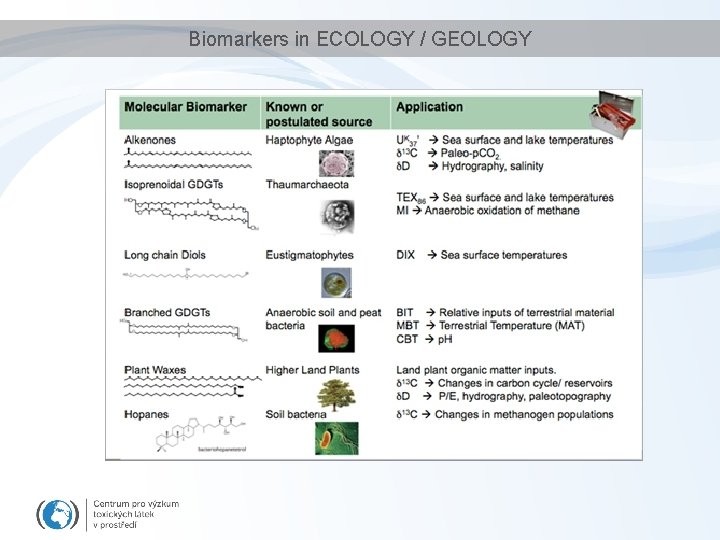
Biomarkers in ECOLOGY / GEOLOGY
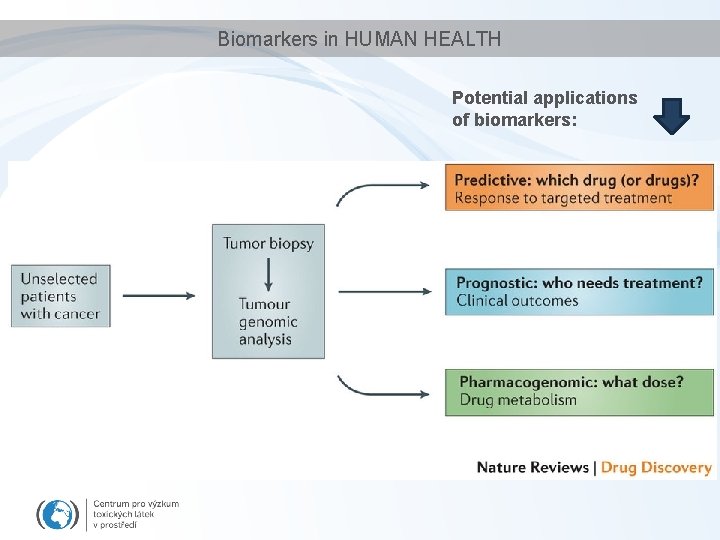
Biomarkers in HUMAN HEALTH Potential applications of biomarkers:
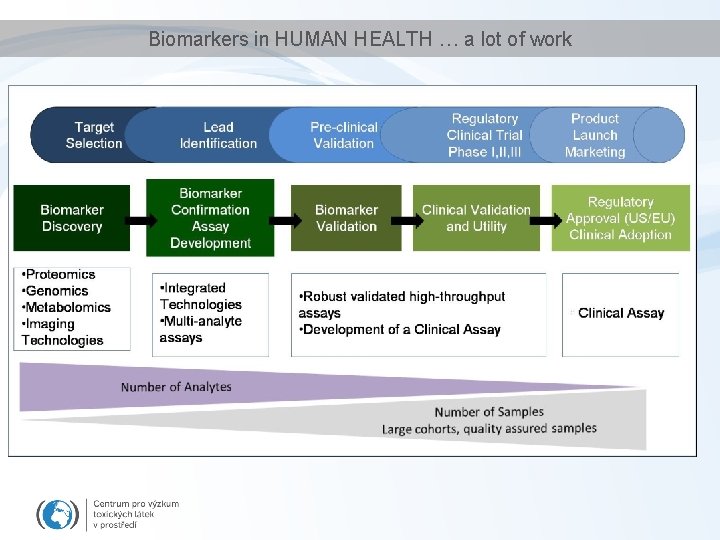
Biomarkers in HUMAN HEALTH … a lot of work
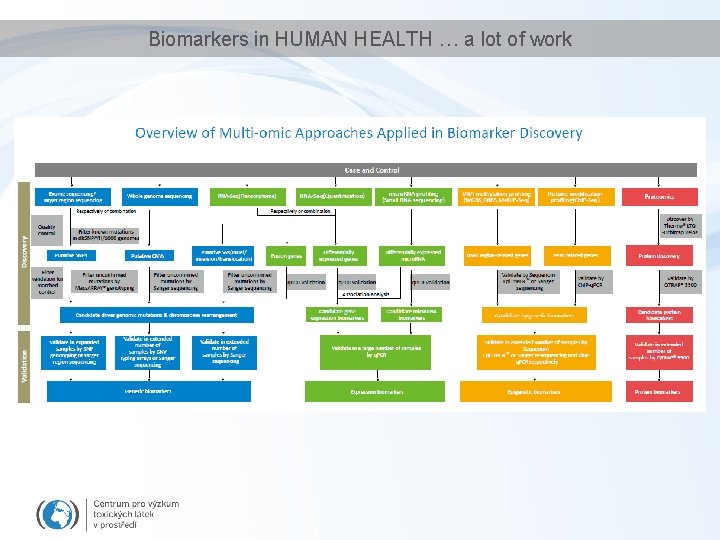
Biomarkers in HUMAN HEALTH … a lot of work
Biomarkers in TOXICOLOGY - Identification of markers of long-term risks - - Human: health, toxicology and carcinogenesis Ecotoxicology: early markers of toxic effects BIOMARKER - - Change which occurs as response to "stressors“ (xenobiotics, disease, temperature. . . ) extending the adaptive response beyond the normal range In vivo biomarkers: - - changes measured in stressed organisms ("classical biomarkers") In vitro biomarkers - in vitro testing characterizing potencies of xenobiotic to induce specific biological activity (or toxicity mechanism) - = biological potencies (markers of potential hazards)
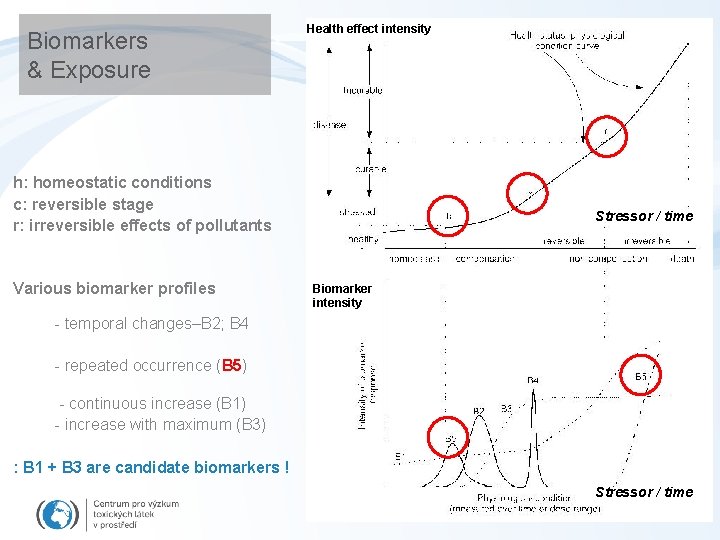
Biomarkers & Exposure Health effect intensity h: homeostatic conditions c: reversible stage r: irreversible effects of pollutants Various biomarker profiles Stressor / time Biomarker intensity - temporal changes–B 2; B 4 - repeated occurrence (B 5) - continuous increase (B 1) - increase with maximum (B 3) : B 1 + B 3 are candidate biomarkers ! Stressor / time
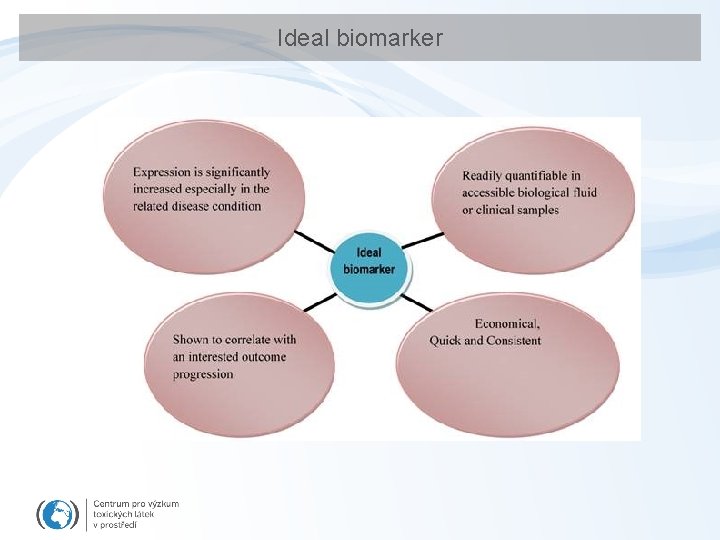
Ideal biomarker
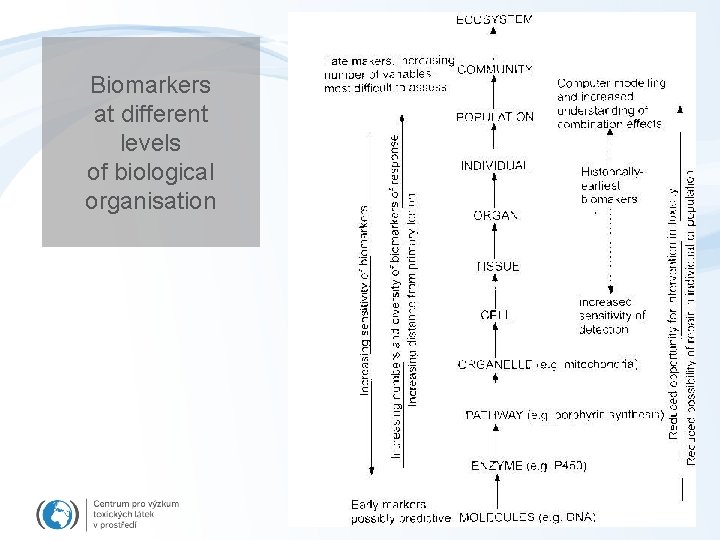
Biomarkers at different levels of biological organisation
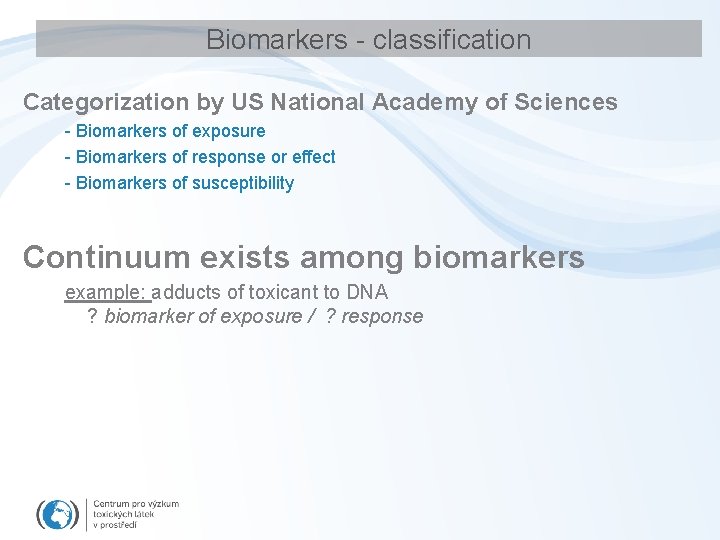
Biomarkers - classification Categorization by US National Academy of Sciences - Biomarkers of exposure - Biomarkers of response or effect - Biomarkers of susceptibility Continuum exists among biomarkers example: adducts of toxicant to DNA ? biomarker of exposure / ? response
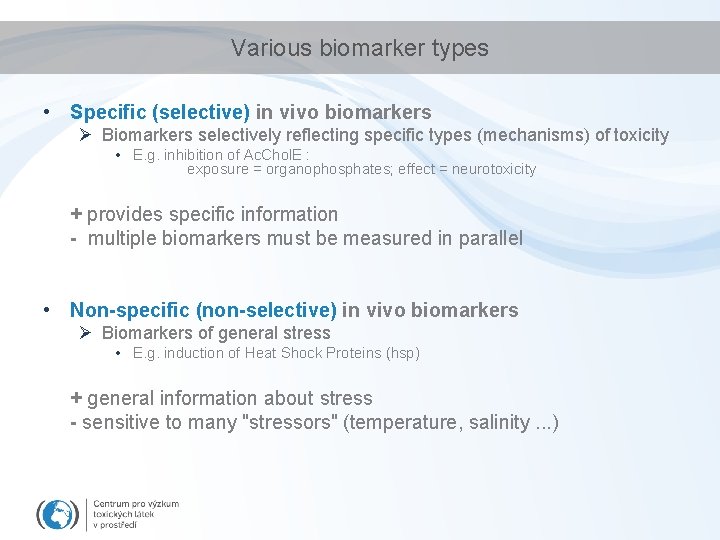
Various biomarker types • Specific (selective) in vivo biomarkers Ø Biomarkers selectively reflecting specific types (mechanisms) of toxicity • E. g. inhibition of Ac. Chol. E : exposure = organophosphates; effect = neurotoxicity + provides specific information - multiple biomarkers must be measured in parallel • Non-specific (non-selective) in vivo biomarkers Ø Biomarkers of general stress • E. g. induction of Heat Shock Proteins (hsp) + general information about stress - sensitive to many "stressors" (temperature, salinity. . . )
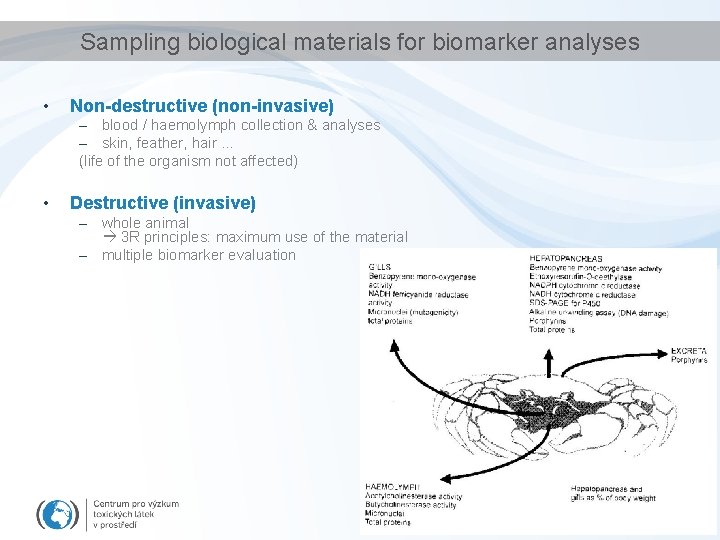
Sampling biological materials for biomarker analyses • Non-destructive (non-invasive) – blood / haemolymph collection & analyses – skin, feather, hair … (life of the organism not affected) • Destructive (invasive) – whole animal 3 R principles: maximum use of the material – multiple biomarker evaluation
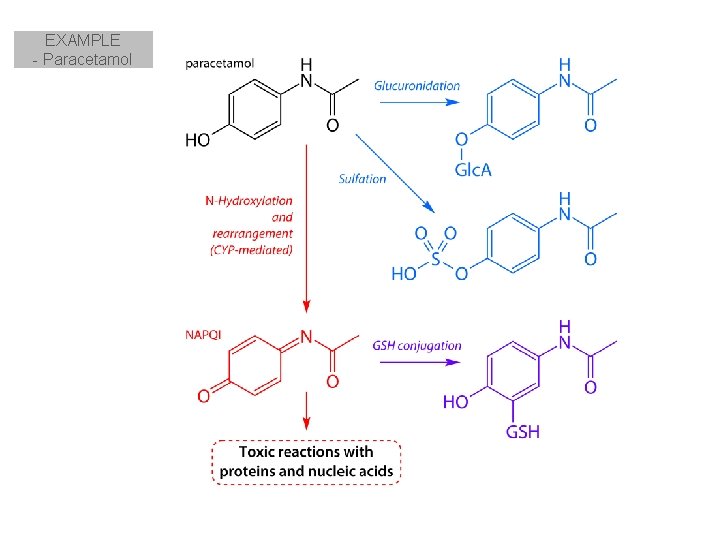
EXAMPLE - Paracetamol
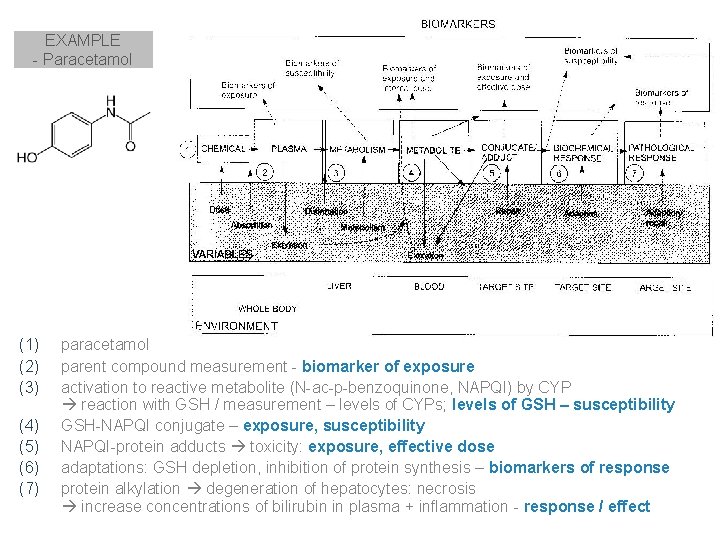
EXAMPLE - Paracetamol (1) (2) (3) (4) (5) (6) (7) paracetamol parent compound measurement - biomarker of exposure activation to reactive metabolite (N-ac-p-benzoquinone, NAPQI) by CYP reaction with GSH / measurement – levels of CYPs; levels of GSH – susceptibility GSH-NAPQI conjugate – exposure, susceptibility NAPQI-protein adducts toxicity: exposure, effective dose adaptations: GSH depletion, inhibition of protein synthesis – biomarkers of response protein alkylation degeneration of hepatocytes: necrosis increase concentrations of bilirubin in plasma + inflammation - response / effect
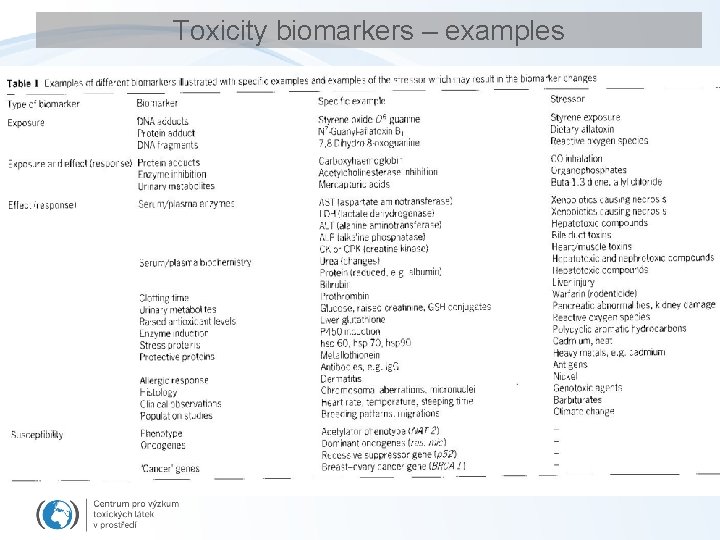
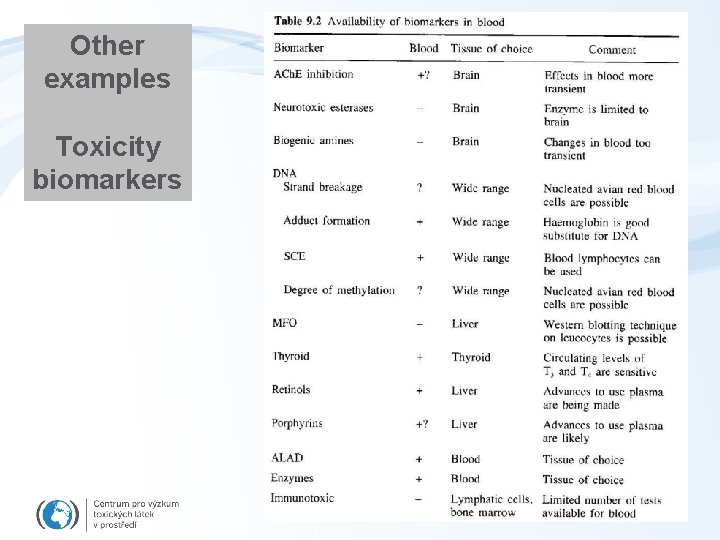
Toxicity biomarkers – examples
Other examples Toxicity biomarkers
- Slides: 17