
Biology What are the parts S Biological Components
Biology: What are the parts? S
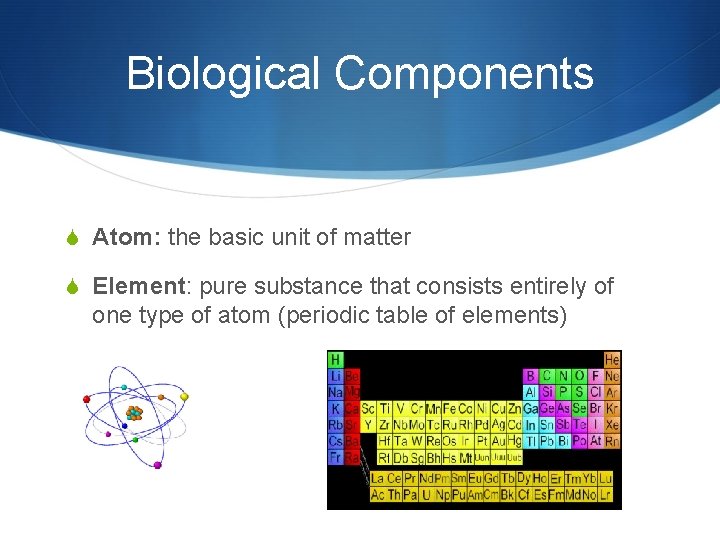
Biological Components S Atom: the basic unit of matter S Element: pure substance that consists entirely of one type of atom (periodic table of elements)
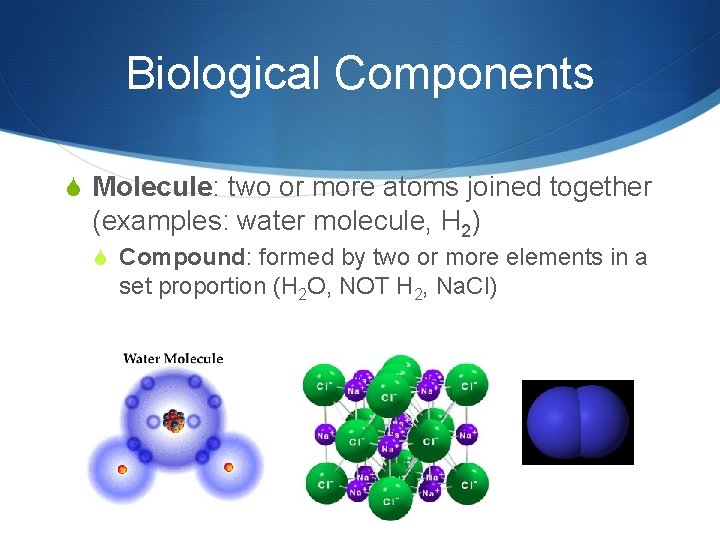
Biological Components S Molecule: two or more atoms joined together (examples: water molecule, H 2) S Compound: formed by two or more elements in a set proportion (H 2 O, NOT H 2, Na. Cl)
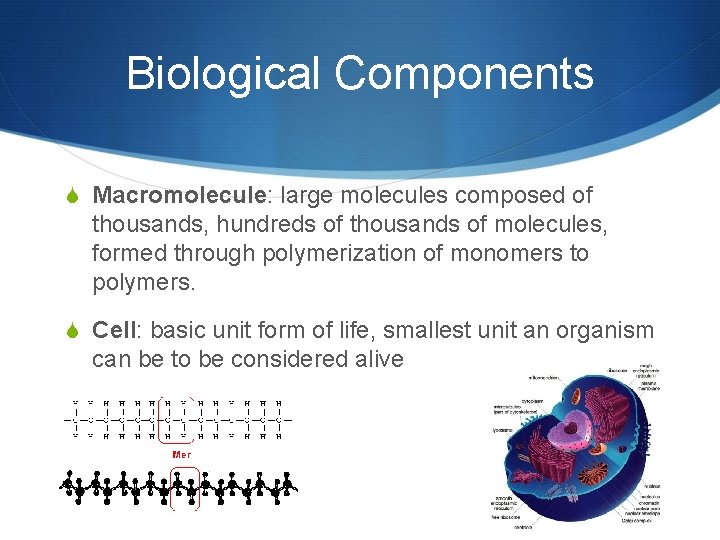
Biological Components S Macromolecule: large molecules composed of thousands, hundreds of thousands of molecules, formed through polymerization of monomers to polymers. S Cell: basic unit form of life, smallest unit an organism can be to be considered alive

Word Roots S Mono: one S Poly: many S -mer: part S Macro: large
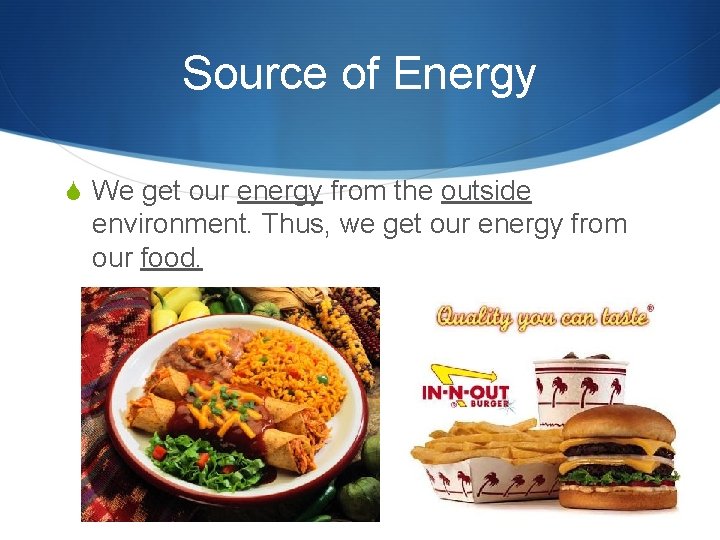
Source of Energy S We get our energy from the outside environment. Thus, we get our energy from our food.
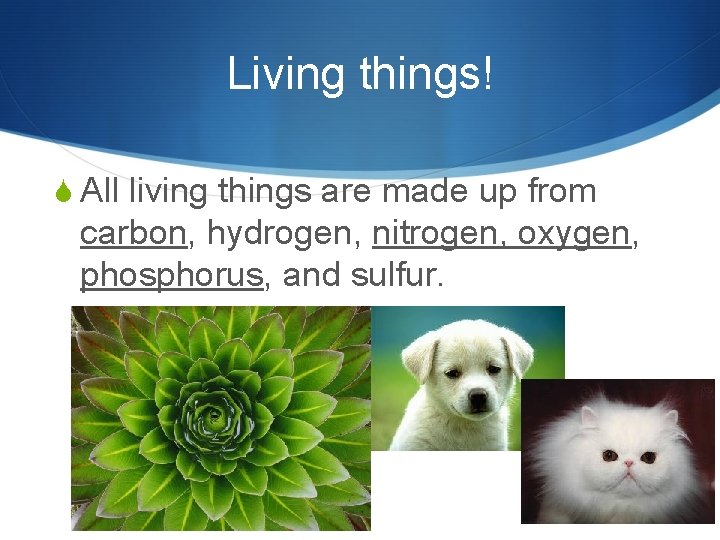
Living things! S All living things are made up from carbon, hydrogen, nitrogen, oxygen, phosphorus, and sulfur.

Hierarchy of Life
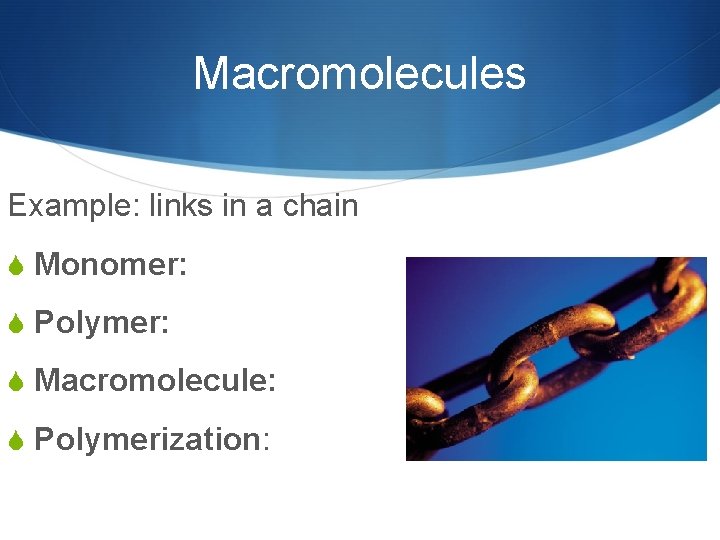
Macromolecules Example: links in a chain S Monomer: S Polymer: S Macromolecule: S Polymerization:
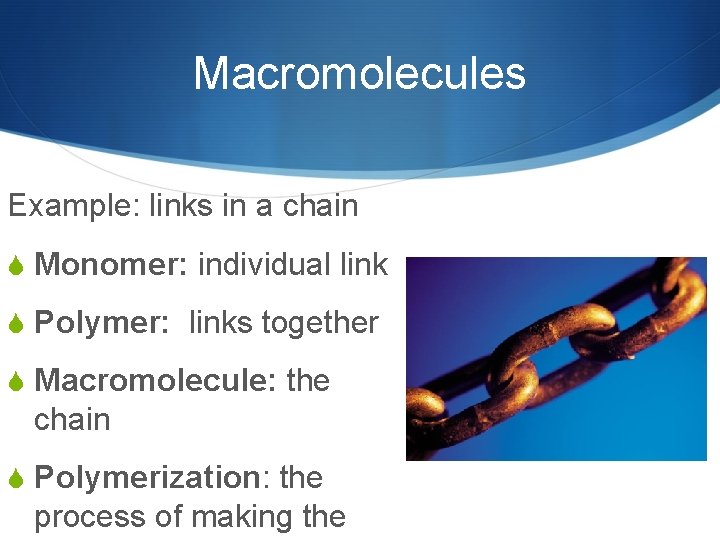
Macromolecules Example: links in a chain S Monomer: individual link S Polymer: links together S Macromolecule: the chain S Polymerization: the process of making the
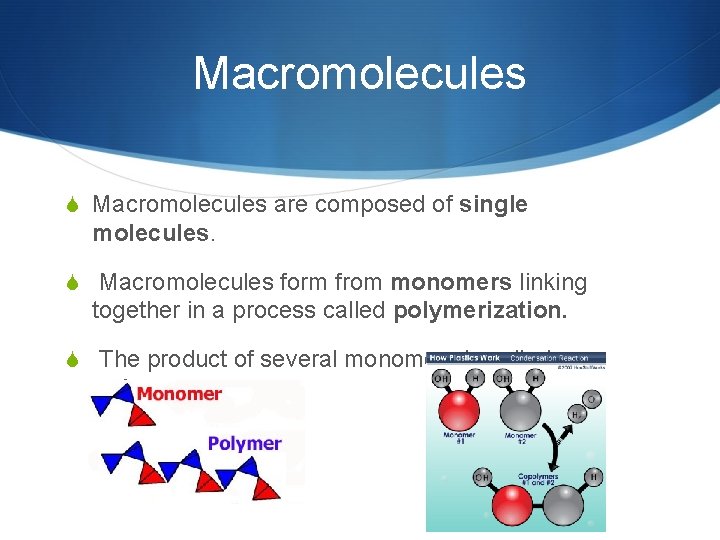
Macromolecules S Macromolecules are composed of single molecules. S Macromolecules form from monomers linking together in a process called polymerization. S The product of several monomers is called a polymer.
Macromolecules S Think and share: S What is another analogy for monomers making up macromolecules?
4 Macromolecule Types S 1. Carbohydrates S 2. Lipids S 3. Proteins S 4. Nucleic Acids
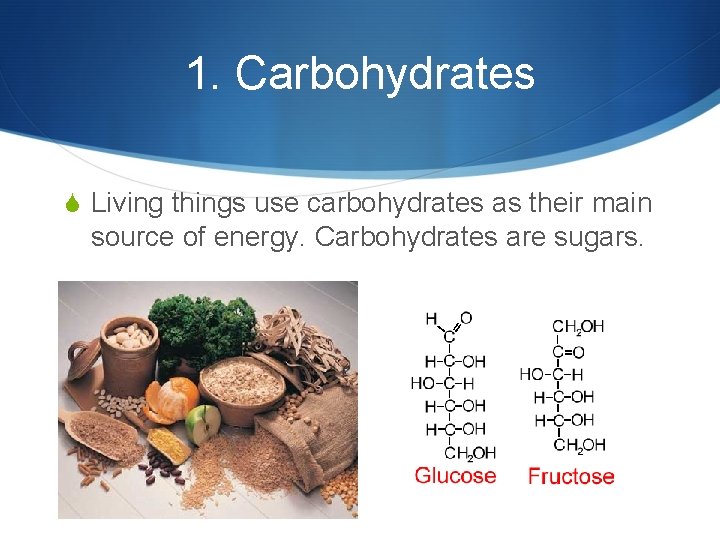
1. Carbohydrates S Living things use carbohydrates as their main source of energy. Carbohydrates are sugars.
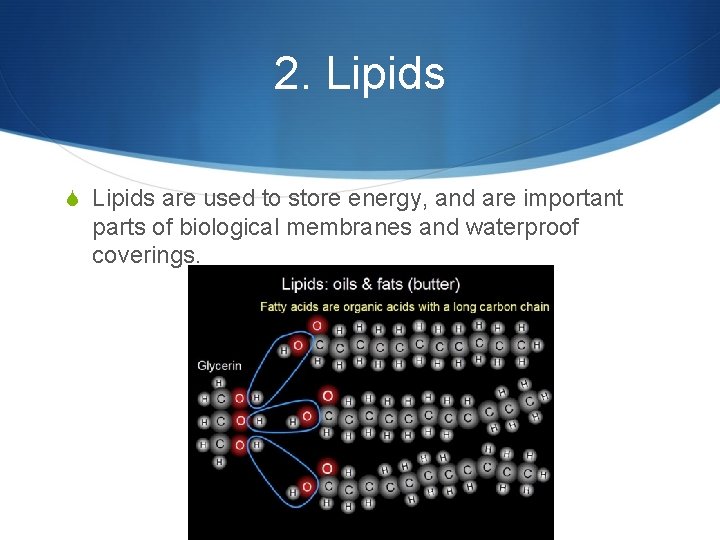
2. Lipids S Lipids are used to store energy, and are important parts of biological membranes and waterproof coverings.
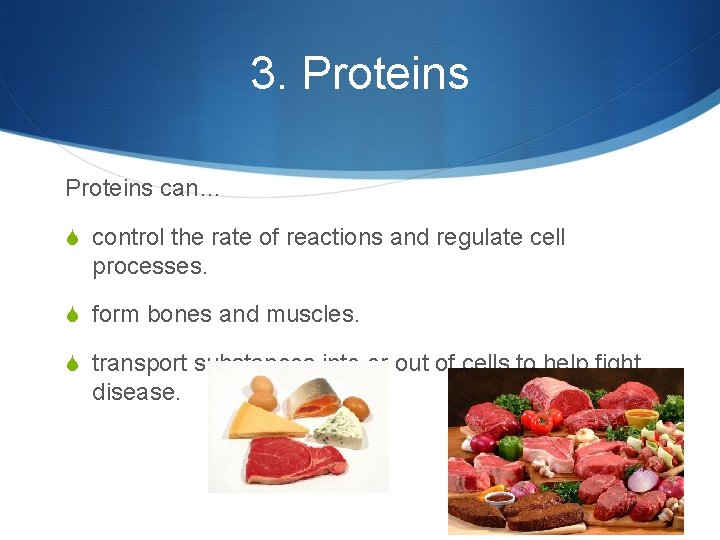
3. Proteins can… S control the rate of reactions and regulate cell processes. S form bones and muscles. S transport substances into or out of cells to help fight disease.
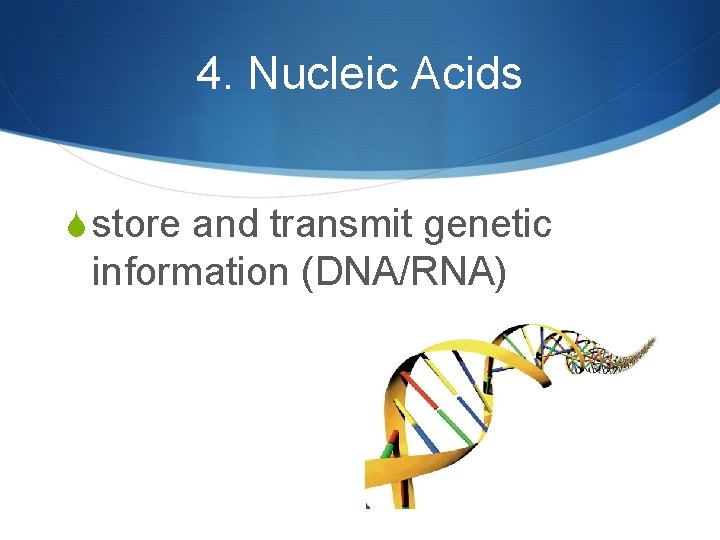
4. Nucleic Acids S store and transmit genetic information (DNA/RNA)
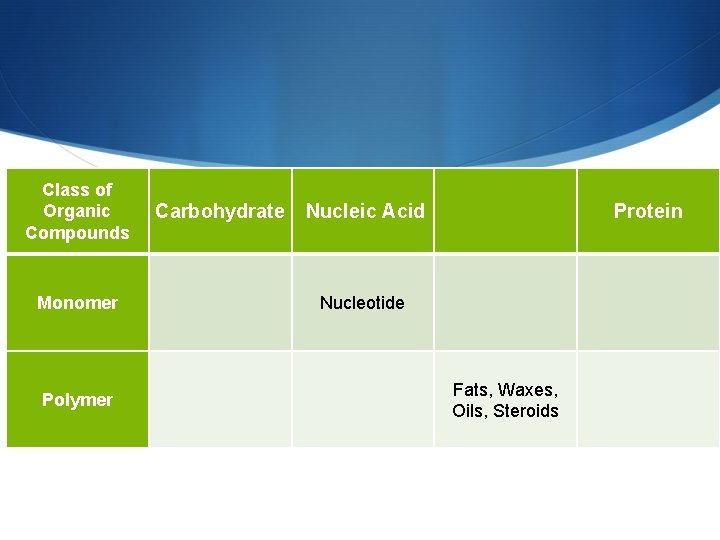
Class of Organic Compounds Monomer Polymer Carbohydrate Nucleic Acid Protein Nucleotide Fats, Waxes, Oils, Steroids
- Slides: 19