
Biology The study of life I Description of
Biology • The study of life.
I. Description of Life • Living – Made of cells – Carry out life processes – Organism – Ex: • Nonliving – Not made of cells – Incapable of carrying out at least one life function – EX:
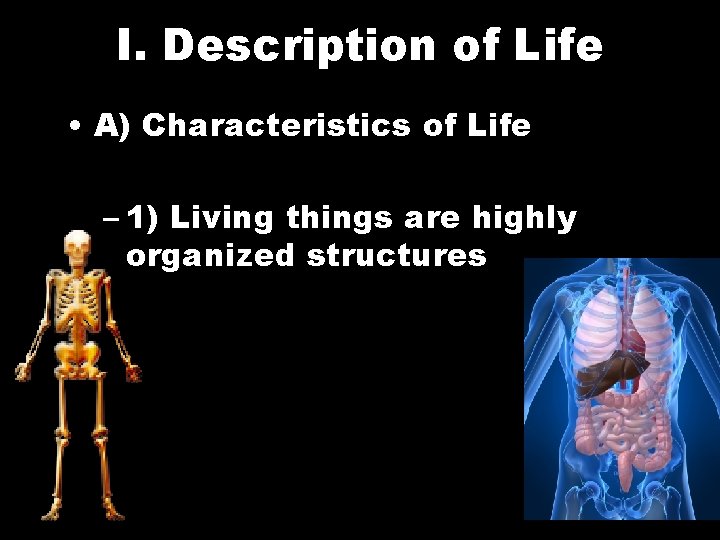
I. Description of Life • A) Characteristics of Life – 1) Living things are highly organized structures
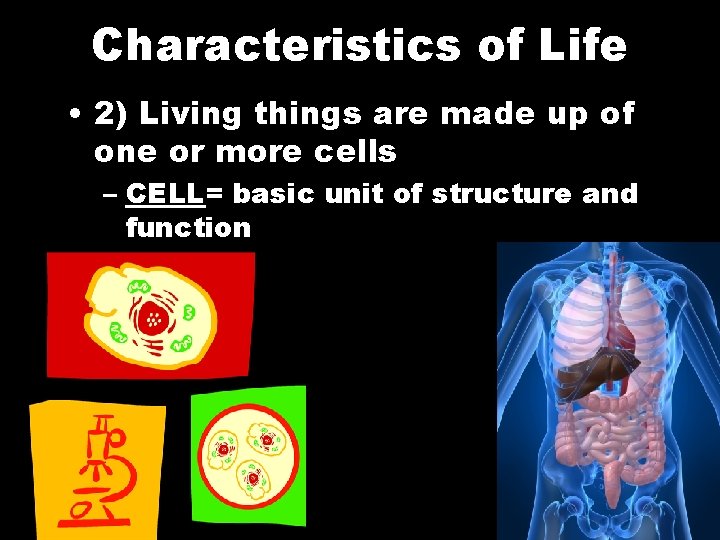
Characteristics of Life • 2) Living things are made up of one or more cells – CELL= basic unit of structure and function
Characteristics of Life • 3) Living things use energy from nutrients to maintain life and grow and develop
Characteristics of Life • 4) Living things grow
Characteristics of Life • 5) Living things reproduce
Characteristics of Life • 6) Living things adapt to the environment (respond to stimuli)
Characteristics of Life • 7) Living things maintain homeostasis – constant internal environment (temperature, moisture, acidity) • 8) Living things have a limited life span
B) Organism – living thing

C) Borderline Case – virus lacks typical cell structure, but reproduces
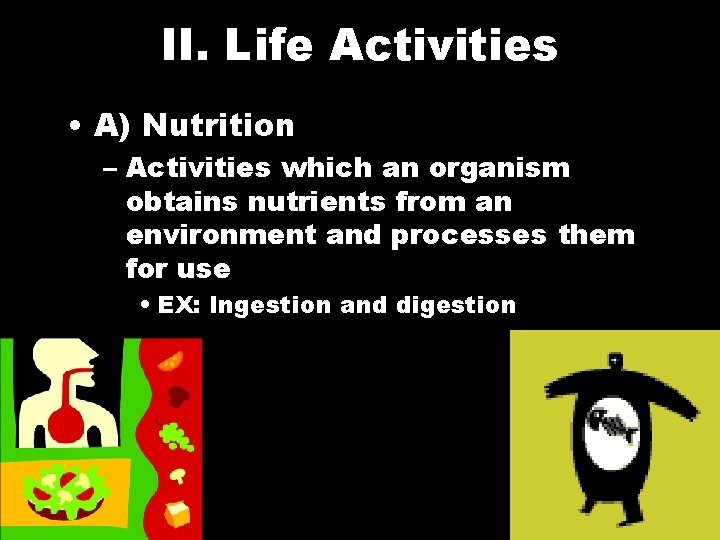
II. Life Activities • A) Nutrition – Activities which an organism obtains nutrients from an environment and processes them for use • EX: Ingestion and digestion
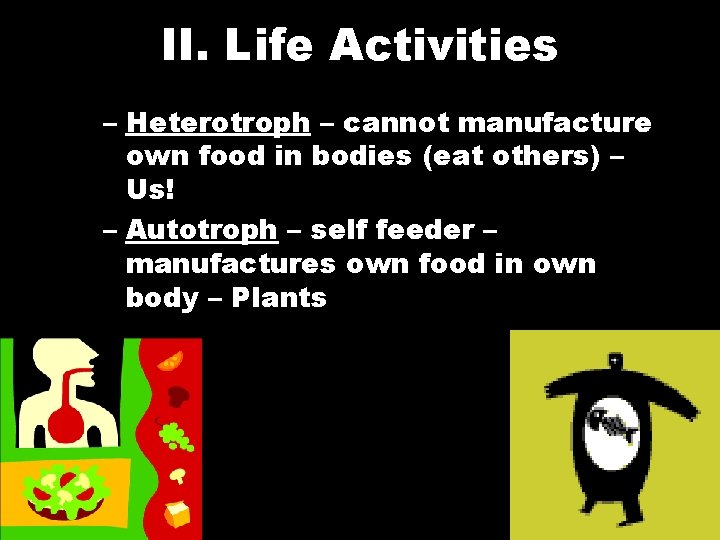
II. Life Activities – Heterotroph – cannot manufacture own food in bodies (eat others) – Us! – Autotroph – self feeder – manufactures own food in own body – Plants
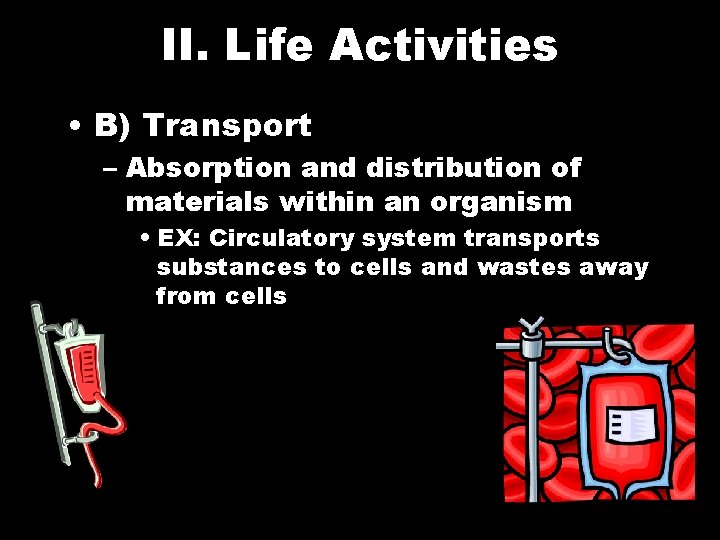
II. Life Activities • B) Transport – Absorption and distribution of materials within an organism • EX: Circulatory system transports substances to cells and wastes away from cells
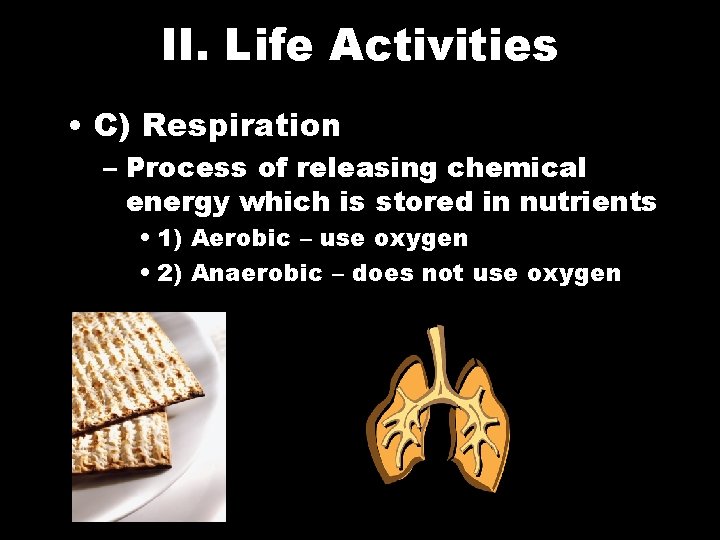
II. Life Activities • C) Respiration – Process of releasing chemical energy which is stored in nutrients • 1) Aerobic – use oxygen • 2) Anaerobic – does not use oxygen
II. Life Activities • D) Synthesis – Taking simple molecules and putting them together to make a larger more complex molecule
II. Life Activities • E) Movement – Change in position in living thing
II. Life Activities • F) Growth – The use of the products in synthesis to increase in cell size and/or number of cells of an organism
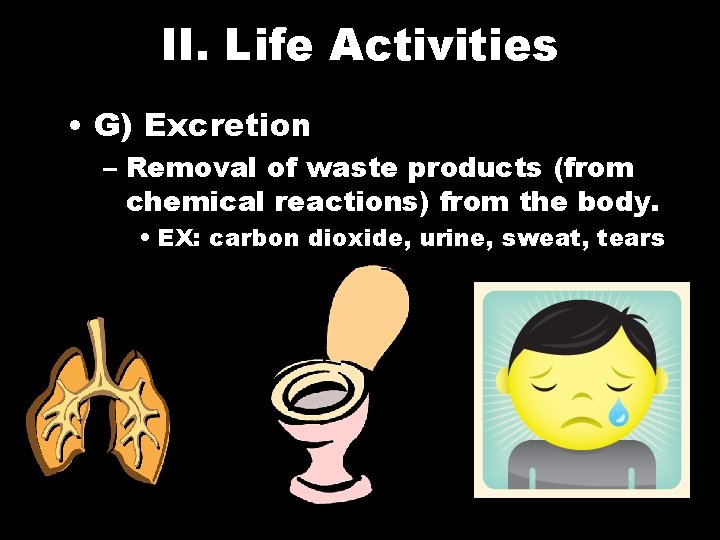
II. Life Activities • G) Excretion – Removal of waste products (from chemical reactions) from the body. • EX: carbon dioxide, urine, sweat, tears
II. Life Activities • H) Immunity – Ability of an organism to resist disease
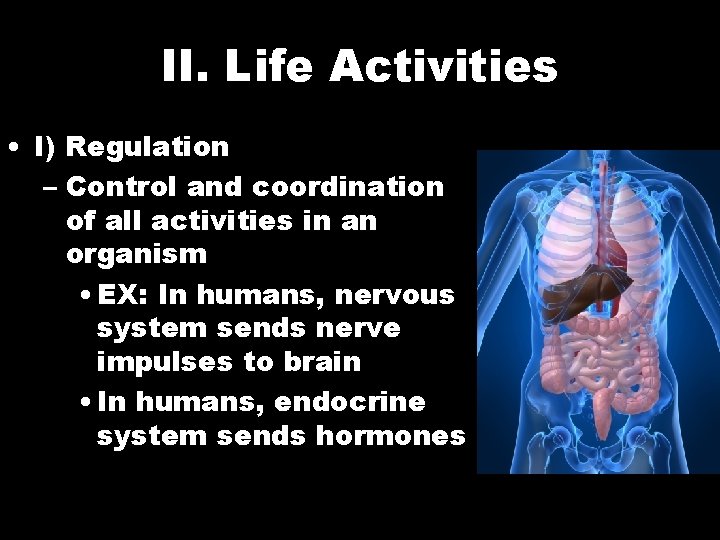
II. Life Activities • I) Regulation – Control and coordination of all activities in an organism • EX: In humans, nervous system sends nerve impulses to brain • In humans, endocrine system sends hormones
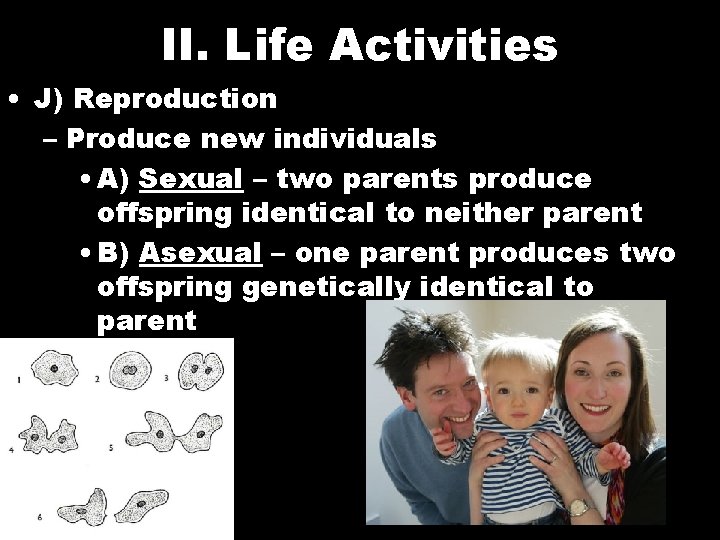
II. Life Activities • J) Reproduction – Produce new individuals • A) Sexual – two parents produce offspring identical to neither parent • B) Asexual – one parent produces two offspring genetically identical to parent
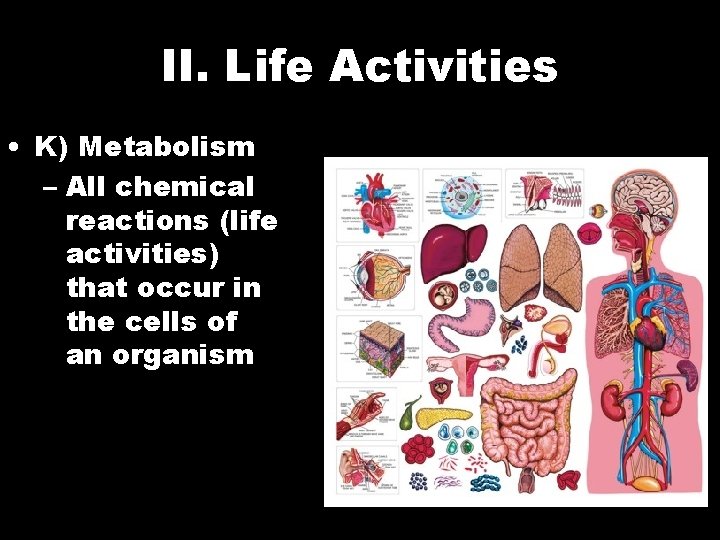
II. Life Activities • K) Metabolism – All chemical reactions (life activities) that occur in the cells of an organism

- Slides: 27