
Biology STAAR Review 2 DNA RNA Protein Replication

Biology STAAR Review #2 • DNA / RNA / Protein • • Replication Transcription Translation Mutations • Cell cycle • Mitosis • Meiosis
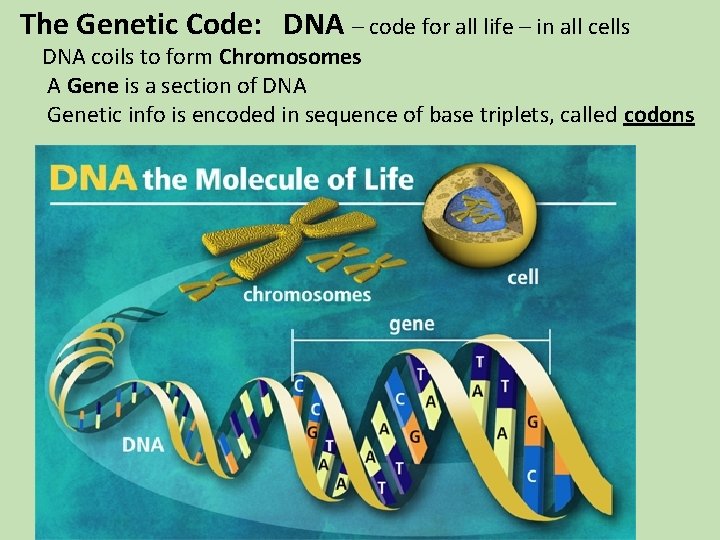
The Genetic Code: DNA – code for all life – in all cells DNA coils to form Chromosomes A Gene is a section of DNA Genetic info is encoded in sequence of base triplets, called codons
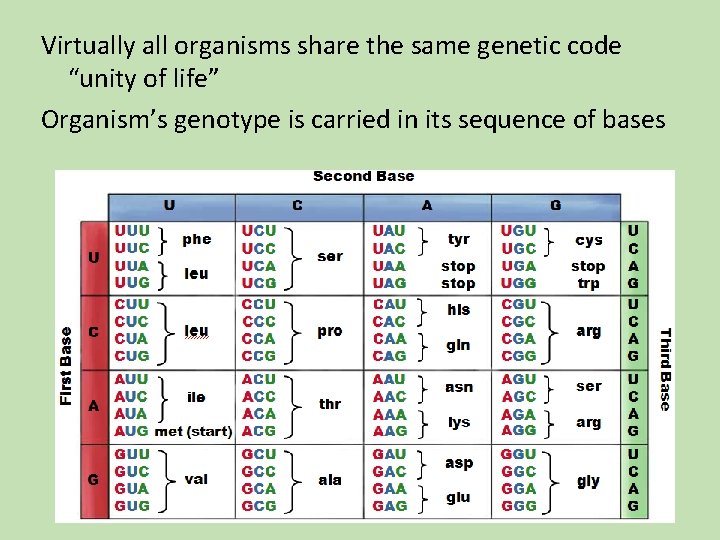
Virtually all organisms share the same genetic code “unity of life” Organism’s genotype is carried in its sequence of bases
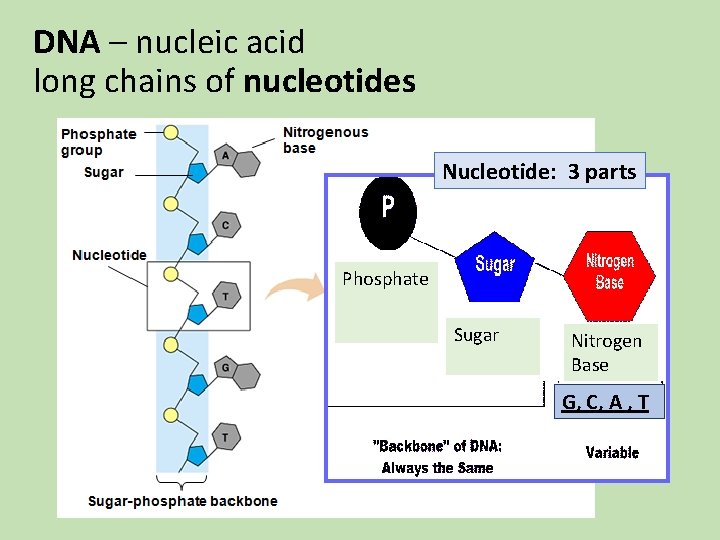
DNA – nucleic acid long chains of nucleotides Nucleotide: 3 parts Phosphate Sugar Nitrogen Base G, C, A , T
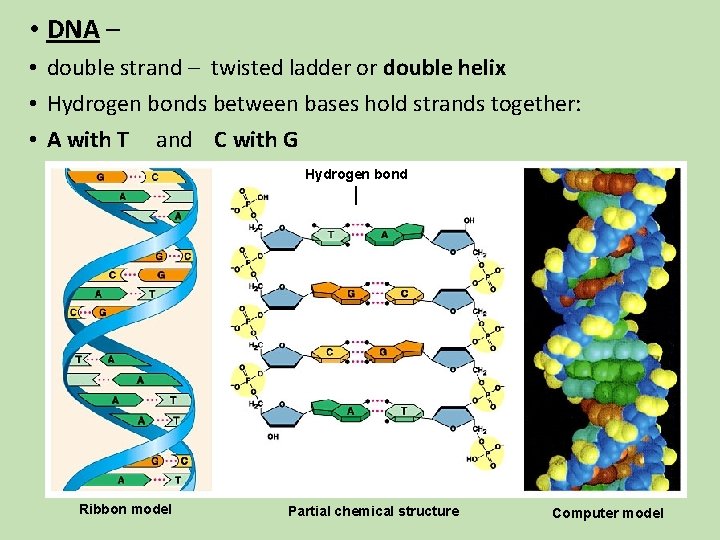
• DNA – • double strand – twisted ladder or double helix • Hydrogen bonds between bases hold strands together: • A with T and C with G Hydrogen bond Ribbon model Partial chemical structure Computer model
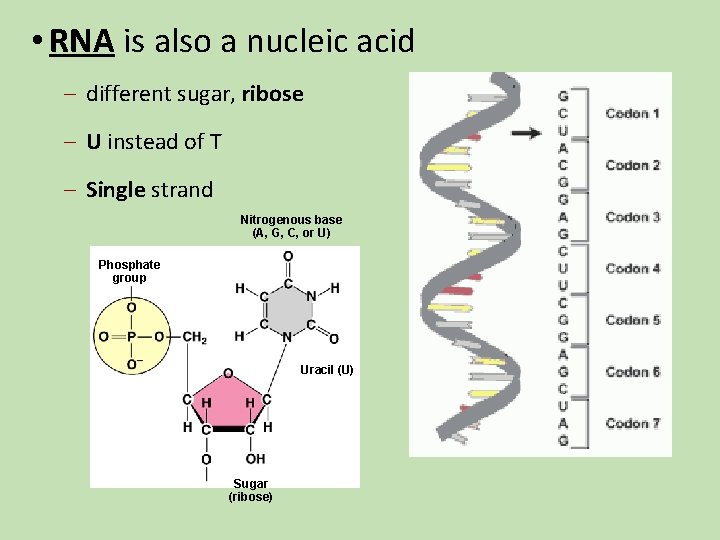
• RNA is also a nucleic acid – different sugar, ribose – U instead of T – Single strand Nitrogenous base (A, G, C, or U) Phosphate group Uracil (U) Sugar (ribose)
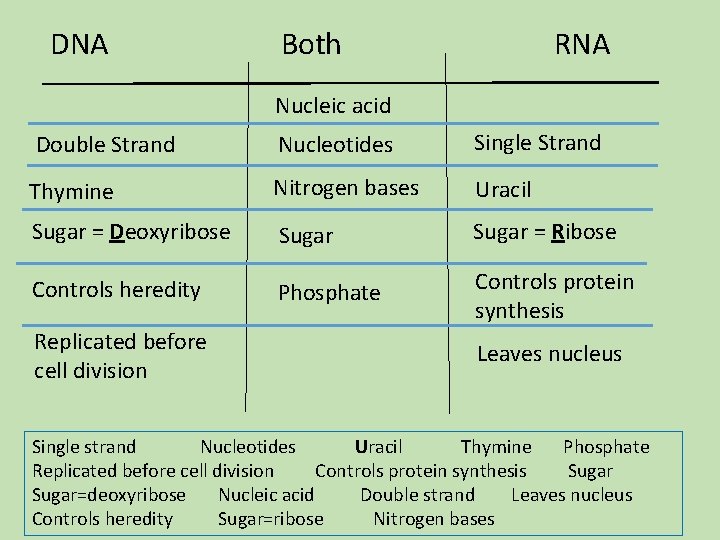
DNA Both RNA Nucleic acid Double Strand Nucleotides Single Strand Thymine Nitrogen bases Uracil Sugar = Deoxyribose Sugar = Ribose Controls heredity Phosphate Controls protein synthesis Replicated before cell division Leaves nucleus Single strand Nucleotides Uracil Thymine Phosphate Replicated before cell division Controls protein synthesis Sugar=deoxyribose Nucleic acid Double strand Leaves nucleus Controls heredity Sugar=ribose Nitrogen bases
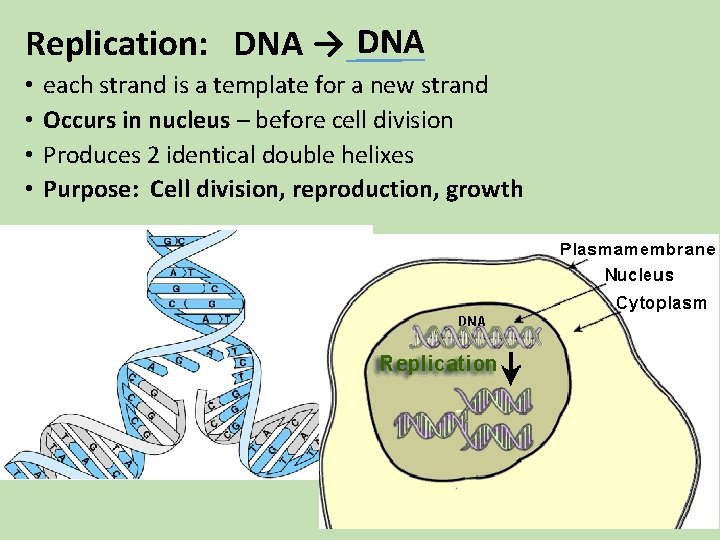
Replication: DNA → DNA • • each strand is a template for a new strand Occurs in nucleus – before cell division Produces 2 identical double helixes Purpose: Cell division, reproduction, growth Figure 10. 4 B
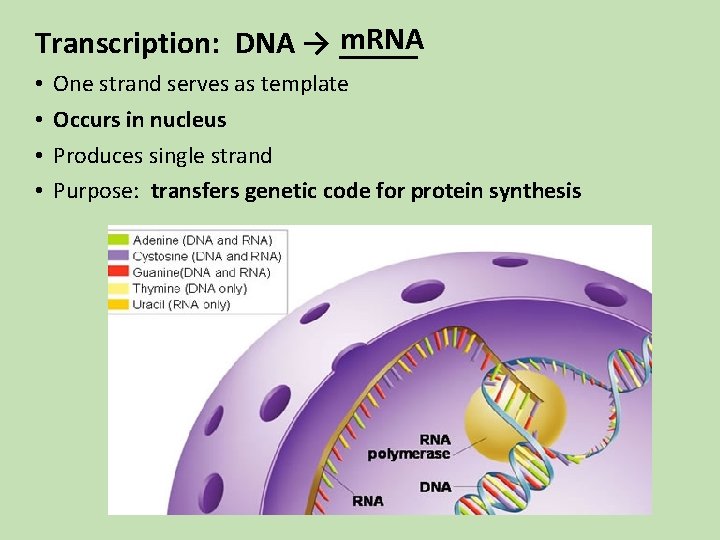
m. RNA Transcription: DNA → _____ • • One strand serves as template Occurs in nucleus Produces single strand Purpose: transfers genetic code for protein synthesis
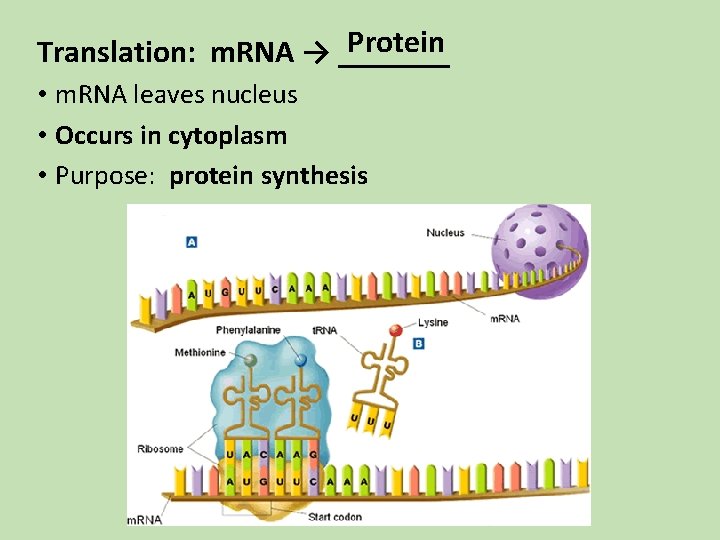
Protein Translation: m. RNA → _______ • m. RNA leaves nucleus • Occurs in cytoplasm • Purpose: protein synthesis
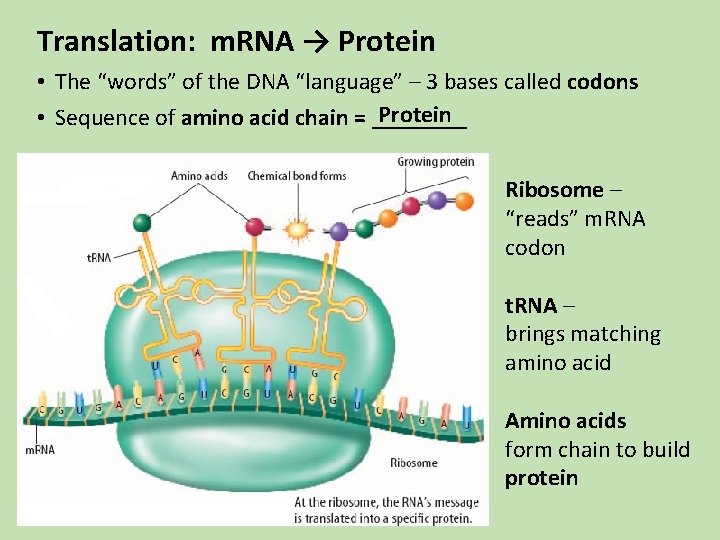
Translation: m. RNA → Protein • The “words” of the DNA “language” – 3 bases called codons Protein • Sequence of amino acid chain = ____ Ribosome – “reads” m. RNA codon t. RNA – brings matching amino acid Amino acids form chain to build protein
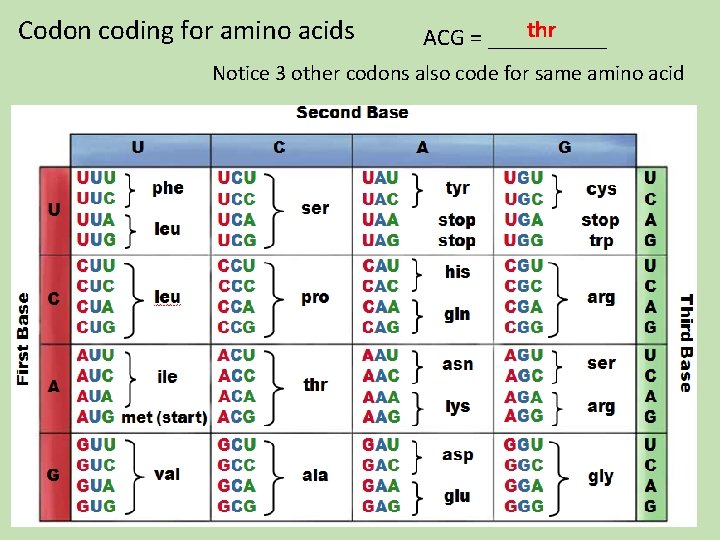
Codon coding for amino acids thr ACG = _____ Notice 3 other codons also code for same amino acid
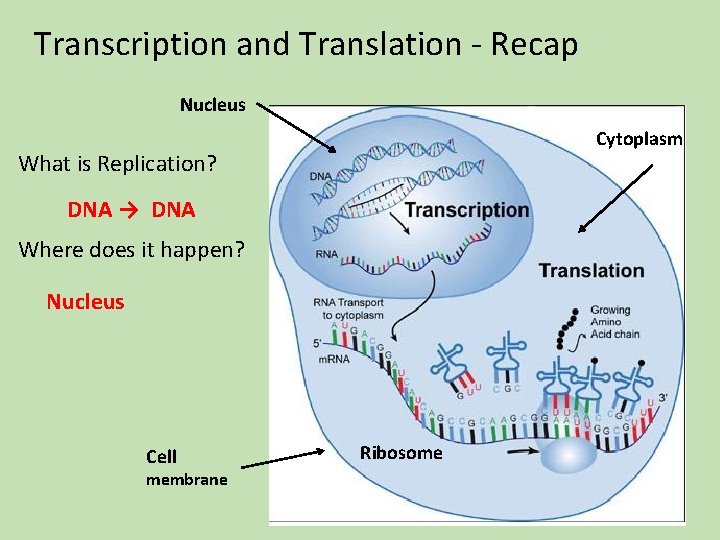
Transcription and Translation - Recap Nucleus Cytoplasm What is Replication? DNA → DNA Where does it happen? Nucleus Cell membrane Ribosome
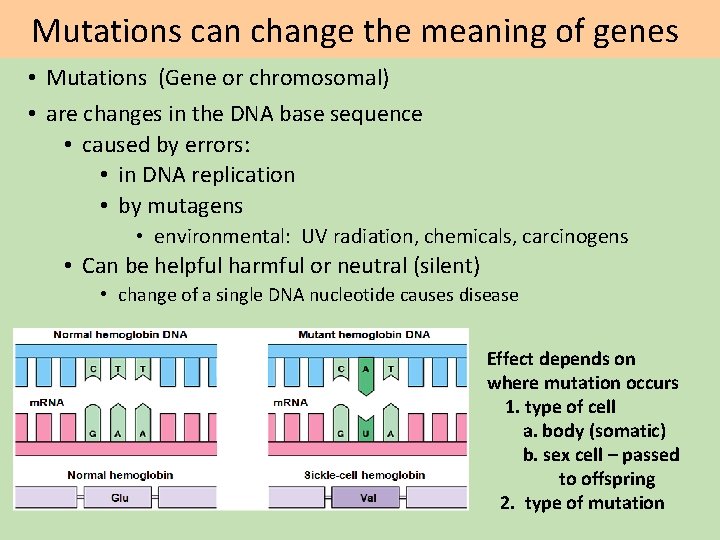
Mutations can change the meaning of genes • Mutations (Gene or chromosomal) • are changes in the DNA base sequence • caused by errors: • in DNA replication • by mutagens • environmental: UV radiation, chemicals, carcinogens • Can be helpful harmful or neutral (silent) • change of a single DNA nucleotide causes disease Effect depends on where mutation occurs 1. type of cell a. body (somatic) b. sex cell – passed to offspring 2. type of mutation
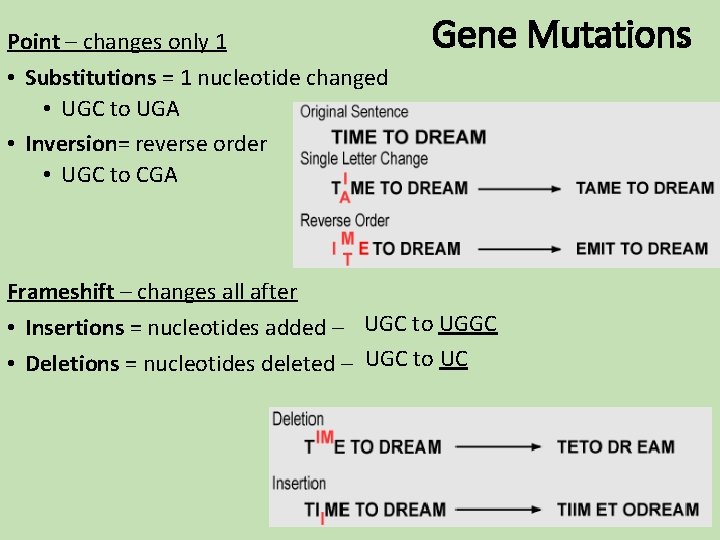
Point – changes only 1 • Substitutions = 1 nucleotide changed • UGC to UGA • Inversion= reverse order • UGC to CGA Gene Mutations Frameshift – changes all after • Insertions = nucleotides added – UGC to UGGC • Deletions = nucleotides deleted – UGC to UC
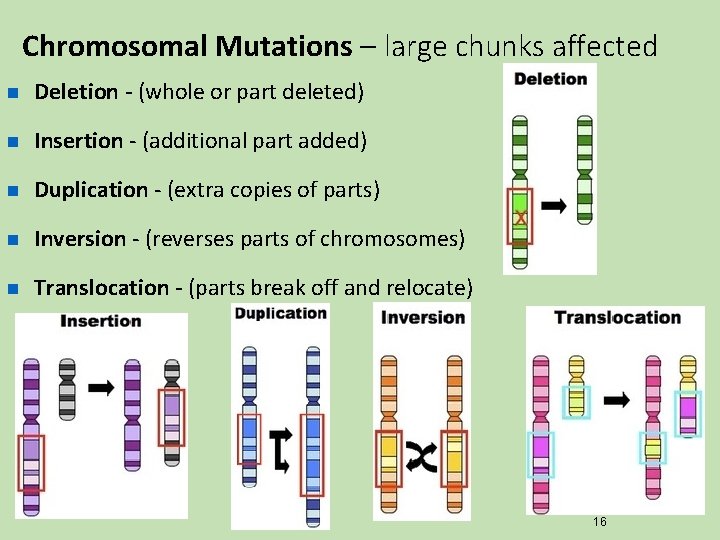
Chromosomal Mutations – large chunks affected n Deletion - (whole or part deleted) n Insertion - (additional part added) n Duplication - (extra copies of parts) n Inversion - (reverses parts of chromosomes) n Translocation - (parts break off and relocate) 16
The Cell Cycle 17
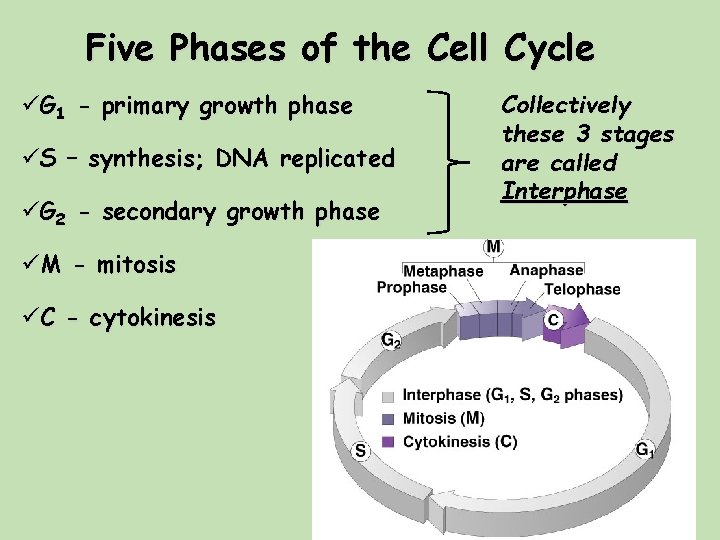
Five Phases of the Cell Cycle üG 1 - primary growth phase üS – synthesis; DNA replicated üG 2 - secondary growth phase Collectively these 3 stages are called Interphase üM - mitosis üC - cytokinesis 18
Interphase - G 1 Stage ü 1 st growth stage after cell division üCells mature by making more cytoplasm & organelles üCell carries on its normal metabolic activities 19

Interphase – S Stage üSynthesis stage üDNA is copied or replicated Two identical copies of DNA Original DNA 20
Interphase – G 2 Stage ü 2 nd Growth Stage üCell gets ready for division üCopied DNA – checked for mistakes & repaired üAll cell structures needed for division are made (e. g. centrioles) üBoth organelles & proteins are synthesized 21
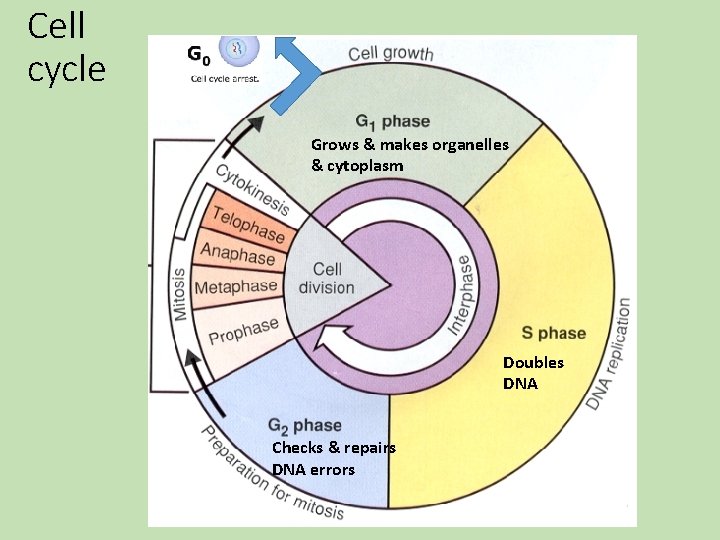
Cell cycle Grows & makes organelles & cytoplasm Doubles DNA Checks & repairs DNA errors
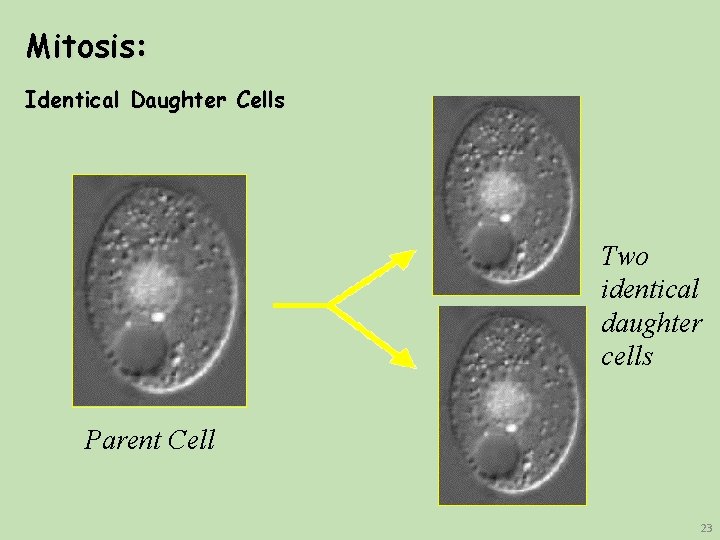
Mitosis: Identical Daughter Cells Two identical daughter cells Parent Cell 23
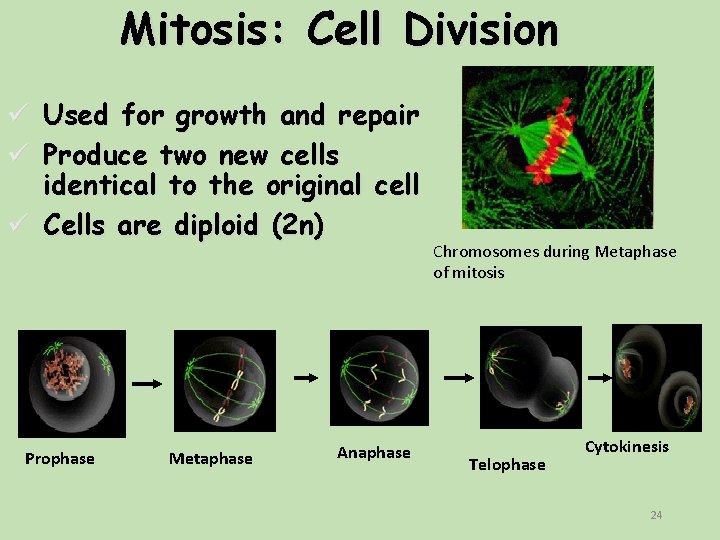
Mitosis: Cell Division Used for growth and repair Produce two new cells identical to the original cell ü Cells are diploid (2 n) ü ü Prophase Metaphase Anaphase Chromosomes during Metaphase of mitosis Telophase Cytokinesis 24
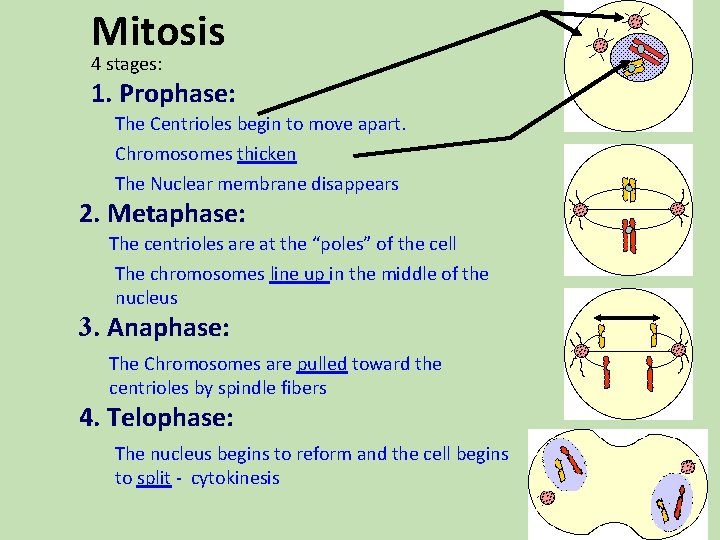
Mitosis 4 stages: 1. Prophase: The Centrioles begin to move apart. Chromosomes thicken The Nuclear membrane disappears 2. Metaphase: The centrioles are at the “poles” of the cell The chromosomes line up in the middle of the nucleus 3. Anaphase: The Chromosomes are pulled toward the centrioles by spindle fibers 4. Telophase: The nucleus begins to reform and the cell begins to split - cytokinesis
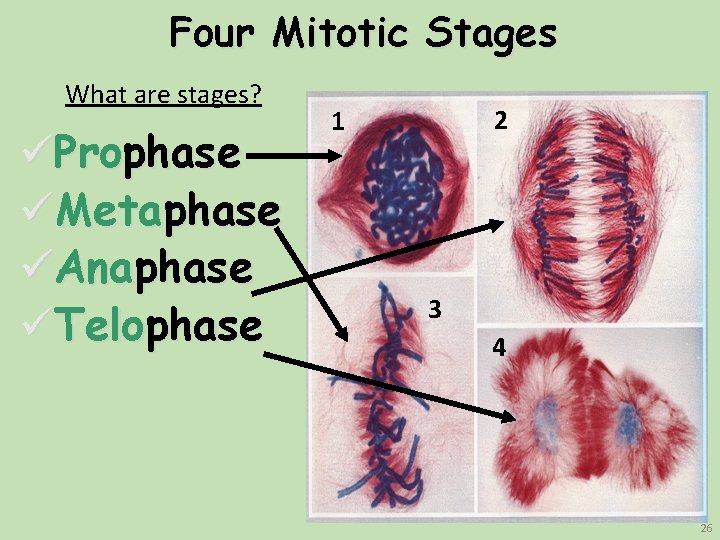
Four Mitotic Stages What are stages? üProphase üMetaphase üAnaphase üTelophase 2 1 3 4 26
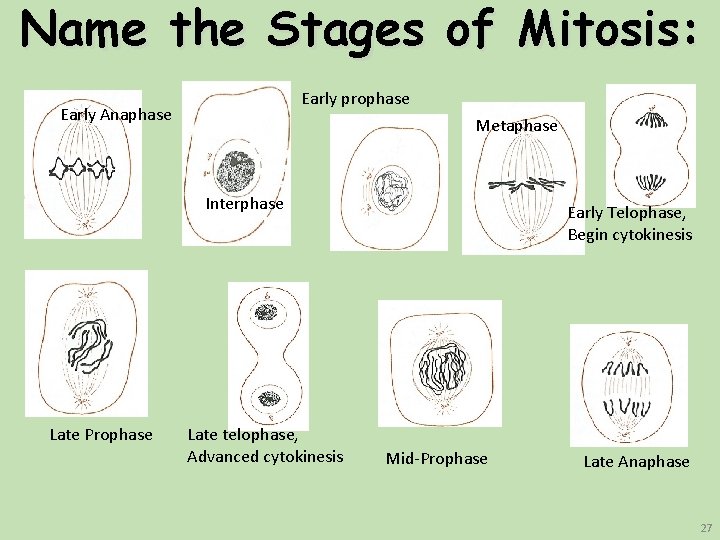
Name the Stages of Mitosis: Early prophase Early Anaphase Metaphase Interphase Late Prophase Late telophase, Advanced cytokinesis Early Telophase, Begin cytokinesis Mid-Prophase Late Anaphase 27
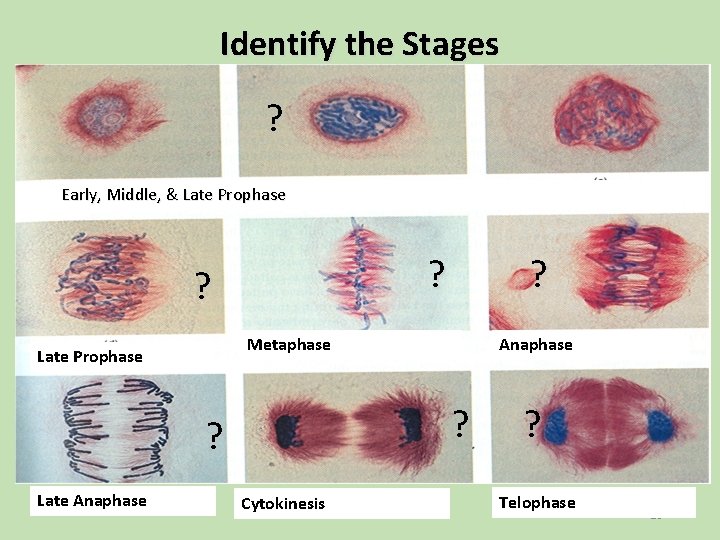
Identify the Stages ? Early, Middle, & Late Prophase ? ? Metaphase Late Prophase Anaphase ? ? Late Anaphase ? Cytokinesis ? Telophase 28
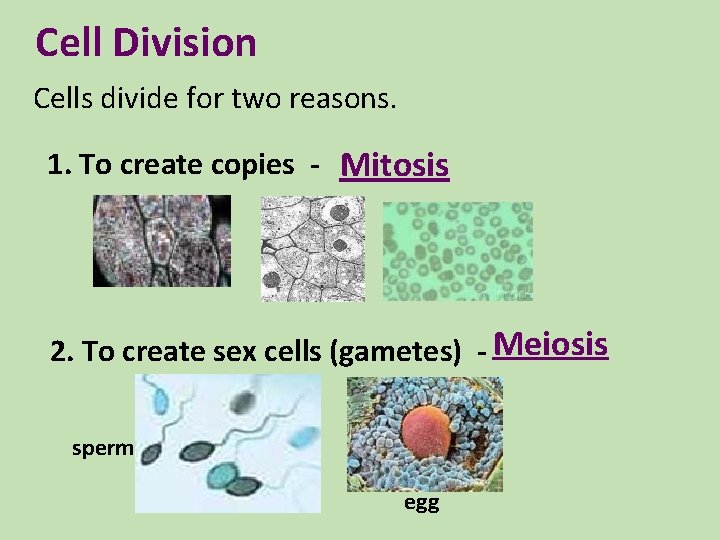
Cell Division Cells divide for two reasons. 1. To create copies - Mitosis 2. To create sex cells (gametes) - Meiosis sperm egg
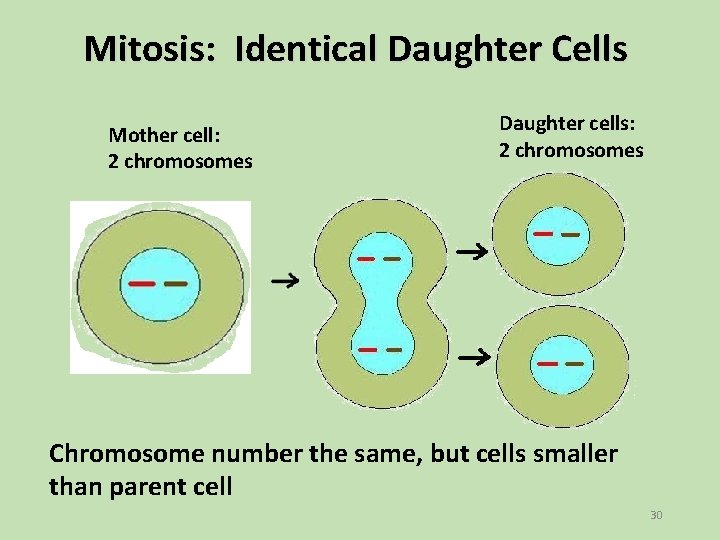
Mitosis: Identical Daughter Cells Mother cell: 2 chromosomes Daughter cells: 2 chromosomes Chromosome number the same, but cells smaller than parent cell 30
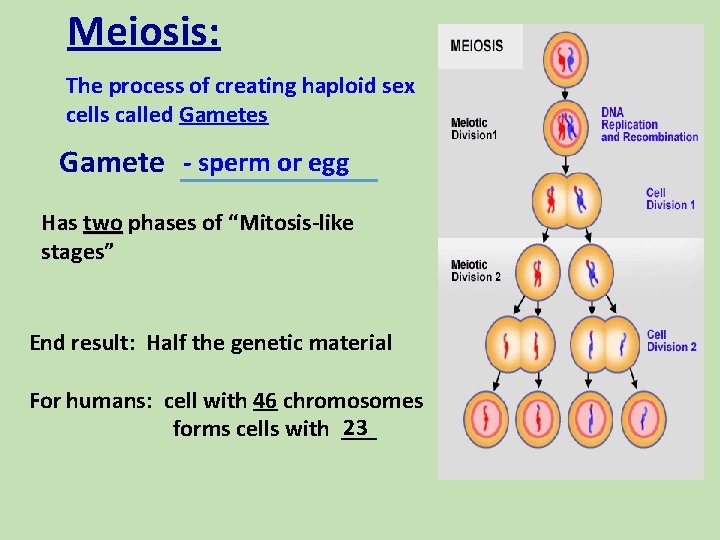
Meiosis: The process of creating haploid sex cells called Gametes Gamete - sperm or egg Has two phases of “Mitosis-like stages” End result: Half the genetic material For humans: cell with 46 chromosomes 23 forms cells with ___
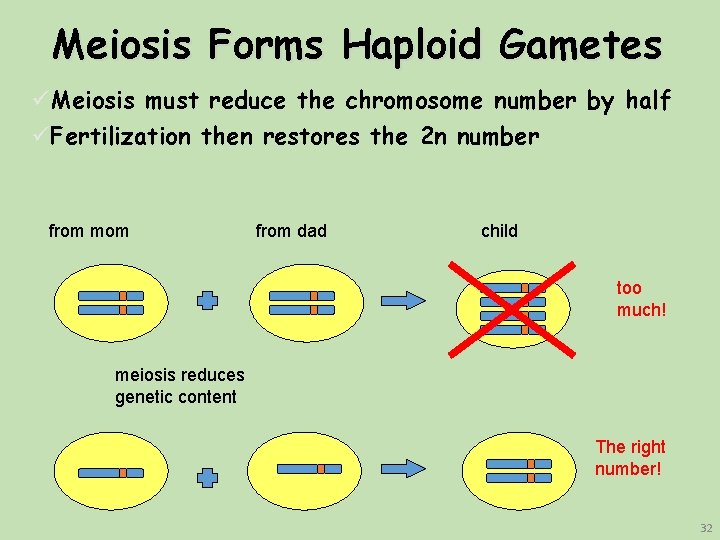
Meiosis Forms Haploid Gametes üMeiosis must reduce the chromosome number by half üFertilization then restores the 2 n number from mom from dad child too much! meiosis reduces genetic content The right number! 32
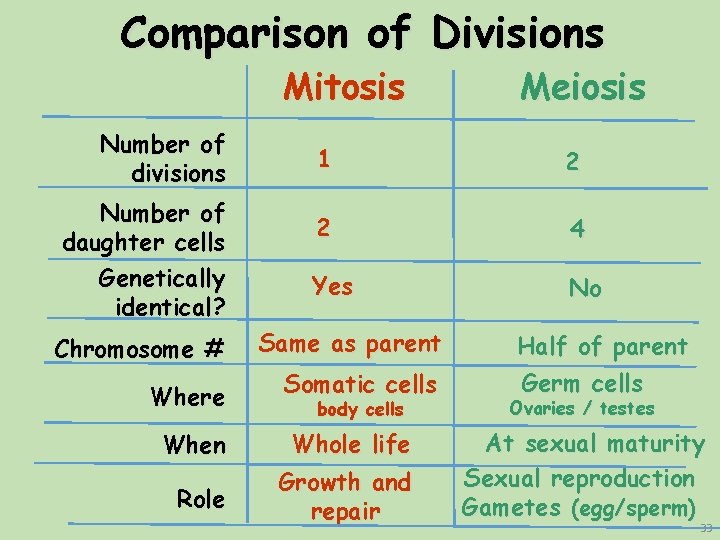
Comparison of Divisions Mitosis Number of divisions Number of daughter cells Genetically identical? Chromosome # Where Meiosis 1 2 2 4 Yes No Same as parent Somatic cells body cells When Whole life Role Growth and repair Half of parent Germ cells Ovaries / testes At sexual maturity Sexual reproduction Gametes (egg/sperm) 33
- Slides: 33