
Biology SOL Review Diffusion Bio 4 When substances
Biology SOL Review
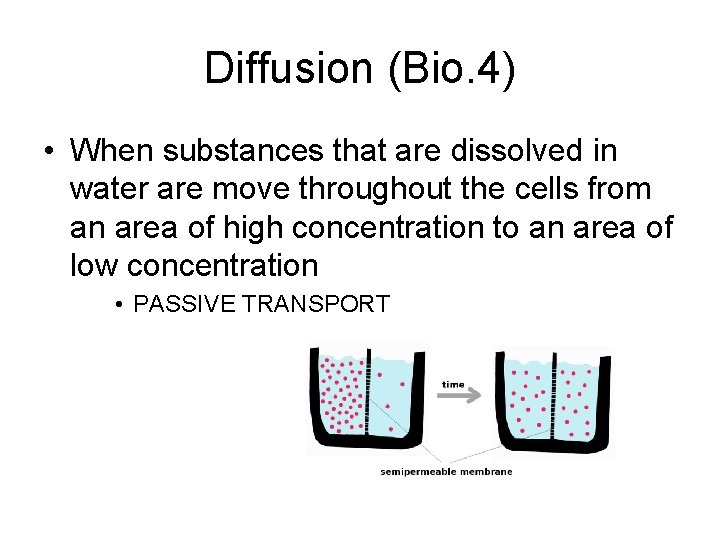
Diffusion (Bio. 4) • When substances that are dissolved in water are move throughout the cells from an area of high concentration to an area of low concentration • PASSIVE TRANSPORT
Osmosis (Bio. 4) • Movement of water molecules from an area of high water concentration to an area of low water concentration • PASSIVE TRANSPORT
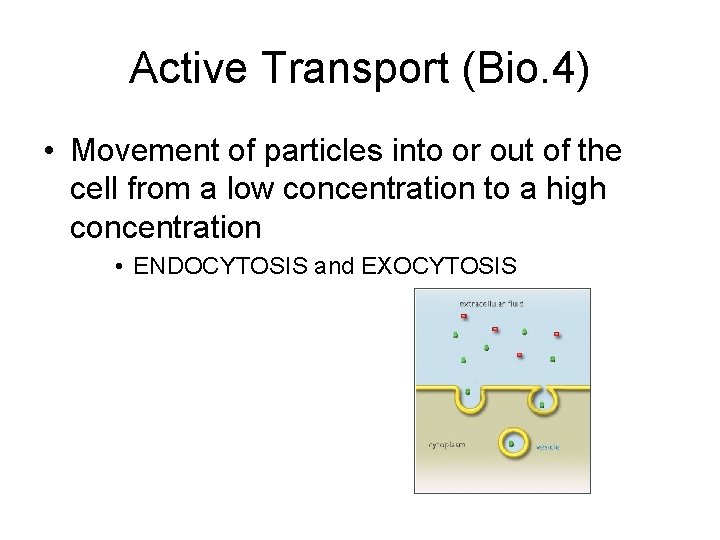
Active Transport (Bio. 4) • Movement of particles into or out of the cell from a low concentration to a high concentration • ENDOCYTOSIS and EXOCYTOSIS
Energy Consumption (Bio. 5) • Autotrophs- must make their own food • Plants (Producers) • Heterotrophs- must capture or consume their food • Animals (consumers)

Organisms (Bio. 5) • Unicellular- single-celled organisms • Bacteria and some protists • Multicellular- many-celled organisms • Animals, plants, fungi • More advanced
Motility (Bio. 5) • Motile organisms • Have the ability to move • Non-motile organisms • Cannot move
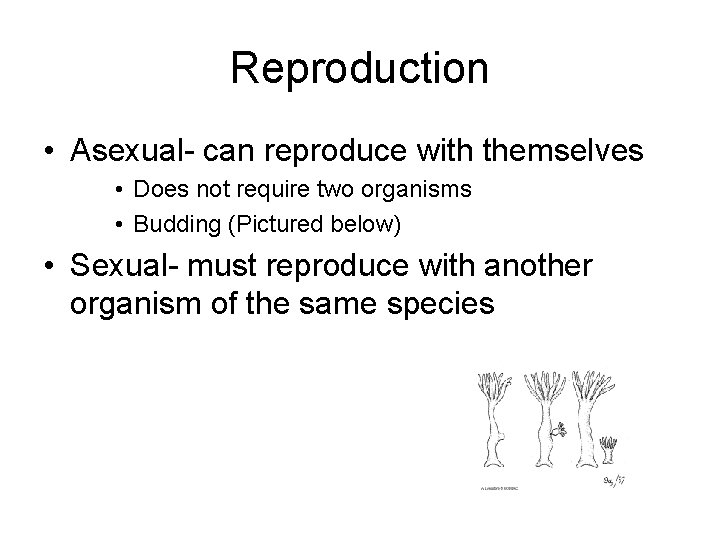
Reproduction • Asexual- can reproduce with themselves • Does not require two organisms • Budding (Pictured below) • Sexual- must reproduce with another organism of the same species
Aquatic vs. Terrestrial (Bio. 5) • Aquatic • Anything that lives in water • Terrestrial • Anything that lives on land
Food for Energy (Bio. 5) • To convert food into energy, body must digest food and transport to all cells • Requires oxygen and removal of carbon dioxide
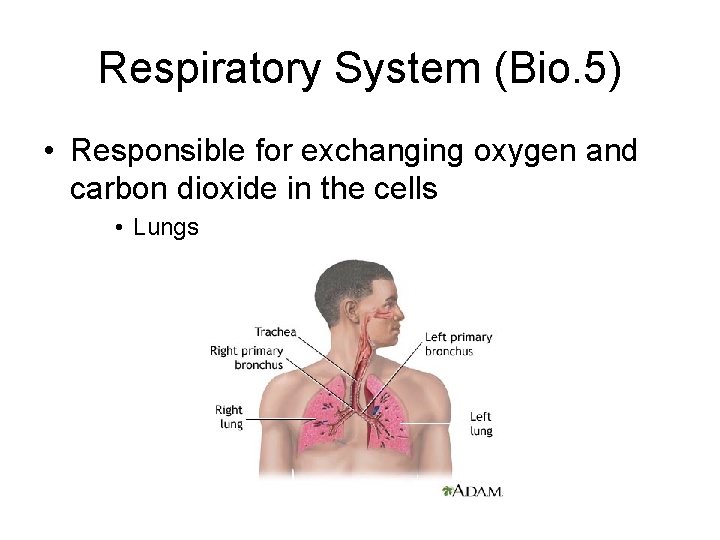
Respiratory System (Bio. 5) • Responsible for exchanging oxygen and carbon dioxide in the cells • Lungs
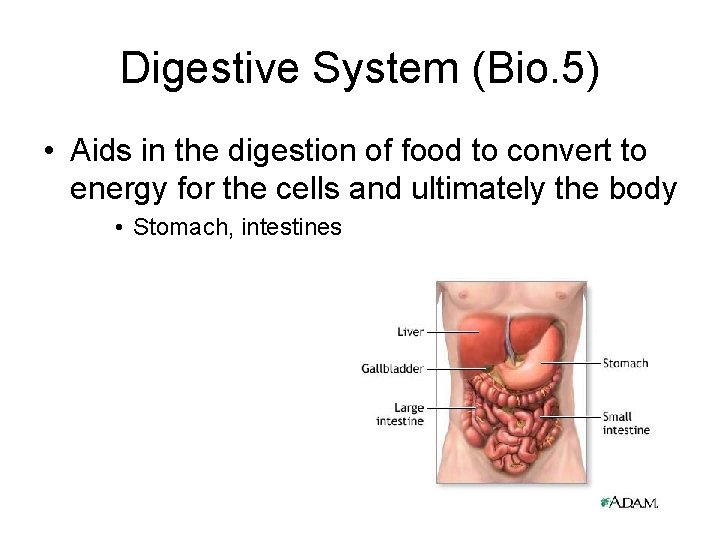
Digestive System (Bio. 5) • Aids in the digestion of food to convert to energy for the cells and ultimately the body • Stomach, intestines
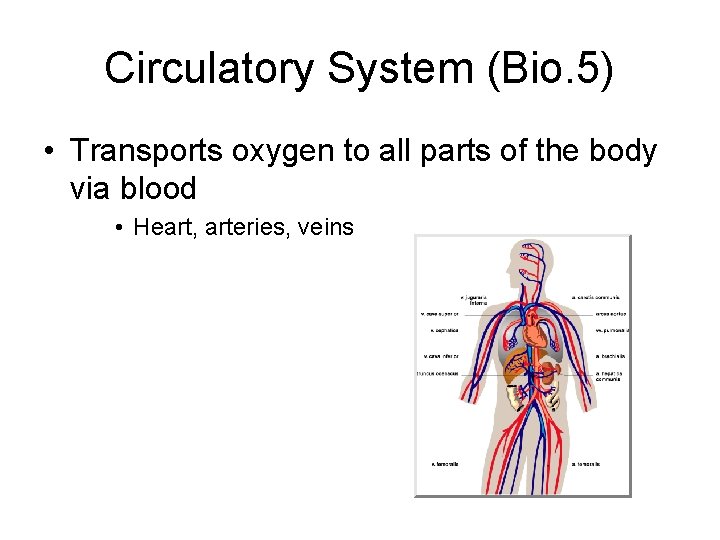
Circulatory System (Bio. 5) • Transports oxygen to all parts of the body via blood • Heart, arteries, veins
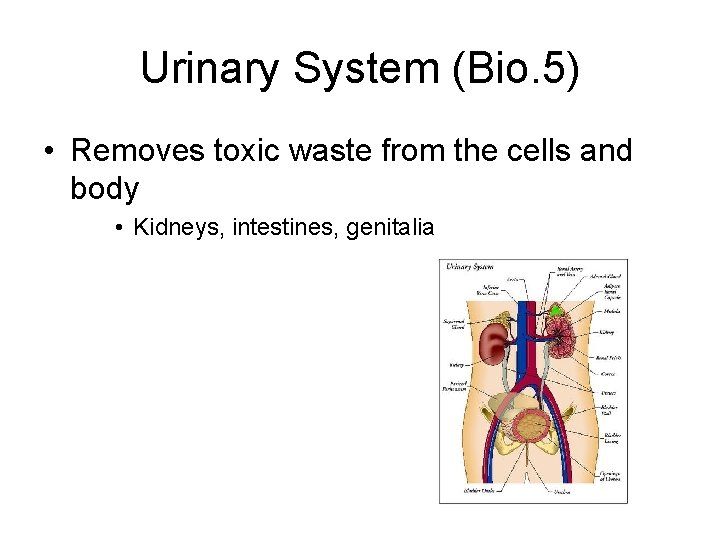
Urinary System (Bio. 5) • Removes toxic waste from the cells and body • Kidneys, intestines, genitalia
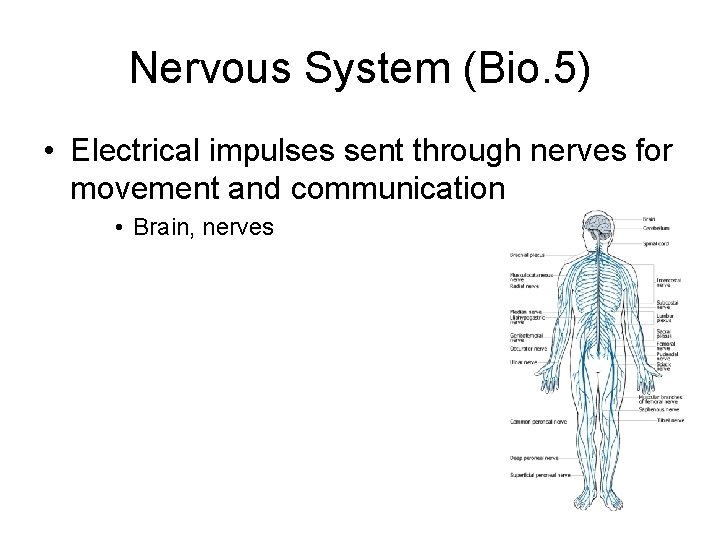
Nervous System (Bio. 5) • Electrical impulses sent through nerves for movement and communication • Brain, nerves
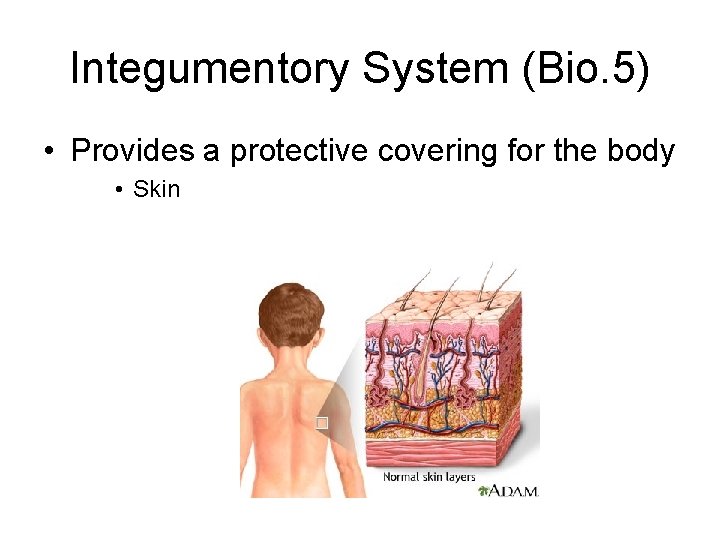
Integumentory System (Bio. 5) • Provides a protective covering for the body • Skin
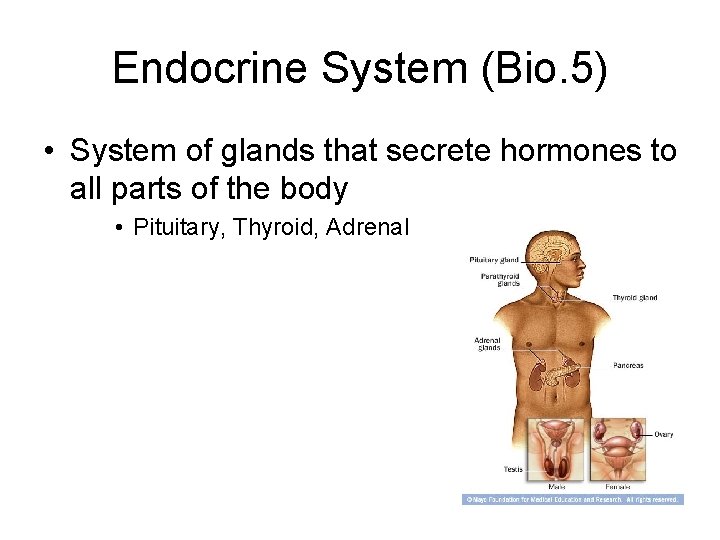
Endocrine System (Bio. 5) • System of glands that secrete hormones to all parts of the body • Pituitary, Thyroid, Adrenal
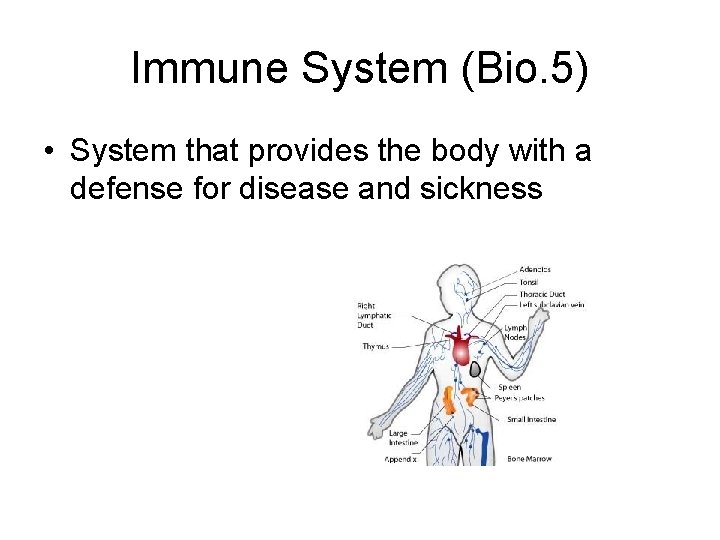
Immune System (Bio. 5) • System that provides the body with a defense for disease and sickness
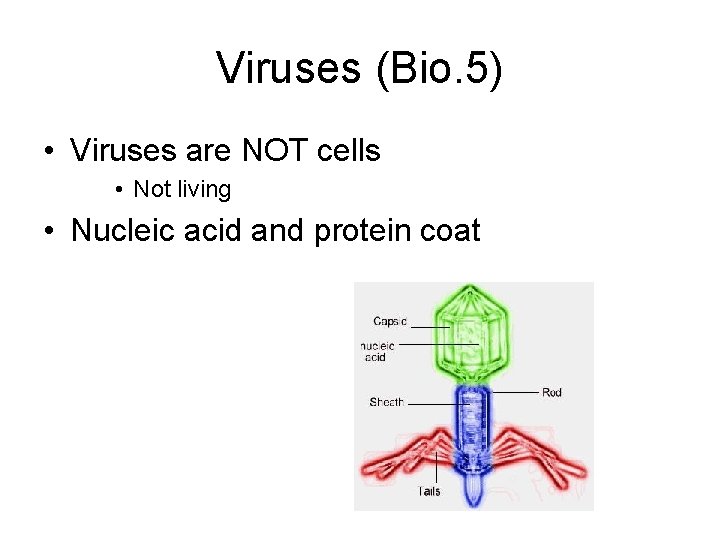
Viruses (Bio. 5) • Viruses are NOT cells • Not living • Nucleic acid and protein coat
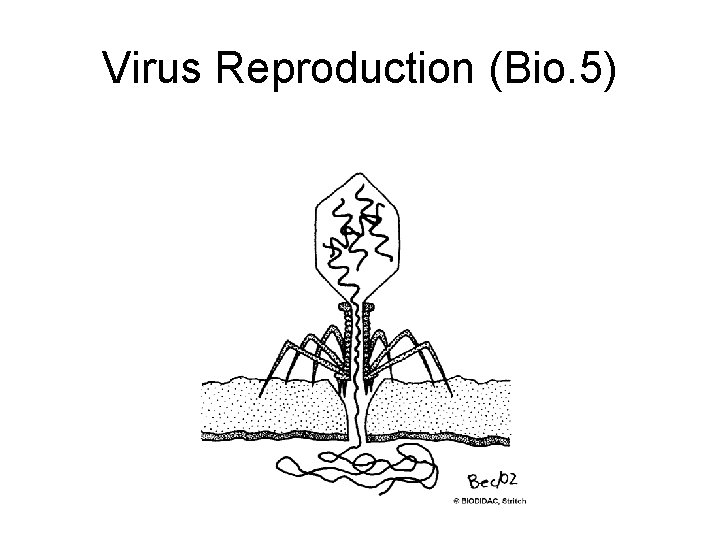
Virus Reproduction (Bio. 5)
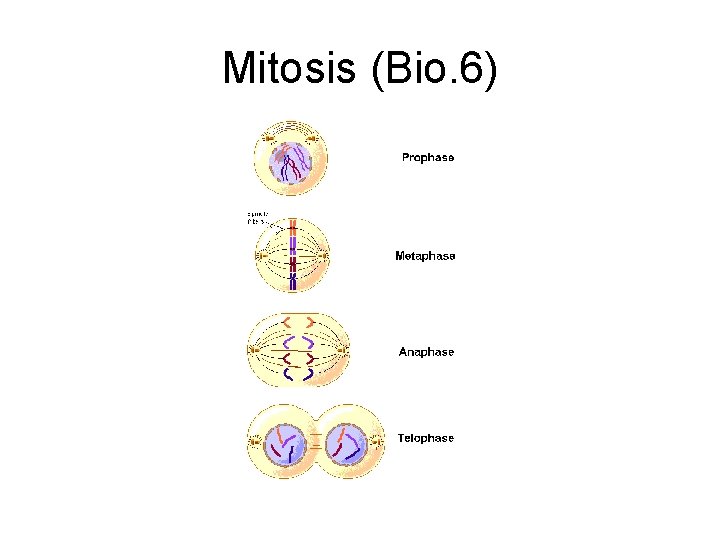
Mitosis (Bio. 6)
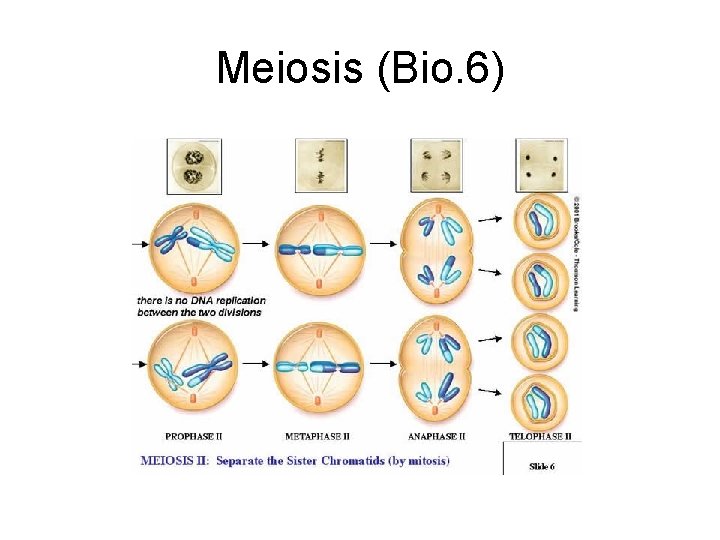
Meiosis (Bio. 6)
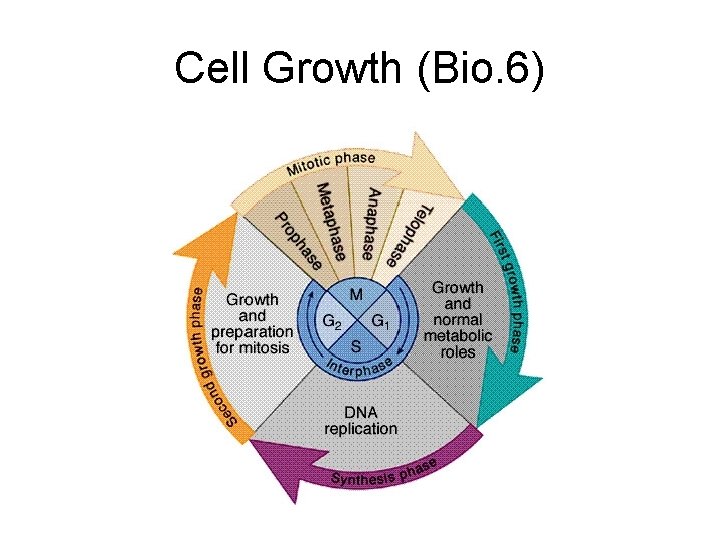
Cell Growth (Bio. 6)
Genetics (Bio. 6) • Medel is father of Genetics • Pea plants • Genotypes • The genetic make-up of an organism • BB, Bb, bb • Phenotype • What the organism looks like • Brown hair or Blonde hair
Genetics (Bio. 6) • Homozygous • Two IDENTICAL alleles for a certain trait • BB or bb • Heterozygous • Two DIFFERENT alleles for a certain trait • Bb
Genetics (Bio. 6) • When one allele covers up another allele we know that one is DOMINANT and the other is RECESSIVE • When the two alleles combine and an intermediate between the two result then INCOMPLETE DOMINANCE is said to occur
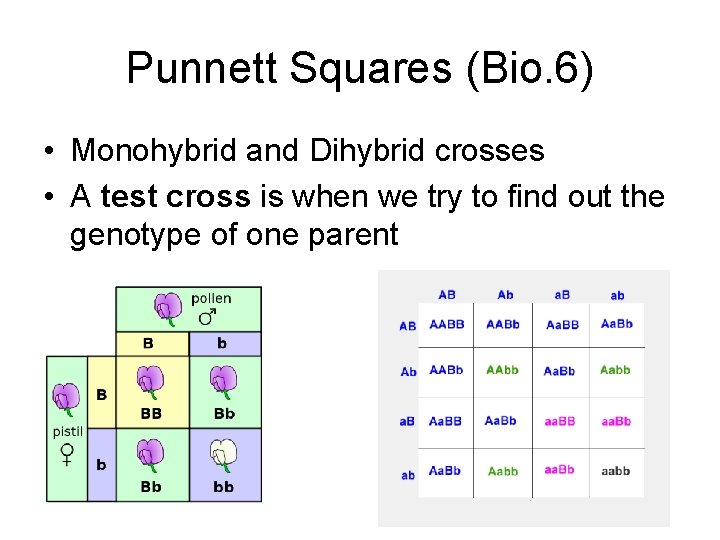
Punnett Squares (Bio. 6) • Monohybrid and Dihybrid crosses • A test cross is when we try to find out the genotype of one parent
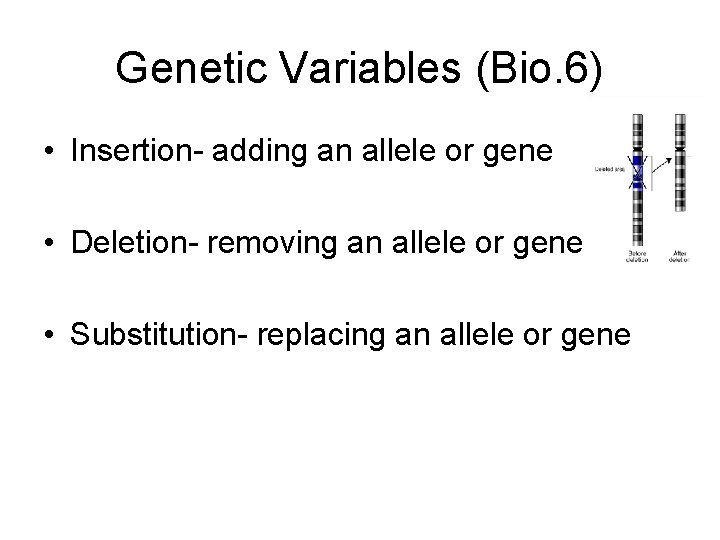
Genetic Variables (Bio. 6) • Insertion- adding an allele or gene • Deletion- removing an allele or gene • Substitution- replacing an allele or gene
Adding or Deleting Chromosomes (Bio. 6) • • Trisomy 21 (Down Syndrome) XO XXY XXX
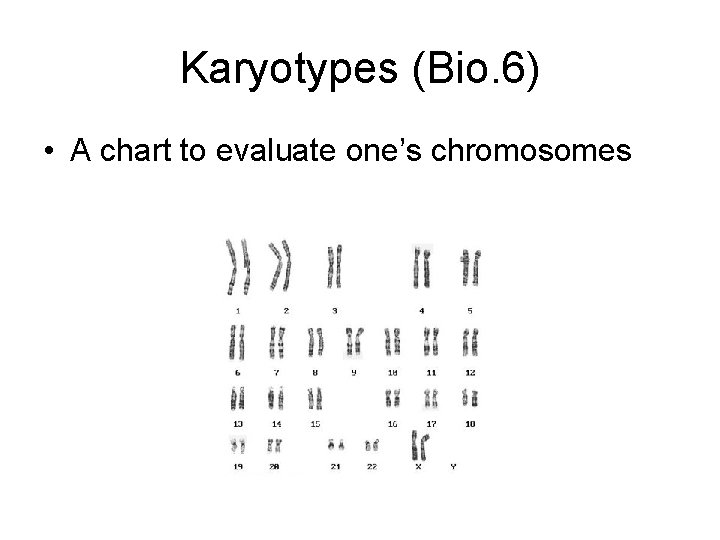
Karyotypes (Bio. 6) • A chart to evaluate one’s chromosomes
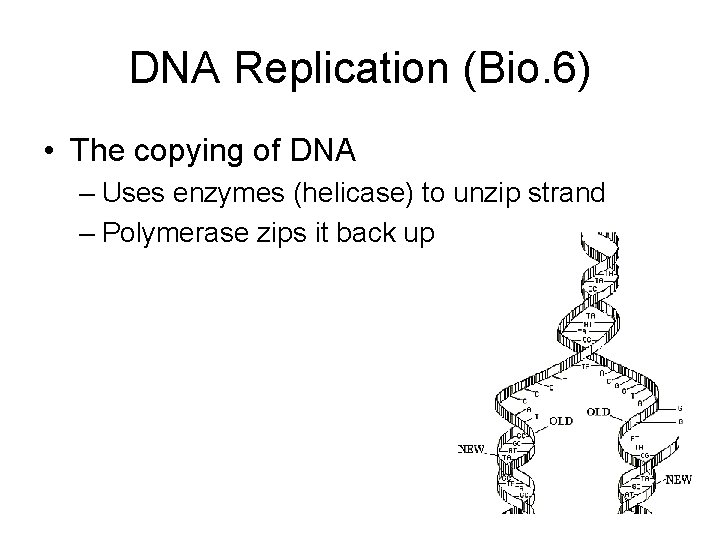
DNA Replication (Bio. 6) • The copying of DNA – Uses enzymes (helicase) to unzip strand – Polymerase zips it back up
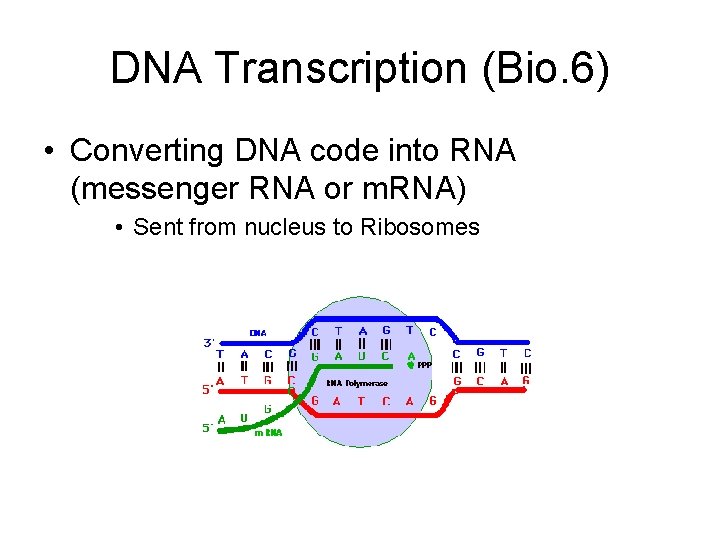
DNA Transcription (Bio. 6) • Converting DNA code into RNA (messenger RNA or m. RNA) • Sent from nucleus to Ribosomes
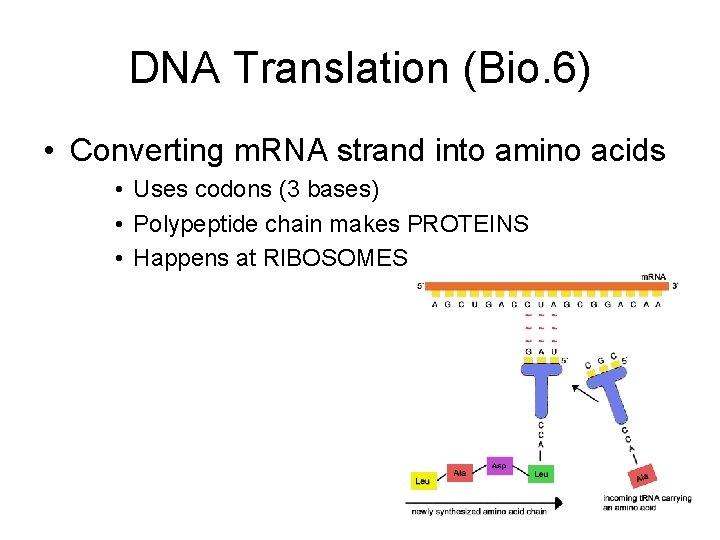
DNA Translation (Bio. 6) • Converting m. RNA strand into amino acids • Uses codons (3 bases) • Polypeptide chain makes PROTEINS • Happens at RIBOSOMES
RNA (Bio. 6) • Ribonucleic Acid • Single stranded • Bases are A, C, G, and U {No Thymine (T)}
Genetic Engineering (Bio. 6) • Making genes so that they are beneficial • Done in a laboratory • Example: making a fruit or vegetable that is resistant to mold or disease
Human Genome Project (Bio. 6) • Project that maps the ENTIRE human gene sequence • Found out how many genes humans have • Cloning • One benefit of the human genome project • Can create identical copies of organisms
Classification (Bio. 7) • Binomial Nomenclature • • Two part naming system developed by Linneaus Genus and species Latin names Homo sapiens
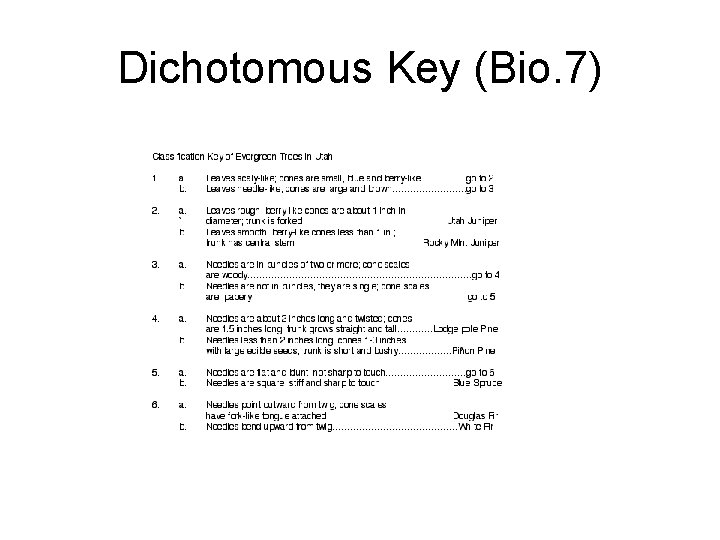
Dichotomous Key (Bio. 7)
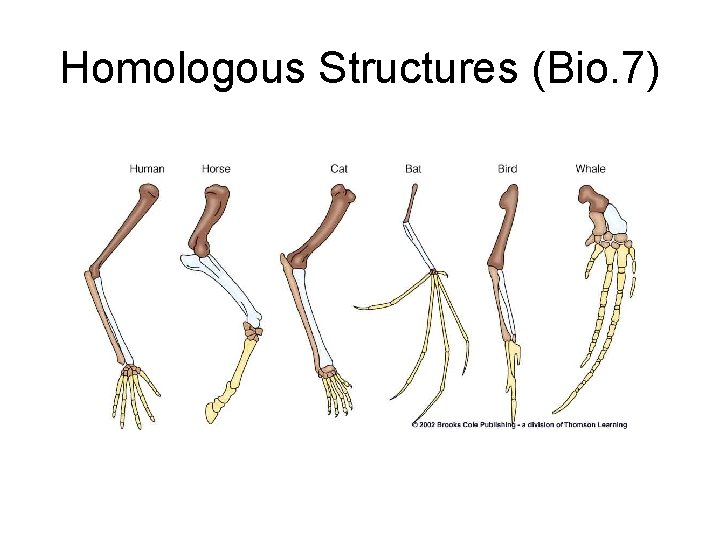
Homologous Structures (Bio. 7)
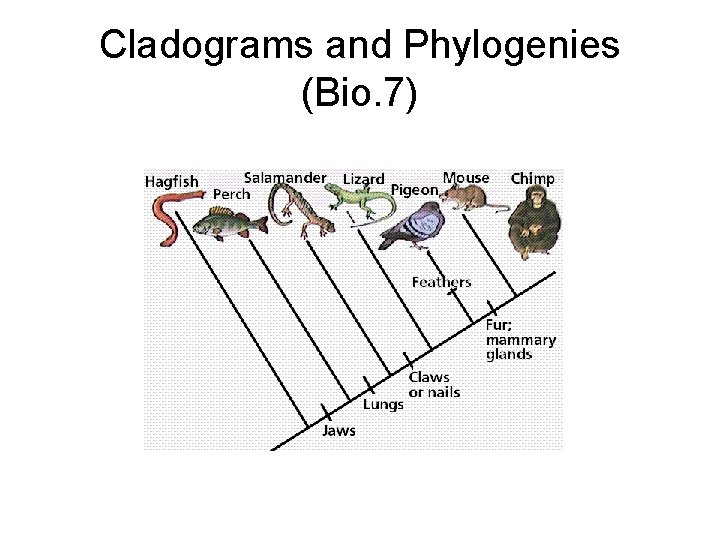
Cladograms and Phylogenies (Bio. 7)
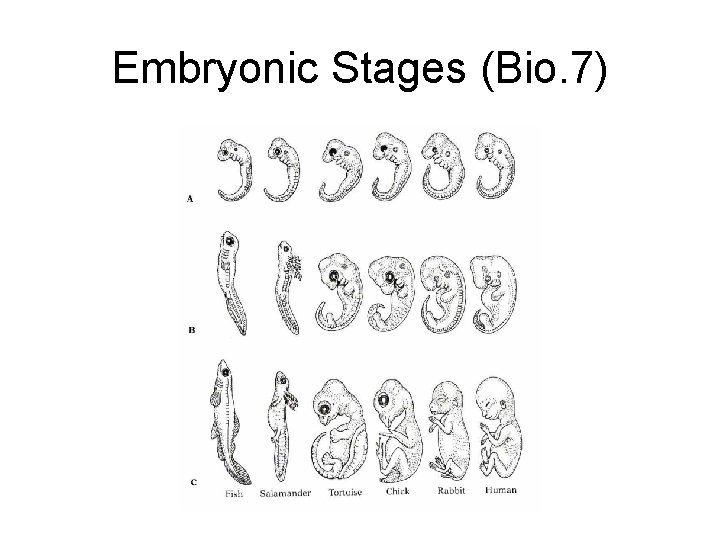
Embryonic Stages (Bio. 7)
Fossils (Bio. 8) • Life has existed for about 3. 5 billion years • Fossils are our only evidence of most of this • Radioactive Decay • This is how we determine the age of most fossils • Use Carbon 14 (Isotope) to determine age using half-life
Populations (Bio. 8) • Groups of interbreeding organisms of the same species that live in a specific area • Humans, deer, squirrels • Organisms that are better suited for an environment will survive
Charles Darwin (Bio. 8) • Researched on the Galapagos Islands • Determined the idea of “SURVIVAL OF THE FITTEST – Main concept of natural selection • Natural selection • Occurs in POPULATIONS over many generations
Mutations vs. Adaptations (Bio. 8) • Mutation- corrupt genes that result in unfavorable traits or death • Adaptations- oraganisms and populations change or evolve to be better suited for environment • Burrowing animals have long claws and are usually slender
Punctuated Equilibrium (Bio. 8) • Idea that organisms undergo rapid changes then may go for long periods of time without change • Jay Gould developed this idea • Gradualism • Idea that organisms change slowly, but continually over time
Community (Bio. 9) • A group of different populations that live together • All animals in a forest
Growth Curves (Bio. 9) • J-shaped • Exponential growth • Bacteria • S-shaped • Gradual growth • Humans and animals
Ecology (Bio. 9) • Limiting factors • Things that limit organisms from growing • NO RESOURCES (food, shelter, water) • Carrying capacity • Number of organisms that can be supported by an ecosystem
Biotic vs. Abiotic factors (Bio. 9) • Abiotic • Non-living things (p. H, temp. , salinity, air) • Biotic • Living things
Symbiotic Relationships (Bio. 9) • Mutualism • Both benefit • Commensalism • One benefits and other is unaffected • Parasitism • One benefits and other is HARMED
Energy Flow (Bio. 9) • Food webs • Biomass • Bioaccumulation
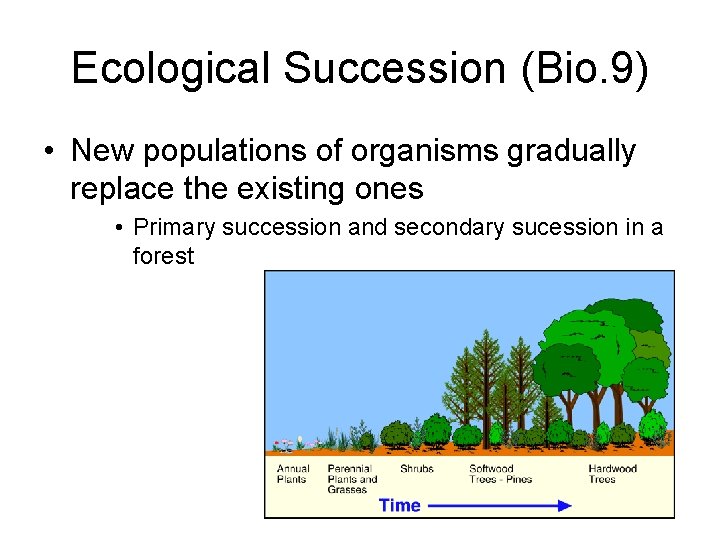
Ecological Succession (Bio. 9) • New populations of organisms gradually replace the existing ones • Primary succession and secondary sucession in a forest
Climax Community • Occurs when succession slows down and the community becomes stable • New growth slows down
Flora vs. Fauna (Bio. 9) • Flora • All plants • Fauna • All animals that are NOT plants
- Slides: 55