
Biology Slide 1 of 30 Copyright Pearson Prentice
Biology Slide 1 of 30 Copyright Pearson Prentice Hall End Show

17 -3 Evolution of Multicellular Life Slide 2 of 30 Copyright Pearson Prentice Hall End Show
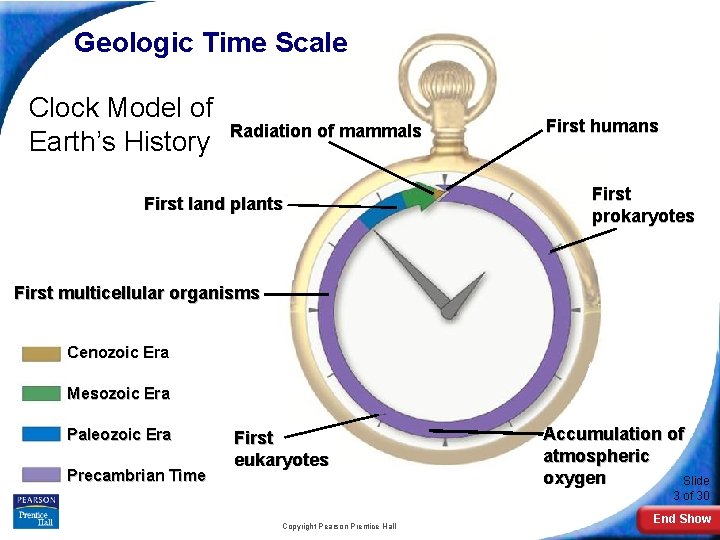
Geologic Time Scale Clock Model of Earth’s History Radiation of mammals First land plants First humans First prokaryotes First multicellular organisms Cenozoic Era Mesozoic Era Paleozoic Era Precambrian Time First eukaryotes Accumulation of atmospheric oxygen Slide 3 of 30 Copyright Pearson Prentice Hall End Show
17 -3 Evolution of Multicellular Life Precambrian Time Few fossils exist from Precambrian time because the animals were all soft-bodied. Life existed only in the sea. Slide 4 of 30 Copyright Pearson Prentice Hall End Show
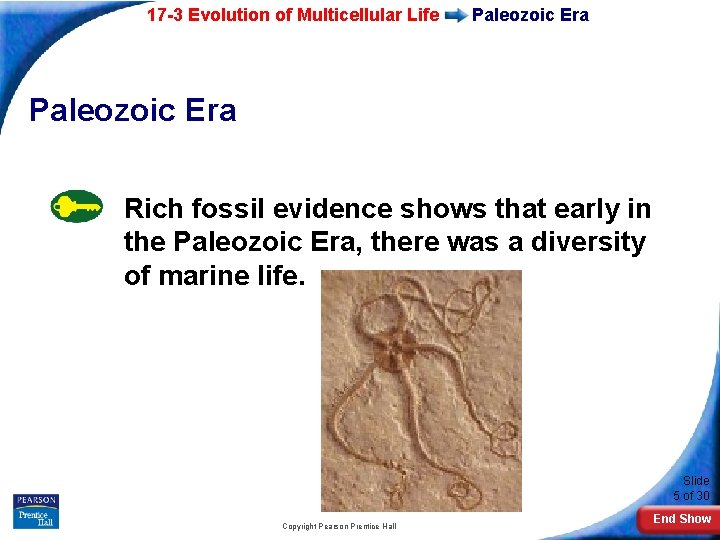
17 -3 Evolution of Multicellular Life Paleozoic Era Rich fossil evidence shows that early in the Paleozoic Era, there was a diversity of marine life. Slide 5 of 30 Copyright Pearson Prentice Hall End Show
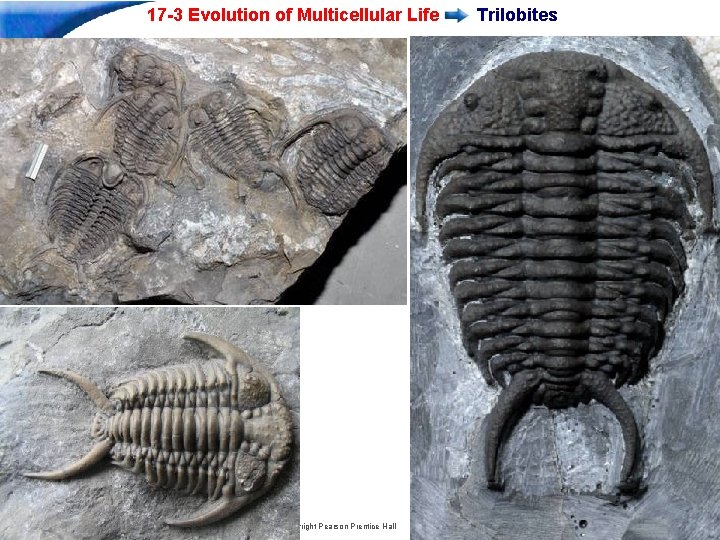
17 -3 Evolution of Multicellular Life Trilobites Slide 6 of 30 Copyright Pearson Prentice Hall End Show
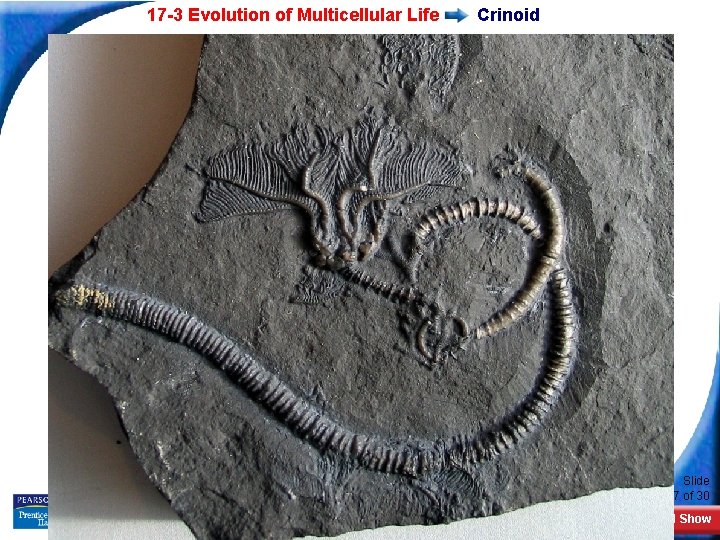
17 -3 Evolution of Multicellular Life Crinoid Slide 7 of 30 Copyright Pearson Prentice Hall End Show
17 -3 Evolution of Multicellular Life Paleozoic Era The Paleozoic Era is divided into the following periods: • Cambrian • Ordovician • Silurian • Devonian • Carboniferous • Permian Slide 8 of 30 Copyright Pearson Prentice Hall End Show
17 -3 Evolution of Multicellular Life Paleozoic Era Cambrian Period The diversification of life at this time is called the “Cambrian Explosion. ” The first known representatives of most animal phyla evolved. These included: • invertebrates • brachiopods • trilobites Slide 9 of 30 Copyright Pearson Prentice Hall End Show
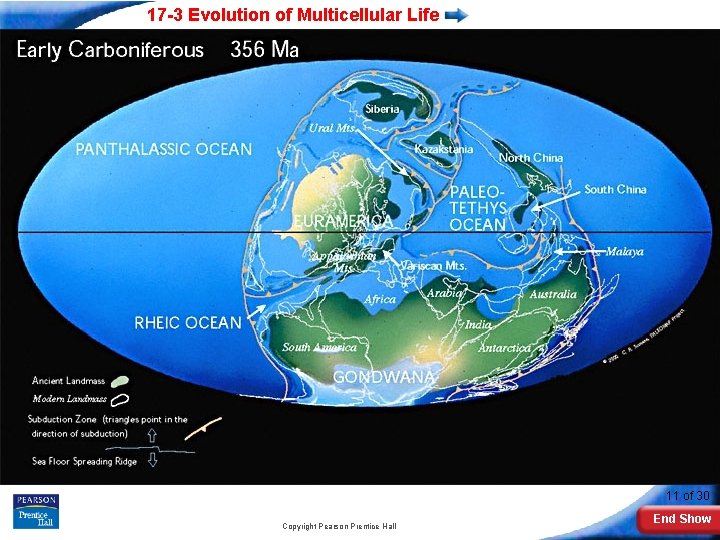
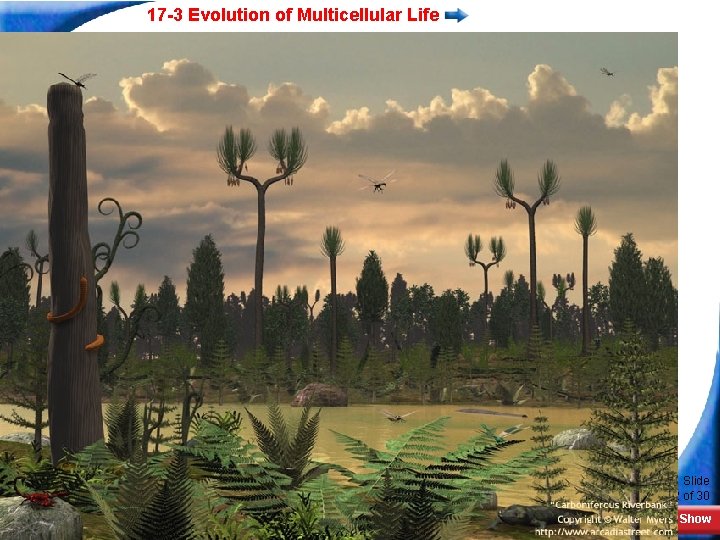
17 -3 Evolution of Multicellular Life Paleozoic Era Carboniferous and Permian Periods Reptiles evolved from certain amphibians. Winged insects evolved into many forms. Giant ferns and other plants formed vast swampy forests. Remains of ancient plants formed thick deposits of sediment that changed into coal over millions of years. Slide 10 of 30 Copyright Pearson Prentice Hall End Show
17 -3 Evolution of Multicellular Life Slide 11 of 30 Copyright Pearson Prentice Hall End Show
17 -3 Evolution of Multicellular Life Slide 12 of 30 Copyright Pearson Prentice Hall End Show
17 -3 Evolution of Multicellular Life Paleozoic Era At the end of the Permian Period, there was a mass extinction in which many living things became extinct at the same time. The mass extinction at the end of the Paleozoic affected both plants and animals on land in the seas. As much as 95% of the complex life in the oceans disappeared. Slide 13 of 30 Copyright Pearson Prentice Hall End Show
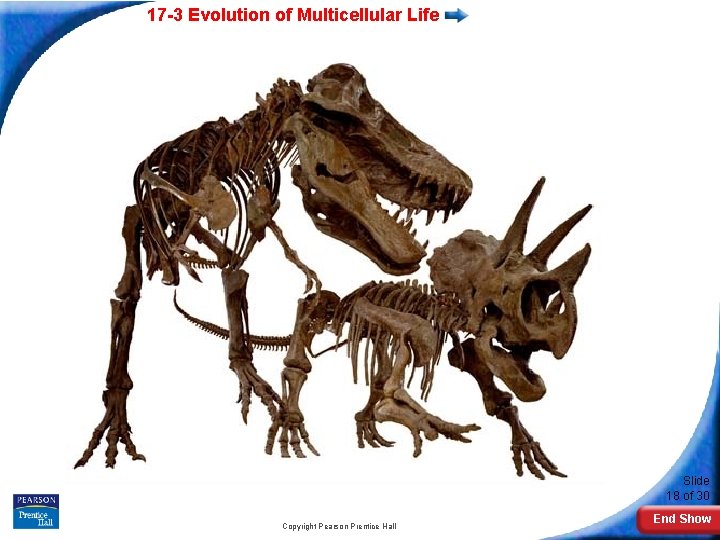
17 -3 Evolution of Multicellular Life Mesozoic Era During the Mesozoic Era, dinosaurs became dominant. The Mesozoic is also marked by the appearance of flowering plants. The Mesozoic Era is often called the Age of Reptiles. Slide 14 of 30 Copyright Pearson Prentice Hall End Show
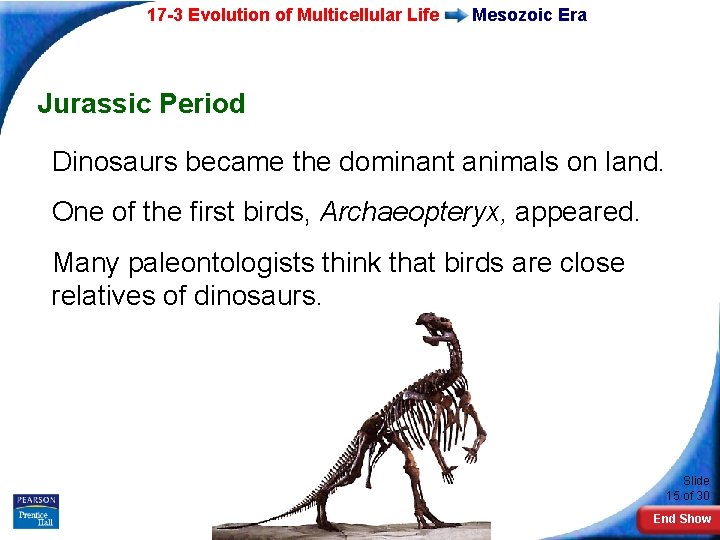
17 -3 Evolution of Multicellular Life Mesozoic Era Jurassic Period Dinosaurs became the dominant animals on land. One of the first birds, Archaeopteryx, appeared. Many paleontologists think that birds are close relatives of dinosaurs. Slide 15 of 30 Copyright Pearson Prentice Hall End Show
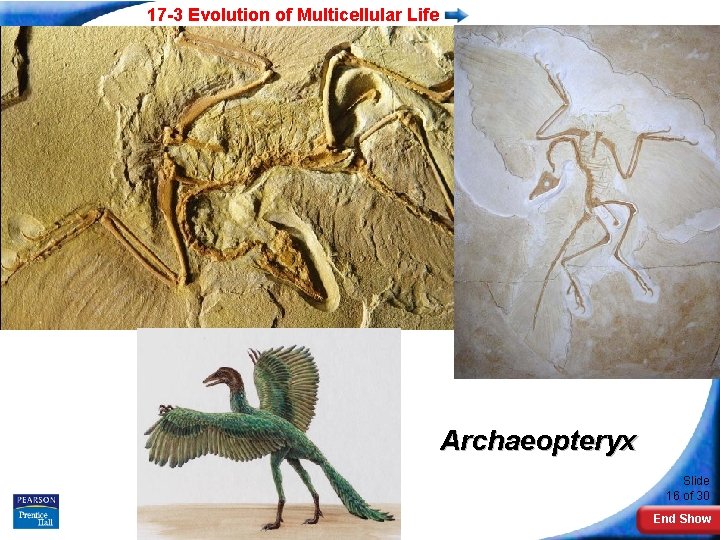
17 -3 Evolution of Multicellular Life Archaeopteryx Slide 16 of 30 Copyright Pearson Prentice Hall End Show
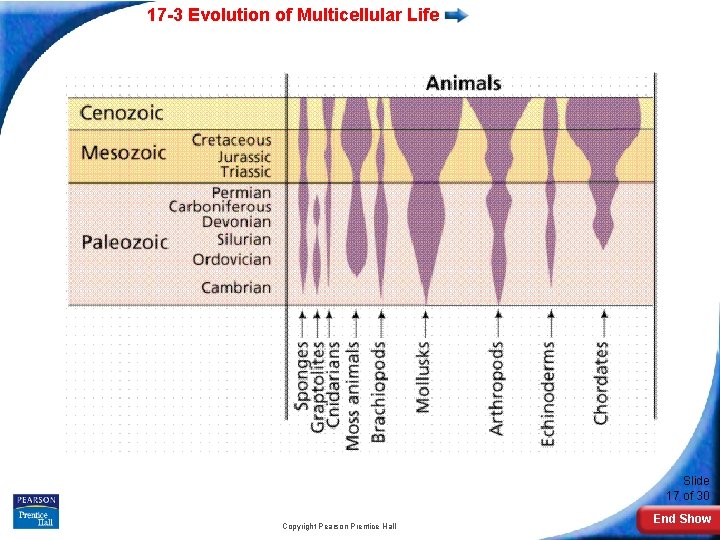
17 -3 Evolution of Multicellular Life Slide 17 of 30 Copyright Pearson Prentice Hall End Show
17 -3 Evolution of Multicellular Life Slide 18 of 30 Copyright Pearson Prentice Hall End Show
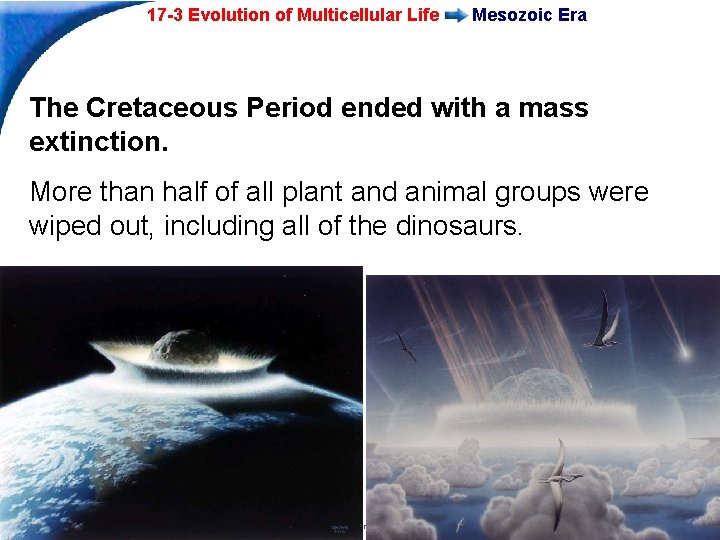
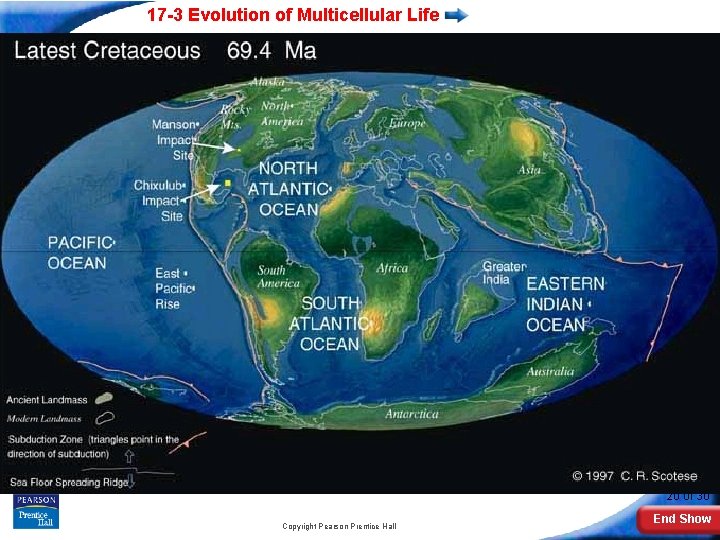
17 -3 Evolution of Multicellular Life Mesozoic Era The Cretaceous Period ended with a mass extinction. More than half of all plant and animal groups were wiped out, including all of the dinosaurs. Slide 19 of 30 Copyright Pearson Prentice Hall End Show
17 -3 Evolution of Multicellular Life Slide 20 of 30 Copyright Pearson Prentice Hall End Show
17 -3 Evolution of Multicellular Life Slide 21 of 30 Copyright Pearson Prentice Hall End Show
17 -3 Evolution of Multicellular Life Cenozoic Era During the Cenozoic, mammals evolved adaptations that allowed them to live in various environments—on land, in water, and even in the air. Slide 22 of 30 Copyright Pearson Prentice Hall End Show
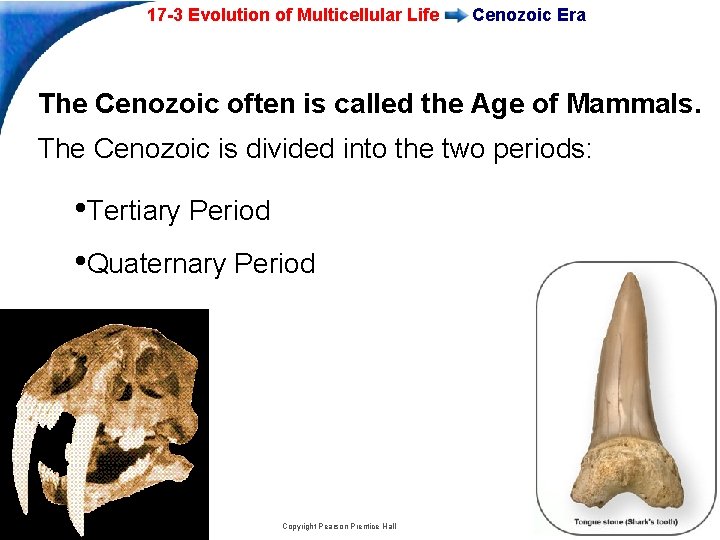
17 -3 Evolution of Multicellular Life Cenozoic Era The Cenozoic often is called the Age of Mammals. The Cenozoic is divided into the two periods: • Tertiary Period • Quaternary Period Slide 23 of 30 Copyright Pearson Prentice Hall End Show
17 -3 Click to Launch: Continue to: - or - Slide 24 of 30 End Show Copyright Pearson Prentice Hall
17 -3 The first vertebrates to appear were the a. jawless fishes. b. eurypterids. c. brachiopods. d. reptiles. Slide 25 of 30 End Show Copyright Pearson Prentice Hall
17 -3 Coal was formed over millions of years from sediments deposited during the a. Ordovician Period. b. Carboniferous Period. c. Cambrian Period. d. Permian Period. Slide 26 of 30 End Show Copyright Pearson Prentice Hall
17 -3 The late Triassic Period saw the appearance of the first a. reptiles. b. giant ferns. c. mammals. d. fish. Slide 27 of 30 End Show Copyright Pearson Prentice Hall
17 -3 The term Cambrian Explosion refers to a. the impact of a giant meteor that extinguished much of life on Earth. b. the end of the Cambrian Period when many species were replaced by other species. c. the first appearance of a great diversity of life representing most animal phyla. d. a volcanic eruption that buried many of the fossils of Cambrian age. Slide 28 of 30 End Show Copyright Pearson Prentice Hall
17 -3 The fossil record indicates that mammals a. were large meat-eaters that caused the extinction of the dinosaurs. b. appeared in the Triassic Period but did not flourish until the dinosaurs became extinct. c. successfully competed with the dinosaurs because they protected their young. d. are the ancestors of modern birds. Slide 29 of 30 End Show Copyright Pearson Prentice Hall
END OF SECTION
- Slides: 30