
Biology Review L 18 9 Photosynthesis and Cellular
Biology Review L. 18. 9 – Photosynthesis and Cellular Respiration Explain the interrelated nature of photosynthesis and cellular respiration. • Explain how reactants and products of photosynthesis are used as reactants for cellular respiration and vice versa. • Explain how photosynthesis stores energy and cellular respiration releases energy. • Identify the reactants, products and/or the basic function of photosynthesis. • Identify the reactants, products, and/or the basic functions of aerobic and anaerobic cellular respiration. • Connect the role of ATP to energy transfers within the cell. • Discuss the role of anaerobic respiration in living things.
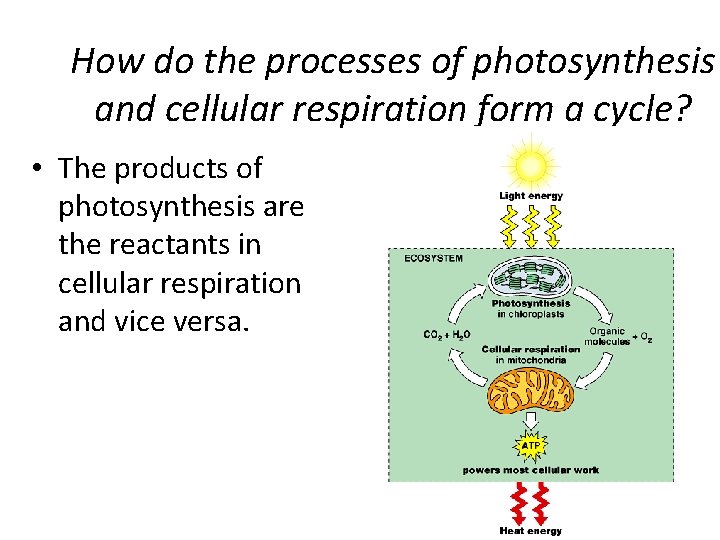
How do the processes of photosynthesis and cellular respiration form a cycle? • The products of photosynthesis are the reactants in cellular respiration and vice versa.
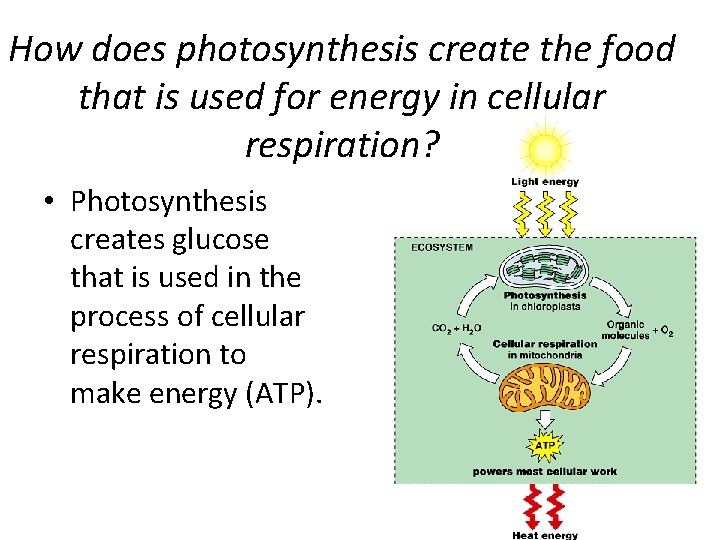
How does photosynthesis create the food that is used for energy in cellular respiration? • Photosynthesis creates glucose that is used in the process of cellular respiration to make energy (ATP).
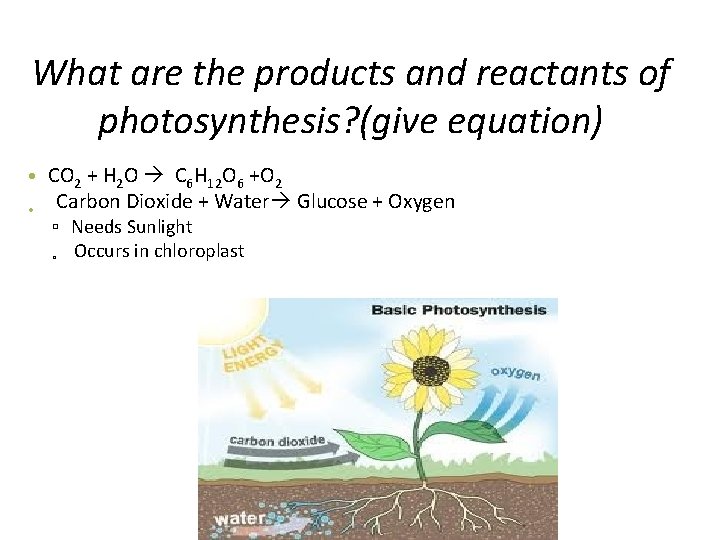
What are the products and reactants of photosynthesis? (give equation) • CO 2 + H 2 O C 6 H 12 O 6 +O 2 Carbon Dioxide + Water Glucose + Oxygen • ▫ Needs Sunlight ▫ Occurs in chloroplast
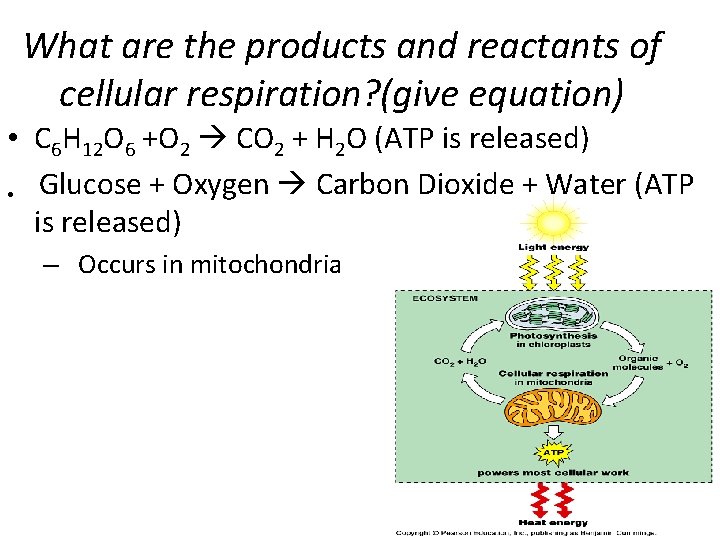
What are the products and reactants of cellular respiration? (give equation) • C 6 H 12 O 6 +O 2 CO 2 + H 2 O (ATP is released) • Glucose + Oxygen Carbon Dioxide + Water (ATP is released) – Occurs in mitochondria
What is the difference between aerobic and anaerobic respiration? • Aerobic Respiration – Making ATP in the presence of oxygen – Makes more ATP • Anaerobic Respiration – Making ATP in the without of oxygen – Create Lactic Acid (OUCH!) – Makes less ATP
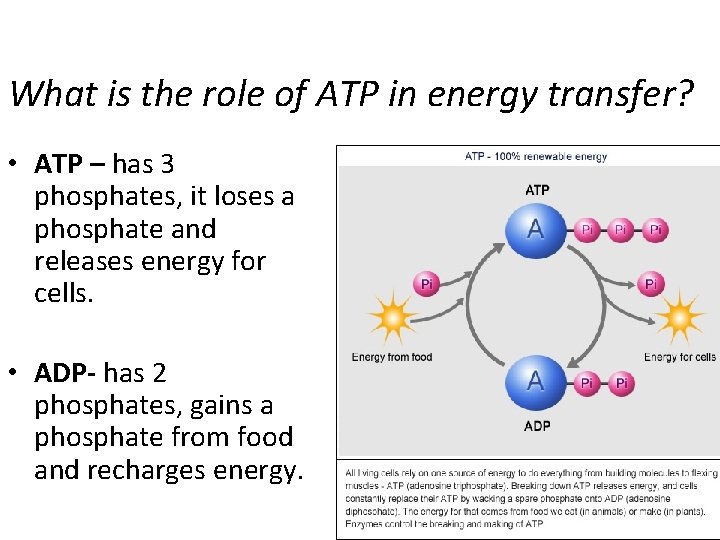
What is the role of ATP in energy transfer? • ATP – has 3 phosphates, it loses a phosphate and releases energy for cells. • ADP- has 2 phosphates, gains a phosphate from food and recharges energy.

• http: //www. youtube. com/ watch? v=65 q. Bln. UTO 3 k&feature=related
• How are cellular respiration and photosynthesis related, in terms of energy? • A. The energy captured in photosynthesis is used to power cellular respiration. • B. The energy transformed in cellular respiration is used to power photosynthesis. • C. Photosynthesis and respiration perform the same task in terms of energy transformation. • D. Energy is not involved in either photosynthesis or cellular respiration.
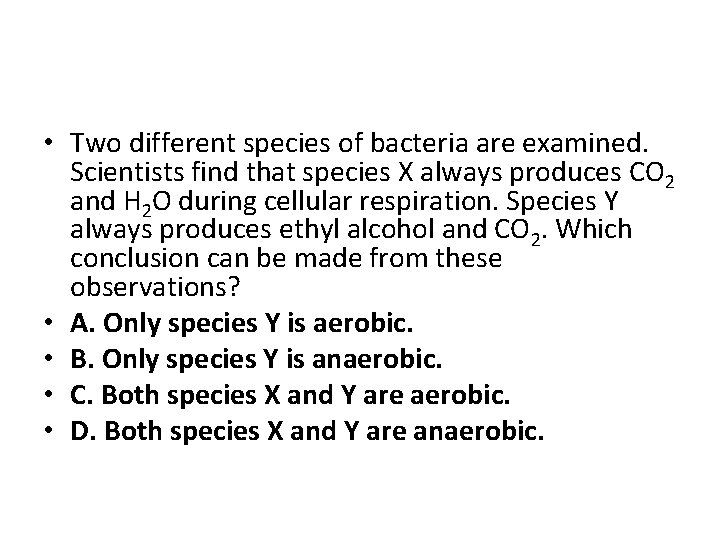
• Two different species of bacteria are examined. Scientists find that species X always produces CO 2 and H 2 O during cellular respiration. Species Y always produces ethyl alcohol and CO 2. Which conclusion can be made from these observations? • A. Only species Y is aerobic. • B. Only species Y is anaerobic. • C. Both species X and Y are aerobic. • D. Both species X and Y are anaerobic.
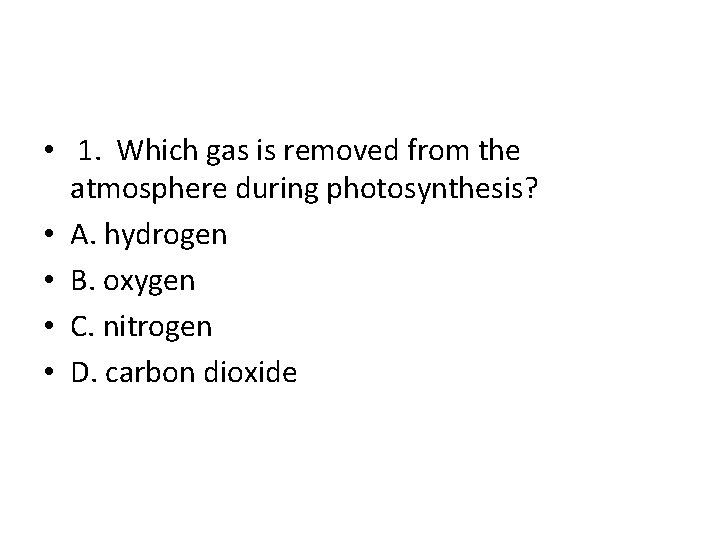
• 1. Which gas is removed from the atmosphere during photosynthesis? • A. hydrogen • B. oxygen • C. nitrogen • D. carbon dioxide
Plants – the sequel
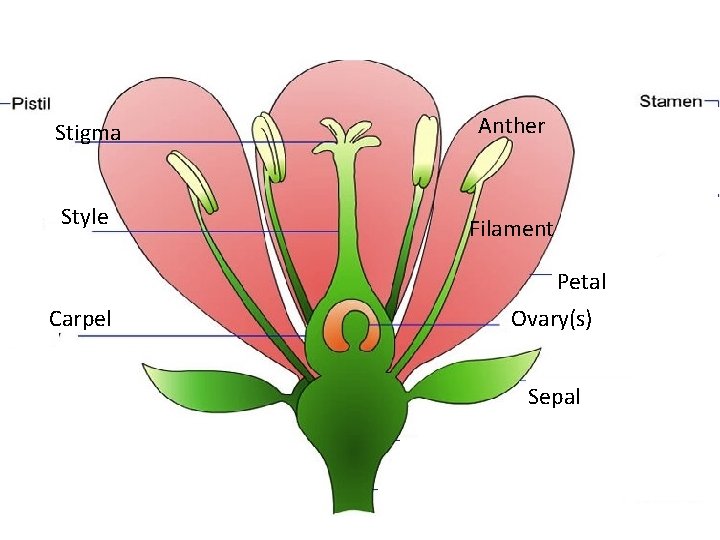
Stigma Style Anther Filament Petal Carpel Ovary(s) Sepal
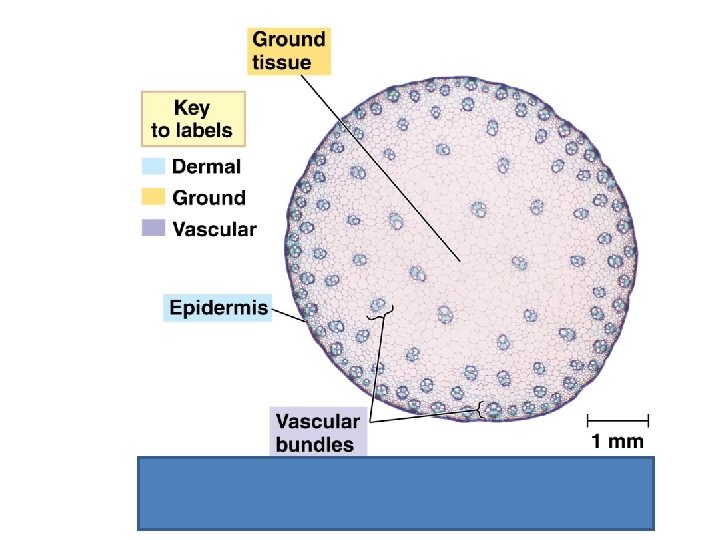
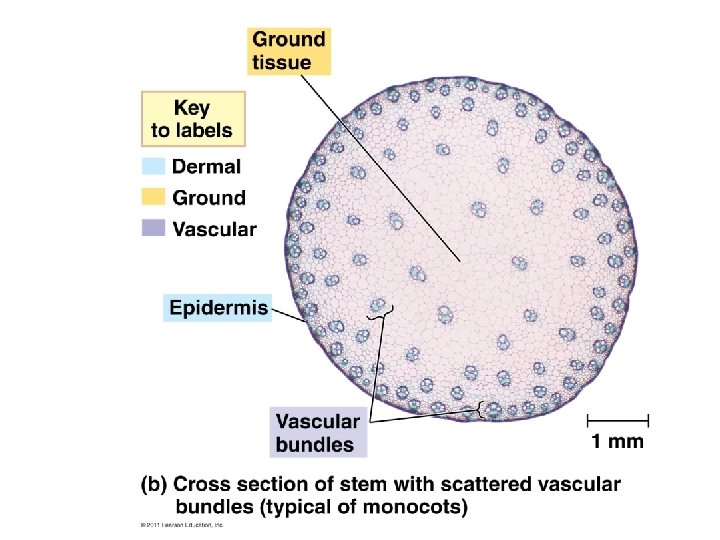
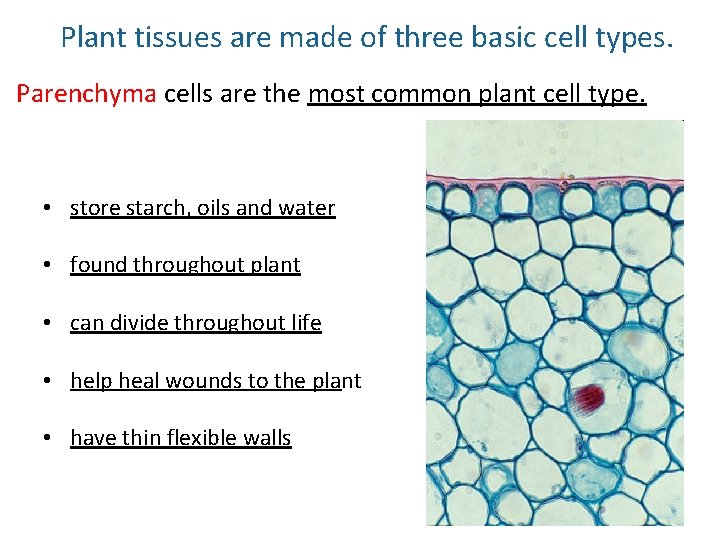
Plant tissues are made of three basic cell types. Parenchyma cells are the most common plant cell type. • store starch, oils and water • found throughout plant • can divide throughout life • help heal wounds to the plant • have thin flexible walls
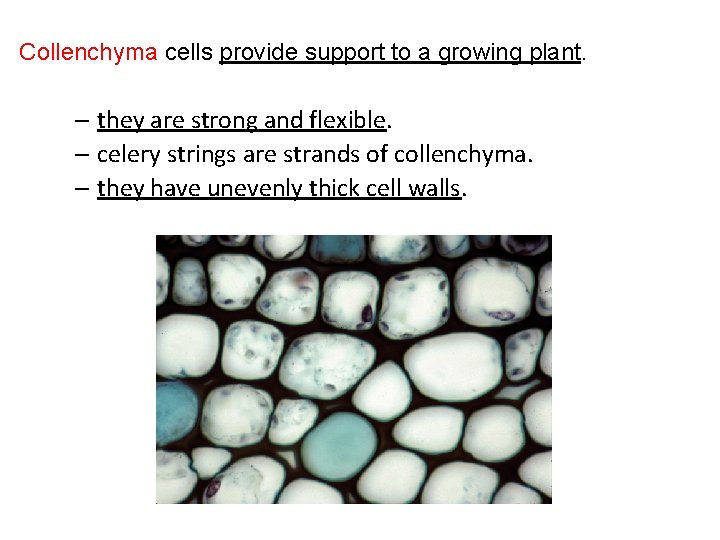
Collenchyma cells provide support to a growing plant. – they are strong and flexible. – celery strings are strands of collenchyma. – they have unevenly thick cell walls.
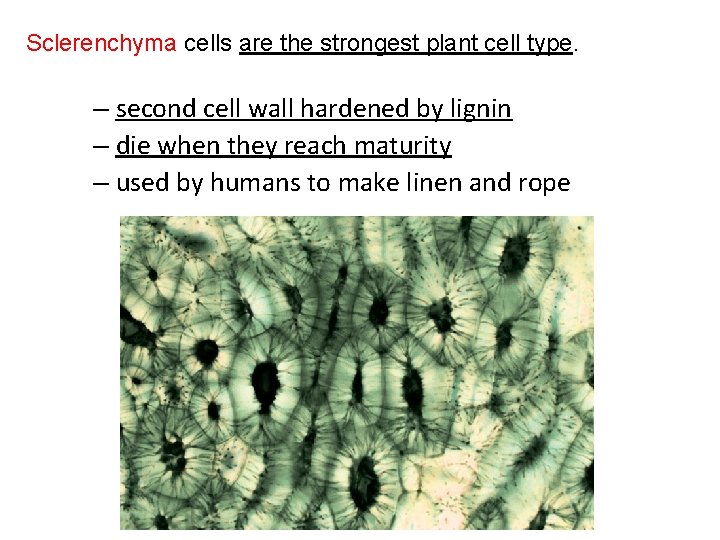
Sclerenchyma cells are the strongest plant cell type. – second cell wall hardened by lignin – die when they reach maturity – used by humans to make linen and rope
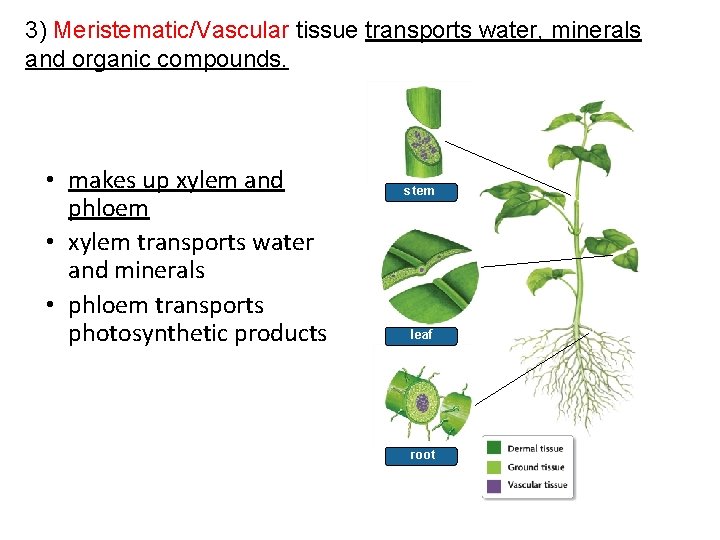
3) Meristematic/Vascular tissue transports water, minerals and organic compounds. • makes up xylem and phloem • xylem transports water and minerals • phloem transports photosynthetic products stem leaf root
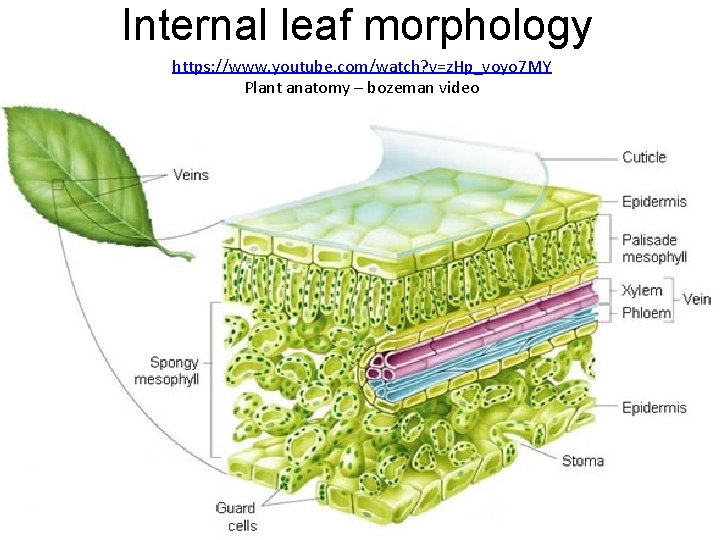
Internal leaf morphology https: //www. youtube. com/watch? v=z. Hp_voyo 7 MY Plant anatomy – bozeman video
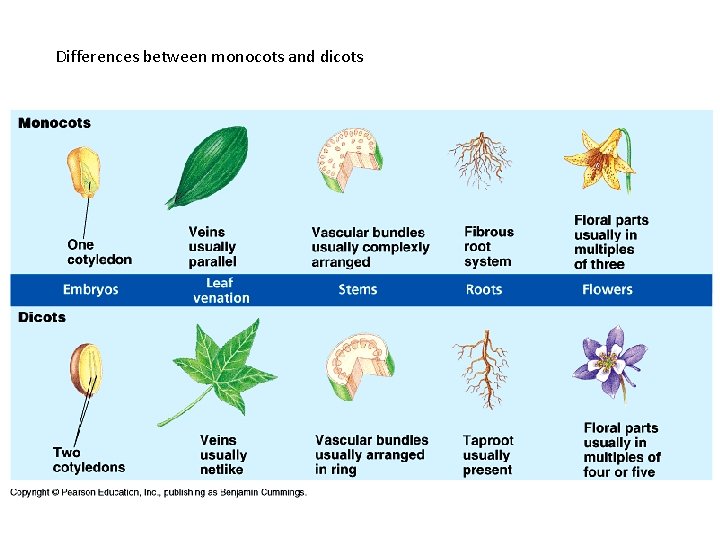
Differences between monocots and dicots
- Slides: 21