
BIOLOGY Organic Compounds A Periodic Table Created and
BIOLOGY Organic Compounds
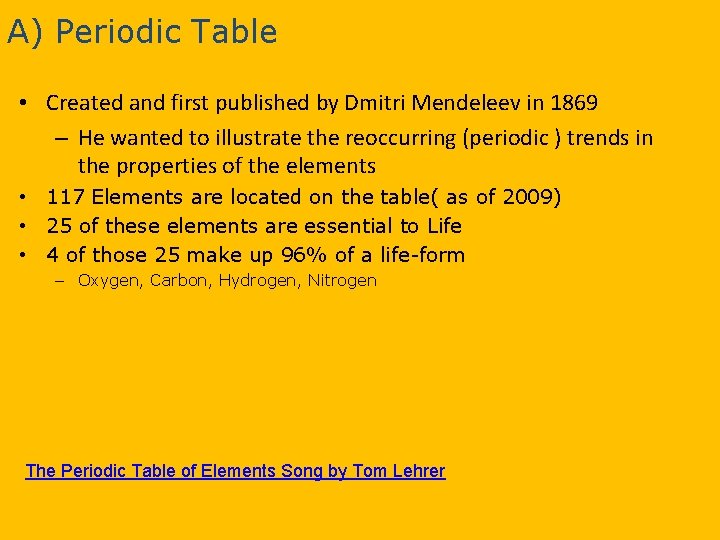
A) Periodic Table • Created and first published by Dmitri Mendeleev in 1869 – He wanted to illustrate the reoccurring (periodic ) trends in the properties of the elements • 117 Elements are located on the table( as of 2009) • 25 of these elements are essential to Life • 4 of those 25 make up 96% of a life-form – Oxygen, Carbon, Hydrogen, Nitrogen The Periodic Table of Elements Song by Tom Lehrer
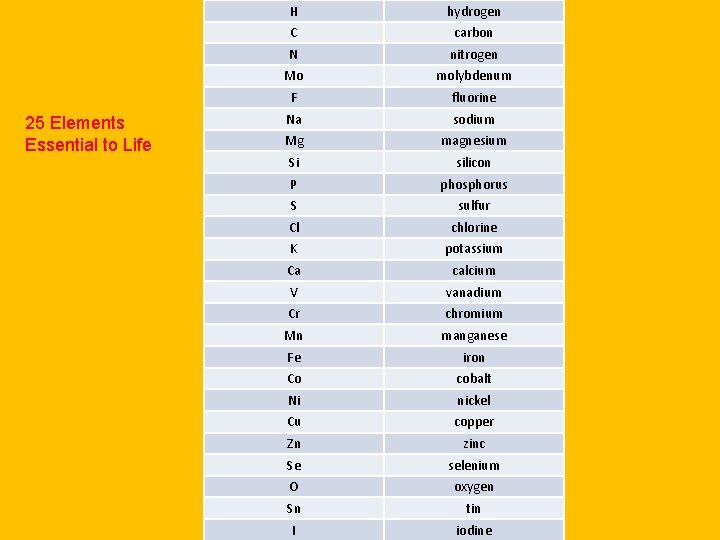
25 Elements Essential to Life H hydrogen C carbon N nitrogen Mo molybdenum F fluorine Na sodium Mg magnesium Si silicon P phosphorus S sulfur Cl chlorine K potassium Ca calcium V vanadium Cr chromium Mn manganese Fe iron Co cobalt Ni nickel Cu copper Zn zinc Se selenium O oxygen Sn tin I iodine
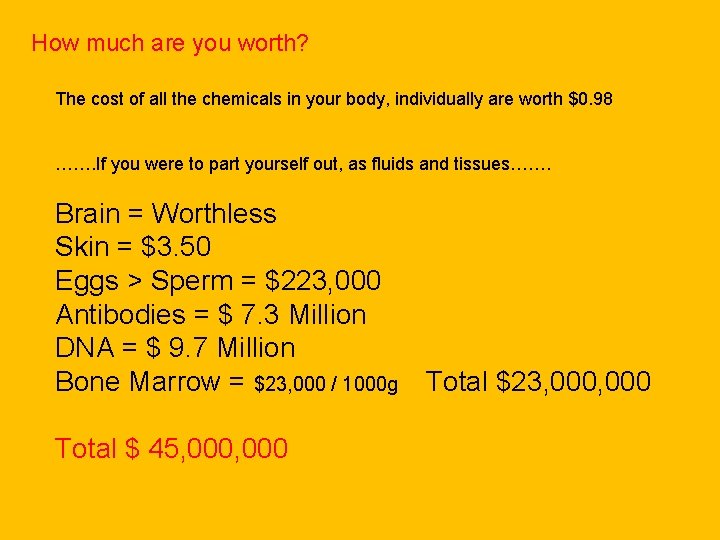
How much are you worth? The cost of all the chemicals in your body, individually are worth $0. 98 ……. If you were to part yourself out, as fluids and tissues……. Brain = Worthless Skin = $3. 50 Eggs > Sperm = $223, 000 Antibodies = $ 7. 3 Million DNA = $ 9. 7 Million Bone Marrow = $23, 000 / 1000 g Total $23, 000 Total $ 45, 000
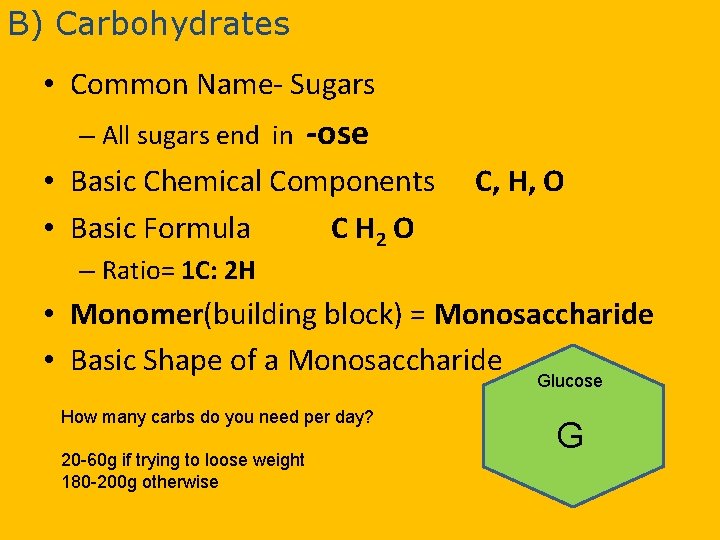
B) Carbohydrates • Common Name- Sugars – All sugars end in -ose • Basic Chemical Components • Basic Formula C H 2 O C, H, O – Ratio= 1 C: 2 H • Monomer(building block) = Monosaccharide • Basic Shape of a Monosaccharide Glucose How many carbs do you need per day? 20 -60 g if trying to loose weight 180 -200 g otherwise G
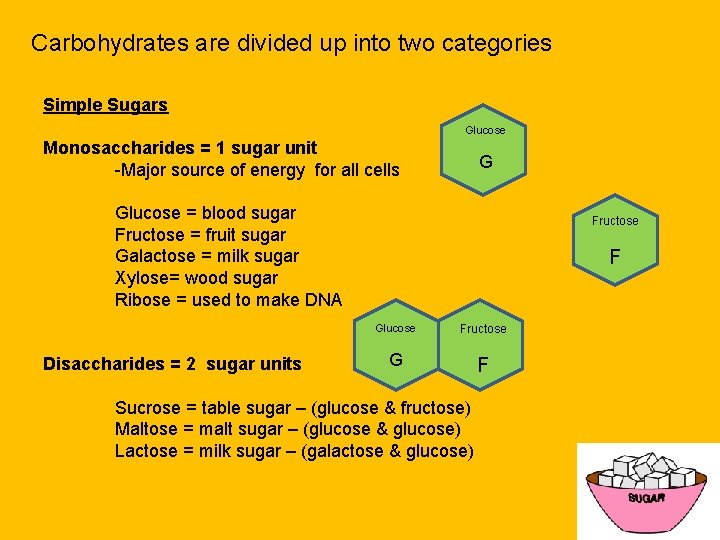
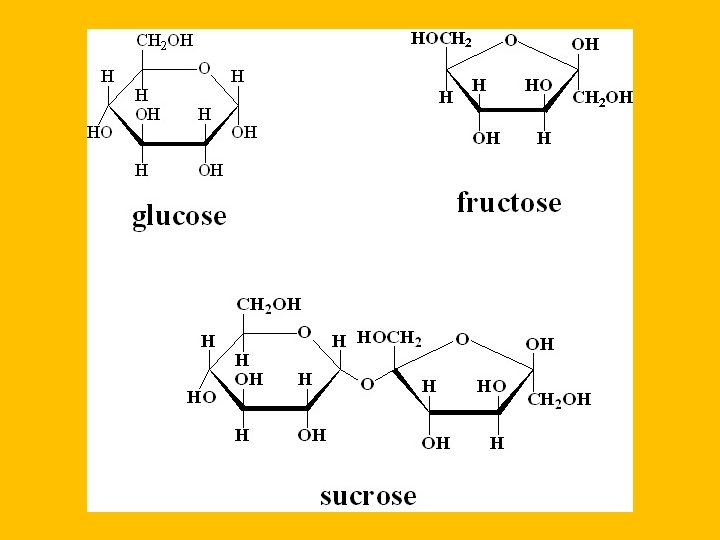
Carbohydrates are divided up into two categories Simple Sugars Glucose Monosaccharides = 1 sugar unit -Major source of energy for all cells G Glucose = blood sugar Fructose = fruit sugar Galactose = milk sugar Xylose= wood sugar Ribose = used to make DNA Disaccharides = 2 sugar units Fructose F Glucose Fructose G F Sucrose = table sugar – (glucose & fructose) Maltose = malt sugar – (glucose & glucose) Lactose = milk sugar – (galactose & glucose)
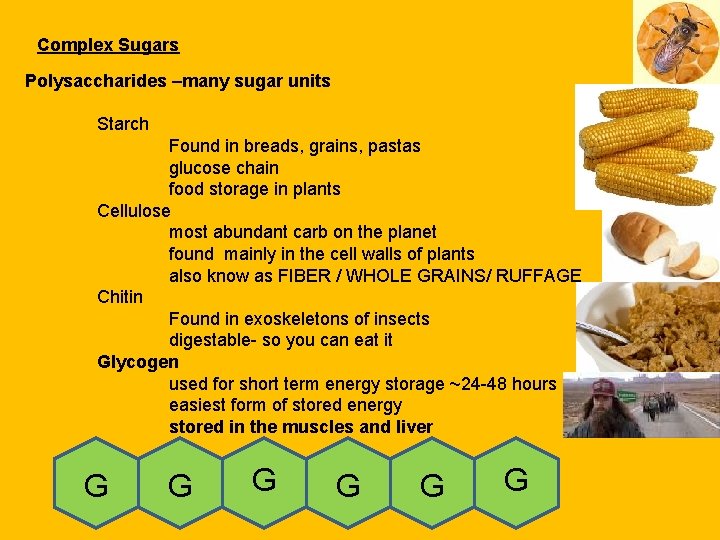
Complex Sugars Polysaccharides –many sugar units Starch Found in breads, grains, pastas glucose chain food storage in plants Cellulose most abundant carb on the planet found mainly in the cell walls of plants also know as FIBER / WHOLE GRAINS/ RUFFAGE Chitin Found in exoskeletons of insects digestable- so you can eat it Glycogen used for short term energy storage ~24 -48 hours easiest form of stored energy stored in the muscles and liver G G G

Molecular Structure of a Carbohydrate Chain Forms Glucose Ring Forms Galactose Fructose
C) Lipids • Commonly Name = Fats & Oils ( also Waxes and Sterols) - Fats- solid at room temperature - Oils- liquid at room temperature • • Basic Chemical Components = Monomer = Fatty acid • Primary function is to store energy long term C, H, O -Additional functions include: insulation, water proofing, build cell membranes, hormones, construction of brain cells( brain is 60% fat) • For good nutrition, average person needs < 50 g / day
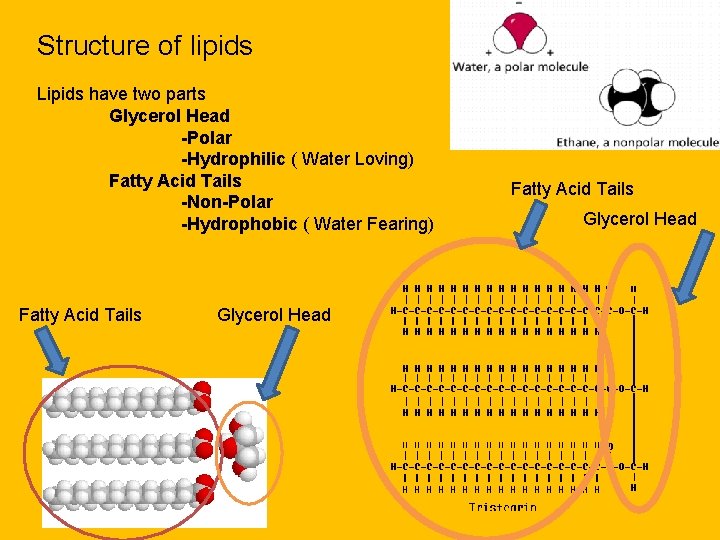
Structure of lipids Lipids have two parts Glycerol Head -Polar -Hydrophilic ( Water Loving) Fatty Acid Tails -Non-Polar -Hydrophobic ( Water Fearing) Fatty Acid Tails Glycerol Head
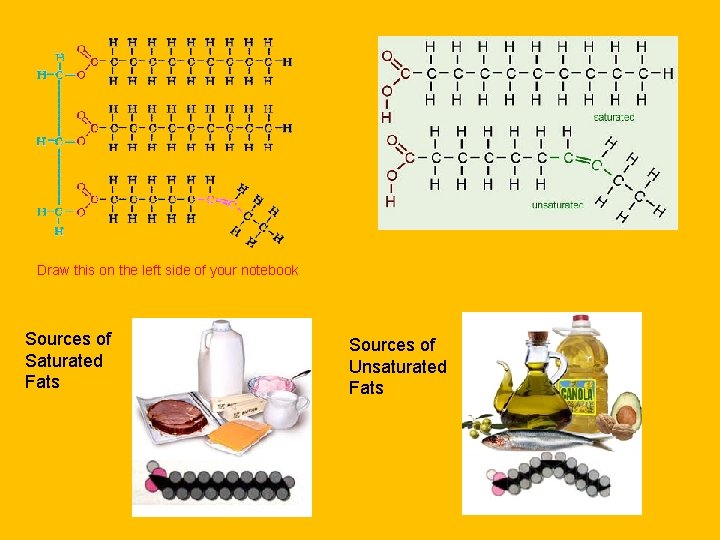
Draw this on the left side of your notebook Sources of Saturated Fats Sources of Unsaturated Fats
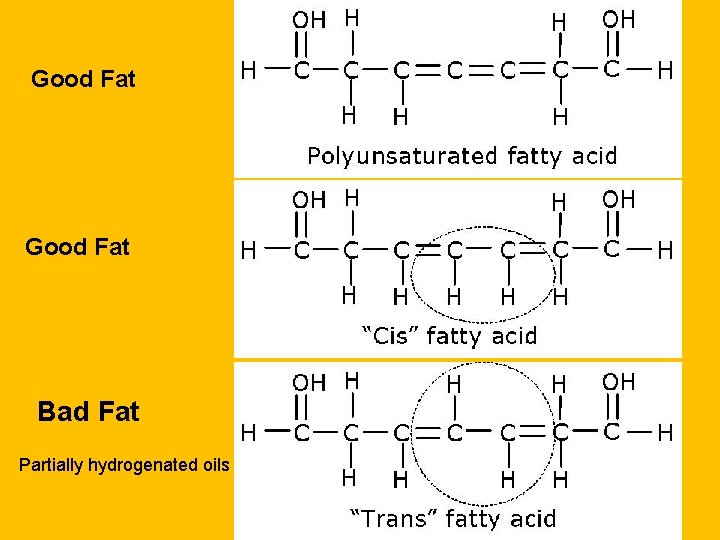
Good Fat Bad Fat Partially hydrogenated oils
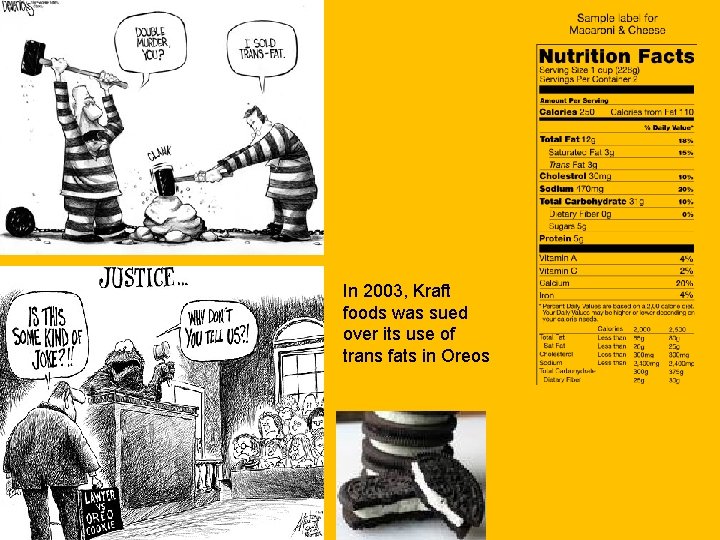
In 2003, Kraft foods was sued over its use of trans fats in Oreos
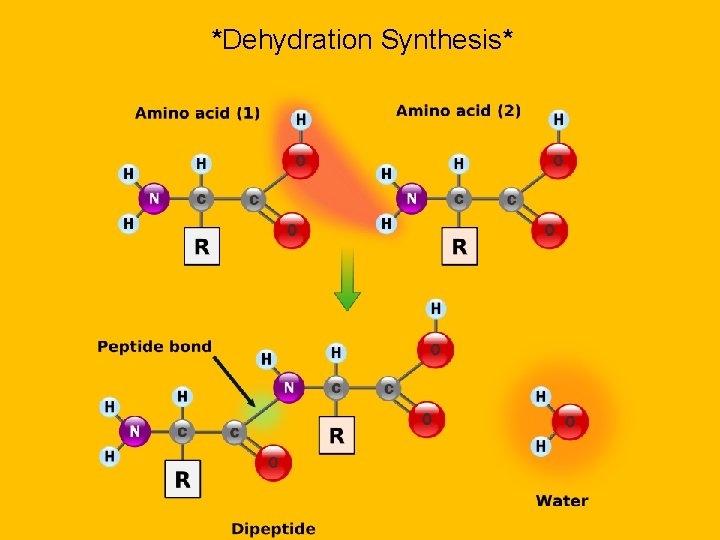
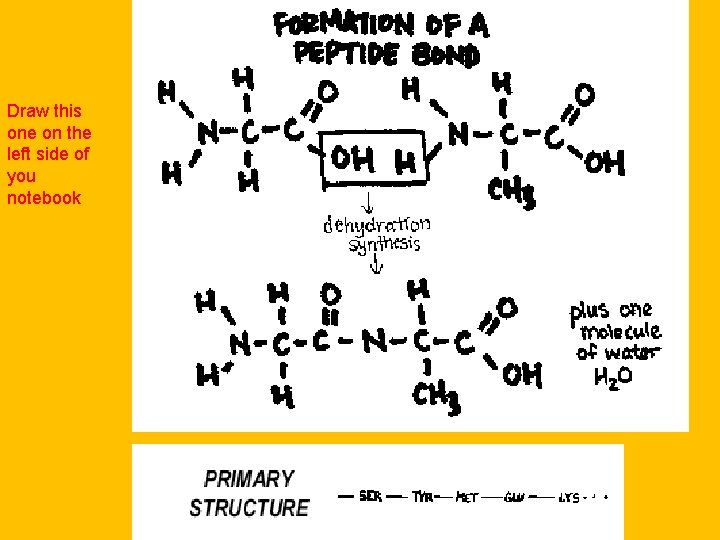
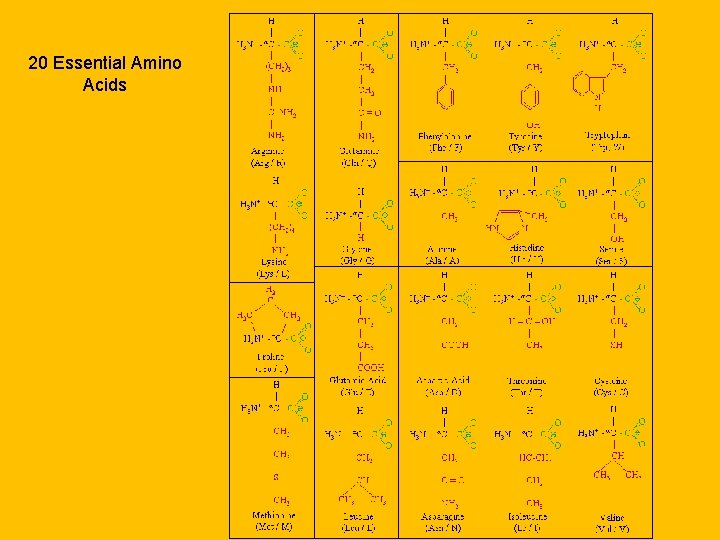
D) Proteins • • Basic Chemical Components = C, H, O, N Monomer = Amino acid • 20 essential amino acids • Primary function is the construction of body structures ex hair, nails, muscle, skin, • • Long chains of amino acids held together with peptide bonds Very large molecules, folded together in a 3 -D form • • Sources-dairy, lean meat, poultry, fish & veggies For good nutrition, average person needs > 50 g / day • Athletes need greater than 1000 g/ day
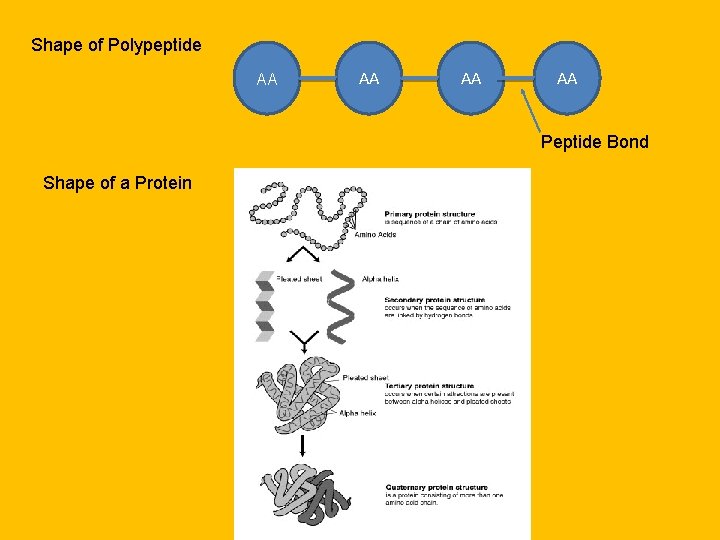
Shape of Polypeptide AA AA Peptide Bond Shape of a Protein
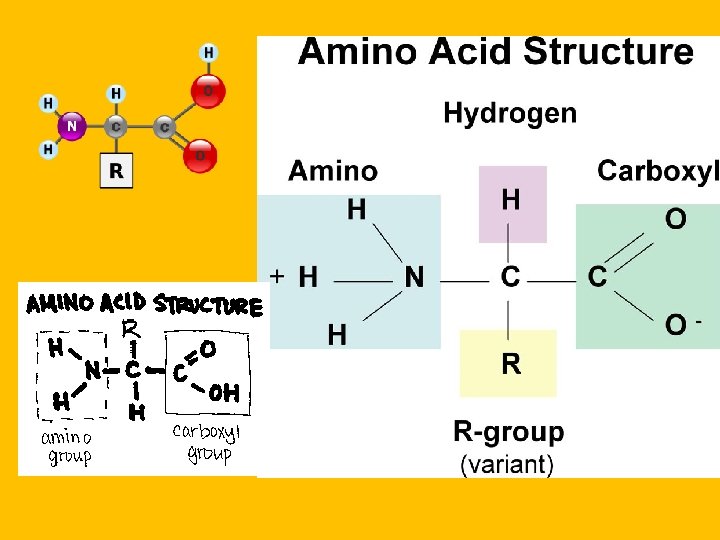
*Dehydration Synthesis*
Draw this one on the left side of you notebook
20 Essential Amino Acids
D-1) Enzymes • • A bio-molecule that acts as a catalyst- it speeds up the rate of a chemical reaction(rxn) by lowering the activation energy Enzymes are made out of proteins, and their shape is vital to their function Basic Chemical Components C, H, O, N Used to break down, or make complex chemicals in the body All enzymes end in –ase The name of the enzyme tells you what it reacts with • Ex: Sucrase breaks down sucrose Maltase breaks down maltose Common names of digestion enzymes end in - in • Ex: Pepsin (which helped give Pepsi-Cola is name in the early 1900’s, is was used to help aid in digestion)
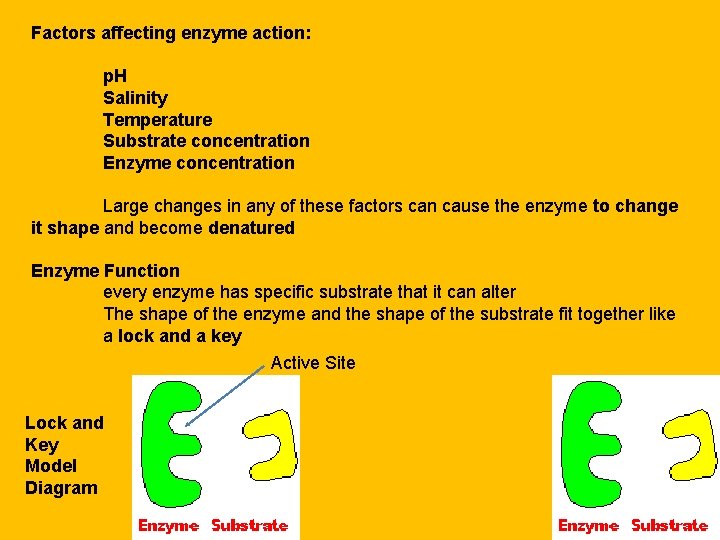
Factors affecting enzyme action: p. H Salinity Temperature Substrate concentration Enzyme concentration Large changes in any of these factors can cause the enzyme to change it shape and become denatured Enzyme Function every enzyme has specific substrate that it can alter The shape of the enzyme and the shape of the substrate fit together like a lock and a key Active Site Lock and Key Model Diagram
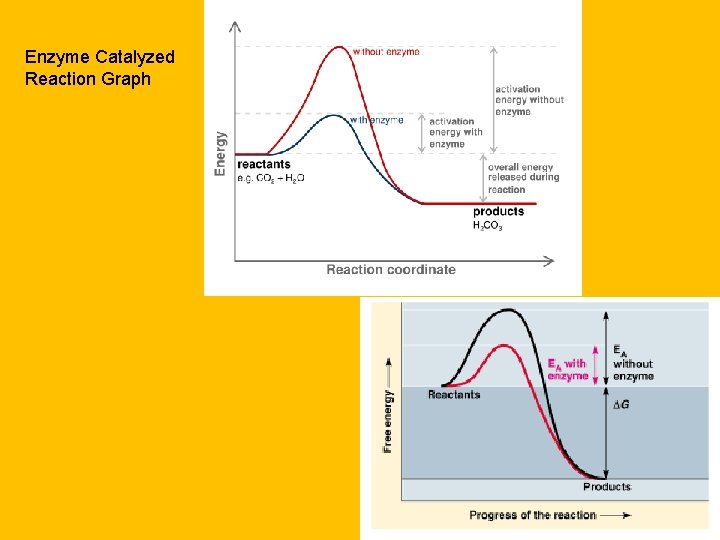
Enzyme Catalyzed Reaction Graph
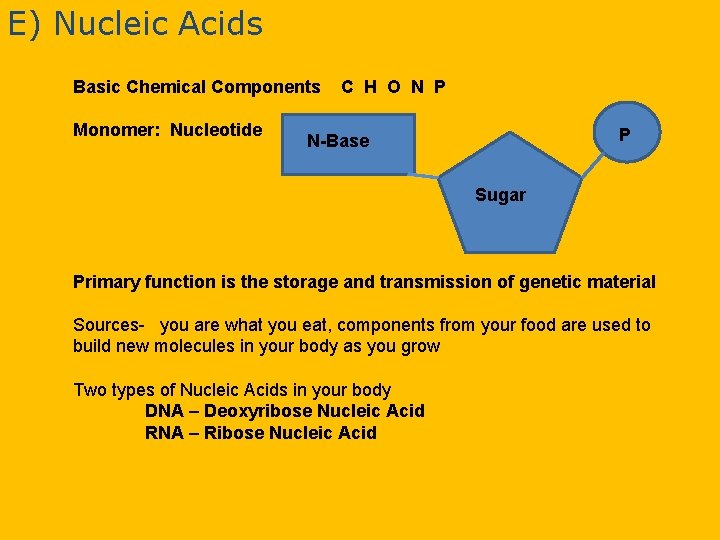
E) Nucleic Acids Basic Chemical Components Monomer: Nucleotide C H O N P P N-Base Sugar Primary function is the storage and transmission of genetic material Sources- you are what you eat, components from your food are used to build new molecules in your body as you grow Two types of Nucleic Acids in your body DNA – Deoxyribose Nucleic Acid RNA – Ribose Nucleic Acid
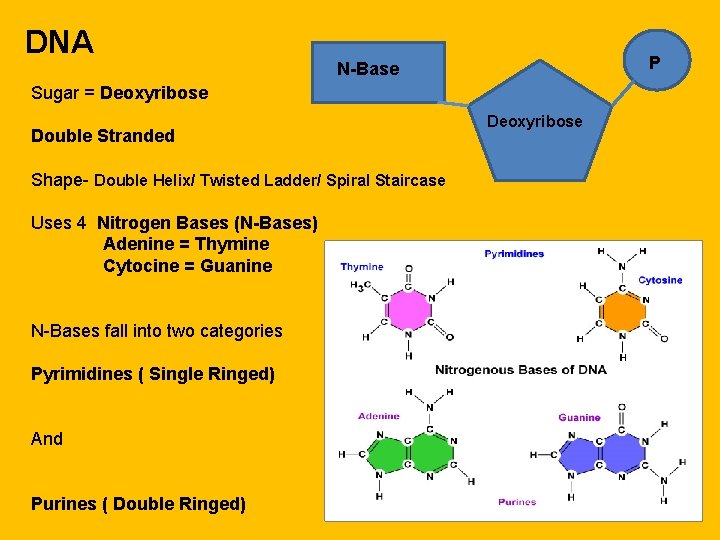
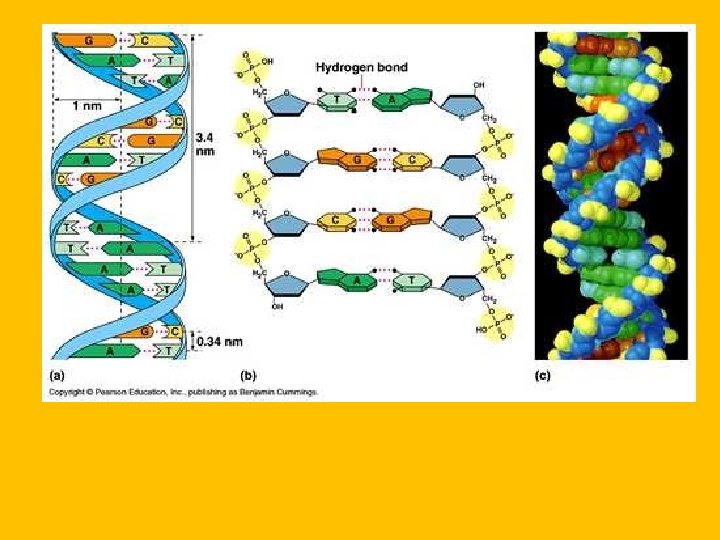
DNA P N-Base Sugar = Deoxyribose Double Stranded Shape- Double Helix/ Twisted Ladder/ Spiral Staircase Uses 4 Nitrogen Bases (N-Bases) Adenine = Thymine Cytocine = Guanine N-Bases fall into two categories Pyrimidines ( Single Ringed) And Purines ( Double Ringed) Deoxyribose
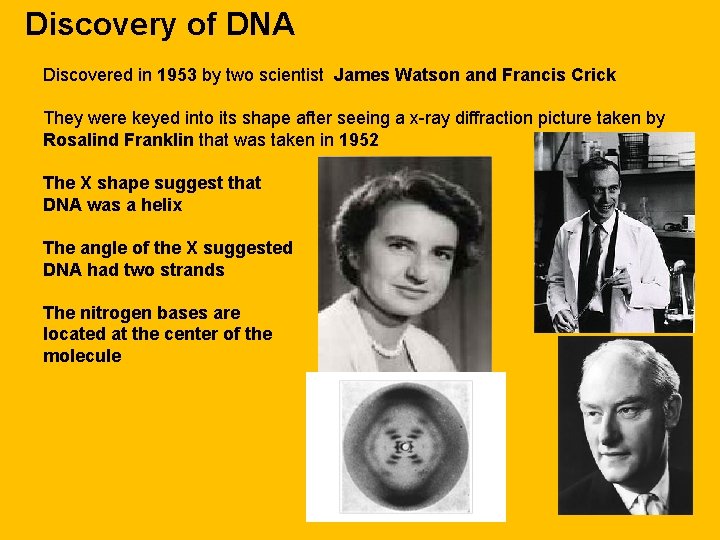
Discovery of DNA Discovered in 1953 by two scientist James Watson and Francis Crick They were keyed into its shape after seeing a x-ray diffraction picture taken by Rosalind Franklin that was taken in 1952 The X shape suggest that DNA was a helix The angle of the X suggested DNA had two strands The nitrogen bases are located at the center of the molecule
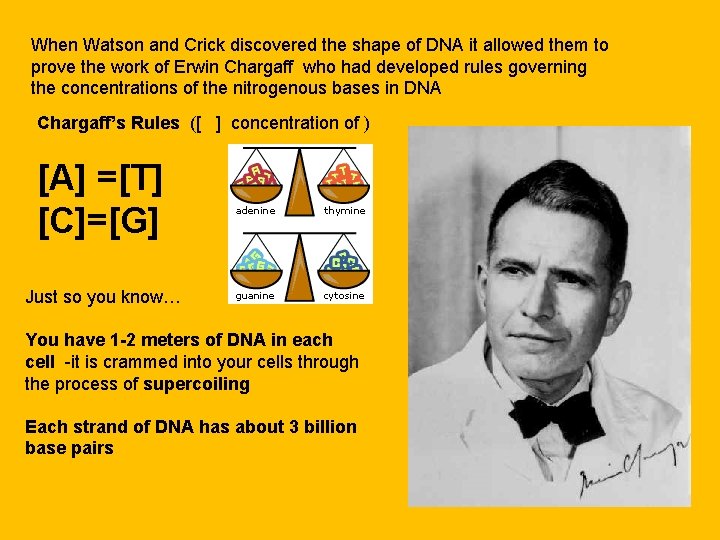
When Watson and Crick discovered the shape of DNA it allowed them to prove the work of Erwin Chargaff who had developed rules governing the concentrations of the nitrogenous bases in DNA Chargaff’s Rules ([ ] concentration of ) [A] =[T] [C]=[G] Just so you know… You have 1 -2 meters of DNA in each cell -it is crammed into your cells through the process of supercoiling Each strand of DNA has about 3 billion base pairs
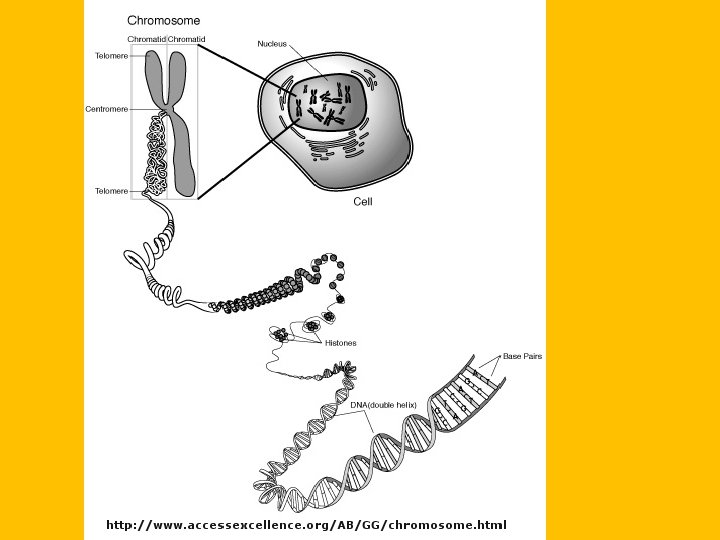
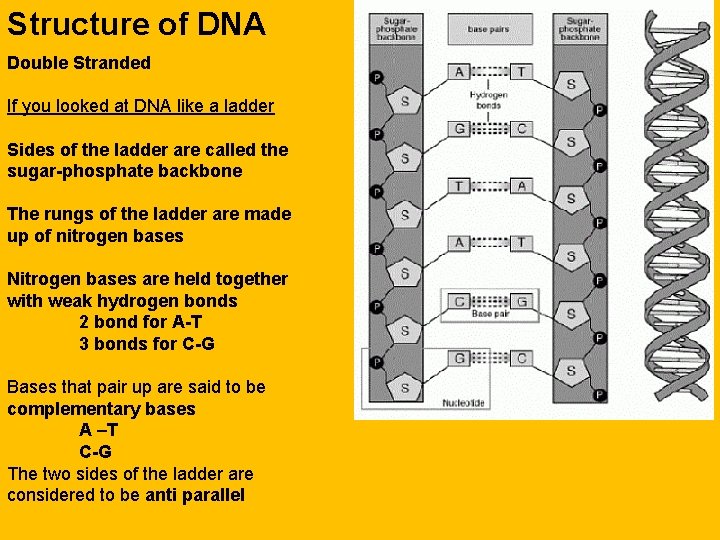
Structure of DNA Double Stranded If you looked at DNA like a ladder Sides of the ladder are called the sugar-phosphate backbone The rungs of the ladder are made up of nitrogen bases Nitrogen bases are held together with weak hydrogen bonds 2 bond for A-T 3 bonds for C-G Bases that pair up are said to be complementary bases A –T C-G The two sides of the ladder are considered to be anti parallel
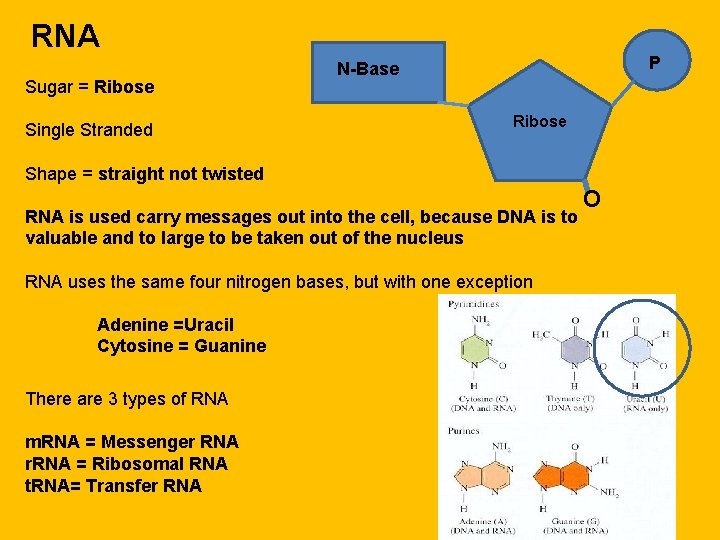
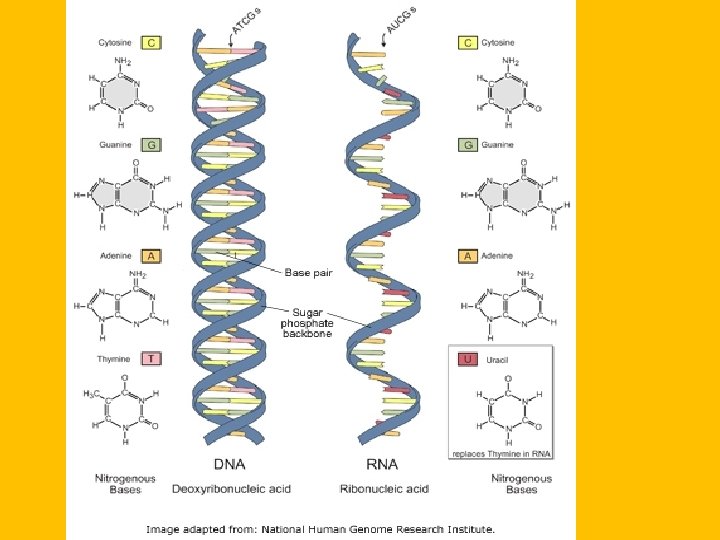
RNA Sugar = Ribose Single Stranded P N-Base Ribose Shape = straight not twisted RNA is used carry messages out into the cell, because DNA is to valuable and to large to be taken out of the nucleus RNA uses the same four nitrogen bases, but with one exception Adenine =Uracil Cytosine = Guanine There are 3 types of RNA m. RNA = Messenger RNA r. RNA = Ribosomal RNA t. RNA= Transfer RNA O
- Slides: 33