
BIOLOGY OF PARASITES Biology of Balantidium coli only
BIOLOGY OF PARASITES
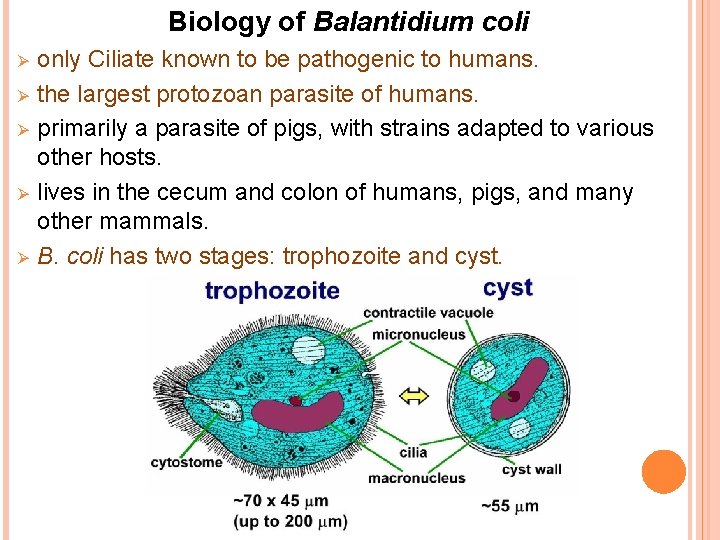
Biology of Balantidium coli Ø Ø Ø only Ciliate known to be pathogenic to humans. the largest protozoan parasite of humans. primarily a parasite of pigs, with strains adapted to various other hosts. lives in the cecum and colon of humans, pigs, and many other mammals. B. coli has two stages: trophozoite and cyst.
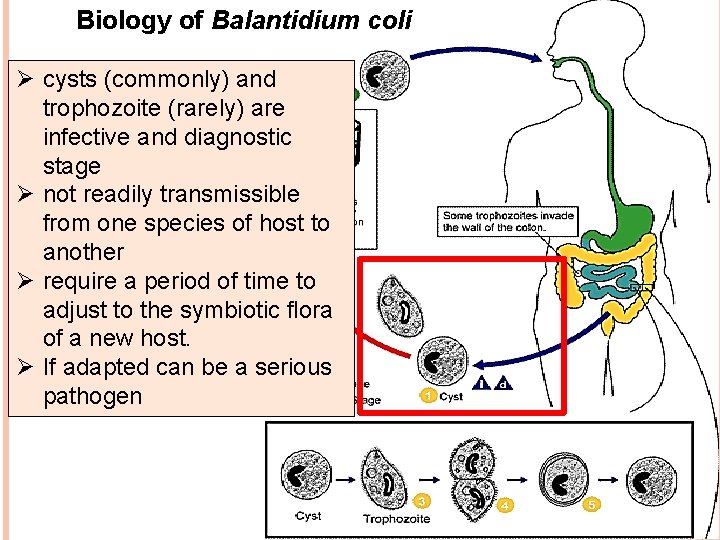
Biology of Balantidium coli Ø cysts (commonly) and trophozoite (rarely) are infective and diagnostic stage Ø not readily transmissible from one species of host to another Ø require a period of time to adjust to the symbiotic flora of a new host. Ø If adapted can be a serious pathogen
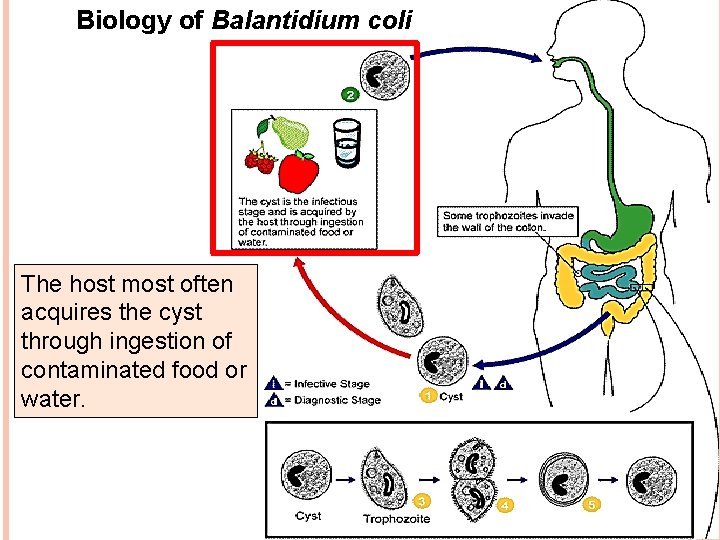
Biology of Balantidium coli The host most often acquires the cyst through ingestion of contaminated food or water.
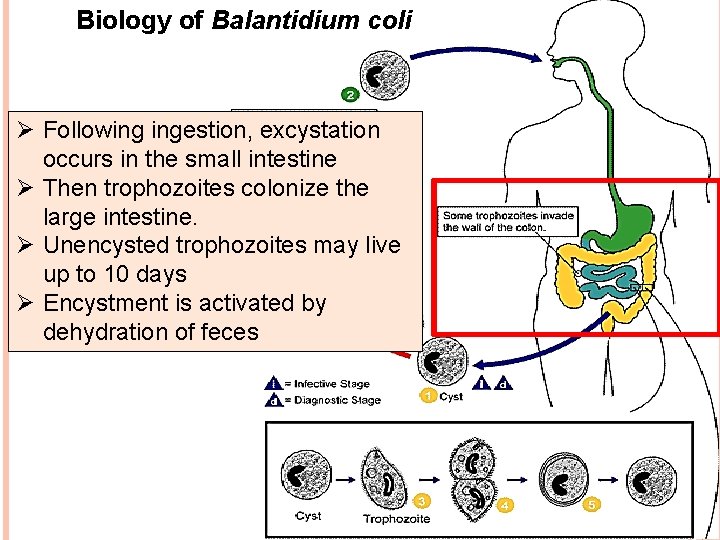
Biology of Balantidium coli Ø Following ingestion, excystation occurs in the small intestine Ø Then trophozoites colonize the large intestine. Ø Unencysted trophozoites may live up to 10 days Ø Encystment is activated by dehydration of feces
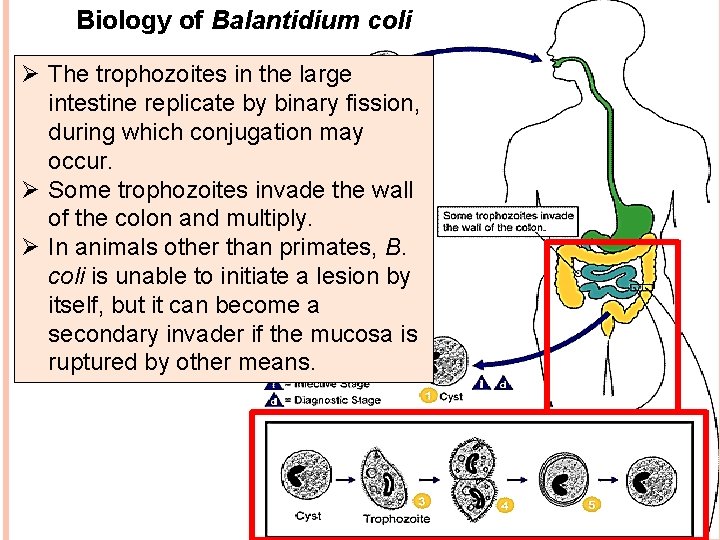
Biology of Balantidium coli Ø The trophozoites in the large intestine replicate by binary fission, during which conjugation may occur. Ø Some trophozoites invade the wall of the colon and multiply. Ø In animals other than primates, B. coli is unable to initiate a lesion by itself, but it can become a secondary invader if the mucosa is ruptured by other means.
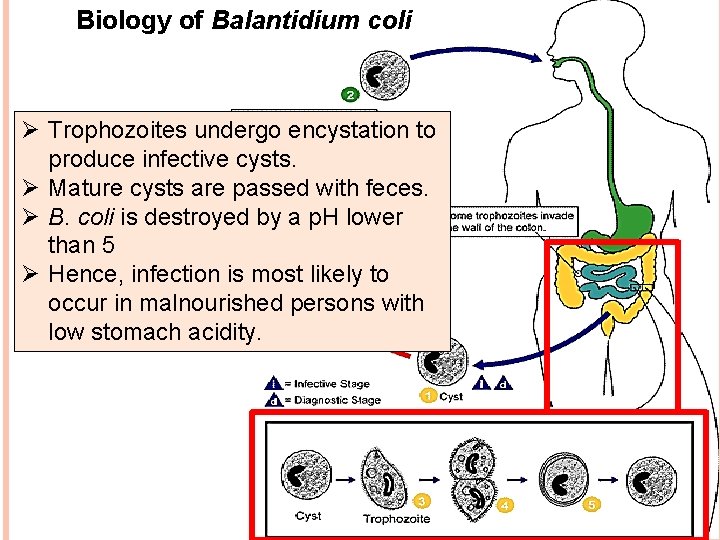
Biology of Balantidium coli Ø Trophozoites undergo encystation to produce infective cysts. Ø Mature cysts are passed with feces. Ø B. coli is destroyed by a p. H lower than 5 Ø Hence, infection is most likely to occur in malnourished persons with low stomach acidity.
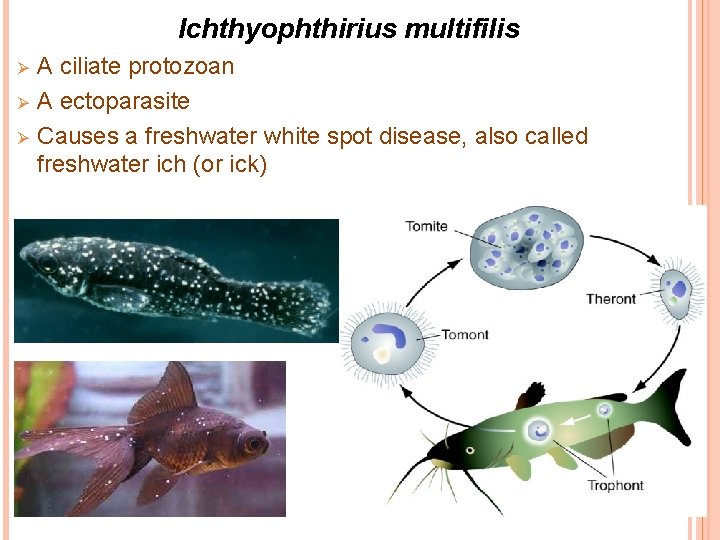
Ichthyophthirius multifilis Ø Ø Ø A ciliate protozoan A ectoparasite Causes a freshwater white spot disease, also called freshwater ich (or ick)
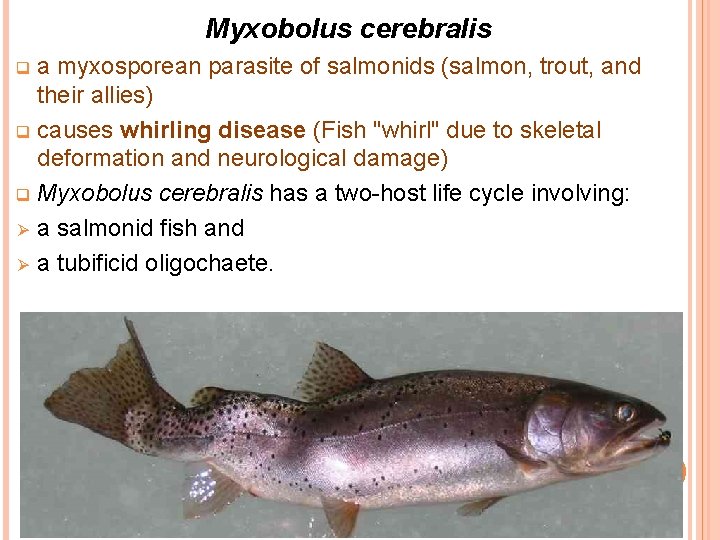
Myxobolus cerebralis a myxosporean parasite of salmonids (salmon, trout, and their allies) q causes whirling disease (Fish "whirl" due to skeletal deformation and neurological damage) q Myxobolus cerebralis has a two-host life cycle involving: Ø a salmonid fish and Ø a tubificid oligochaete. q
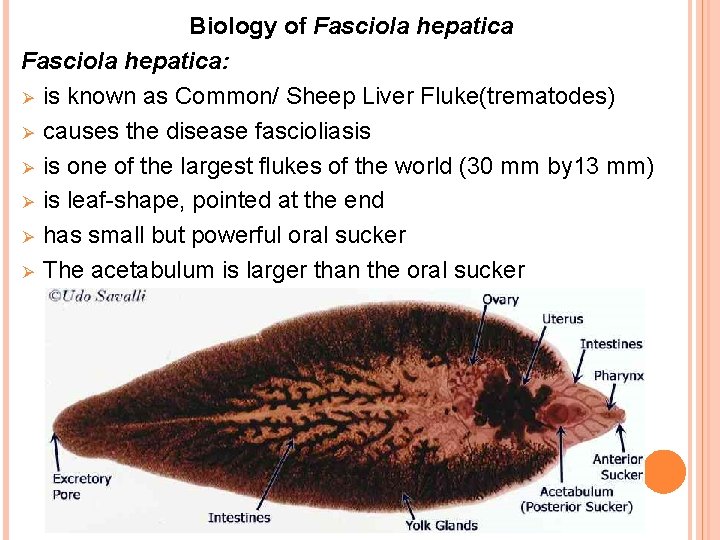
Biology of Fasciola hepatica: Ø is known as Common/ Sheep Liver Fluke(trematodes) Ø causes the disease fascioliasis Ø is one of the largest flukes of the world (30 mm by 13 mm) Ø is leaf-shape, pointed at the end Ø has small but powerful oral sucker Ø The acetabulum is larger than the oral sucker
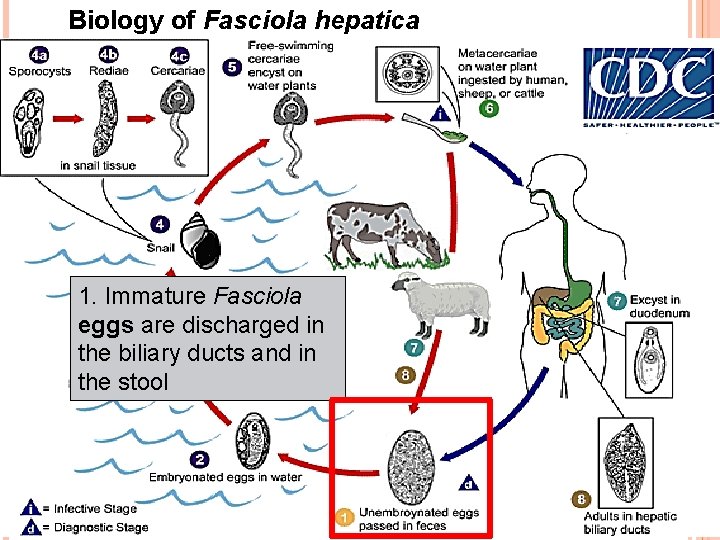
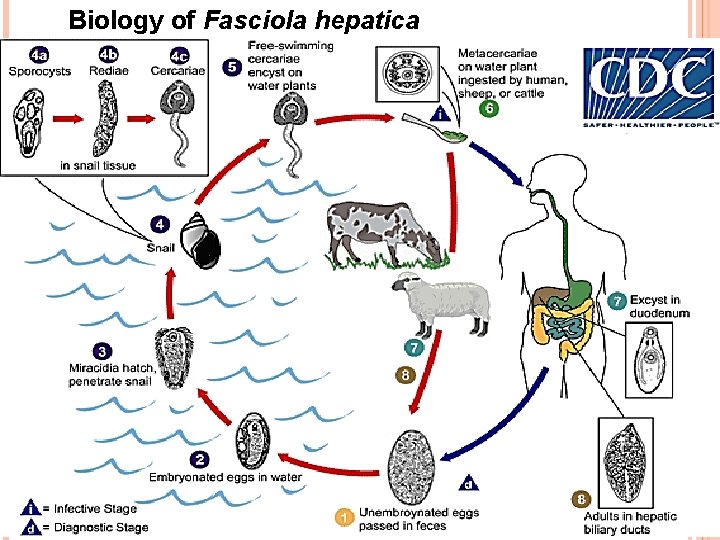
Biology of Fasciola hepatica 1. Immature Fasciola eggs are discharged in the biliary ducts and in the stool
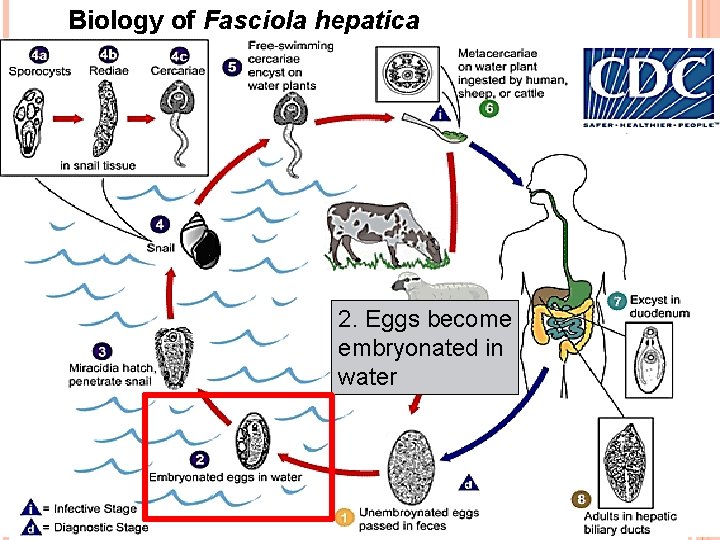
Biology of Fasciola hepatica 2. Eggs become embryonated in water
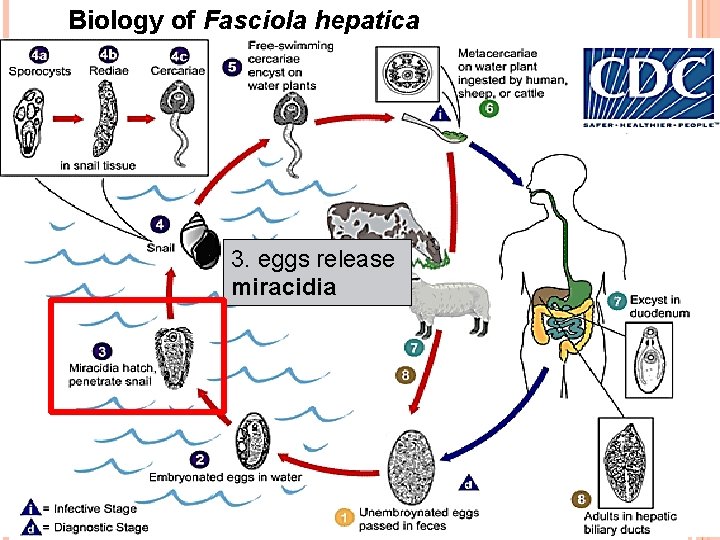
Biology of Fasciola hepatica 3. eggs release miracidia
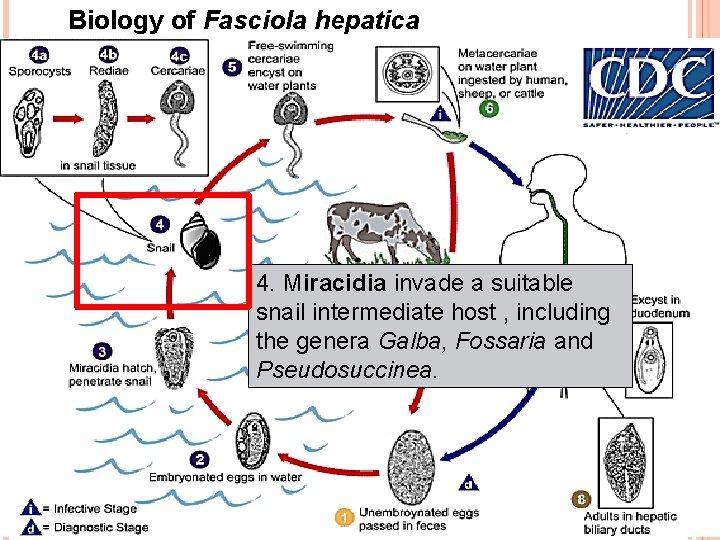
Biology of Fasciola hepatica 4. Miracidia invade a suitable snail intermediate host , including the genera Galba, Fossaria and Pseudosuccinea.
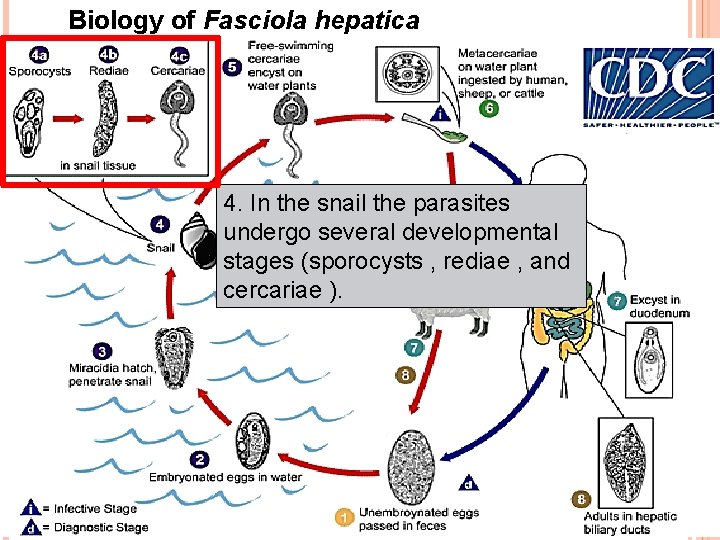
Biology of Fasciola hepatica 4. In the snail the parasites undergo several developmental stages (sporocysts , rediae , and cercariae ).
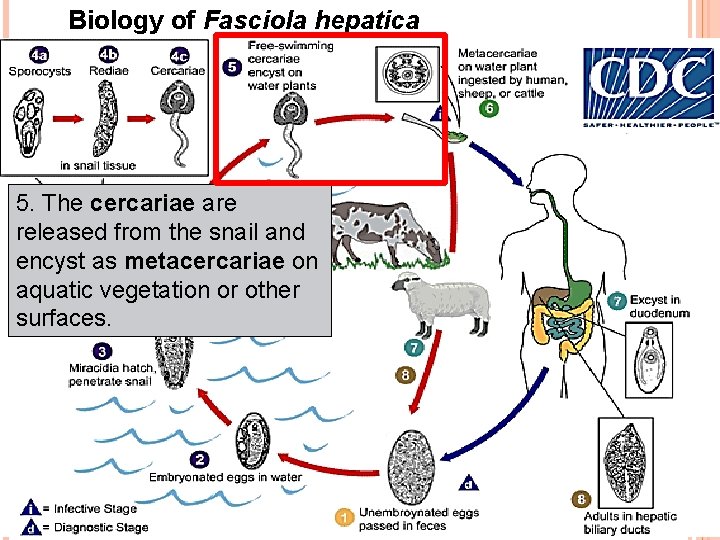
Biology of Fasciola hepatica 5. The cercariae are released from the snail and encyst as metacercariae on aquatic vegetation or other surfaces.
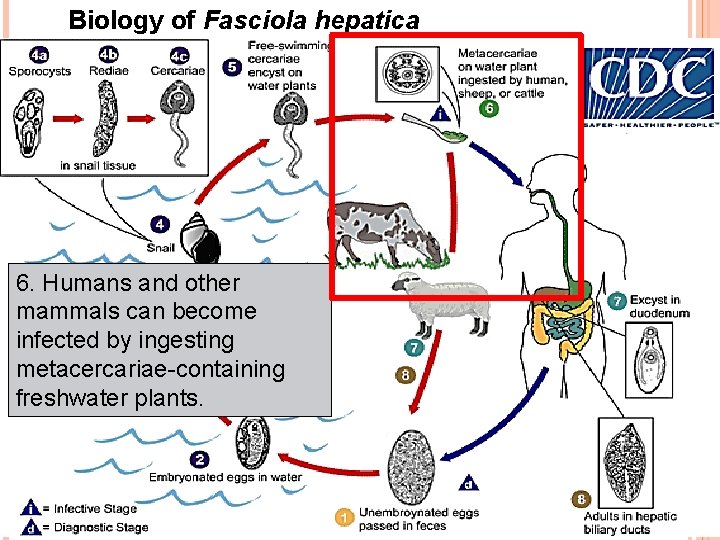
Biology of Fasciola hepatica 6. Humans and other mammals can become infected by ingesting metacercariae-containing freshwater plants.
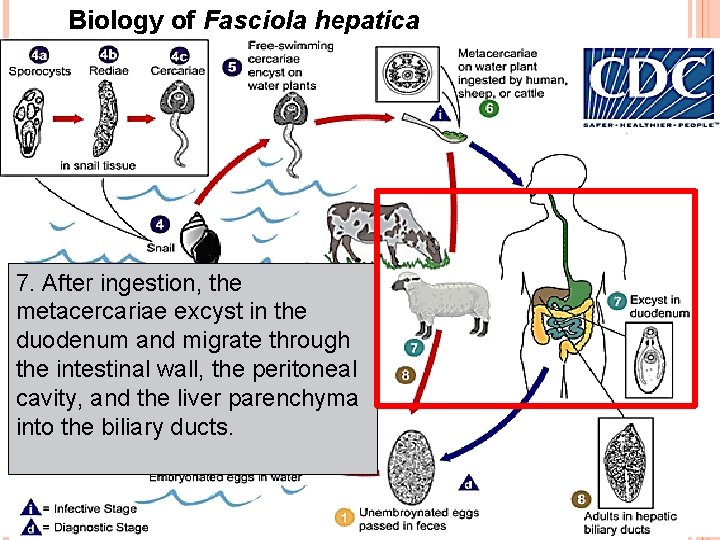
Biology of Fasciola hepatica 7. After ingestion, the metacercariae excyst in the duodenum and migrate through the intestinal wall, the peritoneal cavity, and the liver parenchyma into the biliary ducts.
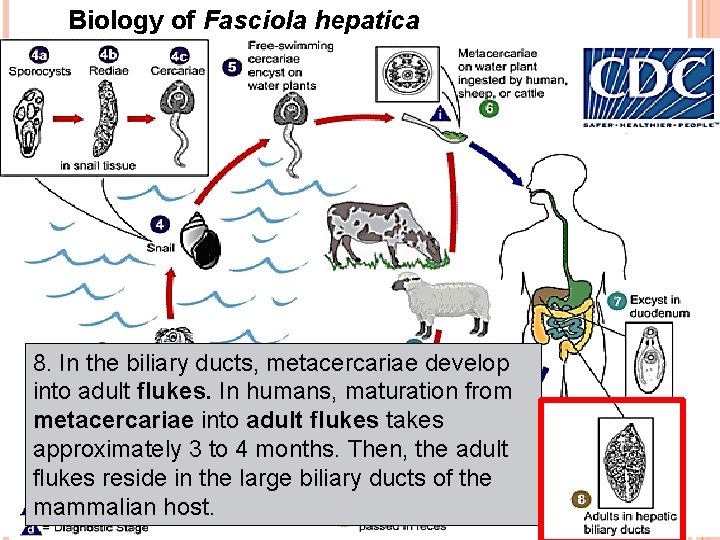
Biology of Fasciola hepatica 8. In the biliary ducts, metacercariae develop into adult flukes. In humans, maturation from metacercariae into adult flukes takes approximately 3 to 4 months. Then, the adult flukes reside in the large biliary ducts of the mammalian host.
Biology of Fasciola hepatica
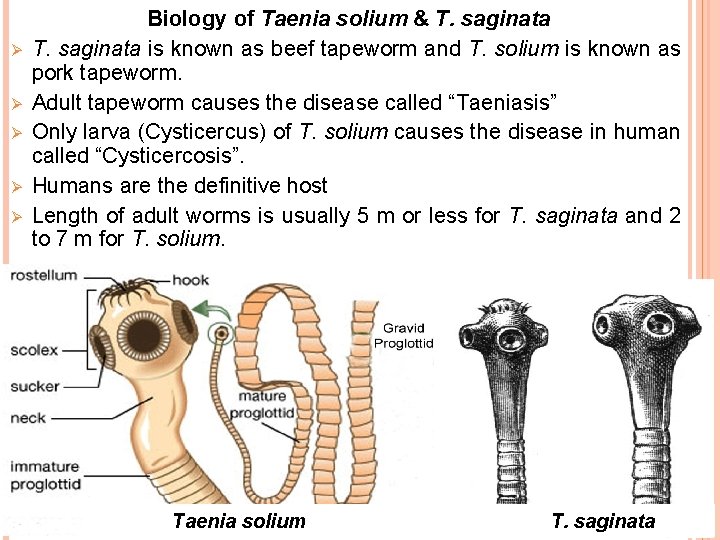
Ø Ø Ø Biology of Taenia solium & T. saginata is known as beef tapeworm and T. solium is known as pork tapeworm. Adult tapeworm causes the disease called “Taeniasis” Only larva (Cysticercus) of T. solium causes the disease in human called “Cysticercosis”. Humans are the definitive host Length of adult worms is usually 5 m or less for T. saginata and 2 to 7 m for T. solium. Taenia solium T. saginata
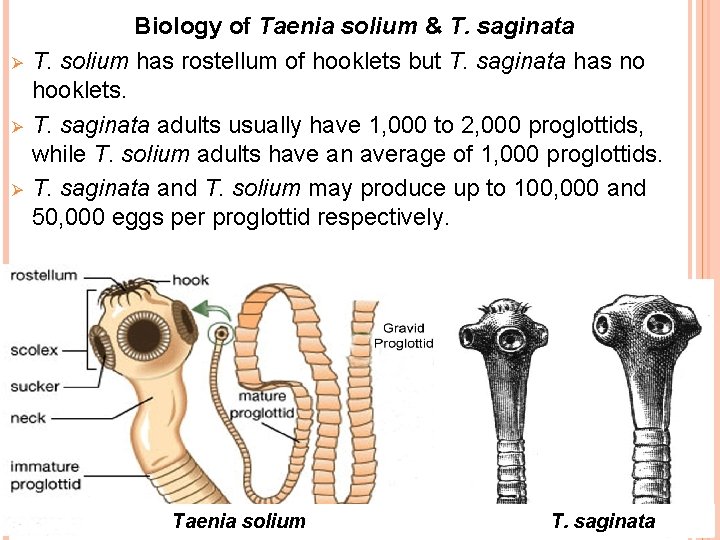
Ø Ø Ø Biology of Taenia solium & T. saginata T. solium has rostellum of hooklets but T. saginata has no hooklets. T. saginata adults usually have 1, 000 to 2, 000 proglottids, while T. solium adults have an average of 1, 000 proglottids. T. saginata and T. solium may produce up to 100, 000 and 50, 000 eggs per proglottid respectively. Taenia solium T. saginata
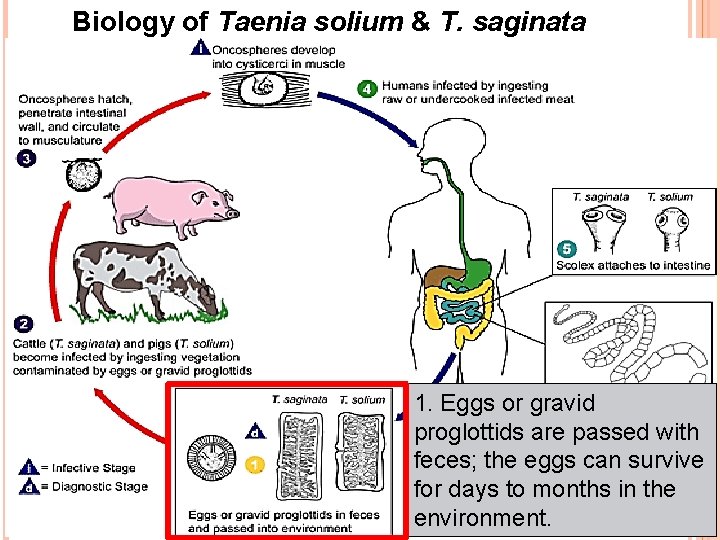
Biology of Taenia solium & T. saginata 1. Eggs or gravid proglottids are passed with feces; the eggs can survive for days to months in the environment.
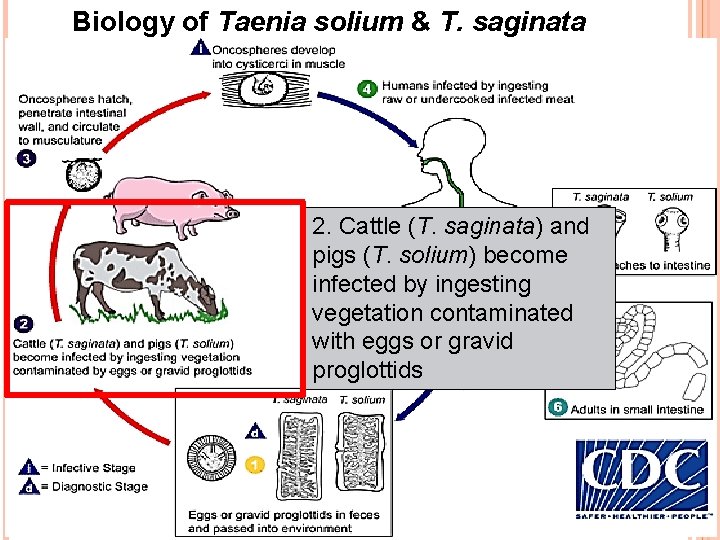
Biology of Taenia solium & T. saginata 2. Cattle (T. saginata) and pigs (T. solium) become infected by ingesting vegetation contaminated with eggs or gravid proglottids
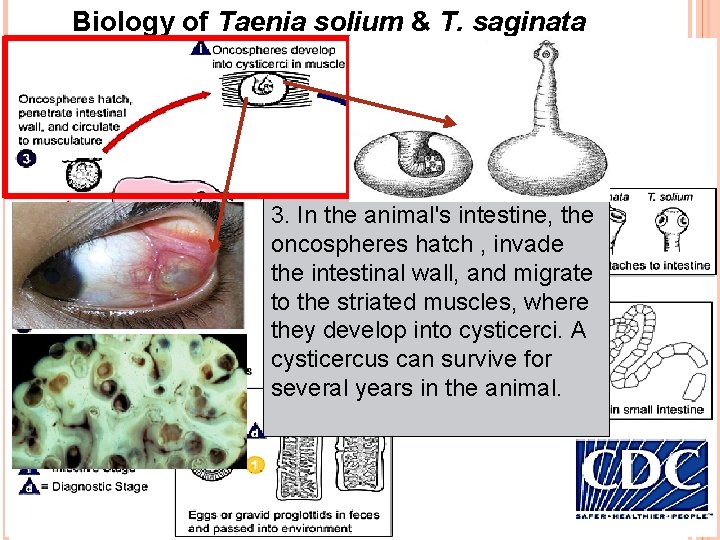
Biology of Taenia solium & T. saginata 3. In the animal's intestine, the oncospheres hatch , invade the intestinal wall, and migrate to the striated muscles, where they develop into cysticerci. A cysticercus can survive for several years in the animal.
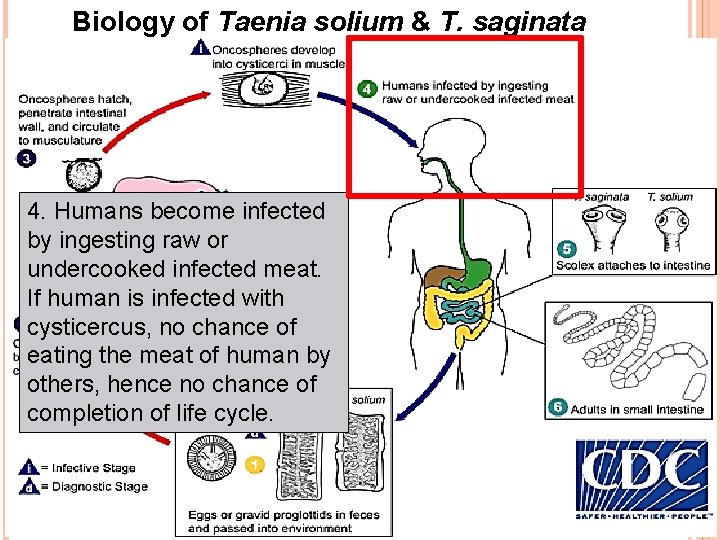
Biology of Taenia solium & T. saginata 4. Humans become infected by ingesting raw or undercooked infected meat. If human is infected with cysticercus, no chance of eating the meat of human by others, hence no chance of completion of life cycle.
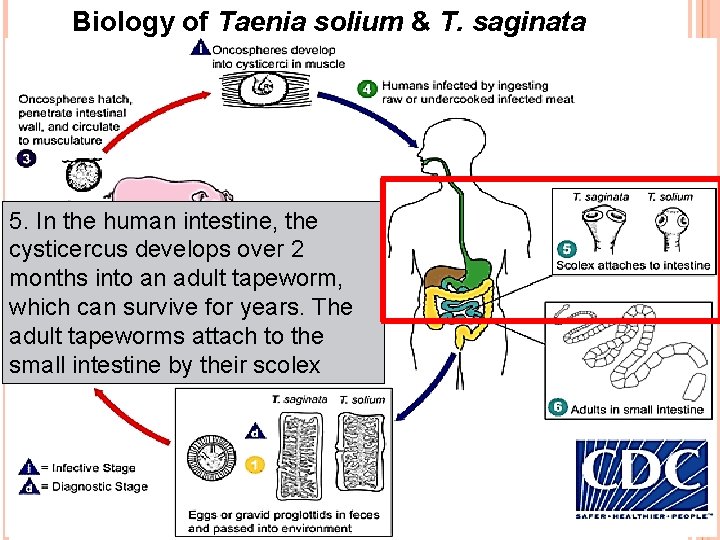
Biology of Taenia solium & T. saginata 5. In the human intestine, the cysticercus develops over 2 months into an adult tapeworm, which can survive for years. The adult tapeworms attach to the small intestine by their scolex
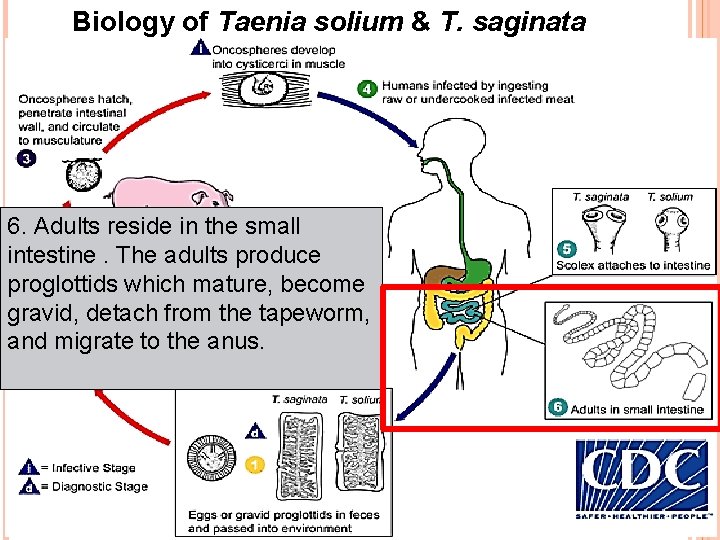
Biology of Taenia solium & T. saginata 6. Adults reside in the small intestine. The adults produce proglottids which mature, become gravid, detach from the tapeworm, and migrate to the anus.
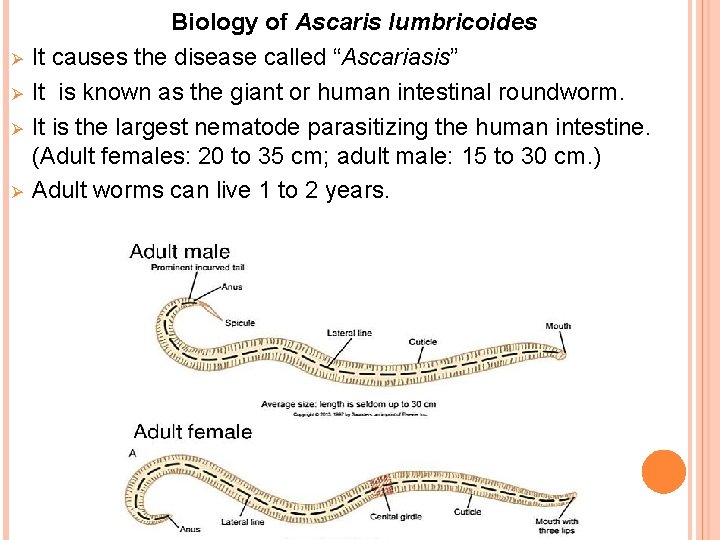
Ø Ø Biology of Ascaris lumbricoides It causes the disease called “Ascariasis” It is known as the giant or human intestinal roundworm. It is the largest nematode parasitizing the human intestine. (Adult females: 20 to 35 cm; adult male: 15 to 30 cm. ) Adult worms can live 1 to 2 years.
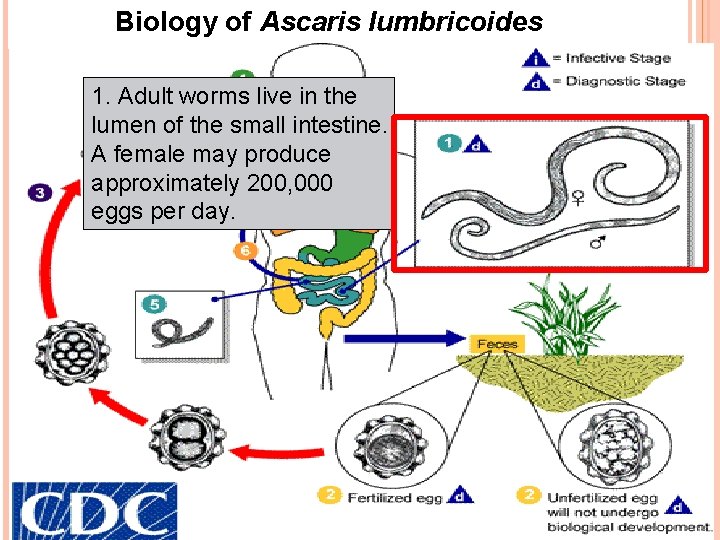
Biology of Ascaris lumbricoides 1. Adult worms live in the lumen of the small intestine. A female may produce approximately 200, 000 eggs per day.
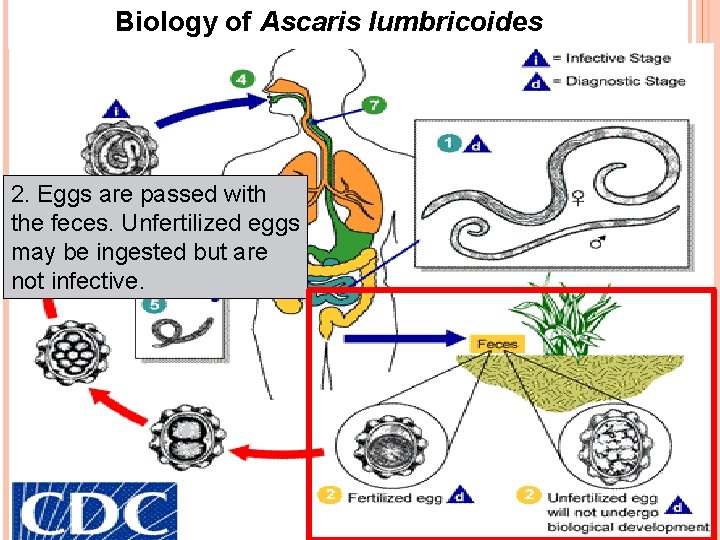
Biology of Ascaris lumbricoides 2. Eggs are passed with the feces. Unfertilized eggs may be ingested but are not infective.
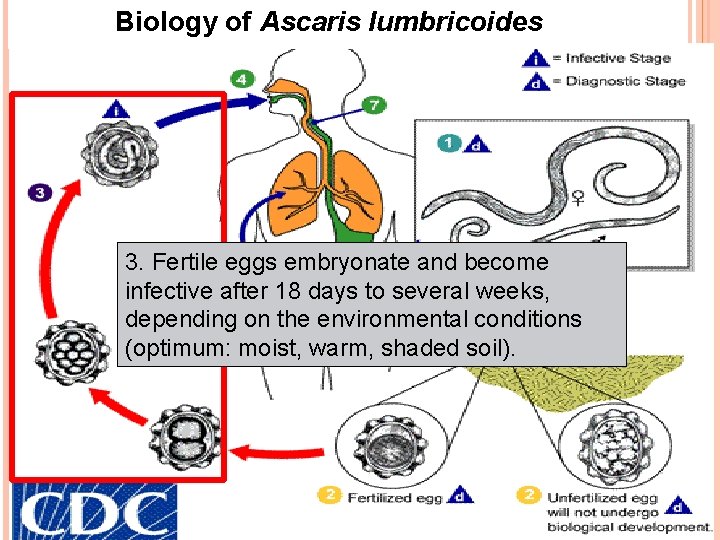
Biology of Ascaris lumbricoides 3. Fertile eggs embryonate and become infective after 18 days to several weeks, depending on the environmental conditions (optimum: moist, warm, shaded soil).
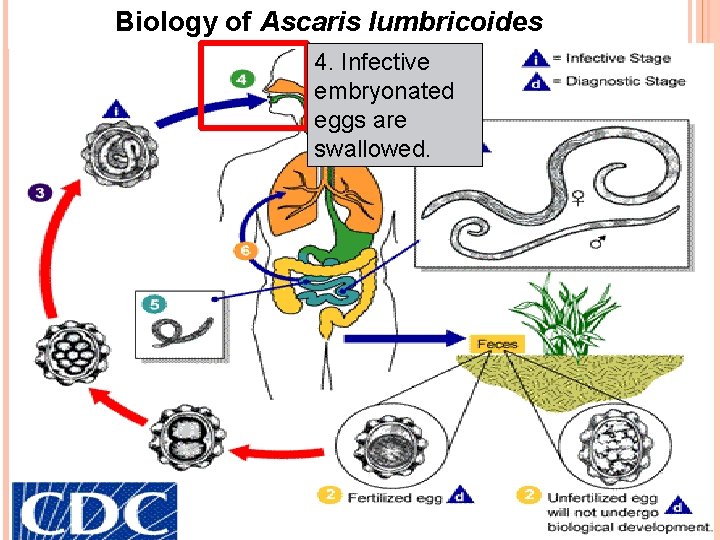
Biology of Ascaris lumbricoides 4. Infective embryonated eggs are swallowed.
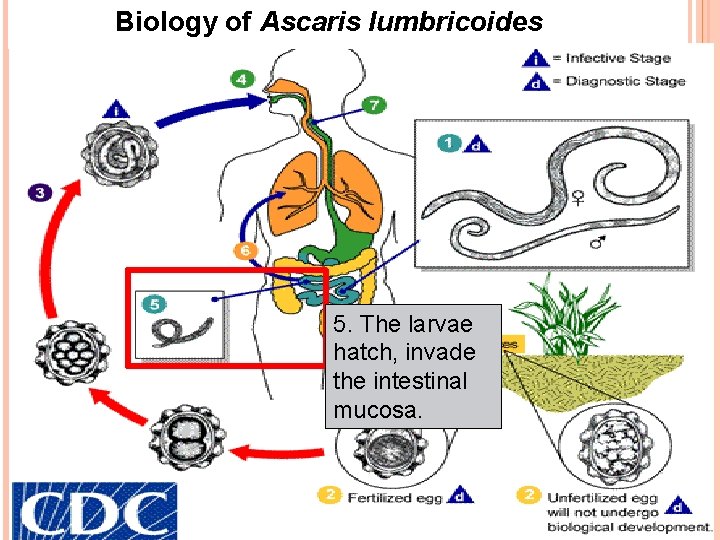
Biology of Ascaris lumbricoides 5. The larvae hatch, invade the intestinal mucosa.
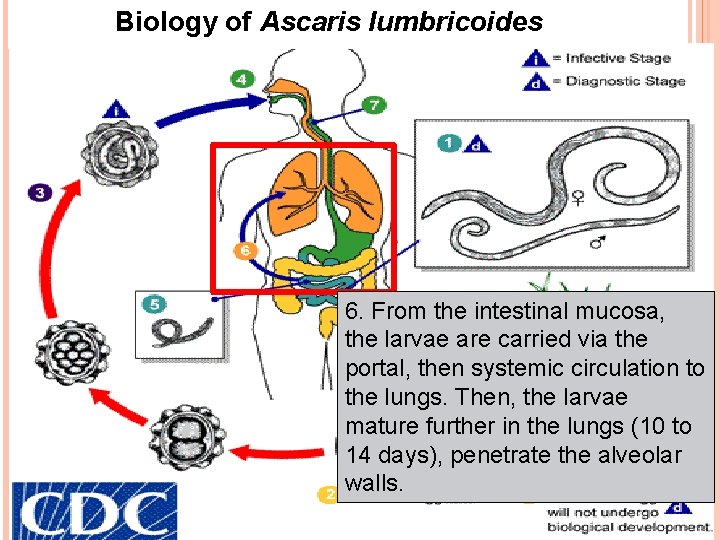
Biology of Ascaris lumbricoides 6. From the intestinal mucosa, the larvae are carried via the portal, then systemic circulation to the lungs. Then, the larvae mature further in the lungs (10 to 14 days), penetrate the alveolar walls.
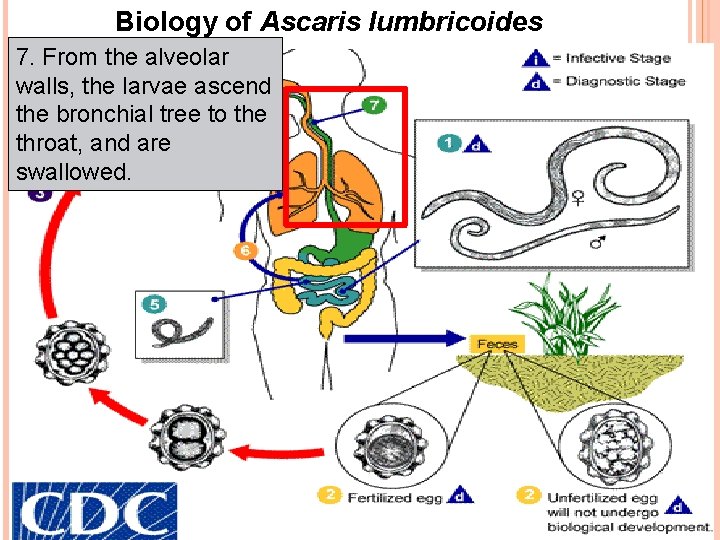
Biology of Ascaris lumbricoides 7. From the alveolar walls, the larvae ascend the bronchial tree to the throat, and are swallowed.
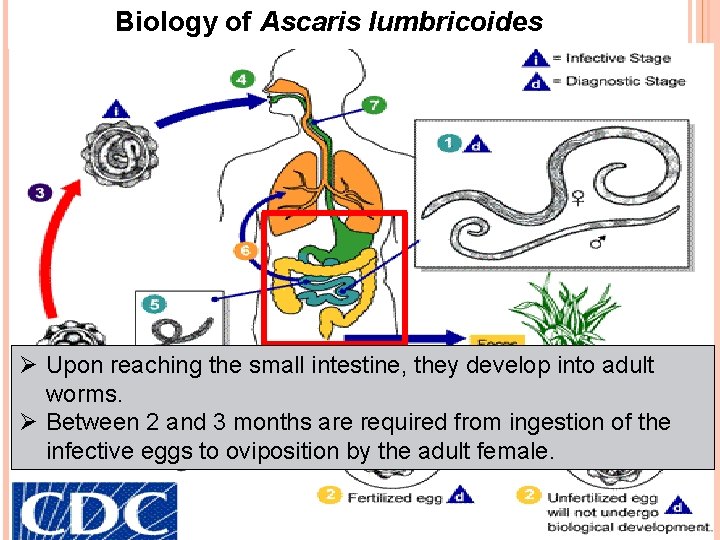
Biology of Ascaris lumbricoides Ø Upon reaching the small intestine, they develop into adult worms. Ø Between 2 and 3 months are required from ingestion of the infective eggs to oviposition by the adult female.
Biology of Mites (Sarcoptes scabiei) Sarcoptes scabiei var. hominis is called the human itch mite, It is belonging to Class Arachnida, subclass Acarina (Acari), Disease caused by Acarina is known as Acariasis It causes scabies in human Transmission occurs primarily by the transfer of the impregnated females during person-to-person contact. Occasionally transmission may occur via fomites Other races of scabies mites may cause infestations in other mammals. Races of mites found on other animals may cause a self-limited infestation in humans.
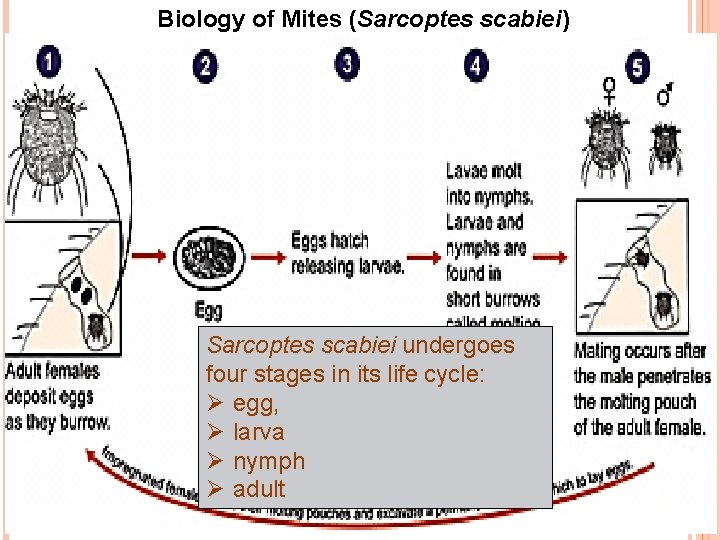
Biology of Mites (Sarcoptes scabiei) Sarcoptes scabiei undergoes four stages in its life cycle: Ø egg, Ø larva Ø nymph Ø adult
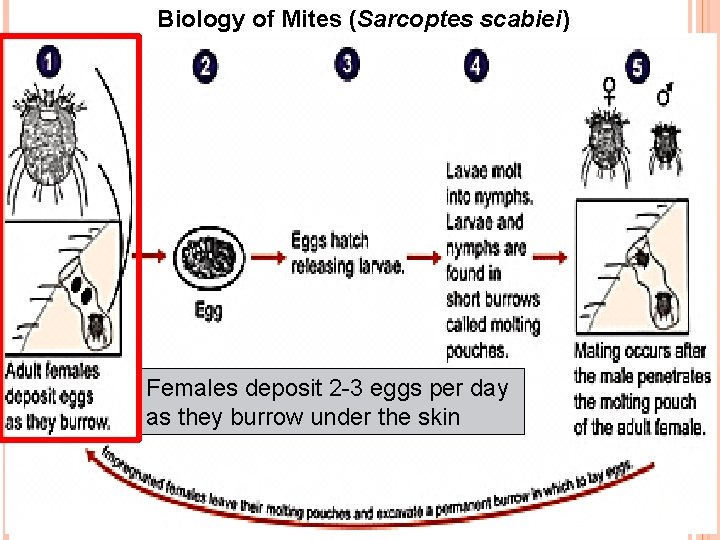
Biology of Mites (Sarcoptes scabiei) Females deposit 2 -3 eggs per day as they burrow under the skin
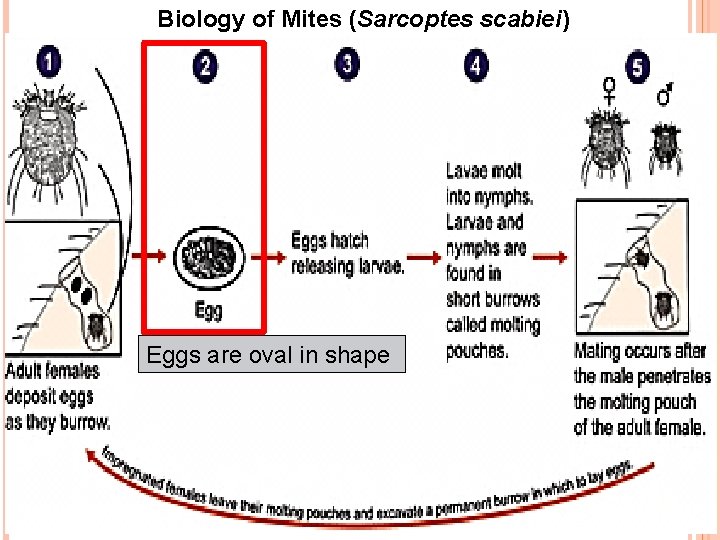
Biology of Mites (Sarcoptes scabiei) Eggs are oval in shape
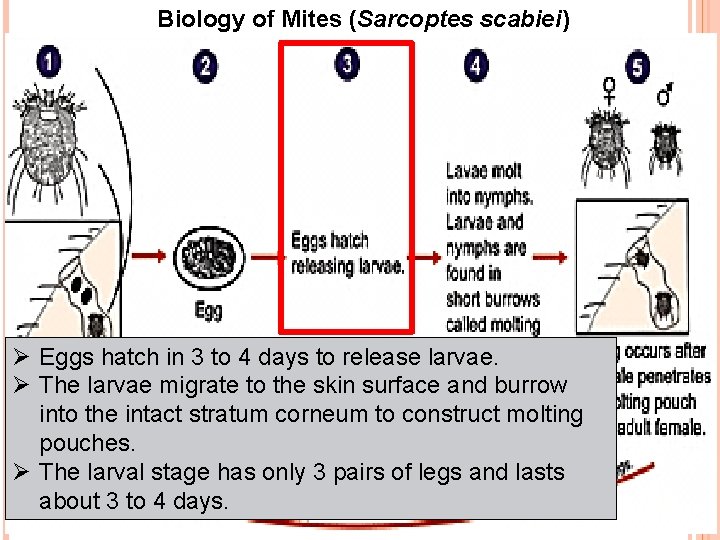
Biology of Mites (Sarcoptes scabiei) Ø Eggs hatch in 3 to 4 days to release larvae. Ø The larvae migrate to the skin surface and burrow into the intact stratum corneum to construct molting pouches. Ø The larval stage has only 3 pairs of legs and lasts about 3 to 4 days.
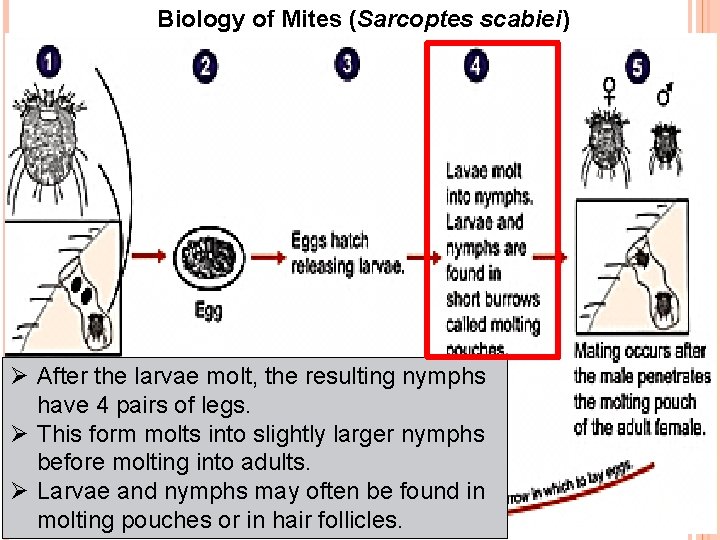
Biology of Mites (Sarcoptes scabiei) Ø After the larvae molt, the resulting nymphs have 4 pairs of legs. Ø This form molts into slightly larger nymphs before molting into adults. Ø Larvae and nymphs may often be found in molting pouches or in hair follicles.
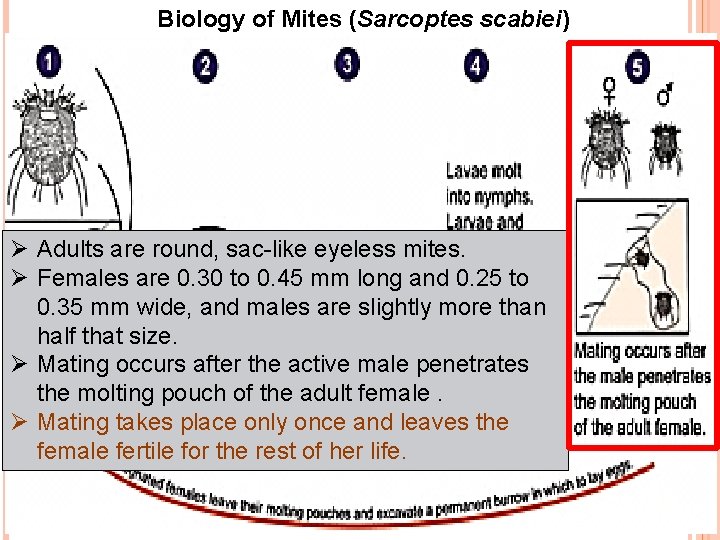
Biology of Mites (Sarcoptes scabiei) Ø Adults are round, sac-like eyeless mites. Ø Females are 0. 30 to 0. 45 mm long and 0. 25 to 0. 35 mm wide, and males are slightly more than half that size. Ø Mating occurs after the active male penetrates the molting pouch of the adult female. Ø Mating takes place only once and leaves the female fertile for the rest of her life.
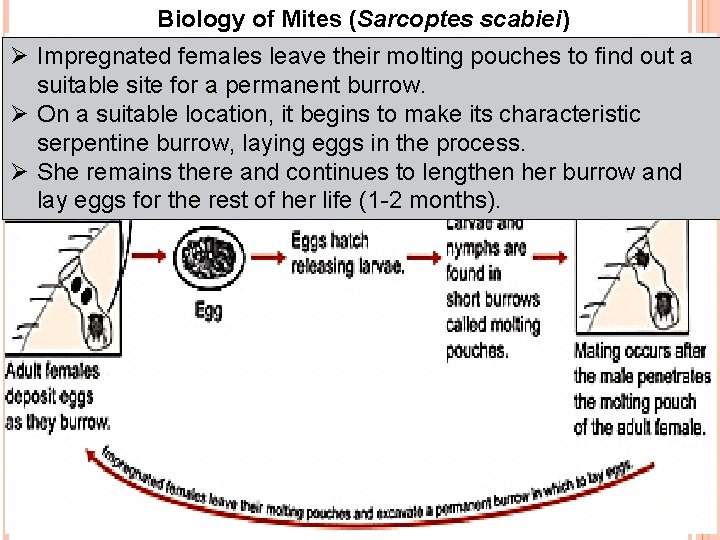
Biology of Mites (Sarcoptes scabiei) Ø Impregnated females leave their molting pouches to find out a suitable site for a permanent burrow. Ø On a suitable location, it begins to make its characteristic serpentine burrow, laying eggs in the process. Ø She remains there and continues to lengthen her burrow and lay eggs for the rest of her life (1 -2 months).
- Slides: 45