
Biology Intro to unit Biology Teacher email emma
Biology – Intro to unit
Biology Teacher email = emma. quigley@hadlow. ac. uk Class time is 14: 00 to 16: 00 on a Thursday afternoon
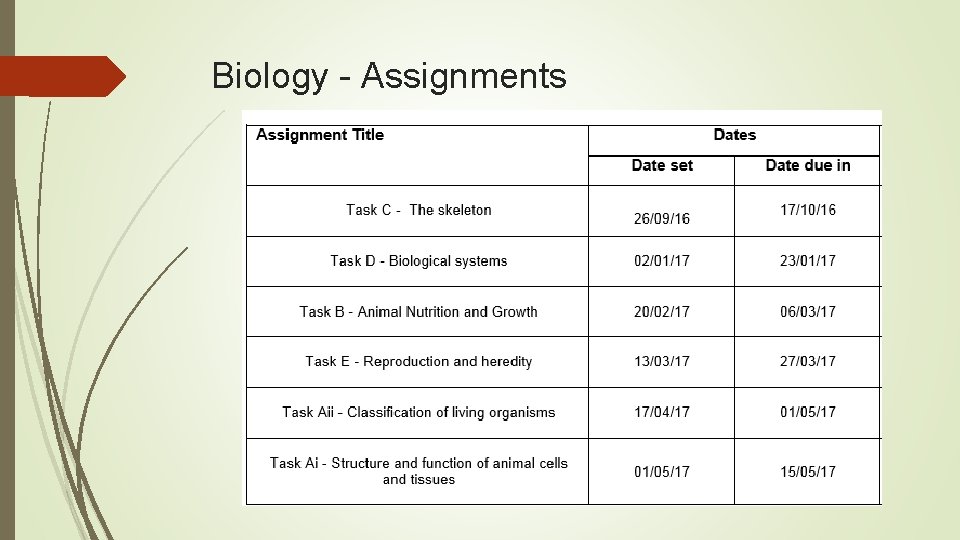
Biology - Assignments
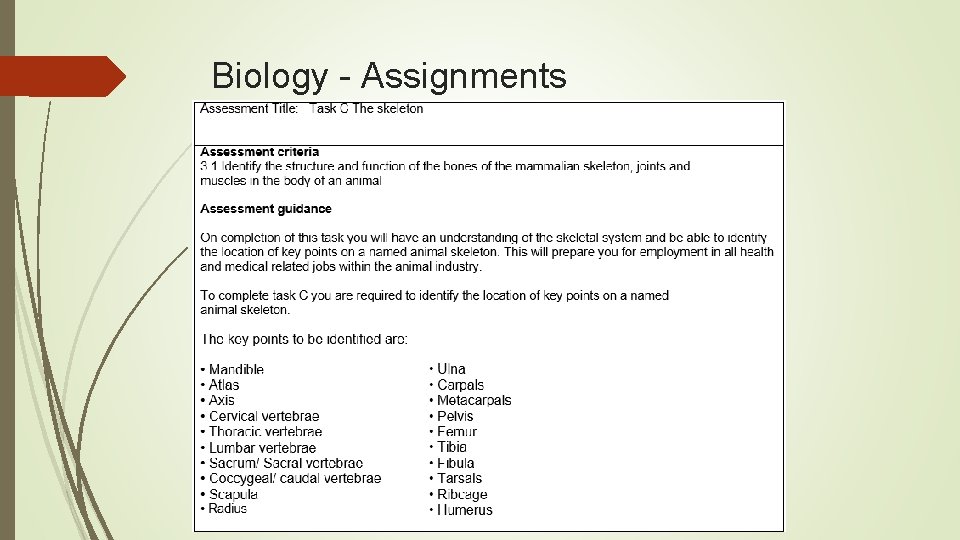
Biology - Assignments
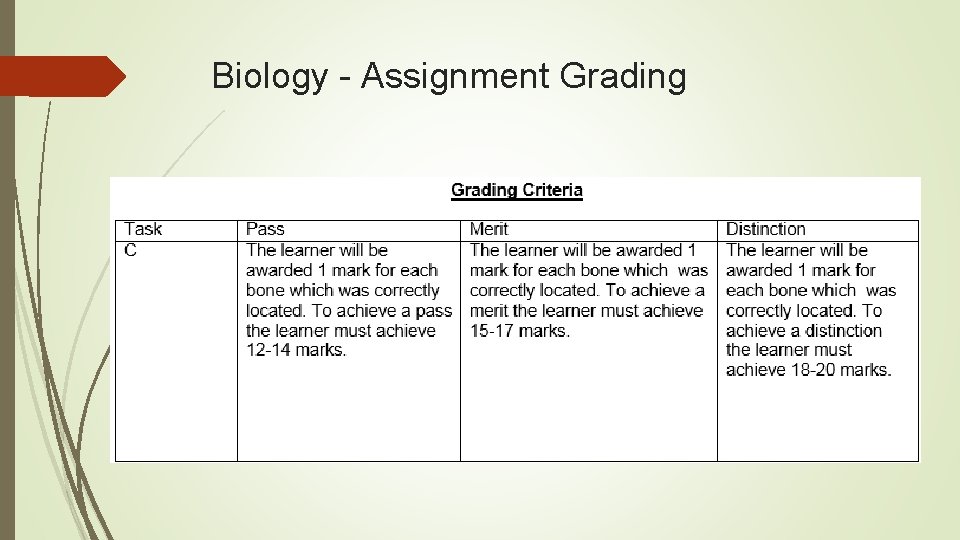
Biology - Assignment Grading
Biology Introduction to the Skeleton
Functions of the Skeleton A skeleton has three main functions, what do you think they are: 1. Support – of muscles and organs 2. Movement – because it has joints. Although this occurs due to skeletal muscles. 3. Protection – of soft, more delicate internal parts
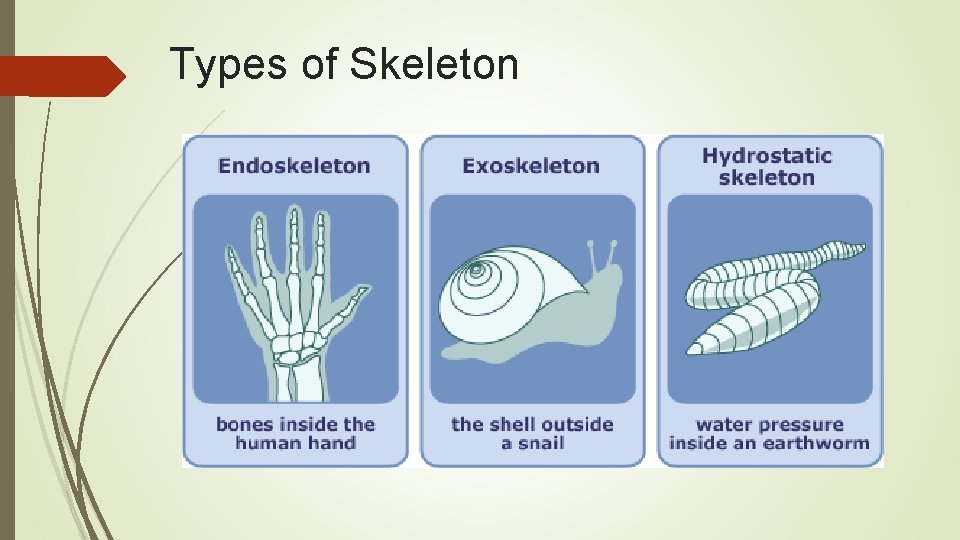
Types of Skeleton
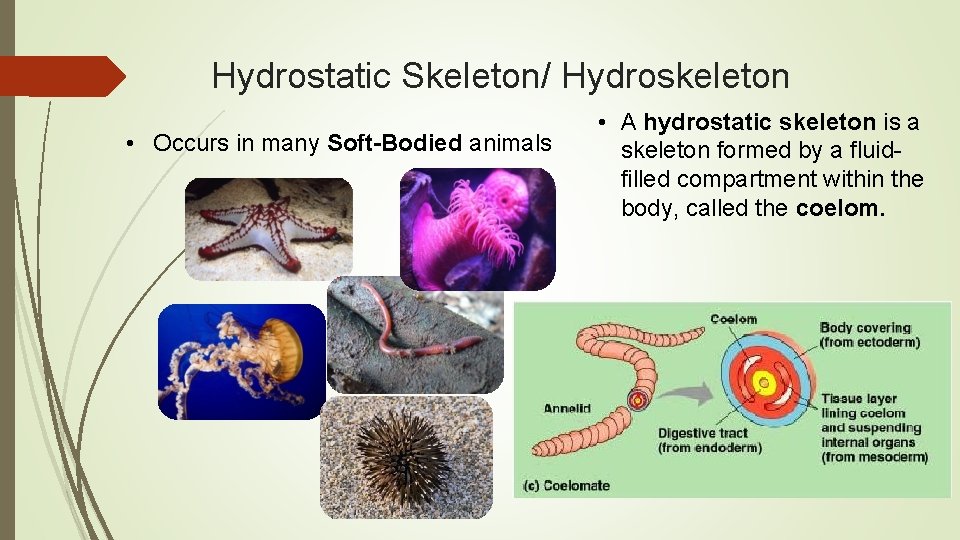
Hydrostatic Skeleton/ Hydroskeleton • Occurs in many Soft-Bodied animals • A hydrostatic skeleton is a skeleton formed by a fluidfilled compartment within the body, called the coelom.
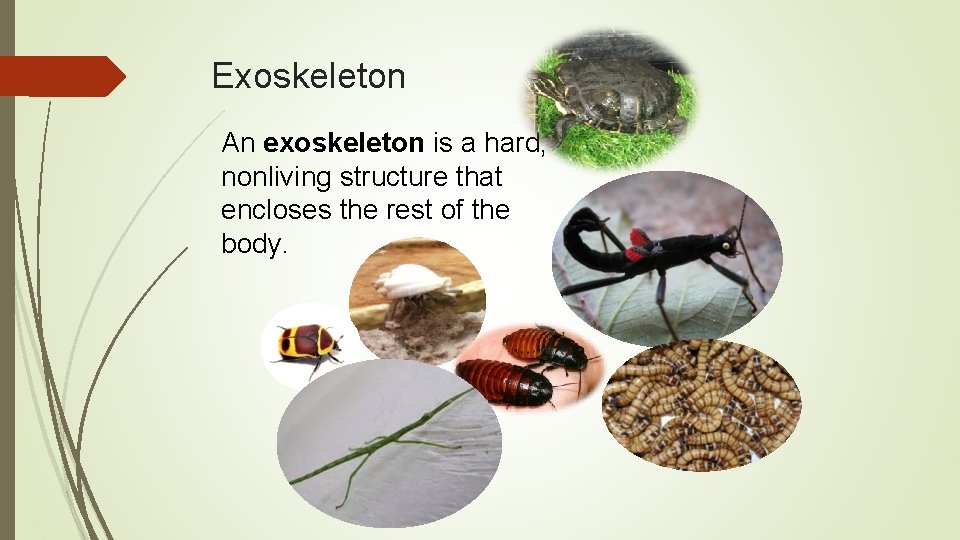
Exoskeleton An exoskeleton is a hard, nonliving structure that encloses the rest of the body.
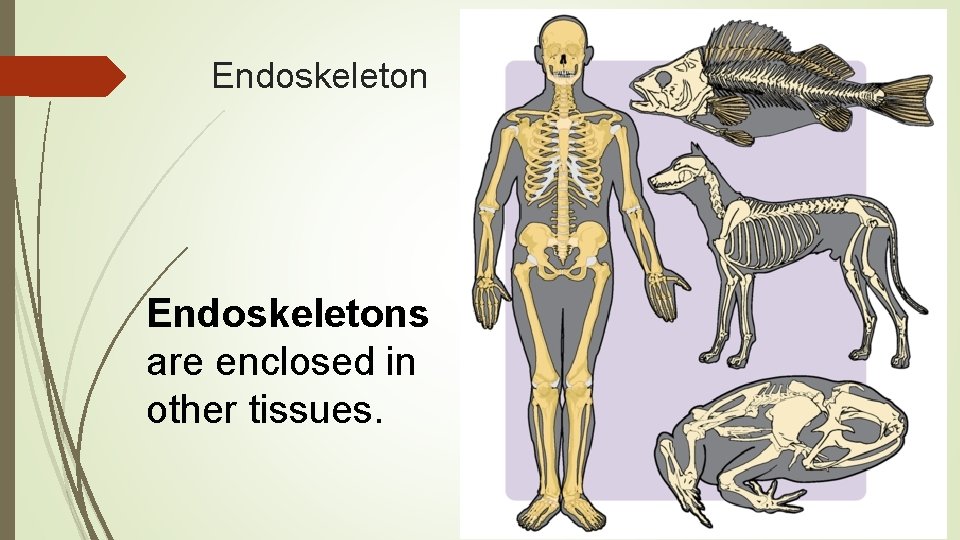
Endoskeletons are enclosed in other tissues.
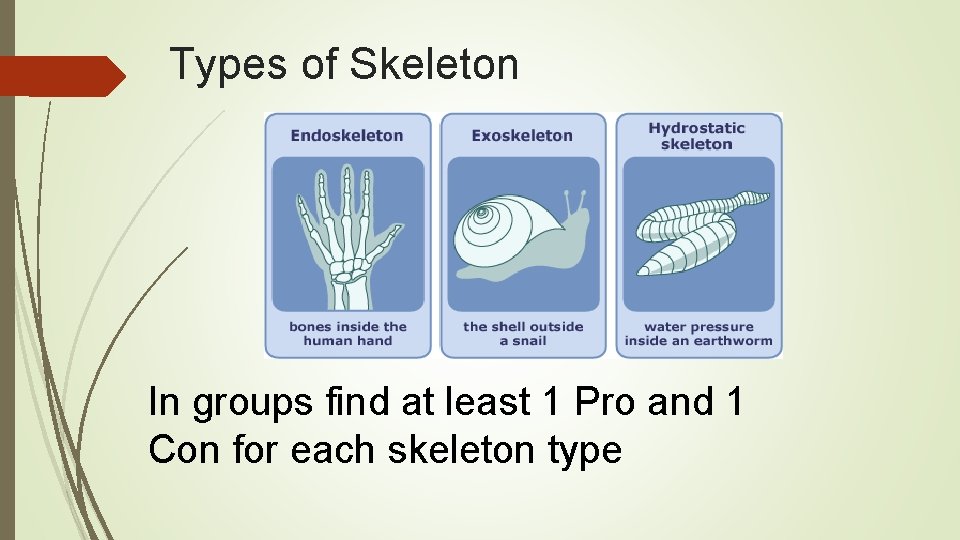
Types of Skeleton In groups find at least 1 Pro and 1 Con for each skeleton type
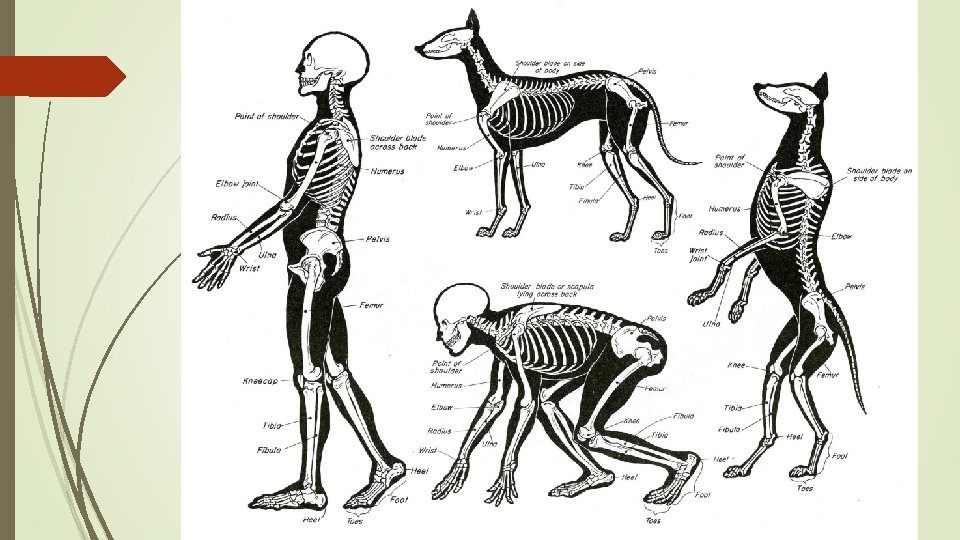
Parts of Skeleton Labelling the Skeleton
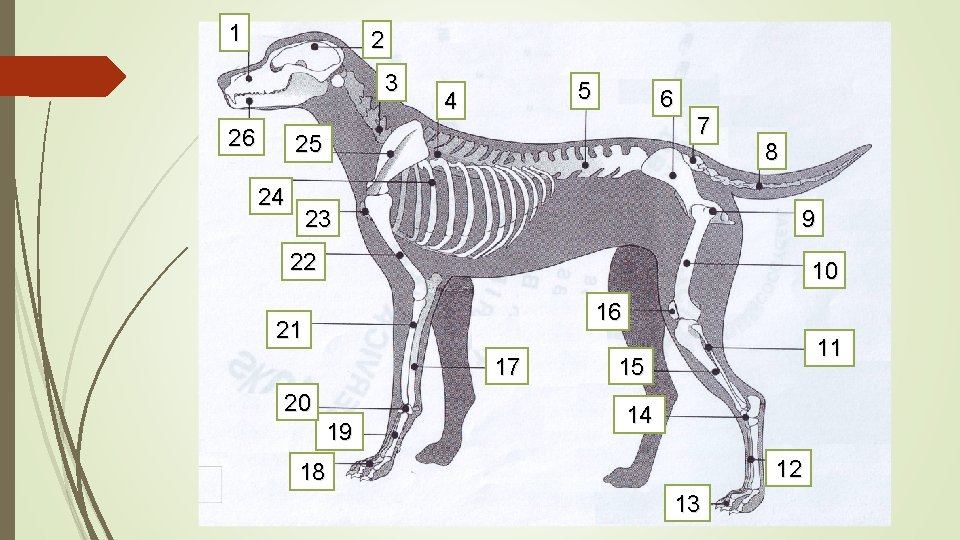
1 2 3 26 5 4 6 25 24 7 23 8 9 22 10 16 21 17 20 19 11 15 14 12 18 13
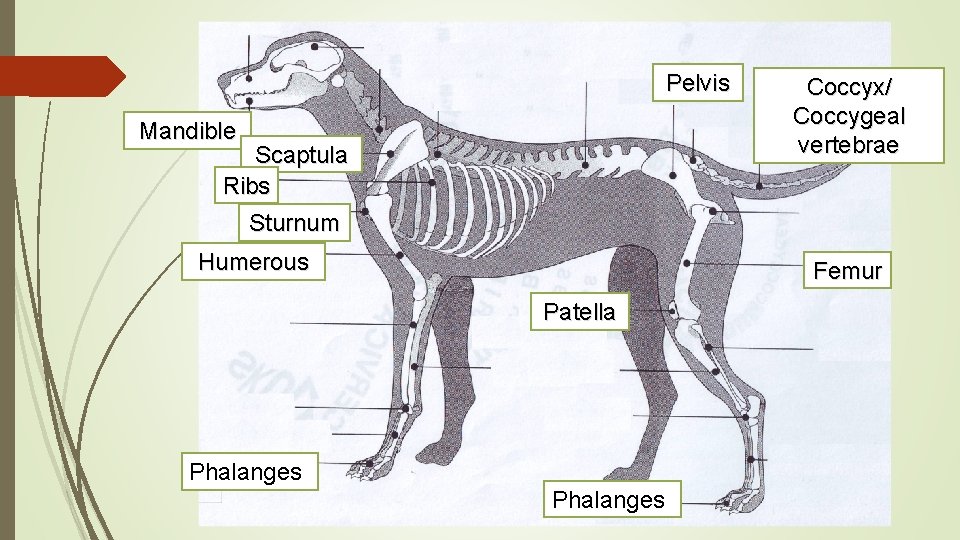
Pelvis Mandible Scaptula Ribs Coccyx/ Coccygeal vertebrae Sturnum Humerous Femur Patella Phalanges
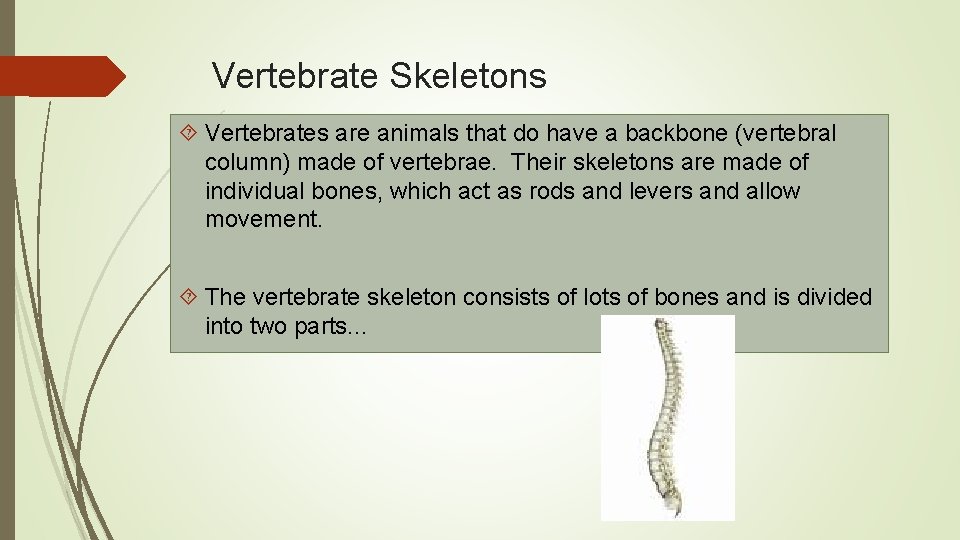
Vertebrate Skeletons Vertebrates are animals that do have a backbone (vertebral column) made of vertebrae. Their skeletons are made of individual bones, which act as rods and levers and allow movement. The vertebrate skeleton consists of lots of bones and is divided into two parts. . .
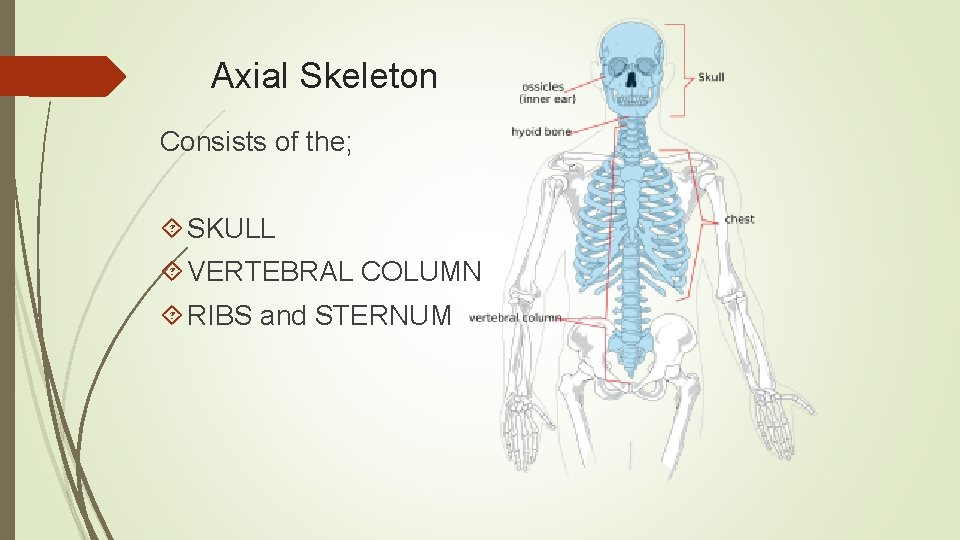
Axial Skeleton Consists of the; SKULL VERTEBRAL COLUMN RIBS and STERNUM
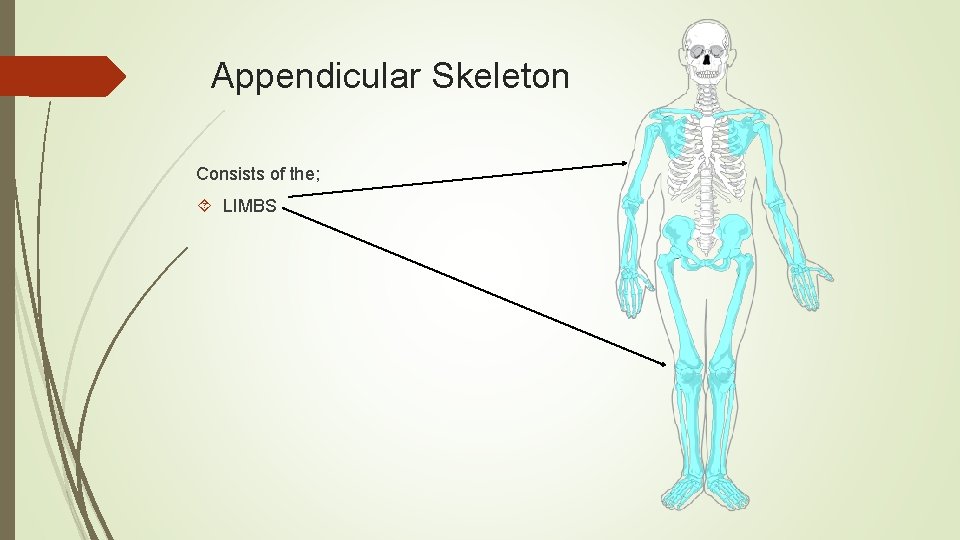
Appendicular Skeleton Consists of the; LIMBS
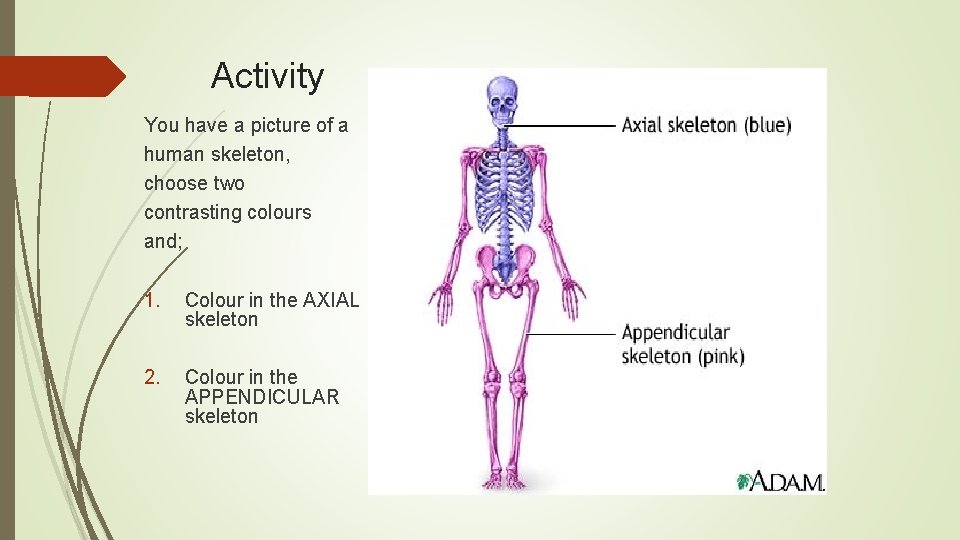
Activity You have a picture of a human skeleton, choose two contrasting colours and; 1. Colour in the AXIAL skeleton 2. Colour in the APPENDICULAR skeleton
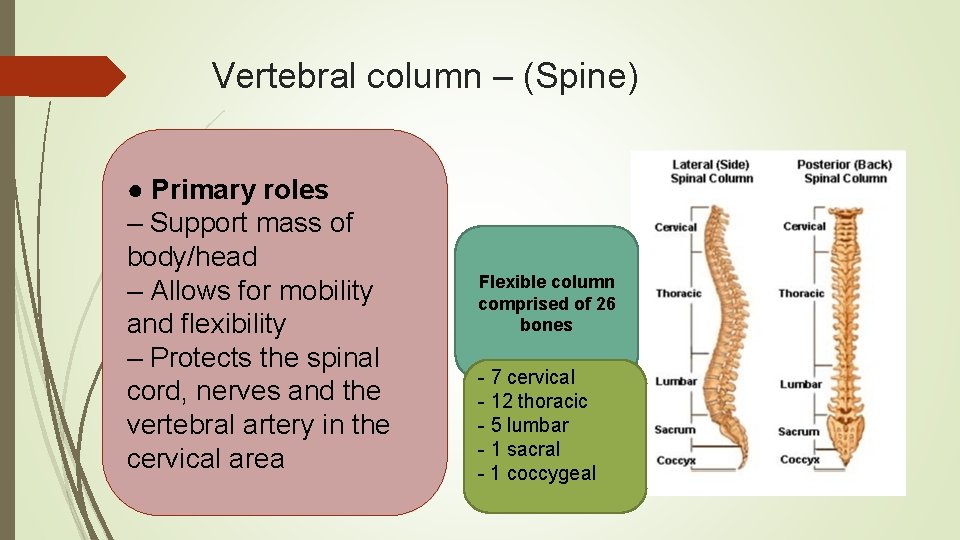
Vertebral column – (Spine) ● Primary roles – Support mass of body/head – Allows for mobility and flexibility – Protects the spinal cord, nerves and the vertebral artery in the cervical area Flexible column comprised of 26 bones - 7 cervical - 12 thoracic - 5 lumbar - 1 sacral - 1 coccygeal

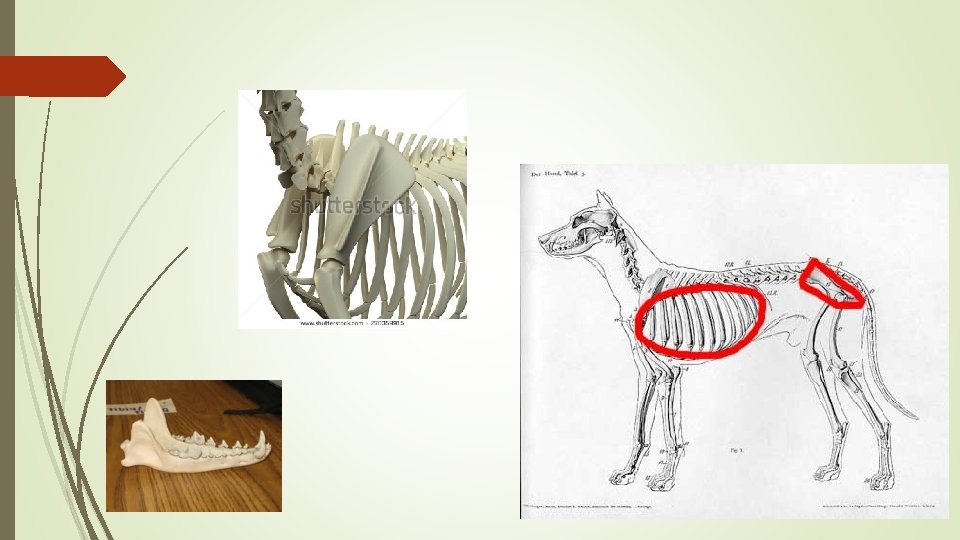
Dog Spinal Column
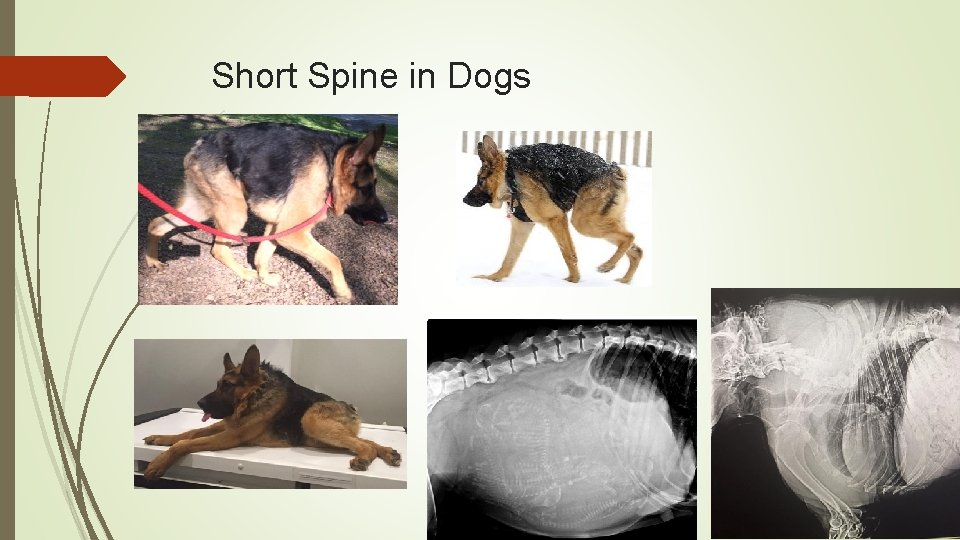
Short Spine in Dogs
Create a Mnemonic A Mnemonic helps you to remember the first letter of a word and the word order by creating a rhyme. For examples when remembering the order of the vertebrae: Cervical Atlas Axis Thoracic Lumbar Sacral Coccygeal Cats Almost Always Think Life Seems Comfortable Now create one of you own!
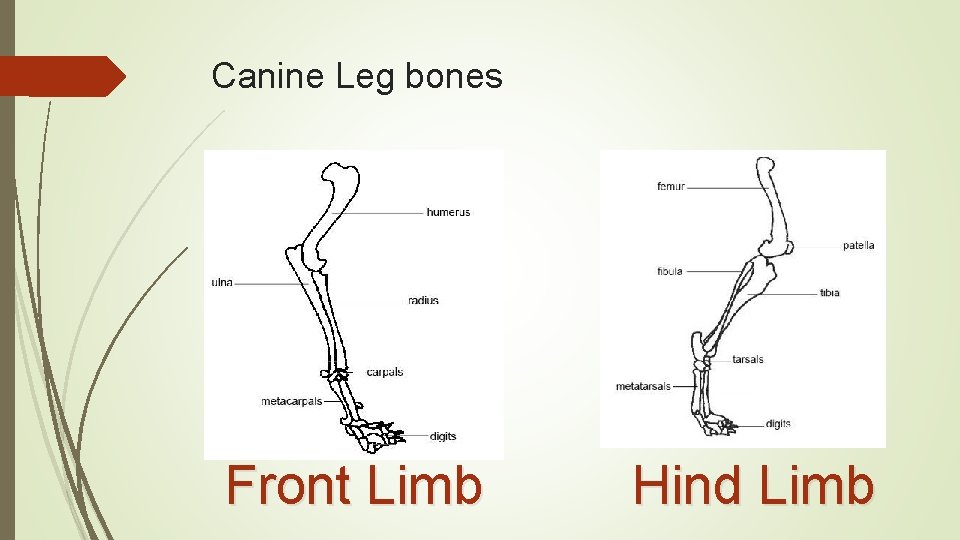
Canine Leg bones Front Limb Hind Limb
How will you remember the leg bones? In pairs come up with a plan to decide how you will each remember the leg bones. Different ways you could use include: Covering the labels and rewriting them Saying them out loud Testing each other in a pair Colouring the pictures
Bones on the Human Skeleton Labelling the Skeleton
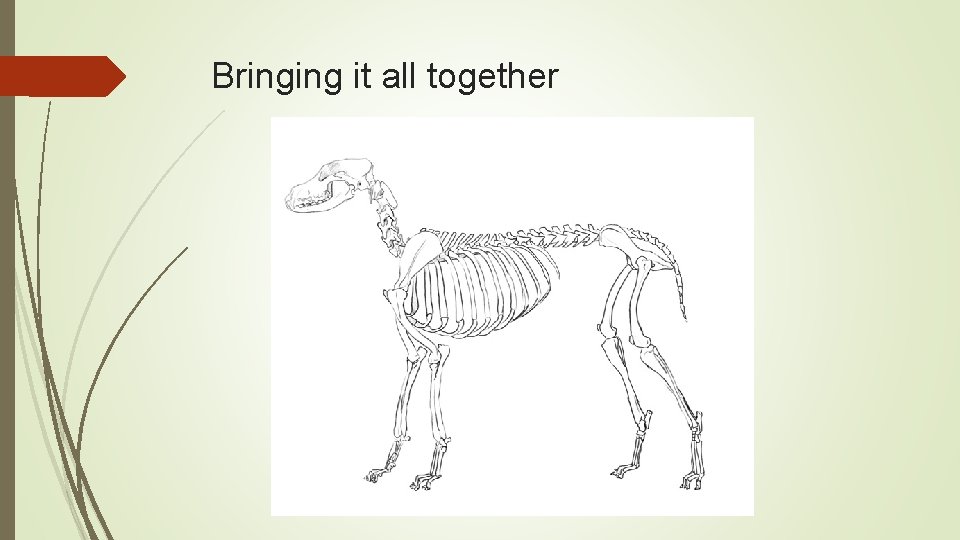
Bringing it all together
- Slides: 29