
Biology Induction Protein synthesis LO Explain how transcription
Biology Induction

Protein synthesis LO: Explain how transcription and translation of genes result in the synthesis of polypeptides Starter: GCSE Knowledge 1) What is gene? 2) What is a protein? 3) DNA is a polymer. What name do we give to the monomer from which it is formed? Extension: Transition What do you understand by the term ‘complimentary base pairing’

GCSE Reminder: The Structure of DNA is a polymer made up nucleotide monomers. There are 4 types of nucleotide monomer – G, T, A, C, A DNA molecule has two strands forming a double helix DNA nucleotide (monomer)
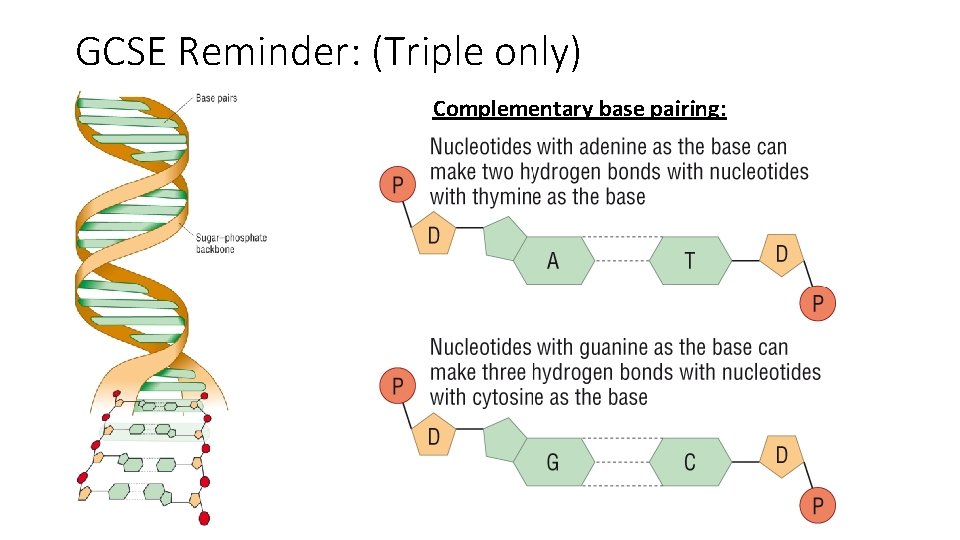
GCSE Reminder: (Triple only) Complementary base pairing:
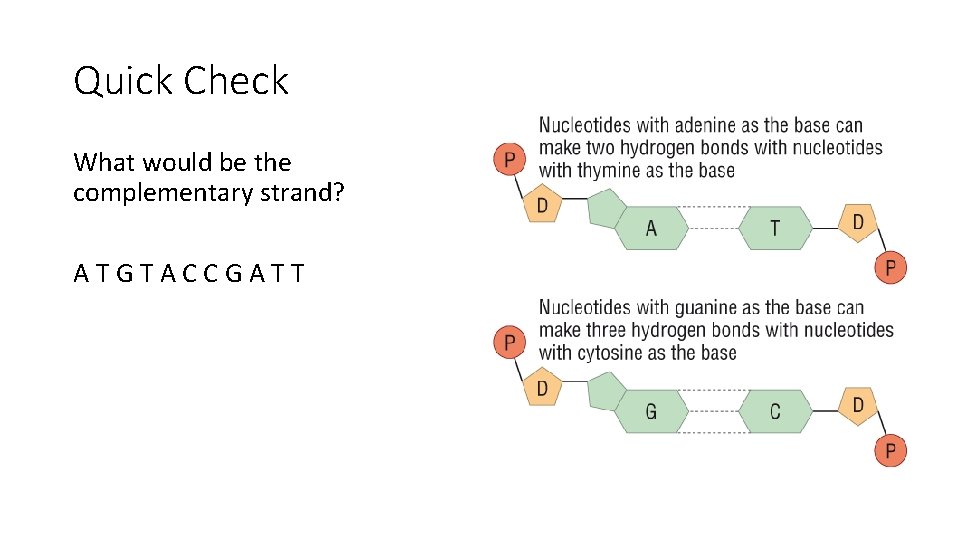
Quick Check What would be the complementary strand? ATGTACCGATT
Protein synthesis So how do we get from a gene (section of DNA) to a protein (sequence of amino acids? Stage 1: Transcription Stage 2: Translation
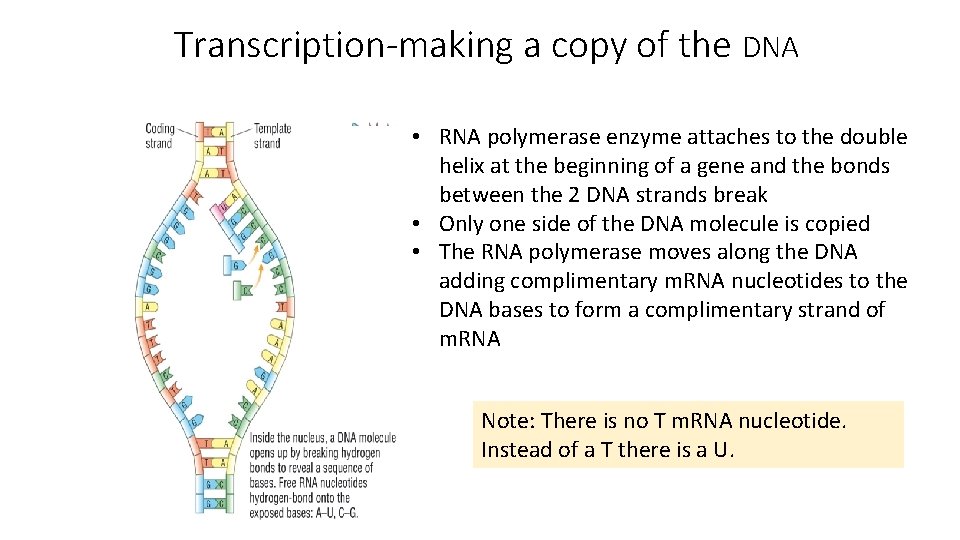
Transcription-making a copy of the DNA • RNA polymerase enzyme attaches to the double helix at the beginning of a gene and the bonds between the 2 DNA strands break • Only one side of the DNA molecule is copied • The RNA polymerase moves along the DNA adding complimentary m. RNA nucleotides to the DNA bases to form a complimentary strand of m. RNA Note: There is no T m. RNA nucleotide. Instead of a T there is a U.
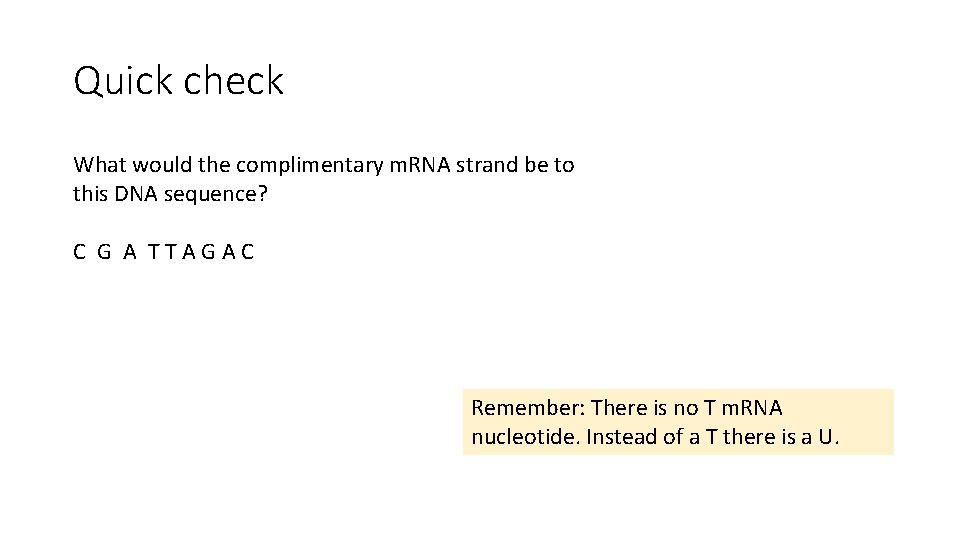
Quick check What would the complimentary m. RNA strand be to this DNA sequence? C G A TTAGAC Remember: There is no T m. RNA nucleotide. Instead of a T there is a U.
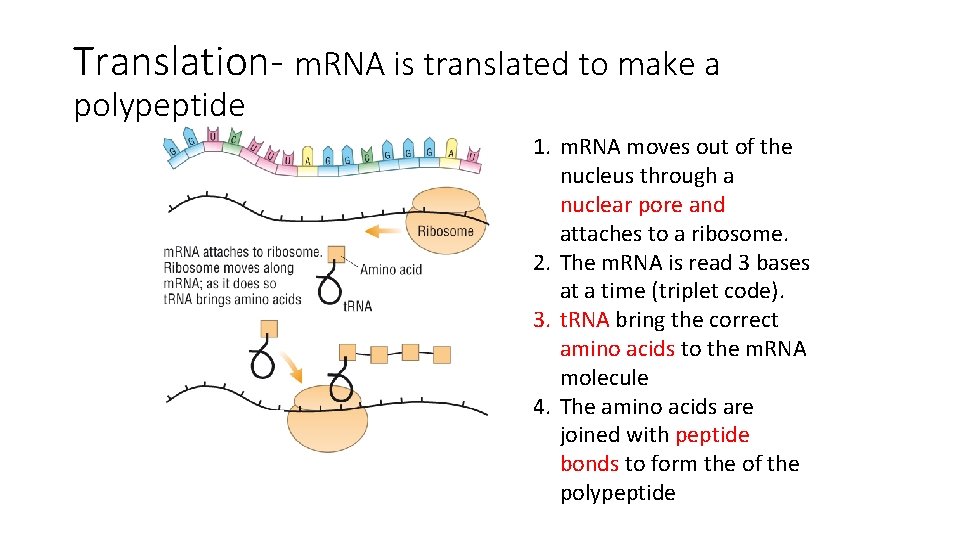
Translation- m. RNA is translated to make a polypeptide 1. m. RNA moves out of the nucleus through a nuclear pore and attaches to a ribosome. 2. The m. RNA is read 3 bases at a time (triplet code). 3. t. RNA bring the correct amino acids to the m. RNA molecule 4. The amino acids are joined with peptide bonds to form the of the polypeptide
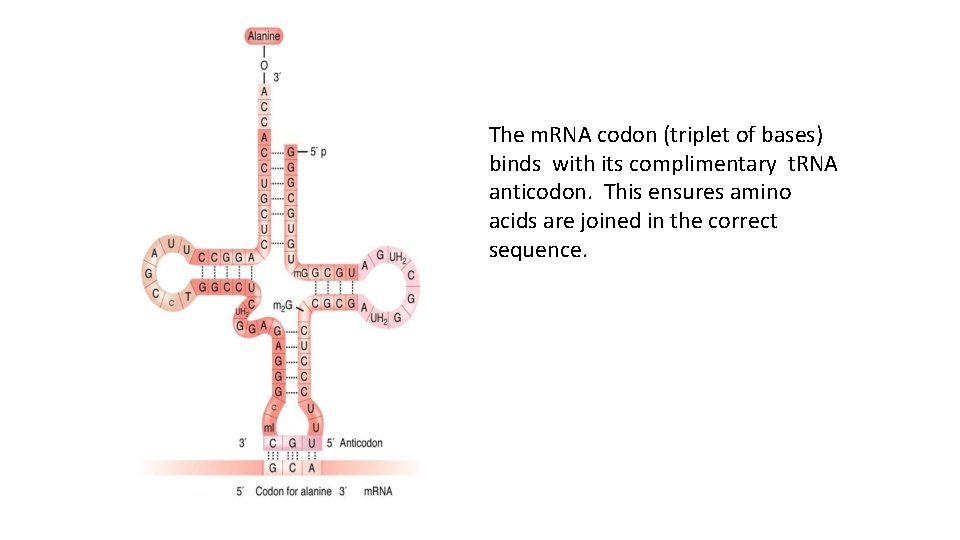
The m. RNA codon (triplet of bases) binds with its complimentary t. RNA anticodon. This ensures amino acids are joined in the correct sequence.
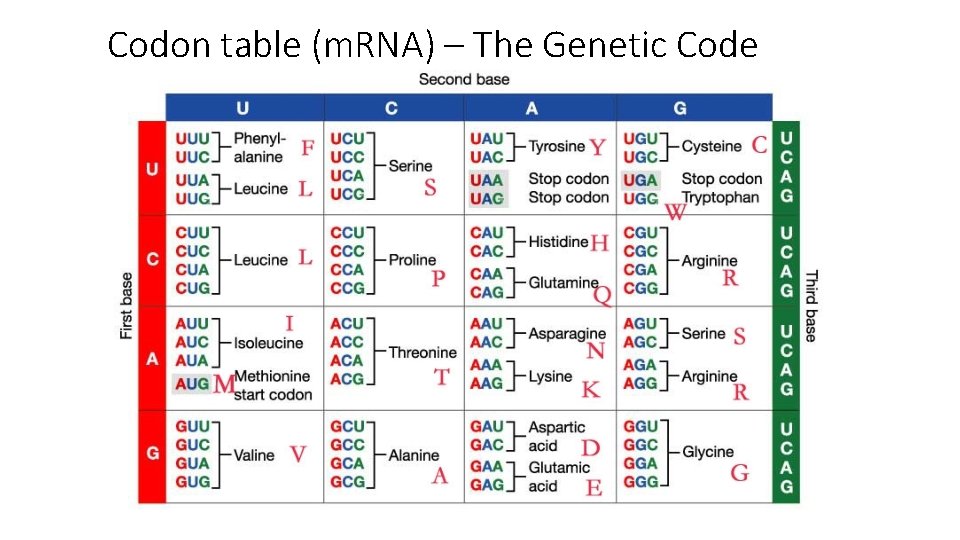
Codon table (m. RNA) – The Genetic Code
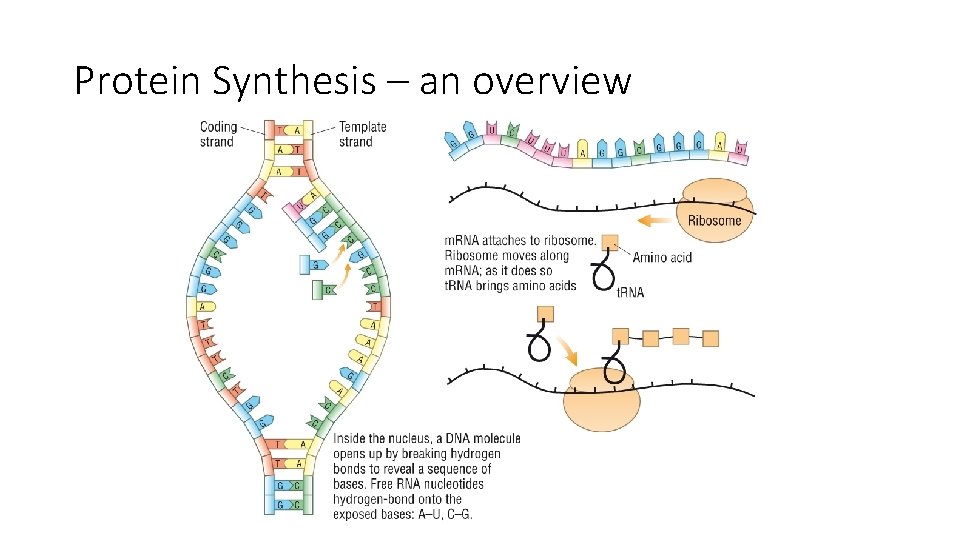
Protein Synthesis – an overview
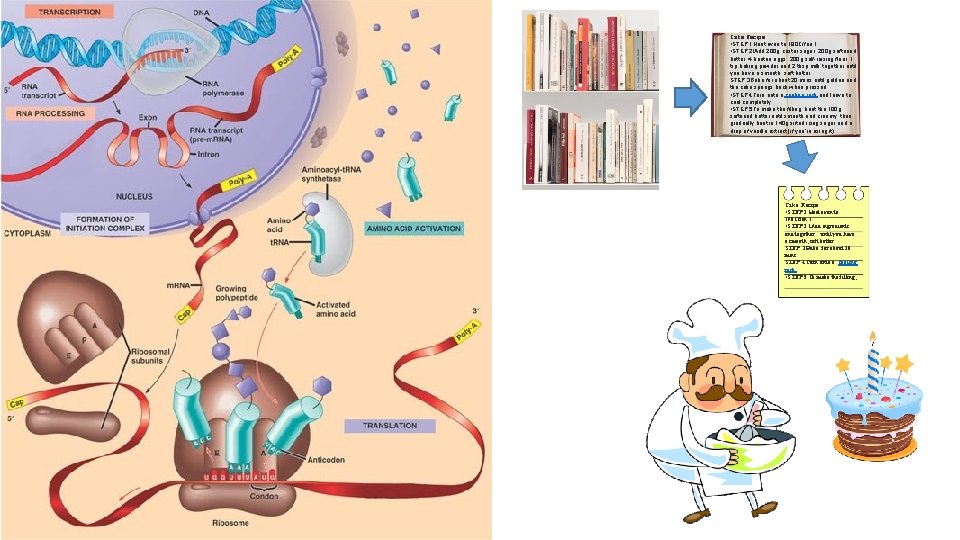
Cake Recipe • STEP 1 Heat oven to 190 C/fan 1 • STEP 2 IAdd 200 g caster sugar, 200 g softened butter, 4 beaten eggs, 200 g self-raising flour, 1 tsp baking powder and 2 tbsp milk together until you have a smooth, soft batter. STEP 3 Bake for about 20 mins until golden and the cake springs back when pressed. • STEP 4 Turn onto a cooling rack and leave to cool completely. • STEP 5 To make the filling, beat the 100 g softened butter until smooth and creamy, then gradually beat in 140 g sifted icing sugar and a drop of vanilla extract (if you’re using it). Cake Recipe • STEP 1 Heat oven to 190 C/fan 1 • STEP 2 IAdd ingredients and together until you have a smooth, soft batter. STEP 3 Bake for about 20 mins STEP 4 Turn onto a cooling rack • STEP 5 To make the filling,
Follow up tasks: 1) Watch the following videos to go over DNA structure and Protein Synthesis: DNA: https: //www. youtube. com/watch? v=0_b 80 f. Hmu. Ww Protein Synthesis: https: //www. youtube. com/watch? v=g. G 7 u. Csk. UOr. A 2) Complete the GCSE A level transition task and bring to your first Biology lesson. In the first couple of weeks we will have a transition test on the content of this task https: //bishopstopford. fireflycloud. net/sixth-form/year-11 ---looking-ahead/biology 3) Look at the Year 12 Induction materials for A Level Biology (including a copy of this Power. Point) https: //bishopstopford. fireflycloud. net/sixthform/year-11 -into-12 -induction-summer-2021/biology
- Slides: 14