
Biology II Unit 3 Tissues Cancer Tissue Groups

Biology II: Unit 3 Tissues & Cancer
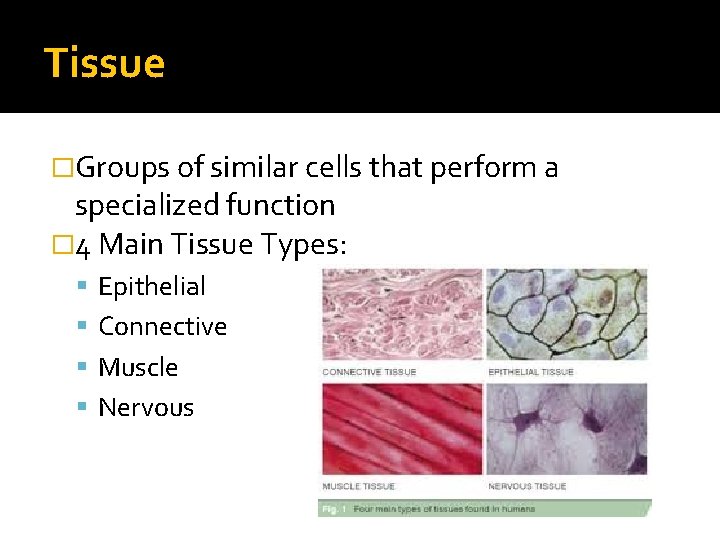
Tissue �Groups of similar cells that perform a specialized function � 4 Main Tissue Types: Epithelial Connective Muscle Nervous
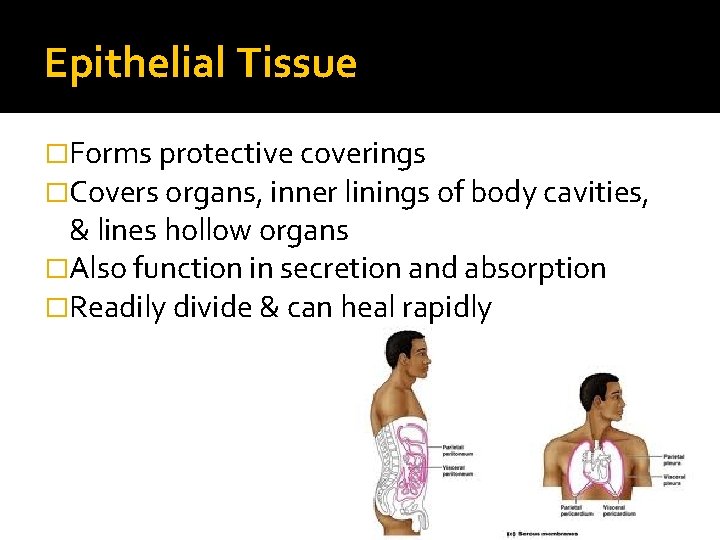
Epithelial Tissue �Forms protective coverings �Covers organs, inner linings of body cavities, & lines hollow organs �Also function in secretion and absorption �Readily divide & can heal rapidly
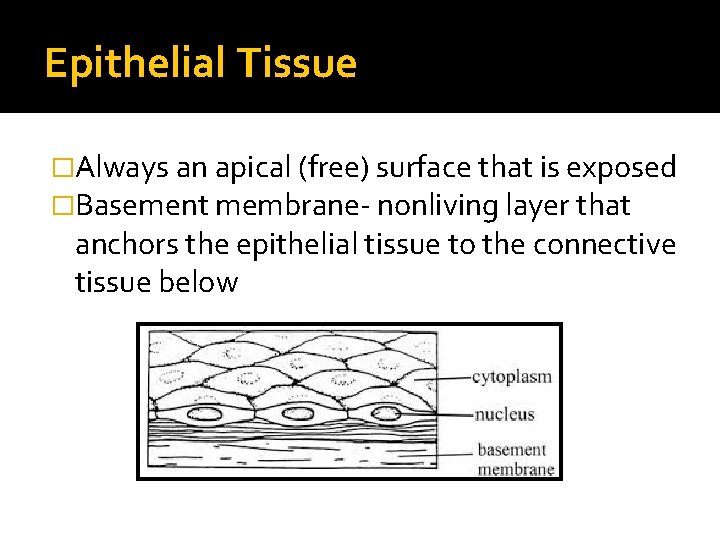
Epithelial Tissue �Always an apical (free) surface that is exposed �Basement membrane- nonliving layer that anchors the epithelial tissue to the connective tissue below

Epithelial Tissue �Packs tightly to form protective barriers Outer layer of the skin and mouth
Epithelial Tissue is Classified by: �Shape: Squamous – thin, flat shape Cuboidal – cube shaped Columnar – tall, elongated shape �Number of layers: Simple – single layer Stratified – 2 or more layers
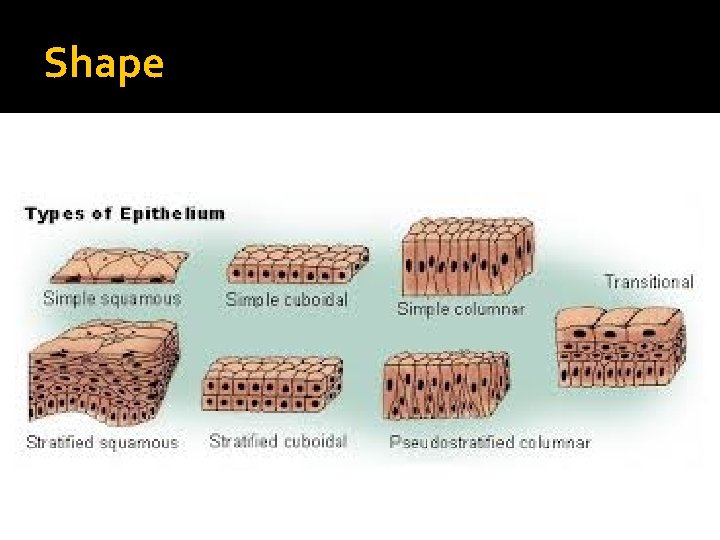
Shape
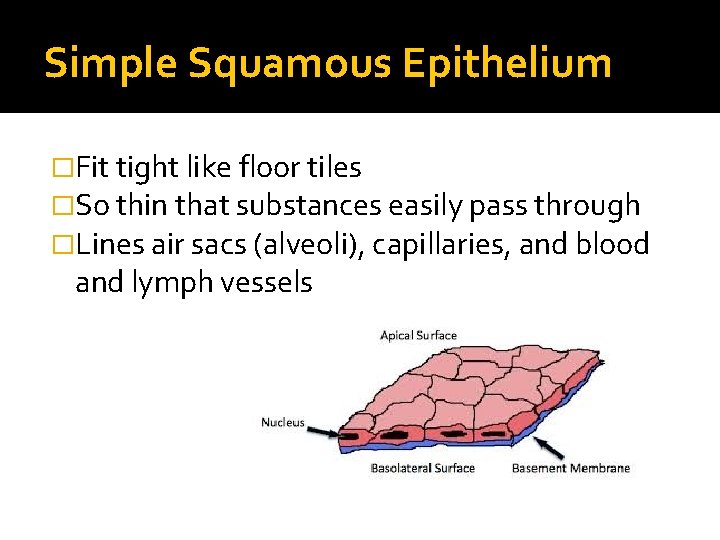
Simple Squamous Epithelium �Fit tight like floor tiles �So thin that substances easily pass through �Lines air sacs (alveoli), capillaries, and blood and lymph vessels
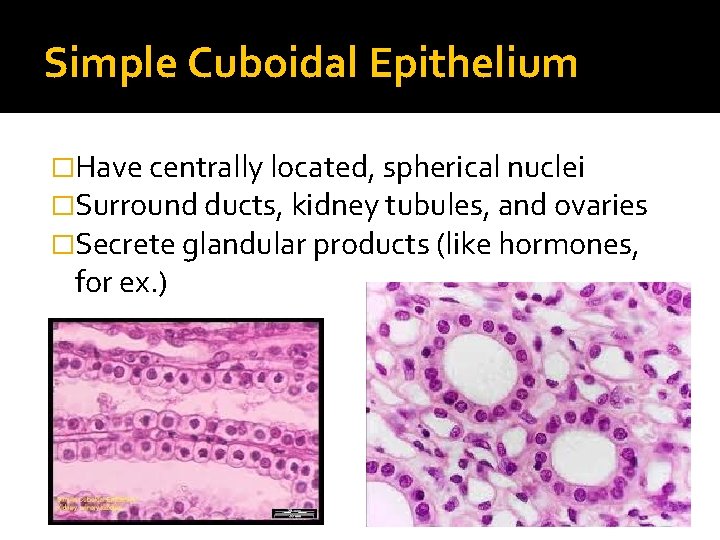
Simple Cuboidal Epithelium �Have centrally located, spherical nuclei �Surround ducts, kidney tubules, and ovaries �Secrete glandular products (like hormones, for ex. )
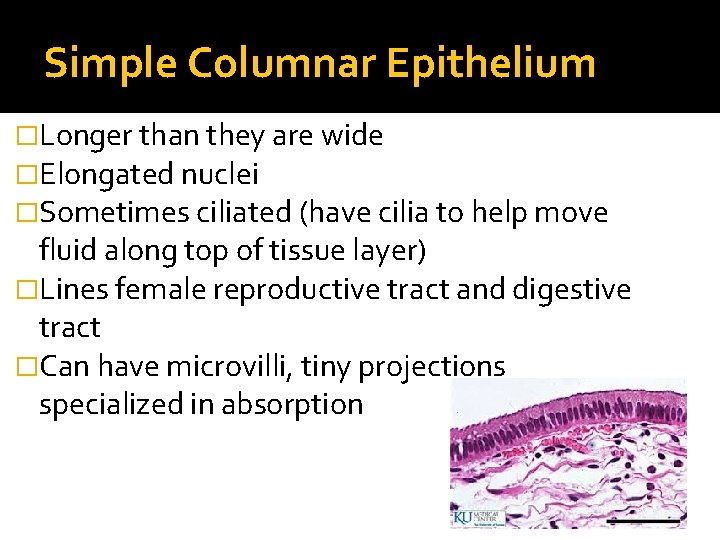
Simple Columnar Epithelium �Longer than they are wide �Elongated nuclei �Sometimes ciliated (have cilia to help move fluid along top of tissue layer) �Lines female reproductive tract and digestive tract �Can have microvilli, tiny projections specialized in absorption
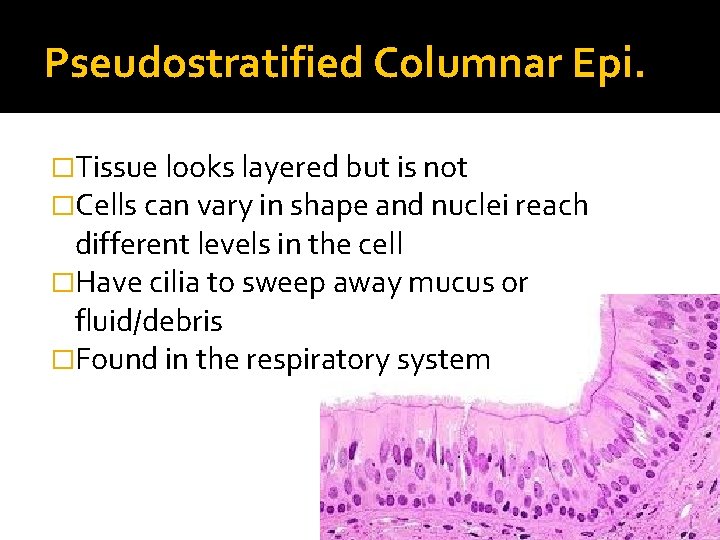
Pseudostratified Columnar Epi. �Tissue looks layered but is not �Cells can vary in shape and nuclei reach different levels in the cell �Have cilia to sweep away mucus or fluid/debris �Found in the respiratory system
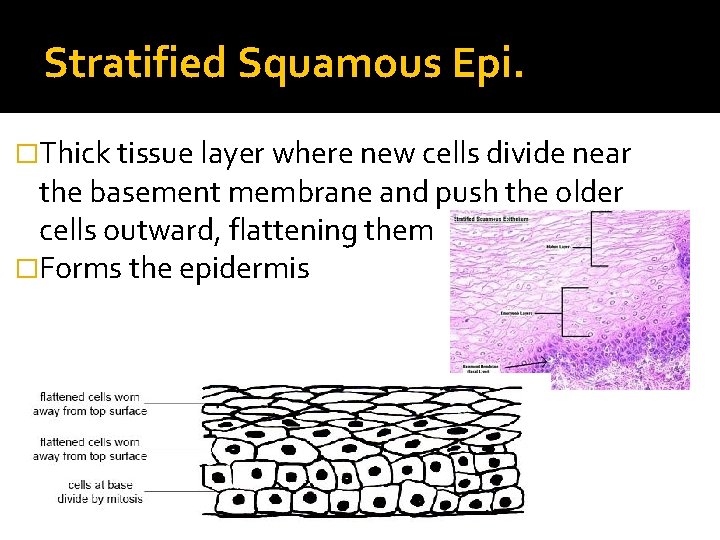
Stratified Squamous Epi. �Thick tissue layer where new cells divide near the basement membrane and push the older cells outward, flattening them �Forms the epidermis
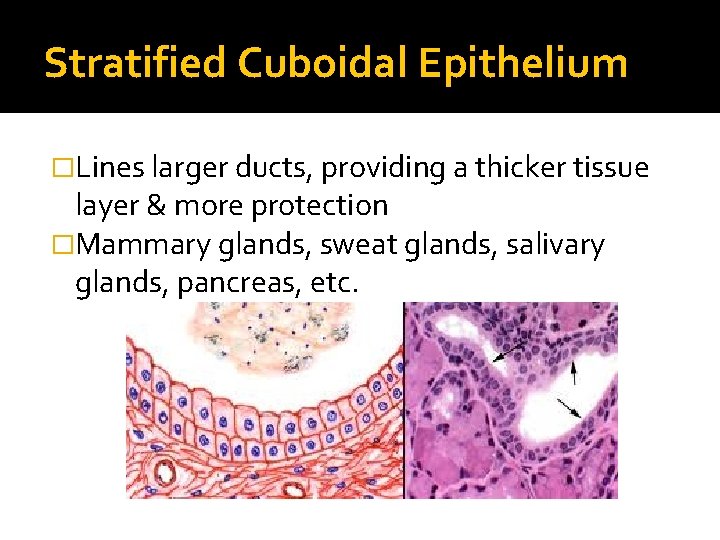
Stratified Cuboidal Epithelium �Lines larger ducts, providing a thicker tissue layer & more protection �Mammary glands, sweat glands, salivary glands, pancreas, etc.
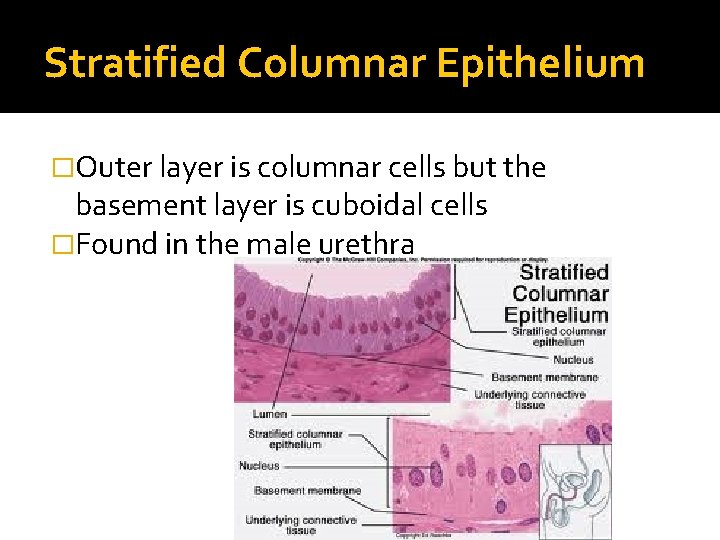
Stratified Columnar Epithelium �Outer layer is columnar cells but the basement layer is cuboidal cells �Found in the male urethra
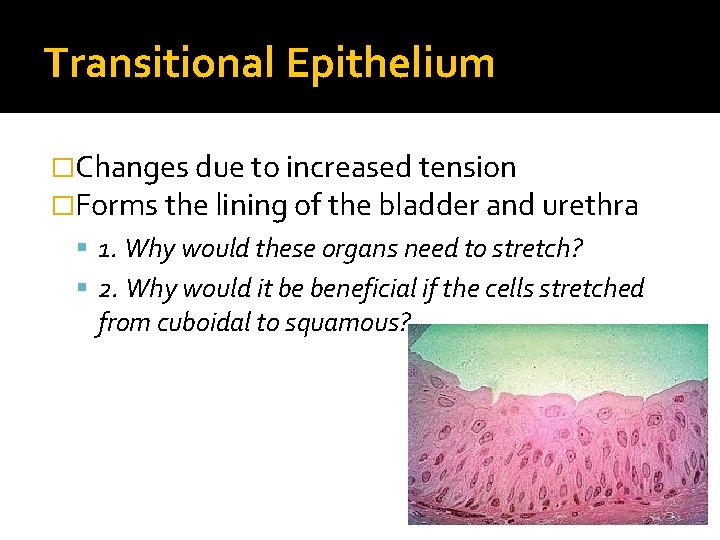
Transitional Epithelium �Changes due to increased tension �Forms the lining of the bladder and urethra 1. Why would these organs need to stretch? 2. Why would it be beneficial if the cells stretched from cuboidal to squamous?
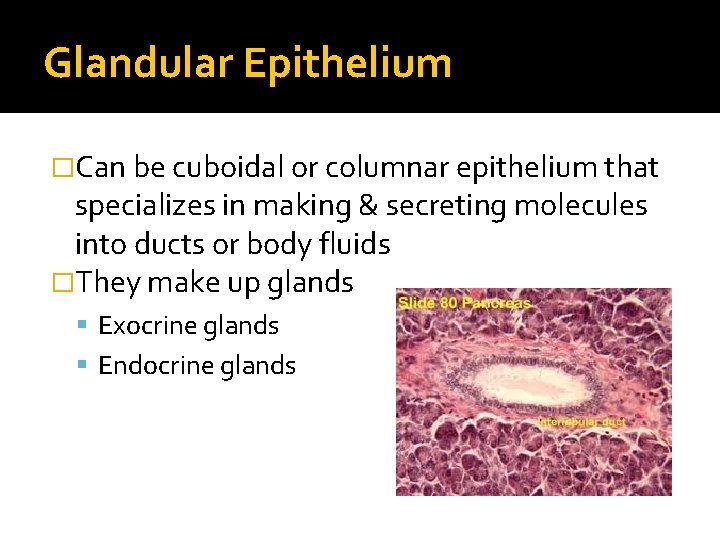
Glandular Epithelium �Can be cuboidal or columnar epithelium that specializes in making & secreting molecules into ducts or body fluids �They make up glands Exocrine glands Endocrine glands
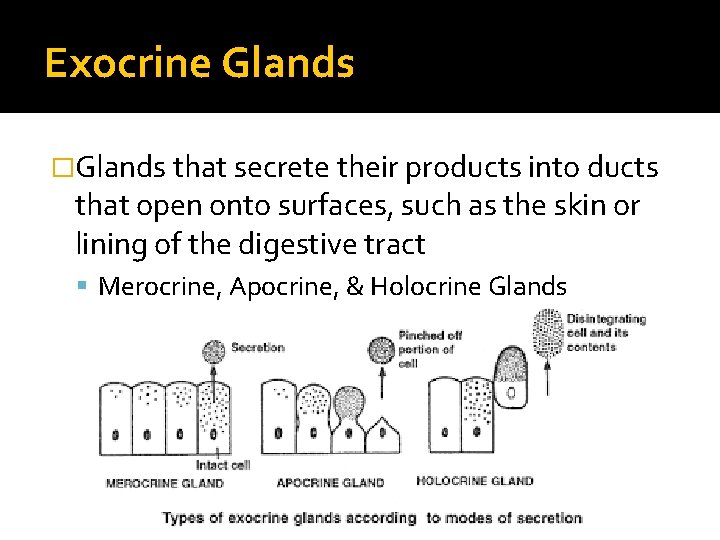
Exocrine Glands �Glands that secrete their products into ducts that open onto surfaces, such as the skin or lining of the digestive tract Merocrine, Apocrine, & Holocrine Glands
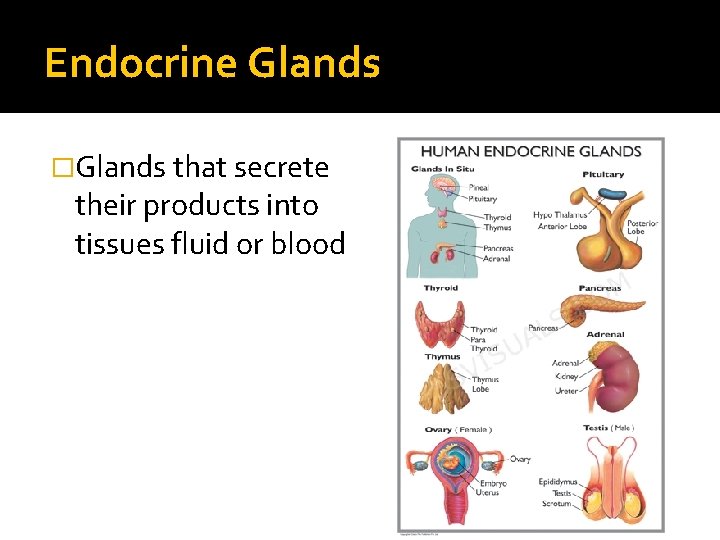
Endocrine Glands �Glands that secrete their products into tissues fluid or blood

Homework: � 5. 1 Check your Recall � 5. 2 Check your Recall 5 -7 �Make notecards for the types of Epithelial Tissue; Sketch out the tissues on your notecards
- Slides: 19