
Biology I for NonMajors Module 8 DNA Structure
Biology I for Non-Majors Module 8: DNA Structure and Replication
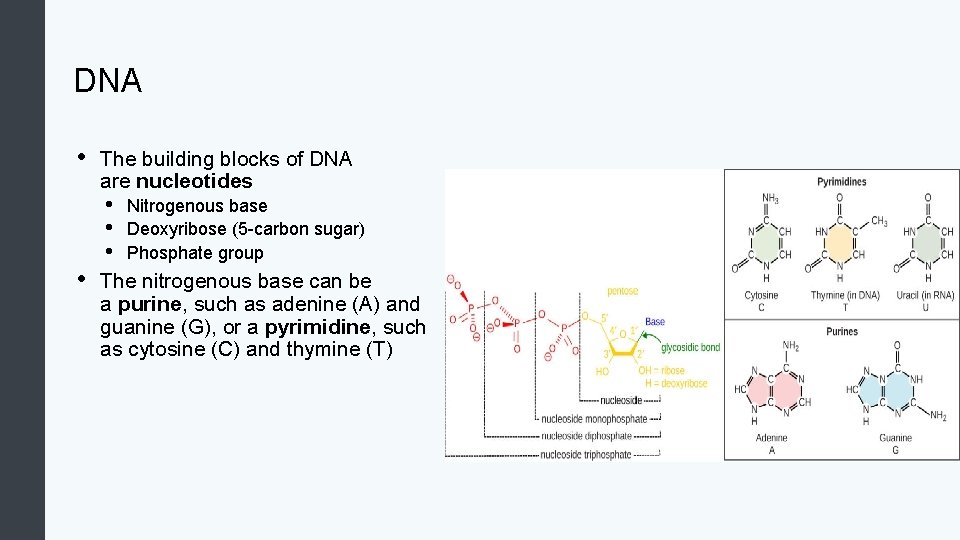
DNA • • The building blocks of DNA are nucleotides • • • Nitrogenous base Deoxyribose (5 -carbon sugar) Phosphate group The nitrogenous base can be a purine, such as adenine (A) and guanine (G), or a pyrimidine, such as cytosine (C) and thymine (T)
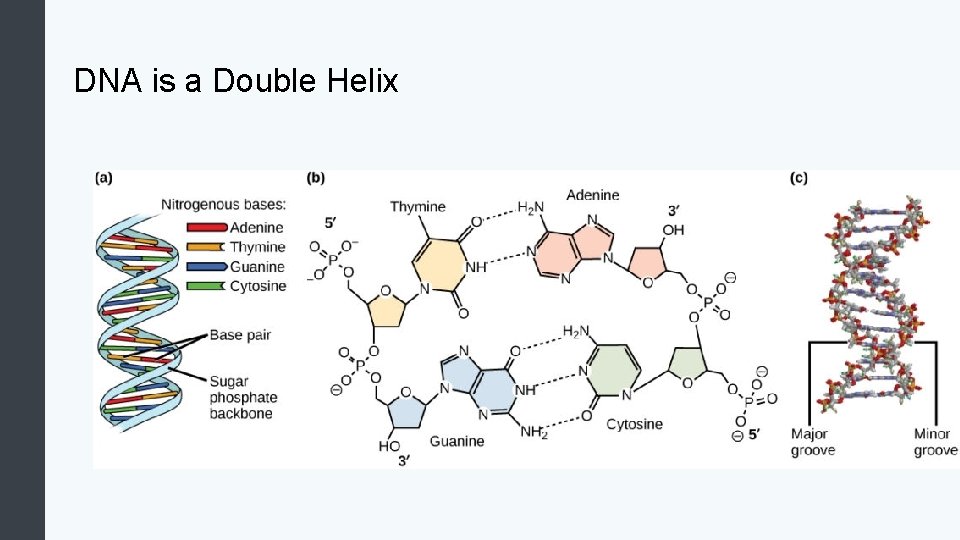
DNA is a Double Helix

DNA Stores Genetic Information • • • The genetic information of an organism is stored in DNA molecules The information stored in the order of bases is organized into genes • In order for DNA to function effectively at storing information, two key processes are required • • Each gene contains information for making a functional product • Information stored in the DNA molecule must be copied, with minimal errors, every time a cell divides The information stored in the DNA molecule must be translated, or expressed Both copying and reading the information stored in DNA relies on base pairing between two nucleic acid polymer strands
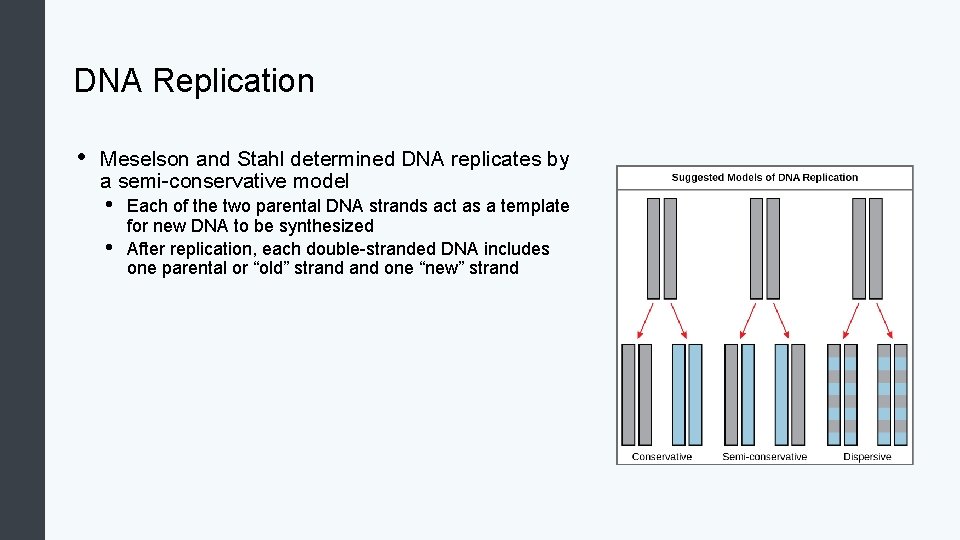
DNA Replication • Meselson and Stahl determined DNA replicates by a semi-conservative model • • Each of the two parental DNA strands act as a template for new DNA to be synthesized After replication, each double-stranded DNA includes one parental or “old” strand one “new” strand
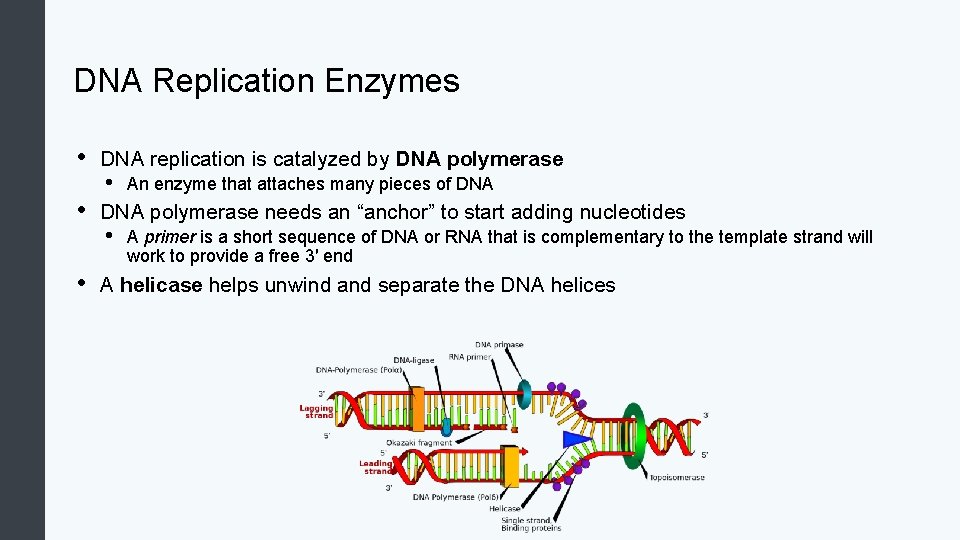
DNA Replication Enzymes • • • DNA replication is catalyzed by DNA polymerase • An enzyme that attaches many pieces of DNA polymerase needs an “anchor” to start adding nucleotides • A primer is a short sequence of DNA or RNA that is complementary to the template strand will work to provide a free 3′ end A helicase helps unwind and separate the DNA helices

Proofreading DNA • In proofreading, the DNA pol reads the newly added base before adding the next one, so a correction can be made • • • If an incorrect base has been added, the enzyme makes a cut at the phosphodiester bond and releases the wrong nucleotide • Performed by the exonuclease action of DNA pol III Mismatch repair are corrections that occur after replication is completed • Enzymes recognize the incorrectly added nucleotide and excise it; this is then replaced by the correct base In nucleotide excision repair, enzymes replace incorrect bases by making a cut on both the 3′ and 5′ ends of the incorrect base

Viruses • Viruses are acellular, meaning they are biological entities that do not have a cellular structure • • • Sometimes called virions: ‘complete’ virus free in the environment Consists of at least a nucleic acid core and an outer protein coating or capsid Sometimes a virus will have an outer envelope made of protein and phospholipid membranes derived from the host cell
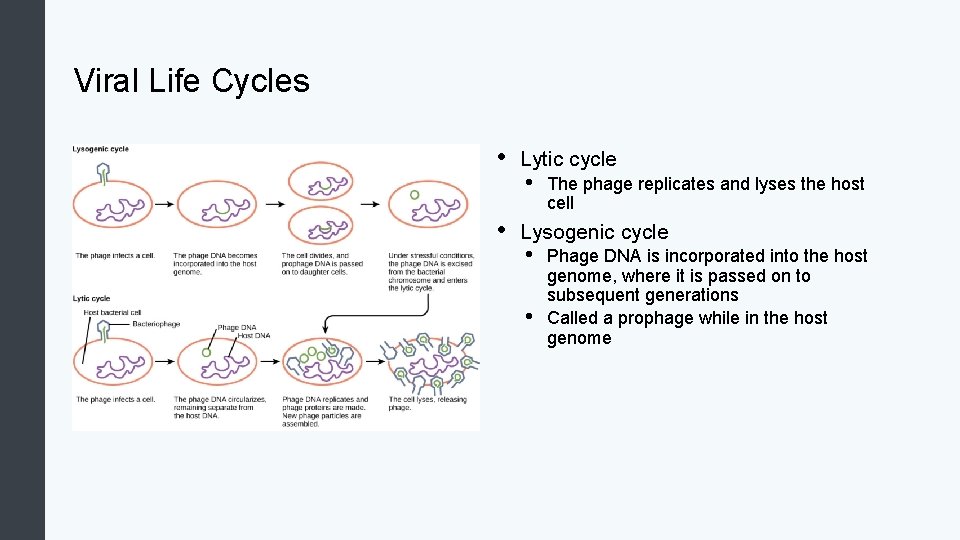
Viral Life Cycles • • Lytic cycle • The phage replicates and lyses the host cell Lysogenic cycle • • Phage DNA is incorporated into the host genome, where it is passed on to subsequent generations Called a prophage while in the host genome
Types of Viral Infections • • Acute disease • Symptoms get increasingly worse for a short period followed by the elimination of the virus from the body by the immune system and eventual recovery from the infection Chronic Infections • Long-term Intermittent symptoms • Only occasionally present Asymptomatic infection • No symptoms are present in the host
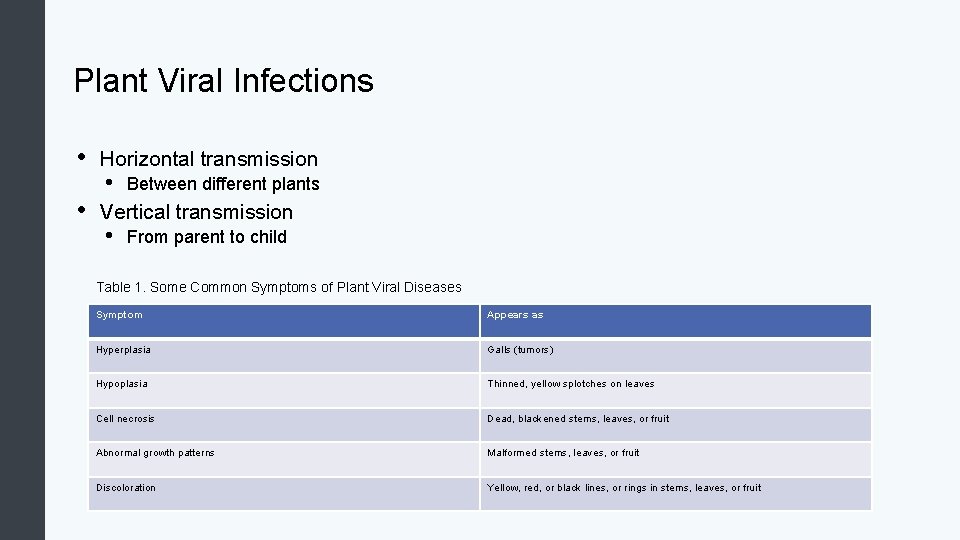
Plant Viral Infections • • Horizontal transmission • Between different plants Vertical transmission • From parent to child Table 1. Some Common Symptoms of Plant Viral Diseases Symptom Appears as Hyperplasia Galls (tumors) Hypoplasia Thinned, yellow splotches on leaves Cell necrosis Dead, blackened stems, leaves, or fruit Abnormal growth patterns Malformed stems, leaves, or fruit Discoloration Yellow, red, or black lines, or rings in stems, leaves, or fruit
Prions and Viroids • Prions • • • Proteinaceous infectious particles No nucleic acids Cause fatal neurodegenerative diseases • • Kuru Mad cow disease 1. Viroids Plant pathogens Small, single-stranded circular RNA particles Make no proteins Infect plants
Quick Review • • • Draw the basic structure of DNA How does the structure of DNA relate its function in storing genetic information? List the basic steps in DNA replication What are the key enzymes in DNA replication and their functions? How is DNA proofread? Draw the basic structure of a virus What are the two main types of viral infections? Describe a prion What are viroids and what do they target?
- Slides: 13