
Biology Human Biology Biology is concerned with life
Biology Human Biology
Biology is concerned with life phenomena of every kind and nature. Biology is the study of living things. Biology is a science of life concerned with the study of life and living organisms, including their structure, function, growth, origin, evolution, distribution, and taxonomy.
Biology is concerned with the study of the interrelationship of organisms and evolution of life. biology (from the Greek words bios, life, and logos, word thought) is the study of living organisms and life’s processes. It is the study of life. Other branches of science are chemistry, physics, geology, astronomy, and related fields such as medicine.
There are many branches of biology , every one is study of a group of organisms or special field of life that Zoology , Botany , Cytology , Ecology, Genetics, Anatomy, Microbiology (Parasitology , Virology , Bactriology , Immunology) , Taxonomy , Physiology , Embryology, Molecular biology , Biotechnology , Bioengineering …. .
All living organisms share some basic characteristics: 1. Order: a) An organism is highly ordered with cells, tissues, organs, etc b) The biosphere is highly ordered in terms of the lower levels. c) Individual structures, like compound eyes, show distinct organization.

2. Response to Stimuli: a) Interaction with the environment and other living organisms. b) Responses help ensure survival. c) Activities in response to stimuli are termed behaviors.
• 3. Regulation of Internal Environment a) Organisms must maintain a state of biological balance b) Homeostasis is the balance maintained regarding temperature, moisture, acidity, and other physiological factors. c) Organisms have feedback and control mechanisms that do not require conscious activity . d) Through behavior, organisms can also maintain homeostasis
4. Acquisition of Materials and Energy: a) Living organisms require an outside source of nutrients and energy. b) Energy is the capacity to do work. It can be gained from food intake. c) Metabolism is the sum of all chemical reactions that occur in a cell. d) Energy is required to ensure that metabolism can occur. e) The sun is the ultimate source of all energy on Earth. f) Photosynthesis transforms solar energy into chemical energy in the form organic molecules in plants. g) All life acquires energy by metabolizing the products of photosynthesis.
5. Reproduction and Development: a) Life comes only from life. b) An organism can reproduce or make more organisms like it. 6. Genetic Inheritance a) The blueprint for an organism is encoded in the genes of DNA. b) Genes contain specific information for how the organism is to be ordered c) DNA (deoxyribonucleic acid) is the genetic code in all living things.
7. Evolutionary Adaptations: a) Adaptations are modifications that make organisms suited to their life. b) Adaptations come about through evolution c) Evolution is the process by which a species changes over time. d) A species is a group of similar organisms that can interbreed.
e) Modifications occur over time as organisms reproduce. f) Natural selection, proposed by Charles Darwin, explains how species change over time when a new variation arises that allows certain members to be more competitive and thus survive and reproduce better. g) The theory of evolution can explain the diversity of life
All living things share certain key characteristics: order, sensitivity, growth, development and reproduction, regulation, and homeostasis.

• Basic Principles of Biology The foundation of biologist exists today is based on five basic principles. basic theories are present in biology 1 -Cell Theory: all living organisms are composed of cells. The cell is the basic unit of life. 2 -Gene Theory: traits are inherited through gene transmission. Genes are located on chromosomes and consist of DNA. 3 -Evolution: any genetic change in a population that is inherited over several generations. These changes may be small or large, noticeable or not so noticeable.
• Basic Principles of Biology • 4 -Homeostasis: ability to maintain a constant internal environment in response to environmental changes. 5 -Thermodynamics: energy is constant and energy transformation is not completely efficient. • 6 -The Ecosystem Theory: organisms are members of populations that interact with each other and with the physical environment within a particular locale
Importance of Scientific Theories in Biology Scientific theories are concepts that tell us about the order and the patterns within the natural world—in other words, how the natural world is organized
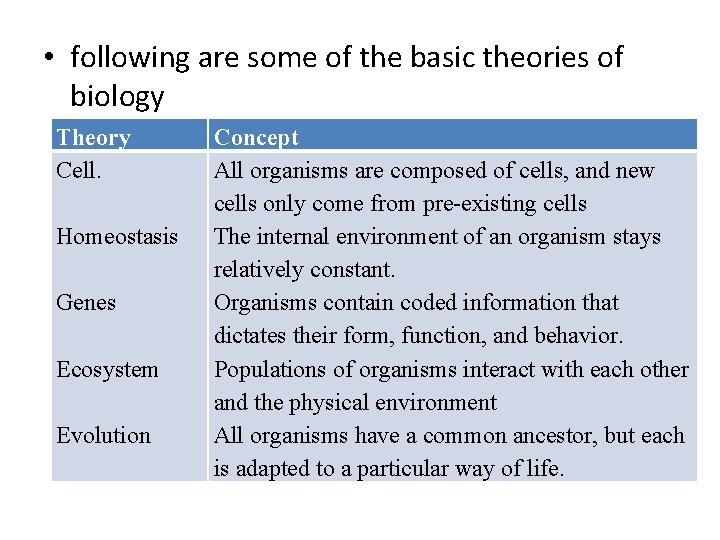
• following are some of the basic theories of biology Theory Concept Cell. Homeostasis Genes Ecosystem Evolution All organisms are composed of cells, and new cells only come from pre-existing cells The internal environment of an organism stays relatively constant. Organisms contain coded information that dictates their form, function, and behavior. Populations of organisms interact with each other and the physical environment All organisms have a common ancestor, but each is adapted to a particular way of life.
Medical biology : is a field of biology that has practical application in medicine , health care and laboratory diagnostics Human Biology introduces students to the anatomy and physiology of the human body Human biology can be studied on any level of biological organization
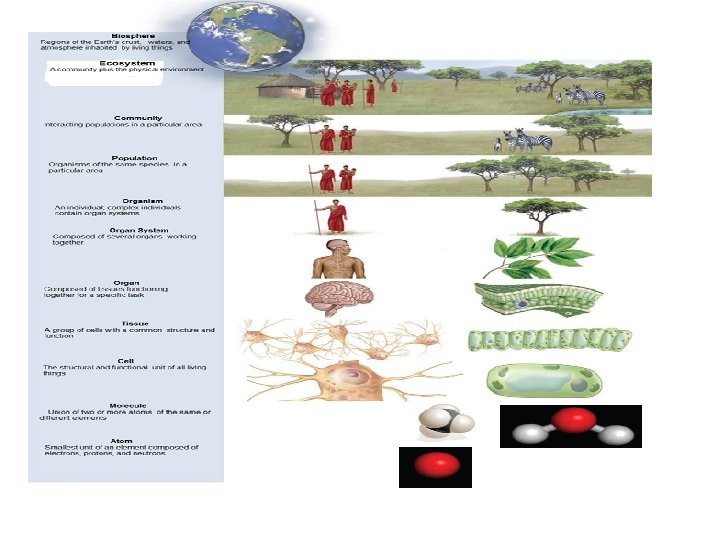
• Life has many levels of organization A. All forms of life are organized similarly B. There are some levels of biological organization. 1 -The chemical organization ( Atoms: – Smallest unit of an element containing electrons, protons, neutrons and molecules ( union of two or more atoms) 2 -The cellular organization( Basic unit of structure and function of all living things). 3 -The tissue level of organization( Group of cells with a common structural function). 4 -The organ level of organization(Structure composed of tissues with similar function ). 5 - The system level of organization (Composed of several organs working together ).
6 - The organism level of organization (An individual). 7 - The ecological level of organization : that including a-Populations –– All organisms of one species that live in a particular area. b- Communities – Interacting populations in a particular area. - c-Ecosystems –A community and the physical environment around it. d-Biosphere: –The sum of all of Earth’s ecosystems, the most complex level. d C. Complexity increases with each level from atom to biosphere. D. Each increase in complexity is associated with the establishment of properties beyond those of the previous level. This is known as emergent properties.
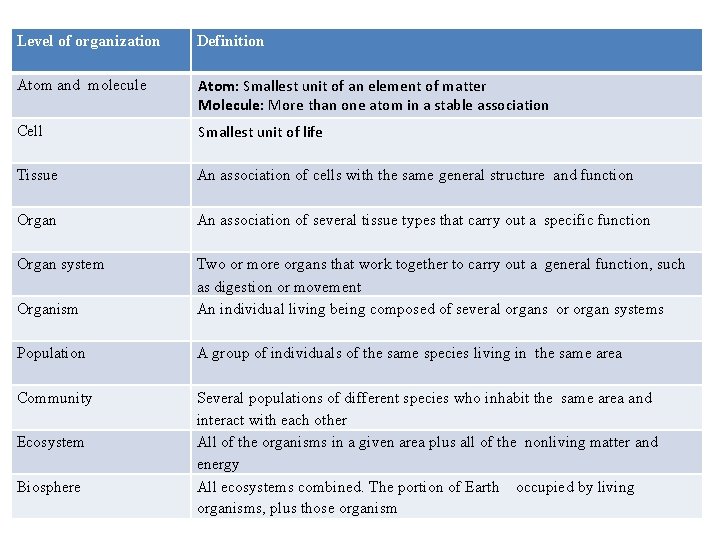
Level of organization Definition Atom and molecule Atom: Smallest unit of an element of matter Molecule: More than one atom in a stable association Cell Smallest unit of life Tissue An association of cells with the same general structure and function Organ An association of several tissue types that carry out a specific function Organ system Organism Two or more organs that work together to carry out a general function, such as digestion or movement An individual living being composed of several organs or organ systems Population A group of individuals of the same species living in the same area Community Several populations of different species who inhabit the same area and interact with each other All of the organisms in a given area plus all of the nonliving matter and energy All ecosystems combined. The portion of Earth occupied by living organisms, plus those organism Ecosystem Biosphere

The Cell The Tissues Histology
• The cell is the smallest biological unit. It is the structural and functional unit of all living forms; unicellular and multicellular organisms. • Cytology: (Cytos means cell; ology means science) is the branch of biology that studies the basic structure, function and chemistry of cells or the biological science which deals with the study of structure, function, molecular organization, growth, reproduction and genetics of the cells • cytology: study of cell structure by light microscopy
• Cell Theory The cell theory is an end-result of the works of botanist Matthias Schleiden (1838), Zoologist Theodor Schwann (1839) and physician Rudolph Virchow (1855). The cell theory is a unifying concept that says that: The cell is the basic structural and functional unit of life forms in unicellular or multicellular organisms. They are characterized by: 1 - The cells come from other cells. 2 - The cells are similar in structure. 3 -The cells are modified to in a variety of ways to carry out specialized function. 4 -The cells are variable in shape. 5 - Cell size is limited and most cells are microscopic.
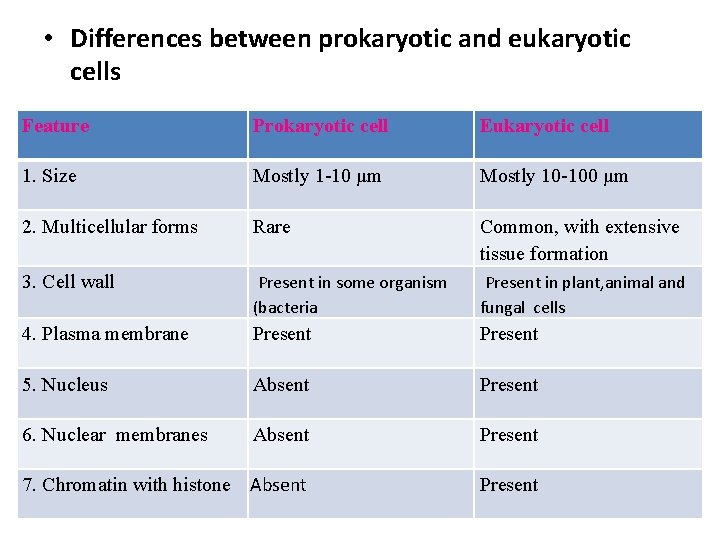
• Differences between prokaryotic and eukaryotic cells Feature Prokaryotic cell Eukaryotic cell 1. Size Mostly 1 -10 μm Mostly 10 -100 μm 2. Multicellular forms Rare Common, with extensive tissue formation 3. Cell wall Present in some organism (bacteria Present in plant, animal and fungal cells 4. Plasma membrane Present 5. Nucleus Absent Present 6. Nuclear membranes Absent Present 7. Chromatin with histone Absent Present
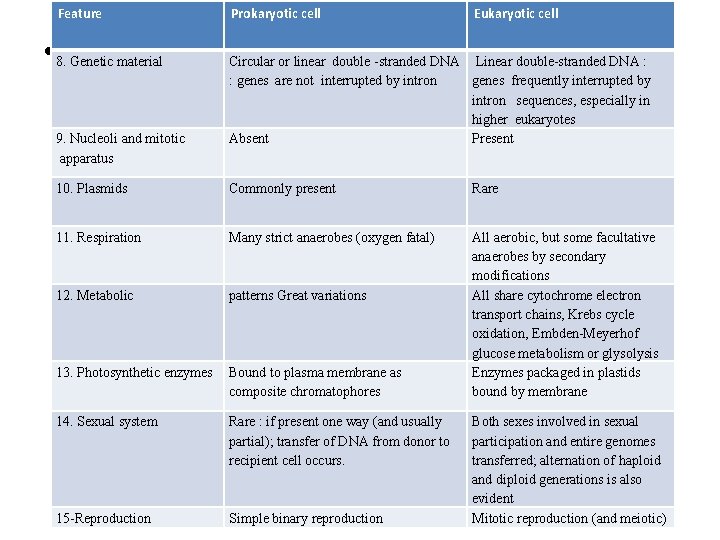
Feature • 8. Genetic material 9. Nucleoli and mitotic apparatus Prokaryotic cell Eukaryotic cell Circular or linear double -stranded DNA Linear double-stranded DNA : : genes are not interrupted by intron genes frequently interrupted by intron sequences, especially in higher eukaryotes Absent Present 10. Plasmids Commonly present Rare 11. Respiration Many strict anaerobes (oxygen fatal) 12. Metabolic patterns Great variations 13. Photosynthetic enzymes Bound to plasma membrane as composite chromatophores All aerobic, but some facultative anaerobes by secondary modifications All share cytochrome electron transport chains, Krebs cycle oxidation, Embden-Meyerhof glucose metabolism or glysolysis Enzymes packaged in plastids bound by membrane 14. Sexual system Rare : if present one way (and usually partial); transfer of DNA from donor to recipient cell occurs. 15 -Reproduction Simple binary reproduction Both sexes involved in sexual participation and entire genomes transferred; alternation of haploid and diploid generations is also evident Mitotic reproduction (and meiotic)
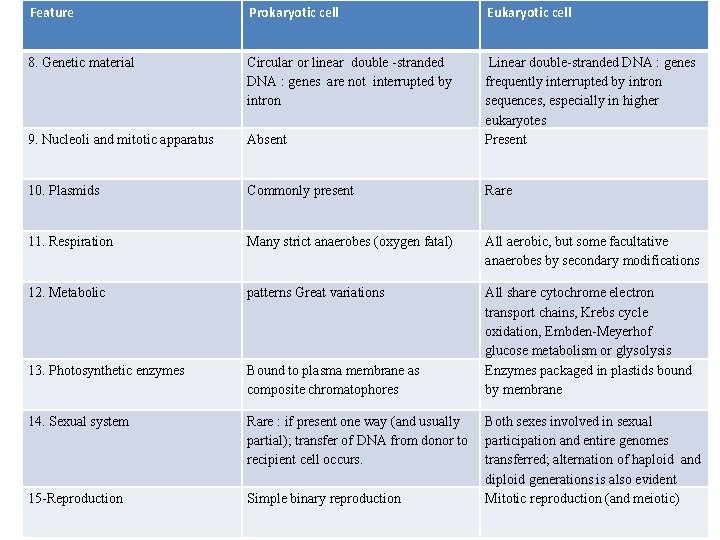
Feature Prokaryotic cell 8. Genetic material Circular or linear double -stranded DNA : genes are not interrupted by intron 9. Nucleoli and mitotic apparatus Absent Linear double-stranded DNA : genes frequently interrupted by intron sequences, especially in higher eukaryotes Present 10. Plasmids Commonly present Rare 11. Respiration Many strict anaerobes (oxygen fatal) All aerobic, but some facultative anaerobes by secondary modifications 12. Metabolic patterns Great variations 13. Photosynthetic enzymes Bound to plasma membrane as composite chromatophores All share cytochrome electron transport chains, Krebs cycle oxidation, Embden-Meyerhof glucose metabolism or glysolysis Enzymes packaged in plastids bound by membrane 14. Sexual system Rare : if present one way (and usually partial); transfer of DNA from donor to recipient cell occurs. 15 -Reproduction Simple binary reproduction Eukaryotic cell Both sexes involved in sexual participation and entire genomes transferred; alternation of haploid and diploid generations is also evident Mitotic reproduction (and meiotic)
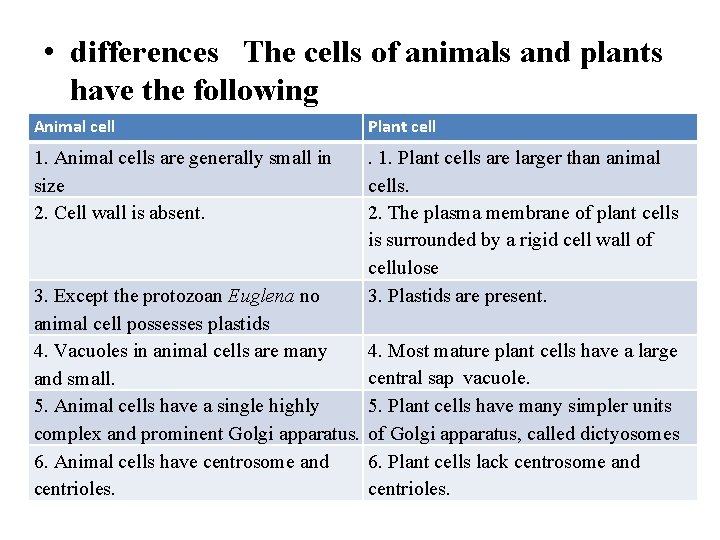
• differences The cells of animals and plants have the following Animal cell Plant cell 1. Animal cells are generally small in size 2. Cell wall is absent. . 1. Plant cells are larger than animal cells. 2. The plasma membrane of plant cells is surrounded by a rigid cell wall of cellulose 3. Plastids are present. 3. Except the protozoan Euglena no animal cell possesses plastids 4. Vacuoles in animal cells are many and small. 5. Animal cells have a single highly complex and prominent Golgi apparatus. 6. Animal cells have centrosome and centrioles. 4. Most mature plant cells have a large central sap vacuole. 5. Plant cells have many simpler units of Golgi apparatus, called dictyosomes 6. Plant cells lack centrosome and centrioles.
• Structure of the Cell and Cell Organelles: Although the cells are variable in their shapes, sizes and functions, they are well organized structures and usually contain the same components . Cell structure reflects cell function. • Most cells are small and can be seen only under a microscope. The small size of cells means that they are measured using the smaller units of the metric system, such as the micrometer (μm). A micrometer is 1/1, 000 millimeter.
• Basic Structure: Examination of a cell by light microscopy shows a fluid cell body (cytoplasm), a cell nucleus and the surrounding cell membrane (plasmalemma) The cytoplasm contains a number of highly organized small bodies, called cell organelles, that can often only be seen by electron microscopy. It also contains certain supportive structures (parts of the cytoskeleton) and numerous cell inclusions (e. g. , metabolic substrates and end products)
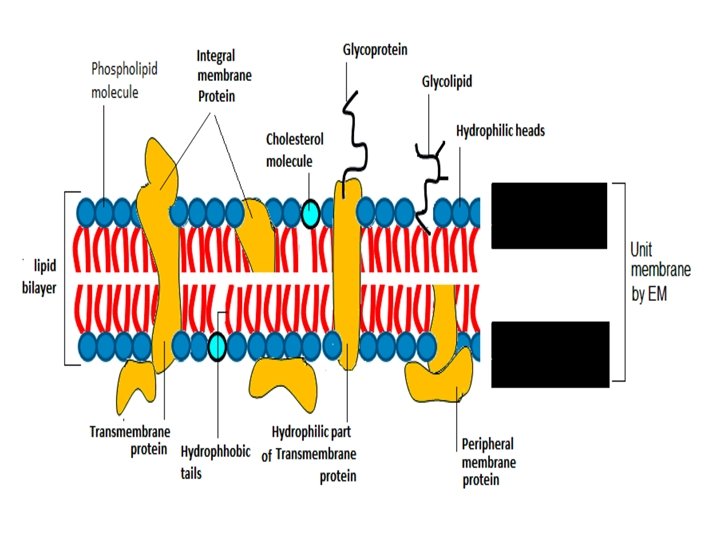
• The plasma membrane( Plasmalemma or cell membrane) that surrounds and keeps the cell intact regulates what enters and exits a cell. The plasma membrane is a phospholipid bilayer that is said to be semipermeable because it allows certain molecules but not others to enter the cell. Proteins present in the plasma membrane play important roles in allowing substances to enter the cell.
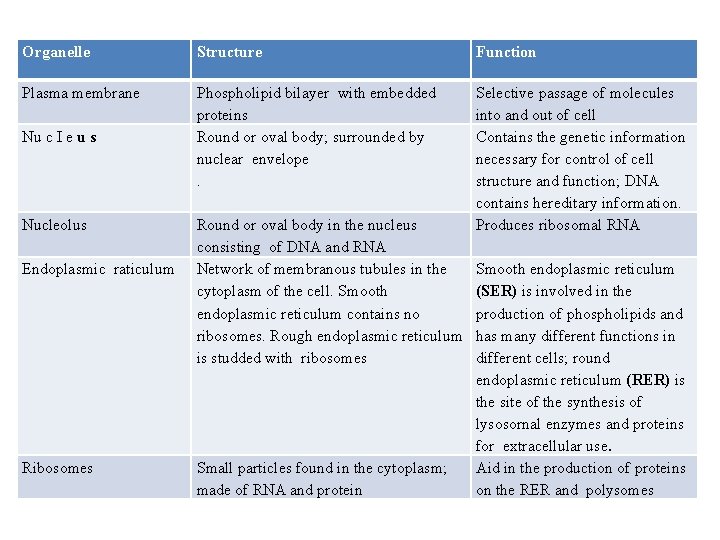
Organelle Structure Plasma membrane Phospholipid bilayer with embedded proteins Round or oval body; surrounded by nuclear envelope. Nu c I e u s Nucleolus Endoplasmic raticulum Ribosomes Round or oval body in the nucleus consisting of DNA and RNA Network of membranous tubules in the cytoplasm of the cell. Smooth endoplasmic reticulum contains no ribosomes. Rough endoplasmic reticulum is studded with ribosomes Small particles found in the cytoplasm; made of RNA and protein Function Selective passage of molecules into and out of cell Contains the genetic information necessary for control of cell structure and function; DNA contains hereditary information. Produces ribosomal RNA Smooth endoplasmic reticulum (SER) is involved in the production of phospholipids and has many different functions in different cells; round endoplasmic reticulum (RER) is the site of the synthesis of lysosornal enzymes and proteins for extracellular use. Aid in the production of proteins on the RER and polysomes
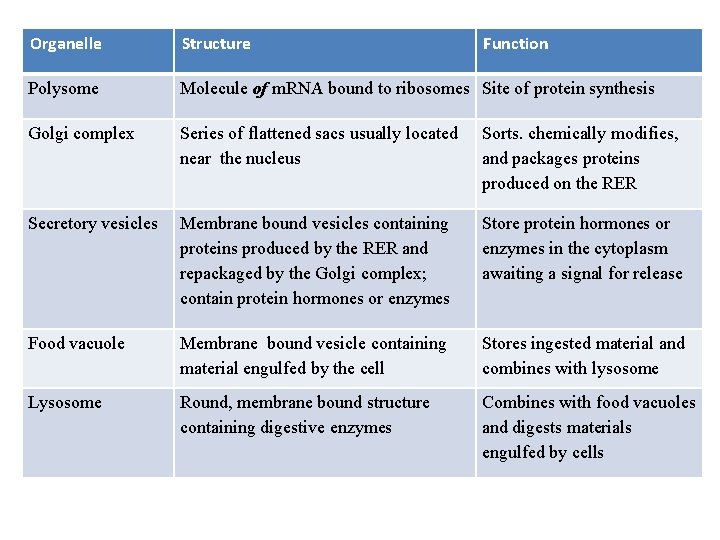
Organelle Structure Polysome Molecule of m. RNA bound to ribosomes Site of protein synthesis Golgi complex Series of flattened sacs usually located near the nucleus Sorts. chemically modifies, and packages proteins produced on the RER Secretory vesicles Membrane bound vesicles containing proteins produced by the RER and repackaged by the Golgi complex; contain protein hormones or enzymes Store protein hormones or enzymes in the cytoplasm awaiting a signal for release Food vacuole Membrane bound vesicle containing material engulfed by the cell Stores ingested material and combines with lysosome Lysosome Round, membrane bound structure containing digestive enzymes Combines with food vacuoles and digests materials engulfed by cells Function
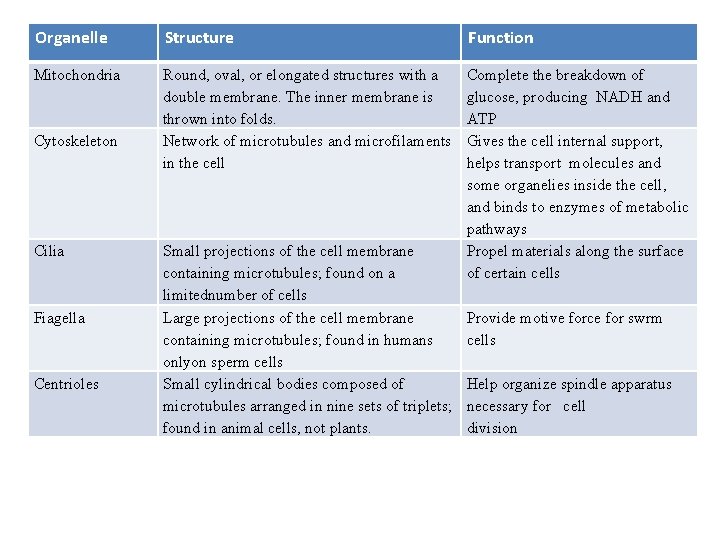
Organelle Structure Mitochondria Round, oval, or elongated structures with a double membrane. The inner membrane is thrown into folds. Network of microtubules and microfilaments in the cell Cytoskeleton Cilia Fiagella Centrioles Small projections of the cell membrane containing microtubules; found on a limitednumber of cells Large projections of the cell membrane containing microtubules; found in humans onlyon sperm cells Small cylindrical bodies composed of microtubules arranged in nine sets of triplets; found in animal cells, not plants. Function Complete the breakdown of glucose, producing NADH and ATP Gives the cell internal support, helps transport molecules and some organelies inside the cell, and binds to enzymes of metabolic pathways Propel materials along the surface of certain cells Provide motive force for swrm cells Help organize spindle apparatus necessary for cell division
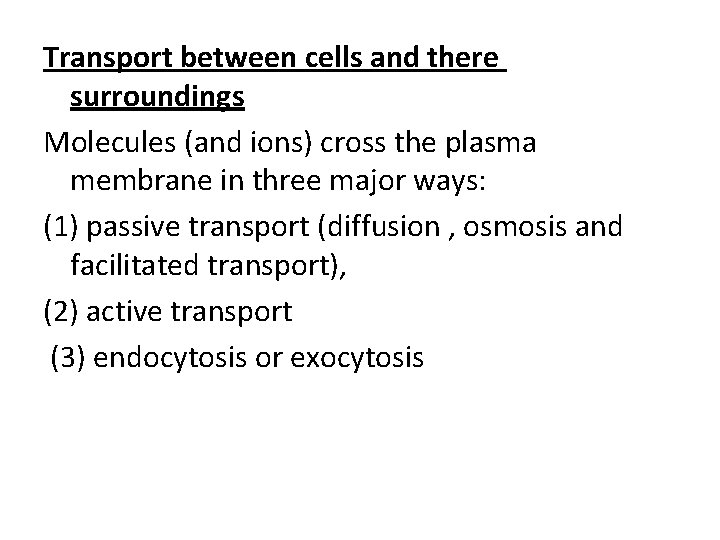
Transport between cells and there surroundings Molecules (and ions) cross the plasma membrane in three major ways: (1) passive transport (diffusion , osmosis and facilitated transport), (2) active transport (3) endocytosis or exocytosis
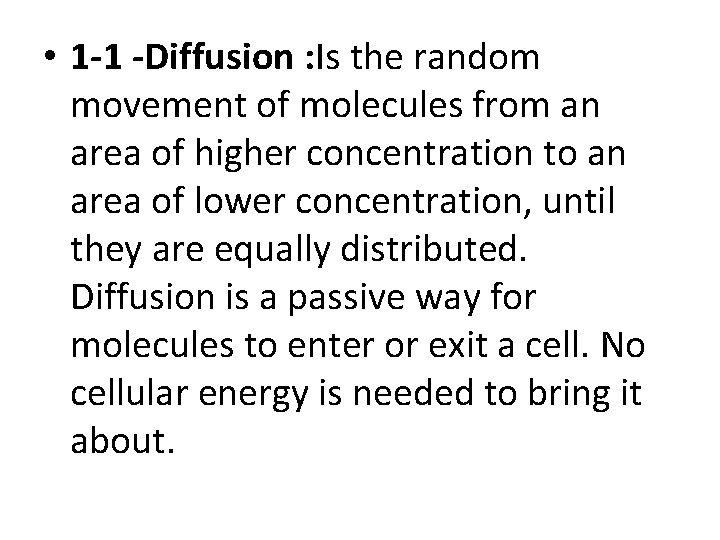
• 1 -1 -Diffusion : Is the random movement of molecules from an area of higher concentration to an area of lower concentration, until they are equally distributed. Diffusion is a passive way for molecules to enter or exit a cell. No cellular energy is needed to bring it about.
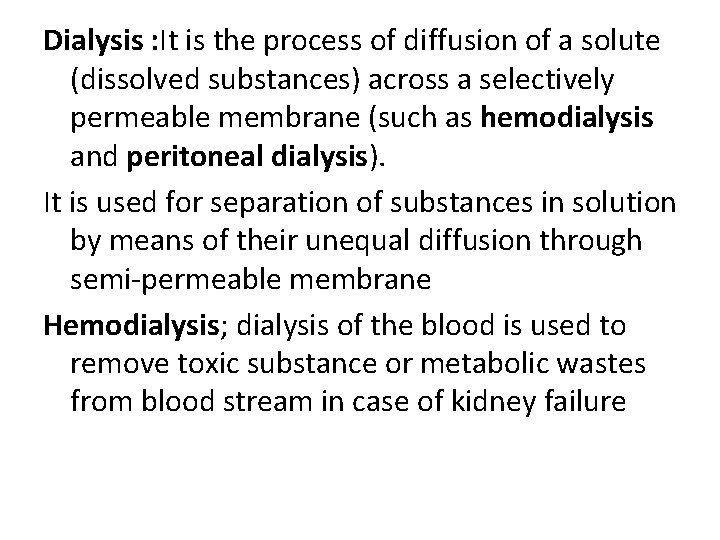
Dialysis : It is the process of diffusion of a solute (dissolved substances) across a selectively permeable membrane (such as hemodialysis and peritoneal dialysis). It is used for separation of substances in solution by means of their unequal diffusion through semi-permeable membrane Hemodialysis; dialysis of the blood is used to remove toxic substance or metabolic wastes from blood stream in case of kidney failure
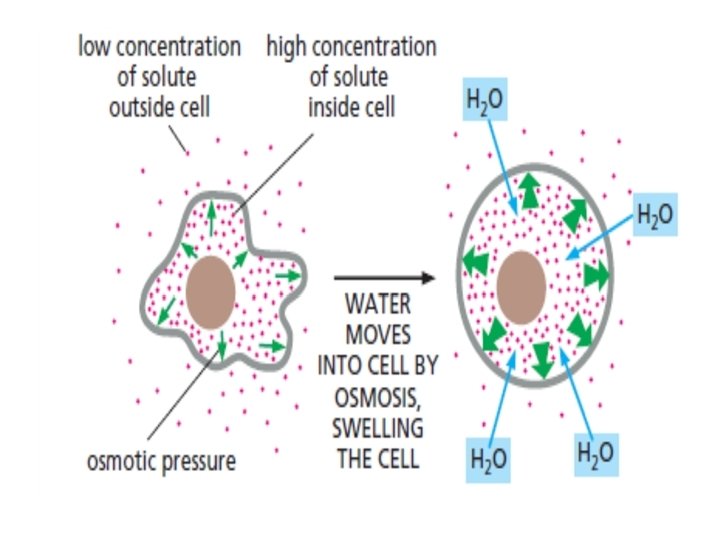
• 1 -2 -Osmosis: Is the net movement of water across a semipermeable membrane, from an area of higher concentration to an area of lower concentration. The membrane separates the two areas, and solute is unable to pass through the membrane. • Water will tend to fl ow from the area that has less solute (and therefore more water) to the area with more solute(and therefore less water).
• 1 -3 -Facilitated Transport: Many solutes do not simply diffuse across a plasma membrane. They are transported by means of protein carriers within the membrane. During facilitated transport, a molecule is transported across the plasma membrane from the side of higher concentration to the side of lower concentration •
• 2 -Active Transport: During active transport, a molecule is moving from a lower to higher concentration • Active transport requires a protein carrier and the useof cellular energy obtained from the breakdown of ATP • The energy is used to carry out active transport. Proteins involved in active transport often are called pumps
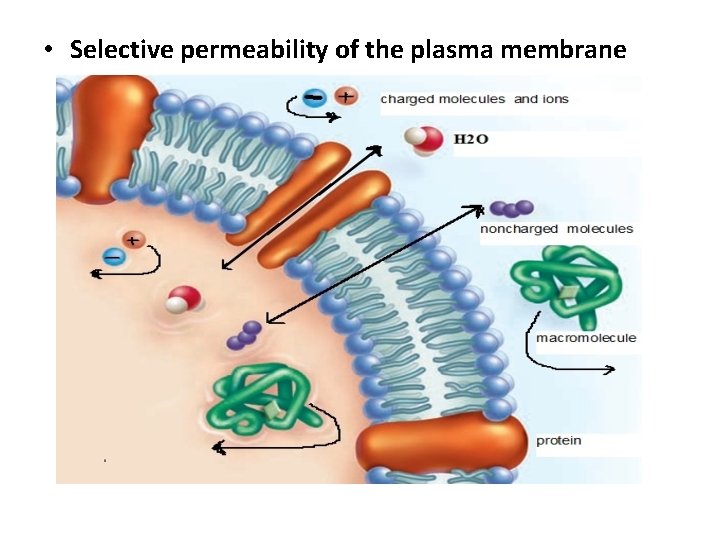
• Selective permeability of the plasma membrane
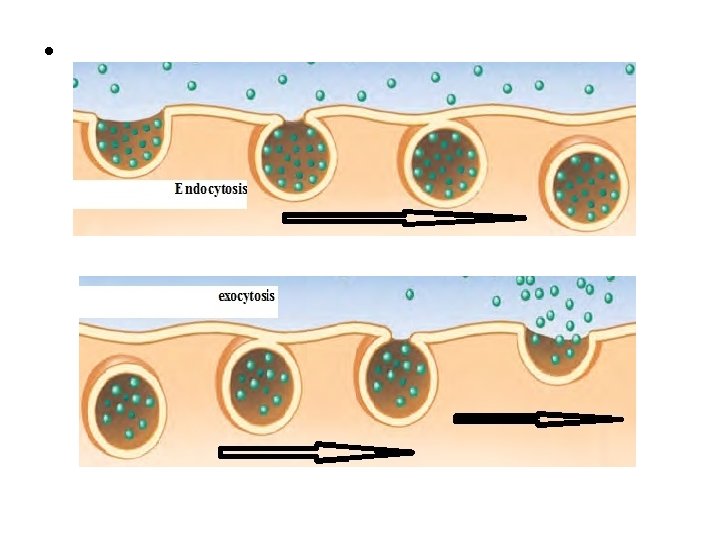
• 3 -Endocytosis and Exocytosis : These two processes are based on the same principle but have different directions of movement. Endocytosis moves materials into the cell, and exocytosis moves materials out of the cell.
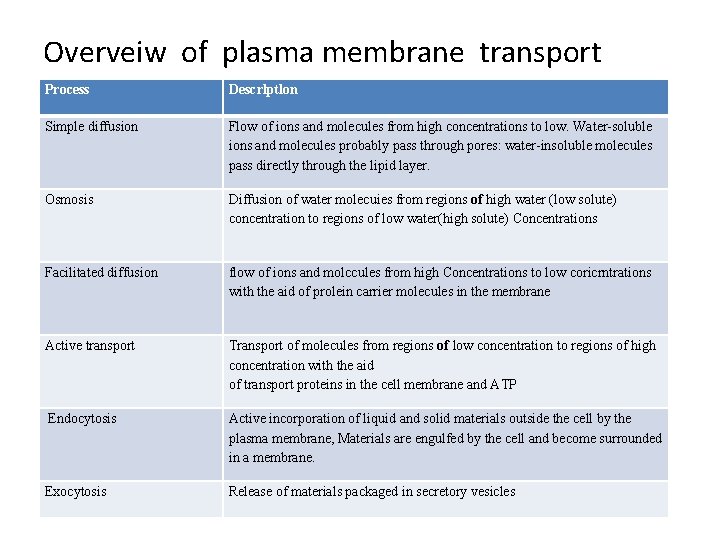
Overveiw of plasma membrane transport Process Descrlptlon Simple diffusion Flow of ions and molecules from high concentrations to low. Water-soluble ions and molecules probably pass through pores: water-insoluble molecules pass directly through the lipid layer. Osmosis Diffusion of water molecuies from regions of high water (low solute) concentration to regions of low water(high solute) Concentrations Facilitated diffusion flow of ions and molccules from high Concentrations to low coricrntrations with the aid of prolein carrier molecules in the membrane Active transport Transport of molecules from regions of low concentration to regions of high concentration with the aid of transport proteins in the cell membrane and ATP Endocytosis Active incorporation of liquid and solid materials outside the cell by the plasma membrane, Materials are engulfed by the cell and become surrounded in a membrane. Exocytosis Release of materials packaged in secretory vesicles
Nutrition Nutrition: You are what you eat
Nutrition: Some people eat to live, but many others seem to live to eat. food probably occupies a central part of your life. Nutrition is the interaction between an organism and its food. Because nearly all nutrients enter the body through the digestive system. The nutrients we need to survive and prosper physically and mentally can be divided into two broad categories: 1 -macronutrients such as water, amino acid , protein , lipid and carbohydrates 2 -micronutrients such as vitamin and minerals
Before going into more detail about the individual nutrients we can summarize their functions as follows: 1 -Carbohydrates : such as sugars starch , supply energy . Carbohydrates are a group of organic compounds. It includes such well-known examples as table sugar (sucrose), blood sugar (glucose), and starch. Carbohydrates consist primarily of carbon, oxygen, and hydrogen.
• Carbohydrates belong to three broad groups: 1 -Monosaccharides : (simple sugars)with five carbons(pentoses like ribose )and with six carbons( hexoses like glucose , fructose ). The chemical formula for glucose is C 6 H 12 O 6. In humans, glucose is an important source of energy. During cellular respiration, energy is released from glucose, and that energy is used to help make adenosine triphosphate (ATP). Galactose (part of lactose, or milk sugar) and fructose (found in sucrose, in fruit) are other common monosaccharides. Although glucose, galactose, and fructose all have the same chemical formula (C 6 H 12 O 6), they differ structurally and chemically
2 -Disaccharides (double sugars ) sucrose from sugar beet or sugar cane. Sucrose is formed when a monomer of glucose and a monomer of fructose are joined in a dehydration reaction to form a glycosidic bond. Common disaccharides include lactose, maltose, and sucrose. Lactose is a disaccharide consisting of the monomers glucose and galactose. It is found naturally in milk. Maltose, or malt sugar, is a disaccharide formed by a dehydration reaction between two glucose molecules. The most common disaccharide is sucrose, or table sugar, which is composed of the monomers glucose and fructose
3 -Polysaccharides (multiple sugars ) Starch found in seed , tubers and roots Cellulose found in plant cell walls. Glycogen (animal starch ) found in liver and muscle. Glycogen is an important component in the homeostatic mechanism that controls blood sugar (glucose) levels. In between meals, though, blood glucose levels tend to fall as cells use up circulating glucose molecules to make energy. To prevent glucose levels from falling below a certain level, the pancreas releases a hormone called glucagon, which stimulates glycogen breakdown in the liver. As glycogen is broken down, glucose is released into the bloodstream, thus maintaining normal blood sugar levels and keeping us from fainting
Lipids(Fats ) The most familiar lipids are those found in fats and oils. Fats, which are usually of animal origin (e. g. , lard and butter) and some plant origin are solid at room temperature. Oils, which are usually of plant origin (e. g. , corn oil and soybean oil), are liquid at room temperature
Lipids : Essential cell components and energy sources. Lipids are diverse and contain long chains of carbon atoms and are insoluble in water. Specialized lipids can be synthesized by some animals, others require essential fatty acids (lipid building blocks) from their food
Lipids : Essential cell components and energy sources. Lipids are diverse and contain long chains of carbon atoms and are insoluble in water. Specialized lipids can be synthesized by some animals, others require essential fatty acids (lipid building blocks) from their food
Three principal types of lipids 1 - Triglycerides (fats used as an energy source) 2 - Phospholipids (component of cell membranes) 3 - Cholesterol (component of cell membranes, sex hormones, and used to synthesize bile
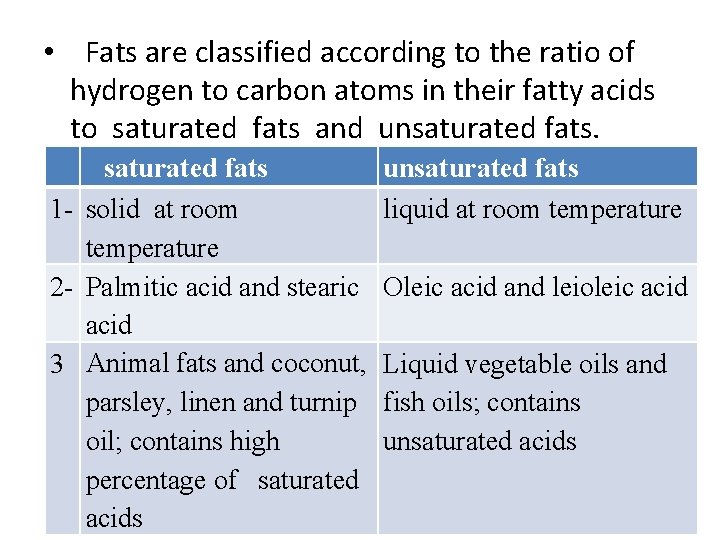
• Fats are classified according to the ratio of hydrogen to carbon atoms in their fatty acids to saturated fats and unsaturated fats 1 - solid at room temperature 2 - Palmitic acid and stearic acid 3 Animal fats and coconut, parsley, linen and turnip oil; contains high percentage of saturated acids unsaturated fats liquid at room temperature Oleic acid and leioleic acid Liquid vegetable oils and fish oils; contains unsaturated acids
Unsaturated fats are considered healthier than saturated fats because they tend to lower LDL cholesterol levels polyunsaturated fatty acids that have been linked to a reduced risk of heart disease and atherosderosis a disease that results from a buildup of cholesterol drpusits, or atherosclerotic plaque, on the walls of arteries.
Cholesterol is a liquid rather than the fats and normal component of the blood. It is present in all body cells (specially nervous tissue ) and is needed for the manufacture of sex hormones and adrenal hormons . In healthy individual the level of cholesterol in the blood by excretion in the bile and facese. The types of food that increase our blood levels of cholesterol are liver, kidney, egg yolk and fatty meat.
Protein: Proteins are crucial to the regulation and maintenance of the body. Body functions such as blood clotting, fluid balance, hormone and enzyme production, visual processes, transport of many substances in the bloodstream, and cell repair require specific proteins.
all proteins are composed of just 20 different amino acids. The body can make 12 of these amino acids. The 8 that the body cannot produce (isoleucine, lysine, methionine, phenylalanine, threonine, tryptophan, and valine) are called essential amino acids because they must be ingested in food and we are unable to manfacture them in the body
Proteins are divided into two major groups by nutritionists: complete and incomplete. Complete proteins contain ample amounts o f all of t h e essential amino acids. Complete proteins are found in milk, eggs, meat, fish, poultry, and cheese. Incomplete proteins lack one or more essential amino acids and include those found in many plant products: nuts, seeds, grains, most legumes (peas and beans), and vegetables.
Proteins are divided into two major groups by nutritionists: complete and incomplete. Complete proteins contain ample amounts o f all of t h e essential amino acids. Complete proteins are found in milk, eggs, meat, fish, poultry, and cheese. Incomplete proteins lack one or more essential amino acids and include those found in many plant products: nuts, seeds, grains, most legumes (peas and beans), and vegetables.
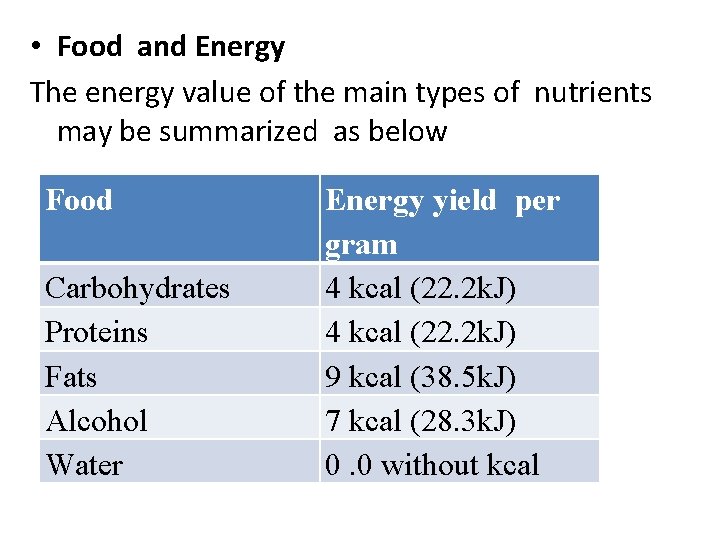
• Food and Energy The energy value of the main types of nutrients may be summarized as below Food Carbohydrates Proteins Fats Alcohol Water Energy yield per gram 4 kcal (22. 2 k. J) 9 kcal (38. 5 k. J) 7 kcal (28. 3 k. J) 0. 0 without kcal
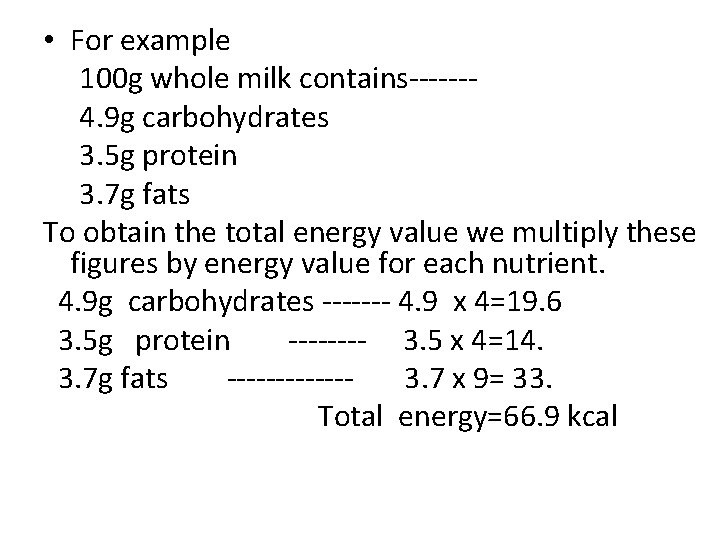
• For example 100 g whole milk contains------- 4. 9 g carbohydrates 3. 5 g protein 3. 7 g fats To obtain the total energy value we multiply these figures by energy value for each nutrient. 4. 9 g carbohydrates ------- 4. 9 x 4=19. 6 3. 5 g protein ---- 3. 5 x 4=14. 3. 7 g fats ------- 3. 7 x 9= 33. Total energy=66. 9 kcal
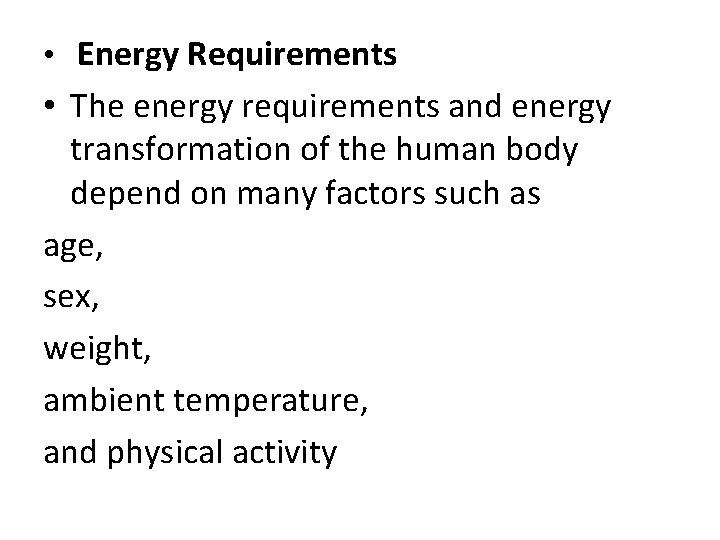
• Energy Requirements • The energy requirements and energy transformation of the human body depend on many factors such as age, sex, weight, ambient temperature, and physical activity
• metabolism may be divided into 1 -basal metabolism, measured under standard conditions (in the morning, fasting, resting quietly, normal body temperature, comfortable ambient temperature) 2 -excess metabolism of exercise measured under varying conditions, Determining how many Calories we need One way of calculating the BMR is to refer to the surface area of the body
Determining how many Calories we need: If we want to maintain a stable body weight, the number of calories we consume must equal the number we use. Your daily caloric energy needs are determined by your basal metabolic rate (BMR) •
BMR (basal metabolic rate) Rate at which energy is expended (heat produced) by the body per unit of time under resting (basal) conditions. The basal metabolic rate (BMR) is the rate at which the body releases heat as a result of breaking down fuel molecules. BMR is the body’s basic cost of living, that is, the rate of energy use during resting conditions This energy is required to maintain body functions such as heart contraction, breathing, and kidney function
• BMR can be influenced by the following factors: 1 -Gender and body composition. BMR is higher in males. Muscle tissue consumes more energy than fat tissue; because men generally have more muscle than women, they have a higher BMR. Also, highly muscular men and women have a faster BMR than their less muscular counter parts
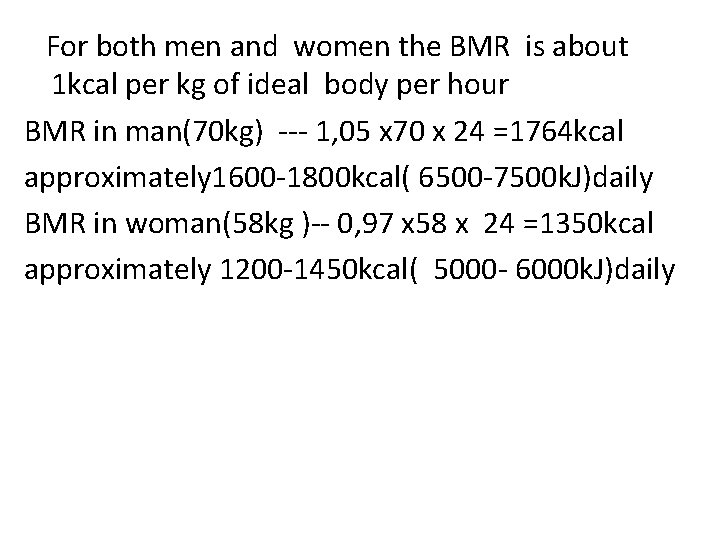
For both men and women the BMR is about 1 kcal per kg of ideal body per hour BMR in man(70 kg) --- 1, 05 x 70 x 24 =1764 kcal approximately 1600 -1800 kcal( 6500 -7500 k. J)daily BMR in woman(58 kg )-- 0, 97 x 58 x 24 =1350 kcal approximately 1200 -1450 kcal( 5000 - 6000 k. J)daily
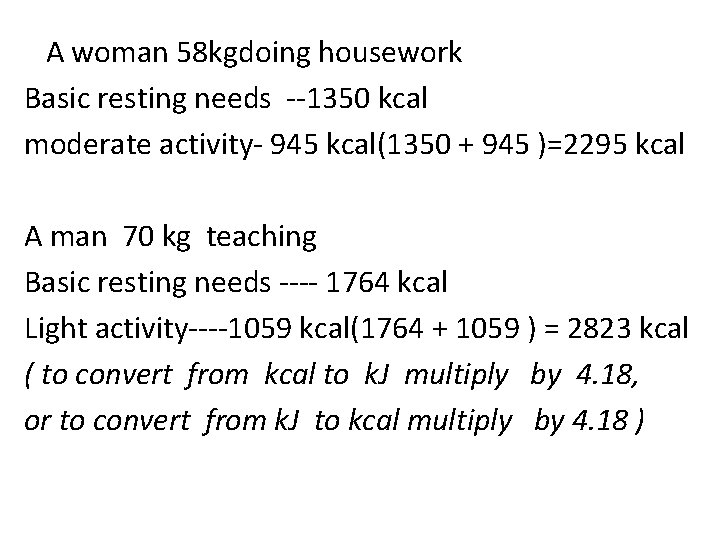
A woman 58 kgdoing housework Basic resting needs --1350 kcal moderate activity- 945 kcal(1350 + 945 )=2295 kcal A man 70 kg teaching Basic resting needs ---- 1764 kcal Light activity----1059 kcal(1764 + 1059 ) = 2823 kcal ( to convert from kcal to k. J multiply by 4. 18, or to convert from k. J to kcal multiply by 4. 18 )
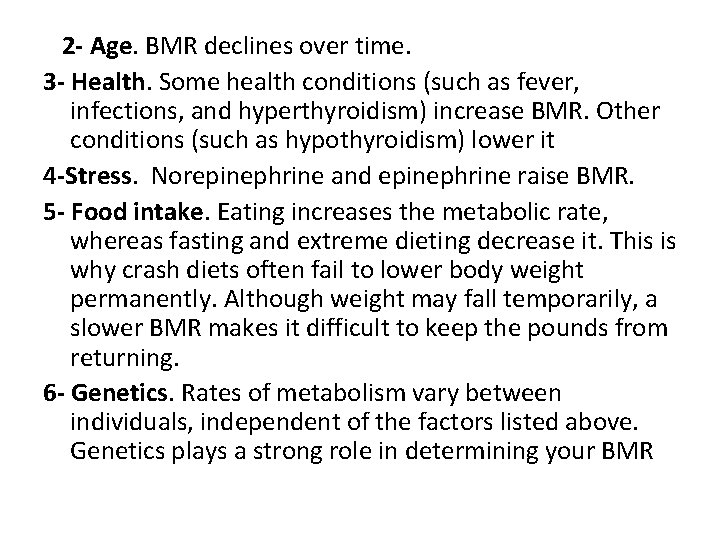
2 - Age. BMR declines over time. 3 - Health. Some health conditions (such as fever, infections, and hyperthyroidism) increase BMR. Other conditions (such as hypothyroidism) lower it 4 -Stress. Norepinephrine and epinephrine raise BMR. 5 - Food intake. Eating increases the metabolic rate, whereas fasting and extreme dieting decrease it. This is why crash diets often fail to lower body weight permanently. Although weight may fall temporarily, a slower BMR makes it difficult to keep the pounds from returning. 6 - Genetics. Rates of metabolism vary between individuals, independent of the factors listed above. Genetics plays a strong role in determining your BMR
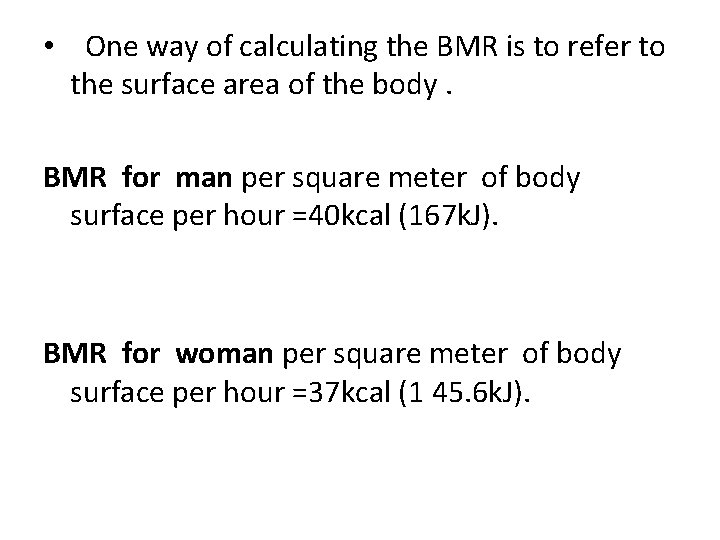
• One way of calculating the BMR is to refer to the surface area of the body. BMR for man per square meter of body surface per hour =40 kcal (167 k. J). BMR for woman per square meter of body surface per hour =37 kcal (1 45. 6 k. J).
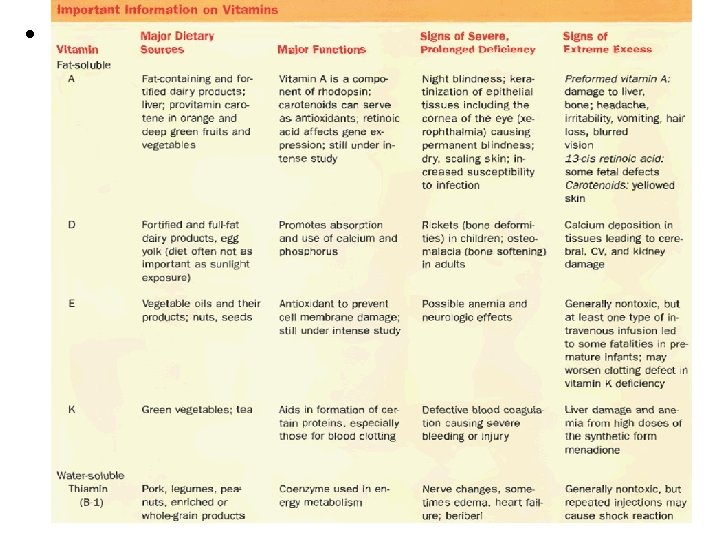
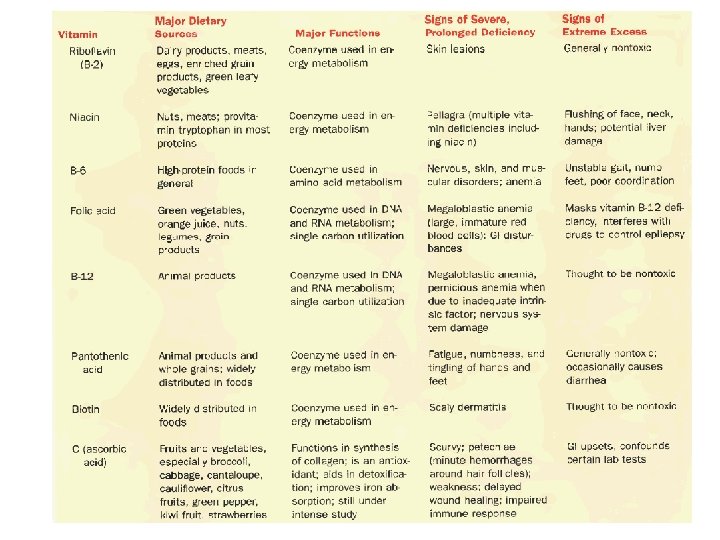
• Vitamins are essential for normal function vitamins, a group of at least 13 chemicals that are essential for normal functioning. The body can produce only a few vitamins; our skin synthesizes vitamin D when exposed • to sunlight, and bacteria living in the colon manufacture vitamins K, B 6, and biotin. We must obtain all others from our food and absorb them in the digestive tract. Vitamins fall into two groups: fat soluble and water soluble.
• Minerals: Elements essential for body processes: Minerals are the atoms of certain chemical elements that are also essential for body processes. They are the ions in blood plasma and cell cytoplasm (sodium, potassium, chloride, and many others). They represent most of the chemical structure of bone (calcium, phosphorus, and oxygen). They also contribute to the activity of nerves and muscles (sodium, potassium, and calcium), among many other functions. Twentyone minerals are considered essential for animals. Nine of the 21 (arsenic, chromium, cobalt, manganese, molybdenum, nickel, selenium, silicon, and vanadium) are called trace minerals because they represent less than 0. 01% of your body weight
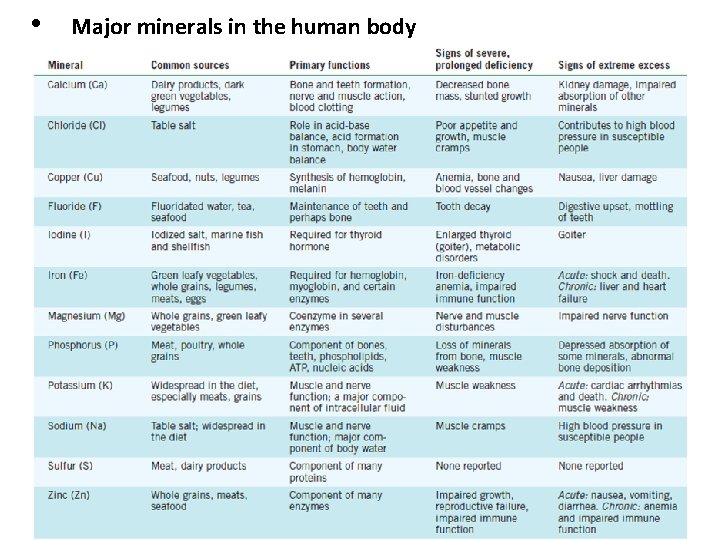
• Major minerals in the human body
Integumentary System
Integumentary System: from the Latin integere, meaning “to cover”). The integumentary system consists of the skin and its derivatives ; hair, nails, and cutaneous glands . The skin is sometimes called the cutaneous membrane or the integument. Skin covers the body. In an adult, the skin has a surface area of about 1. 8 square meters (over 19. 5 square feet). It accounts for nearly 15% of the weight of an average human. Dermatology is the scientific study and medical treatment of the integumentary system. •
The skin consists of two layers: (1) The outer layer of the skin is a stratified squamous epithelial tissue called the epidermis (2) The deeper connective tissue layer called the dermis. •
• Functions of the Integumentary System 1 - Protective Protection from dehydration (helps prevent our bodies from drying out) ■ Protection from injury (such as abrasion) ■ Defense against invasion by bacteria and viruses
2 -Sensory Sensation: provides information about the external world via receptors for touch, vibration, pain, and temperature 3 - Thermoregulatory Regulation of body temperature 4 -Metabolic. Synthesis of an inactive form of vitamin D 5 - Sexual signaling
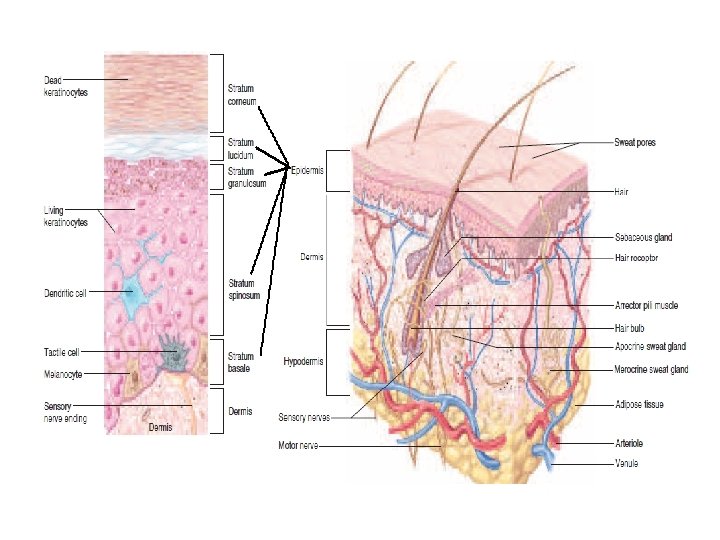
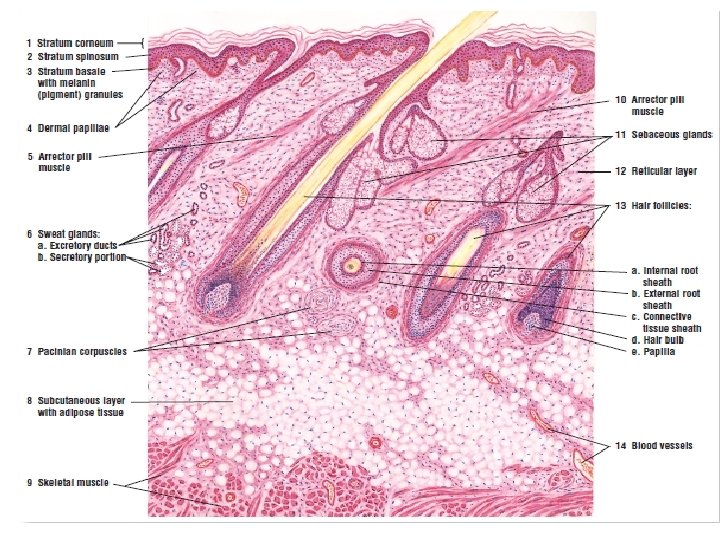
The Epidermis The epidermis 1 is a keratinized stratified squamous epithelium. The epidermis usually consists of four zones (five in thick skin), described here in order from deep to superficial: 1 -Stratum Basale 2 -Stratum Spinosum 3. The stratum granulosum 4. The stratum lucidum 5 -The stratum corneum
The dermis is the layer of the skin underlying the epidermis. It is of mesodermal origin and is composedof dense, irregular connective tissue that contains many type I collagen fibers and networks of thick elastic fibers. Although it is divided into a superficial papillary layer and a deeper, more extensive reticular layer, no distinct boundary exists between these layers A. The dermal papillary layer B. The dermal reticular layer •
The hypodermis : contains variable amounts of adipose tissue arranged into lobules separated by connective tissue septa. It lies deep to the dermis and is equivalent to the subcutaneous fascia. In well nourished individuals and in individuals living in cold climates, the adipose tissue can be quite thick. The epidermal derivatives of the skin (epithelial skin appendages) include the following structures and integumentary products Hair follicles and hair Sweat (sudoriferous) glands , Sebaceous glands, Nails and Mammary glands •
Reproductive System
Reproductive System In the life , Reproduction is an essential process for the survival of species. Reproductive system is consisting of : A-Basic or Primary sex organs( gonads in general are ovaries or testis). B-Secondry or Accessory sex organs ( genital ducts ). •
Male Reproductive System The male reproductive system includes the organs. The male gonads, or primary sex organs, are paired testes (sing. , testis), suspended within the sacs of the scrotum Male Reproductive Organs In humans, the male reproductive system consists the parts that :
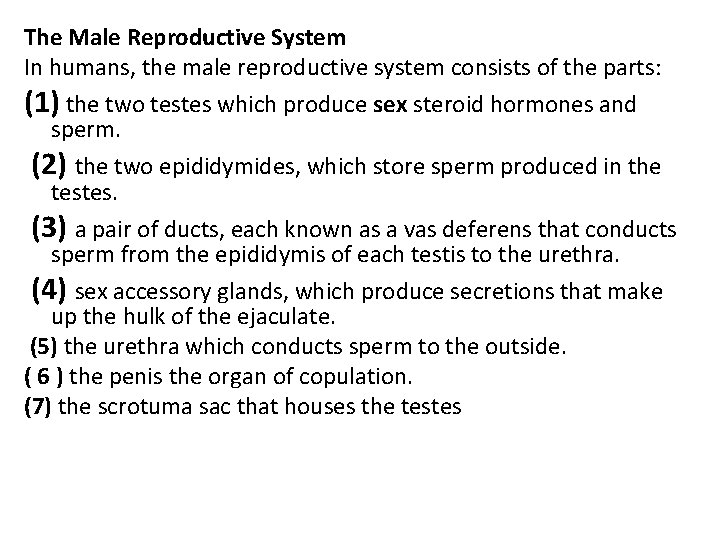
The Male Reproductive System In humans, the male reproductive system consists of the parts: (1) the two testes which produce sex steroid hormones and sperm. (2) the two epididymides, which store sperm produced in the testes. (3) a pair of ducts, each known as a vas deferens that conducts sperm from the epididymis of each testis to the urethra. (4) sex accessory glands, which produce secretions that make up the hulk of the ejaculate. (5) the urethra which conducts sperm to the outside. ( 6 ) the penis the organ of copulation. (7) the scrotuma sac that houses the testes
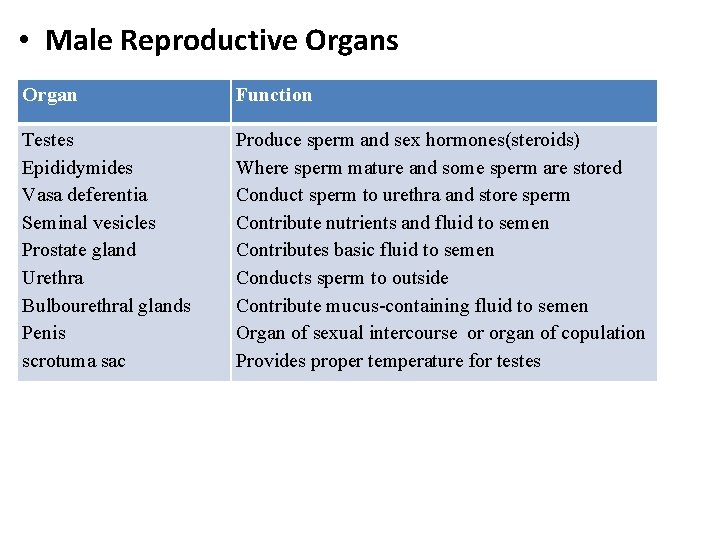
• Male Reproductive Organs Organ Function Testes Epididymides Vasa deferentia Seminal vesicles Prostate gland Urethra Bulbourethral glands Penis scrotuma sac Produce sperm and sex hormones(steroids) Where sperm mature and some sperm are stored Conduct sperm to urethra and store sperm Contribute nutrients and fluid to semen Contributes basic fluid to semen Conducts sperm to outside Contribute mucus-containing fluid to semen Organ of sexual intercourse or organ of copulation Provides proper temperature for testes
• Female Reproductive System The female reproductive system includes the organs The female gonads are paired ovaries that lie in shallow depressions, one on each side of the upper pelvic cavity. The ovaries produce eggs (technically referred to as ova) and the female sex hormonesestrogen and progesterone
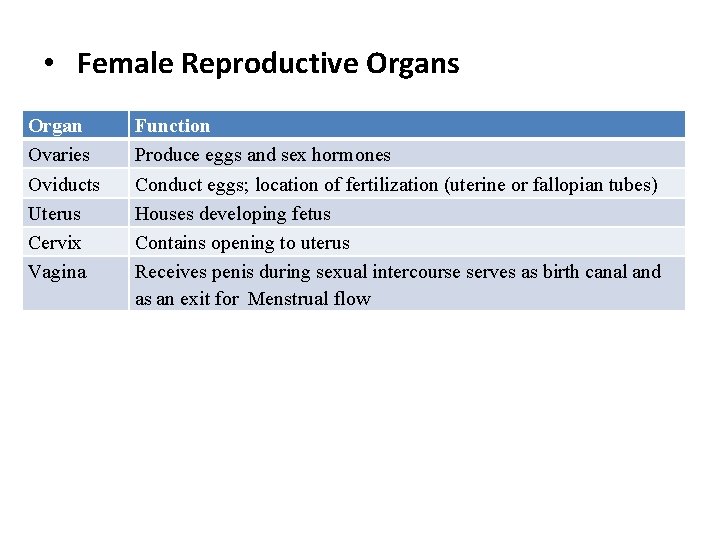
• Female Reproductive Organs Organ Function Ovaries Oviducts Uterus Cervix Vagina Produce eggs and sex hormones Conduct eggs; location of fertilization (uterine or fallopian tubes) Houses developing fetus Contains opening to uterus Receives penis during sexual intercourse serves as birth canal and as an exit for Menstrual flow
- Slides: 97