
Biology EOC Highlight Review Courtesy of Mr S
Biology EOC Highlight Review Courtesy of Mr. S. Russillo
Organic Compounds • All living things are made of organic compounds. • Contain the element Carbon • Carbohydrates, Proteins, Lipids, Nucleic Acids
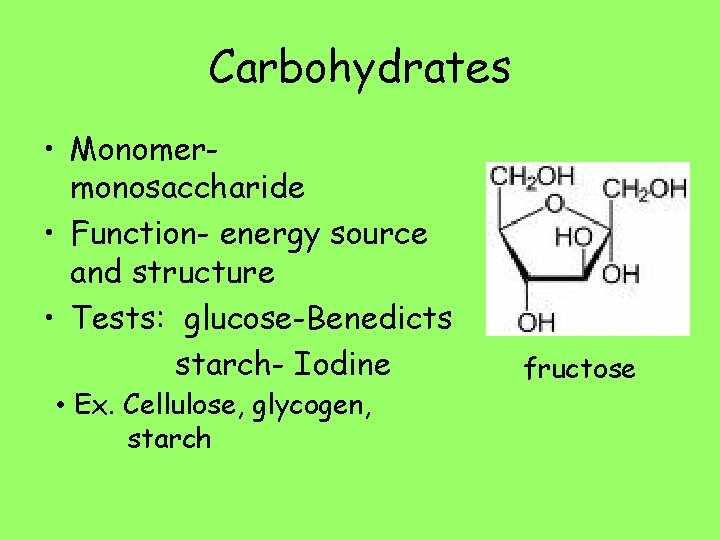
Carbohydrates • Monomermonosaccharide • Function- energy source and structure • Tests: glucose-Benedicts starch- Iodine • Ex. Cellulose, glycogen, starch fructose
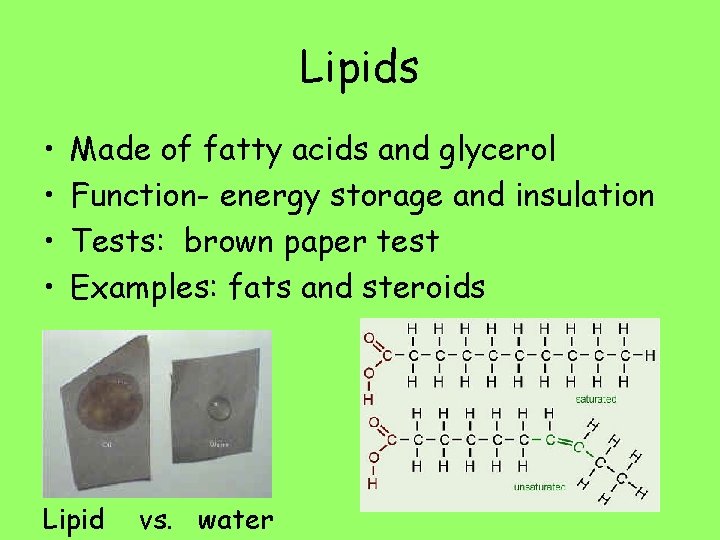
Lipids • • Made of fatty acids and glycerol Function- energy storage and insulation Tests: brown paper test Examples: fats and steroids Lipid vs. water
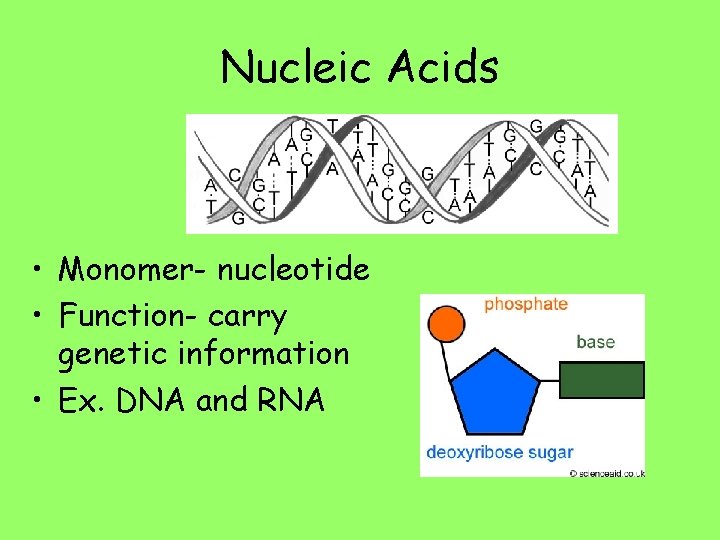
Nucleic Acids • Monomer- nucleotide • Function- carry genetic information • Ex. DNA and RNA
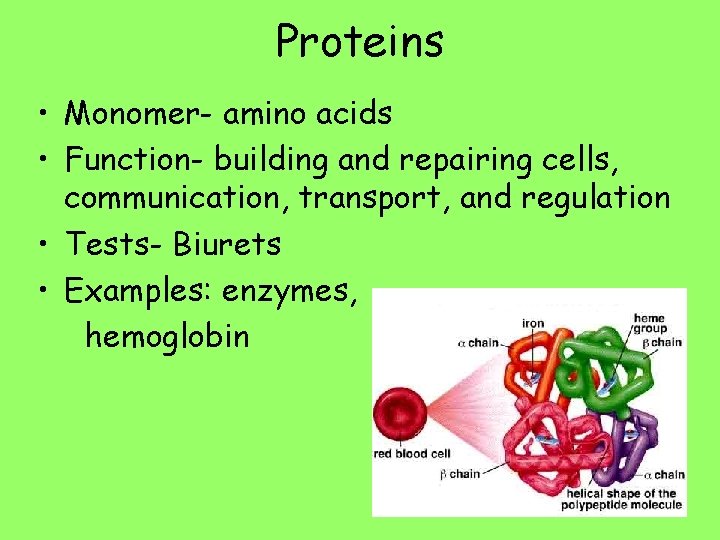
Proteins • Monomer- amino acids • Function- building and repairing cells, communication, transport, and regulation • Tests- Biurets • Examples: enzymes, hemoglobin
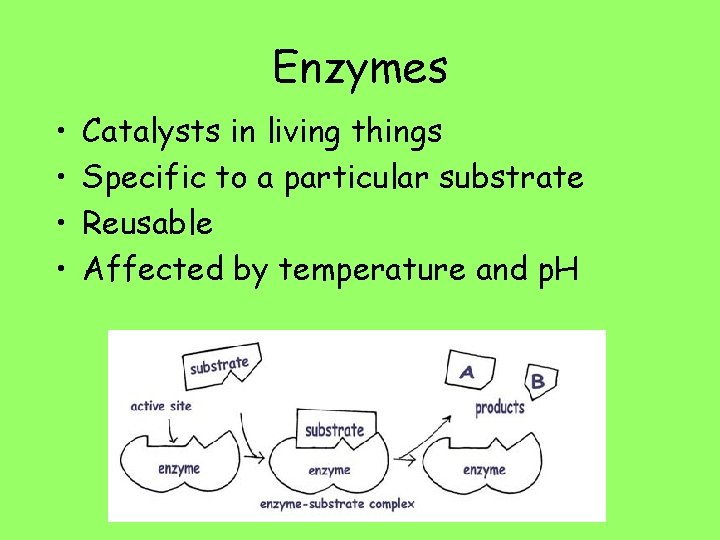
Enzymes • • Catalysts in living things Specific to a particular substrate Reusable Affected by temperature and p. H
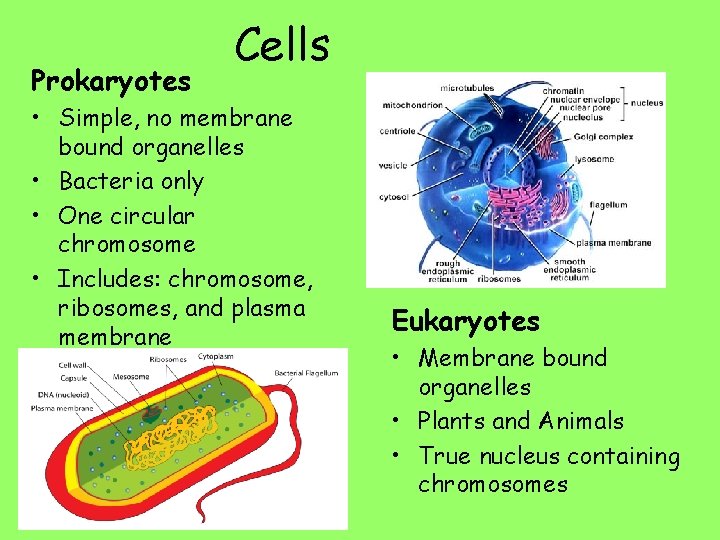
Prokaryotes Cells • Simple, no membrane bound organelles • Bacteria only • One circular chromosome • Includes: chromosome, ribosomes, and plasma membrane Eukaryotes • Membrane bound organelles • Plants and Animals • True nucleus containing chromosomes
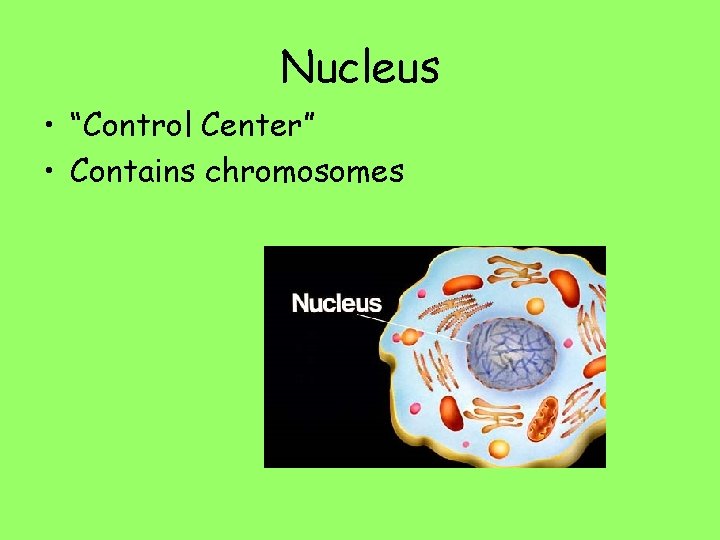
Nucleus • “Control Center” • Contains chromosomes
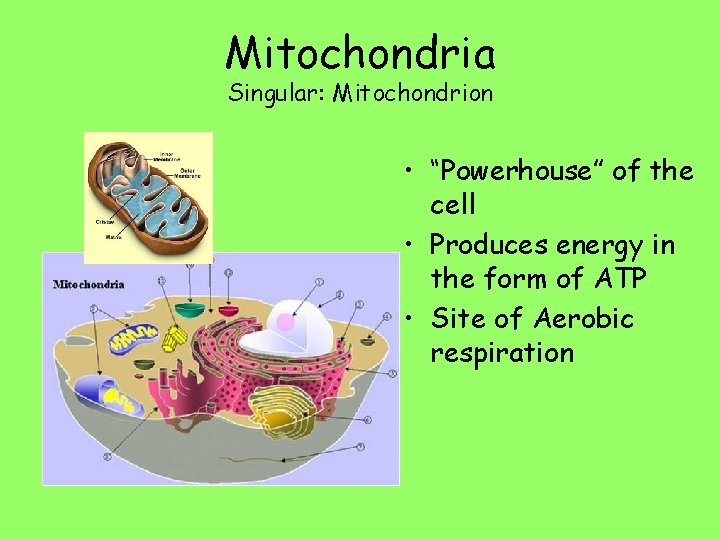
Mitochondria Singular: Mitochondrion • “Powerhouse” of the cell • Produces energy in the form of ATP • Site of Aerobic respiration
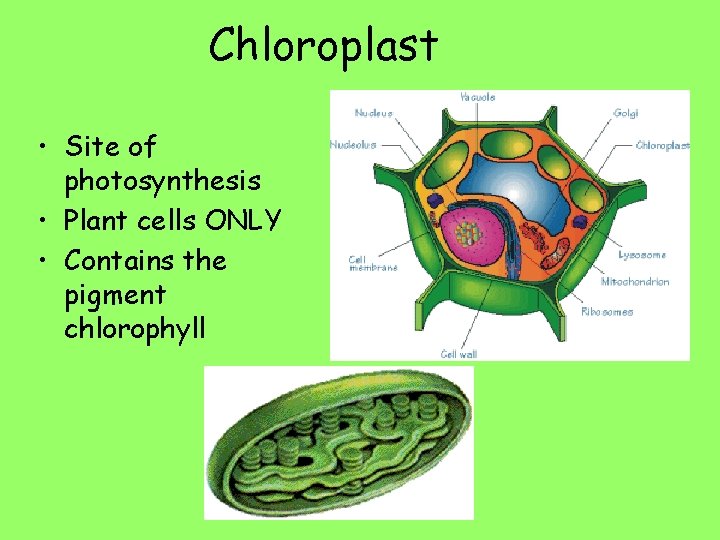
Chloroplast • Site of photosynthesis • Plant cells ONLY • Contains the pigment chlorophyll
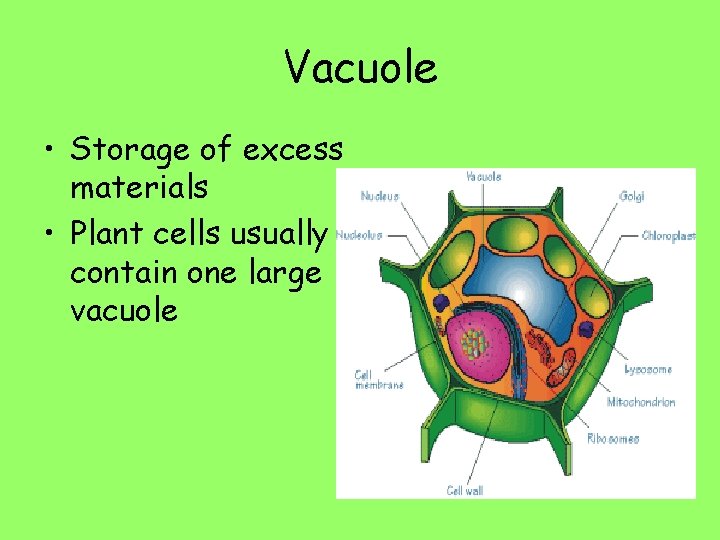
Vacuole • Storage of excess materials • Plant cells usually contain one large vacuole
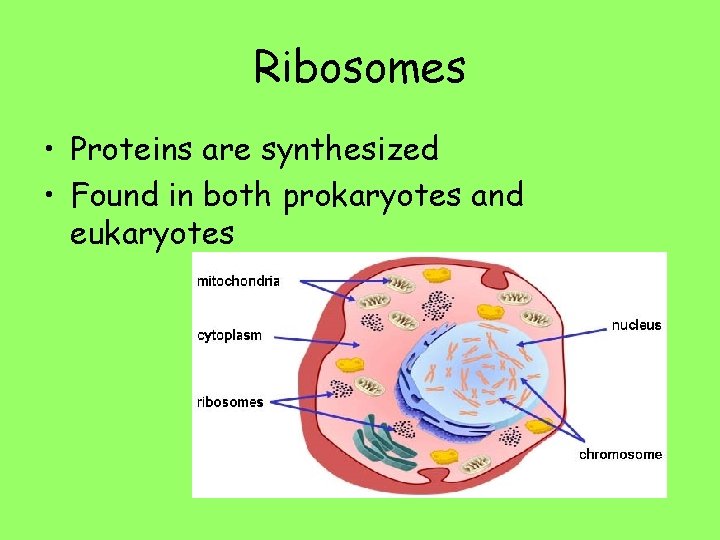
Ribosomes • Proteins are synthesized • Found in both prokaryotes and eukaryotes
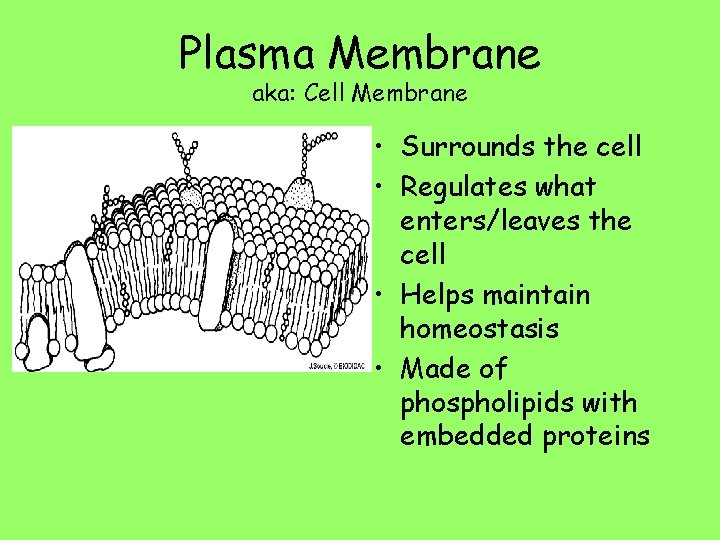
Plasma Membrane aka: Cell Membrane • Surrounds the cell • Regulates what enters/leaves the cell • Helps maintain homeostasis • Made of phospholipids with embedded proteins
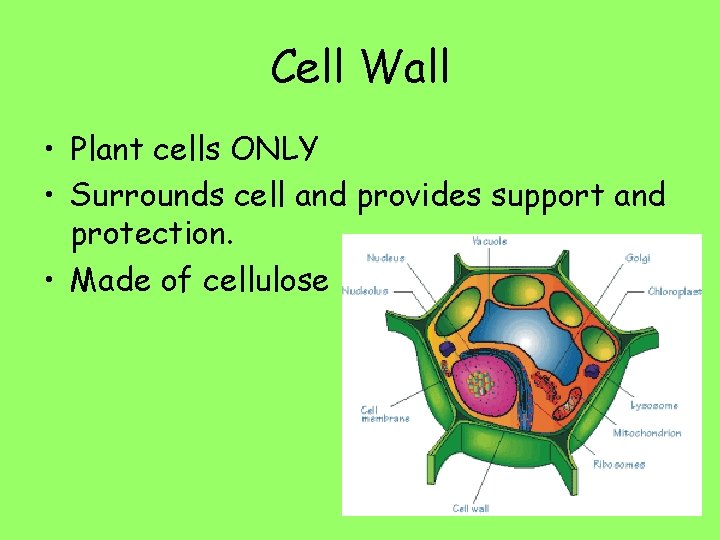
Cell Wall • Plant cells ONLY • Surrounds cell and provides support and protection. • Made of cellulose
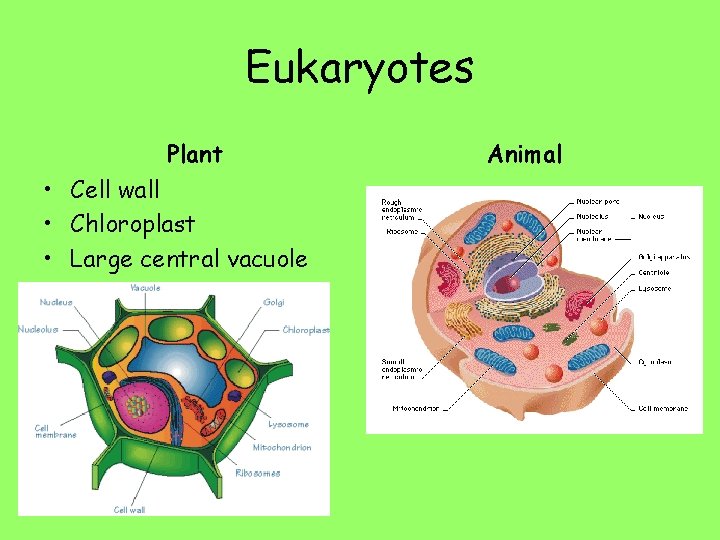
Eukaryotes Plant • Cell wall • Chloroplast • Large central vacuole Animal
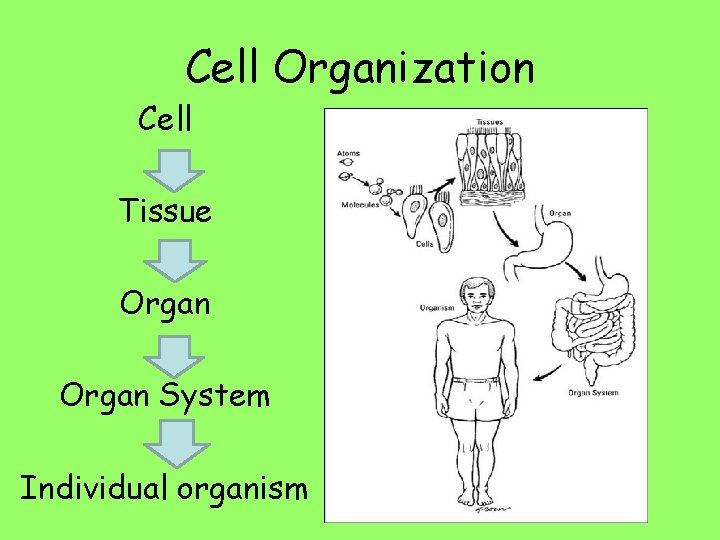
Cell Organization Cell Tissue Organ System Individual organism
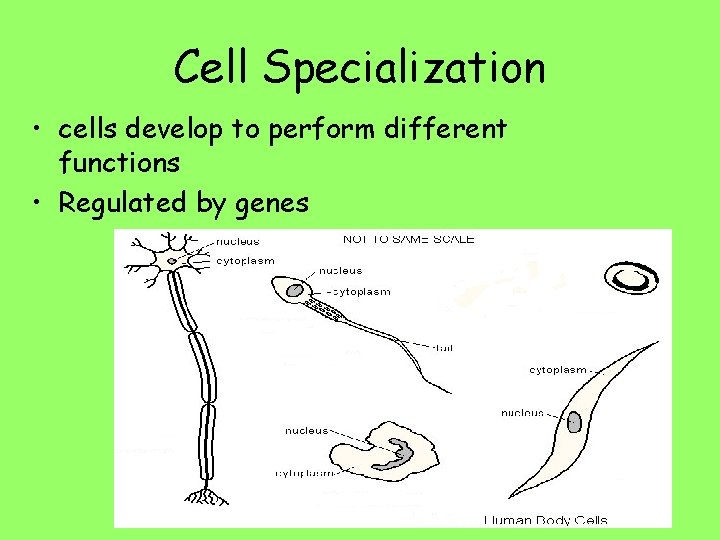
Cell Specialization • cells develop to perform different functions • Regulated by genes
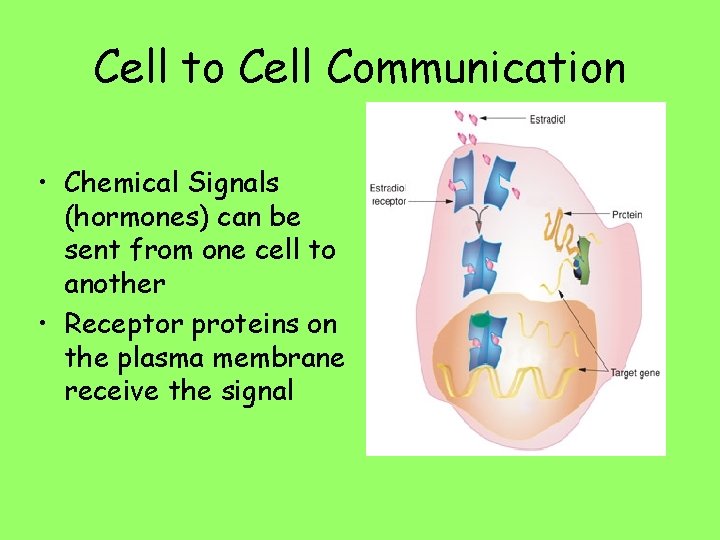
Cell to Cell Communication • Chemical Signals (hormones) can be sent from one cell to another • Receptor proteins on the plasma membrane receive the signal
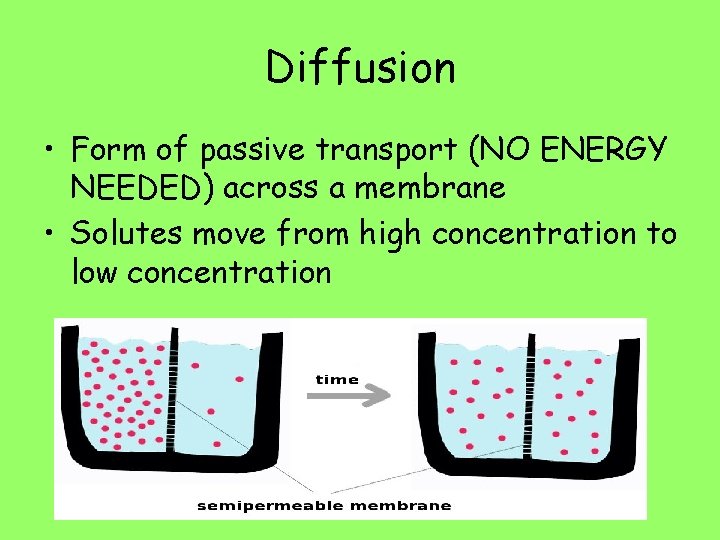
Diffusion • Form of passive transport (NO ENERGY NEEDED) across a membrane • Solutes move from high concentration to low concentration
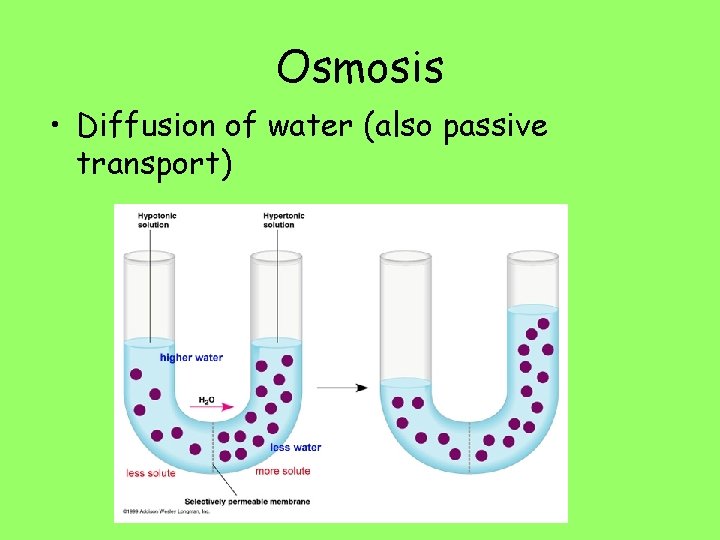
Osmosis • Diffusion of water (also passive transport)
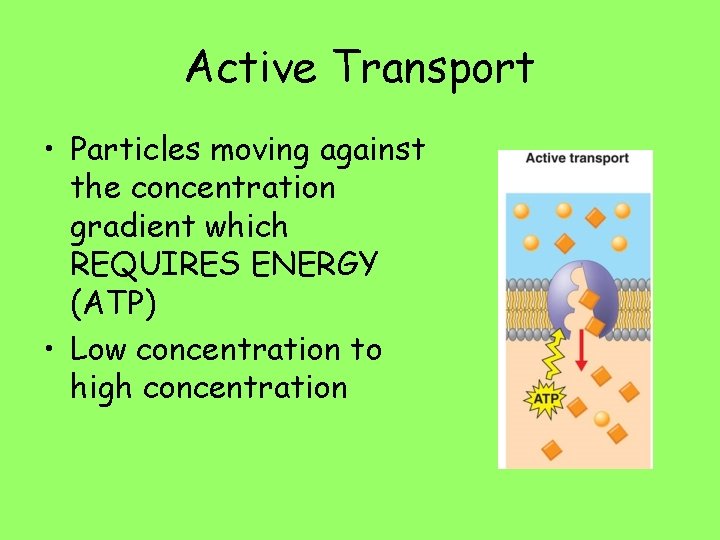
Active Transport • Particles moving against the concentration gradient which REQUIRES ENERGY (ATP) • Low concentration to high concentration
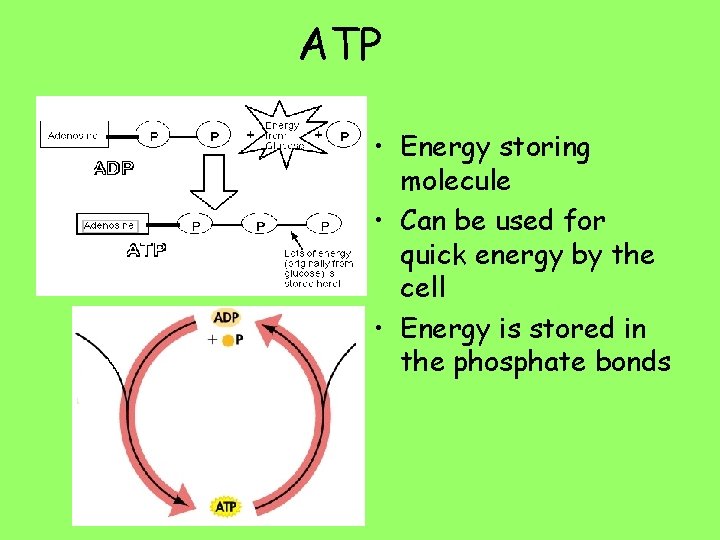
ATP • Energy storing molecule • Can be used for quick energy by the cell • Energy is stored in the phosphate bonds
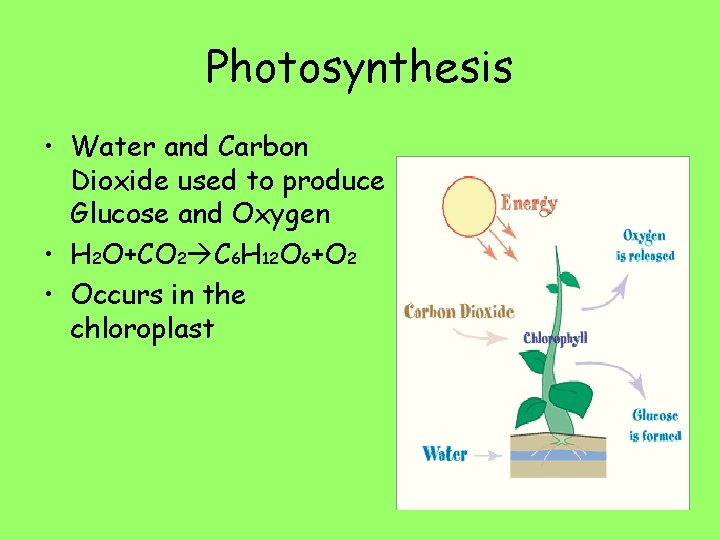
Photosynthesis • Water and Carbon Dioxide used to produce Glucose and Oxygen • H 2 O+CO 2 C 6 H 12 O 6+O 2 • Occurs in the chloroplast
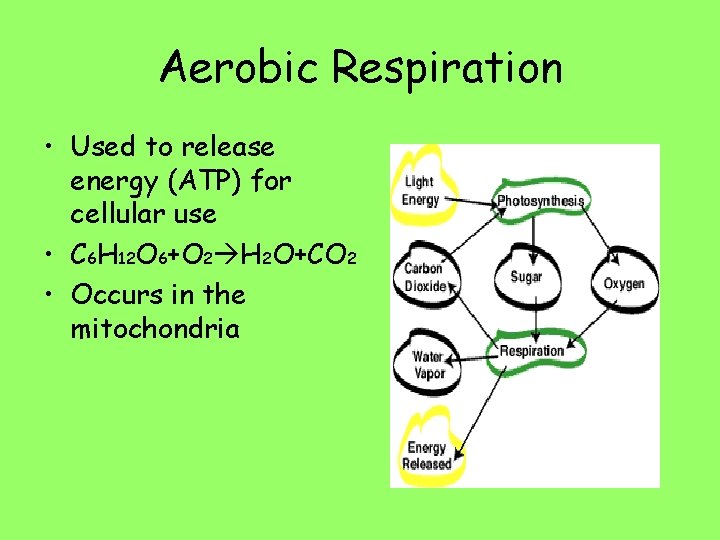
Aerobic Respiration • Used to release energy (ATP) for cellular use • C 6 H 12 O 6+O 2 H 2 O+CO 2 • Occurs in the mitochondria
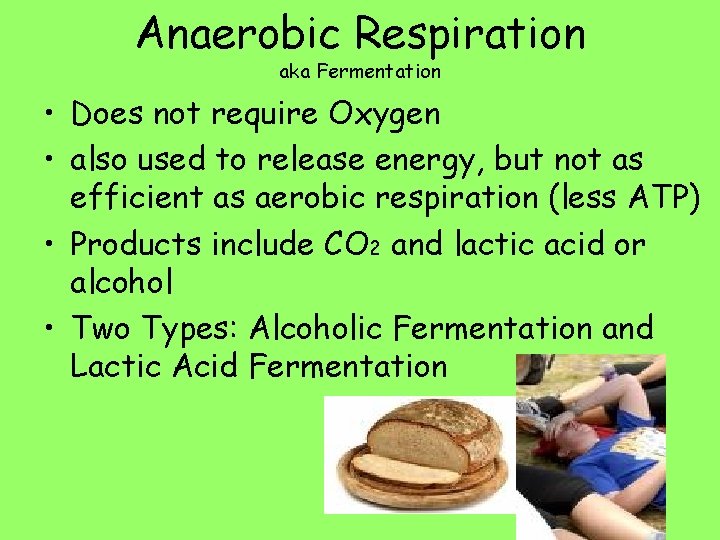
Anaerobic Respiration aka Fermentation • Does not require Oxygen • also used to release energy, but not as efficient as aerobic respiration (less ATP) • Products include CO 2 and lactic acid or alcohol • Two Types: Alcoholic Fermentation and Lactic Acid Fermentation
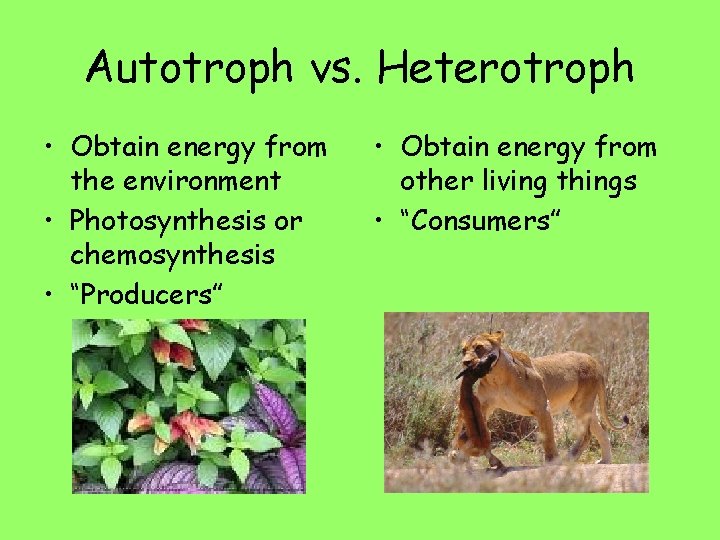
Autotroph vs. Heterotroph • Obtain energy from the environment • Photosynthesis or chemosynthesis • “Producers” • Obtain energy from other living things • “Consumers”
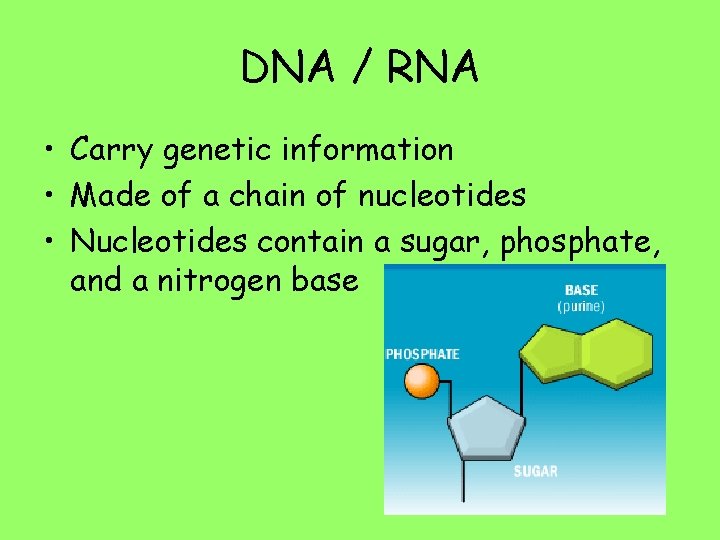
DNA / RNA • Carry genetic information • Made of a chain of nucleotides • Nucleotides contain a sugar, phosphate, and a nitrogen base
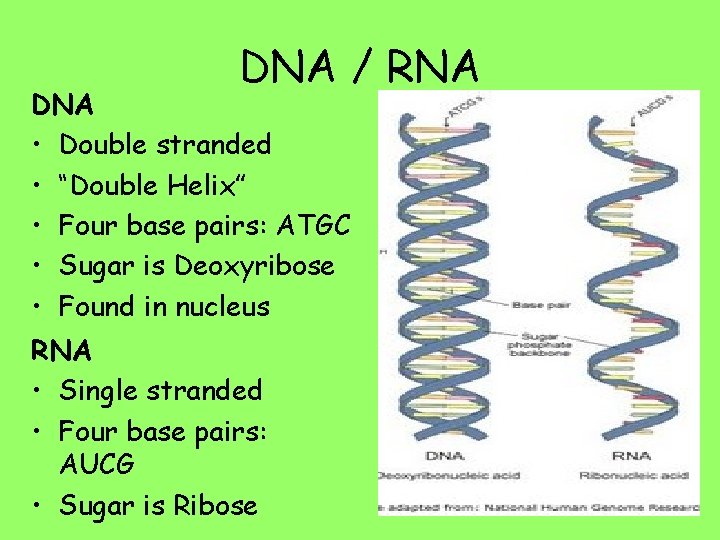
DNA / RNA DNA • Double stranded • “Double Helix” • Four base pairs: ATGC • Sugar is Deoxyribose • Found in nucleus RNA • Single stranded • Four base pairs: AUCG • Sugar is Ribose
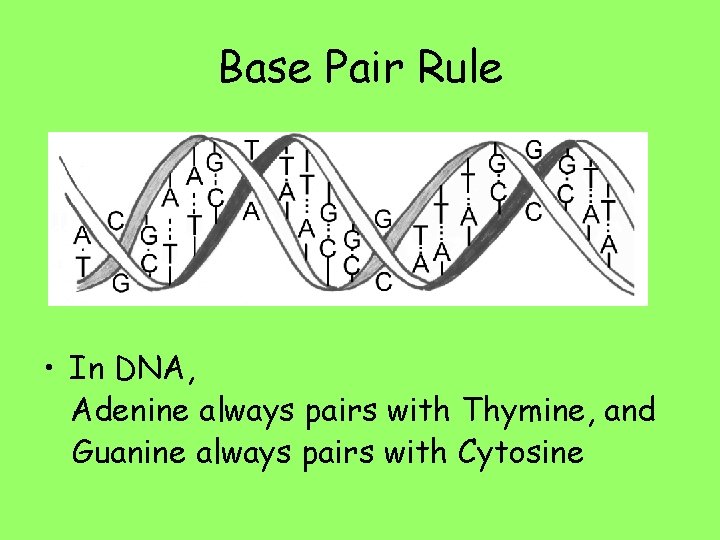
Base Pair Rule • In DNA, Adenine always pairs with Thymine, and Guanine always pairs with Cytosine
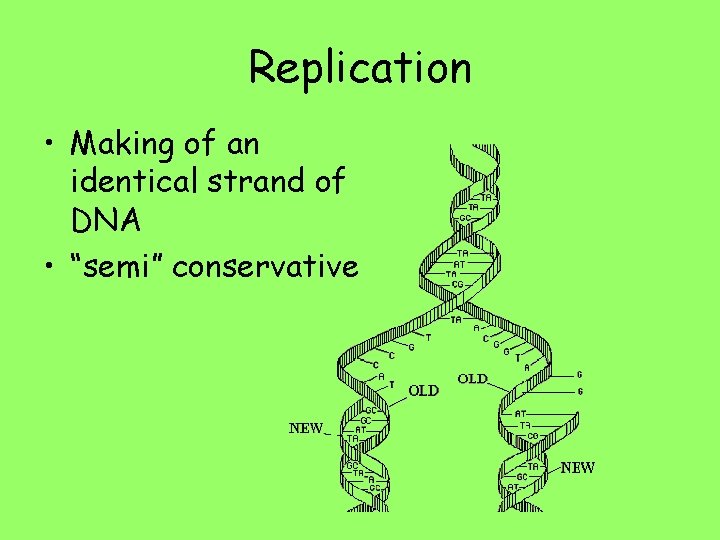
Replication • Making of an identical strand of DNA • “semi” conservative
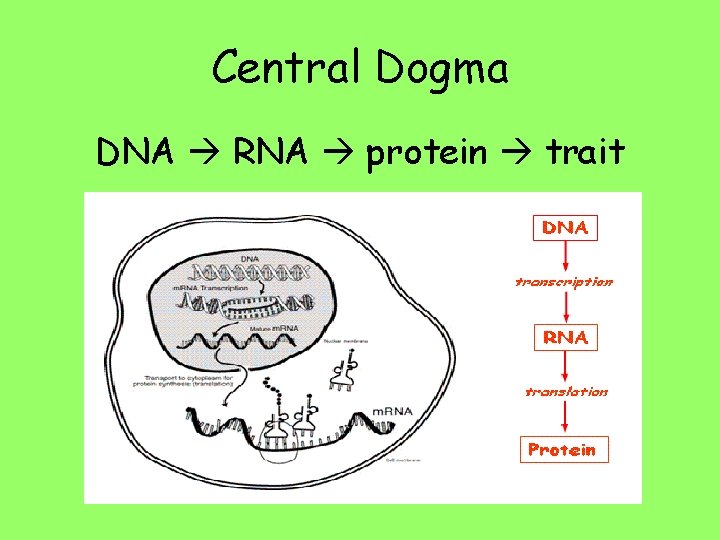
Central Dogma DNA RNA protein trait
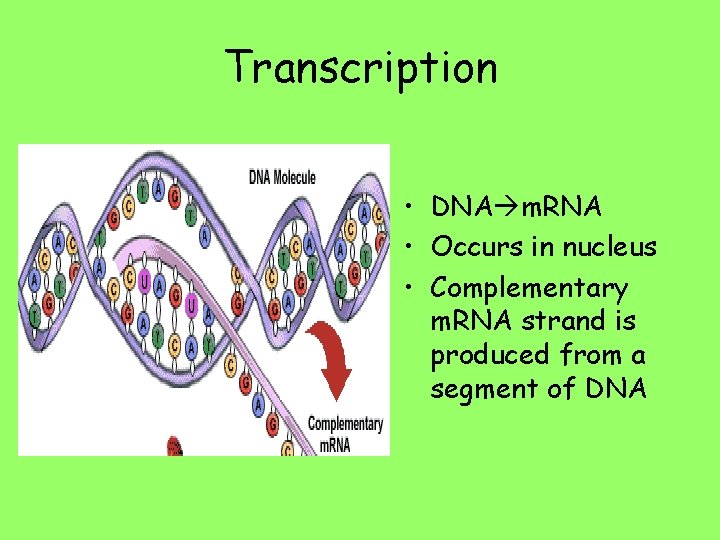
Transcription • DNA m. RNA • Occurs in nucleus • Complementary m. RNA strand is produced from a segment of DNA
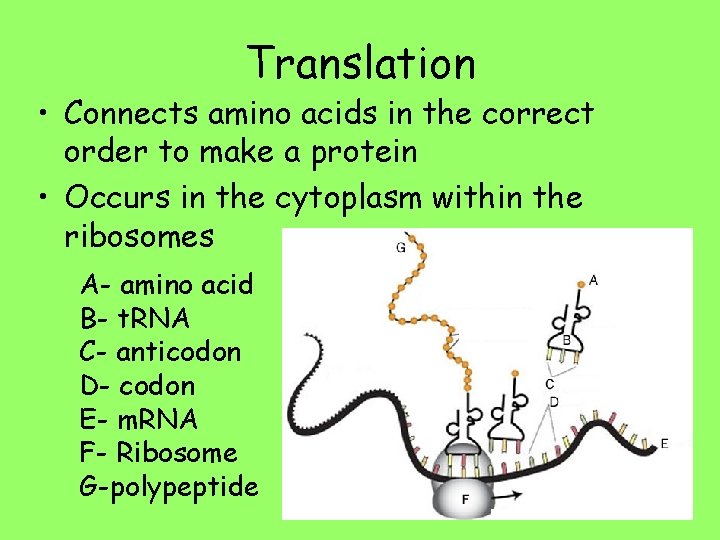
Translation • Connects amino acids in the correct order to make a protein • Occurs in the cytoplasm within the ribosomes A- amino acid B- t. RNA C- anticodon D- codon E- m. RNA F- Ribosome G-polypeptide
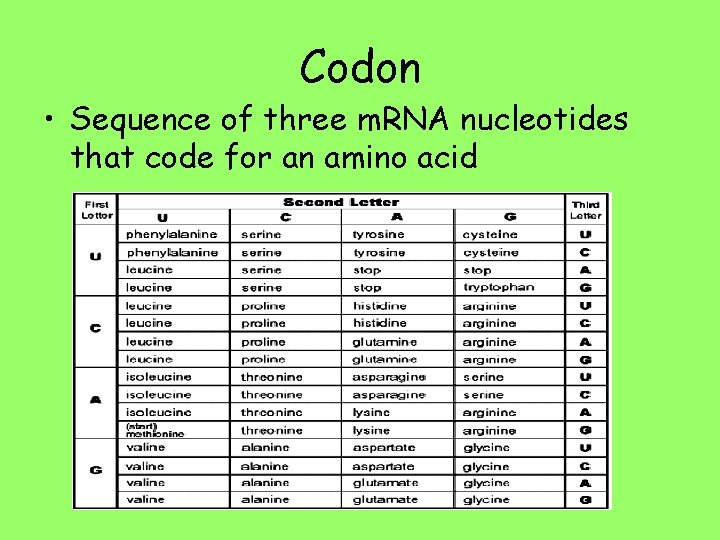
Codon • Sequence of three m. RNA nucleotides that code for an amino acid
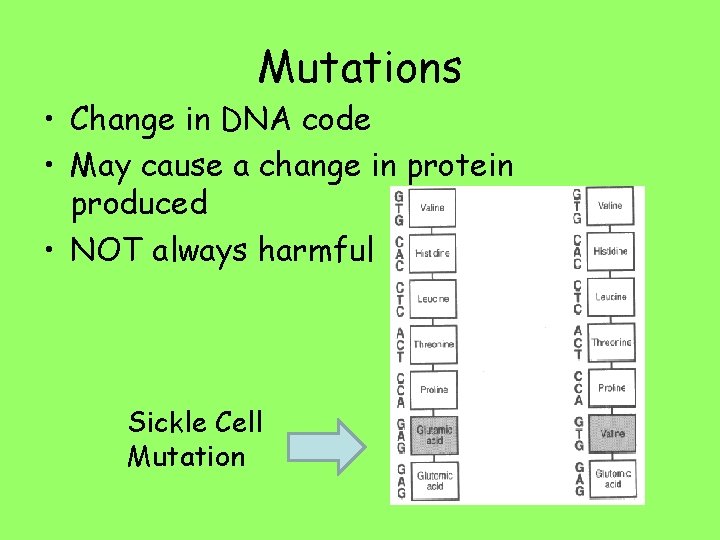
Mutations • Change in DNA code • May cause a change in protein produced • NOT always harmful Sickle Cell Mutation
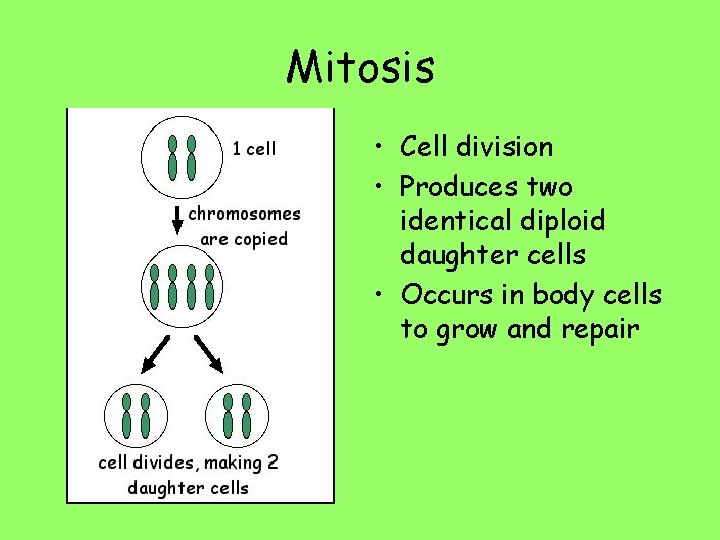
Mitosis • Cell division • Produces two identical diploid daughter cells • Occurs in body cells to grow and repair
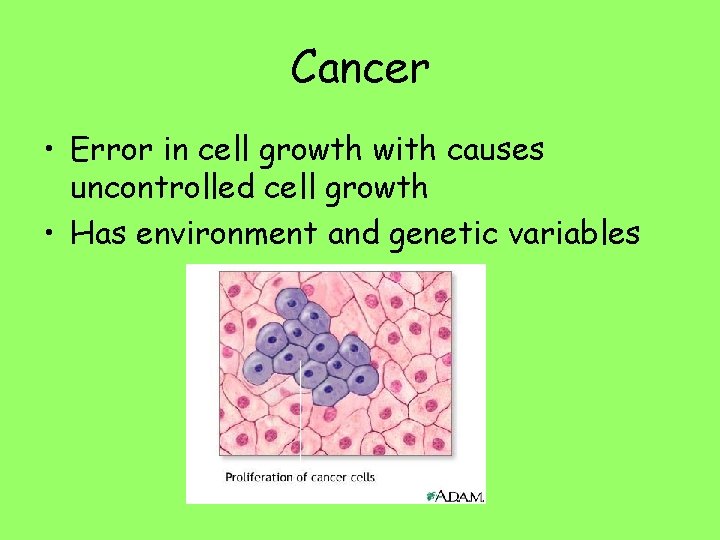
Cancer • Error in cell growth with causes uncontrolled cell growth • Has environment and genetic variables
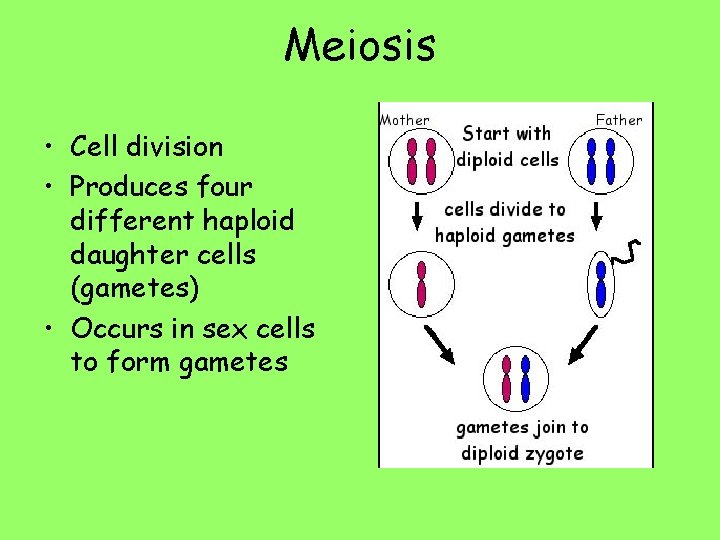
Meiosis • Cell division • Produces four different haploid daughter cells (gametes) • Occurs in sex cells to form gametes
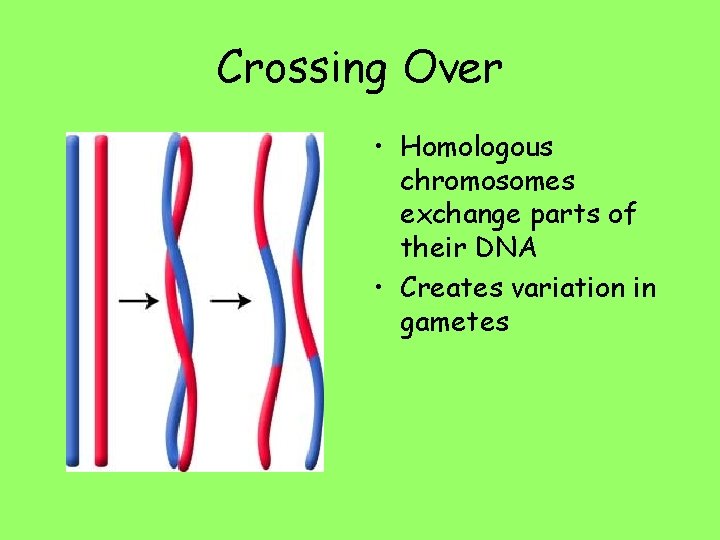
Crossing Over • Homologous chromosomes exchange parts of their DNA • Creates variation in gametes
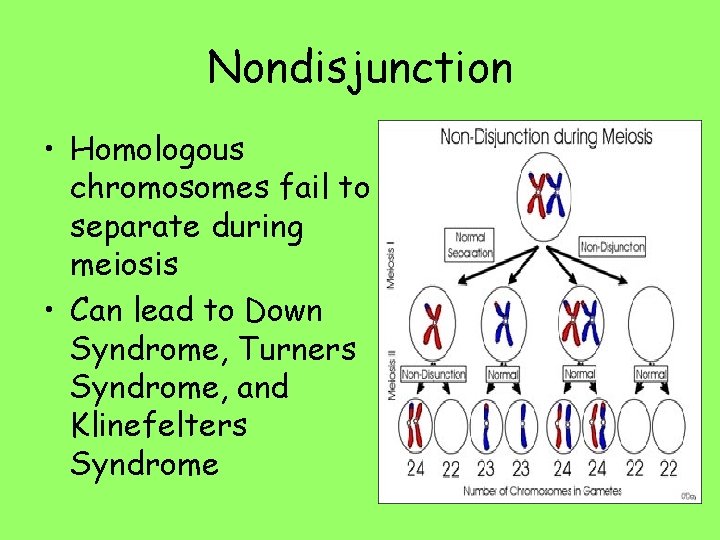
Nondisjunction • Homologous chromosomes fail to separate during meiosis • Can lead to Down Syndrome, Turners Syndrome, and Klinefelters Syndrome
Asexual vs. Sexual Reproduction Asexual • One parent • Identical offspring • Variation only thru mutations • Examples: budding, fragmentation, fission Sexual • Two parents • Offspring different from parents • More variation • Fertilization (fusion of gametes)
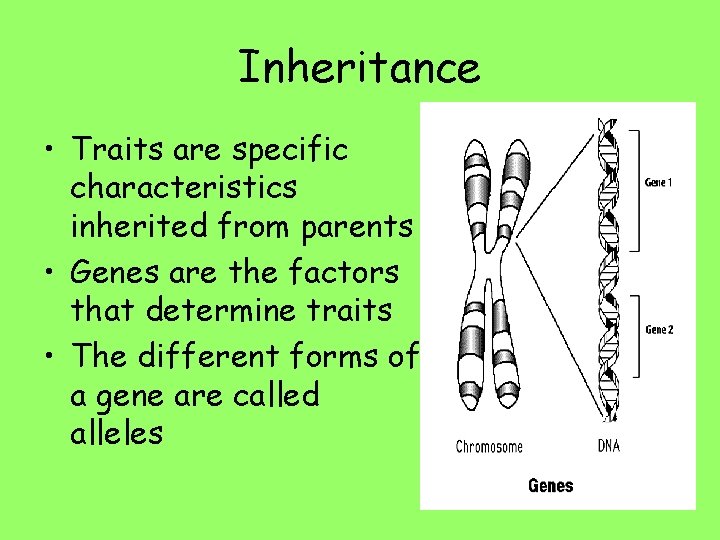
Inheritance • Traits are specific characteristics inherited from parents • Genes are the factors that determine traits • The different forms of a gene are called alleles
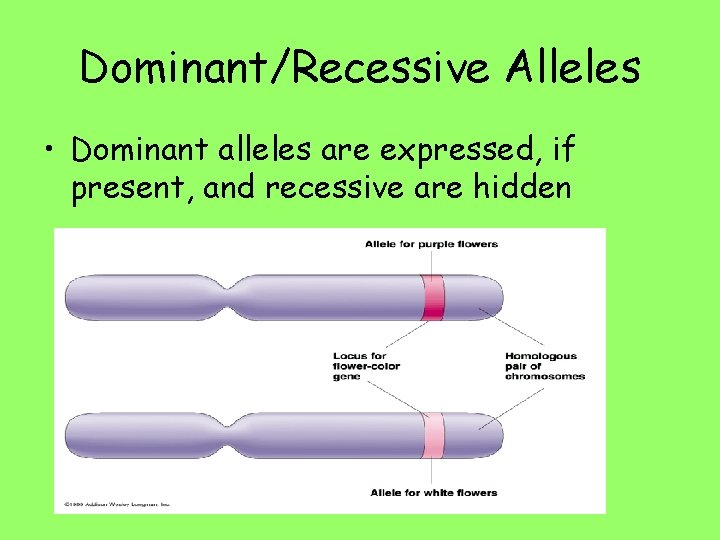
Dominant/Recessive Alleles • Dominant alleles are expressed, if present, and recessive are hidden
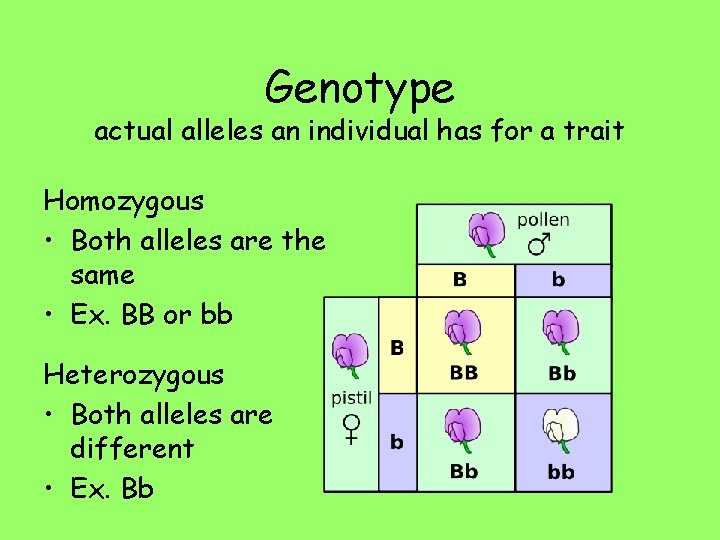
Genotype actual alleles an individual has for a trait Homozygous • Both alleles are the same • Ex. BB or bb Heterozygous • Both alleles are different • Ex. Bb
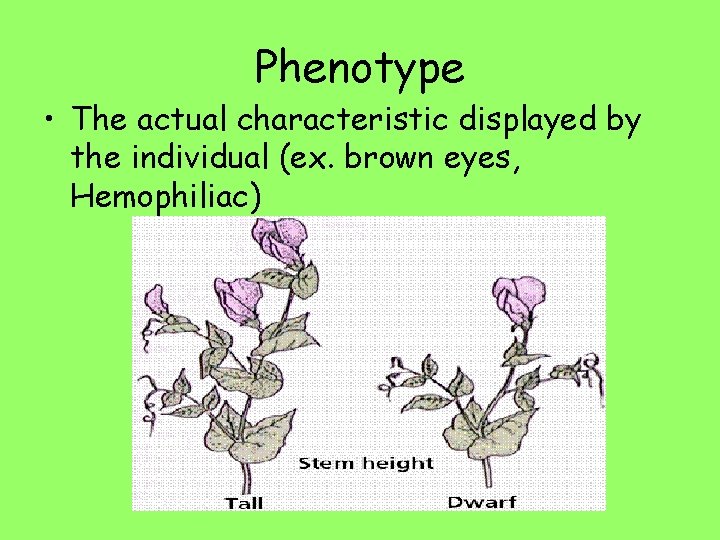
Phenotype • The actual characteristic displayed by the individual (ex. brown eyes, Hemophiliac)
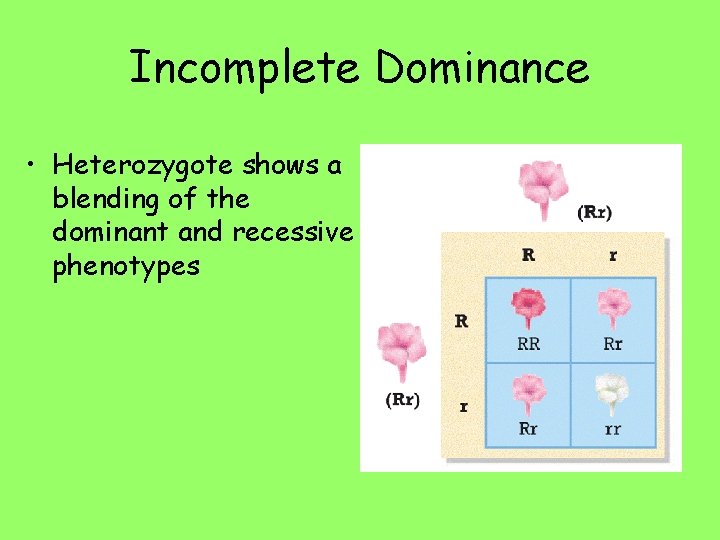
Incomplete Dominance • Heterozygote shows a blending of the dominant and recessive phenotypes
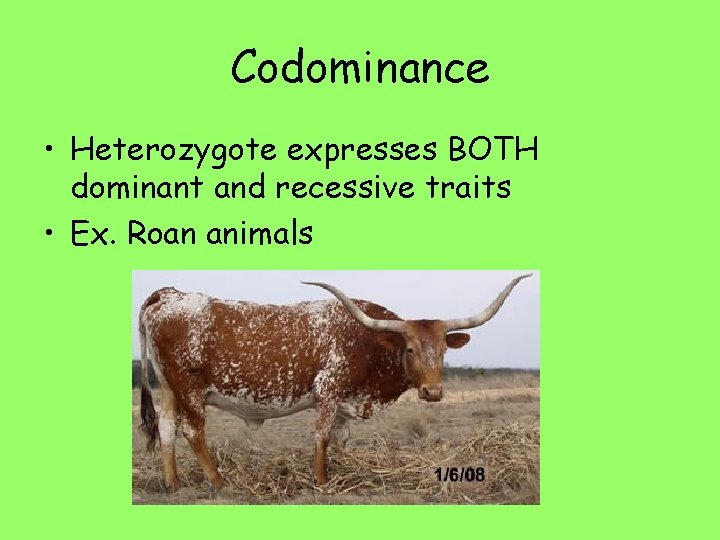
Codominance • Heterozygote expresses BOTH dominant and recessive traits • Ex. Roan animals
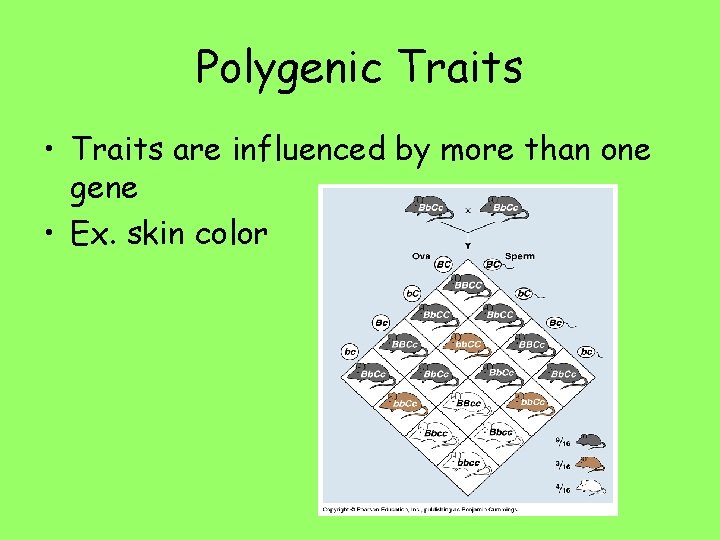
Polygenic Traits • Traits are influenced by more than one gene • Ex. skin color
Multiple Alleles • More than two alleles for a trait (an individual still only inherits two) • Ex. Blood Type (IA, IB, i) type A = IAIA or IAi type B = IBIB or IBi type AB= IAIB type O = ii
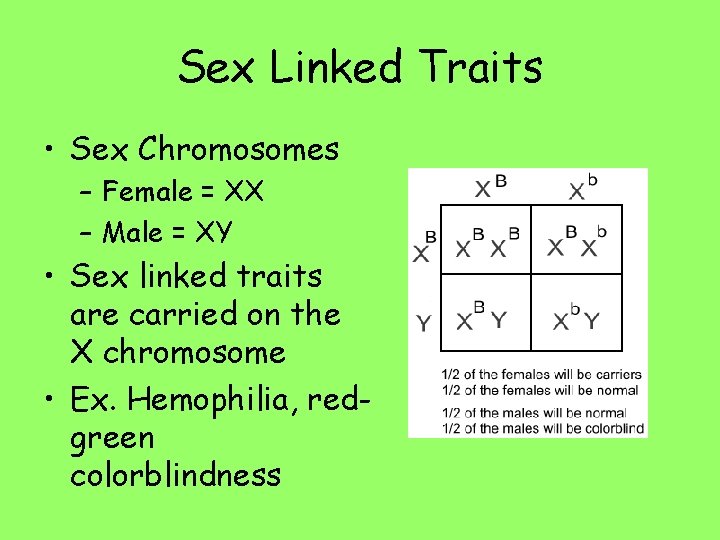
Sex Linked Traits • Sex Chromosomes – Female = XX – Male = XY • Sex linked traits are carried on the X chromosome • Ex. Hemophilia, redgreen colorblindness
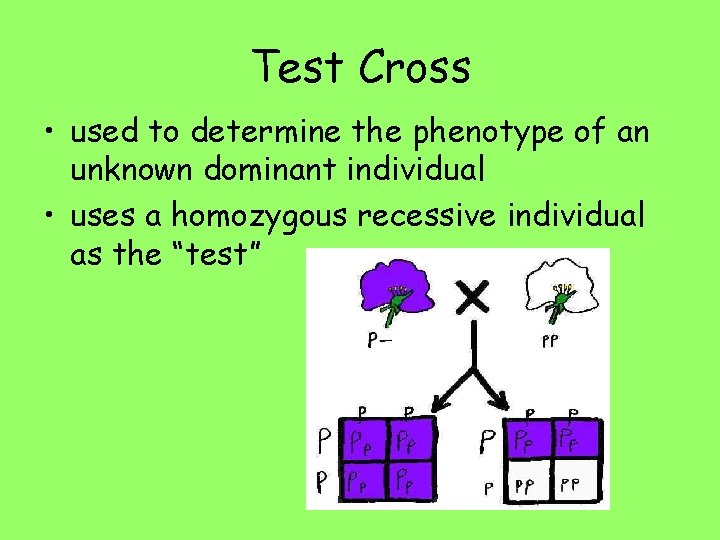
Test Cross • used to determine the phenotype of an unknown dominant individual • uses a homozygous recessive individual as the “test”
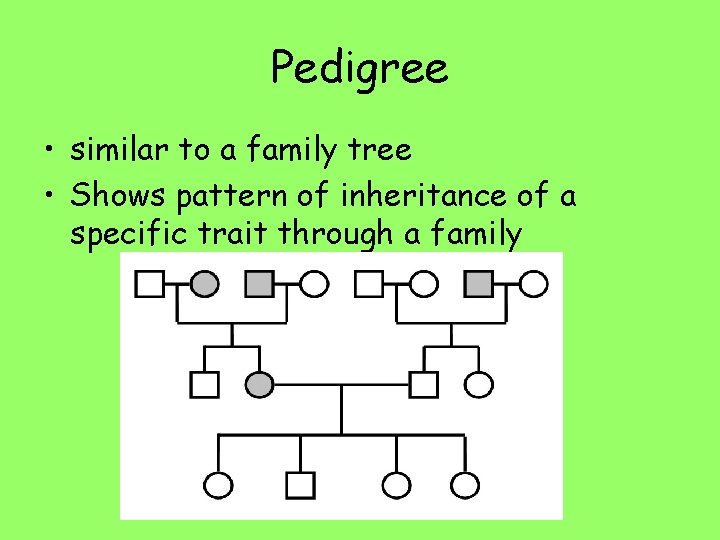
Pedigree • similar to a family tree • Shows pattern of inheritance of a specific trait through a family
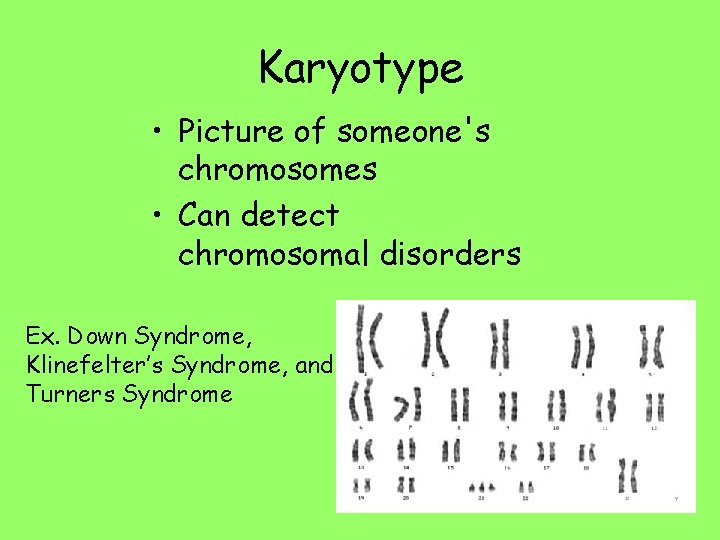
Karyotype • Picture of someone's chromosomes • Can detect chromosomal disorders Ex. Down Syndrome, Klinefelter’s Syndrome, and Turners Syndrome
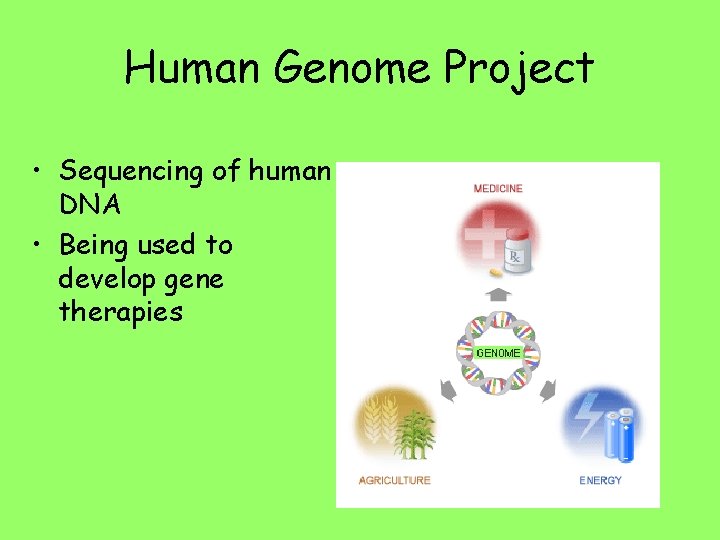
Human Genome Project • Sequencing of human DNA • Being used to develop gene therapies
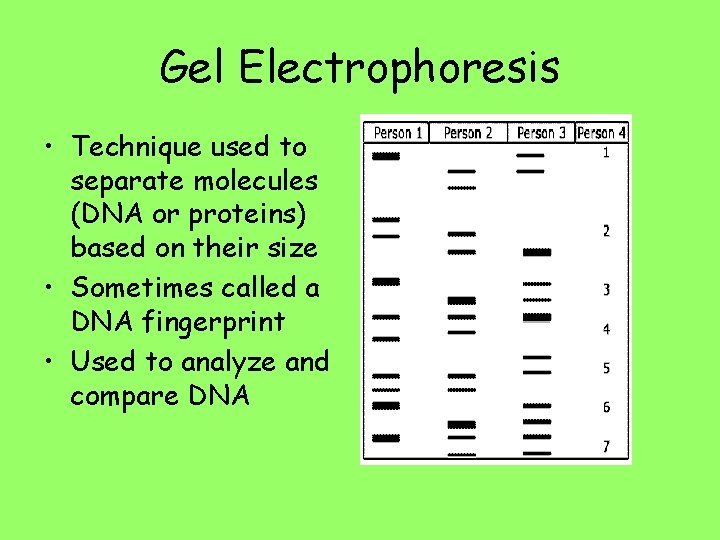
Gel Electrophoresis • Technique used to separate molecules (DNA or proteins) based on their size • Sometimes called a DNA fingerprint • Used to analyze and compare DNA
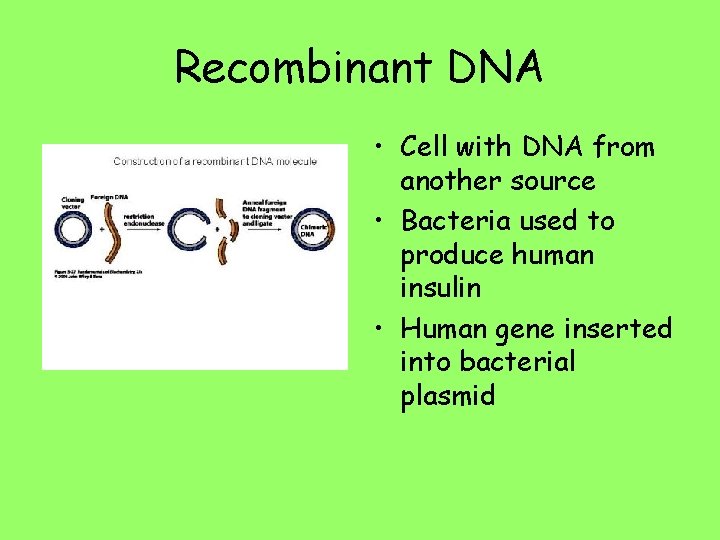
Recombinant DNA • Cell with DNA from another source • Bacteria used to produce human insulin • Human gene inserted into bacterial plasmid
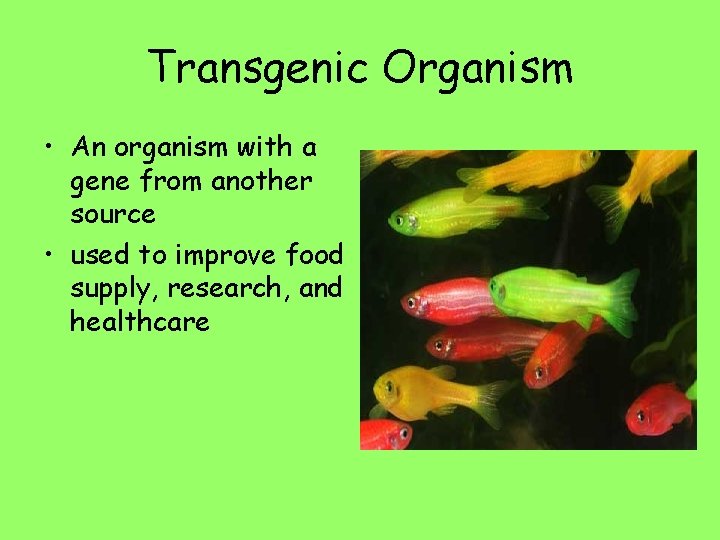
Transgenic Organism • An organism with a gene from another source • used to improve food supply, research, and healthcare
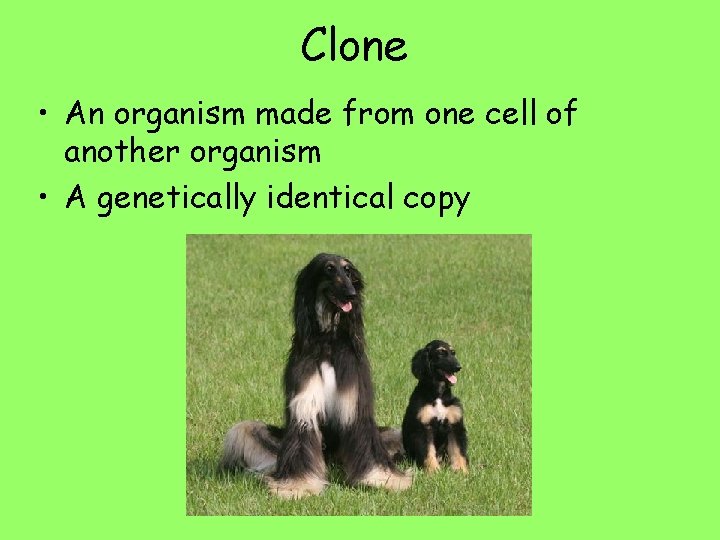
Clone • An organism made from one cell of another organism • A genetically identical copy
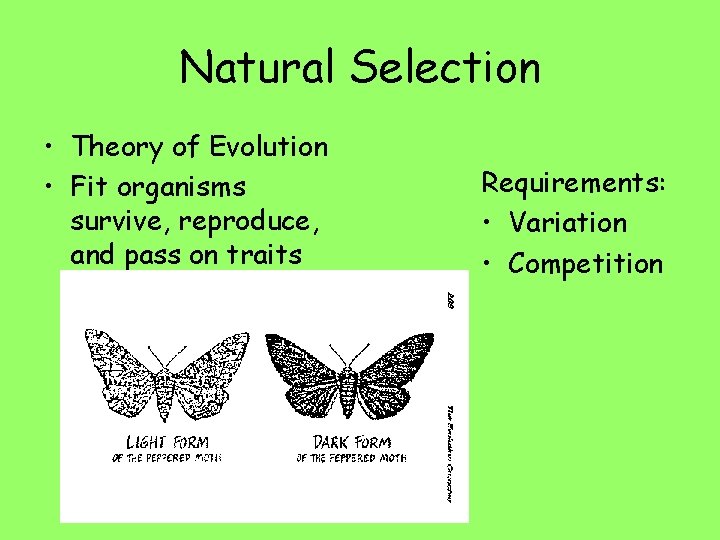
Natural Selection • Theory of Evolution • Fit organisms survive, reproduce, and pass on traits Requirements: • Variation • Competition
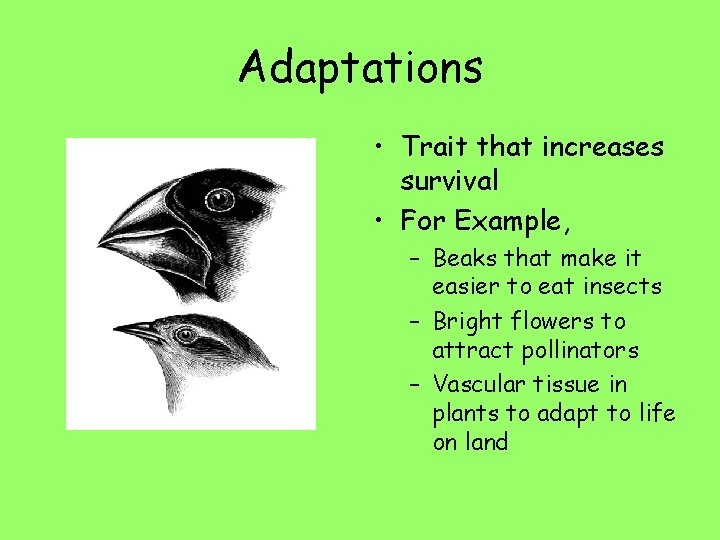
Adaptations • Trait that increases survival • For Example, – Beaks that make it easier to eat insects – Bright flowers to attract pollinators – Vascular tissue in plants to adapt to life on land
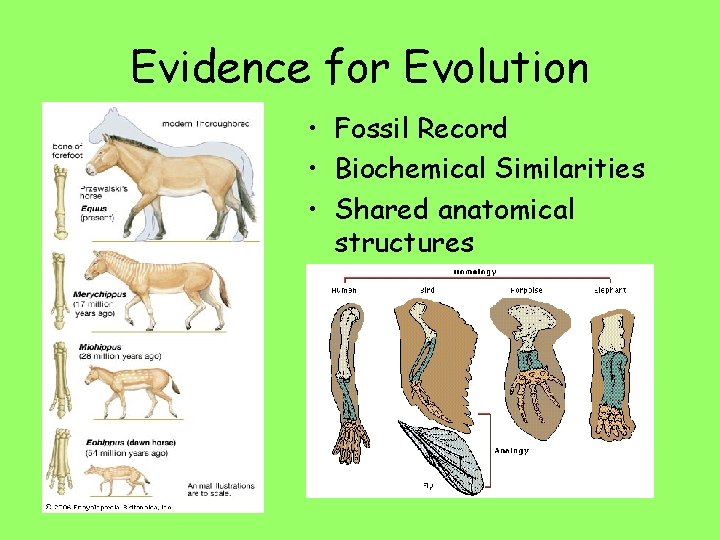
Evidence for Evolution • Fossil Record • Biochemical Similarities • Shared anatomical structures
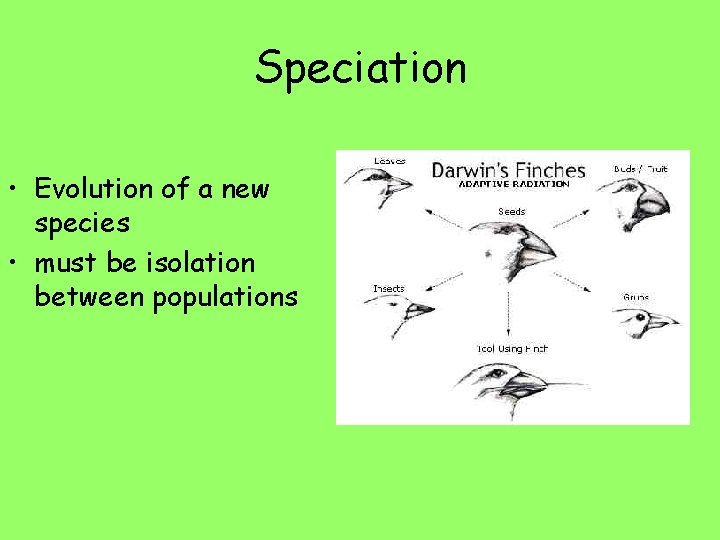
Speciation • Evolution of a new species • must be isolation between populations
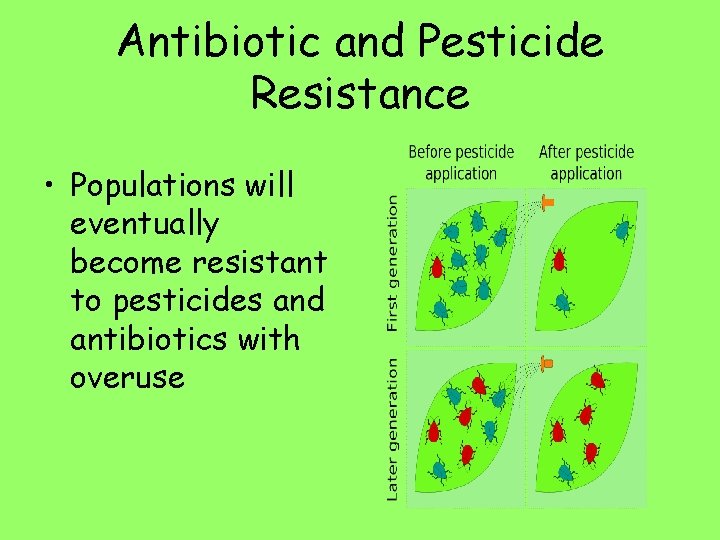
Antibiotic and Pesticide Resistance • Populations will eventually become resistant to pesticides and antibiotics with overuse
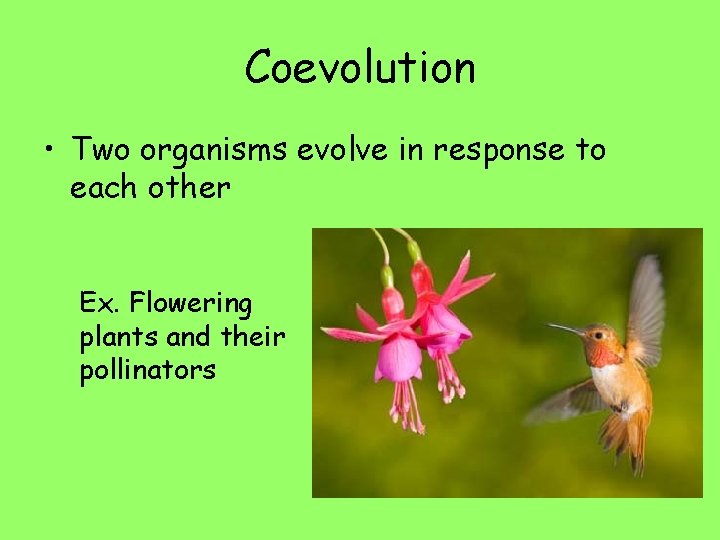
Coevolution • Two organisms evolve in response to each other Ex. Flowering plants and their pollinators
Binomial Nomenclature • • Two word naming system Scientific name Uses Genus and Species names Ex. Dogs: Canis familiaris
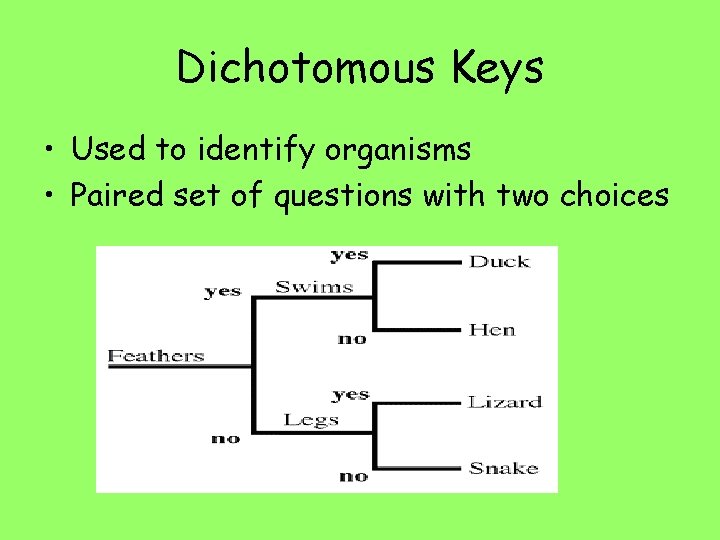
Dichotomous Keys • Used to identify organisms • Paired set of questions with two choices
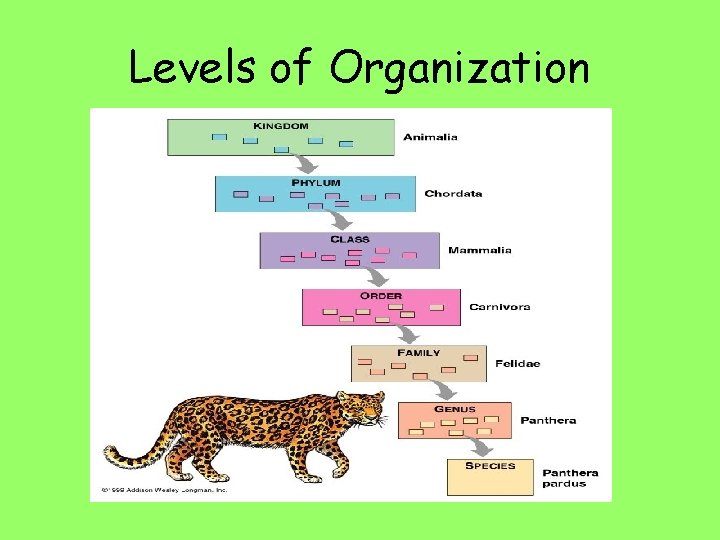
Levels of Organization
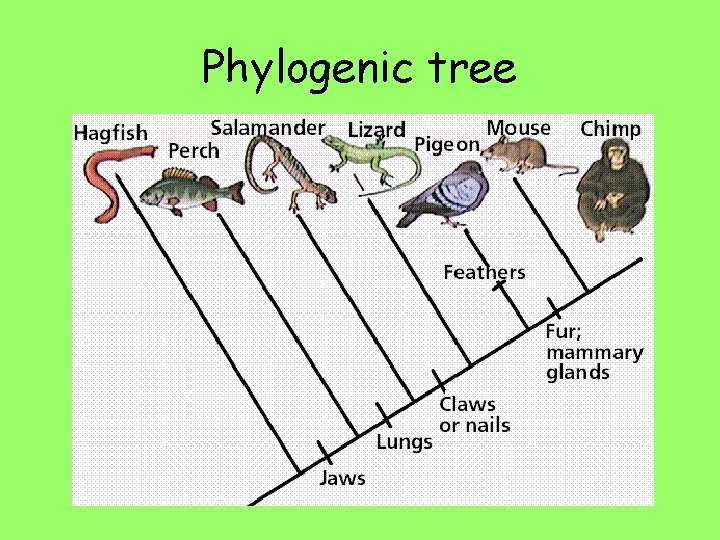
Phylogenic tree
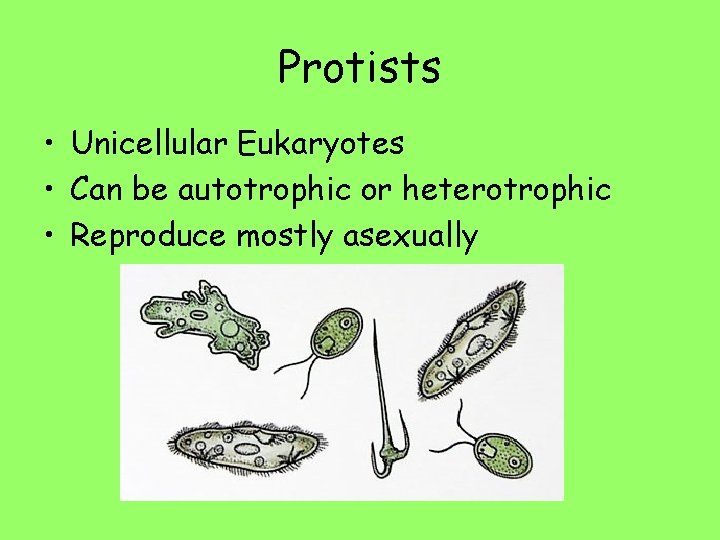
Protists • Unicellular Eukaryotes • Can be autotrophic or heterotrophic • Reproduce mostly asexually
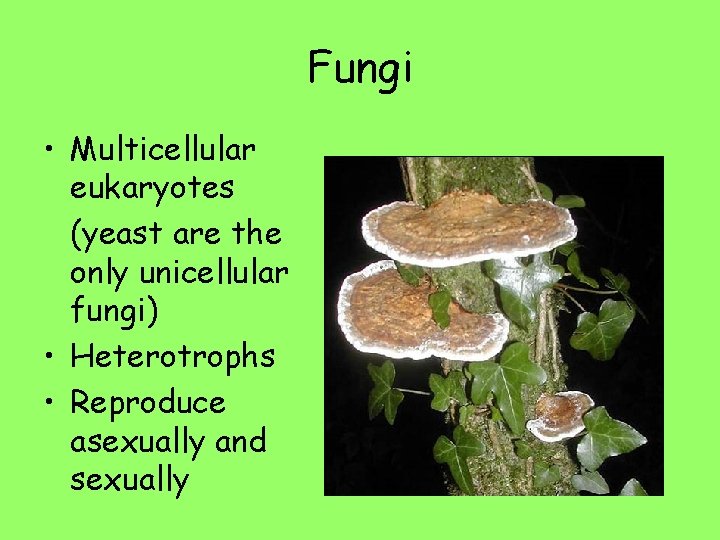
Fungi • Multicellular eukaryotes (yeast are the only unicellular fungi) • Heterotrophs • Reproduce asexually and sexually
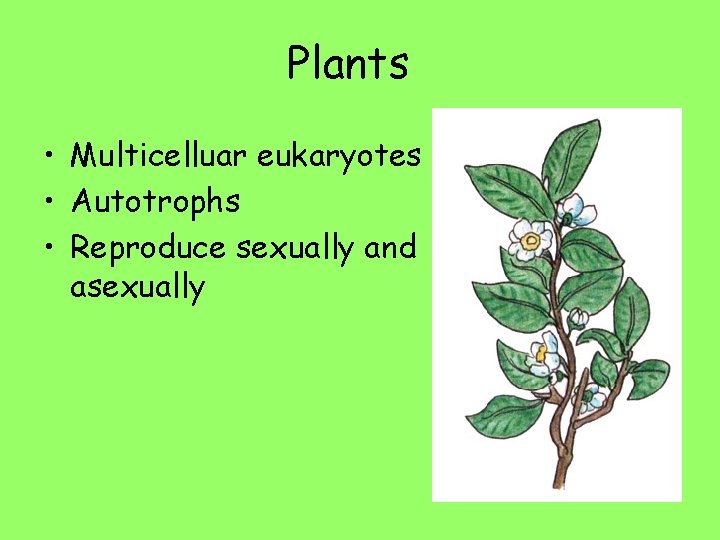
Plants • Multicelluar eukaryotes • Autotrophs • Reproduce sexually and asexually
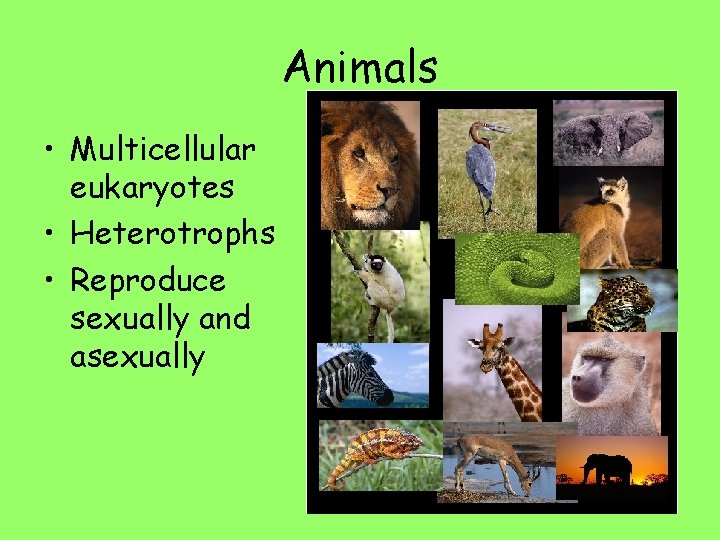
Animals • Multicellular eukaryotes • Heterotrophs • Reproduce sexually and asexually
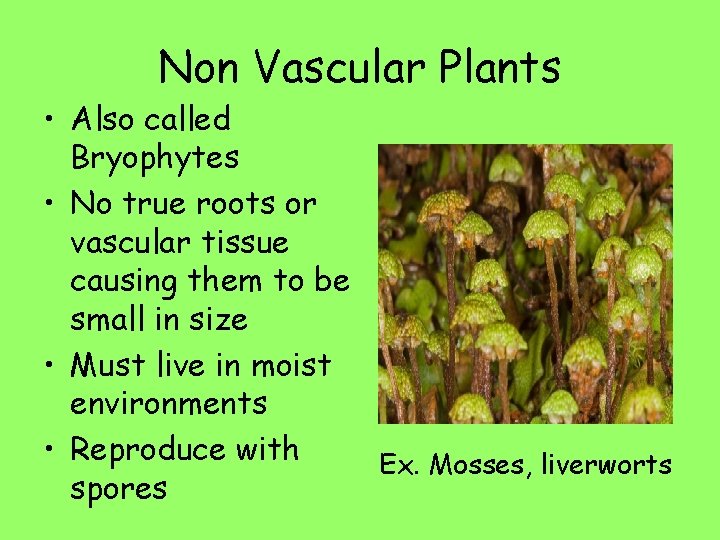
Non Vascular Plants • Also called Bryophytes • No true roots or vascular tissue causing them to be small in size • Must live in moist environments • Reproduce with Ex. Mosses, liverworts spores
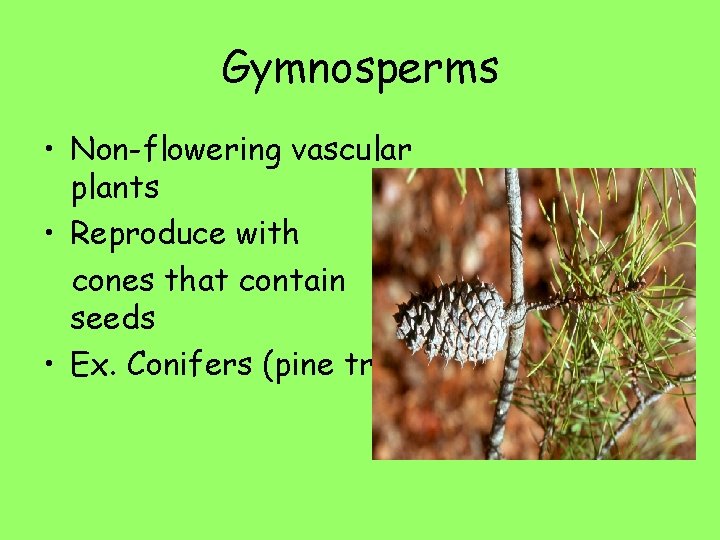
Gymnosperms • Non-flowering vascular plants • Reproduce with cones that contain seeds • Ex. Conifers (pine trees)
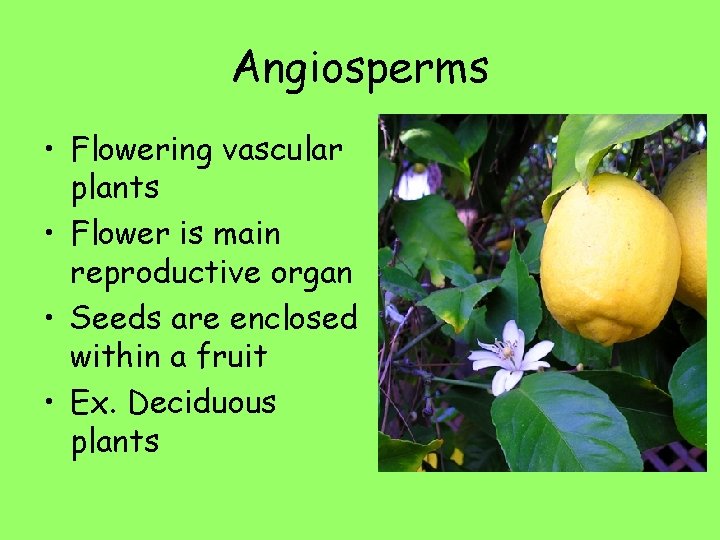
Angiosperms • Flowering vascular plants • Flower is main reproductive organ • Seeds are enclosed within a fruit • Ex. Deciduous plants
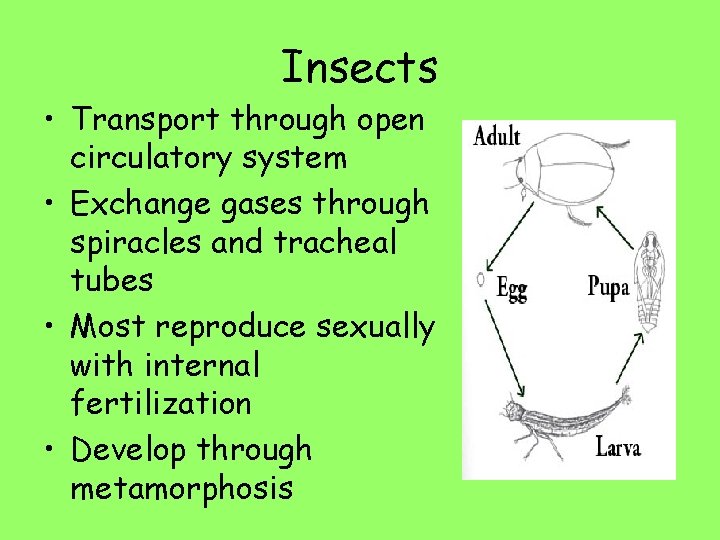
Insects • Transport through open circulatory system • Exchange gases through spiracles and tracheal tubes • Most reproduce sexually with internal fertilization • Develop through metamorphosis
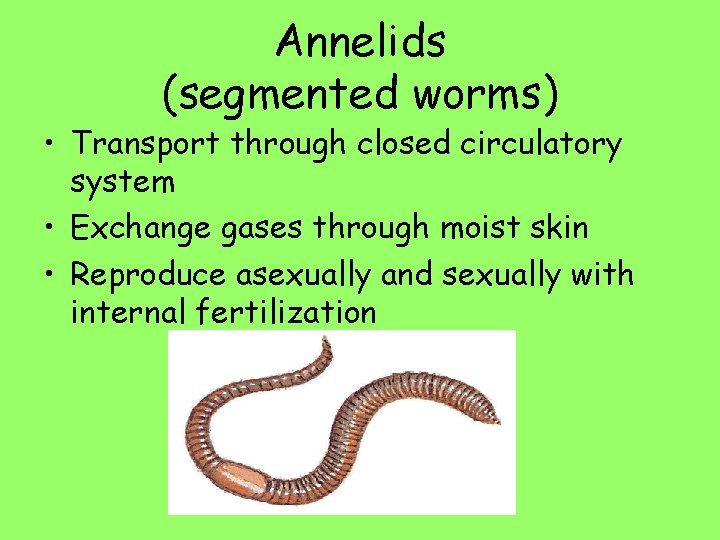
Annelids (segmented worms) • Transport through closed circulatory system • Exchange gases through moist skin • Reproduce asexually and sexually with internal fertilization
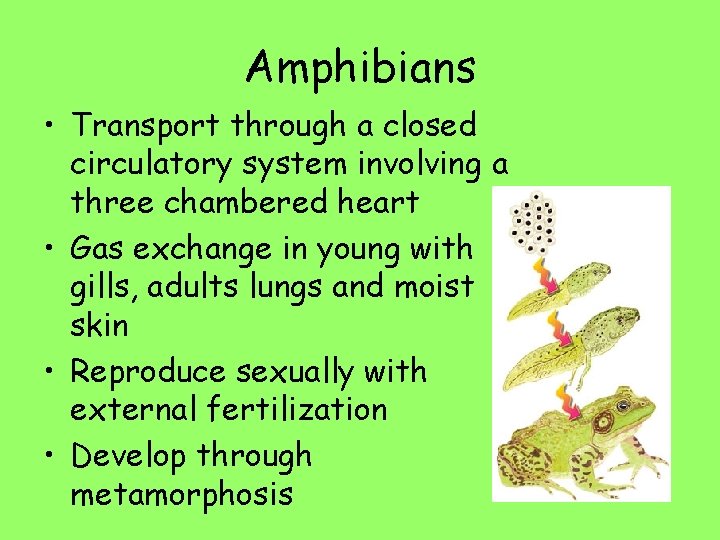
Amphibians • Transport through a closed circulatory system involving a three chambered heart • Gas exchange in young with gills, adults lungs and moist skin • Reproduce sexually with external fertilization • Develop through metamorphosis
Mammals • Transport though closed circulatory system involving a four chambered heart • Gas exchange through lungs • Reproduce sexually with internal fertilization • Young develop in a uterus and exchange nutrients and oxygen through the placenta (placental mammals)
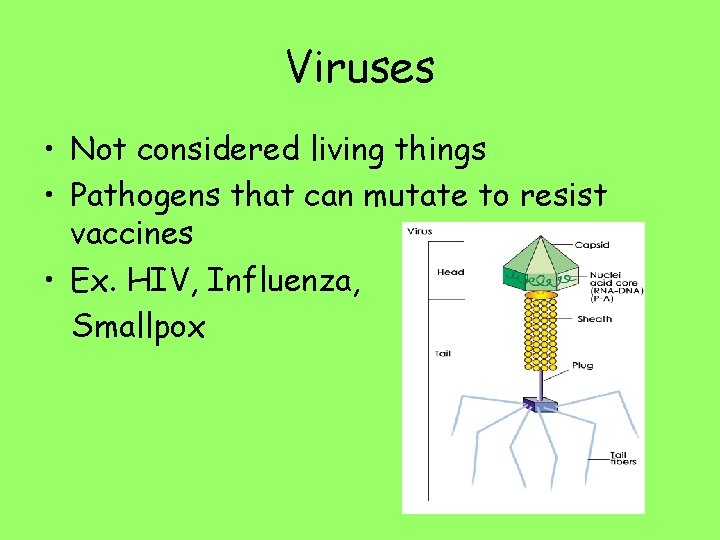
Viruses • Not considered living things • Pathogens that can mutate to resist vaccines • Ex. HIV, Influenza, Smallpox
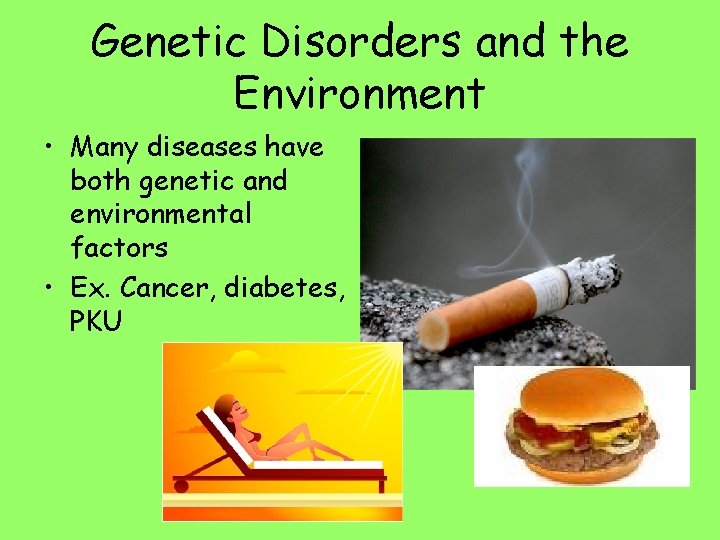
Genetic Disorders and the Environment • Many diseases have both genetic and environmental factors • Ex. Cancer, diabetes, PKU
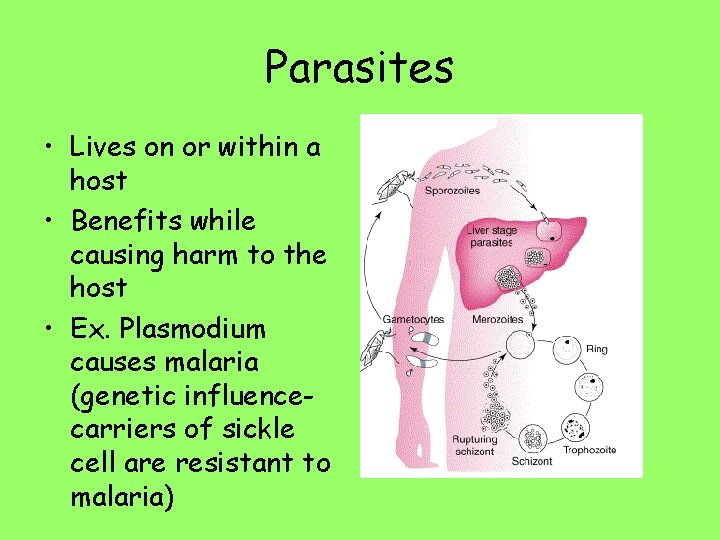
Parasites • Lives on or within a host • Benefits while causing harm to the host • Ex. Plasmodium causes malaria (genetic influencecarriers of sickle cell are resistant to malaria)
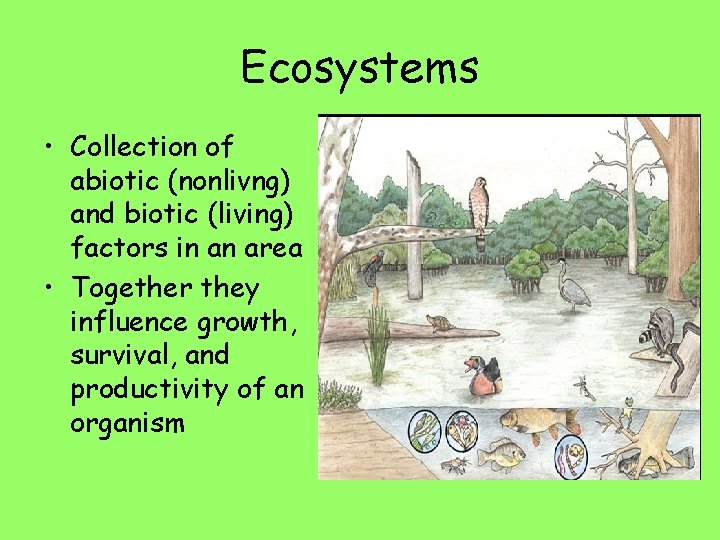
Ecosystems • Collection of abiotic (nonlivng) and biotic (living) factors in an area • Together they influence growth, survival, and productivity of an organism
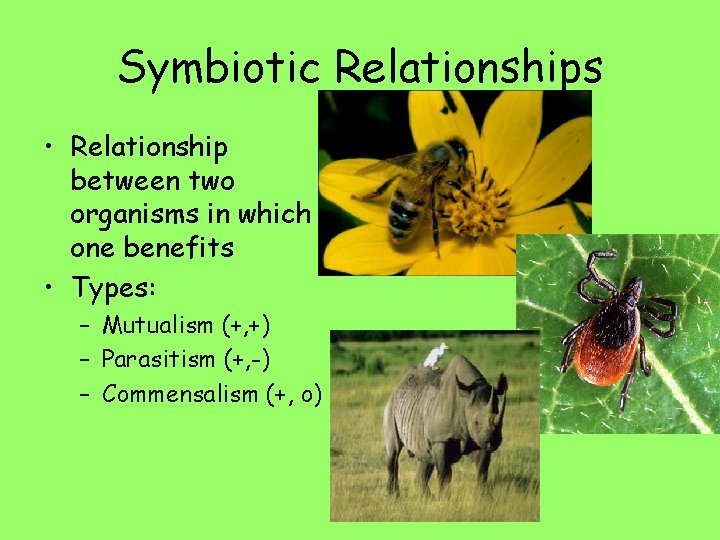
Symbiotic Relationships • Relationship between two organisms in which one benefits • Types: – Mutualism (+, +) – Parasitism (+, -) – Commensalism (+, o)
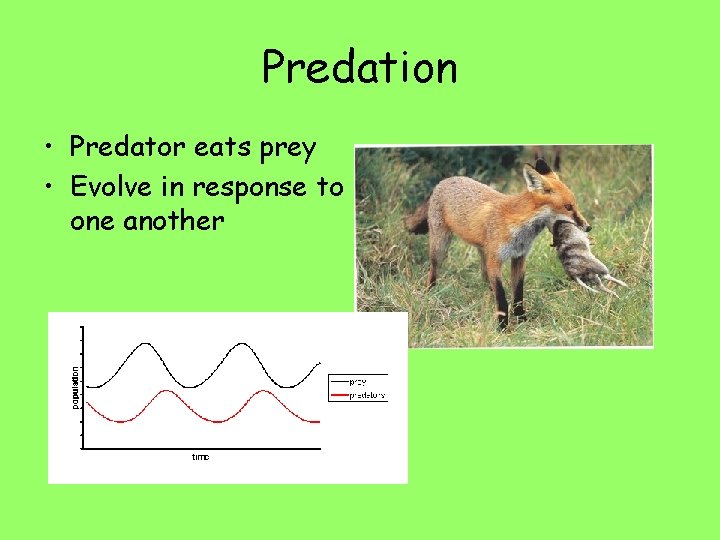
Predation • Predator eats prey • Evolve in response to one another
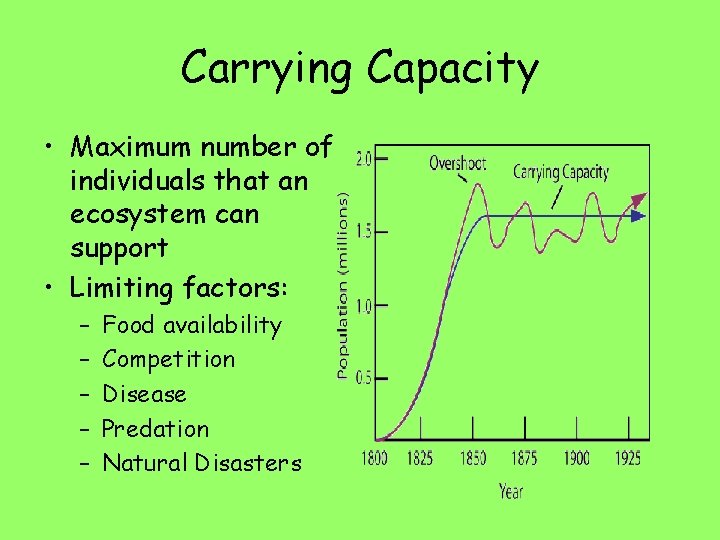
Carrying Capacity • Maximum number of individuals that an ecosystem can support • Limiting factors: – – – Food availability Competition Disease Predation Natural Disasters
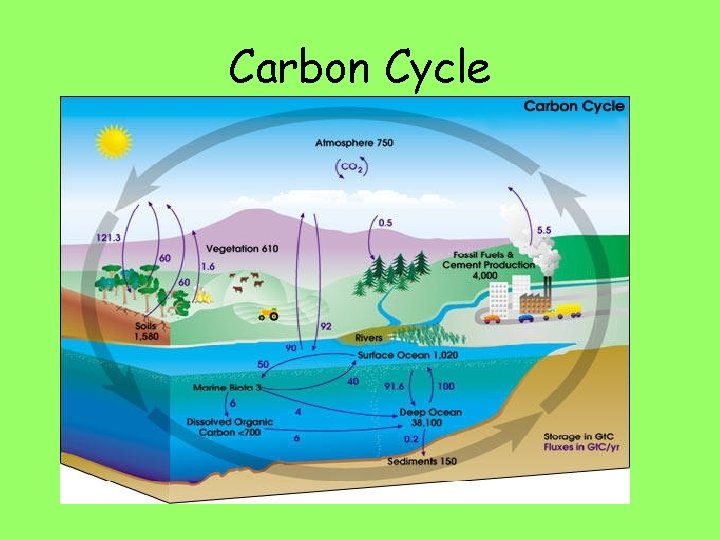
Carbon Cycle
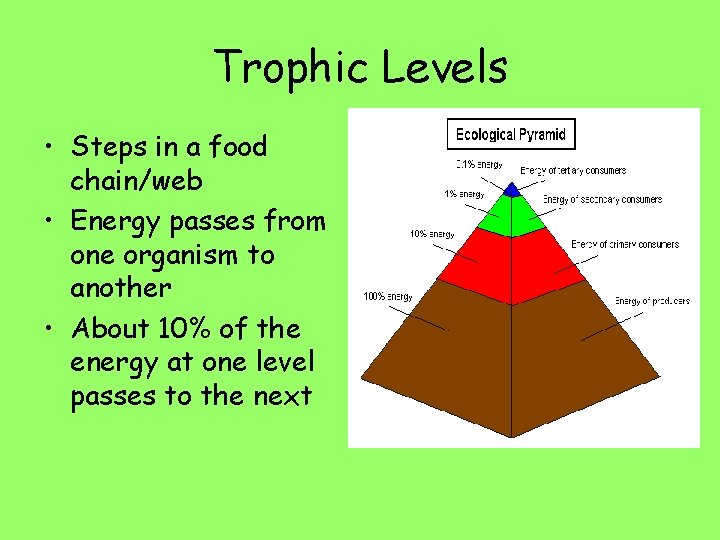
Trophic Levels • Steps in a food chain/web • Energy passes from one organism to another • About 10% of the energy at one level passes to the next
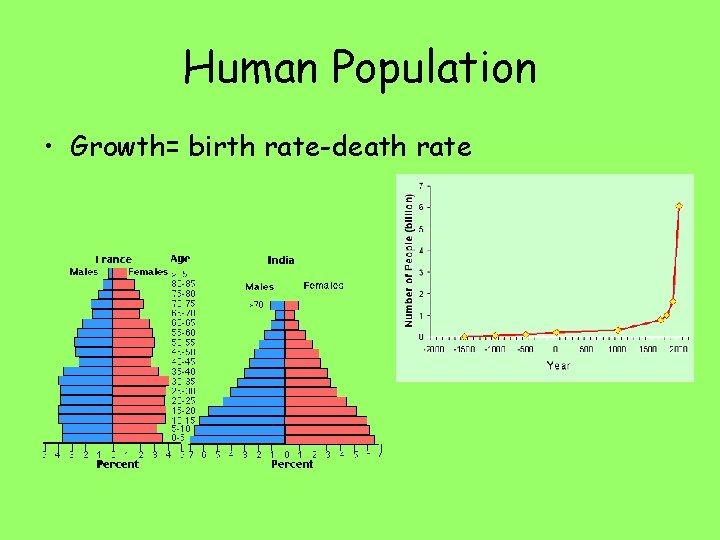
Human Population • Growth= birth rate-death rate
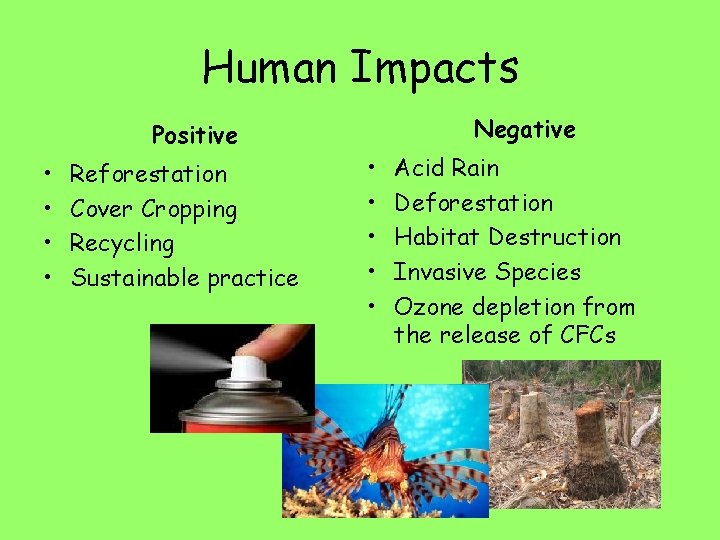
Human Impacts Positive • • Reforestation Cover Cropping Recycling Sustainable practice Negative • • • Acid Rain Deforestation Habitat Destruction Invasive Species Ozone depletion from the release of CFCs
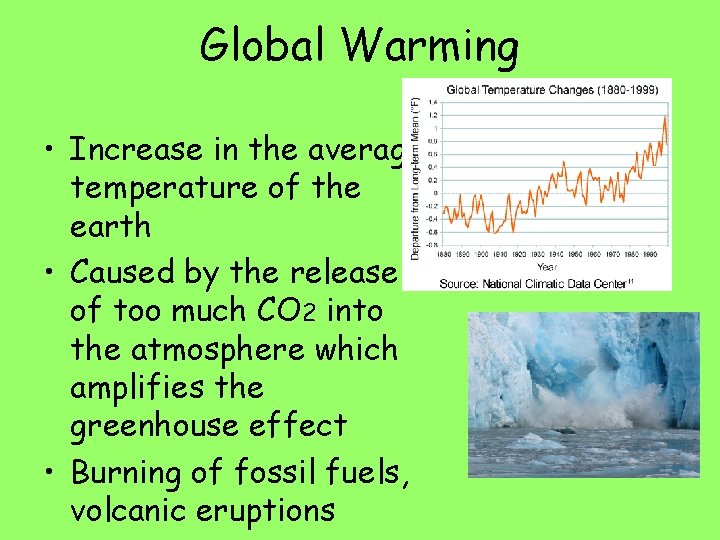
Global Warming • Increase in the average temperature of the earth • Caused by the release of too much CO 2 into the atmosphere which amplifies the greenhouse effect • Burning of fossil fuels, volcanic eruptions
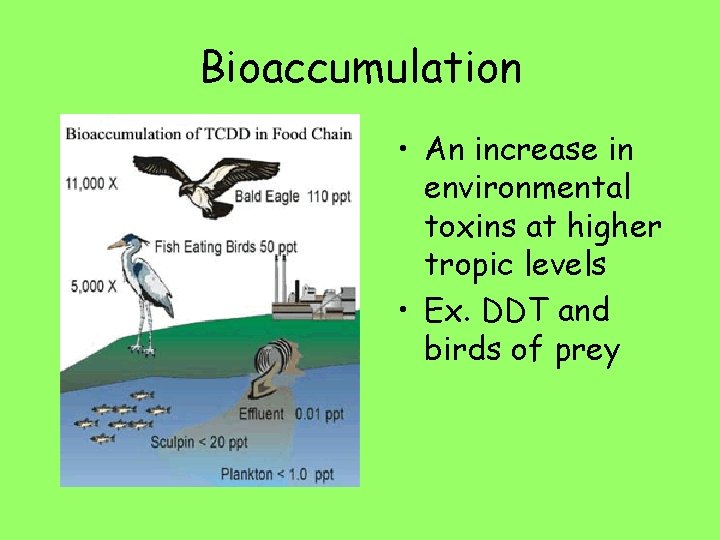
Bioaccumulation • An increase in environmental toxins at higher tropic levels • Ex. DDT and birds of prey
- Slides: 93