
Biology Chapter 9 Copyright Pearson Prentice Hall Respiration
Biology Chapter 9 Copyright Pearson Prentice Hall
Respiration Copyright Pearson Prentice Hall
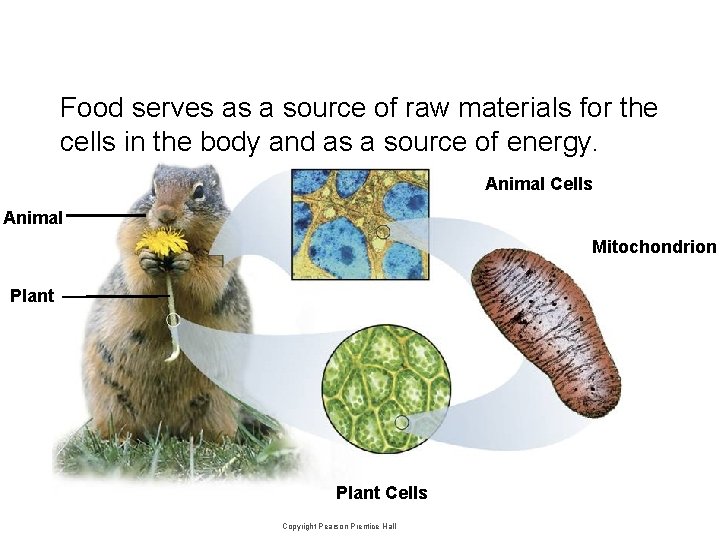
Food serves as a source of raw materials for the cells in the body and as a source of energy. Animal Cells Animal Mitochondrion Plant Cells Copyright Pearson Prentice Hall
Chapter 9: Cellular Respiration • C 6 H 12 O 6 + 6 O 2 6 CO 2 + 6 H 2 O + 36 ATP • Cellular Respiration – mitochondria breakdown glucose to produce ATP Copyright Pearson Prentice Hall
• 3 Stages of Cellular Respiration 1. Glycolysis • • • Occurs in cytoplasm • • • 2 molecules of ATP are used to start reaction No oxygen required Break down glucose into 2 molecules of pyruvic acid 4 ATP molecules are produced Your body gets to store 2 ATP and 2 ATP go back to restart the reaction Copyright Pearson Prentice Hall
• NAD+ - an energy carrying molecule • NADH when it is carrying an electron (energy) • Glucose + 2 ATP → 2 pyruvic acid 4 ATP (body stores 2 and 2 restart the reaction) 2 NADH Copyright Pearson Prentice Hall
• After glycolysis the pyruvic acid molecules move to the mitochondria Copyright Pearson Prentice Hall
2. Citric Acid Cycle • Also called Kreb Cycle • Occurs in the mitochondria • Aerobic – requires oxygen • 2 pyruvic acid → citric acid 2 ATP 4 CO 2 2 FADH 2 6 NADH Copyright Pearson Prentice Hall
3. Electron Transport Chain • Occurs in the inner membrane of the mitochondria • Aerobic • NADH and FADH 2 energized electrons are passed from protein to protein • The energy associated with highly energized electron forms ATP from ADP • Energy being released from electron allows O 2 to bond with H+ to make H 2 O • Produces 32 ATP molecules • 32 ADP → 32 ATP • O 2 → H 2 O Copyright Pearson Prentice Hall
• When your cells are without oxygen an anaerobic process called fermentation proceeds • Provides a way to continue producing ATP until oxygen is available again Copyright Pearson Prentice Hall
2 Types of Fermentation 1. Lactic Acid • Anaerobic • Occurs in cytoplasm • Occurs in animals • 2 Pryuvic acid is broken down into 2 lactic acid • Lactic acid build up in muscles and causes burn or fatigue • 2 pyruvic acid → 2 lactic acid Copyright Pearson Prentice Hall
2. Alcoholic Fermentation • Anaerobic • Occurs in cytoplasm • Occurs in yeast, bacteria, plants • Produce CO 2 and ethyl alcohol • 2 pyruvic acid → 2 ethyl alcohol Copyright Pearson Prentice Hall
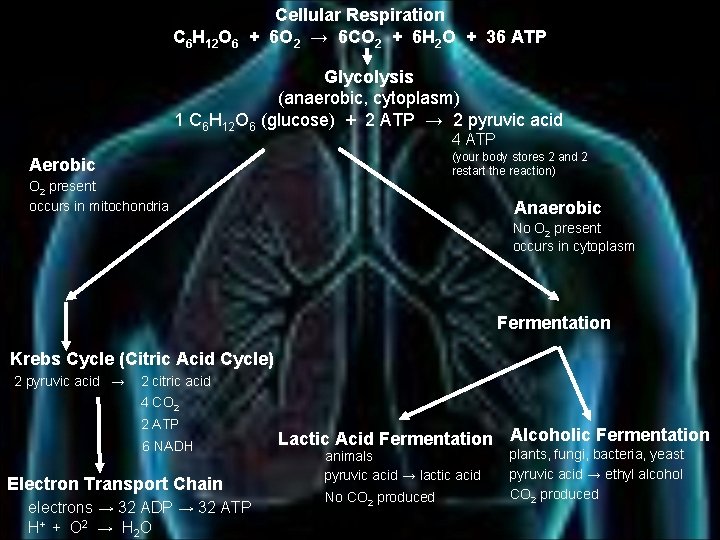
Cellular Respiration C 6 H 12 O 6 + 6 O 2 → 6 CO 2 + 6 H 2 O + 36 ATP Glycolysis (anaerobic, cytoplasm) 1 C 6 H 12 O 6 (glucose) + 2 ATP → 2 pyruvic acid 4 ATP (your body stores 2 and 2 restart the reaction) Aerobic O 2 present occurs in mitochondria Anaerobic No O 2 present occurs in cytoplasm Fermentation Krebs Cycle (Citric Acid Cycle) 2 pyruvic acid → 2 citric acid 4 CO 2 2 ATP 6 NADH Electron Transport Chain electrons → 32 ADP → 32 ATP H+ + O 2 → H 2 O Lactic Acid Fermentation Alcoholic Fermentation animals pyruvic acid → lactic acid No CO 2 produced plants, fungi, bacteria, yeast pyruvic acid → ethyl alcohol CO 2 produced

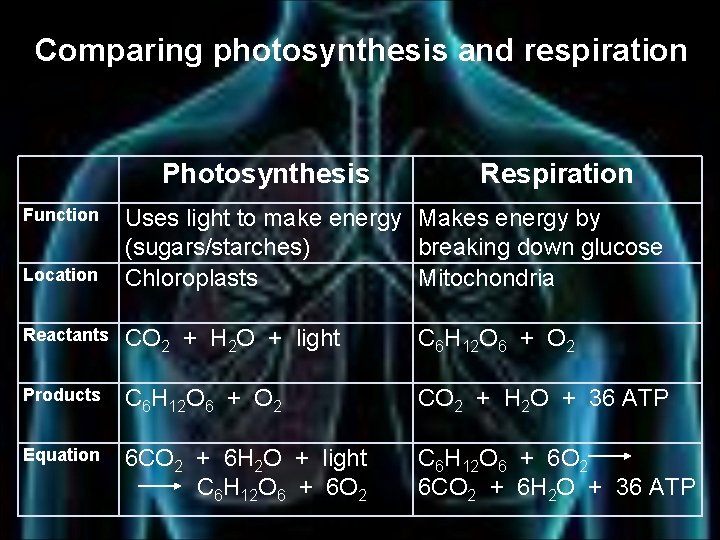
Comparing photosynthesis and respiration Photosynthesis Function Location Respiration Uses light to make energy Makes energy by (sugars/starches) breaking down glucose Chloroplasts Mitochondria Reactants CO 2 + H 2 O + light C 6 H 12 O 6 + O 2 Products C 6 H 12 O 6 + O 2 CO 2 + H 2 O + 36 ATP Equation 6 CO 2 + 6 H 2 O + light C 6 H 12 O 6 + 6 O 2 6 CO 2 + 6 H 2 O + 36 ATP
- Slides: 15