
BIOLOGY Bio life ology study of Copyright Mc
BIOLOGY “Bio” = life “ology” = study of Copyright © Mc. Graw-Hill Education Introduction to Biology
Biology is the study of: • the origins and history of life and once-living things • the structures of living things • how living things interact with one another • how living things function Copyright © Mc. Graw-Hill Education Introduction to Biology
What do biologists do? • Study the diversity of life • Research diseases • Develop technologies • Improve agriculture • Preserve the environment Copyright © Mc. Graw-Hill Education Introduction to Biology
The Characteristics of Life 1. Made of one or more cells 2. Displays organization 3. Grows and develops 4. Reproduces 5. Responds to stimuli 6. Requires energy 7. Maintains homeostasis 8. Adaptations evolve over time An organism is anything that has or once had all these characteristics Copyright © Mc. Graw-Hill Education Introduction to Biology
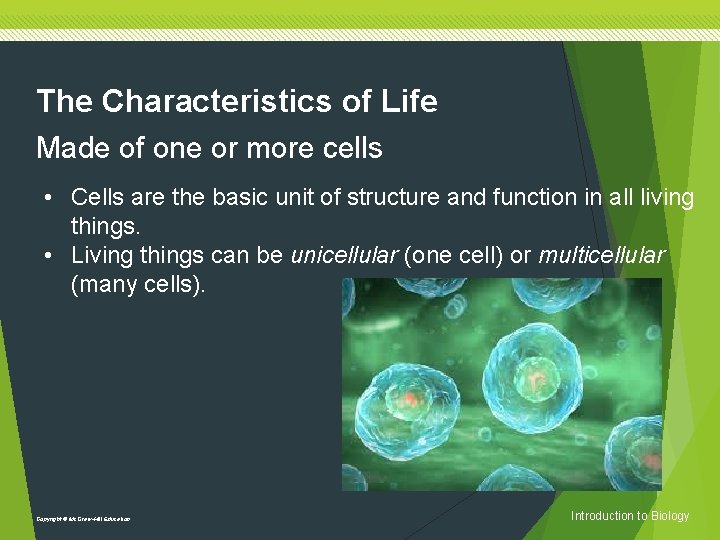
The Characteristics of Life Made of one or more cells • Cells are the basic unit of structure and function in all living things. • Living things can be unicellular (one cell) or multicellular (many cells). Copyright © Mc. Graw-Hill Education Introduction to Biology
The Characteristics of Life Displays organization • Living things display organization, which means they are arranged in an orderly way. • Single cells: contains organized functional structures • Multicellular: • Specialized cells organized into tissues • Tissues are organized into organs • Organ systems work together to support an organism Copyright © Mc. Graw-Hill Education Introduction to Biology
Biological Organization Biosphere Ecosystem Population Organism Organ System Organ Tissue Cell Macromolecules Atoms Subatomic Particles
The Characteristics of Life Grows and develops • Most organisms begin as a single cell. • The addition of mass to an organism, often in the form of new cells and structures, is called growth. • The process of natural changes over the lifetime of an organism is called development. Copyright © Mc. Graw-Hill Education Introduction to Biology
The Characteristics of Life Reproduces • Reproduction = the production of offspring • Organisms that can breed with one another and produce fertile offspring are know as a species. • Reproduction is not essential for the survival of an individual, but it is essential for the continuation of the species. Copyright © Mc. Graw-Hill Education Introduction to Biology
The Characteristics of Life Responds to stimuli • Anything that is part of the internal or external environments and causes a reaction by the organism is called a stimulus. • The reaction to a stimulus is a response. Copyright © Mc. Graw-Hill Education Introduction to Biology
The Characteristics of Life Requires energy • Living things get their energy from food. • Most plants and some unicellular organisms use light energy from the Sun to make their own food. • Organisms that cannot make their own food get energy by consuming other organisms. Copyright © Mc. Graw-Hill Education Introduction to Biology
The Characteristics of Life Maintains homeostasis • Regulation of an organism’s internal conditions to maintain life is called homeostasis. • If anything happens within or to an organism that affects its normal state, processes to restore the normal state begin. Copyright © Mc. Graw-Hill Education Introduction to Biology
The Characteristics of Life Adaptations evolve over time • An adaptation is any inherited characteristic that results from changes to a species over time. • Adaptations enable species to survive and pass on their genes to the next generation. • Adaptations are usually developed in response to an environmental factor. Copyright © Mc. Graw-Hill Education Introduction to Biology
A. Interact with Environment C. Reproduction B. Homeostasis D. Societal Factors E. Energy Match the Examples with the above descriptions. 1. Scientists discovering a vaccination for Polio 2. A male and female chicken copulating with the female laying eggs that hatch into chicks 3. A walleye eating a perch 4. A mosquito flying towards a light at night. 5. When the temperature drops, you begin to shiver.
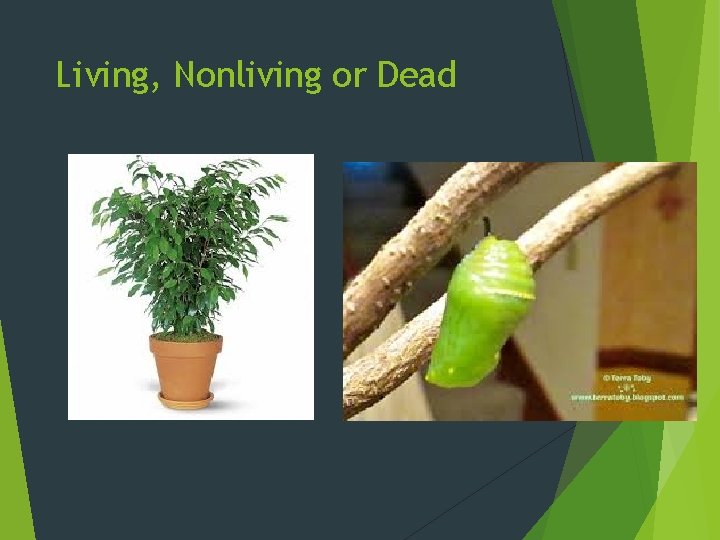
Living, Nonliving or Dead
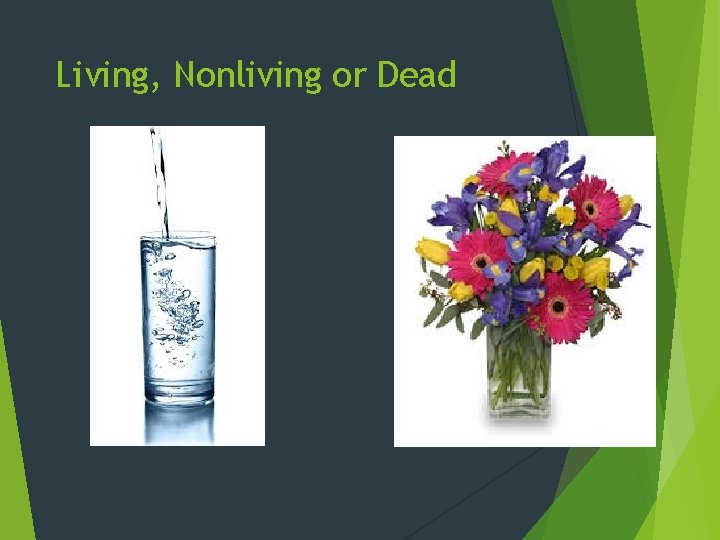
Living, Nonliving or Dead
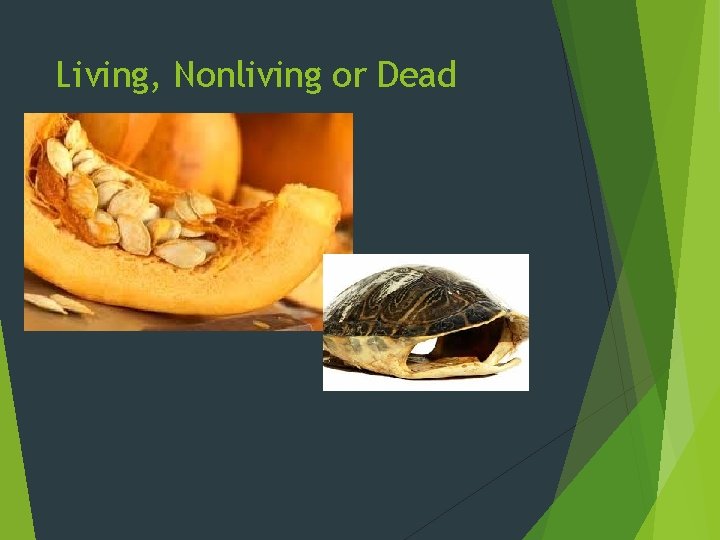
Living, Nonliving or Dead
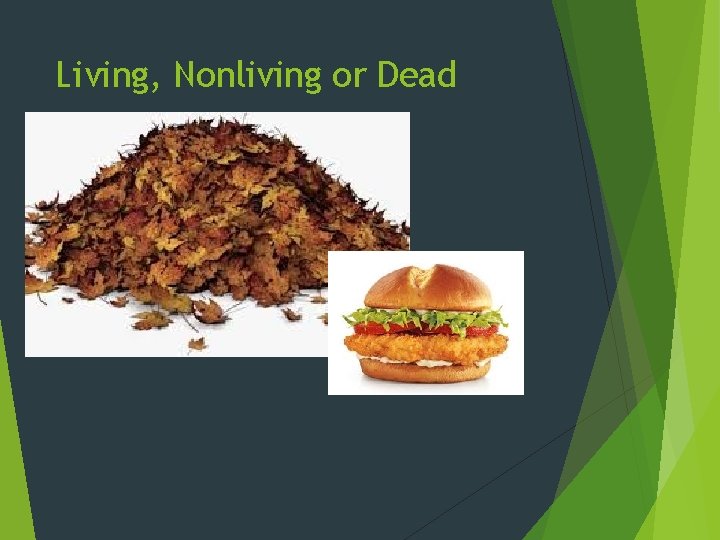
Living, Nonliving or Dead
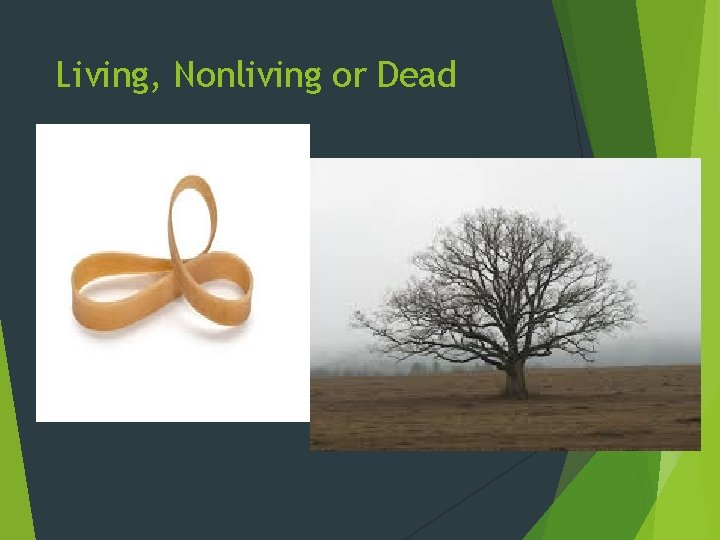
Living, Nonliving or Dead
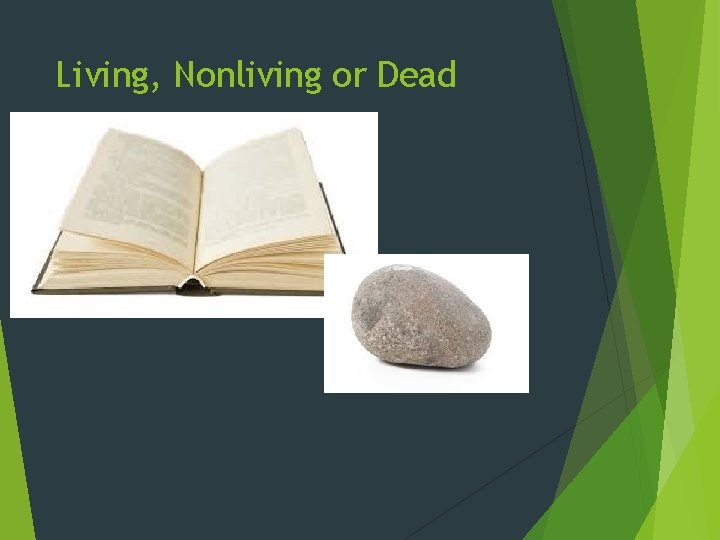
Living, Nonliving or Dead
Types of Graphs Pie: Used to show percentages/parts of a whole (Ethnic breakdown in a community) Line: Used to represent a situation that continually changes (Daily temp changes) Bar: Used when groups are averaged together and the averages are then compared. (Average monthly temperatures in Fargo)

- Slides: 23