
BIOLOGY A Global Approach TENTH EDITION Global Edition
BIOLOGY A Global Approach TENTH EDITION Global Edition Campbell • Reece • Urry • Cain • Wasserman • Minorsky • Jackson 34 Vertebrates Lecturer and other chordates Dorothee Huchon Lecture Presentation by Museum 527 Steinhardt Nicole Tunbridge and 036409817 Kathleen Fitzpatrick huchond@tauex. tau. ac. il © 2015 Pearson Education Ltd
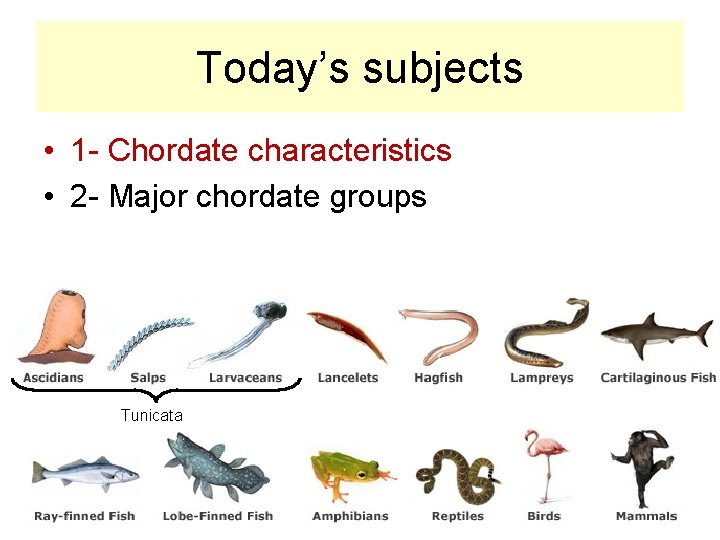
Today’s subjects • 1 - Chordate characteristics • 2 - Major chordate groups Tunicata 2
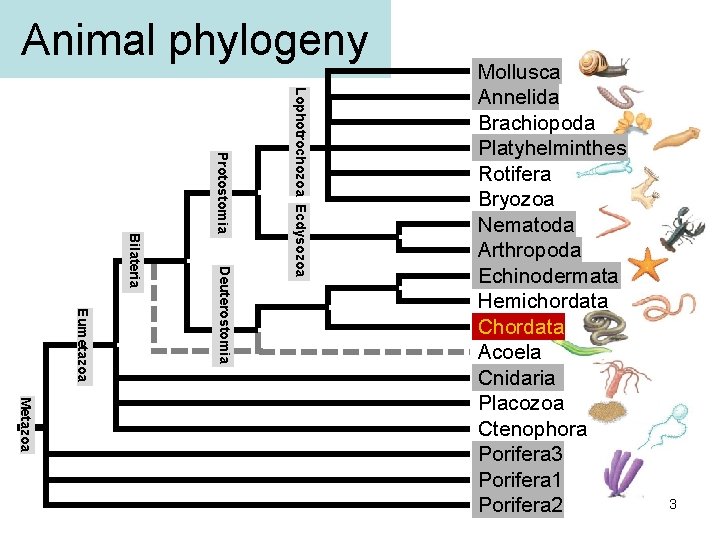
Animal phylogeny Deuterostomia Lophotrochozoa Ecdysozoa Protostomia Bilateria Eumetazoa Mollusca Annelida Brachiopoda Platyhelminthes Rotifera Bryozoa Nematoda Arthropoda Echinodermata Hemichordata Chordata Acoela Cnidaria Placozoa Ctenophora Porifera 3 Porifera 1 Porifera 2 3
What makes a chordate • All chordates share a set of derived characters • Some species have some of these traits only during embryonic development • Four key characters of chordates – Notochord (or backbone) מיתר הגב 4
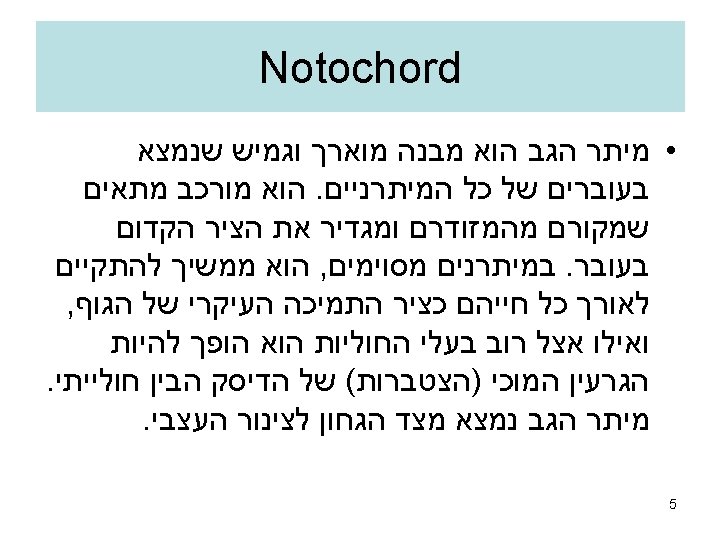
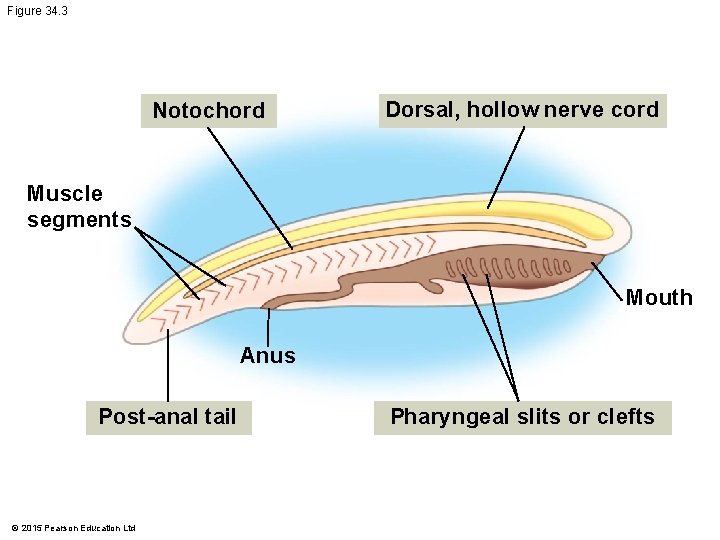
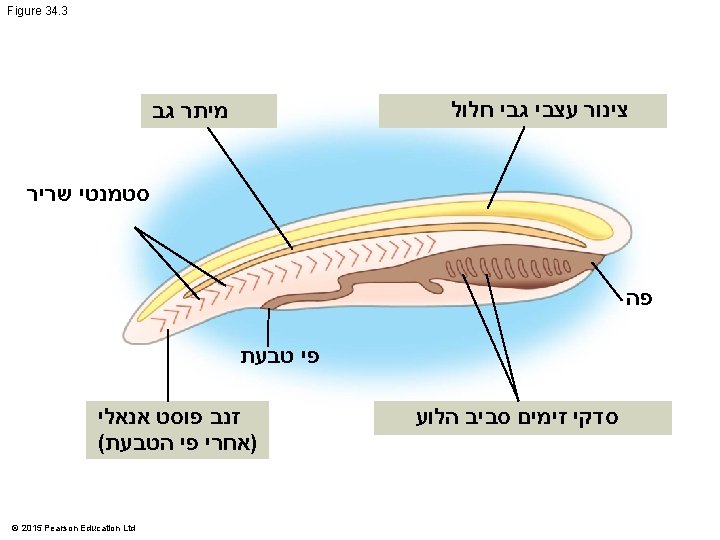
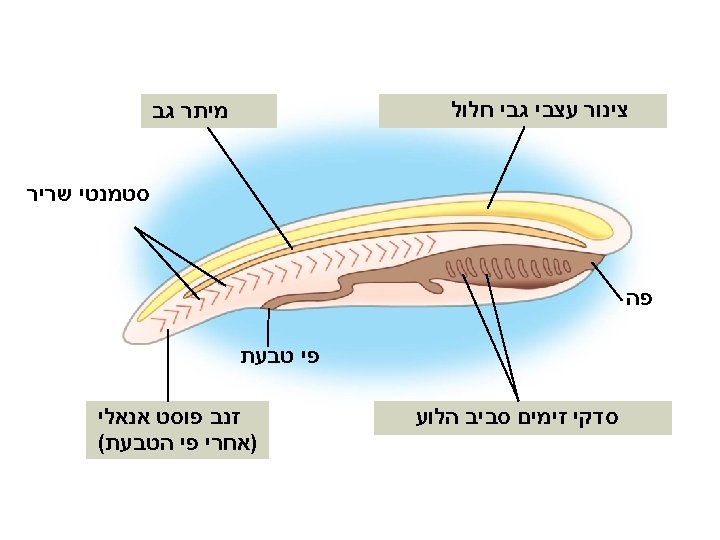
Figure 34. 3 Notochord Dorsal, hollow nerve cord Muscle segments Mouth Anus Post-anal tail © 2015 Pearson Education Ltd Pharyngeal slits or clefts
What makes a chordate • All chordates share a set of derived characters • Some species have some of these traits only during embryonic development • Four key characters of chordates – Notochord (or backbone) מיתר הגב 8
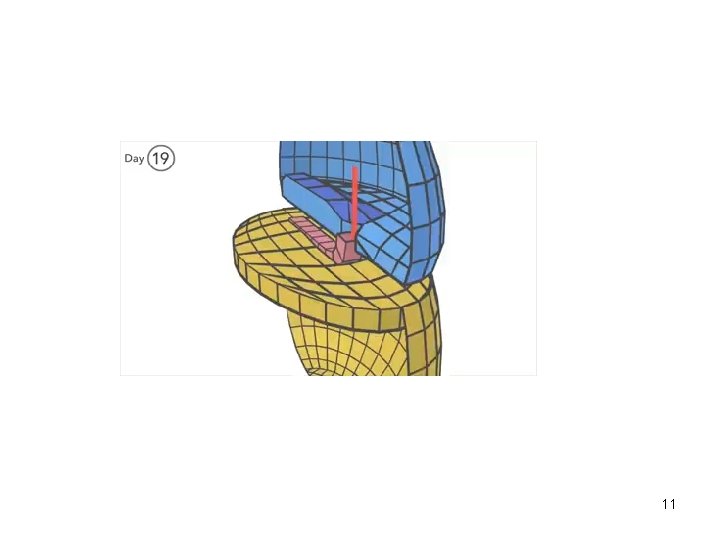
What makes a chordate • All chordates share a set of derived characters • Some species have some of these traits only during embryonic development • Four key characters of chordates – Notochord (or backbone) מיתר הגב – Dorsal, hollow nerve cord צינור עצבים גבי חלול 9
10
11
12
What makes a chordate • All chordates share a set of derived characters • Some species have some of these traits only during embryonic development • Four key characters of chordates – Notochord (or backbone) מיתר הגב – Dorsal, hollow nerve cord צינור עצבים גבי חלול 13
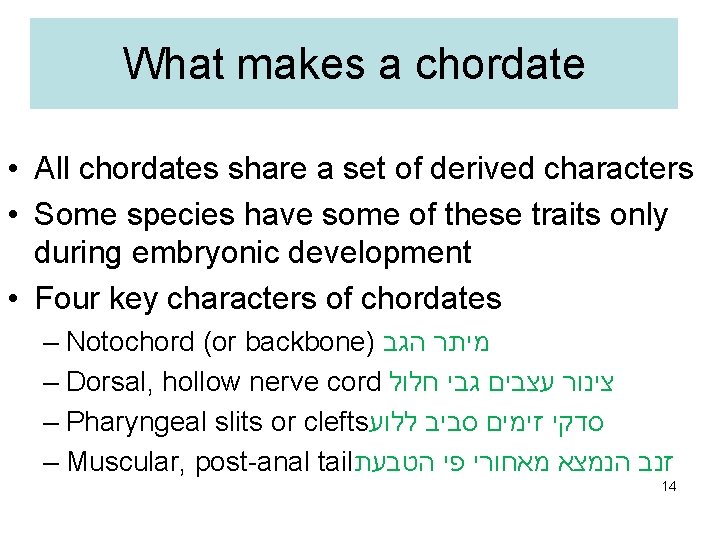
What makes a chordate • All chordates share a set of derived characters • Some species have some of these traits only during embryonic development • Four key characters of chordates – Notochord (or backbone) מיתר הגב – Dorsal, hollow nerve cord צינור עצבים גבי חלול – Pharyngeal slits or clefts סדקי זימים סביב ללוע – Muscular, post-anal tail זנב הנמצא מאחורי פי הטבעת 14
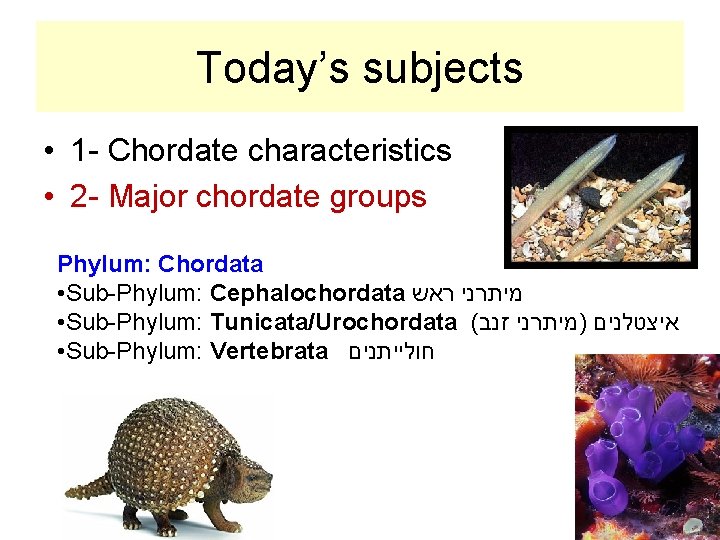
Today’s subjects • 1 - Chordate characteristics • 2 - Major chordate groups Phylum: Chordata • Sub-Phylum: Cephalochordata מיתרני ראש • Sub-Phylum: Tunicata/Urochordata ( איצטלנים )מיתרני זנב • Sub-Phylum: Vertebrata חולייתנים
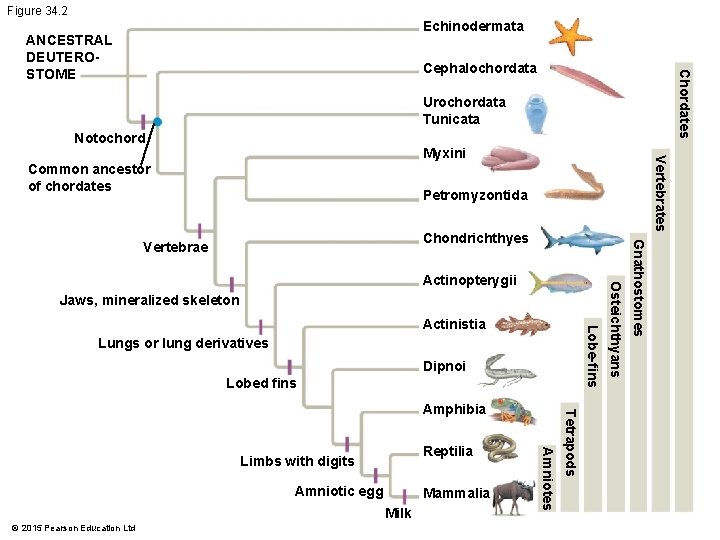
Figure 34. 2 Echinodermata ANCESTRAL DEUTEROSTOME Chordates Cephalochordata Urochordata Tunicata Notochord Common ancestor of chordates Vertebrates Myxini Petromyzontida Jaws, mineralized skeleton Lobe-fins Actinistia Lungs or lung derivatives Dipnoi Lobed fins Amniotic egg Mammalia Milk © 2015 Pearson Education Ltd Amniotes Reptilia Limbs with digits Tetrapods Amphibia Osteichthyans Actinopterygii Gnathostomes Chondrichthyes Vertebrae
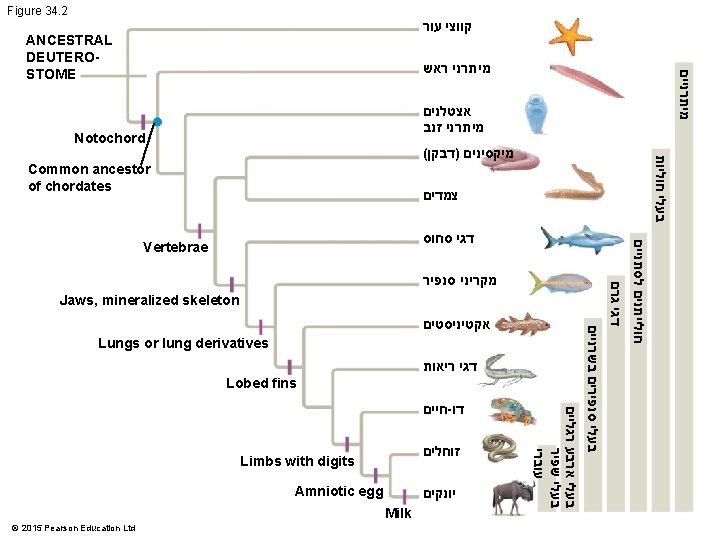
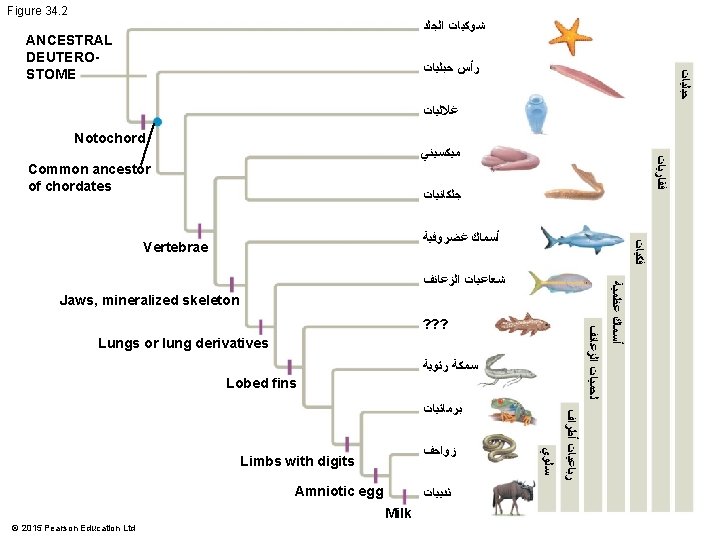
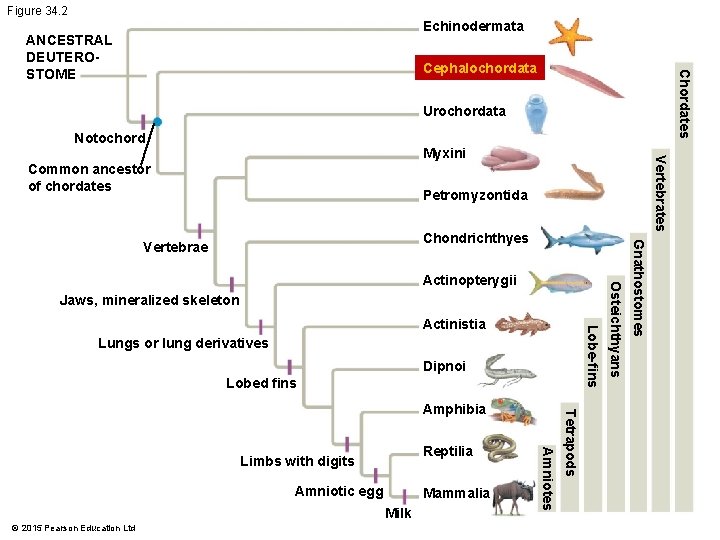
Figure 34. 2 Echinodermata ANCESTRAL DEUTEROSTOME Chordates Cephalochordata Urochordata Notochord Common ancestor of chordates Vertebrates Myxini Petromyzontida Jaws, mineralized skeleton Lobe-fins Actinistia Lungs or lung derivatives Dipnoi Lobed fins Amniotic egg Mammalia Milk © 2015 Pearson Education Ltd Amniotes Reptilia Limbs with digits Tetrapods Amphibia Osteichthyans Actinopterygii Gnathostomes Chondrichthyes Vertebrae
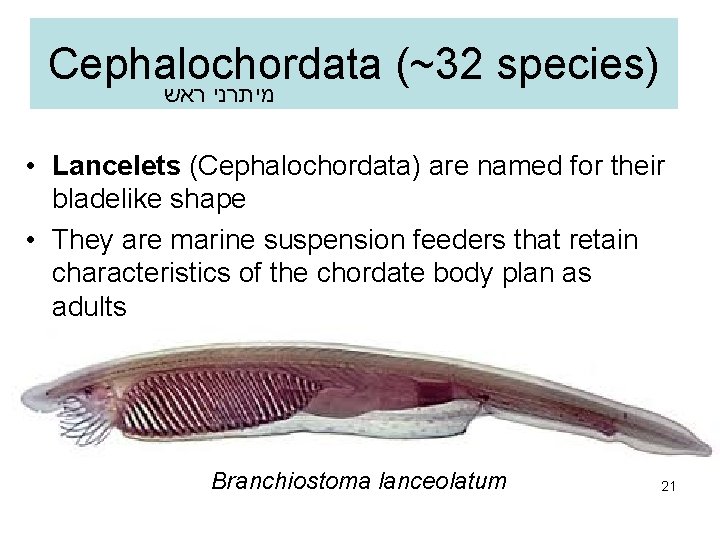
Cephalochordata (~32 species) מיתרני ראש • Lancelets (Cephalochordata) are named for their bladelike shape • They are marine suspension feeders that retain characteristics of the chordate body plan as adults Branchiostoma lanceolatum 21
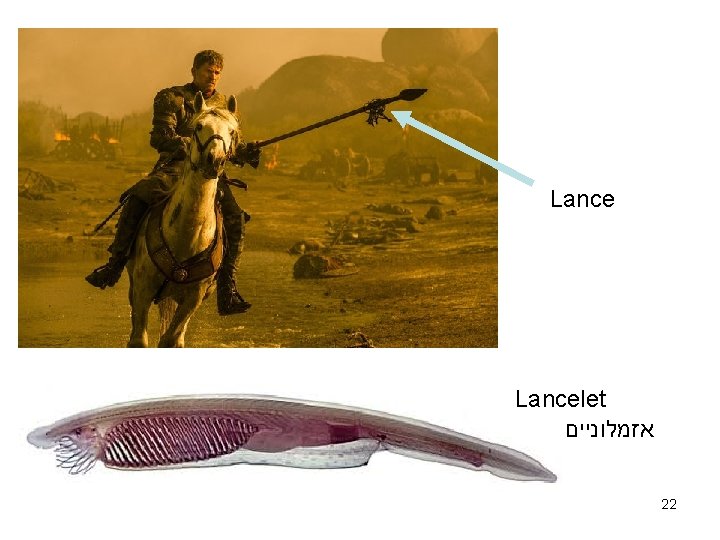
Lancelet אזמלוניים 22
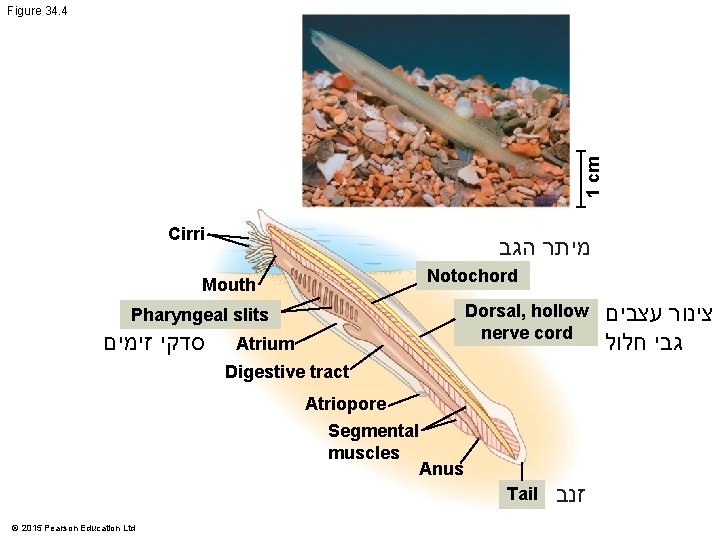
1 cm Figure 34. 4 Cirri מיתר הגב Notochord Mouth Dorsal, hollow nerve cord Pharyngeal slits סדקי זימים Atrium Digestive tract Atriopore Segmental muscles Anus Tail © 2015 Pearson Education Ltd זנב צינור עצבים גבי חלול
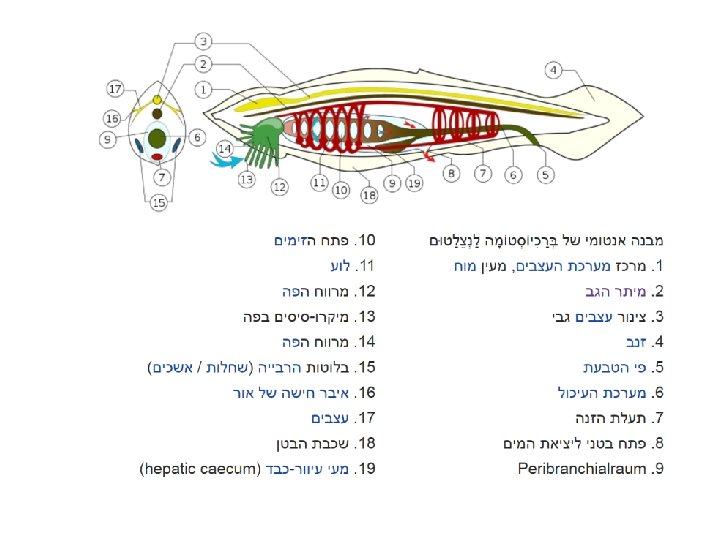
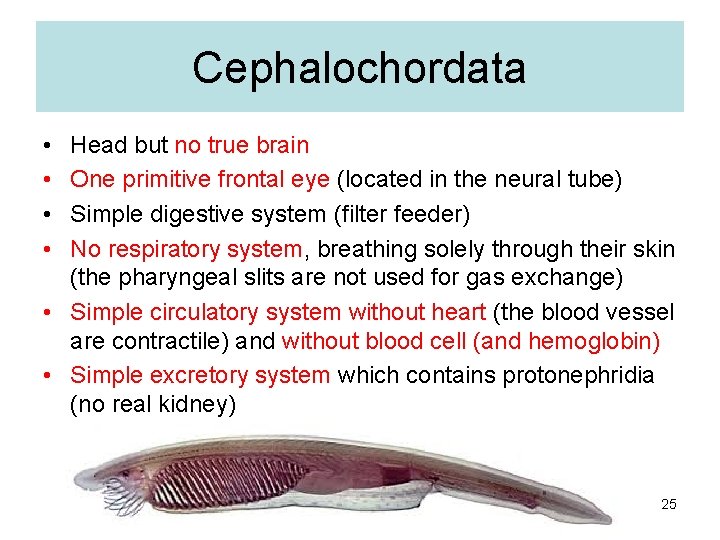
Cephalochordata • • Head but no true brain One primitive frontal eye (located in the neural tube) Simple digestive system (filter feeder) No respiratory system, breathing solely through their skin (the pharyngeal slits are not used for gas exchange) • Simple circulatory system without heart (the blood vessel are contractile) and without blood cell (and hemoglobin) • Simple excretory system which contains protonephridia (no real kidney) 25
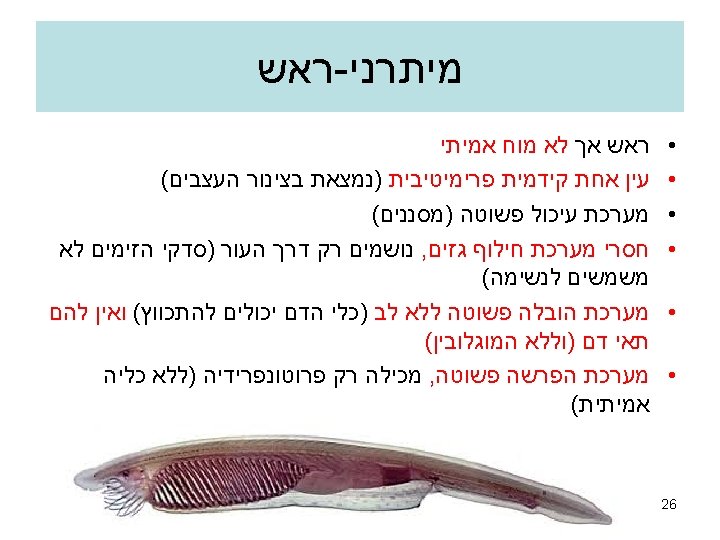
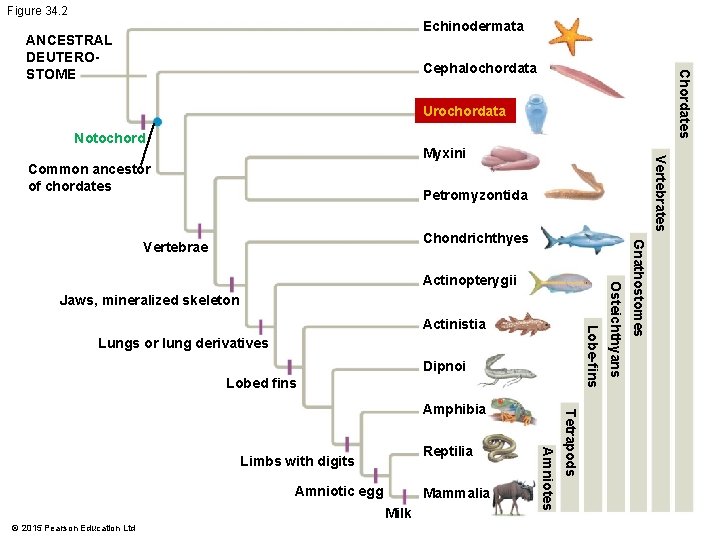
Figure 34. 2 Echinodermata ANCESTRAL DEUTEROSTOME Chordates Cephalochordata Urochordata Notochord Common ancestor of chordates Vertebrates Myxini Petromyzontida Jaws, mineralized skeleton Lobe-fins Actinistia Lungs or lung derivatives Dipnoi Lobed fins Amniotic egg Mammalia Milk © 2015 Pearson Education Ltd Amniotes Reptilia Limbs with digits Tetrapods Amphibia Osteichthyans Actinopterygii Gnathostomes Chondrichthyes Vertebrae
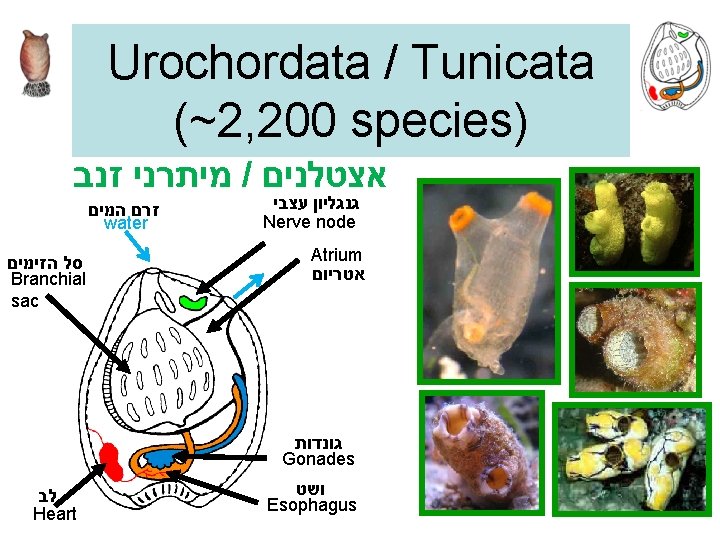
Urochordata / Tunicata (~2, 200 species) מיתרני זנב / אצטלנים זרם המים water סל הזימים Branchial sac גנגליון עצבי Nerve node Atrium אטריום גונדות Gonades לב Heart ושט Esophagus
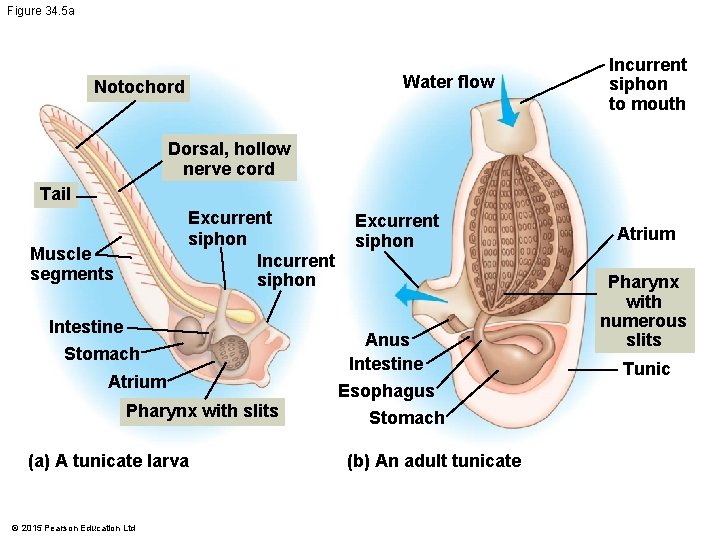
Figure 34. 5 a Water flow Notochord Incurrent siphon to mouth Dorsal, hollow nerve cord Tail Excurrent siphon Incurrent siphon Muscle segments Intestine Stomach Atrium Pharynx with slits (a) A tunicate larva © 2015 Pearson Education Ltd Excurrent siphon Anus Intestine Esophagus Stomach (b) An adult tunicate Atrium Pharynx with numerous slits Tunic
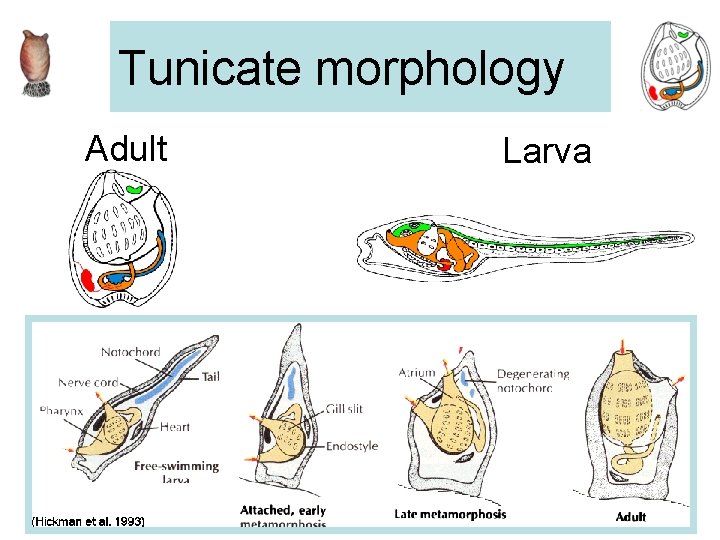
Tunicate morphology Adult Larva
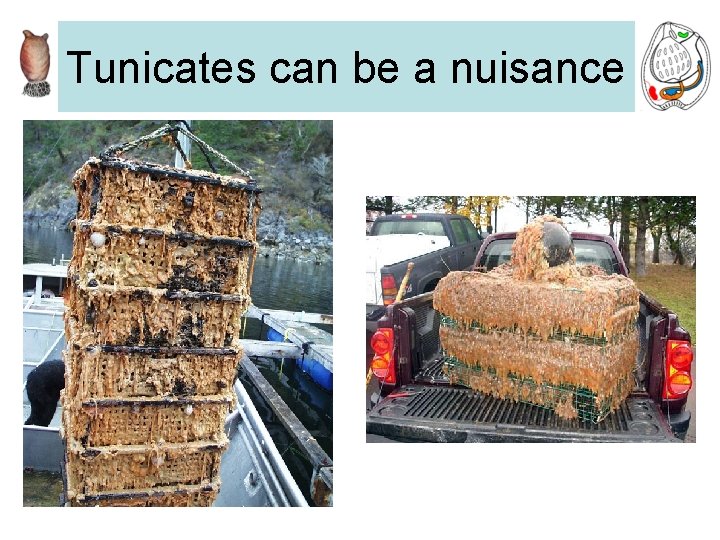
Tunicates can be a nuisance
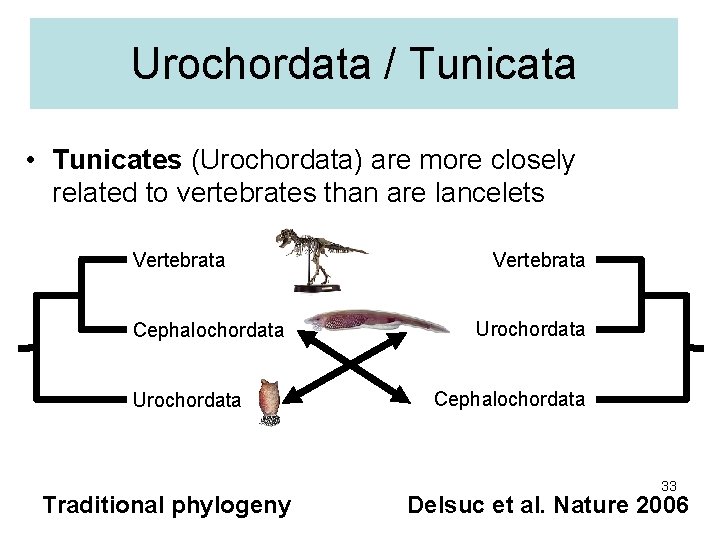
Urochordata / Tunicata • Tunicates (Urochordata) are more closely related to vertebrates than are lancelets Vertebrata Cephalochordata Urochordata Traditional phylogeny Vertebrata Urochordata Cephalochordata 33 Delsuc et al. Nature 2006
Chordate 34
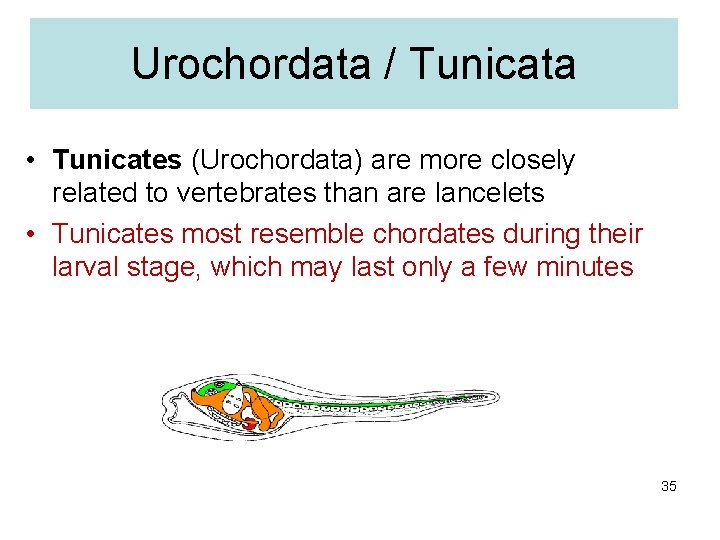
Urochordata / Tunicata • Tunicates (Urochordata) are more closely related to vertebrates than are lancelets • Tunicates most resemble chordates during their larval stage, which may last only a few minutes 35
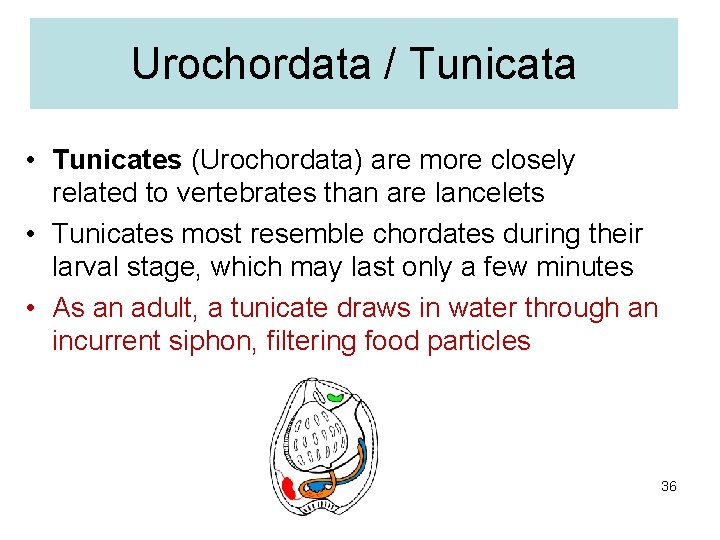
Urochordata / Tunicata • Tunicates (Urochordata) are more closely related to vertebrates than are lancelets • Tunicates most resemble chordates during their larval stage, which may last only a few minutes • As an adult, a tunicate draws in water through an incurrent siphon, filtering food particles 36
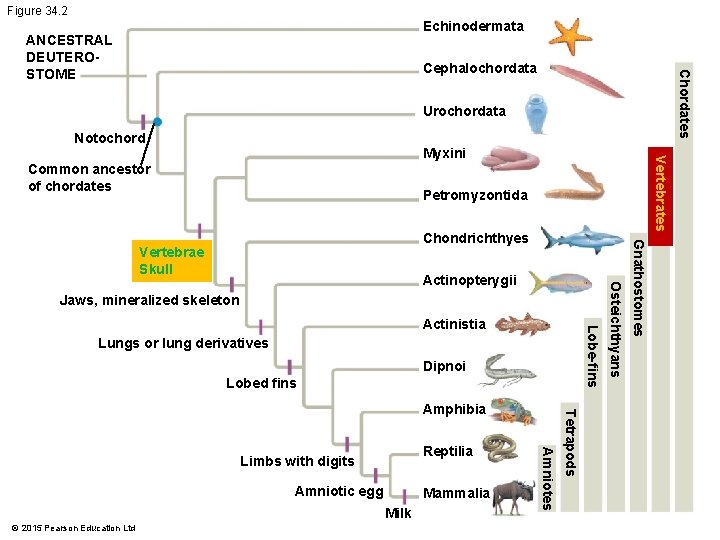
Figure 34. 2 Echinodermata ANCESTRAL DEUTEROSTOME Chordates Cephalochordata Urochordata Notochord Common ancestor of chordates Vertebrates Myxini Petromyzontida Vertebrae Skull Jaws, mineralized skeleton Lobe-fins Actinistia Lungs or lung derivatives Dipnoi Lobed fins Amniotic egg Mammalia Milk © 2015 Pearson Education Ltd Amniotes Reptilia Limbs with digits Tetrapods Amphibia Osteichthyans Actinopterygii Gnathostomes Chondrichthyes
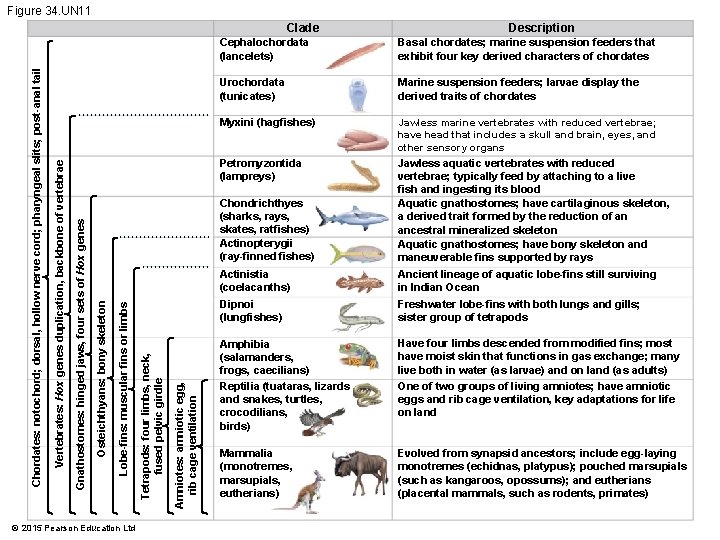
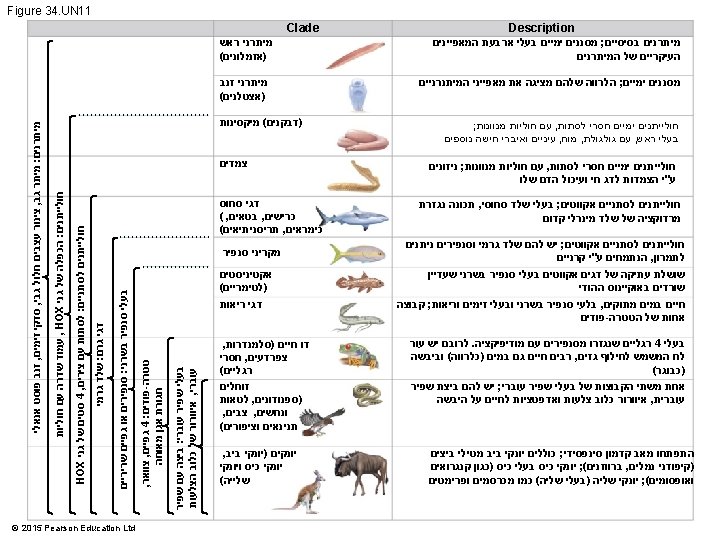
Figure 34. UN 11 Urochordata (tunicates) Marine suspension feeders; larvae display the derived traits of chordates Myxini (hagfishes) Jawless marine vertebrates with reduced vertebrae; have head that includes a skull and brain, eyes, and other sensory organs Jawless aquatic vertebrates with reduced vertebrae; typically feed by attaching to a live fish and ingesting its blood Aquatic gnathostomes; have cartilaginous skeleton, a derived trait formed by the reduction of an ancestral mineralized skeleton Aquatic gnathostomes; have bony skeleton and maneuverable fins supported by rays Chondrichthyes (sharks, rays, skates, ratfishes) Actinopterygii (ray-finned fishes) Amniotes: amniotic egg, rib cage ventilation Dipnoi (lungfishes) Tetrapods: four limbs, neck, fused pelvic girdle Lobe-fins: muscular fins or limbs Osteichthyans: bony skeleton Actinistia (coelacanths) © 2015 Pearson Education Ltd Description Basal chordates; marine suspension feeders that exhibit four key derived characters of chordates Petromyzontida (lampreys) Gnathostomes: hinged jaws, four sets of Hox genes Vertebrates: Hox genes duplication, backbone of vertebrae Chordates: notochord; dorsal, hollow nerve cord; pharyngeal slits; post-anal tail Clade Cephalochordata (lancelets) Ancient lineage of aquatic lobe-fins still surviving in Indian Ocean Freshwater lobe-fins with both lungs and gills; sister group of tetrapods Amphibia (salamanders, frogs, caecilians) Reptilia (tuataras, lizards and snakes, turtles, crocodilians, birds) Have four limbs descended from modified fins; most have moist skin that functions in gas exchange; many live both in water (as larvae) and on land (as adults) One of two groups of living amniotes; have amniotic eggs and rib cage ventilation, key adaptations for life on land Mammalia (monotremes, marsupials, eutherians) Evolved from synapsid ancestors; include egg-laying monotremes (echidnas, platypus); pouched marsupials (such as kangaroos, opossums); and eutherians (placental mammals, such as rodents, primates)
- Slides: 39