
Biology 484 Ethology Chapter 4 b Neural Mechanisms
Biology 484 – Ethology Chapter 4 b – Neural Mechanisms Controlling Behavior
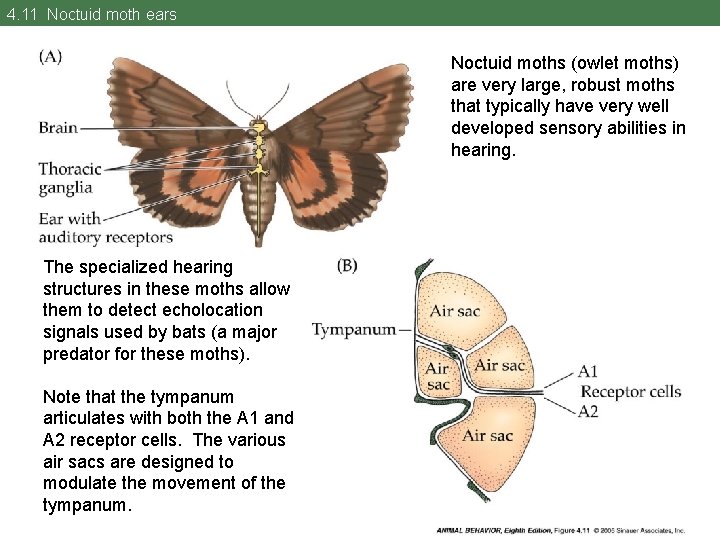
4. 11 Noctuid moth ears Noctuid moths (owlet moths) are very large, robust moths that typically have very well developed sensory abilities in hearing. The specialized hearing structures in these moths allow them to detect echolocation signals used by bats (a major predator for these moths). Note that the tympanum articulates with both the A 1 and A 2 receptor cells. The various air sacs are designed to modulate the movement of the tympanum.
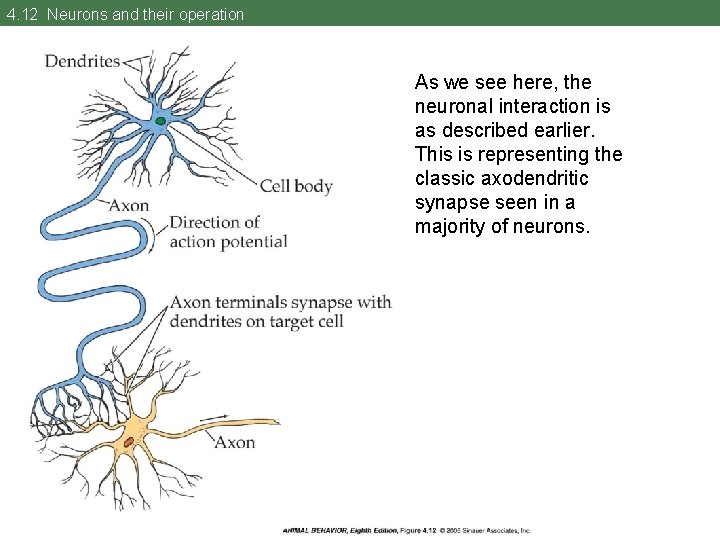
4. 12 Neurons and their operation As we see here, the neuronal interaction is as described earlier. This is representing the classic axodendritic synapse seen in a majority of neurons.
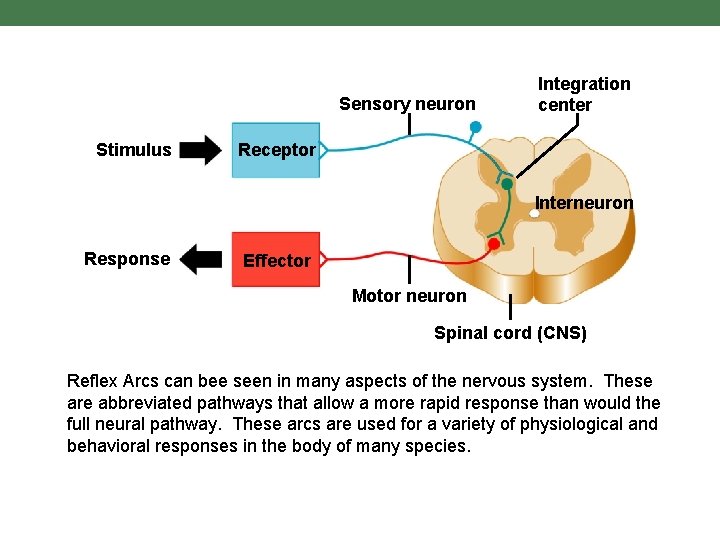
Sensory neuron Stimulus Integration center Receptor Interneuron Response Effector Motor neuron Spinal cord (CNS) Reflex Arcs can bee seen in many aspects of the nervous system. These are abbreviated pathways that allow a more rapid response than would the full neural pathway. These arcs are used for a variety of physiological and behavioral responses in the body of many species.
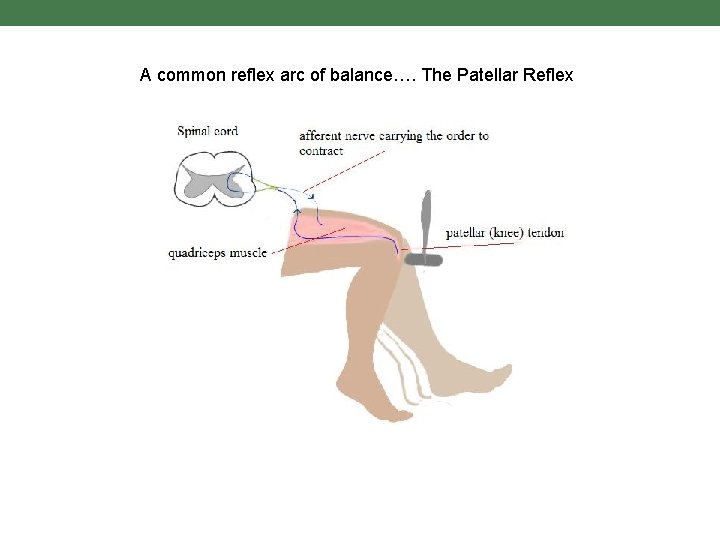
A common reflex arc of balance…. The Patellar Reflex

The Babinski (Plantar) Reflex which is closely related to the Crossed- Extensor Reflex.

The Achillies Reflex

The Crossed Extensor Reflex - a withdrawal reflex that occurs when the flexors in the withdrawing limb contract and the extensors relax, while in the other limb, the opposite occurs. The crossed extensor reflex is contralateral, meaning the reflex occurs on the opposite side of the body from the stimulus. This reflex also occurs in the forlimbs (arms). Thought Question…. From a behavioral perspective, can you think of some broader uses for this reflex, especially for quadrapeds?
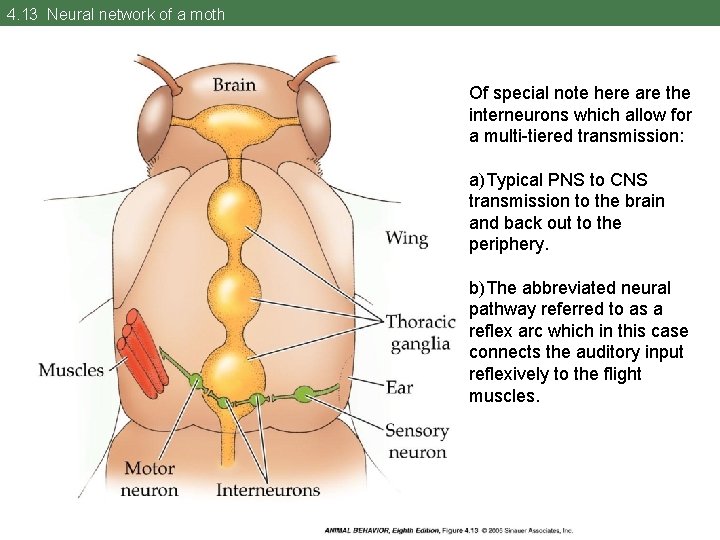
4. 13 Neural network of a moth Of special note here are the interneurons which allow for a multi-tiered transmission: a)Typical PNS to CNS transmission to the brain and back out to the periphery. b)The abbreviated neural pathway referred to as a reflex arc which in this case connects the auditory input reflexively to the flight muscles.
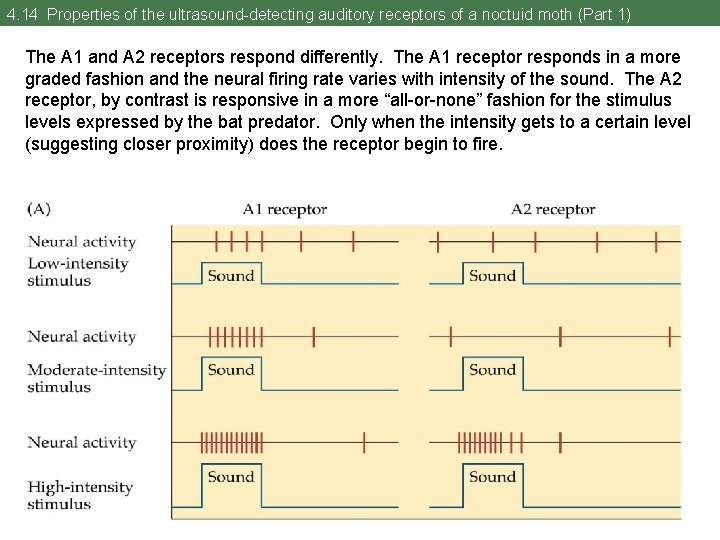
4. 14 Properties of the ultrasound-detecting auditory receptors of a noctuid moth (Part 1) The A 1 and A 2 receptors respond differently. The A 1 receptor responds in a more graded fashion and the neural firing rate varies with intensity of the sound. The A 2 receptor, by contrast is responsive in a more “all-or-none” fashion for the stimulus levels expressed by the bat predator. Only when the intensity gets to a certain level (suggesting closer proximity) does the receptor begin to fire.
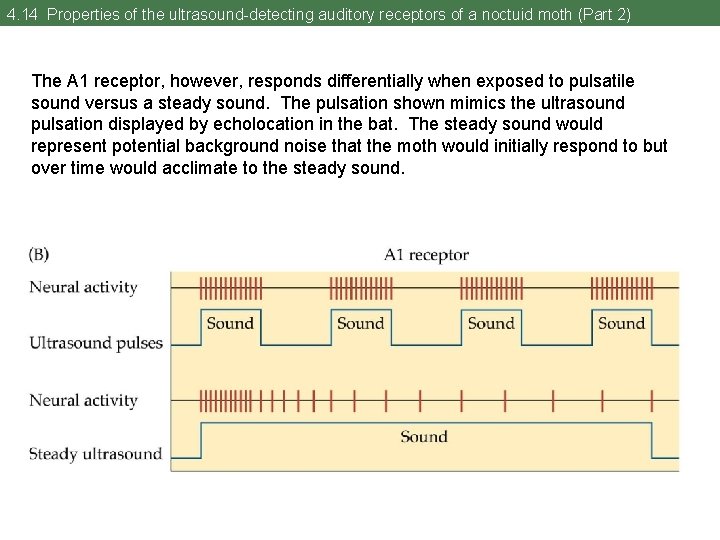
4. 14 Properties of the ultrasound-detecting auditory receptors of a noctuid moth (Part 2) The A 1 receptor, however, responds differentially when exposed to pulsatile sound versus a steady sound. The pulsation shown mimics the ultrasound pulsation displayed by echolocation in the bat. The steady sound would represent potential background noise that the moth would initially respond to but over time would acclimate to the steady sound.
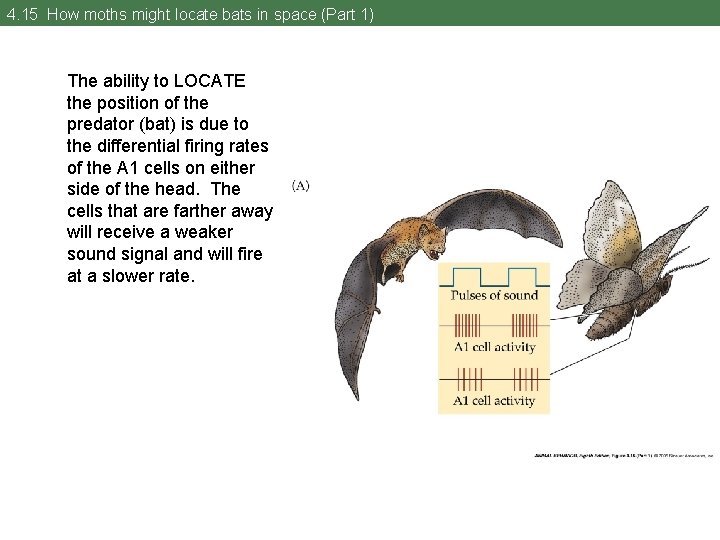
4. 15 How moths might locate bats in space (Part 1) The ability to LOCATE the position of the predator (bat) is due to the differential firing rates of the A 1 cells on either side of the head. The cells that are farther away will receive a weaker sound signal and will fire at a slower rate.
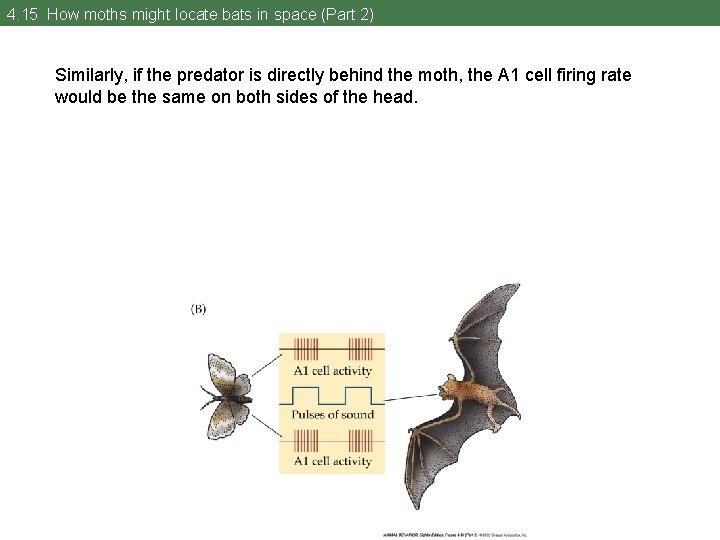
4. 15 How moths might locate bats in space (Part 2) Similarly, if the predator is directly behind the moth, the A 1 cell firing rate would be the same on both sides of the head.
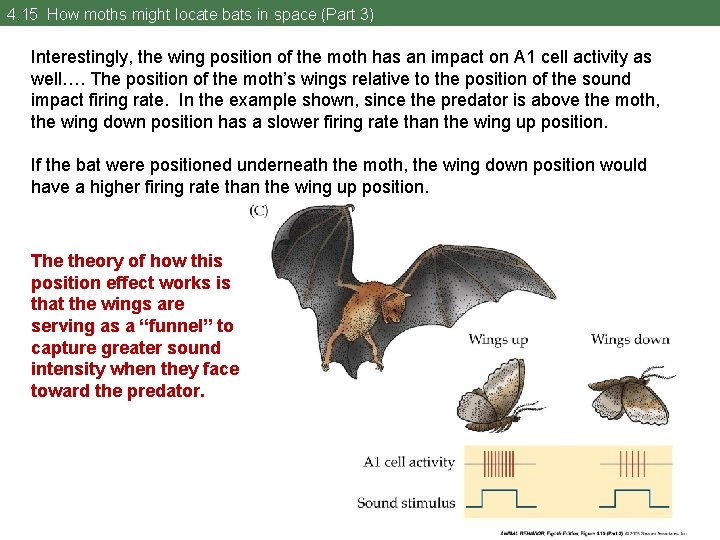
4. 15 How moths might locate bats in space (Part 3) Interestingly, the wing position of the moth has an impact on A 1 cell activity as well…. The position of the moth’s wings relative to the position of the sound impact firing rate. In the example shown, since the predator is above the moth, the wing down position has a slower firing rate than the wing up position. If the bat were positioned underneath the moth, the wing down position would have a higher firing rate than the wing up position. The theory of how this position effect works is that the wings are serving as a “funnel” to capture greater sound intensity when they face toward the predator.
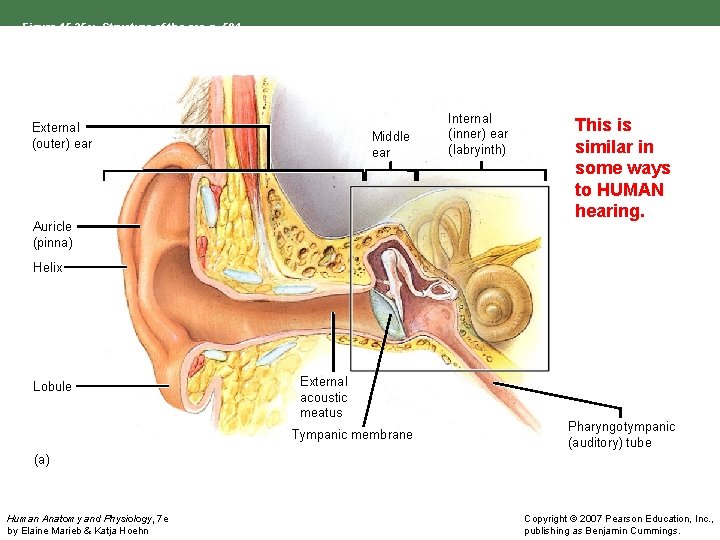
Figure 15. 25 a: Structure of the ear, p. 584. External (outer) ear Middle ear Auricle (pinna) Internal (inner) ear (labryinth) This is similar in some ways to HUMAN hearing. Helix Lobule External acoustic meatus Tympanic membrane Pharyngotympanic (auditory) tube (a) Human Anatomy and Physiology, 7 e by Elaine Marieb & Katja Hoehn Copyright © 2007 Pearson Education, Inc. , publishing as Benjamin Cummings.
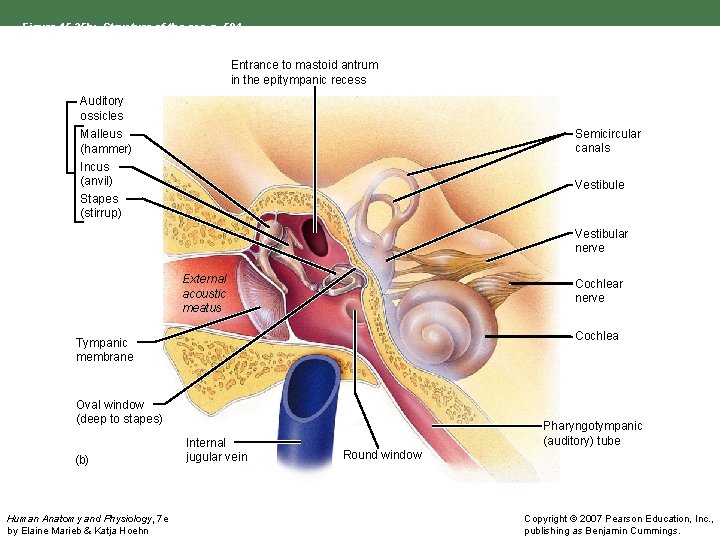
Figure 15. 25 b: Structure of the ear, p. 584. Entrance to mastoid antrum in the epitympanic recess Auditory ossicles Semicircular canals Malleus (hammer) Incus (anvil) Stapes (stirrup) Vestibule Vestibular nerve External acoustic meatus Cochlear nerve Cochlea Tympanic membrane Oval window (deep to stapes) (b) Human Anatomy and Physiology, 7 e by Elaine Marieb & Katja Hoehn Internal jugular vein Pharyngotympanic (auditory) tube Round window Copyright © 2007 Pearson Education, Inc. , publishing as Benjamin Cummings.
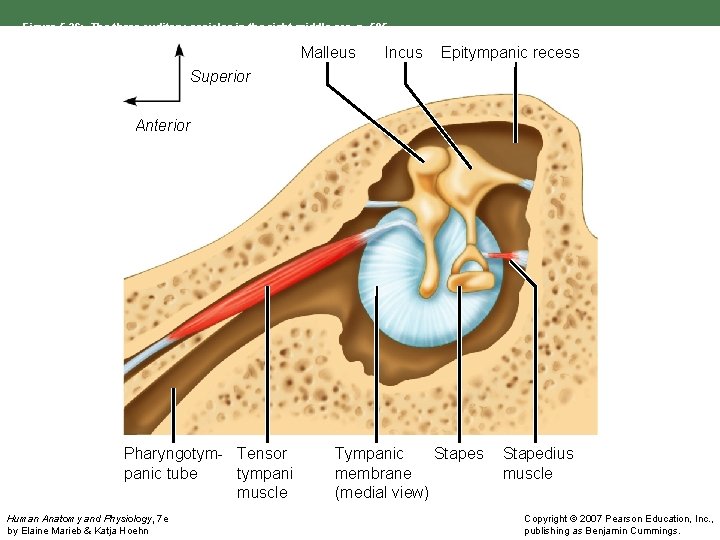
Figure 5. 26: The three auditory ossicles in the right middle ear, p. 585. Malleus Incus Epitympanic recess Superior Anterior Pharyngotym- Tensor panic tube tympani muscle Human Anatomy and Physiology, 7 e by Elaine Marieb & Katja Hoehn Tympanic Stapes membrane (medial view) Stapedius muscle Copyright © 2007 Pearson Education, Inc. , publishing as Benjamin Cummings.
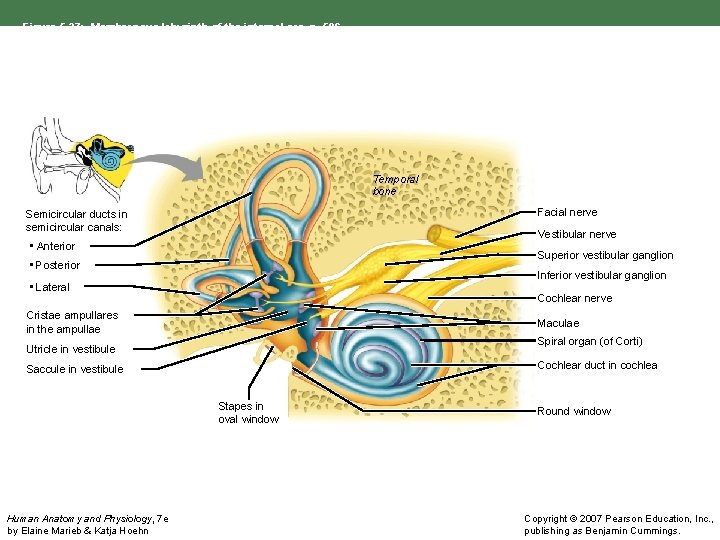
Figure 5. 27: Membranous labyrinth of the internal ear, p. 586. Temporal bone Facial nerve Semicircular ducts in semicircular canals: Vestibular nerve • Anterior Superior vestibular ganglion • Posterior Inferior vestibular ganglion • Lateral Cochlear nerve Cristae ampullares in the ampullae Maculae Spiral organ (of Corti) Utricle in vestibule Cochlear duct in cochlea Saccule in vestibule Stapes in oval window Human Anatomy and Physiology, 7 e by Elaine Marieb & Katja Hoehn Round window Copyright © 2007 Pearson Education, Inc. , publishing as Benjamin Cummings.
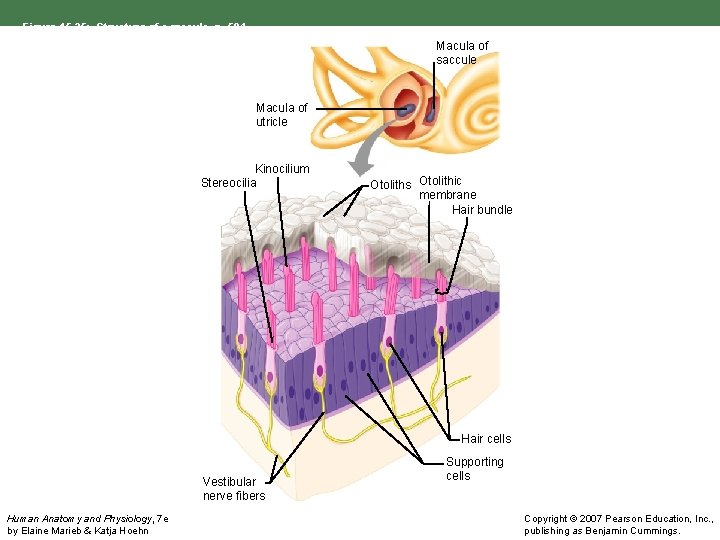
Figure 15. 35: Structure of a macula, p. 594. Macula of saccule Macula of utricle Kinocilium Stereocilia Otoliths Otolithic membrane Hair bundle Hair cells Vestibular nerve fibers Human Anatomy and Physiology, 7 e by Elaine Marieb & Katja Hoehn Supporting cells Copyright © 2007 Pearson Education, Inc. , publishing as Benjamin Cummings.
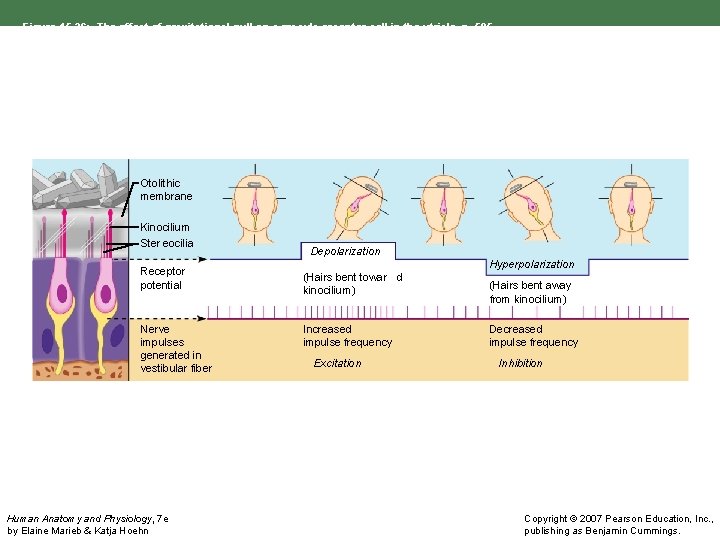
Figure 15. 36: The effect of gravitational pull on a macula receptor cell in the utricle, p. 595. Otolithic membrane Kinocilium Ster eocilia Depolarization Receptor potential (Hairs bent towar d kinocilium) Nerve impulses generated in vestibular fiber Increased impulse frequency Human Anatomy and Physiology, 7 e by Elaine Marieb & Katja Hoehn Excitation Hyperpolarization (Hairs bent away from kinocilium) Decreased impulse frequency Inhibition Copyright © 2007 Pearson Education, Inc. , publishing as Benjamin Cummings.
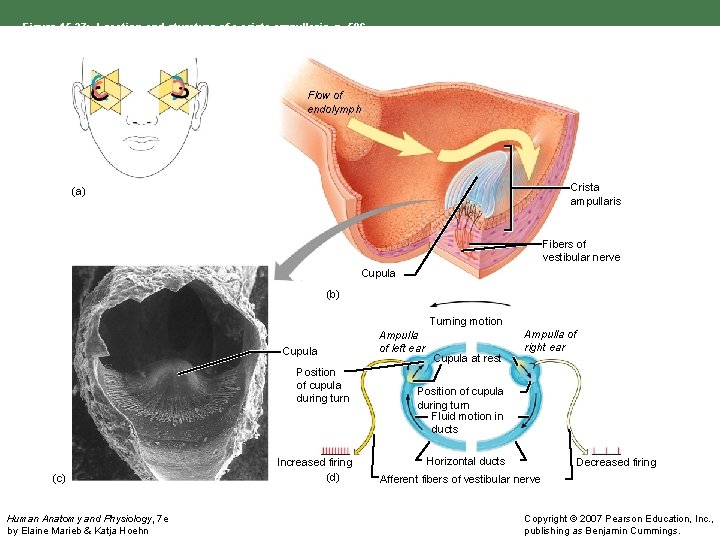
Figure 15. 37: Location and sturcture of a crista ampullaris, p. 596. Flow of endolymph Crista ampullaris (a) Fibers of vestibular nerve Cupula (b) Turning motion Cupula Position of cupula during turn (c) Human Anatomy and Physiology, 7 e by Elaine Marieb & Katja Hoehn Increased firing (d) Ampulla of left ear Cupula at rest Ampulla of right ear Position of cupula during turn Fluid motion in ducts Horizontal ducts Decreased firing Afferent fibers of vestibular nerve Copyright © 2007 Pearson Education, Inc. , publishing as Benjamin Cummings.
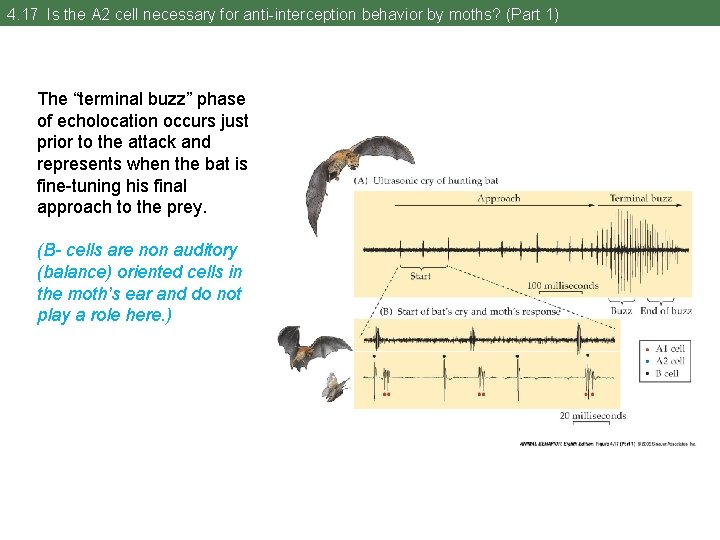
4. 17 Is the A 2 cell necessary for anti-interception behavior by moths? (Part 1) The “terminal buzz” phase of echolocation occurs just prior to the attack and represents when the bat is fine-tuning his final approach to the prey. (B- cells are non auditory (balance) oriented cells in the moth’s ear and do not play a role here. )
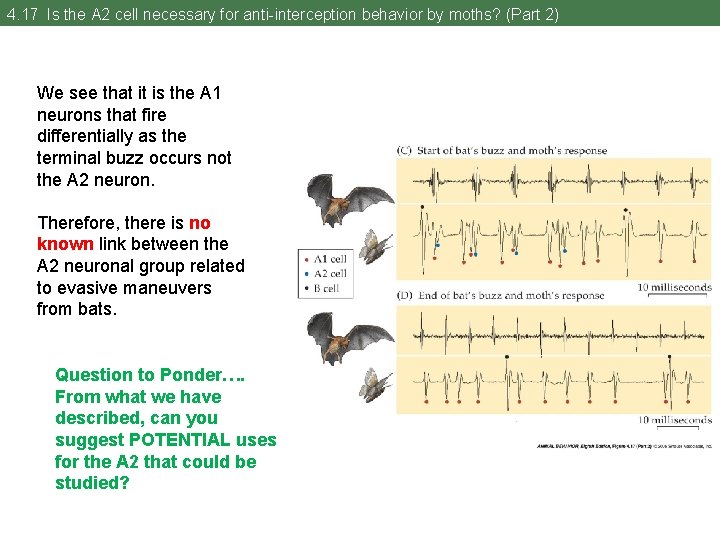
4. 17 Is the A 2 cell necessary for anti-interception behavior by moths? (Part 2) We see that it is the A 1 neurons that fire differentially as the terminal buzz occurs not the A 2 neuron. Therefore, there is no known link between the A 2 neuronal group related to evasive maneuvers from bats. Question to Ponder…. From what we have described, can you suggest POTENTIAL uses for the A 2 that could be studied?
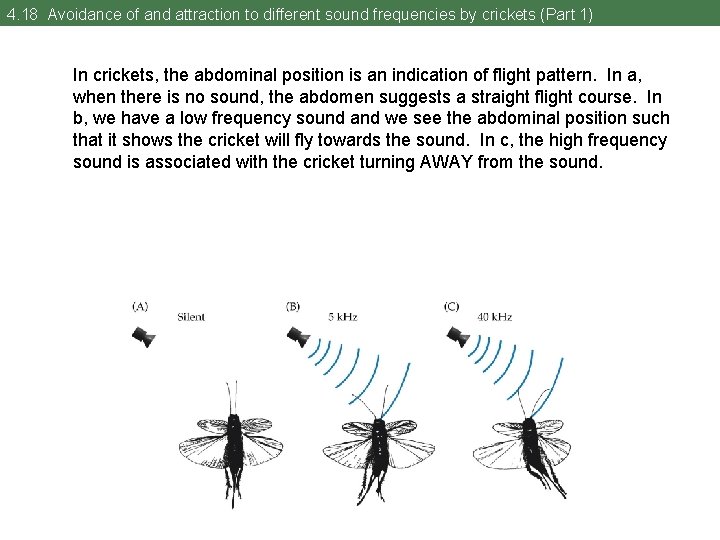
4. 18 Avoidance of and attraction to different sound frequencies by crickets (Part 1) In crickets, the abdominal position is an indication of flight pattern. In a, when there is no sound, the abdomen suggests a straight flight course. In b, we have a low frequency sound and we see the abdominal position such that it shows the cricket will fly towards the sound. In c, the high frequency sound is associated with the cricket turning AWAY from the sound.
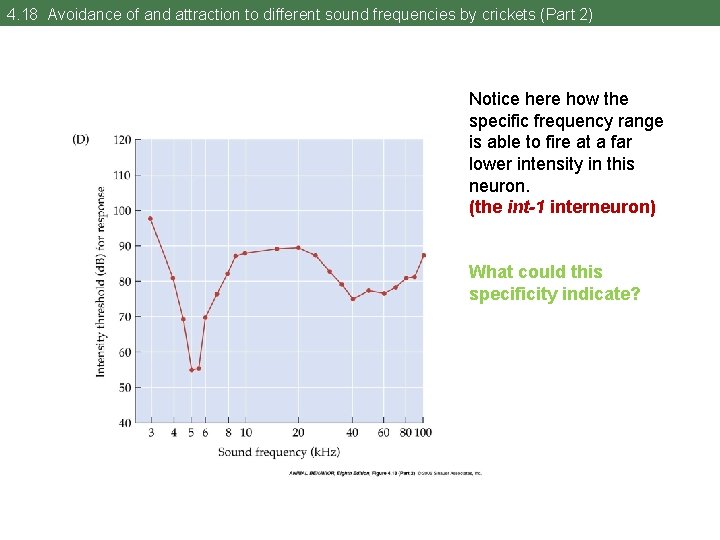
4. 18 Avoidance of and attraction to different sound frequencies by crickets (Part 2) Notice here how the specific frequency range is able to fire at a far lower intensity in this neuron. (the int-1 interneuron) What could this specificity indicate?
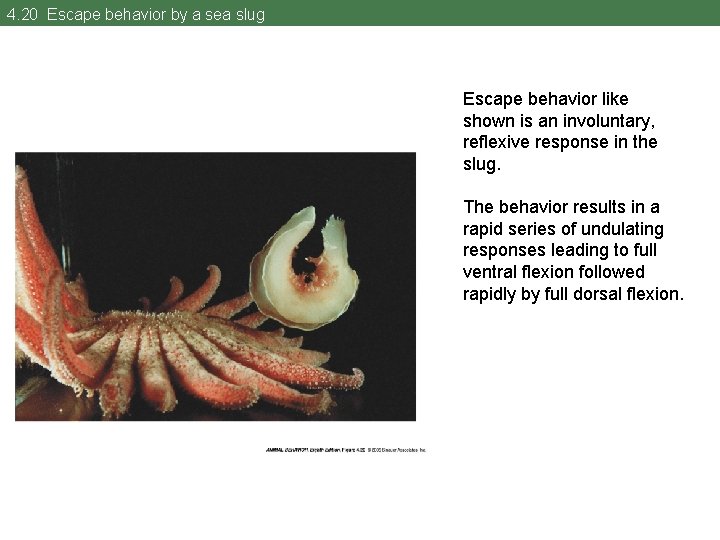
4. 20 Escape behavior by a sea slug Escape behavior like shown is an involuntary, reflexive response in the slug. The behavior results in a rapid series of undulating responses leading to full ventral flexion followed rapidly by full dorsal flexion.
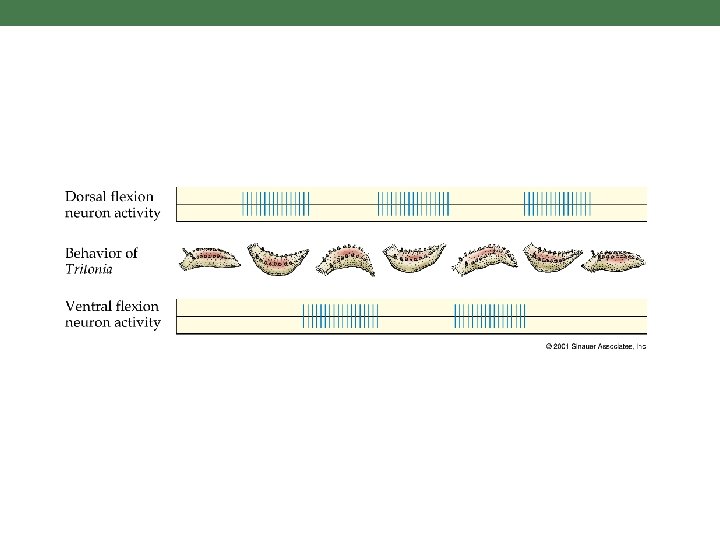
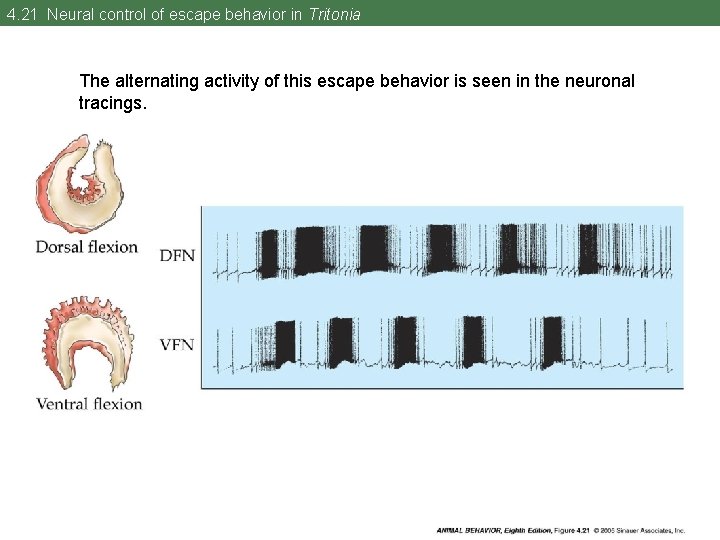
4. 21 Neural control of escape behavior in Tritonia The alternating activity of this escape behavior is seen in the neuronal tracings.
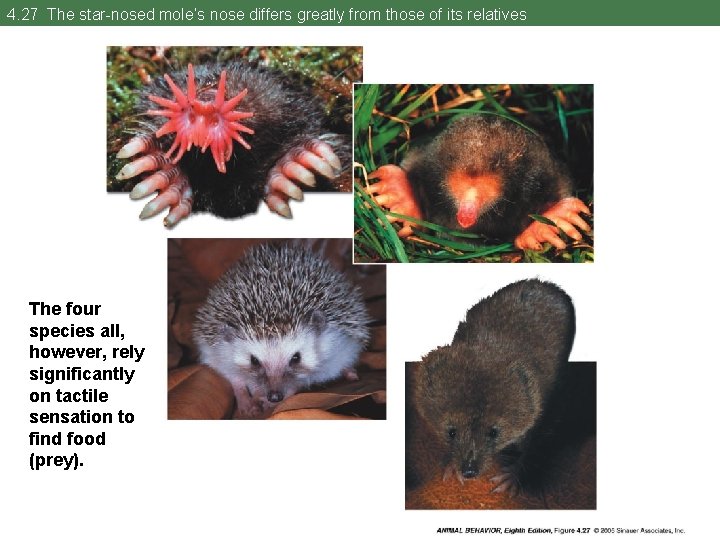
4. 27 The star-nosed mole’s nose differs greatly from those of its relatives The four species all, however, rely significantly on tactile sensation to find food (prey).
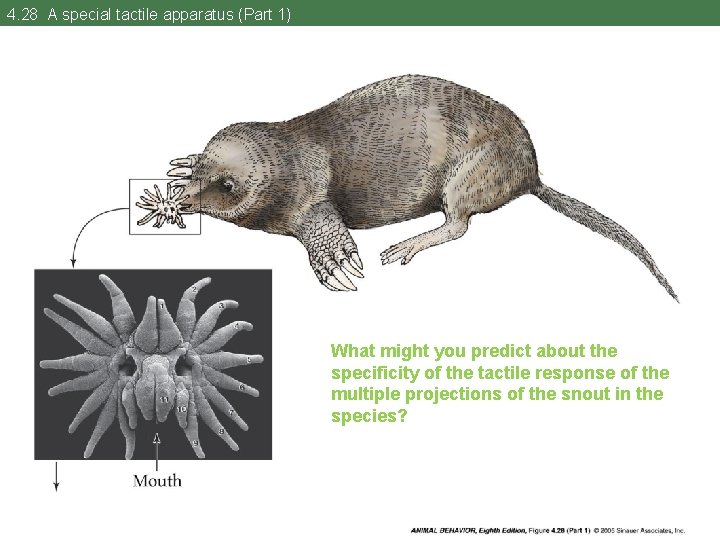
4. 28 A special tactile apparatus (Part 1) What might you predict about the specificity of the tactile response of the multiple projections of the snout in the species?
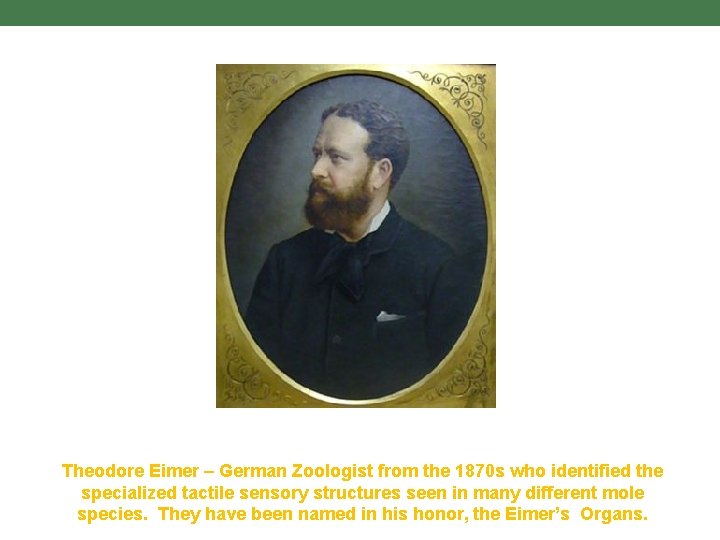
Theodore Eimer – German Zoologist from the 1870 s who identified the specialized tactile sensory structures seen in many different mole species. They have been named in his honor, the Eimer’s Organs.
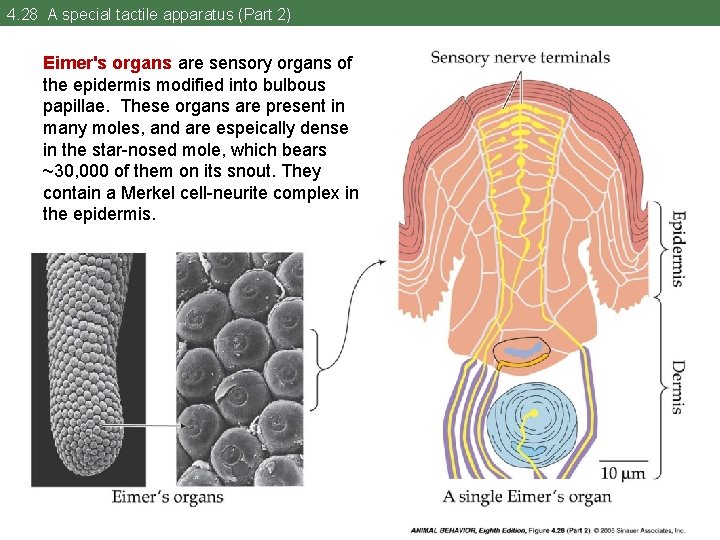
4. 28 A special tactile apparatus (Part 2) Eimer's organs are sensory organs of the epidermis modified into bulbous papillae. These organs are present in many moles, and are espeically dense in the star-nosed mole, which bears ~30, 000 of them on its snout. They contain a Merkel cell-neurite complex in the epidermis.
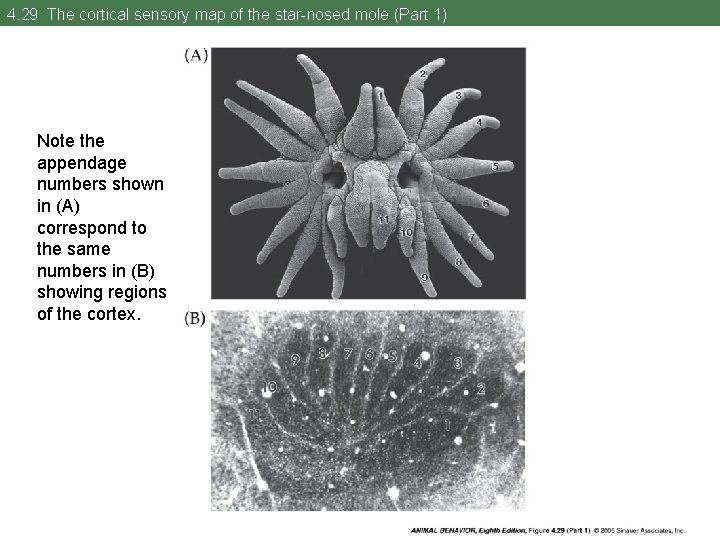
4. 29 The cortical sensory map of the star-nosed mole (Part 1) Note the appendage numbers shown in (A) correspond to the same numbers in (B) showing regions of the cortex.
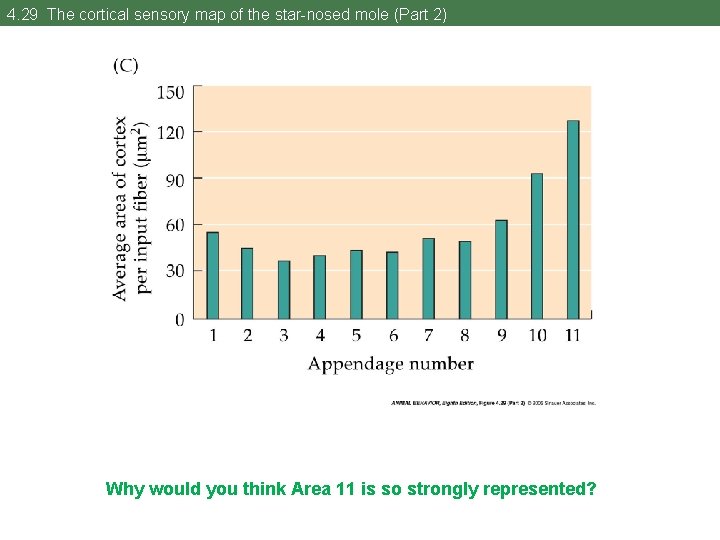
4. 29 The cortical sensory map of the star-nosed mole (Part 2) Why would you think Area 11 is so strongly represented?
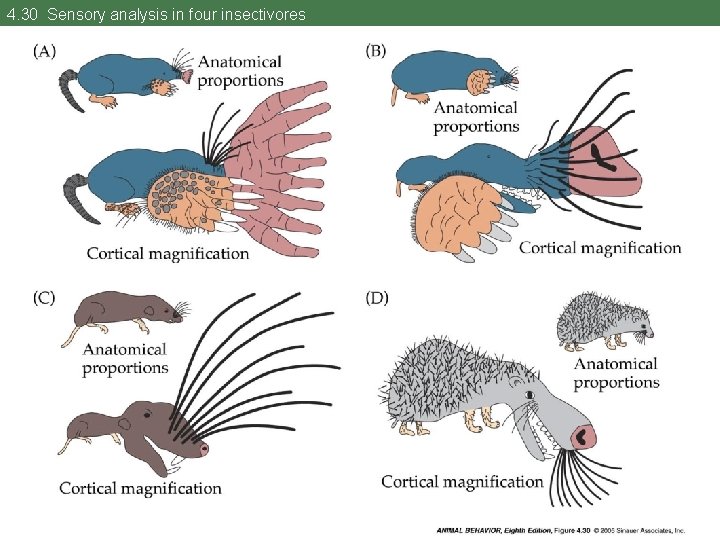
4. 30 Sensory analysis in four insectivores
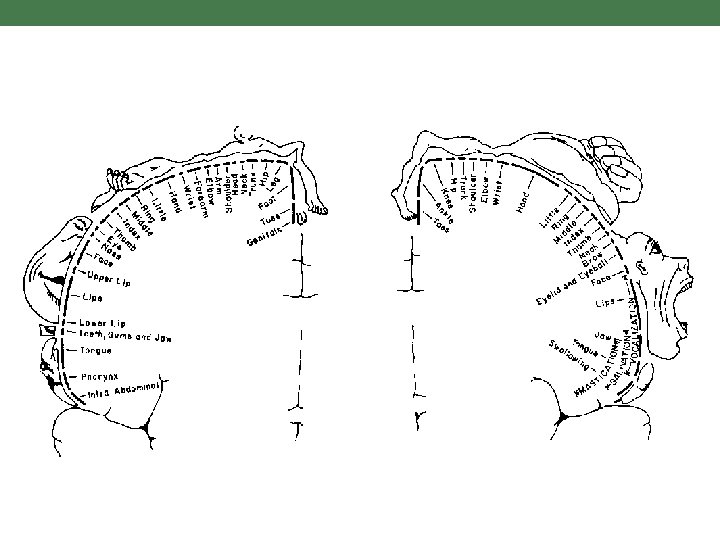
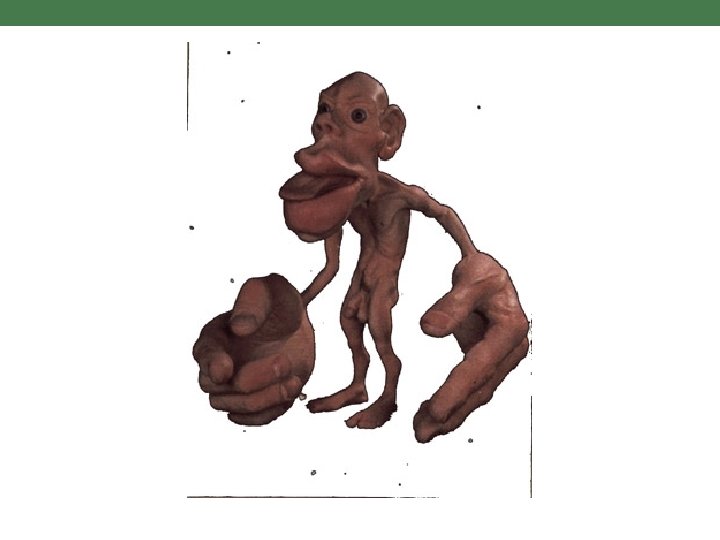
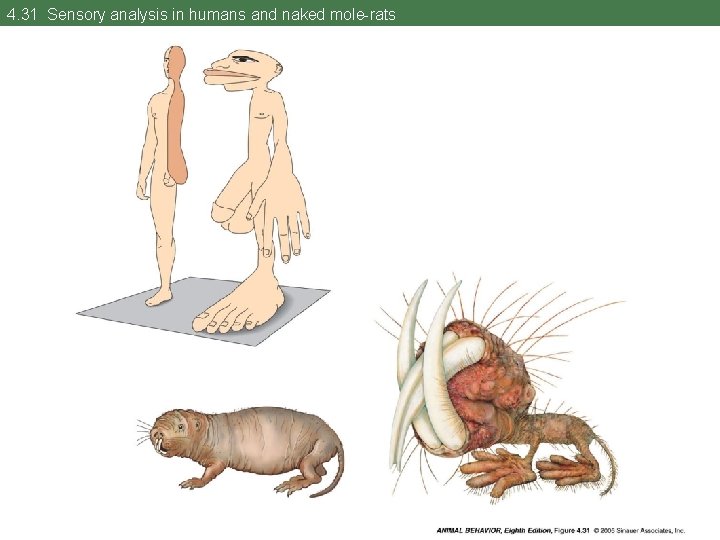
4. 31 Sensory analysis in humans and naked mole-rats
- Slides: 38