
BIOLOGY 30 Unit 3B Reproduction and Development Day
BIOLOGY 30 Unit 3/B: Reproduction and Development Day 1: Male Reproductive System (Structures and Functions) Female Reproductive System (Structures and Functions) Sperm and Egg

Sexual Reproduction l l l Sexual reproduction occurs in eukaryotic organisms l not part of the protist kingdom Needs two gametes; egg and sperm Way of creating variation through new gene combinations Variation allows for species to better adapt to the environment, thus allow species to proliferate Sperm and egg are referred to as gametes A zygote is a fertilized ( F!) egg
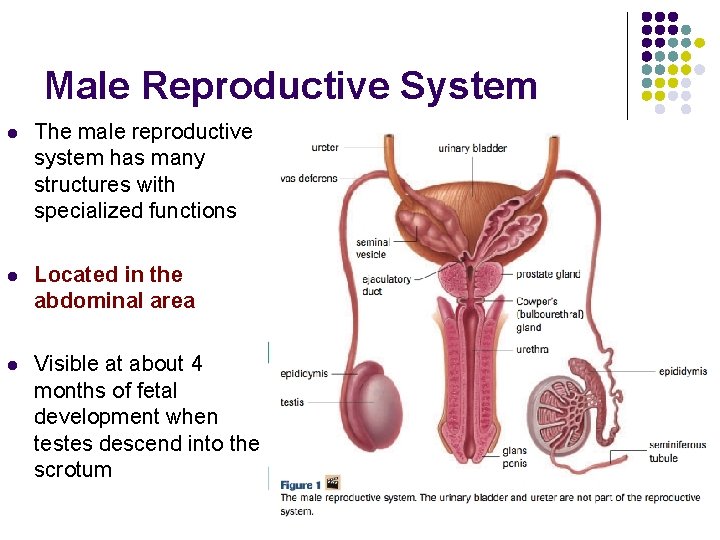
Male Reproductive System l The male reproductive system has many structures with specialized functions l Located in the abdominal area l Visible at about 4 months of fetal development when testes descend into the scrotum
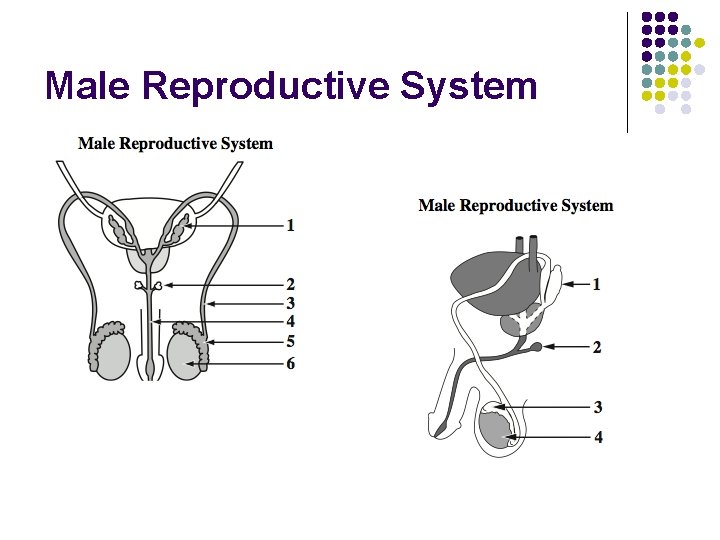
Male Reproductive System
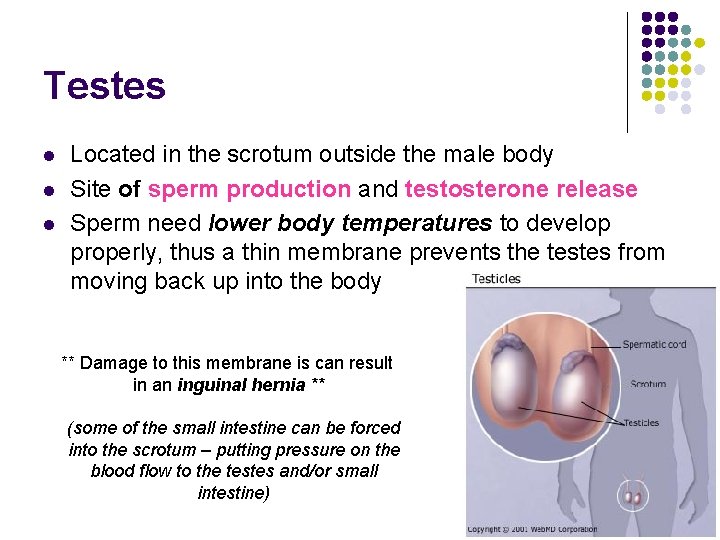
Testes l l l Located in the scrotum outside the male body Site of sperm production and testosterone release Sperm need lower body temperatures to develop properly, thus a thin membrane prevents the testes from moving back up into the body ** Damage to this membrane is can result in an inguinal hernia ** (some of the small intestine can be forced into the scrotum – putting pressure on the blood flow to the testes and/or small intestine)

Testicular Tissue
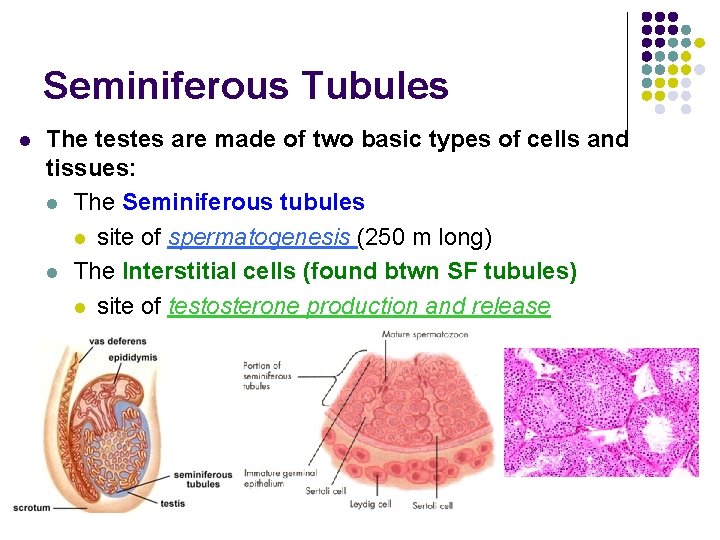
Seminiferous Tubules l The testes are made of two basic types of cells and tissues: l The Seminiferous tubules l site of spermatogenesis (250 m long) l The Interstitial cells (found btwn SF tubules) l site of testosterone production and release
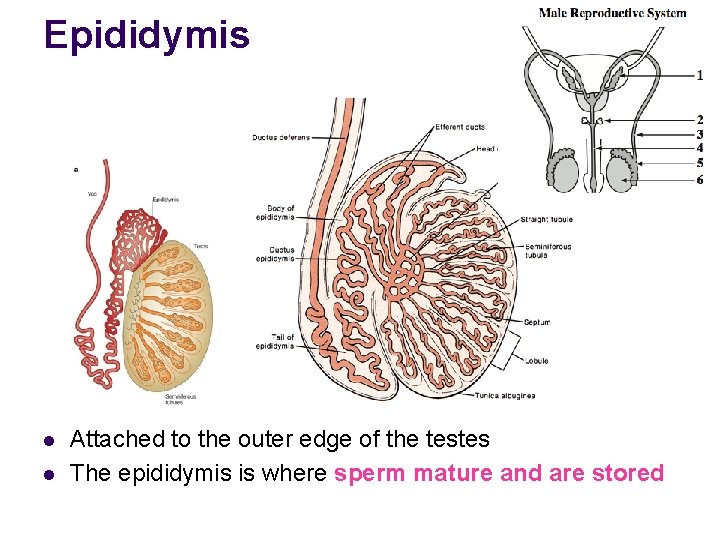
Epididymis l l Attached to the outer edge of the testes The epididymis is where sperm mature and are stored
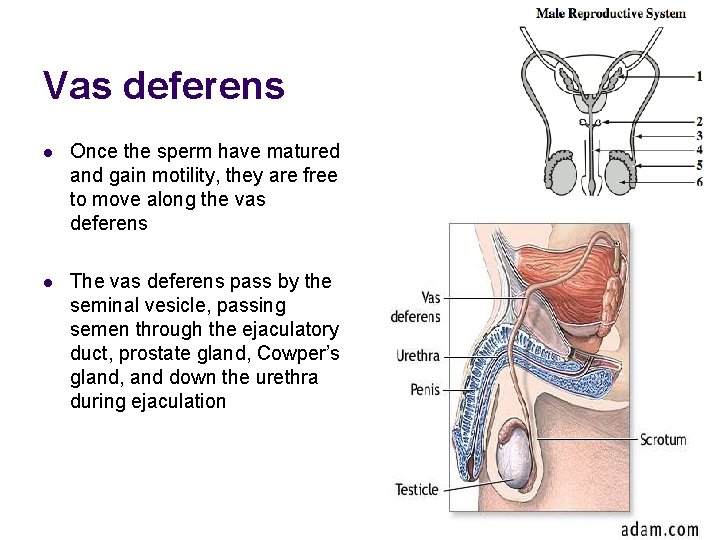
Vas deferens l Once the sperm have matured and gain motility, they are free to move along the vas deferens l The vas deferens pass by the seminal vesicle, passing semen through the ejaculatory duct, prostate gland, Cowper’s gland, and down the urethra during ejaculation
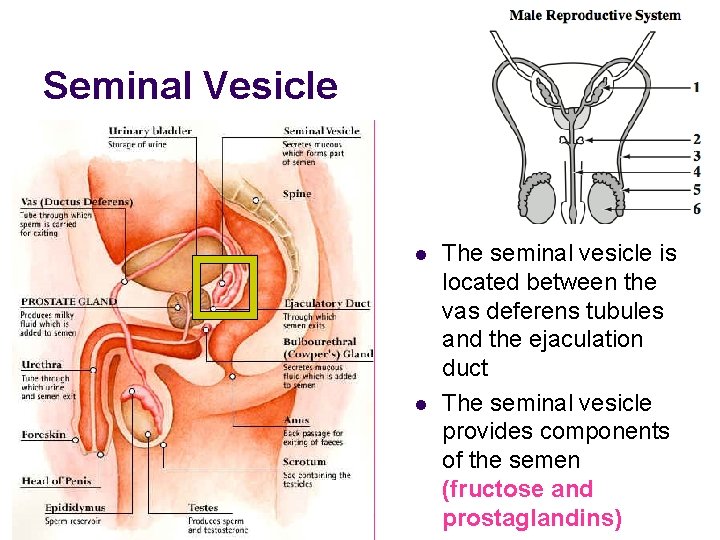
Seminal Vesicle l l The seminal vesicle is located between the vas deferens tubules and the ejaculation duct The seminal vesicle provides components of the semen (fructose and prostaglandins)
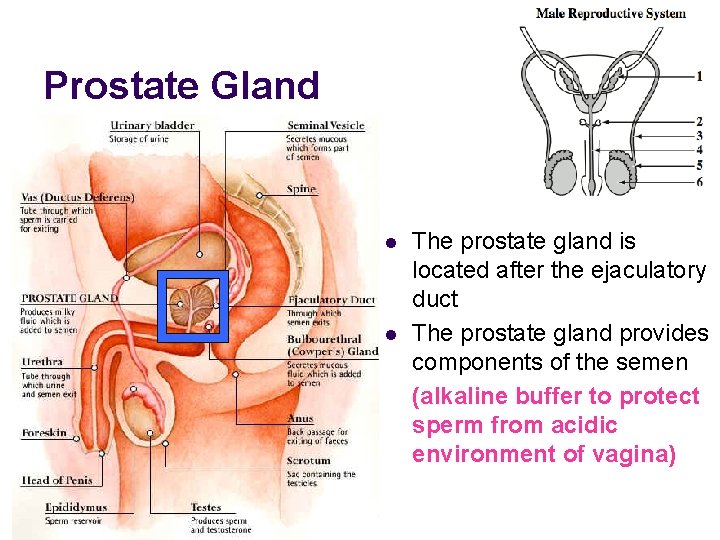
Prostate Gland l l The prostate gland is located after the ejaculatory duct The prostate gland provides components of the semen (alkaline buffer to protect sperm from acidic environment of vagina)
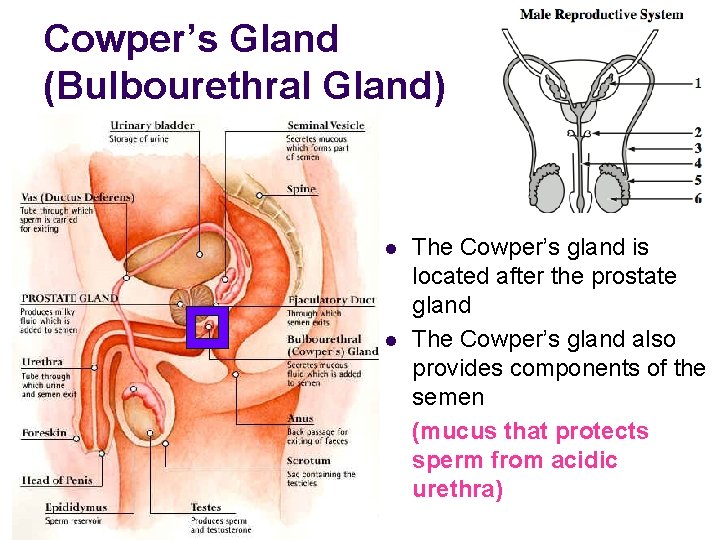
Cowper’s Gland (Bulbourethral Gland) l l The Cowper’s gland is located after the prostate gland The Cowper’s gland also provides components of the semen (mucus that protects sperm from acidic urethra)
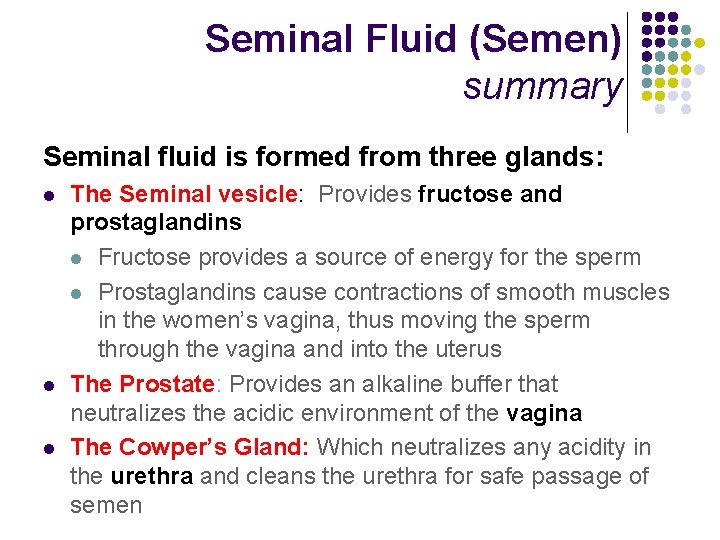
Seminal Fluid (Semen) summary Seminal fluid is formed from three glands: l l l The Seminal vesicle: Provides fructose and prostaglandins l Fructose provides a source of energy for the sperm l Prostaglandins cause contractions of smooth muscles in the women’s vagina, thus moving the sperm through the vagina and into the uterus The Prostate: Provides an alkaline buffer that neutralizes the acidic environment of the vagina The Cowper’s Gland: Which neutralizes any acidity in the urethra and cleans the urethra for safe passage of semen
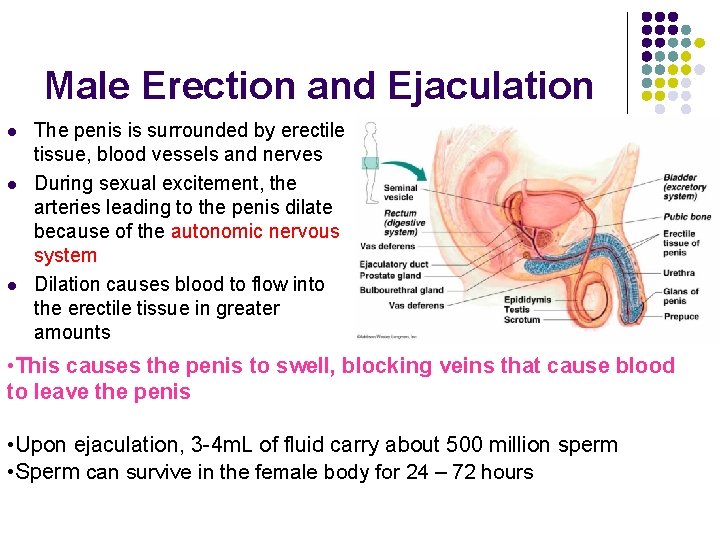
Male Erection and Ejaculation l l l The penis is surrounded by erectile tissue, blood vessels and nerves During sexual excitement, the arteries leading to the penis dilate because of the autonomic nervous system Dilation causes blood to flow into the erectile tissue in greater amounts • This causes the penis to swell, blocking veins that cause blood to leave the penis • Upon ejaculation, 3 -4 m. L of fluid carry about 500 million sperm • Sperm can survive in the female body for 24 – 72 hours
Female Reproductive System l l l Females, unlike males, only produce a gamete once every 28 days after the onset of puberty Hormone levels will fluctuate during a females complicated sex cycle (menstrual cycle) Females, at birth, have about 400 000 immature sex cells Only about 400 of those will develop into eggs The human ovum is about 100 000 times larger than a single sperm cell The reproductive life of a female ends when her ovaries no longer develop follicles and thus, no longer releases high levels of estrogen and progesterone
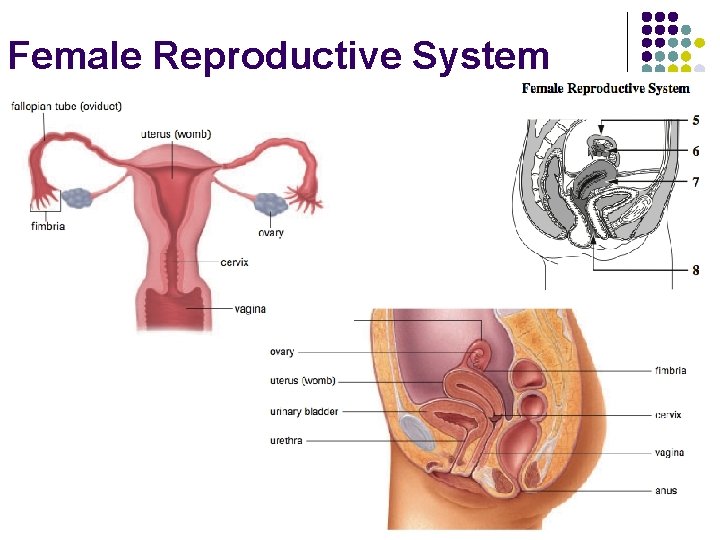
Female Reproductive System
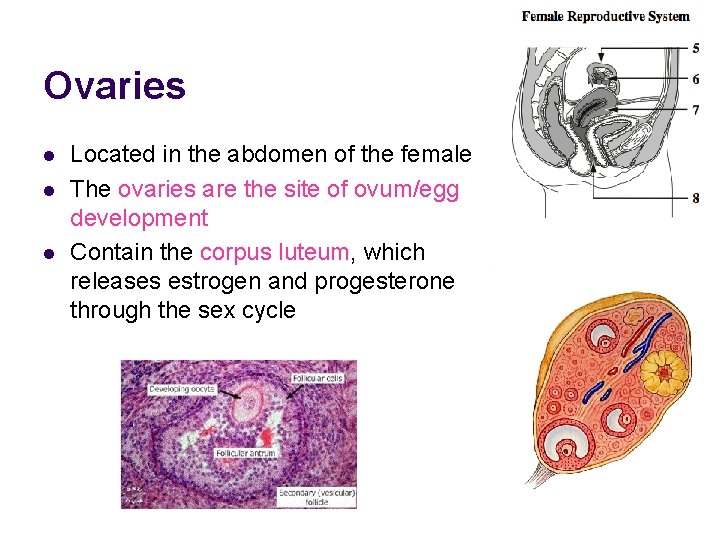
Ovaries l l l Located in the abdomen of the female The ovaries are the site of ovum/egg development Contain the corpus luteum, which releases estrogen and progesterone through the sex cycle
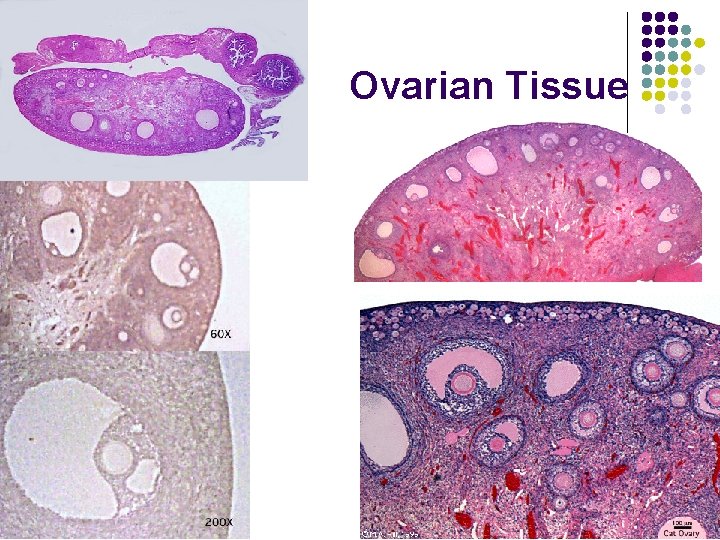
Ovarian Tissue
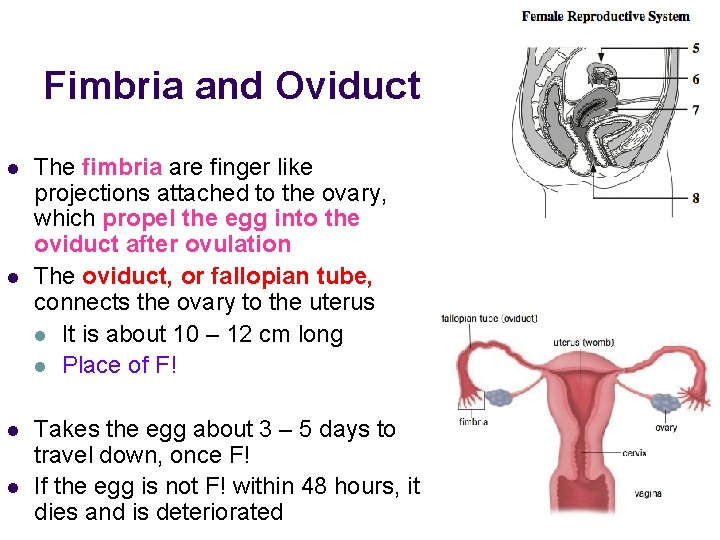
Fimbria and Oviduct l l The fimbria are finger like projections attached to the ovary, which propel the egg into the oviduct after ovulation The oviduct, or fallopian tube, connects the ovary to the uterus l It is about 10 – 12 cm long l Place of F! Takes the egg about 3 – 5 days to travel down, once F! If the egg is not F! within 48 hours, it dies and is deteriorated
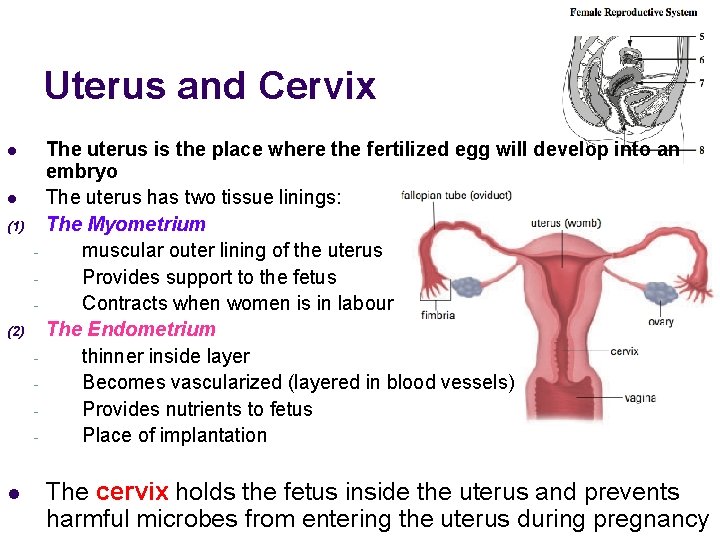
Uterus and Cervix l l (1) (2) - l The uterus is the place where the fertilized egg will develop into an embryo The uterus has two tissue linings: The Myometrium muscular outer lining of the uterus Provides support to the fetus Contracts when women is in labour The Endometrium thinner inside layer Becomes vascularized (layered in blood vessels) Provides nutrients to fetus Place of implantation The cervix holds the fetus inside the uterus and prevents harmful microbes from entering the uterus during pregnancy
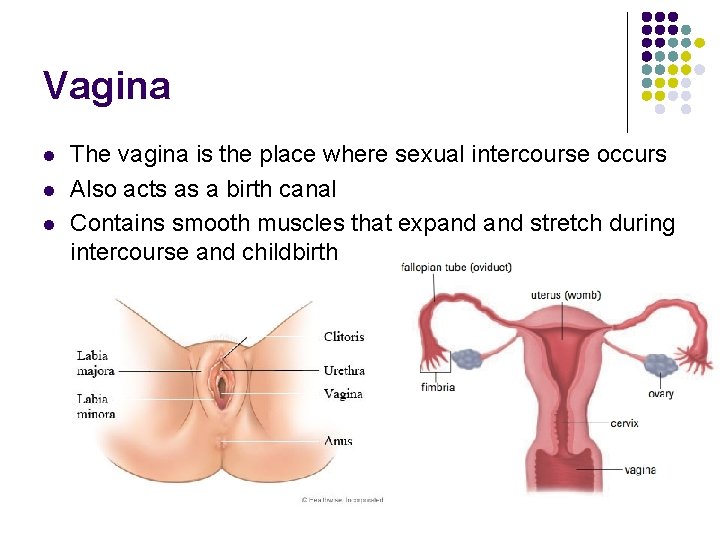
Vagina l l l The vagina is the place where sexual intercourse occurs Also acts as a birth canal Contains smooth muscles that expand stretch during intercourse and childbirth
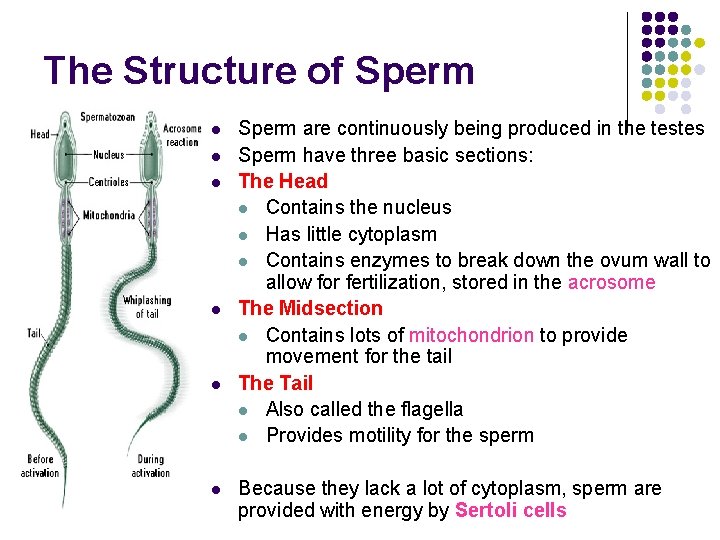
The Structure of Sperm l l l Sperm are continuously being produced in the testes Sperm have three basic sections: The Head l Contains the nucleus l Has little cytoplasm l Contains enzymes to break down the ovum wall to allow for fertilization, stored in the acrosome The Midsection l Contains lots of mitochondrion to provide movement for the tail The Tail l Also called the flagella l Provides motility for the sperm Because they lack a lot of cytoplasm, sperm are provided with energy by Sertoli cells
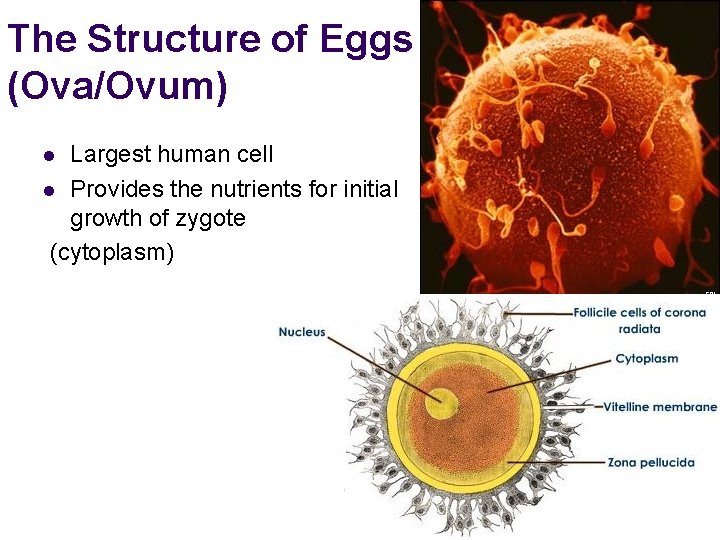
The Structure of Eggs (Ova/Ovum) Largest human cell l Provides the nutrients for initial growth of zygote (cytoplasm) l
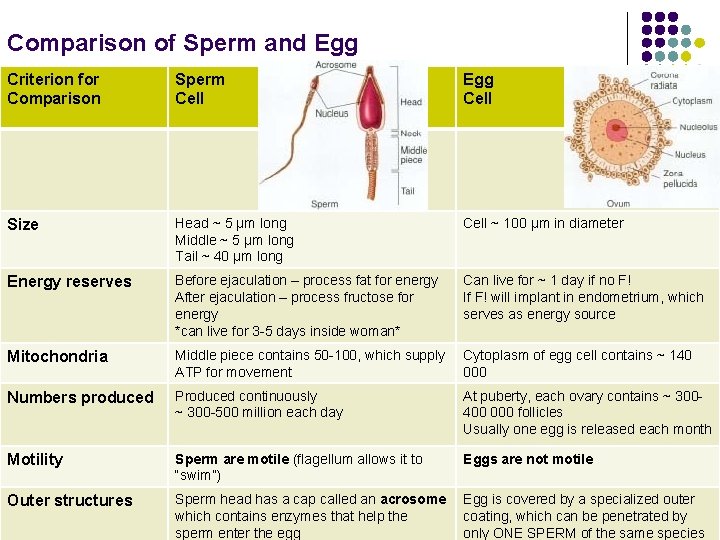
Comparison of Sperm and Egg Criterion for Comparison Sperm Cell Egg Cell Size Head ~ 5 μm long Middle ~ 5 μm long Tail ~ 40 μm long Cell ~ 100 μm in diameter Energy reserves Before ejaculation – process fat for energy After ejaculation – process fructose for energy *can live for 3 -5 days inside woman* Can live for ~ 1 day if no F! If F! will implant in endometrium, which serves as energy source Mitochondria Middle piece contains 50 -100, which supply ATP for movement Cytoplasm of egg cell contains ~ 140 000 Numbers produced Produced continuously ~ 300 -500 million each day At puberty, each ovary contains ~ 300400 000 follicles Usually one egg is released each month Motility Sperm are motile (flagellum allows it to “swim”) Eggs are not motile Outer structures Sperm head has a cap called an acrosome which contains enzymes that help the sperm enter the egg Egg is covered by a specialized outer coating, which can be penetrated by only ONE SPERM of the same species
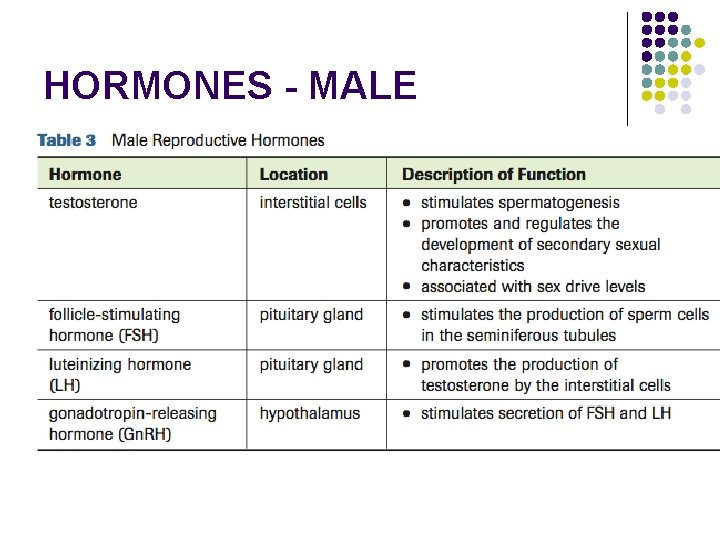
HORMONES - MALE
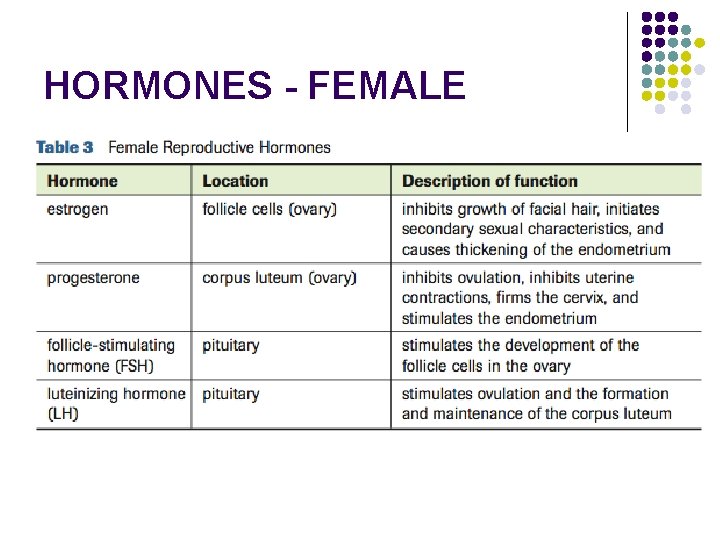
HORMONES - FEMALE
- Slides: 27