
BIOLOGY 2 E Chapter 11 MEIOSIS AND SEXUAL
BIOLOGY 2 E Chapter 11 MEIOSIS AND SEXUAL REPRODUCTION Power. Point Image Slideshow This work is licensed under a Creative Commons Attribution-Non. Commercial. Share. Alike 4. 0 International License.
11. 1 THE PROCESS OF MEIOSIS Reproduction Asexual reproduction • Produces genetically identical clones Sexual reproduction • combines cells (gametes) from two individuals (parents) through fertilization • genetic diversity is increased
11. 1 THE PROCESS OF MEIOSIS Sexual reproduction • The cells that make up the bodies of most plants and animals have two sets of chromosomes – One set from each parent, contributed through gametes – Diploid (2 n) • Meiosis reduces the number of chromosomes in gametes to avoid doubling in every generation – Occurs in reproductive tissues – Haploid (n)
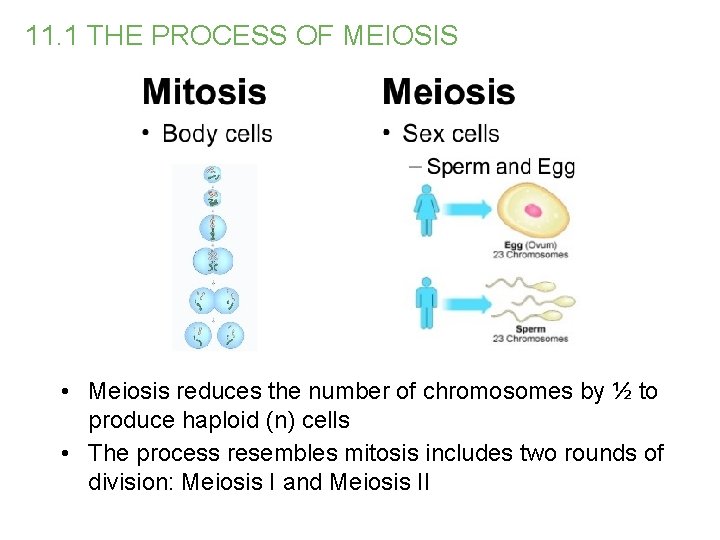
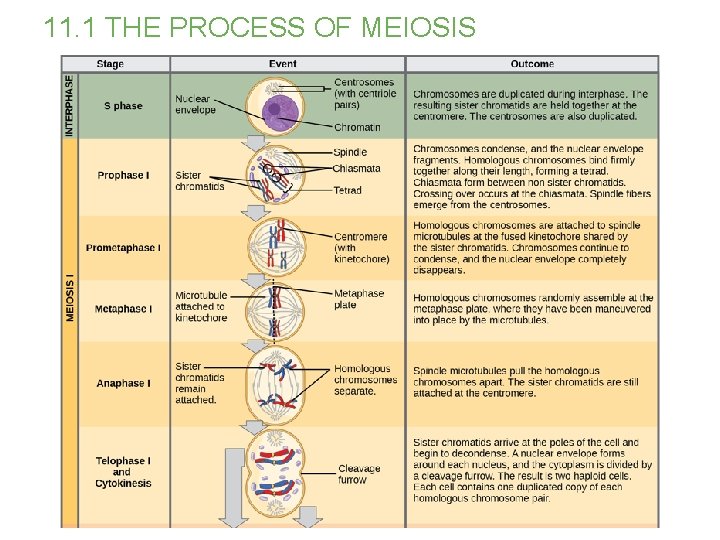
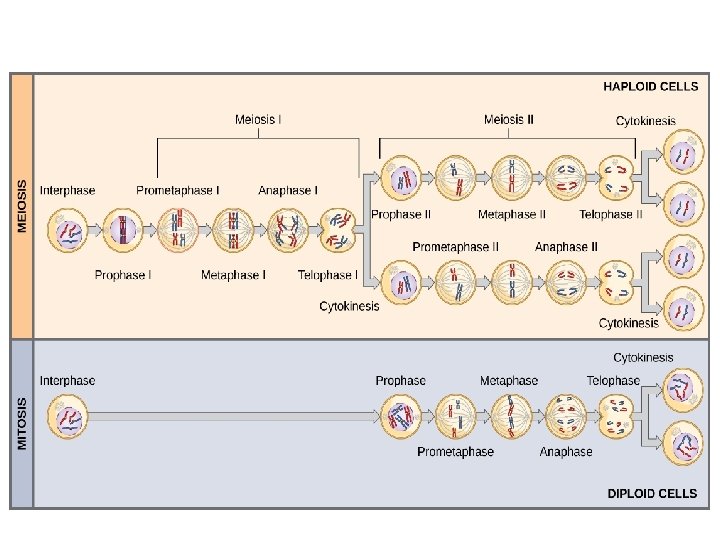
11. 1 THE PROCESS OF MEIOSIS • Meiosis reduces the number of chromosomes by ½ to produce haploid (n) cells • The process resembles mitosis includes two rounds of division: Meiosis I and Meiosis II
11. 1 THE PROCESS OF MEIOSIS
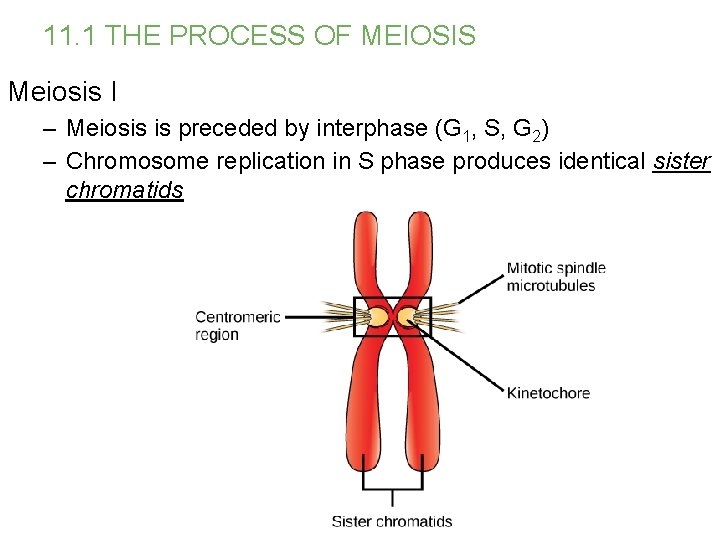
11. 1 THE PROCESS OF MEIOSIS Meiosis I – Meiosis is preceded by interphase (G 1, S, G 2) – Chromosome replication in S phase produces identical sister chromatids
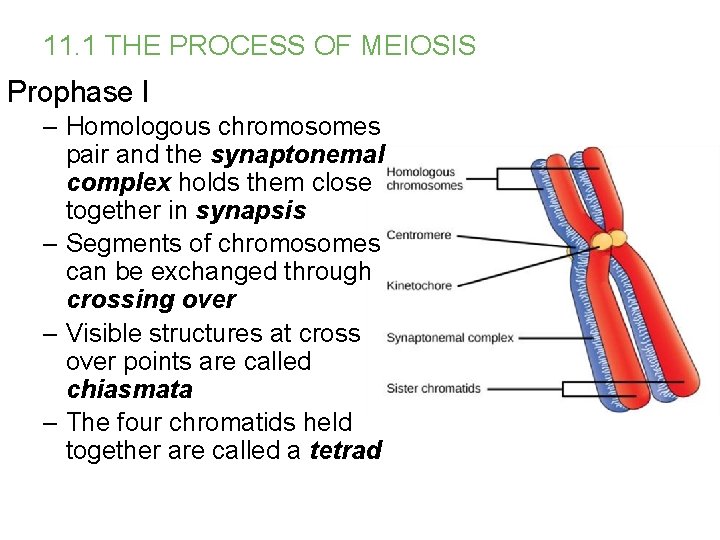
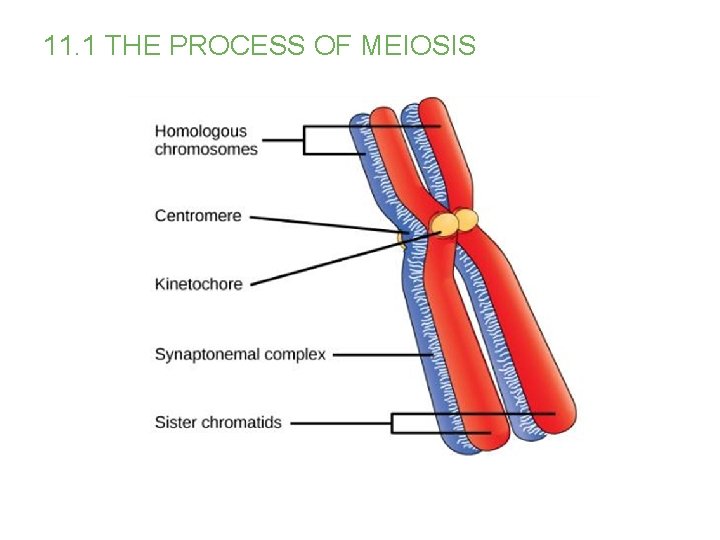
11. 1 THE PROCESS OF MEIOSIS Prophase I – Homologous chromosomes pair and the synaptonemal complex holds them close together in synapsis – Segments of chromosomes can be exchanged through crossing over – Visible structures at cross over points are called chiasmata – The four chromatids held together are called a tetrad
11. 1 THE PROCESS OF MEIOSIS
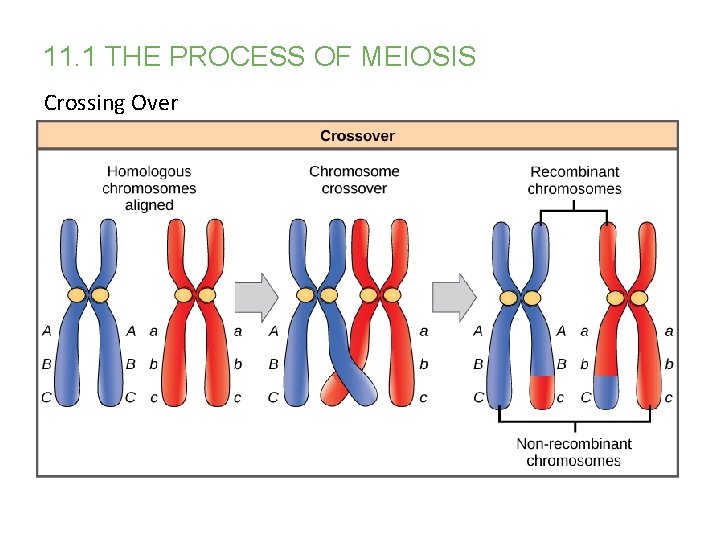
11. 1 THE PROCESS OF MEIOSIS Crossing Over
11. 1 THE PROCESS OF MEIOSIS Prometaphase I – Spindle fiber microtubules attach to the kinetochore proteins at the centromeres – Homologous chromosomes are still held together – Nuclear envelope is completely broken down
11. 1 THE PROCESS OF MEIOSIS Metaphase I – Homologous chromosomes are arranged at the cell equator with kinetochores facing opposite poles – Maternal and paternal chromatids orient randomly and are mixed when they migrate to the poles (Independent Assortment) • Increases genetic variation among daughter cells
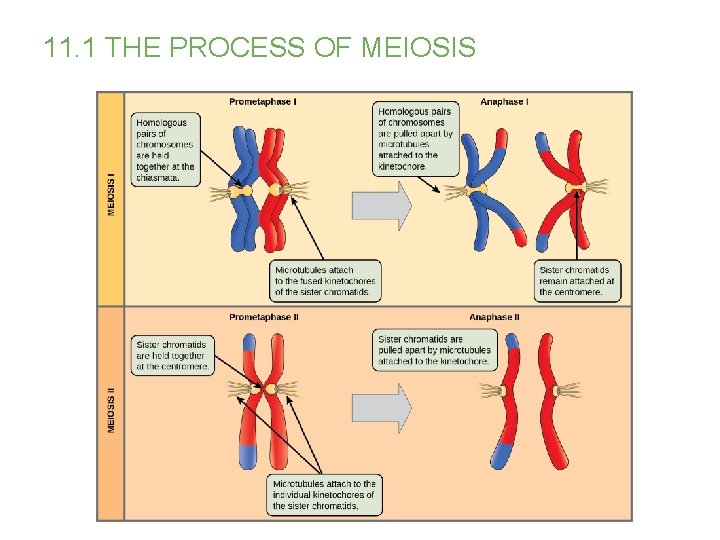
11. 1 THE PROCESS OF MEIOSIS Anaphase I • The microtubules pull tetrads apart • Chiasmata are broken • Sister chromatids remain attached at centromere
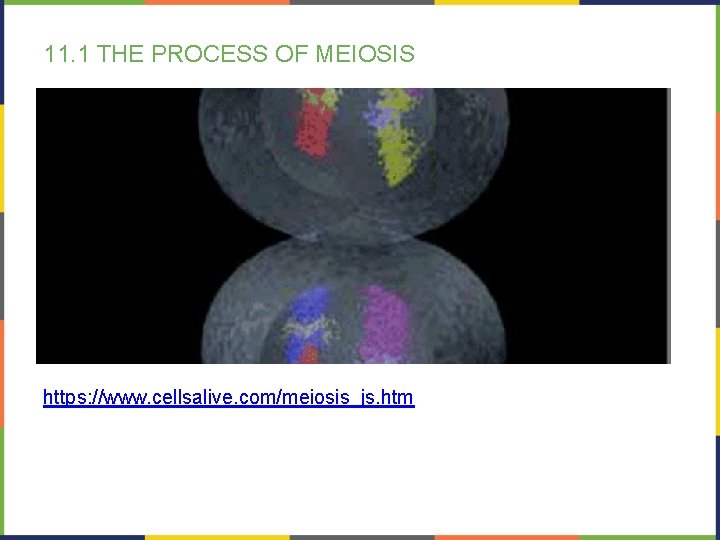
11. 1 THE PROCESS OF MEIOSIS Telophase I and Cytokinesis – Separated chromosomes arrive at opposite poles – Cytokinesis separates the cytoplasm into daughter cells
11. 1 THE PROCESS OF MEIOSIS https: //www. cellsalive. com/meiosis_js. htm
11. 1 THE PROCESS OF MEIOSIS
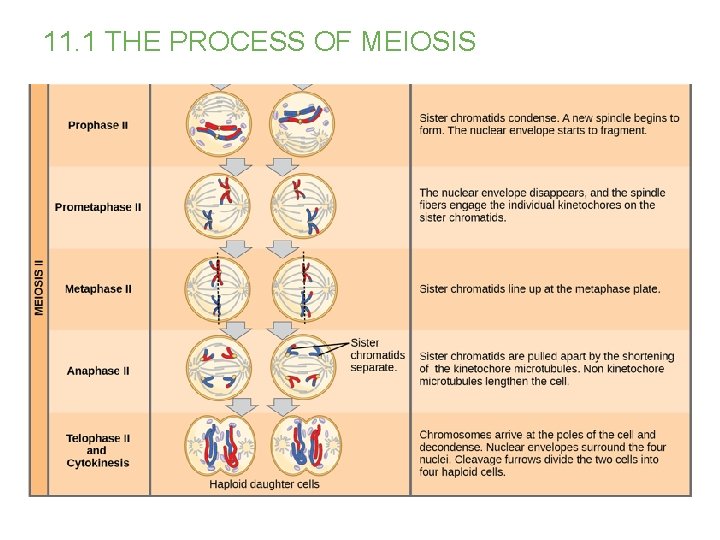
11. 1 THE PROCESS OF MEIOSIS Prophase II – Events depend on species-specific differences – If chromosomes decondensed in telophase I, they recondense now – If centrosomes were duplicated, they migrate to opposite poles and new spindles form
11. 1 THE PROCESS OF MEIOSIS Prometaphase II – Nuclear envelopes completely disappear – Spindle is fully formed – Each sister chromatid forms a kinetochore and attaches to microtubules from opposite poles
11. 1 THE PROCESS OF MEIOSIS
11. 1 THE PROCESS OF MEIOSIS Metaphase II and Anaphase II – Events proceed as in mitosis as chromosomes line up at the cell equator and sister chromatids separate and move toward opposite poles
11. 1 THE PROCESS OF MEIOSIS Telophase II and Cytokinesis – The chromosomes arrive at opposite poles and decondense – Nuclear envelopes form around chromosomes – Cytokinesis separates the two cells into four unique haploid cells
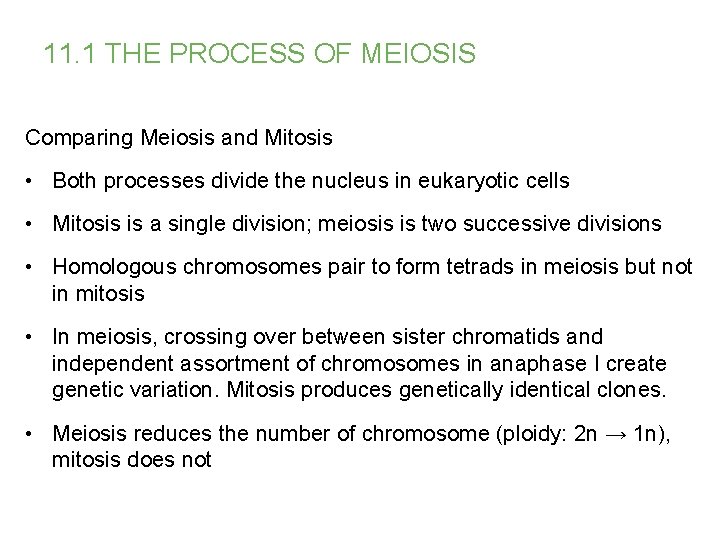
11. 1 THE PROCESS OF MEIOSIS Comparing Meiosis and Mitosis • Both processes divide the nucleus in eukaryotic cells • Mitosis is a single division; meiosis is two successive divisions • Homologous chromosomes pair to form tetrads in meiosis but not in mitosis • In meiosis, crossing over between sister chromatids and independent assortment of chromosomes in anaphase I create genetic variation. Mitosis produces genetically identical clones. • Meiosis reduces the number of chromosome (ploidy: 2 n → 1 n), mitosis does not
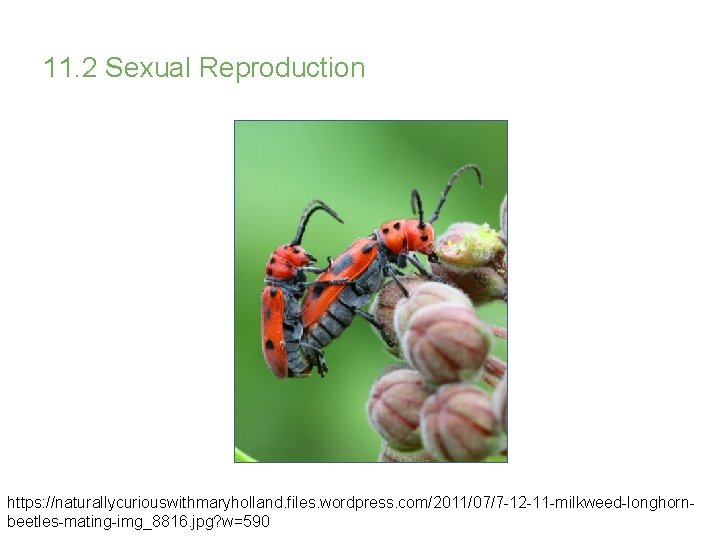
11. 2 Sexual Reproduction https: //naturallycuriouswithmaryholland. files. wordpress. com/2011/07/7 -12 -11 -milkweed-longhornbeetles-mating-img_8816. jpg? w=590
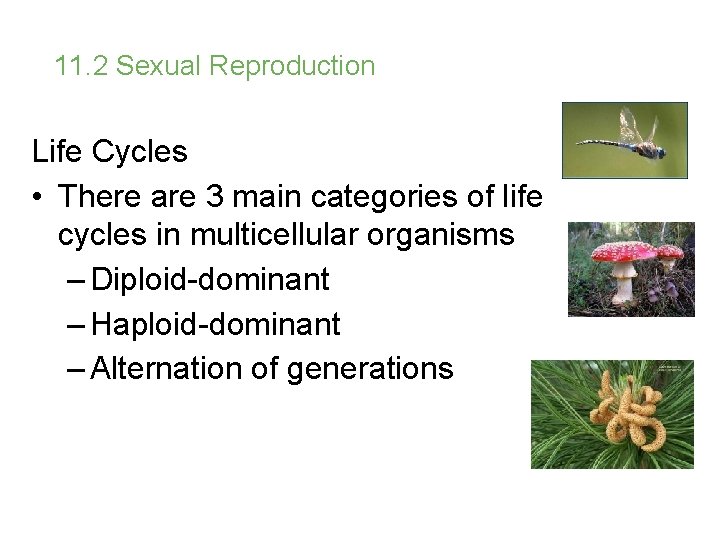
11. 2 Sexual Reproduction Life Cycles • There are 3 main categories of life cycles in multicellular organisms – Diploid-dominant – Haploid-dominant – Alternation of generations
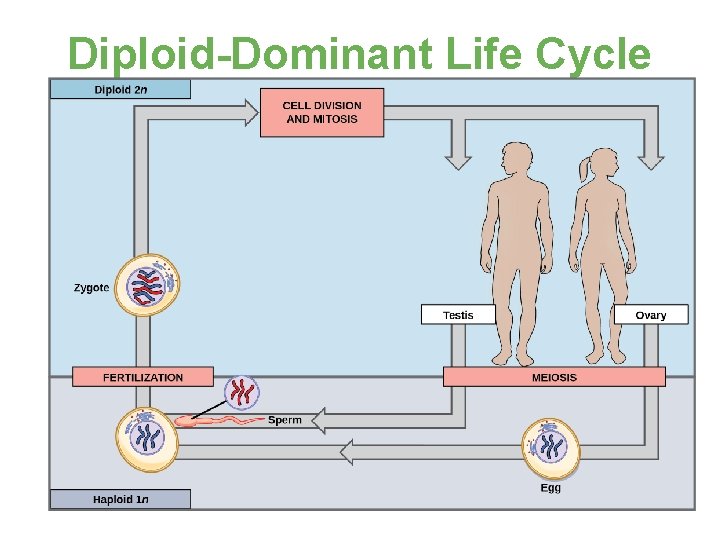
11. 2 Sexual Reproduction Diploid-Dominant Life Cycle • Most animals have a diploid-dominant lifecycle strategy: the only haploid cells produced are the gametes • Germ cells produced by gonads (testes and ovaries) use mitosis to perpetuate the cell line and meiosis to produce gametes • There is no multicellular haploid life stage • Fertilization occurs when two gametes fuse to restore the diploid state
Diploid-Dominant Life Cycle
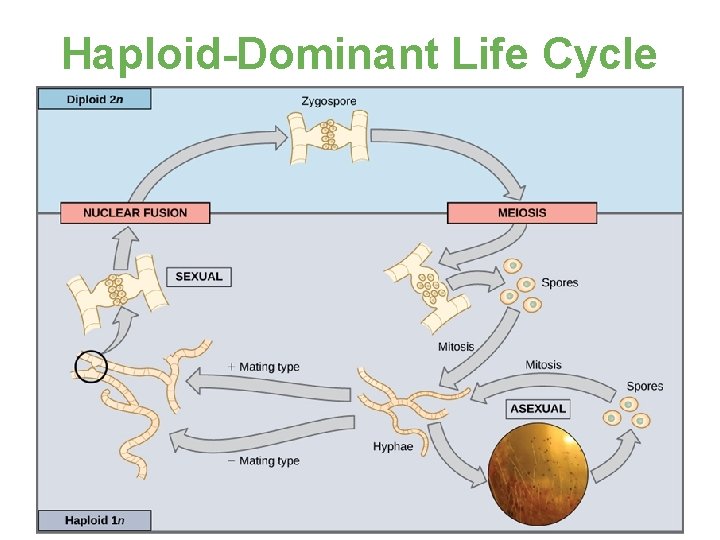
11. 2 Sexual Reproduction Haploid-Dominant Life Cycle • In most fungi and algae the “body” of the organism, the ecologically important part of the life cycle, is haploid • During sexual reproduction, specialized haploid cells from two individuals, designated the (+) and (−) mating types, join to form a diploid zygote which immediately undergoes meiosis to form 4 haploid spores • Although haploid like the “parents, ” these spores contain a new genetic combination from two parents. • The spores form multicellular haploid structures by many rounds of mitosis
Haploid-Dominant Life Cycle
11. 2 Sexual Reproduction Alternation of Generations • Seen in some algae and all plants • The haploid multicellular plants are called gametophytes, because they produce gametes from specialized cell • Meiosis is not directly involved in the production of gametes because the organism that produces the gametes is already a haploid • Fertilization between the gametes forms a diploid zygote • Zygotes undergo many rounds of mitosis and give rise to a diploid multicellular plant called a sporophyte • Specialized cells of the sporophyte undergo meiosis to produce haploid spores which subsequently develop into the gametophytes
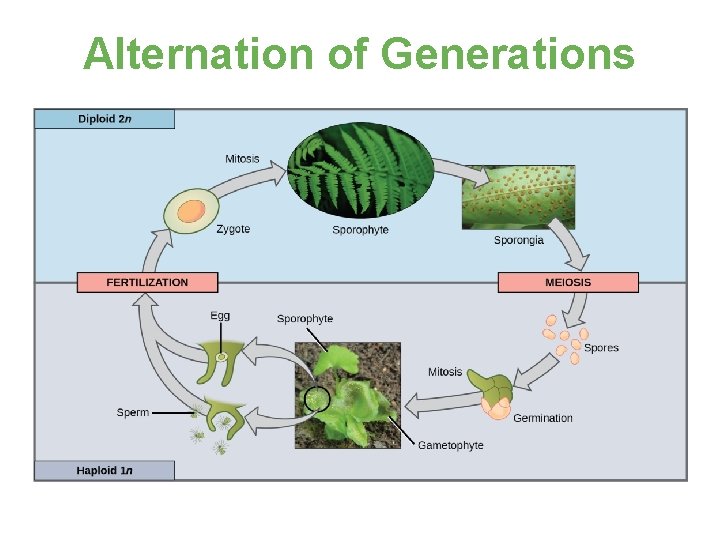
Alternation of Generations
- Slides: 30