
Biology 177 Principles of Modern Microscopy Lecture 14
Biology 177: Principles of Modern Microscopy Lecture 14: Single Molecule Imaging Andres Collazo, Director Biological Imaging Facility Wan-Rong (Sandy) Wong, Graduate Student, TA
Lecture 14: Single molecule imaging • Review of FRET, FLIM • Fluorescence fluctuation spectroscopy (FFS) • Fluorescence correlation spectroscopy (FCS) • Some concrete examples of what we can learn • Fluorescence cross correlation spectroscopy (FCCS) • Photon counting histogram (PCH) • FRAP/FLIP
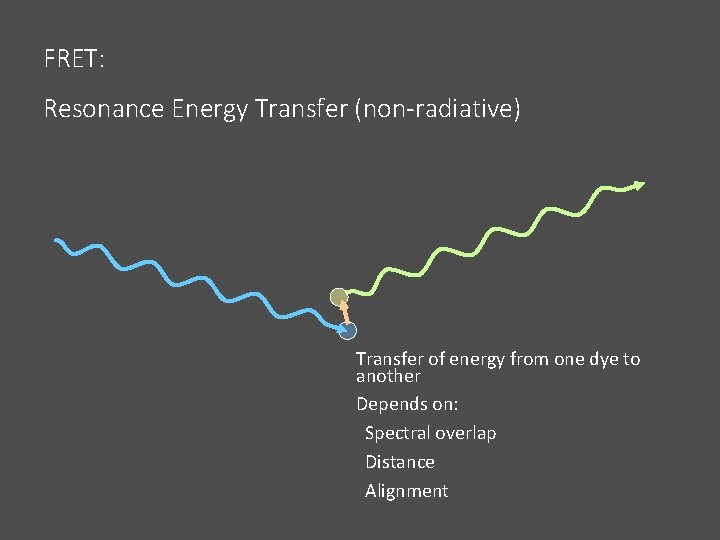
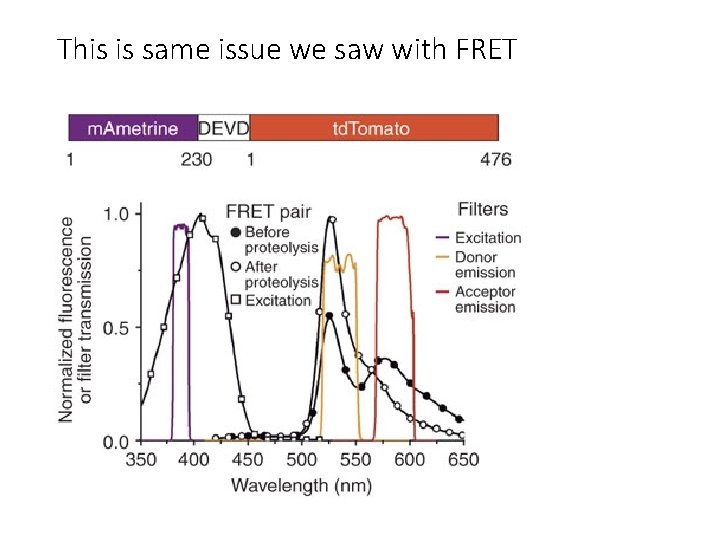
FRET: Resonance Energy Transfer (non-radiative) Transfer of energy from one dye to another Depends on: Spectral overlap Distance Alignment
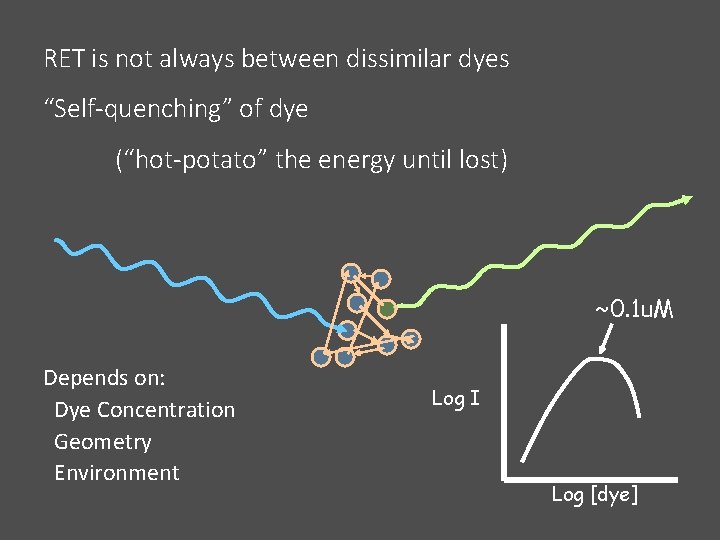
RET is not always between dissimilar dyes “Self-quenching” of dye (“hot-potato” the energy until lost) ~0. 1 u. M Depends on: Dye Concentration Geometry Environment Log I Log [dye]
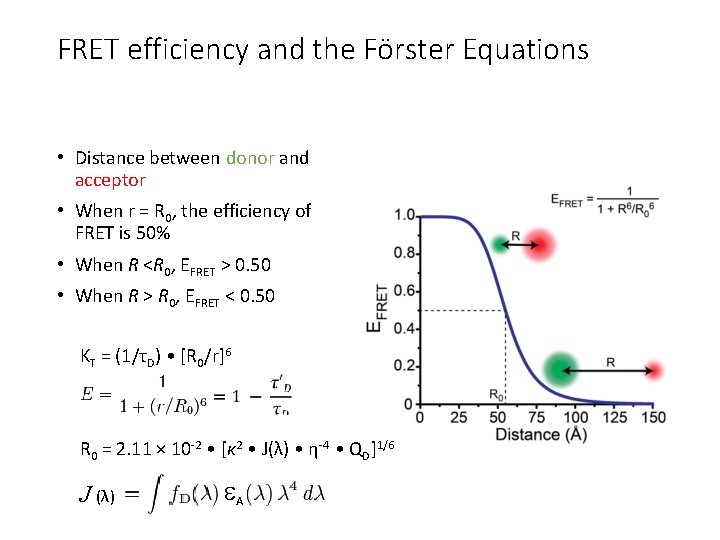
FRET efficiency and the Förster Equations • Distance between donor and acceptor • When r = R 0, the efficiency of FRET is 50% • When R <R 0, EFRET > 0. 50 • When R > R 0, EFRET < 0. 50 KT = (1/τD) • [R 0/r]6 R 0 = 2. 11 × 10 -2 • [κ 2 • J(λ) • η-4 • QD]1/6 J (λ) e. A
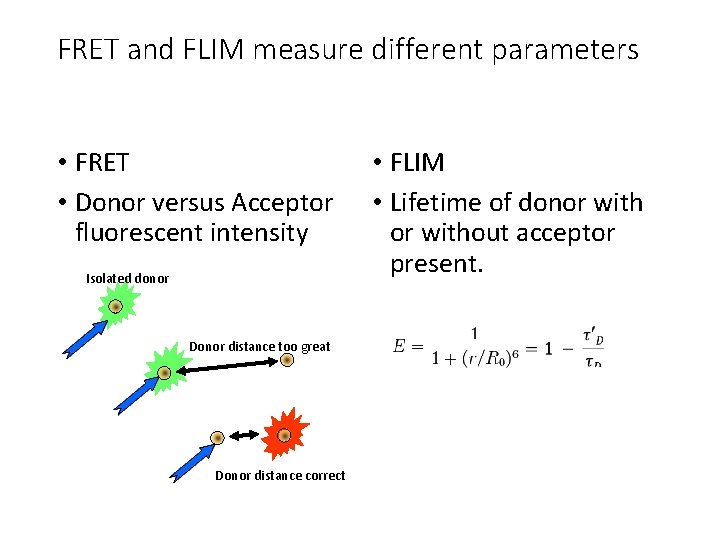
FRET and FLIM measure different parameters • FRET • Donor versus Acceptor fluorescent intensity Isolated donor Donor distance too great Donor distance correct • FLIM • Lifetime of donor without acceptor present.
Fluorescence correlation spectroscopy (FCS) • In 1972 Watt Webb’s laboratory at Cornell put fluorescence microscopy to new use • Studied reaction kinetics • Ethidium bromide binding to DNA • Individually don’t fluoresce but together glow under UV • Could detect single molecules but could not repeatedly detect the same molecule
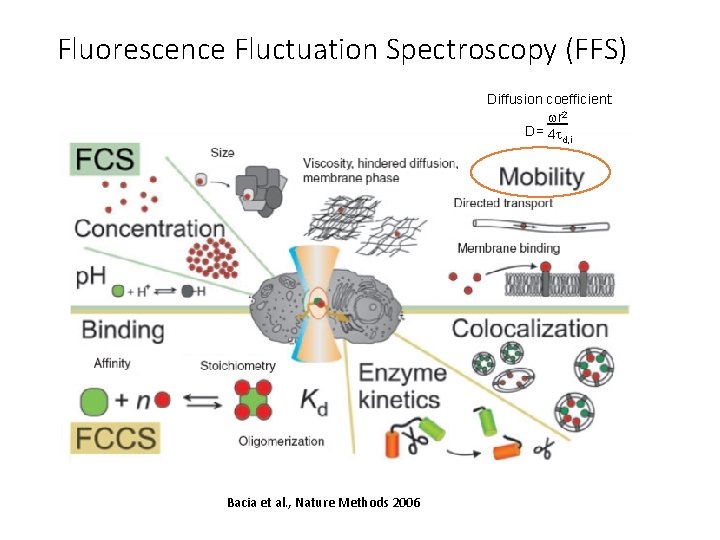
Fluorescence Fluctuation Spectroscopy (FFS) • Fluorescence Correlation Spectroscopy (FCS) • Photon Counting Histogram (PCH) • Fluorescence Cross-Correlation Spectroscopy (FCCS) • FCS with more than 1 color
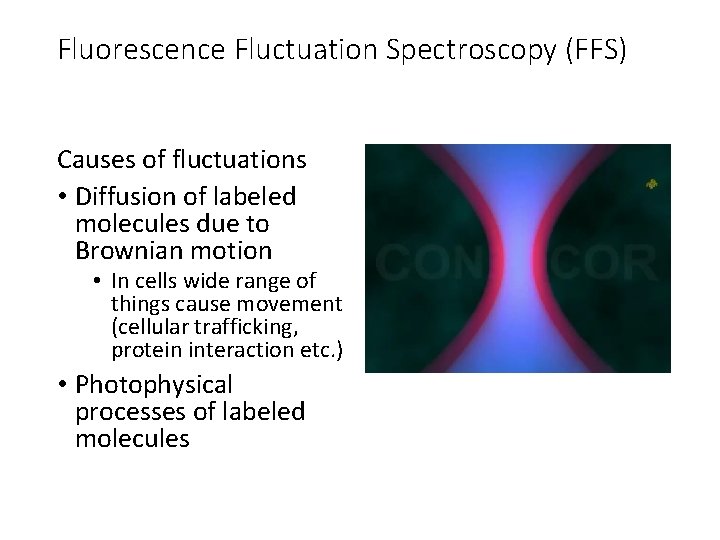
Fluorescence Fluctuation Spectroscopy (FFS) Causes of fluctuations • Diffusion of labeled molecules due to Brownian motion • In cells wide range of things cause movement (cellular trafficking, protein interaction etc. ) • Photophysical processes of labeled molecules
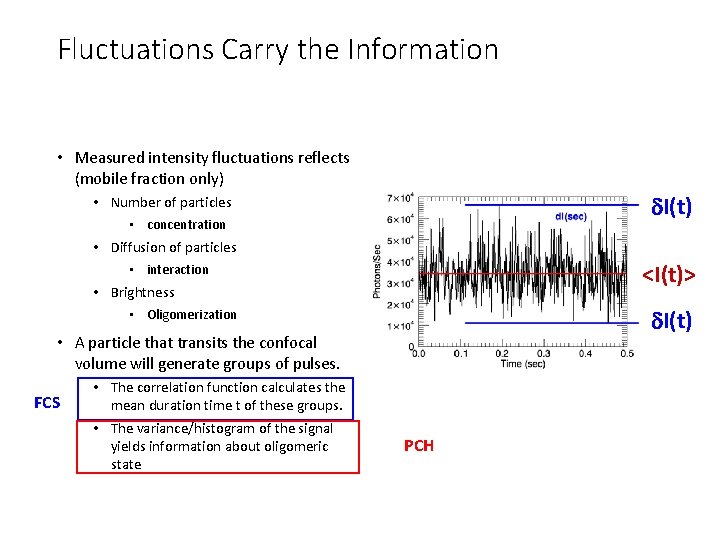
Fluctuations Carry the Information • Measured intensity fluctuations reflects (mobile fraction only) d. I(t) • Number of particles • concentration • Diffusion of particles <I(t)> • interaction • Brightness d. I(t) • Oligomerization • A particle that transits the confocal volume will generate groups of pulses. FCS • The correlation function calculates the mean duration time t of these groups. • The variance/histogram of the signal yields information about oligomeric state PCH
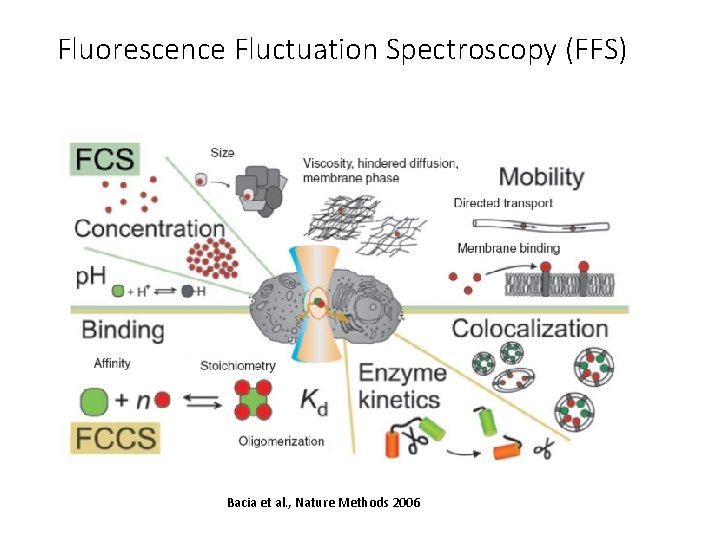
Fluorescence Fluctuation Spectroscopy (FFS) Bacia et al. , Nature Methods 2006
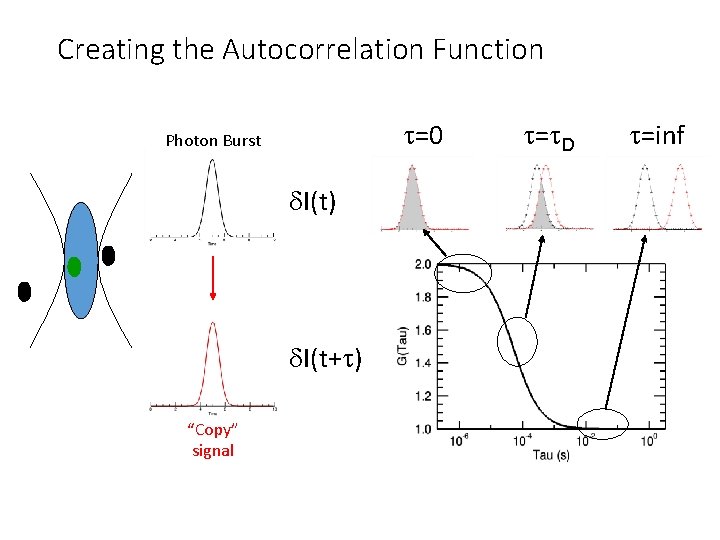
Creating the Autocorrelation Function t=0 Photon Burst d. I(t) d. I(t+t) “Copy” signal t=t. D t=inf
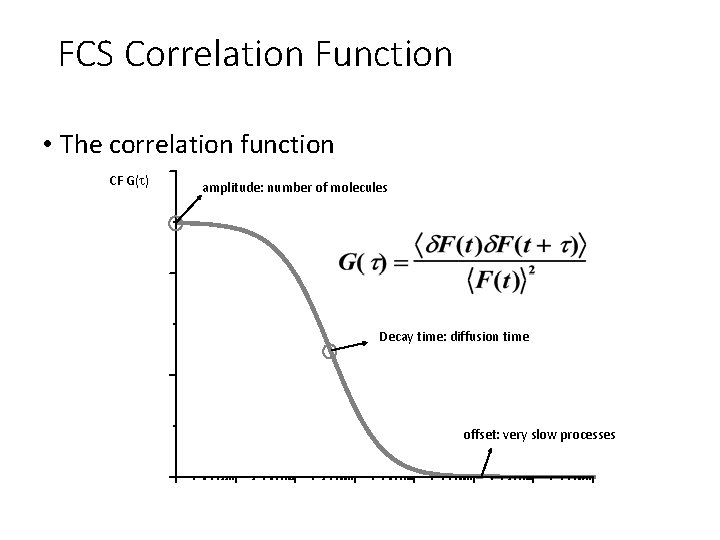
FCS Correlation Function • The correlation function CF G(t) amplitude: number of molecules Decay time: diffusion time offset: very slow processes
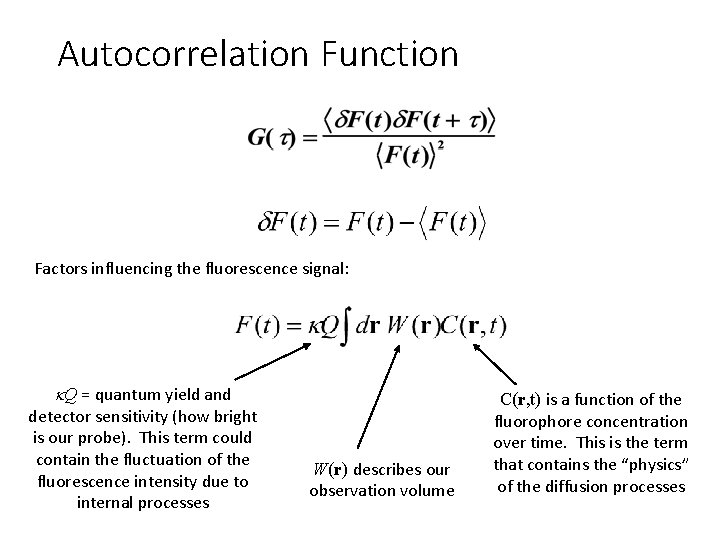
Autocorrelation Function Factors influencing the fluorescence signal: k. Q = quantum yield and detector sensitivity (how bright is our probe). This term could contain the fluctuation of the fluorescence intensity due to internal processes W(r) describes our observation volume C(r, t) is a function of the fluorophore concentration over time. This is the term that contains the “physics” of the diffusion processes
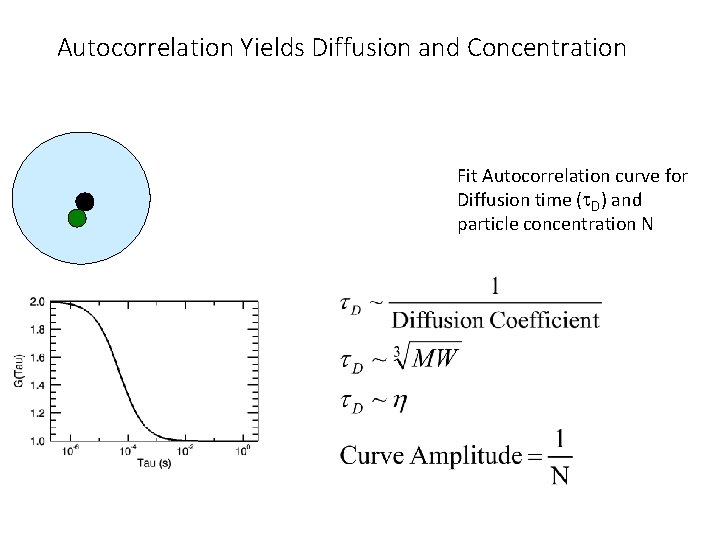
Autocorrelation Yields Diffusion and Concentration Fit Autocorrelation curve for Diffusion time (t. D) and particle concentration N
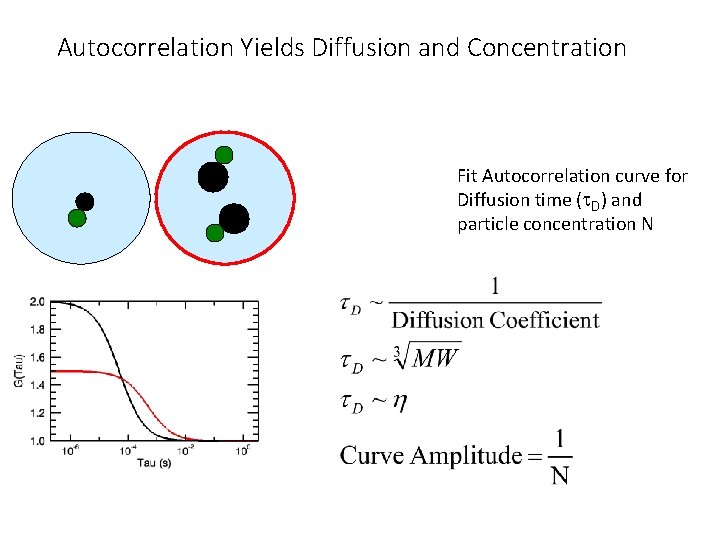
Autocorrelation Yields Diffusion and Concentration Fit Autocorrelation curve for Diffusion time (t. D) and particle concentration N
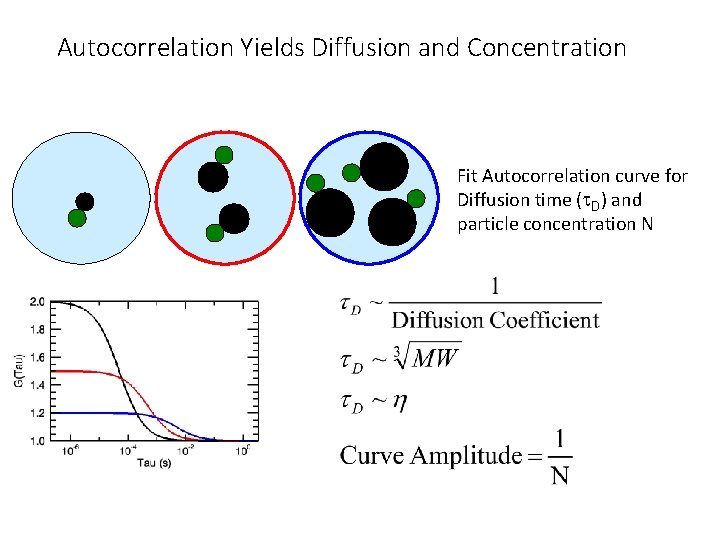
Autocorrelation Yields Diffusion and Concentration Fit Autocorrelation curve for Diffusion time (t. D) and particle concentration N
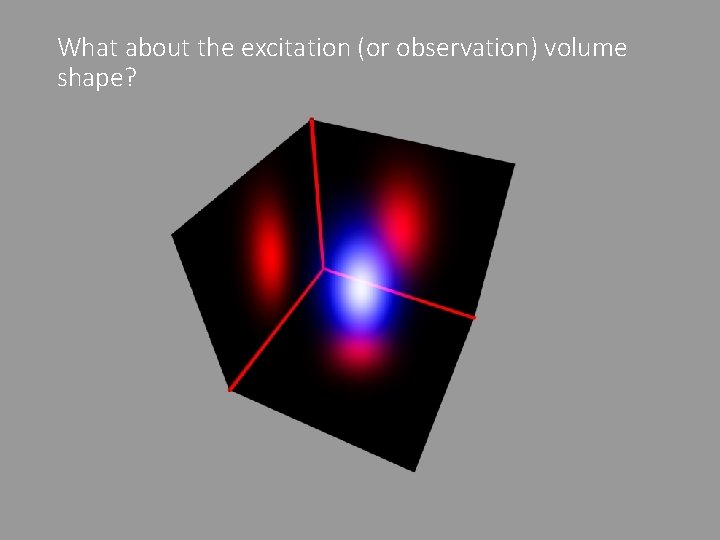
What about the excitation (or observation) volume shape?
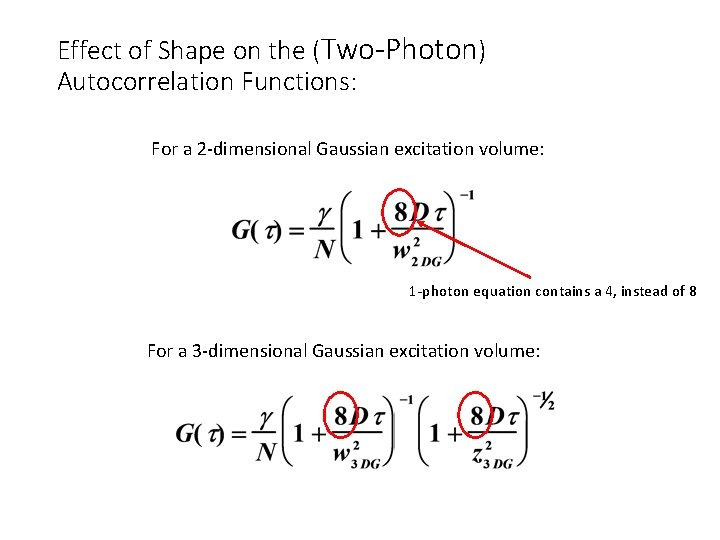
Effect of Shape on the (Two-Photon) Autocorrelation Functions: For a 2 -dimensional Gaussian excitation volume: 1 -photon equation contains a 4, instead of 8 For a 3 -dimensional Gaussian excitation volume:
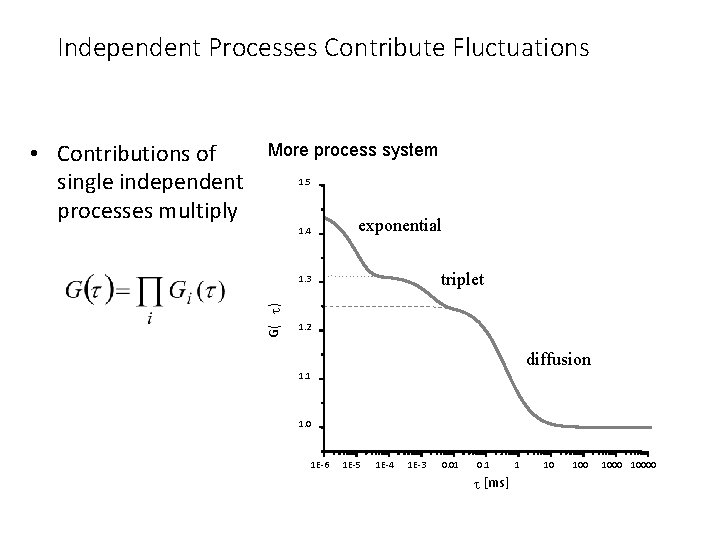
Independent Processes Contribute Fluctuations More process system 1. 5 1. 4 exponential triplet 1. 3 G( t ) • Contributions of single independent processes multiply 1. 2 diffusion 1. 1 1. 0 1 E-6 1 E-5 1 E-4 1 E-3 0. 01 0. 1 t [ms] 1 10 10000
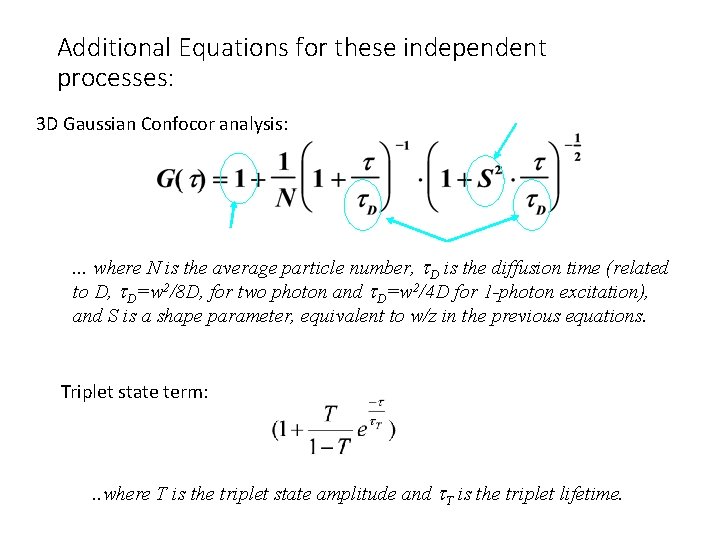
Additional Equations for these independent processes: 3 D Gaussian Confocor analysis: . . . where N is the average particle number, t. D is the diffusion time (related to D, t. D=w 2/8 D, for two photon and t. D=w 2/4 D for 1 -photon excitation), and S is a shape parameter, equivalent to w/z in the previous equations. Triplet state term: . . where T is the triplet state amplitude and t. T is the triplet lifetime.
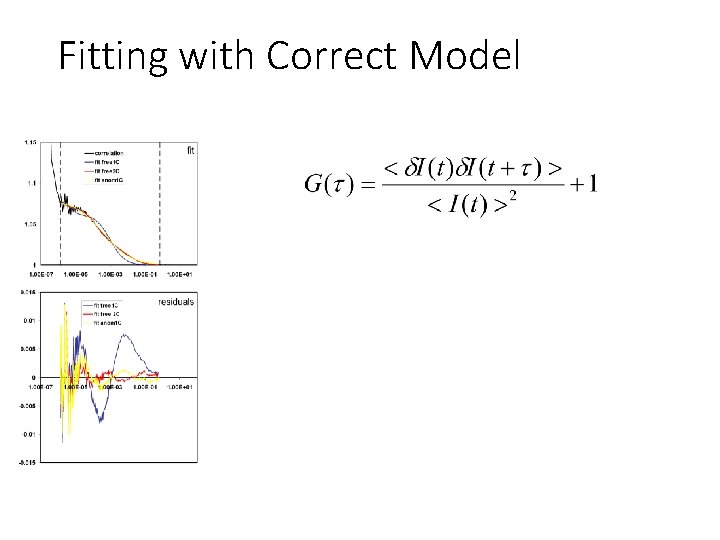
Fitting with Correct Model
Fitting with Correct Model Schwille and Haustein 2004
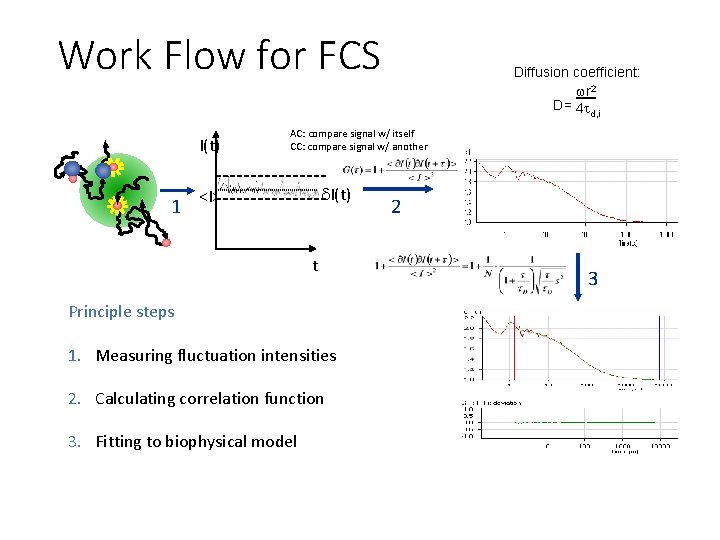
Work Flow for FCS I(t) 1 Diffusion coefficient: wr 2 D= 4 t d, i AC: compare signal w/ itself CC: compare signal w/ another d. I(t) <I> t Principle steps 1. Measuring fluctuation intensities 2. Calculating correlation function 3. Fitting to biophysical model 2 3
FCS also benefits from FLIM • FCS measurements at single point allow kinetic and diffusion properties, concentration and aggregation state of fluorescently labeled molecules to be determined. • FLIM measurement of fluorescent lifetime of fluorophore is sensitive to the molecular environment of that fluorophore. • FCS and FLIM allow information to be gathered on diffusional mobility, protein clustering and interactions, and molecular environment.
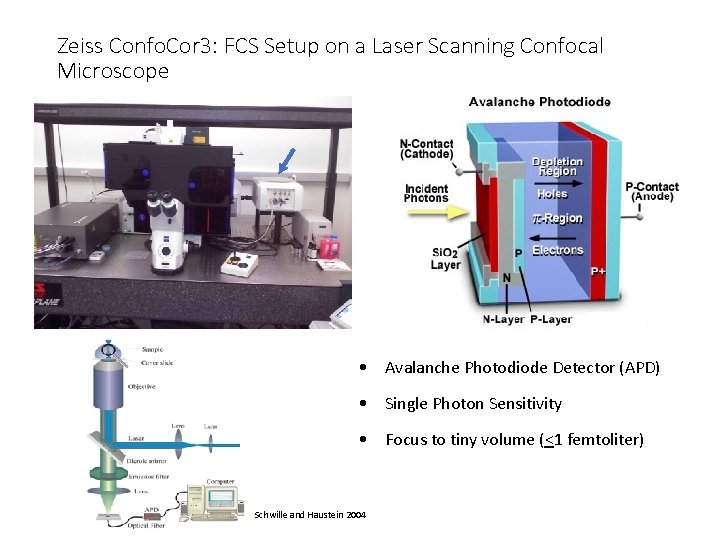
Zeiss Confo. Cor 3: FCS Setup on a Laser Scanning Confocal Microscope • Avalanche Photodiode Detector (APD) • Single Photon Sensitivity • Focus to tiny volume (<1 femtoliter) Schwille and Haustein 2004
Fluorescence Fluctuation Spectroscopy (FFS) Diffusion coefficient: wr 2 D= 4 t d, i Bacia et al. , Nature Methods 2006
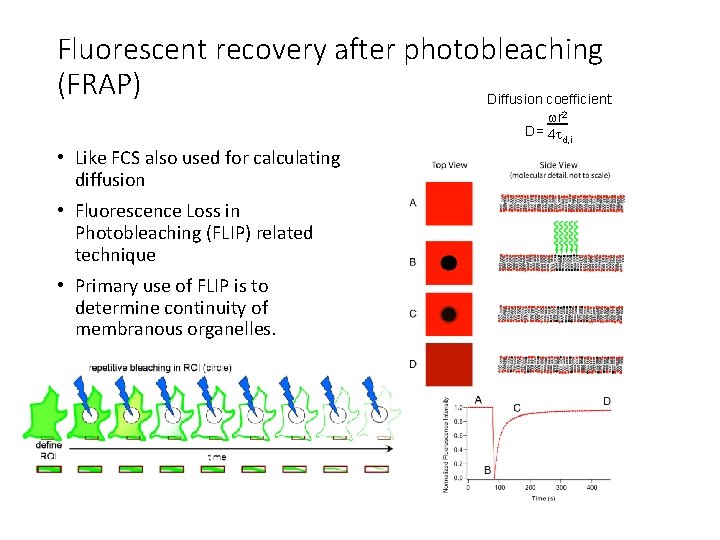
Fluorescent recovery after photobleaching (FRAP) Diffusion coefficient: wr 2 D= 4 t d, i • Like FCS also used for calculating diffusion • Fluorescence Loss in Photobleaching (FLIP) related technique • Primary use of FLIP is to determine continuity of membranous organelles.
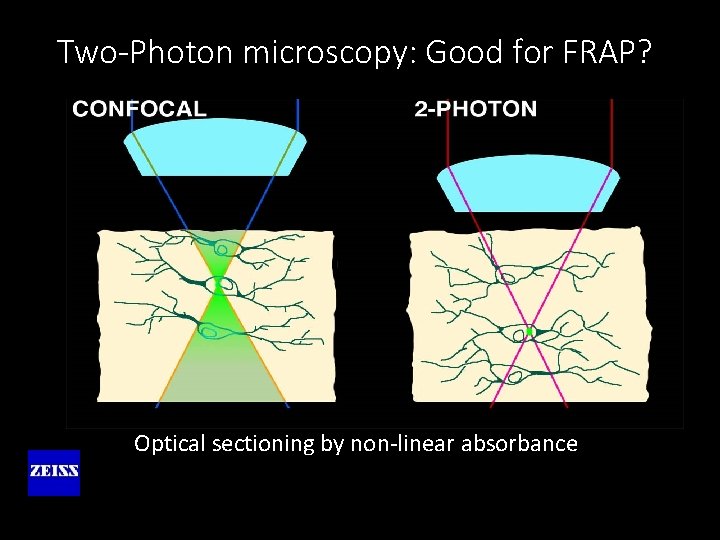
Two-Photon microscopy: Good for FRAP? Optical sectioning by non-linear absorbance
FRAP has been around since 1976 • Again developed by Watt Webb’s laboratory at Cornell • Though it’s been around for a while can you guess what development really made FRAP take off?
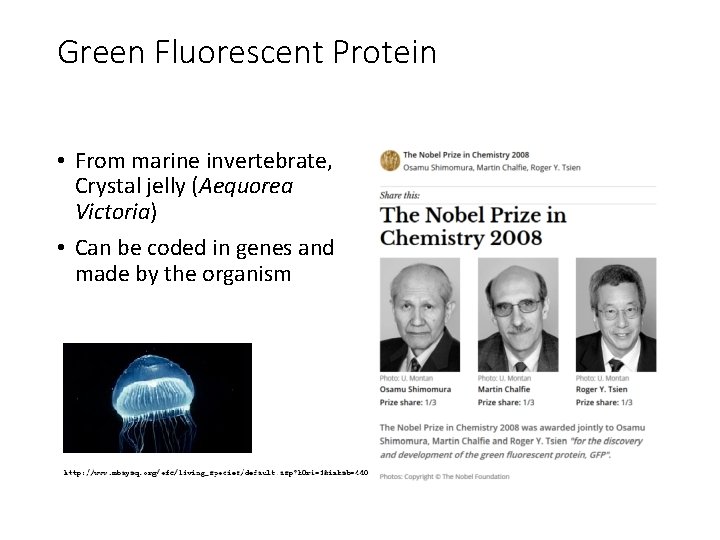
Green Fluorescent Protein • From marine invertebrate, Crystal jelly (Aequorea Victoria) • Can be coded in genes and made by the organism
Choosing Fluorescent Proteins Shaner, N. C. , Steinbach, P. A. , Tsien, R. Y. , 2005. A guide to choosing fluorescent proteins. Nat Meth 2, 905 -909.
Fluorescence Fluctuation Spectroscopy (FFS) • Fluorescence Correlation Spectroscopy (FCS) • Photon Counting Histogram (PCH) • Fluorescence Cross-Correlation Spectroscopy (FCCS) • FCS with more than 1 color • Advantages over FRAP and FRET
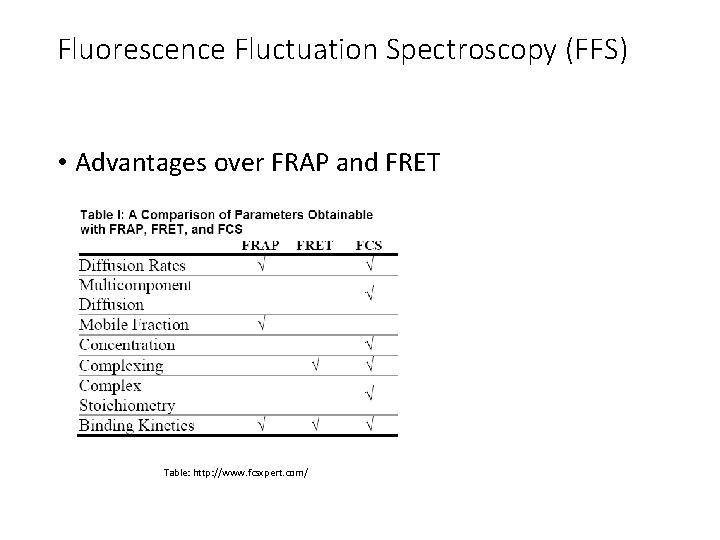
Fluorescence Fluctuation Spectroscopy (FFS) • Advantages over FRAP and FRET Table: http: //www. fcsxpert. com/
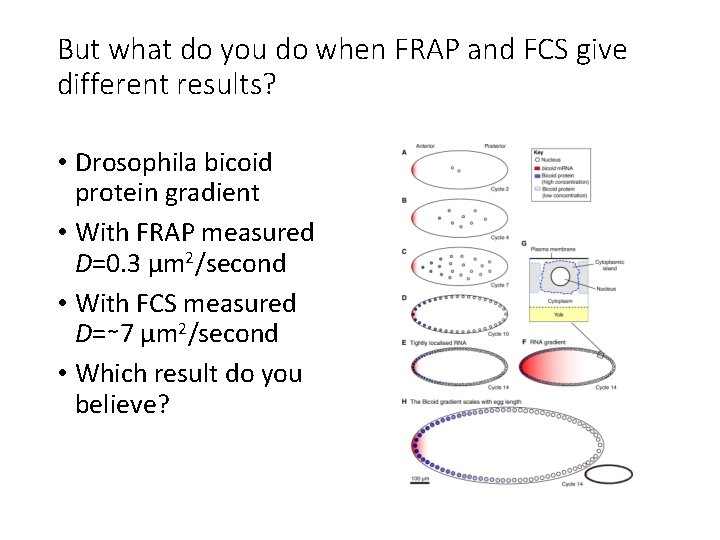
But what do you do when FRAP and FCS give different results? • Drosophila bicoid protein gradient • With FRAP measured D=0. 3 μm 2/second • With FCS measured D=∼ 7 μm 2/second • Which result do you believe?
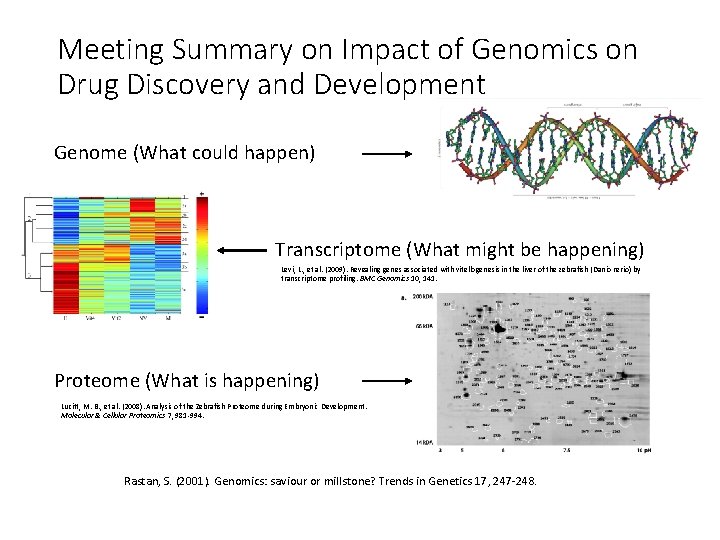
Meeting Summary on Impact of Genomics on Drug Discovery and Development Genome (What could happen) Transcriptome (What might be happening) Levi, L. , et al. (2009). Revealing genes associated with vitellogenesis in the liver of the zebrafish (Danio rerio) by transcriptome profiling. BMC Genomics 10, 141. Proteome (What is happening) Lucitt, M. B. , et al. (2008). Analysis of the Zebrafish Proteome during Embryonic Development. Molecular & Cellular Proteomics 7, 981 -994. Rastan, S. (2001). Genomics: saviour or millstone? Trends in Genetics 17, 247 -248.
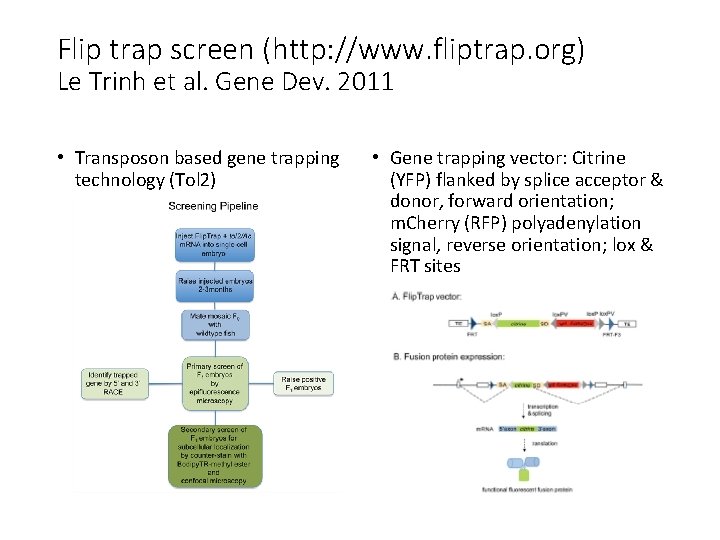
Flip trap screen (http: //www. fliptrap. org) Le Trinh et al. Gene Dev. 2011 • Transposon based gene trapping technology (Tol 2) • Gene trapping vector: Citrine (YFP) flanked by splice acceptor & donor, forward orientation; m. Cherry (RFP) polyadenylation signal, reverse orientation; lox & FRT sites
Flip Trap Screen Labels Endogenous Proteins: Different Sub-Cellular Compartments and Cell Types Zebrafish Ear Development
FCS Detects Intracellular Variations
Diffusion Coefficients Similar to those Obtained Using FRAP
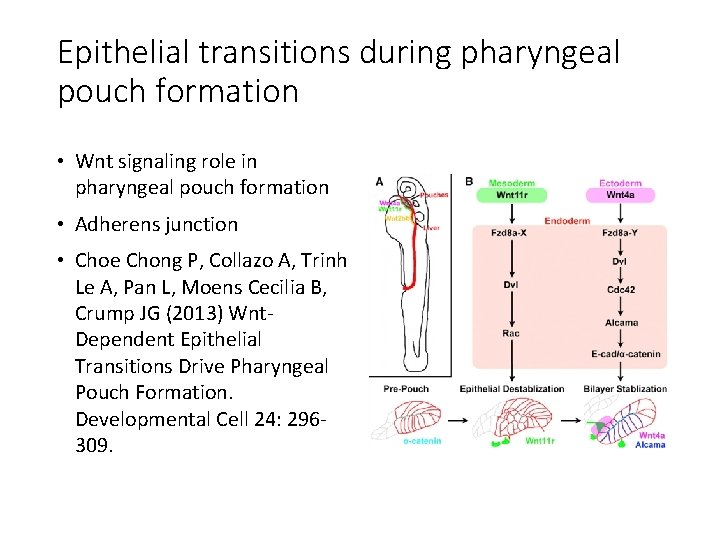
Epithelial transitions during pharyngeal pouch formation • Wnt signaling role in pharyngeal pouch formation • Adherens junction • Choe Chong P, Collazo A, Trinh Le A, Pan L, Moens Cecilia B, Crump JG (2013) Wnt. Dependent Epithelial Transitions Drive Pharyngeal Pouch Formation. Developmental Cell 24: 296309.
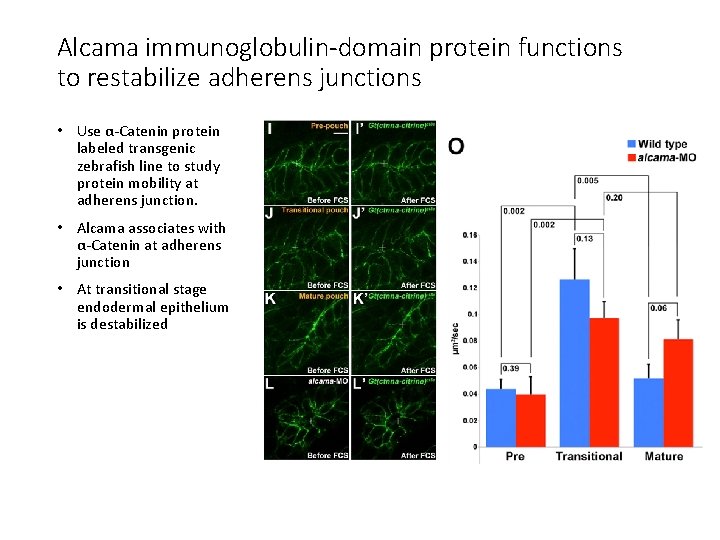
Alcama immunoglobulin-domain protein functions to restabilize adherens junctions • Use α-Catenin protein labeled transgenic zebrafish line to study protein mobility at adherens junction. • Alcama associates with α-Catenin at adherens junction • At transitional stage endodermal epithelium is destabilized
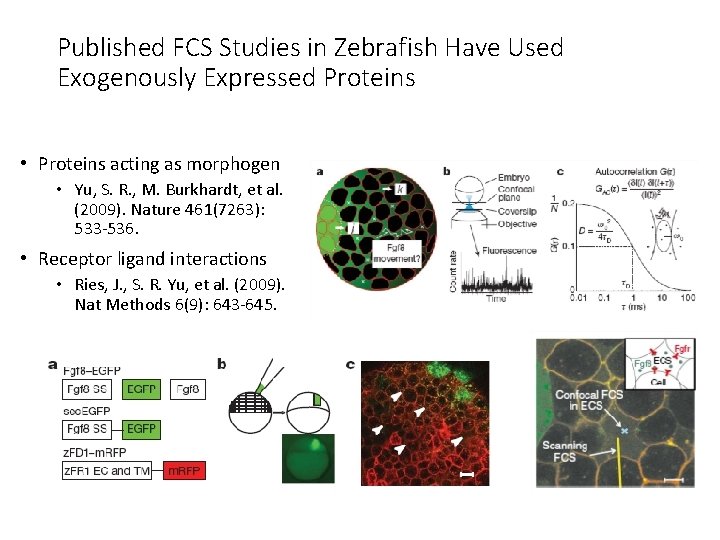
Published FCS Studies in Zebrafish Have Used Exogenously Expressed Proteins • Proteins acting as morphogen • Yu, S. R. , M. Burkhardt, et al. (2009). Nature 461(7263): 533 -536. • Receptor ligand interactions • Ries, J. , S. R. Yu, et al. (2009). Nat Methods 6(9): 643 -645.
Less Gnb 2 in Hair Cells than Neurons
Expressing Tagged Proteins by m. RNA Injection Can Lead to Over-expression and Incorrect Estimates of Diffusion Rates
What Do Differences in Diffusion Coefficients Mean? • Binding to larger protein?
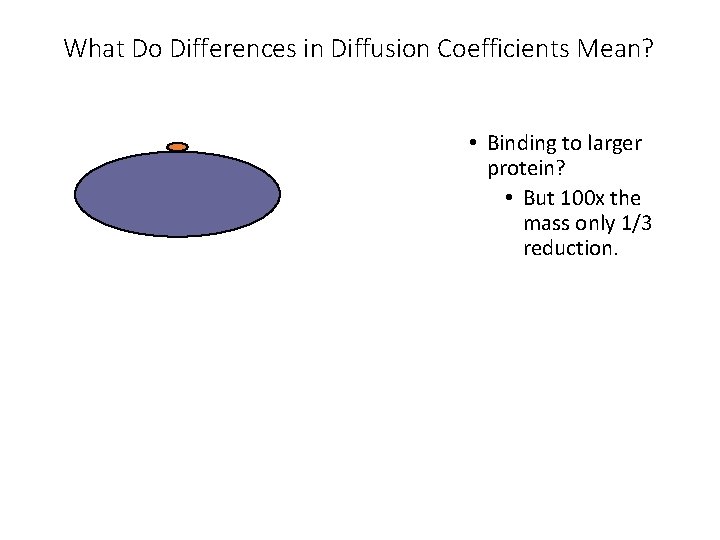
What Do Differences in Diffusion Coefficients Mean? • Binding to larger protein? • But 100 x the mass only 1/3 reduction.
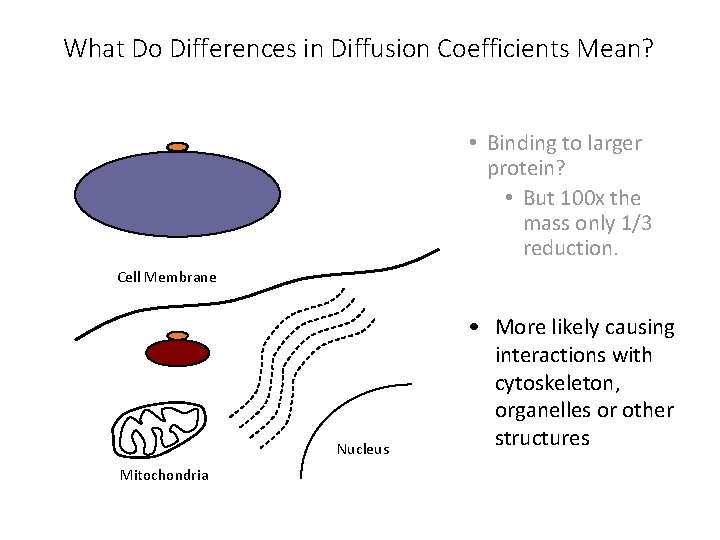
What Do Differences in Diffusion Coefficients Mean? • Binding to larger protein? • But 100 x the mass only 1/3 reduction. Cell Membrane Nucleus Mitochondria • More likely causing interactions with cytoskeleton, organelles or other structures
Conclusion of examples • FCS + Flip Trap lines provide unique insights into protein kinetics in vivo. • Intracellular differences across subcellular regions • Developmental transitions in protein kinetics • Endogenous protein concentrations crucial for accurate FCS measurements
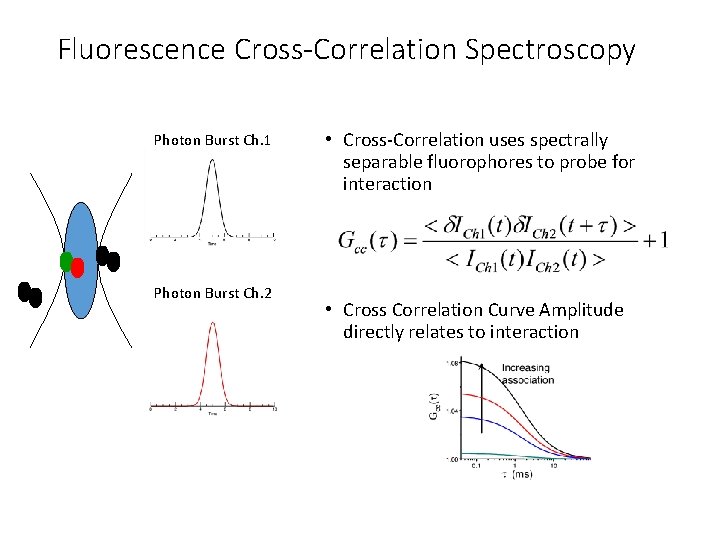
Fluorescence Cross-Correlation Spectroscopy Photon Burst Ch. 1 Photon Burst Ch. 2 • Cross-Correlation uses spectrally separable fluorophores to probe for interaction • Cross Correlation Curve Amplitude directly relates to interaction
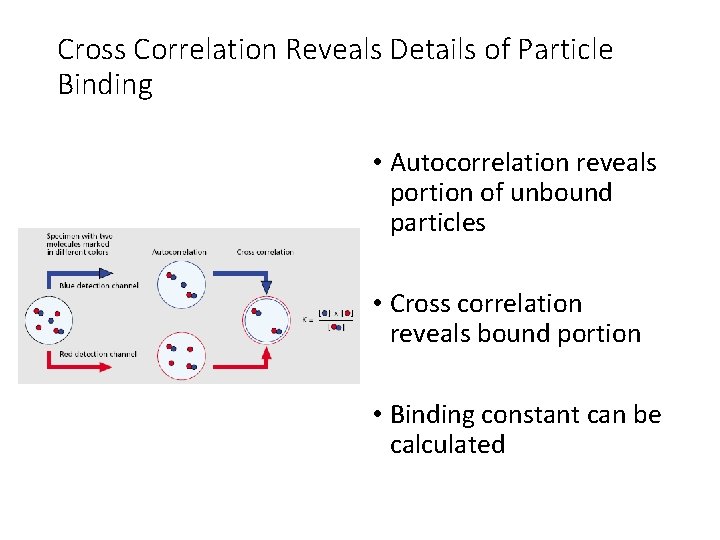
Cross Correlation Reveals Details of Particle Binding • Autocorrelation reveals portion of unbound particles • Cross correlation reveals bound portion • Binding constant can be calculated
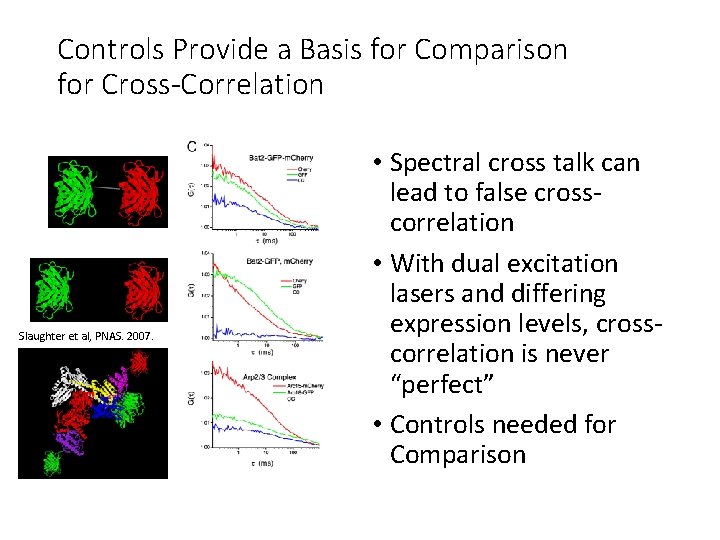
Controls Provide a Basis for Comparison for Cross-Correlation Slaughter et al, PNAS. 2007. • Spectral cross talk can lead to false crosscorrelation • With dual excitation lasers and differing expression levels, crosscorrelation is never “perfect” • Controls needed for Comparison
This is same issue we saw with FRET
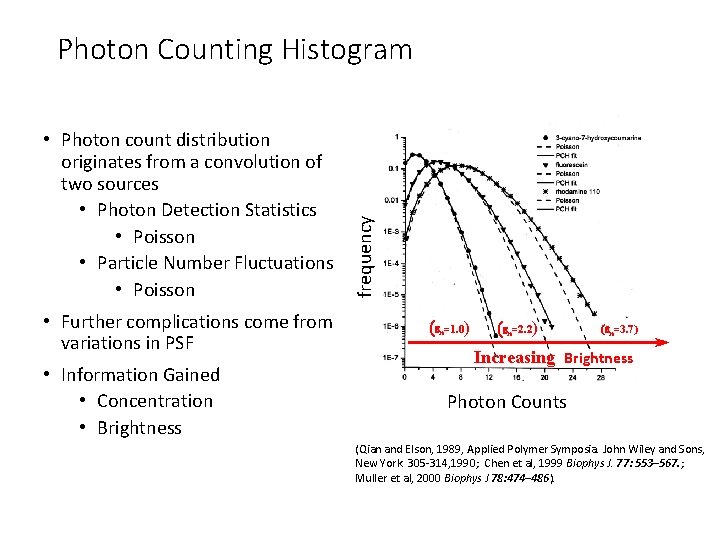
• Photon count distribution originates from a convolution of two sources • Photon Detection Statistics • Poisson • Particle Number Fluctuations • Poisson • Further complications come from variations in PSF • Information Gained • Concentration • Brightness frequency Photon Counting Histogram (en=1. 0) (en=2. 2) (en=3. 7) Increasing Brightness Photon Counts (Qian and Elson, 1989, Applied Polymer Symposia. John Wiley and Sons, New York. 305 -314, 1990; Chen et al, 1999 Biophys J. 77: 553– 567. ; Muller et al, 2000 Biophys J 78: 474– 486).
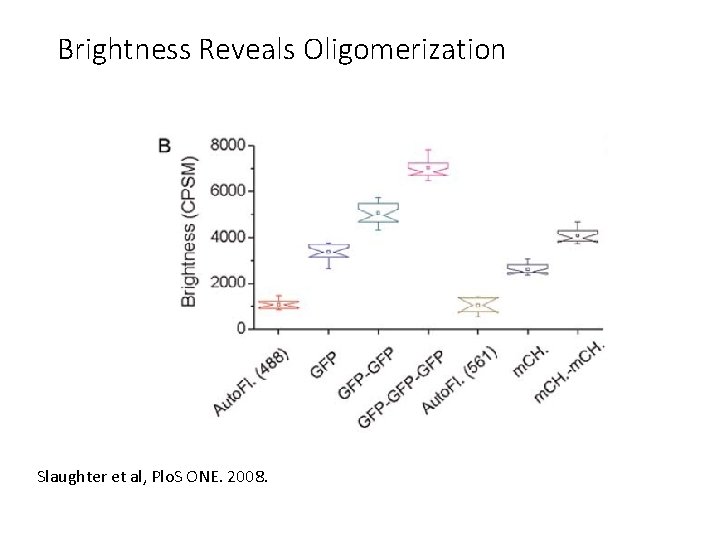
Brightness Reveals Oligomerization Slaughter et al, Plo. S ONE. 2008.

Homework 5 Early on during zebrafish development, many molecules are involved in patterning the embryo’s tissues and axes. One possible explanation for this complex patterning is Alan Turing’s reaction-diffusion model. To test this you have fluorescently tagged three proteins involved in this process. Your hypothesis is that one protein acts at a long distance while another acts at a short distance and the third at an intermediate distance. Questions: What fluorescent technique would you use to determine the mobility of these three proteins? What would you predict is the relative mobility of these three proteins?

Paper to read • Pearson, H. , 2007. The good, the bad and the ugly. Nature 447, 138 -140. • http: //www. nature. com/nature/journal/v 447/n 714 1/full/447138 a. html
Cautionary tale of fluorescence microscopy
Cautionary tale of fluorescence microscopy
Choice quotes • The modern light microscope comes with the accoutrements and price tag of a high-speed racing car and offers an exhilarating ride…But not everyone should be allowed behind the eyepiece. • She aims to scare users enough that they will consult her before embarking on a doomed microscopy project: “It’s quite cruel of me isn’t it? ” • It’s so temperamental that Waters says she advises new graduate students “to turn around and run away” if a prospective supervisor suggests FRET for their thesis work.
Top tips for taking images • Choose the right method • Prepare sample carefully • Choose the right mountant • Select objective lens with care • Choose right tags and filters • Avoid aberration • Don’t saturate the image • Don’t always select the ideal cell • Keep your cells happy
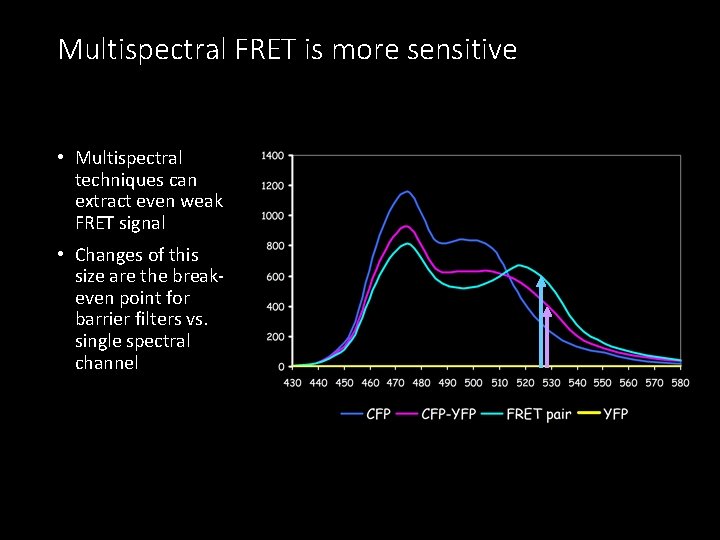
Multispectral FRET is more sensitive • Multispectral techniques can extract even weak FRET signal • Changes of this size are the breakeven point for barrier filters vs. single spectral channel
- Slides: 62