
BIOLOGY 12 POWERPOINT NOTES THE DIGESTIVE SYSTEM MR
BIOLOGY 12 – POWERPOINT NOTES THE DIGESTIVE SYSTEM MR. J. MUNRO – HIGHROAD ACADEMY
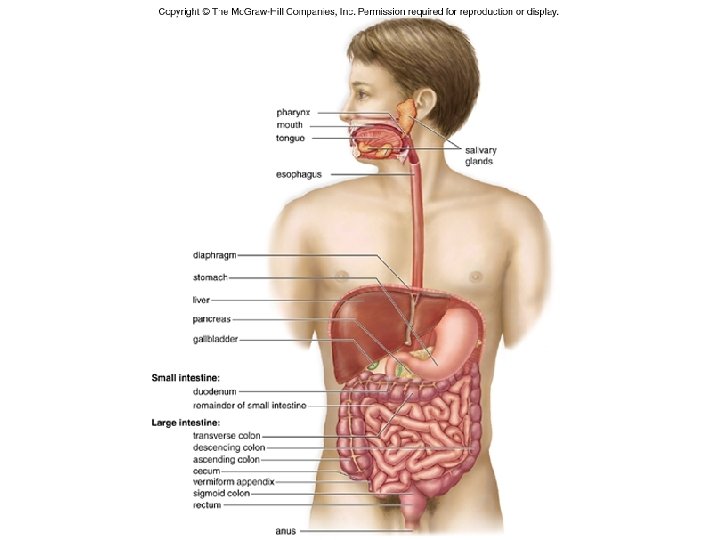

The Digestive Tract • Functions – Ingest food – Digest food to nutrients – Absorb nutrients – Eliminate indigestible remains
The Digestive Tract • Two types of digestion – Mechanical Digestion • Large piece of food becomes smaller ones • Chewing of food in the mouth • Churning and mixing of food in the stomach – Chemical Digestion • Enzymes break down macromolecules into smaller molecules that can be absorbed
The Digestive Tract • The Mouth/ Oral Cavity – The Tongue • Comprised of skeletal muscles • Taste buds • Mechanical digestion and formation of bolus – Roof • Hard palate (anterior) – Contains several bones • Soft palate (posterior) – Made of muscle – Uvula: A finger shaped projection at the back of the mouth – Tonsils: Help protect the body from infections
The Digestive Tract – Salivary Glands • Three pairs of glands that send saliva through ducts to the mouth • Lubricate bolus • Saliva contains salivary amylase that begins digesting starch.
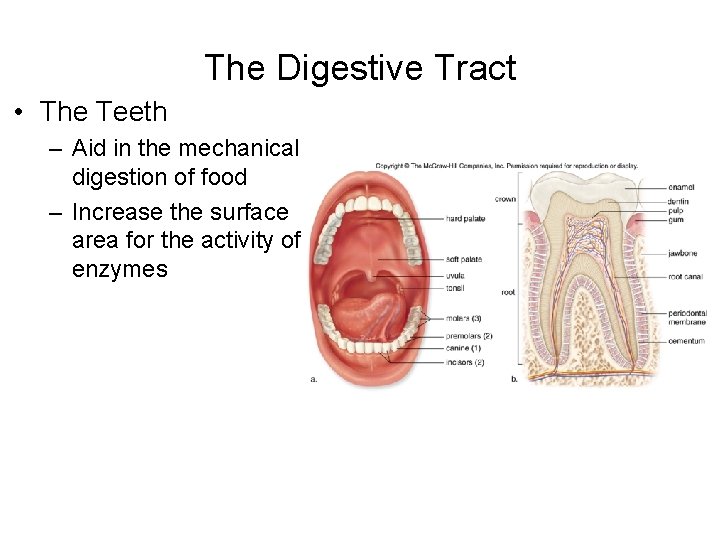
The Digestive Tract • The Teeth – Aid in the mechanical digestion of food – Increase the surface area for the activity of enzymes
The Digestive Tract • Pharynx – Receives air from the nasal cavities and food from the mouth – Swallowing • A reflex action • Soft palate closes off the nasopharynx • Trachea moves up causing the epiglottis to cover the glottis preventing food from entering the trachea
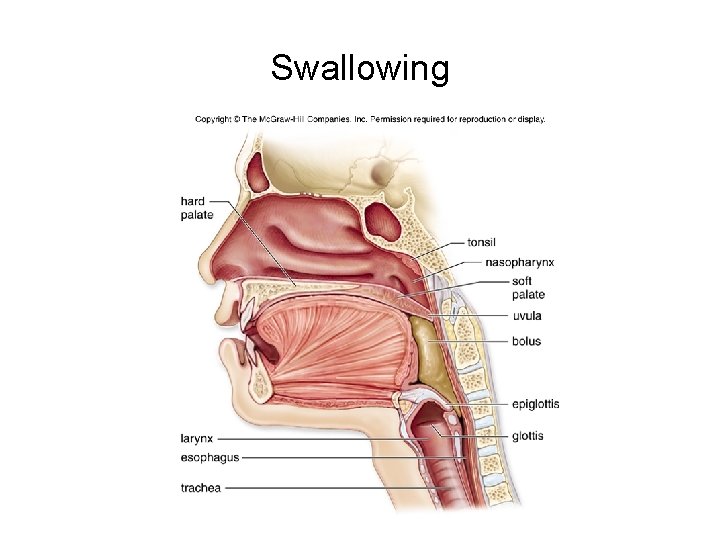
Swallowing
The Digestive Tract • Esophagus – A muscular tube that extends from the pharynx to the stomach – The esophagus is usually collapsed except during swallowing – Peristalsis (rhythmic contractions) pushes food along the digestive tract – Cardiac sphincter muscle closes the esophagus from the stomach – Relaxation of the cardiac sphincter allows food to enter the stomach – If contents of the stomach escape into the esophagus, this cause heartburn.
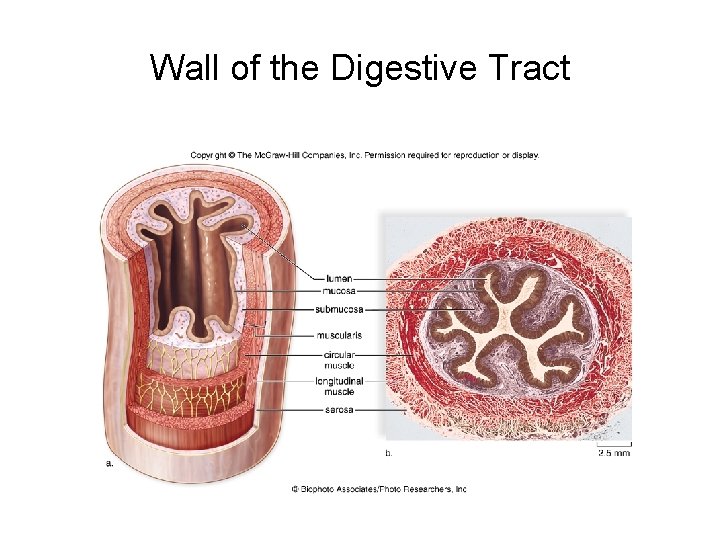
Wall of the Digestive Tract
The Digestive Tract • The Stomach – Receives food from the esophagus – Moves food into the small intestine – Can expand to hold about 4 liters
The Digestive Tract • The Stomach – Both mechanical and chemical digestion occur in the stomach. – The stomach wall has three layers of muscles that churns the food, mixing it with gastric juices. – Gastric glands in the lining of the stomach secretes pepsinogen, Hydrochloric acid (HCl), and mucous. • Pepsinogen is converted to pepsin by the presence of HCl • Food mixture = acid chyme – Mucous protects the wall of the stomach from the HCl. • An ulcer may develop if HCl penetrates the mucous. – Pyloric sphincter controls rate at which chyme exits stomach

The Digestive Tract • The Small Intestine – Approximately 6 meters long but smaller in diameter compared to the large intestine – Duodenum • The first 25 centimeters of the small intestine • Receives bile from the liver – Bile emulsifies fat • Also receives pancreatic juice from the pancreas – Many enzymes for digestion of nutrients – Bicarbonate to neutralize p. H
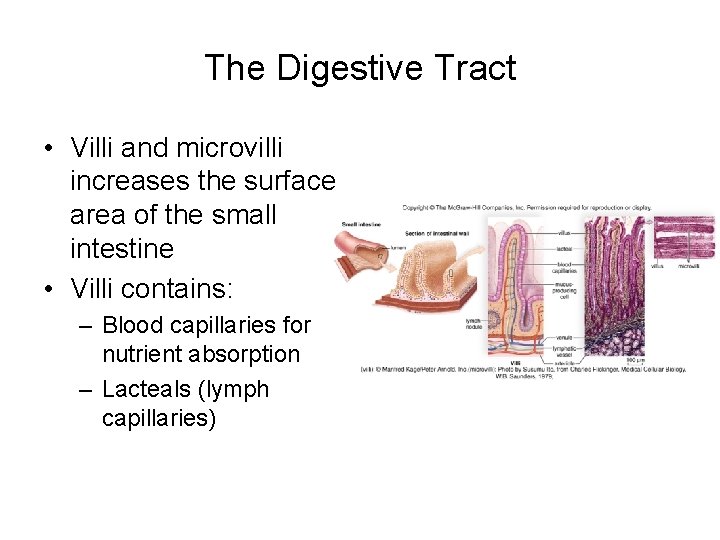
The Digestive Tract • Villi and microvilli increases the surface area of the small intestine • Villi contains: – Blood capillaries for nutrient absorption – Lacteals (lymph capillaries)
The Digestive Tract • The Large Intestine – Approximately 1. 5 meters long but larger in diameter compared to the small intestine – Absorbs water, salts, and some vitamins – Stores indigestible materials until it can be eliminated – Includes the cecum, the colon, the rectum, and the anus – E. coli bacteria population
• E. coli bacteria digest some indigestible material and produce: a) gas b) amino acids c) vitamins d) growth factor proteins (stimulate cell growth)
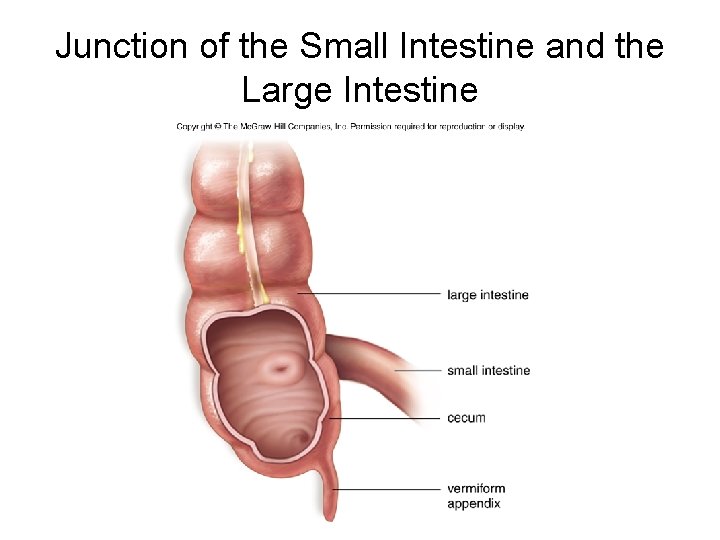
Junction of the Small Intestine and the Large Intestine
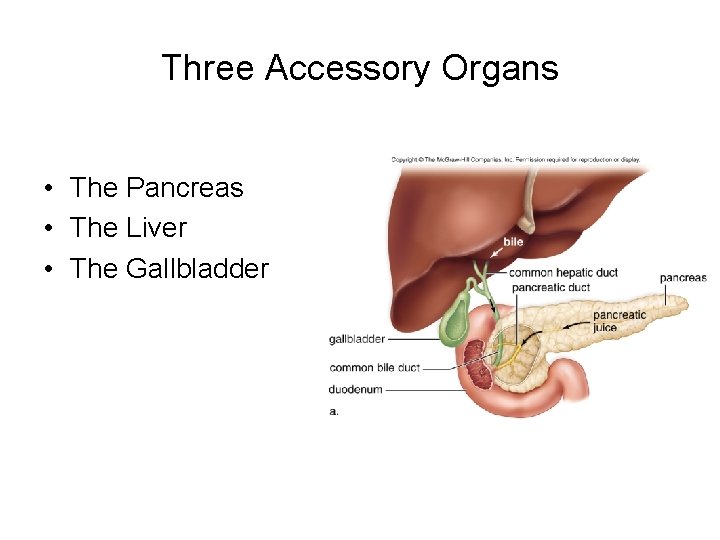
Three Accessory Organs • The Pancreas • The Liver • The Gallbladder
Three Accessory Organs • The Pancreas – Endocrine function (control hormones) • Islets cells release insulin and glucagon • Regulate blood glucose
Pancreas • Insulin – – Released after eating when blood glucose is high Stimulates uptake of glucose by cells Protein gates open Stimulates conversion of glucose to glycogen • Especially muscle, liver, and adipose cells • Also promotes formation of fats and proteins for long-term storage • Overall effect = Decreases blood glucose
Pancreas • Glucagon – – Released before eating when glucose is low Targets liver and adipose tissue Increases blood glucose Has opposite effect to insulin
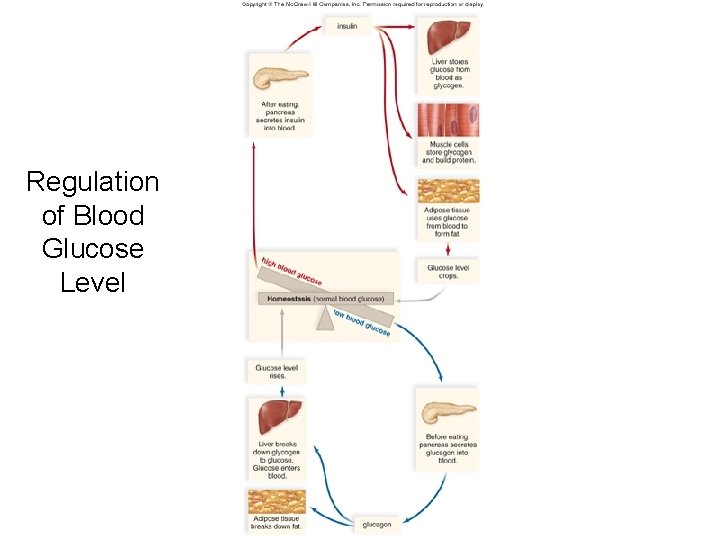
Regulation of Blood Glucose Level
Three Accessory Organs • The Pancreas – Exocrine function: release of: • Sodium bicarbonate • Pancreatic amylase: enzyme for starch digestion • Trypsin: enzyme for protein digestion • Lipase: enzyme for fat digestion • Nucleases: enzymes for nucleic acid digestion
Three Accessory Organs • The Liver – Largest gland in the body • A bile duct carries bile to duodenum • Hepatic artery and the hepatic portal vein connect to circulatory system • Detoxifies poisonous substances in blood • Removes and stores iron and vit. A, D, E, K, and B 12 • Makes plasma proteins • Regulates cholesterol
• The Liver – Glucose regulation • Excess glucose stored as glycogen in the liver • Glycogen is broken down to glucose when needed • When glycogen is depleted – Converts fats and amino acids to glucose = gluconeogenesis – Requires deamination of amino acids » Liver combines ammonia with carbon dioxide » Forms urea
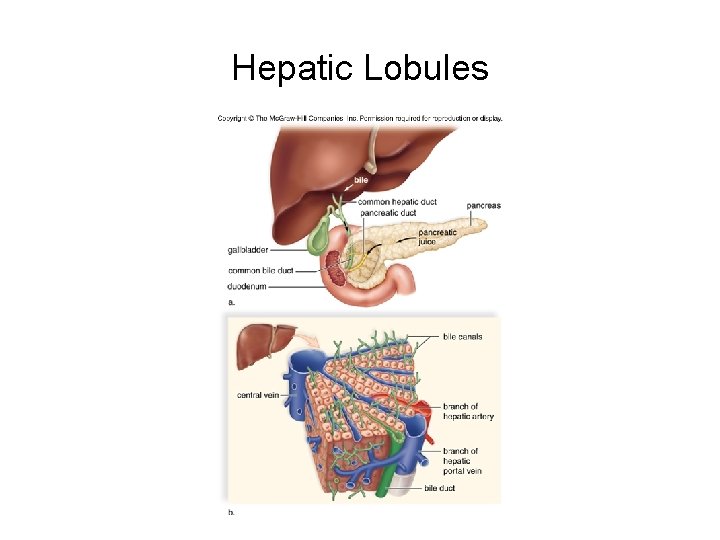
Hepatic Lobules
The Liver – Bile production • Stored in gallbladder • Has an important digestive function • Composition – Bilirubin » From breakdown of hemoglobin » Greenish color – Bile salts » Derived from cholesterol » Emulsify fats » breaks fat drops into tiny droplets which are homogeneous » stay in suspension. » increases surface area of the fat droplets for lipase to work on.
Summary of Liver Function • It removes poisonous substances (detoxifies blood) • Stores glucose in the form of Glycogen. Converts glycogen to glucose when blood sugar levels drop. • Destroys old red blood cells – (converts hemoglobin to bile) – stores bile in gall bladder to be used for fat emulsification. • Produces urea from breakdown product of amino acids – urea: nitrogenous waste • Makes blood proteins • Converts amino acids to glucose if necessary – “gluconeogenesis"
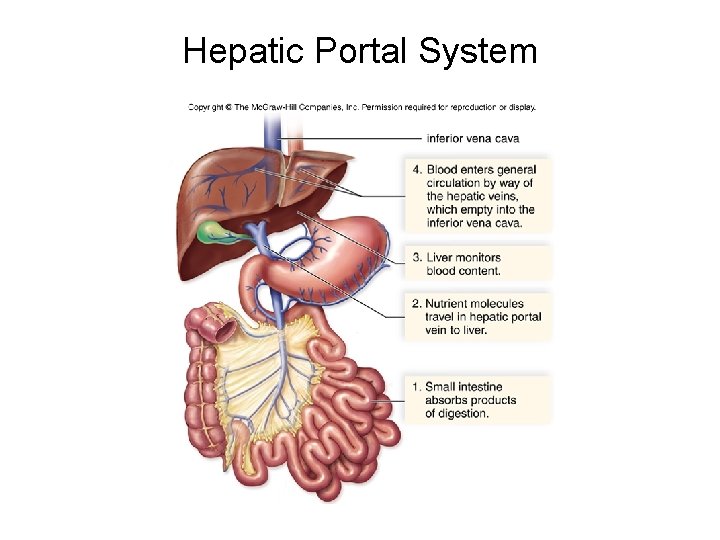
Hepatic Portal System
Three Accessory Organs • The Gallbladder – – Excess bile stored Secreted through common bile duct Bile emulsifies fat into tiny globules Cholesterol can precipitate out of solution • Forms crystals • Can become gall stones • Obstructive jaundice
Digestive Enzymes • Digestive Enzymes – Proteins with a particular tertiary shape that fits their substrate. – Have an optimum p. H which maintains their shape – Break down carbohydrates, proteins, nucleic acids, and fats
Digestive Enzymes • Salivary Amylase – Catalyzes the reaction: Starch+ H 2 O Maltose • • • Occurs in the mouth Produced by salivary glands Optimum at neutral p. H (7) Maltose must be broken down to glucose for absorption Polysaccharide Disaccharide • Pepsin – Catalyzes the reaction: Protein + H 2 O Peptides • Pepsinogen activated to pepsin by p. H<2 • Occurs in the stomach in presence of HCl
Digestive Enzymes • Pancreatic Amylase – Catalyzes the reaction: Starch + H 2 O Maltose • Occurs in duodenum – p. H in duodenum is slightly basic from sodium bicarbonate (>7) – Optimal p. H for pancreatic amylase is basic • Completes digestion of starches to dissaccharides • Trypsin – Catalyzes the reaction: Protein + H 2 O Peptides • Occurs in duodenum • Basic p. H (>7) • Produced by pancreas as trypsinogen which is converted to trypsin in basic p. H
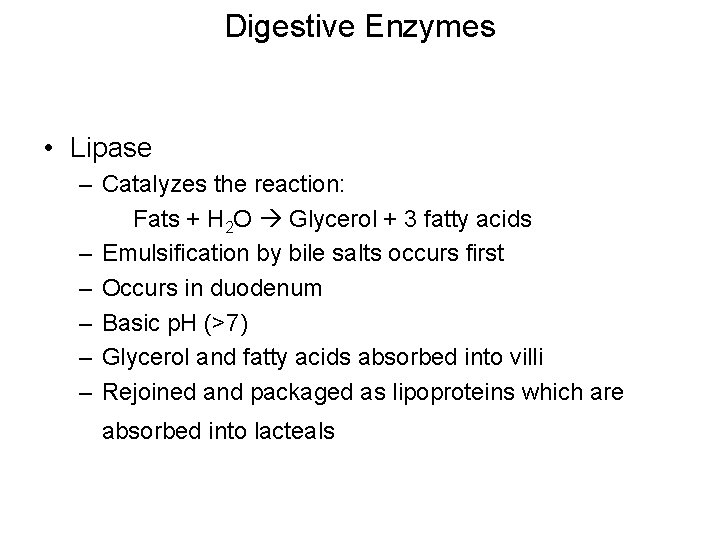
Digestive Enzymes • Lipase – Catalyzes the reaction: Fats + H 2 O Glycerol + 3 fatty acids – Emulsification by bile salts occurs first – Occurs in duodenum – Basic p. H (>7) – Glycerol and fatty acids absorbed into villi – Rejoined and packaged as lipoproteins which are absorbed into lacteals
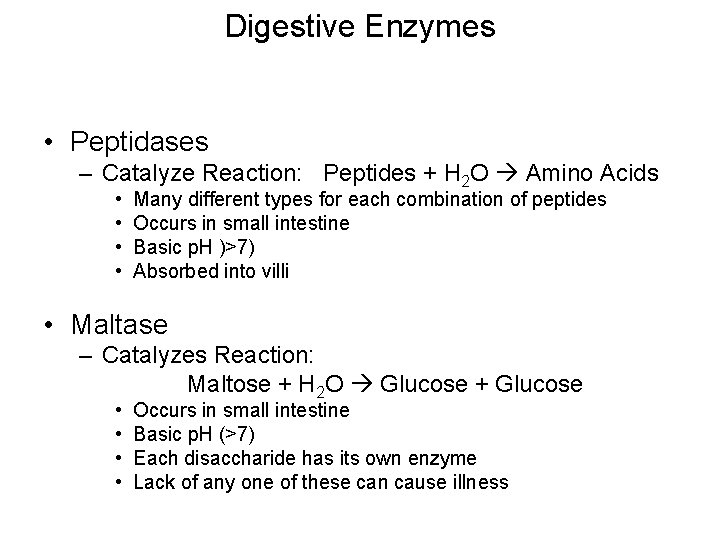
Digestive Enzymes • Peptidases – Catalyze Reaction: Peptides + H 2 O Amino Acids • • Many different types for each combination of peptides Occurs in small intestine Basic p. H )>7) Absorbed into villi • Maltase – Catalyzes Reaction: Maltose + H 2 O Glucose + Glucose • • Occurs in small intestine Basic p. H (>7) Each disaccharide has its own enzyme Lack of any one of these can cause illness
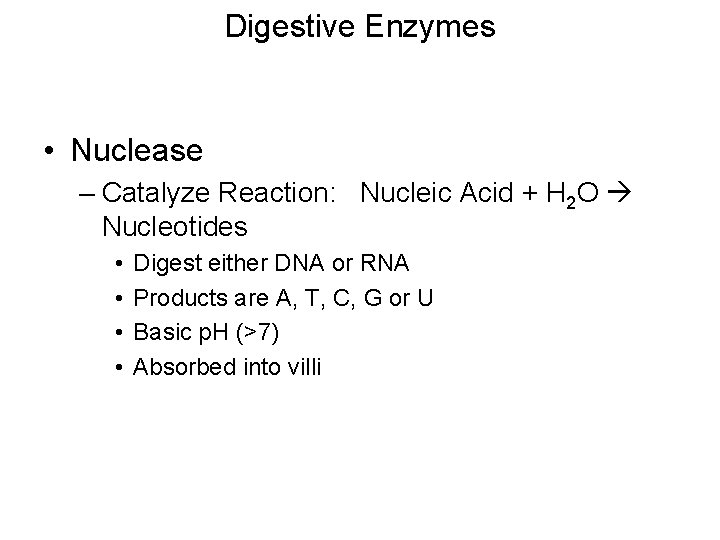
Digestive Enzymes • Nuclease – Catalyze Reaction: Nucleic Acid + H 2 O Nucleotides • • Digest either DNA or RNA Products are A, T, C, G or U Basic p. H (>7) Absorbed into villi
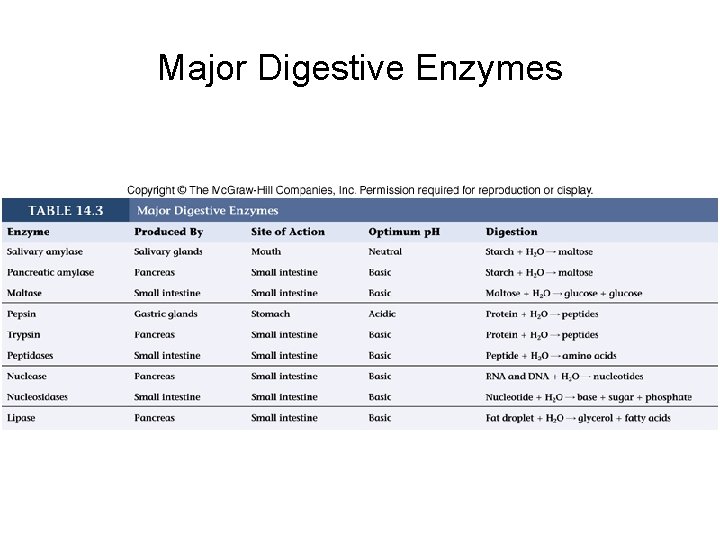
Major Digestive Enzymes
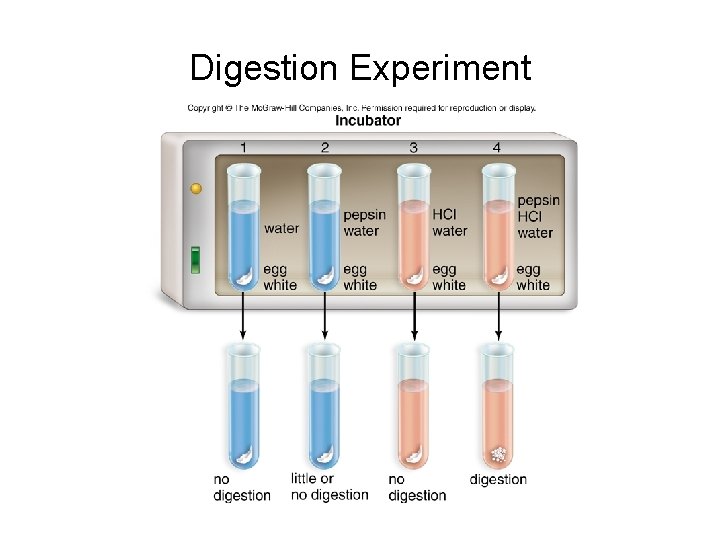
Digestion Experiment
SWALLOWING AND PERISTALSIS • Swallowing involves the formation of a bolus (food ball) which is formed by the mouth, teeth, tongue, and saliva from the salivary glands. When swallowing the esophagus moves the bolus into the stomach by peristalsis. - peristalsis is a rhythmic contraction of the esophagus and intestine - muscle contractions (smooth muscle) run along the tube and push food material in one direction
Saliva • Saliva: H 2 O, mucus - lubrication of food - formation of a bolus (food ball) - (salivary amalyse -- starch digestion)
Pancreatic Juice • Sodium Bicarbonate: (Baking Soda) - very important in neutralizing stomach acid to give a slightly basic p. H in intestine. (p. H 3. 5 in stomach to p. H 7. 5 in intestine) - Enzymes: - Pancreatic Amylase - Trypsin - Lipase - Nuclease • Remember S-L-A-N-T • Sodium bicarbonate, Lipase, Amylase, Nuclease, Trypsin
Intestinal Juice • Small intestine (including duodenum) Accessory glands (food does not directly pass through them) - bile is secreted from the gallbladder into the duodenum - pancreatic juice enters into the duodenum Enzymes - Maltase - Peptidases - Nucleases
Nutrition • Nutrition – Science of foods and nutrients • Nutrient- component of food that performs physiological function – All body functions depend on proper nutrition • Nutrients – Carbohydrates • Primary energy source – Fats • Energy storage – Proteins • Growth and development • Regulate metabolism • Can be energy source
Nutrition • Nutrients – Water • Cells are 70 -80% water – Vitamins and minerals • Coenzymes and cofactors • Food Pyramid – – Guides food choices to fulfill needs Emphasize foods in broad base areas Minimize foods at tip Guidelines change as nutritionists gain information

Food Guide Pyramids
Nutrition • Guidelines – Balance energy input with energy output to maintain weight – Eat a variety of foods – A healthy diet • A moderate total fat intake low in saturated fats and cholesterol • Whole grains, legumes, vegetables for fiber and complex carbohydrates • Low in refined carbohydrates • Low in salt and sodium • Adequate protein from poultry, fish, plants • Low or moderate alcohol consumption • Adequate vitamins and minerals – Avoid questionable supplements-may be contraindicated
Nutrition • Carbohydrates – Glucose is the most readily available energy source • Stored by liver as glycogen – Between meals liver can keep blood glucose constant by: » The breakdown of glycogen » The conversion of amino acids and fat to glucose • Body cells can use fatty acids for energy • Brain cells can only use glucose
Nutrition • Carbohydrates – Complex carbohydrates • Gradually broken down to glucose • Contain fiber – Insoluble fiber-may protect against cancer – Soluble fiber-combines with bile acids and cholesterol
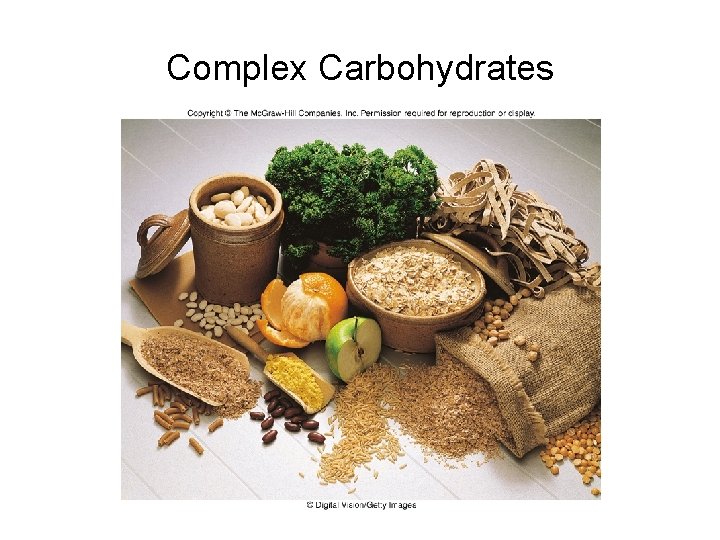
Complex Carbohydrates
Nutrition • Carbohydrates – Simple Sugars • • High glycemic index - elevate blood sugar rapidly This causes the pancreas to releases an overload of insulin Sugar is then taken up rapidly, hunger returns quickly Can lead to insulin resistance
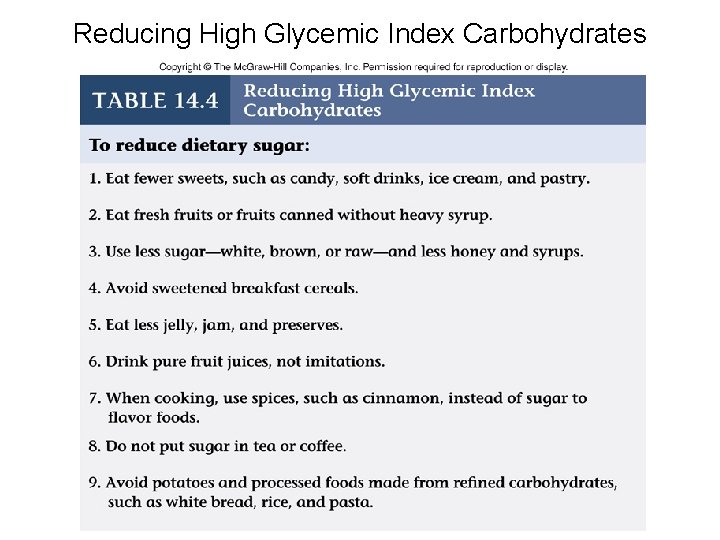
Reducing High Glycemic Index Carbohydrates
Nutrition • Proteins – Following the digestion of proteins, amino acids enter the bloodstream and are transferred to tissues – Amino acids are usually not used as an energy source, rather they are used to make structural proteins (muscle, hair, skin, nails) – Others are used to synthesis proteins such as hemoglobin, plasma proteins, enzymes, hormones
Nutrition • Proteins – Adequate protein formation requires 20 amino acids • 8 must be supplied in the diet (essential amino acids) • The remaining 12 can be synthesized by the body
Nutrition • Proteins – Complete proteins • Contain all 20 amino acids • Eggs, meat, milk – Incomplete proteins • Proteins of plant origin • Each lacks at least essential amino acids • Vegetarians must combine plant protein sources – Protein complementary – Legumes with grains-provides all 20 amino acids
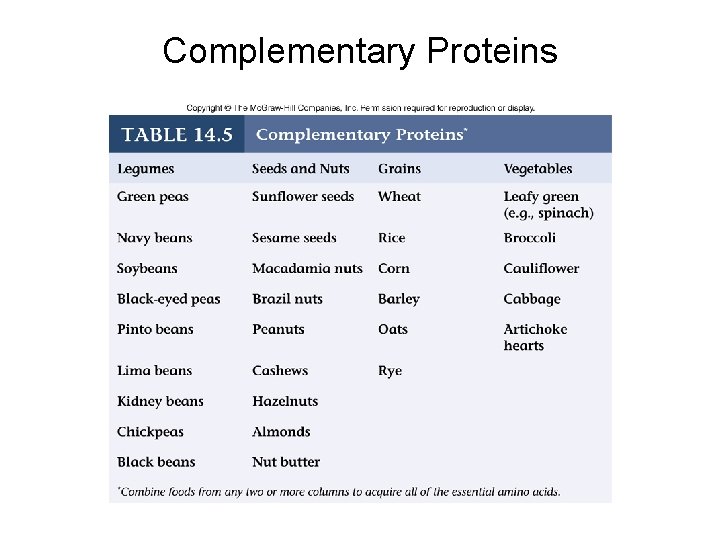
Complementary Proteins
Nutrition • Proteins – Amino acids are not stored – Must take in daily supply – Too high intake of protein can be harmful • • Deamination of amino acids produces urea Urea excretion requires water Dehydration especially if individual is exercising Can also cause calcium loss – Some protein foods also are high in saturated fats • Red meat • Can lead to cardiovascular disease
Nutrition • Lipids (Fats, oils, and cholesterol) – Saturated Fats • Solids at room temperature • Usually of animal origin – Exceptions: palm oil, coconut oil • Associated with cardiovascular disease • Trans fatty acids are worst – Hydrogenated unsaturated fatty acids – Found largely in commercial products – May reduce ability to clear cholesterol – Associated with heart disease and diabetes
Nutrition • Lipids – Unsaturated Fats • Oils have percentage of mono- and polyunsaturated fats • Polyunsaturated oils contain essential fatty acids that can only be obtained through the diet – Linoleic and linolenic acid – Omega-3 fatty acids • Especially protective against heart disease • Cold water fish, flax seed oil, olive oil, canola oil
Nutrition • Lipids – Fats That Cause Disease • Plaques- form in arteries – Contain cholesterol and saturated fats • Cholesterol – Carried in blood by low density lipoprotein (LDL) and high density lipoprotein (HDL) – LDL (”bad” cholesterol) - transports cholesterol from the liver to cells – HDL- (“good” cholesterol) - transports cholesterol to the liver to make bile salts
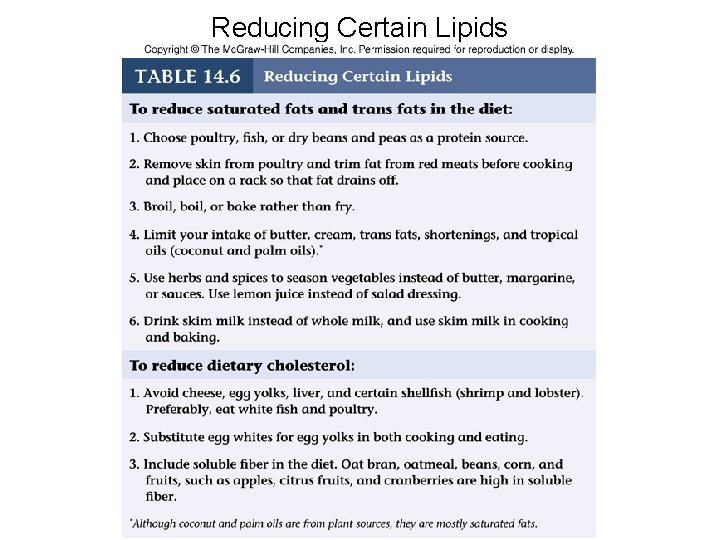
Reducing Certain Lipids
Nutrition • Vitamins – Organic compounds • Many are coenzymes • Deficiencies produce specific symptoms – 13 vitamins • Fat soluble- A, D, E, K • Water soluble- remaining 9 – Antioxidants-defend against free radicals • Vitamins C, E, and A • Cell metabolism generates free radicals – O 2 - and OH– Cause cell damage
Nutrition • Vitamins – Vitamin D • Converted in skin to active form by UV light • Further modification in kidneys and liver – Becomes calcitrol – Promotes calcium absorption from intestines • Deficiency causes rickets
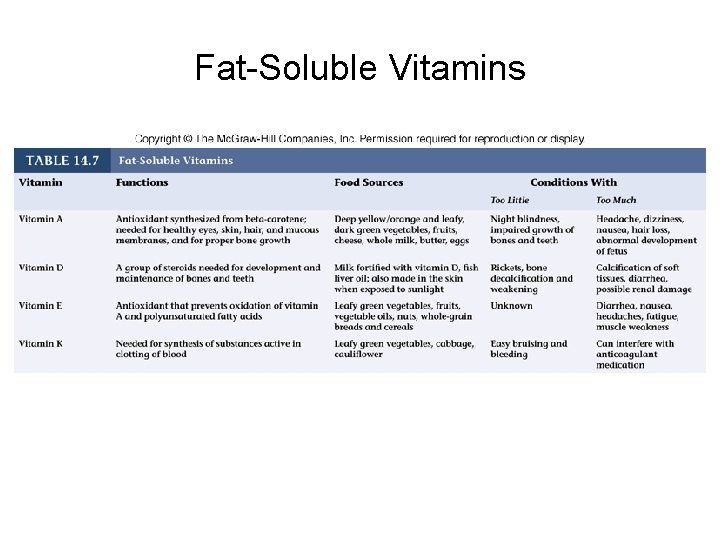
Fat-Soluble Vitamins
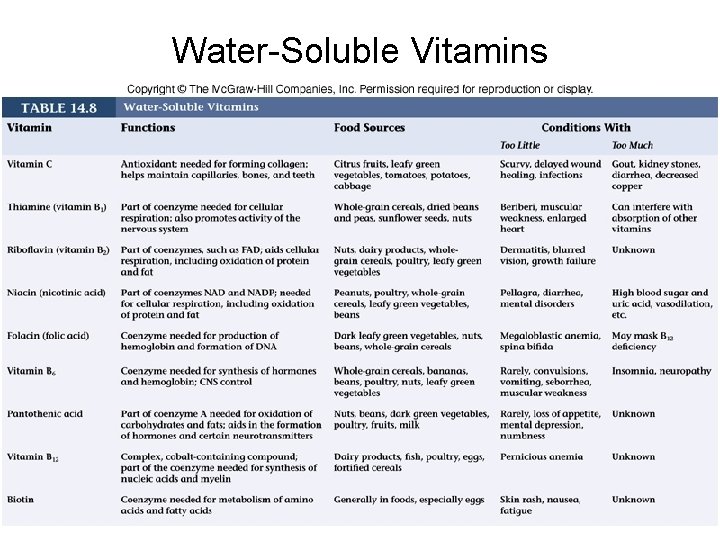
Water-Soluble Vitamins
Nutrition • Minerals – Major Minerals • Body contains more than 5 grams • Constituents of cells • Structural components – Trace Minerals • Body contains less than 5 grams • Components of larger molecules
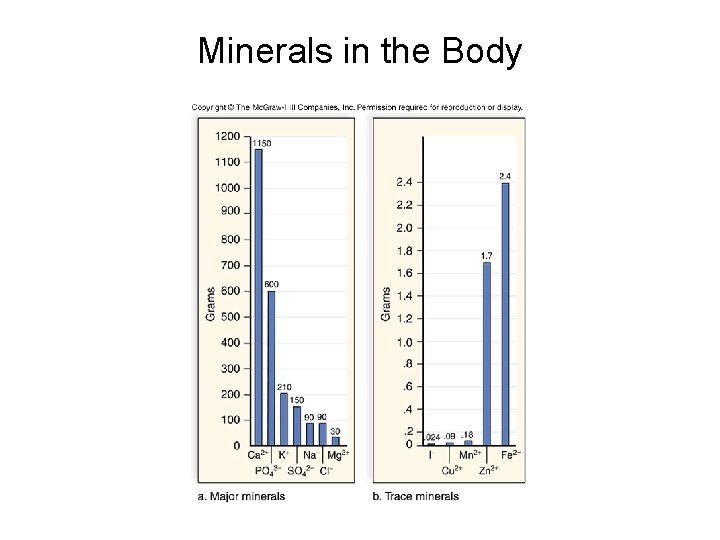
Minerals in the Body
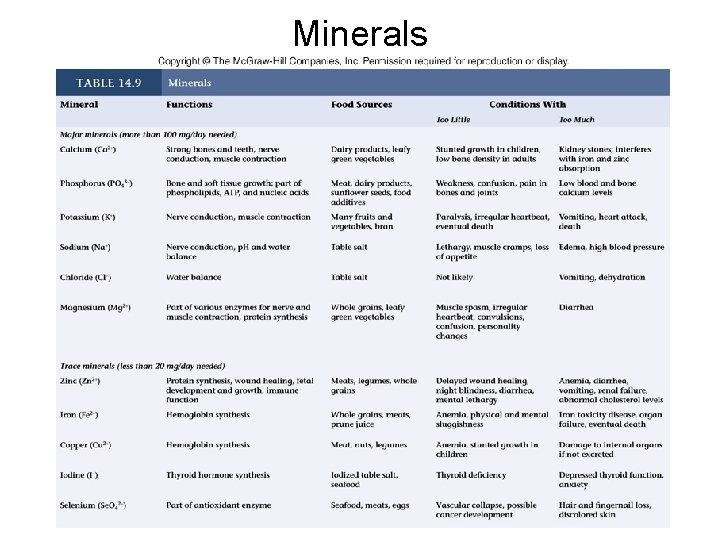
Minerals
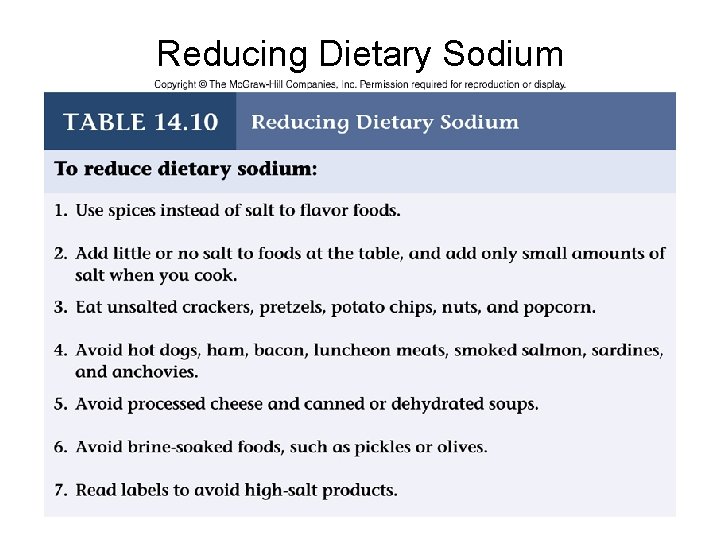
Reducing Dietary Sodium
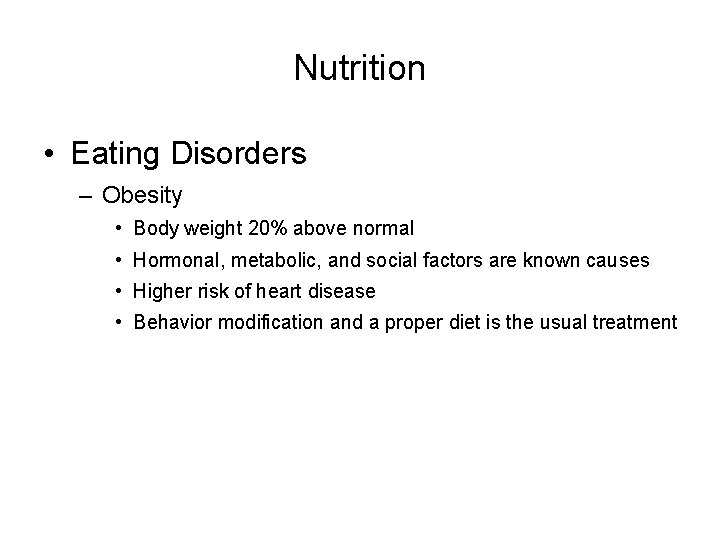
Nutrition • Eating Disorders – Obesity • Body weight 20% above normal • Hormonal, metabolic, and social factors are known causes • Higher risk of heart disease • Behavior modification and a proper diet is the usual treatment
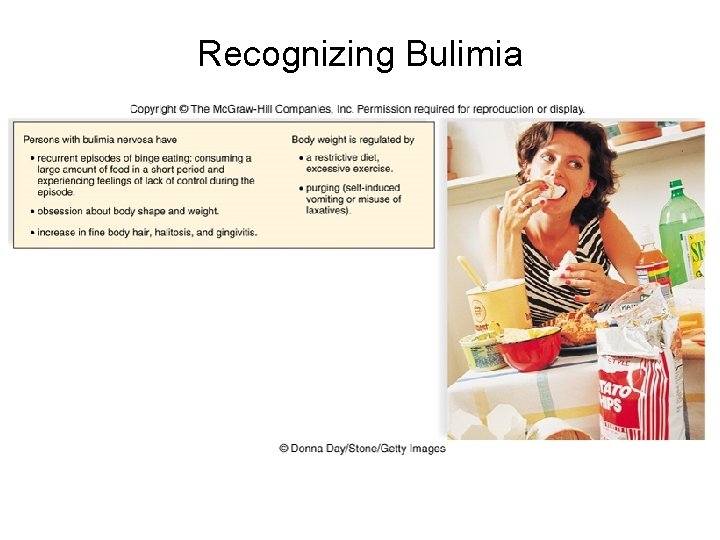
Recognizing Bulimia
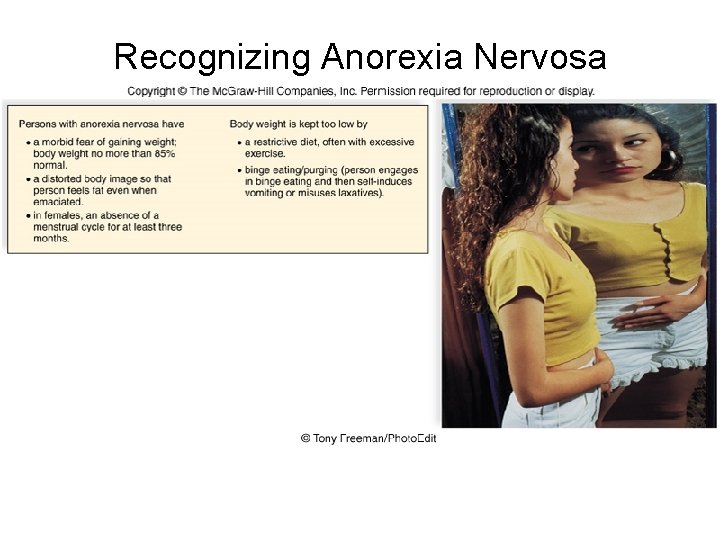
Recognizing Anorexia Nervosa
- Slides: 72