
BIOLOGY 12 POWERPOINT NOTES Cell Structures MR J
BIOLOGY 12 – POWERPOINT NOTES Cell Structures MR. J. MUNRO – HIGHROAD ACADEMY
• describe the following cell structures and their functions: – – – cell membrane mitochondria smooth and rough endoplasmic reticulum ribosomes Golgi bodies vesicles vacuoles lysosomes nuclear envelope nucleus nucleolus chromosomes • identify the functional interrelationships of cell structures • identify the cell structures in diagrams and electron micrographs
The Cellular Level of Organization
The Cellular Level of Organization • The cell is the structural and functional unit of an organism, the smallest structure capable of performing all the functions necessary for life.
The Cell Theory
The Cell Theory • All organisms are composed of one or more cells.
The Cell Theory • All organisms are composed of one or more cells. • Cells are the basic living unit of structure and function in organisms.
The Cell Theory • All organisms are composed of one or more cells. • Cells are the basic living unit of structure and function in organisms. • All cells come only from other cells.
The Cellular Level of Organization • Prokaryotic cells lack membrane enclosed structures. • Eukaryotic cells possess membrane enclosed structures.
3. 3 Eukaryotic Cells
3. 3 Eukaryotic Cells • Eukaryotic cells: – Are structurally complex – Have a nucleus – Possess membrane-bound organelles – May have a cell wall
3. 3 Eukaryotic Cells • Eukaryotic cells: – Are structurally complex – Have a nucleus – Possess membrane-bound organelles – May have a cell wall
3. 3 Eukaryotic Cells • Eukaryotic cells: – Are structurally complex – Have a nucleus – Possess membrane-bound organelles – May have a cell wall
3. 3 Eukaryotic Cells • Eukaryotic cells: – Are structurally complex – Have a nucleus – Possess membrane-bound organelles – May have a cell wall
Eukaryotic Cells
3. 3 Eukaryotic Cells
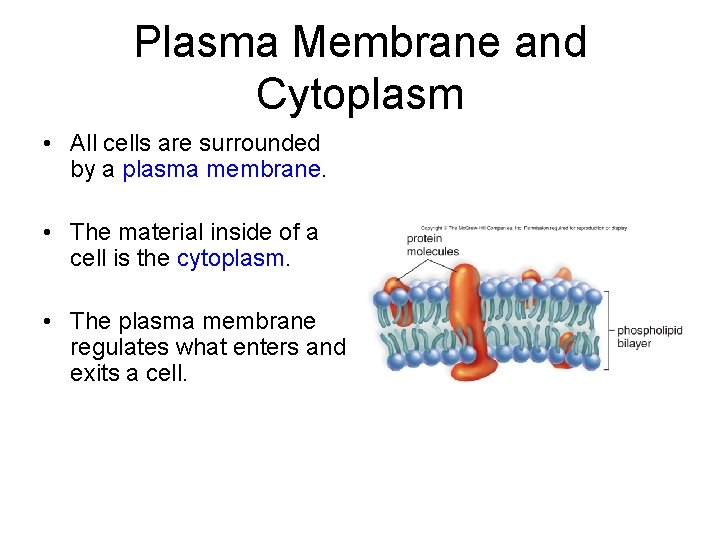
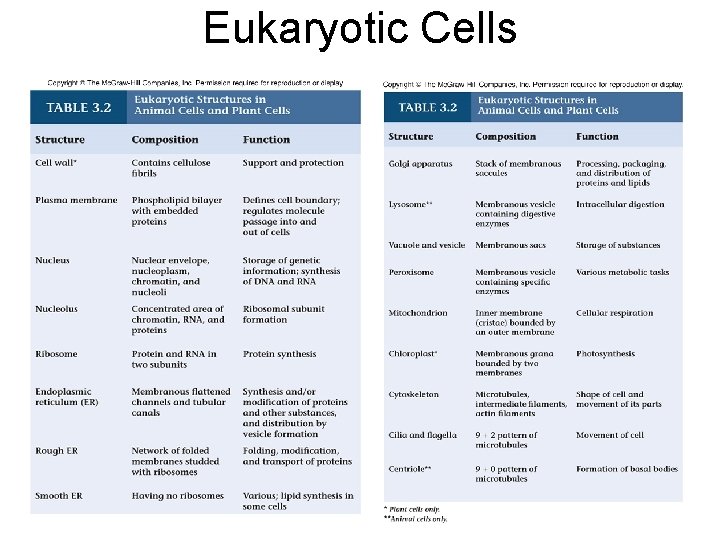
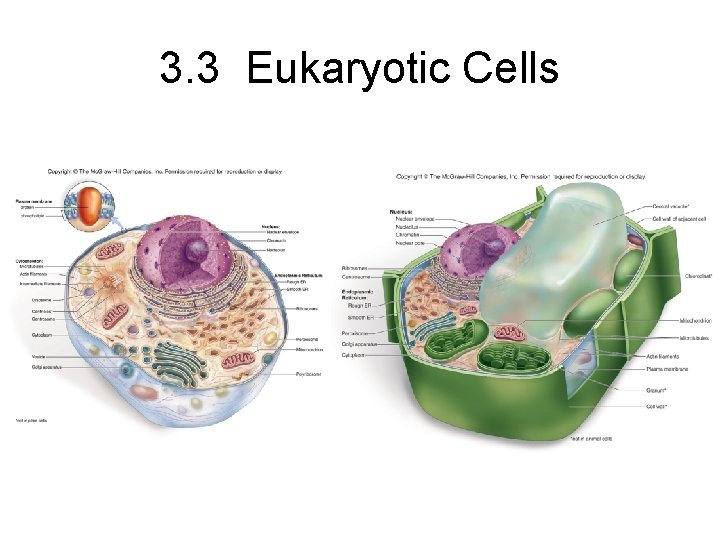
Plasma Membrane and Cytoplasm • All cells are surrounded by a plasma membrane. • The material inside of a cell is the cytoplasm. • The plasma membrane regulates what enters and exits a cell.
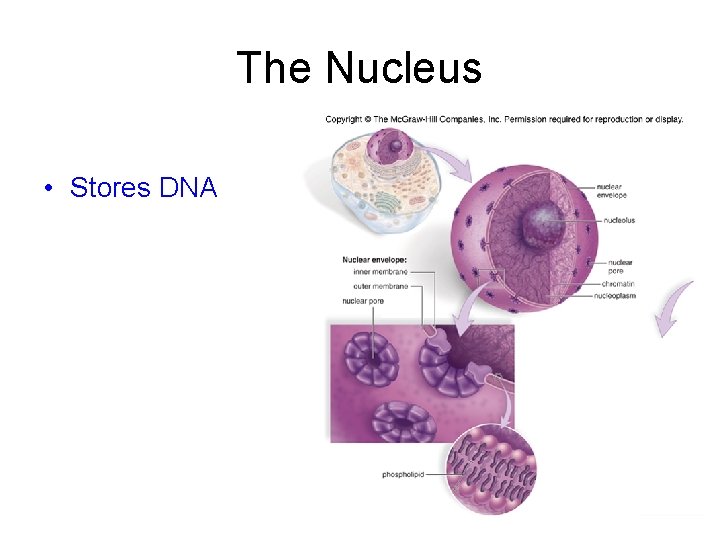
The Nucleus • Stores DNA
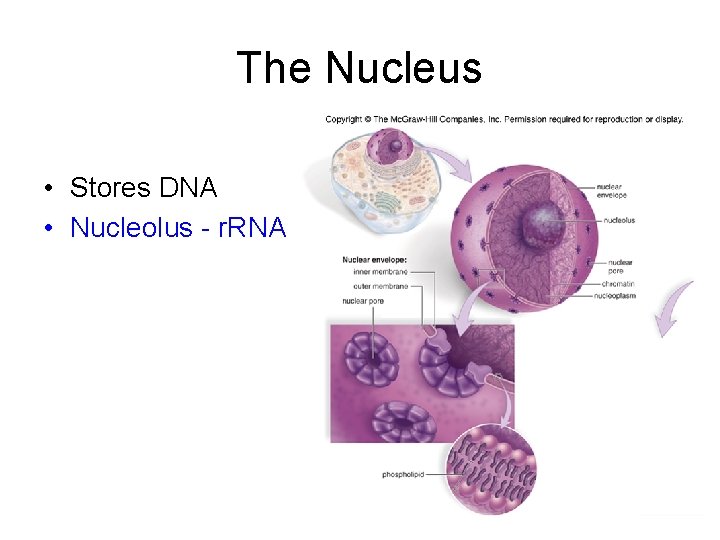
The Nucleus • Stores DNA • Nucleolus - r. RNA
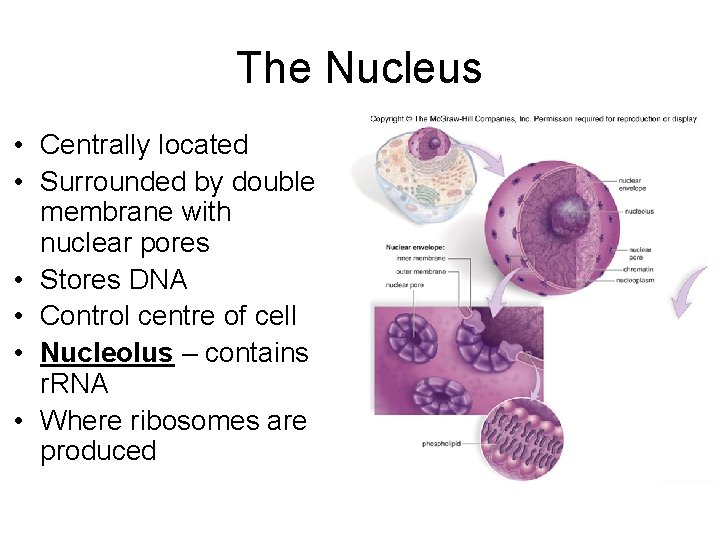
The Nucleus • Centrally located • Surrounded by double membrane with nuclear pores • Stores DNA • Control centre of cell • Nucleolus – contains r. RNA • Where ribosomes are produced
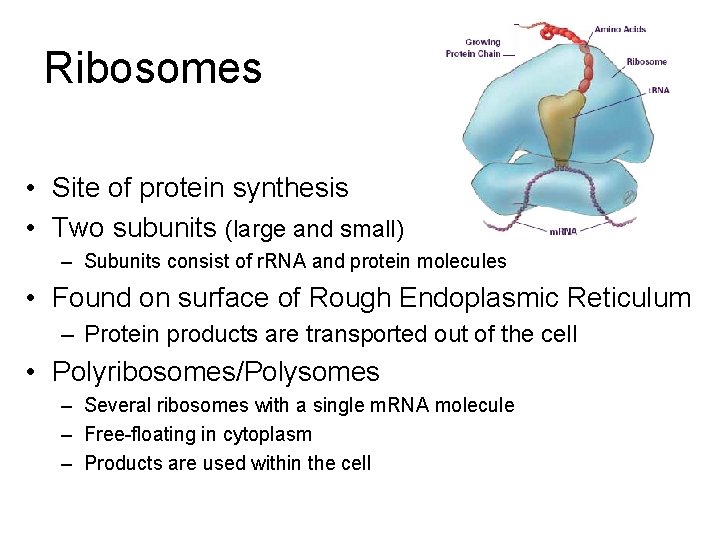
Ribosomes • Site of protein synthesis • Two subunits (large and small) – Subunits consist of r. RNA and protein molecules • Found on surface of Rough Endoplasmic Reticulum – Protein products are transported out of the cell • Polyribosomes/Polysomes – Several ribosomes with a single m. RNA molecule – Free-floating in cytoplasm – Products are used within the cell
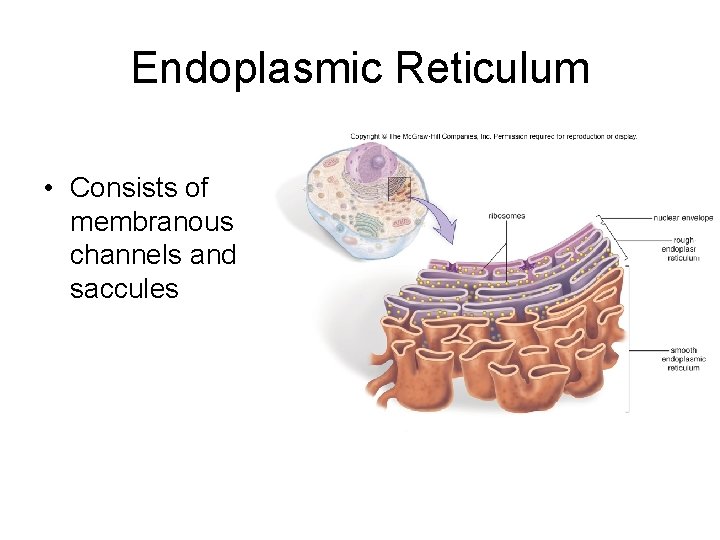
Endoplasmic Reticulum • Consists of membranous channels and saccules
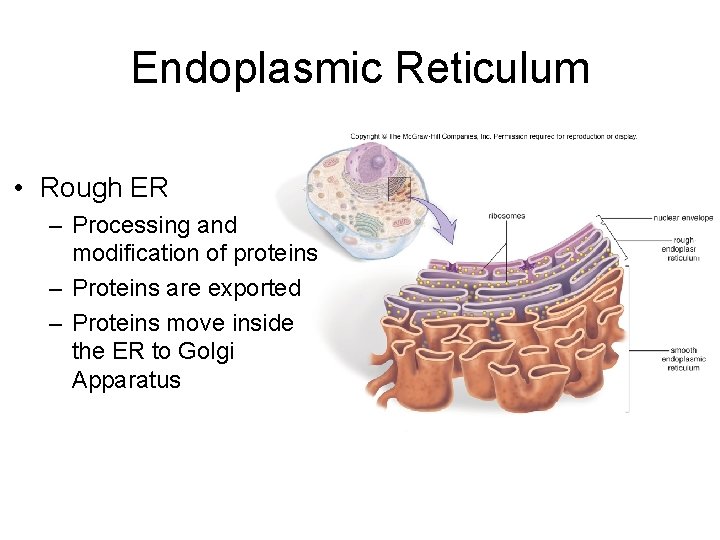
Endoplasmic Reticulum • Rough ER – Processing and modification of proteins – Proteins are exported – Proteins move inside the ER to Golgi Apparatus
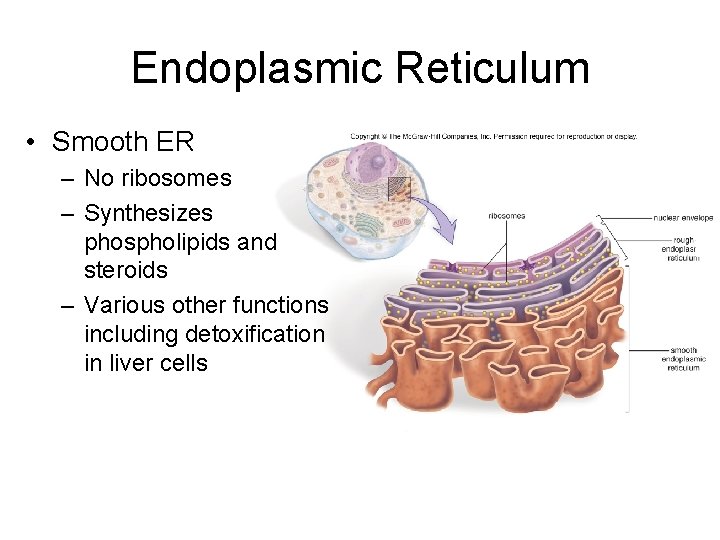
Endoplasmic Reticulum • Smooth ER – No ribosomes – Synthesizes phospholipids and steroids – Various other functions including detoxification in liver cells
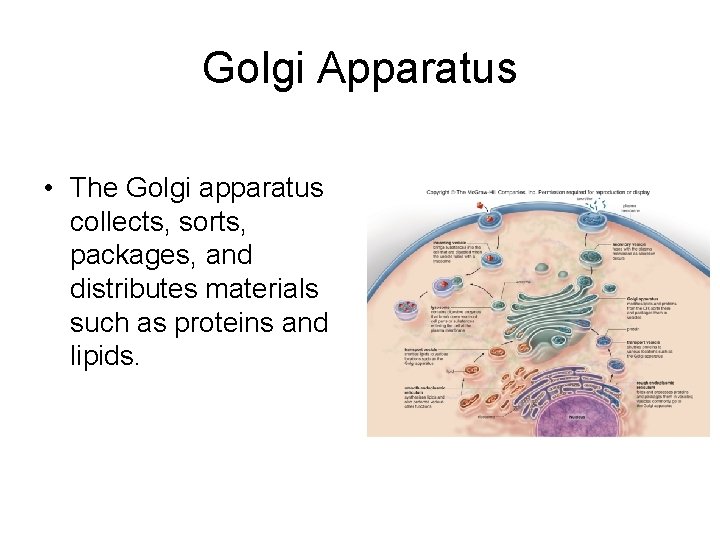
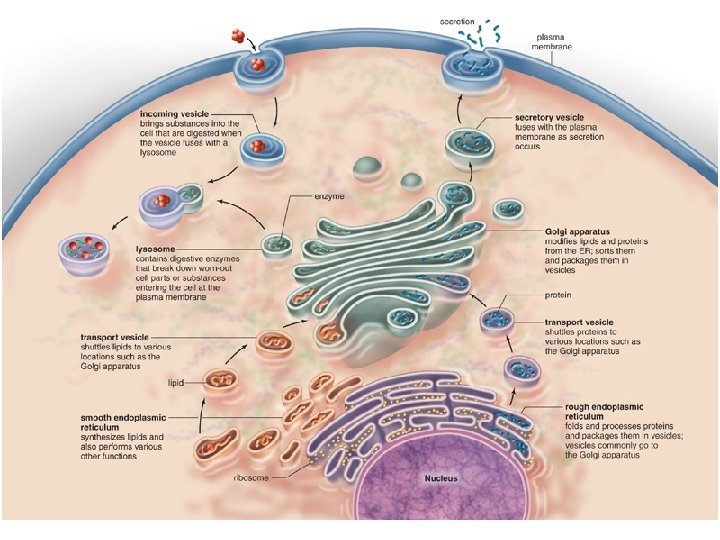
Golgi Apparatus • The Golgi apparatus collects, sorts, packages, and distributes materials such as proteins and lipids.
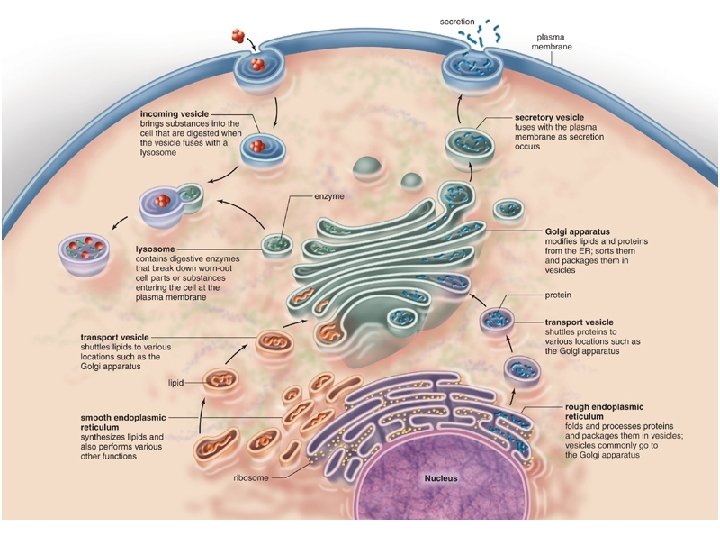
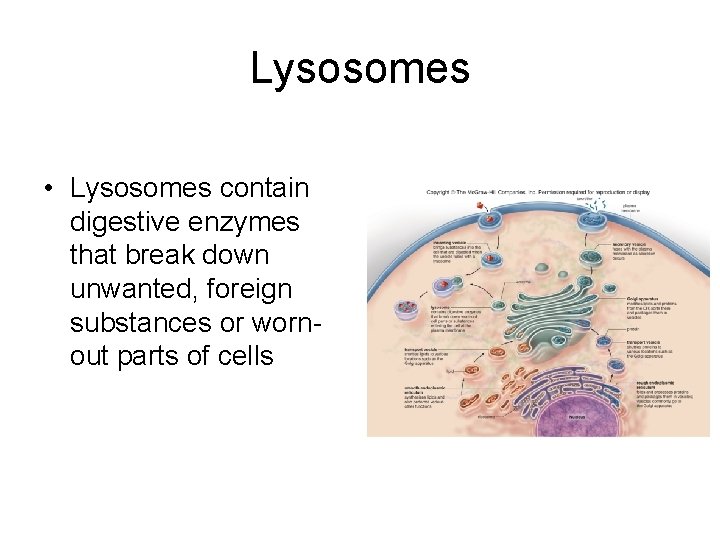
Lysosomes • Lysosomes contain digestive enzymes that break down unwanted, foreign substances or wornout parts of cells
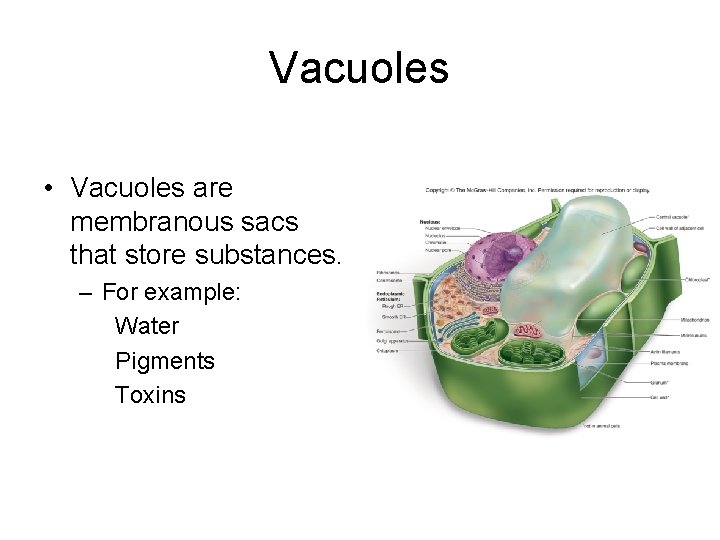
Vacuoles • Vacuoles are membranous sacs that store substances. – For example: Water Pigments Toxins
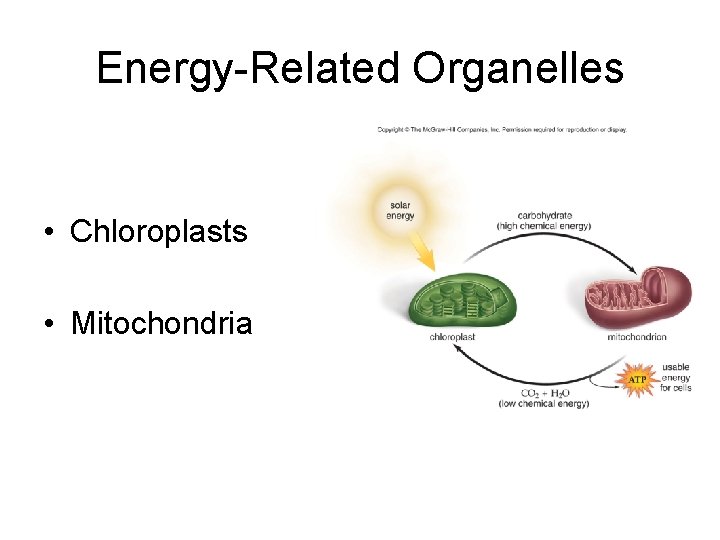
Energy-Related Organelles • Chloroplasts • Mitochondria
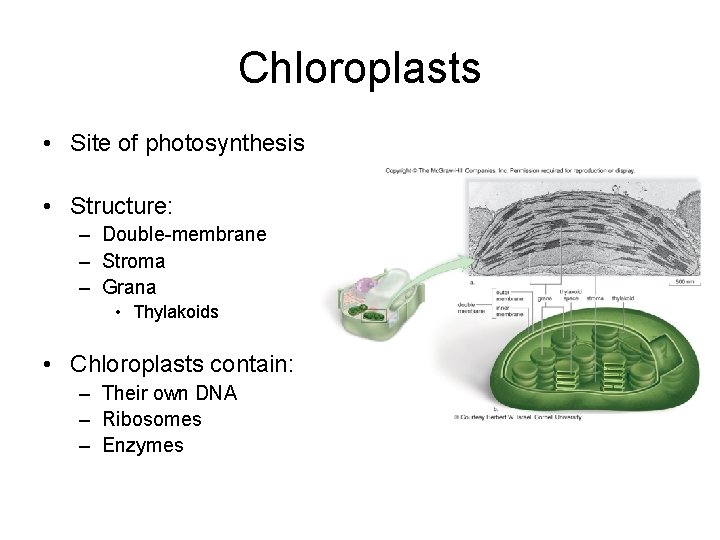
Chloroplasts • Site of photosynthesis • Structure: – Double-membrane – Stroma – Grana • Thylakoids • Chloroplasts contain: – Their own DNA – Ribosomes – Enzymes
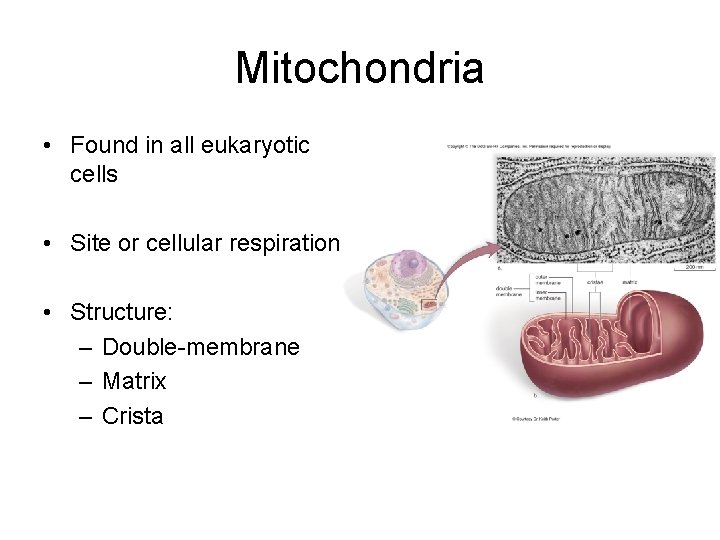
Mitochondria • Found in all eukaryotic cells • Site or cellular respiration • Structure: – Double-membrane – Matrix – Crista
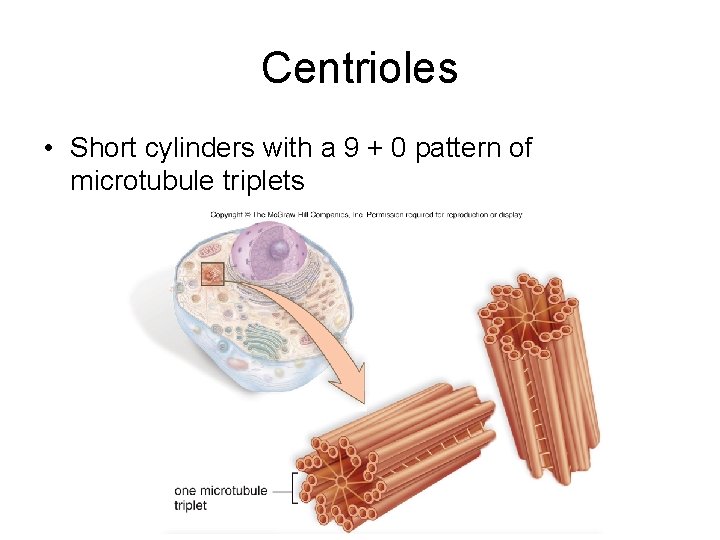
Centrioles • Short cylinders with a 9 + 0 pattern of microtubule triplets
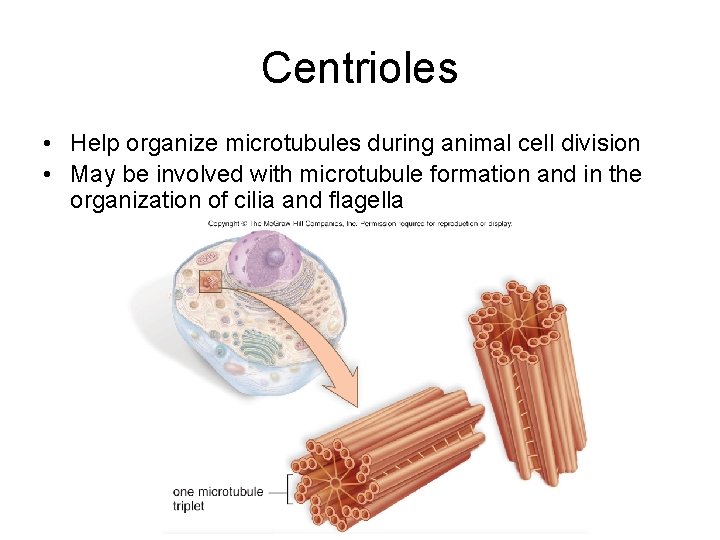
Centrioles • Help organize microtubules during animal cell division • May be involved with microtubule formation and in the organization of cilia and flagella
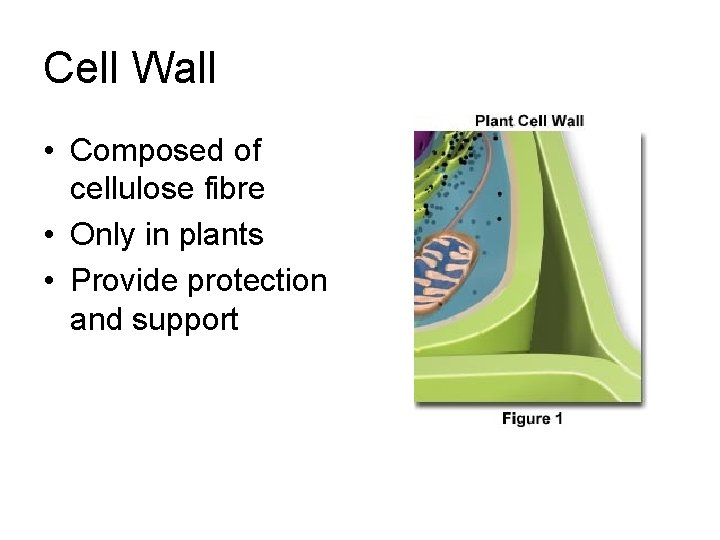
Cell Wall • Composed of cellulose fibre • Only in plants • Provide protection and support
The Cytoskeleton • Maintains cell shape • Assists in movement of cell and organelles • Assemble and disassemble as needed • Three types of macromolecular fibers – Actin Filaments – Intermediate Filaments – Microtubules
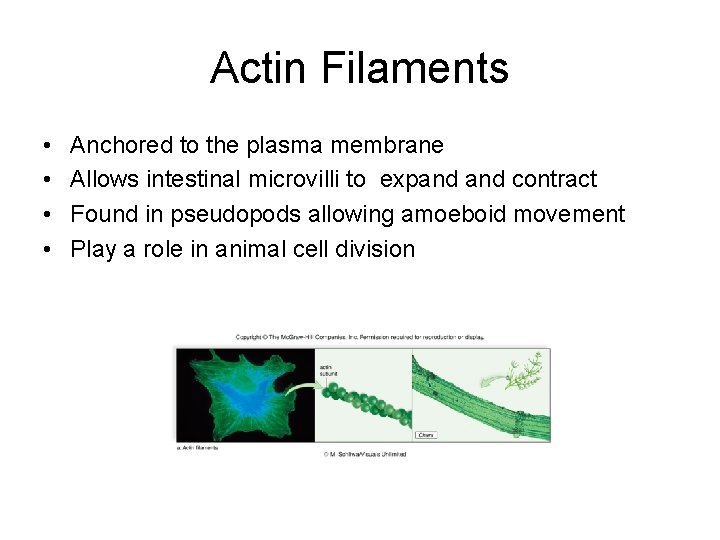
Actin Filaments • • Anchored to the plasma membrane Allows intestinal microvilli to expand contract Found in pseudopods allowing amoeboid movement Play a role in animal cell division
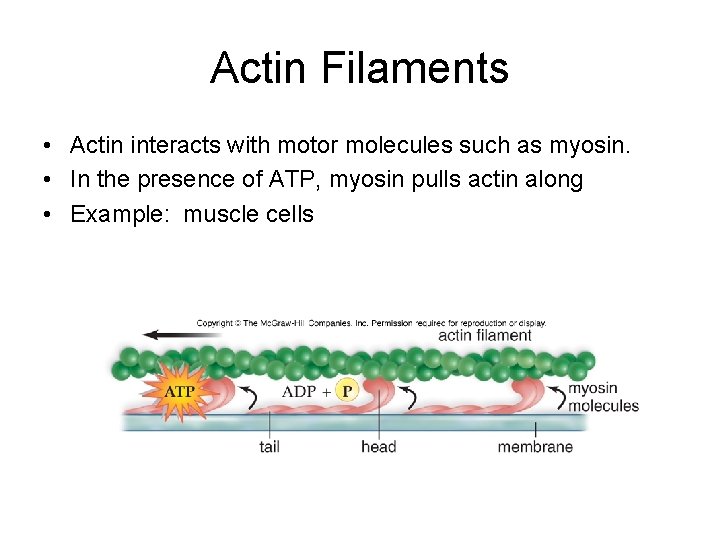
Actin Filaments • Actin interacts with motor molecules such as myosin. • In the presence of ATP, myosin pulls actin along • Example: muscle cells
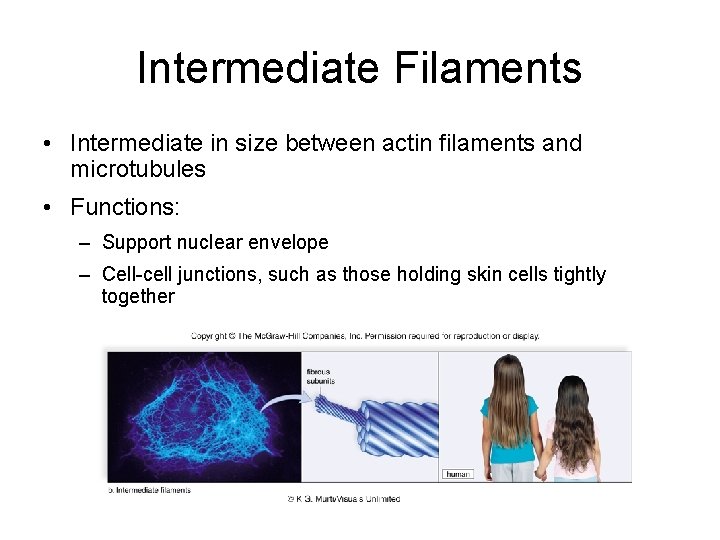
Intermediate Filaments • Intermediate in size between actin filaments and microtubules • Functions: – Support nuclear envelope – Cell-cell junctions, such as those holding skin cells tightly together
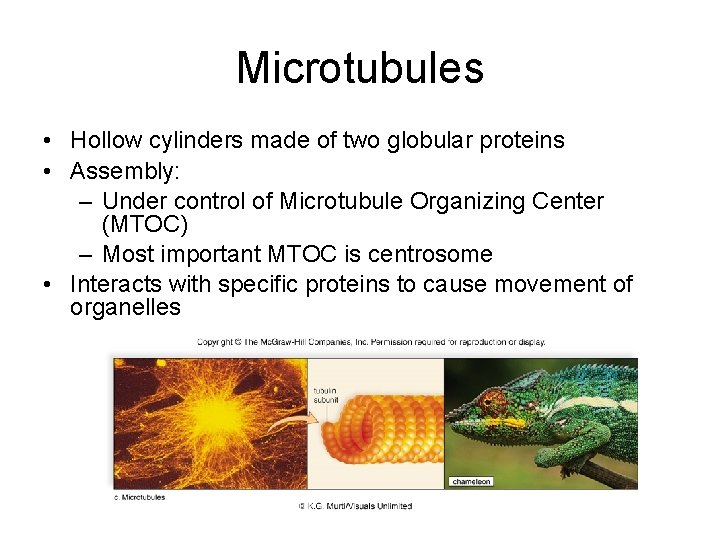
Microtubules • Hollow cylinders made of two globular proteins • Assembly: – Under control of Microtubule Organizing Center (MTOC) – Most important MTOC is centrosome • Interacts with specific proteins to cause movement of organelles
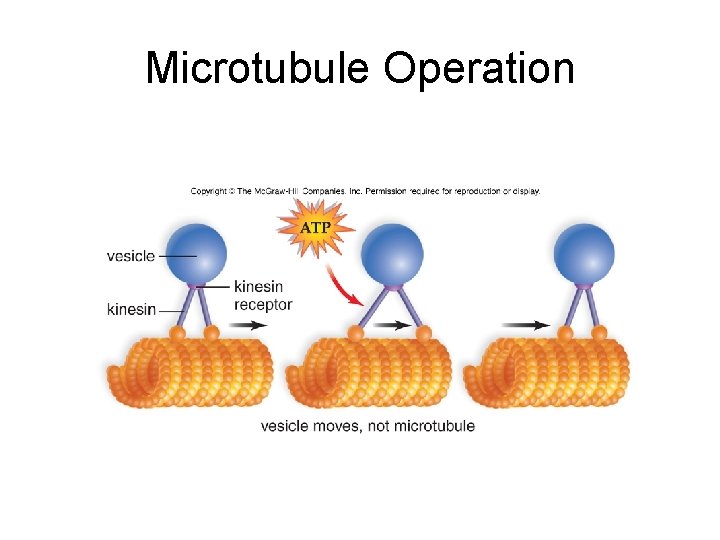
Microtubule Operation
Cilia and Flagella • Hairlike projections that aid in cell movement • In eukaryotic cells, cilia are much shorter than flagella • They are membrane-bound cylinders enclosing a matrix area – The matrix consists of microtubules in a 9 + 2 pattern
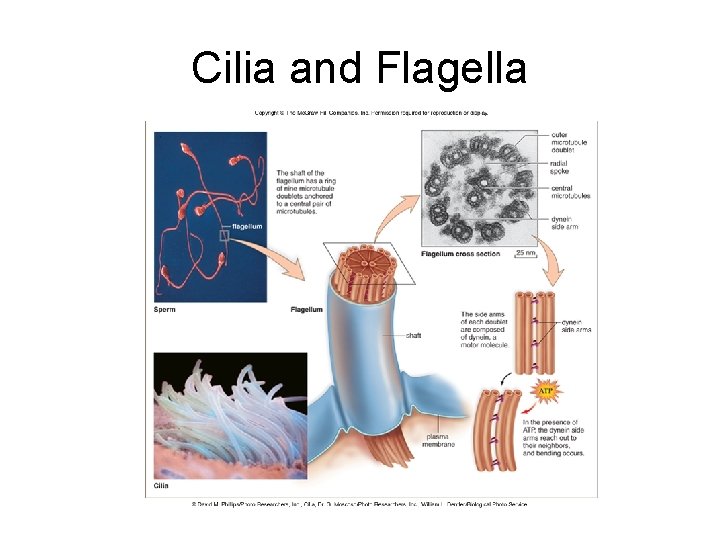
Cilia and Flagella
Peroxisomes • Membrane bound vesicles containing enzymes. – The enzymes break down molecules and as a result produce hydrogen peroxide.
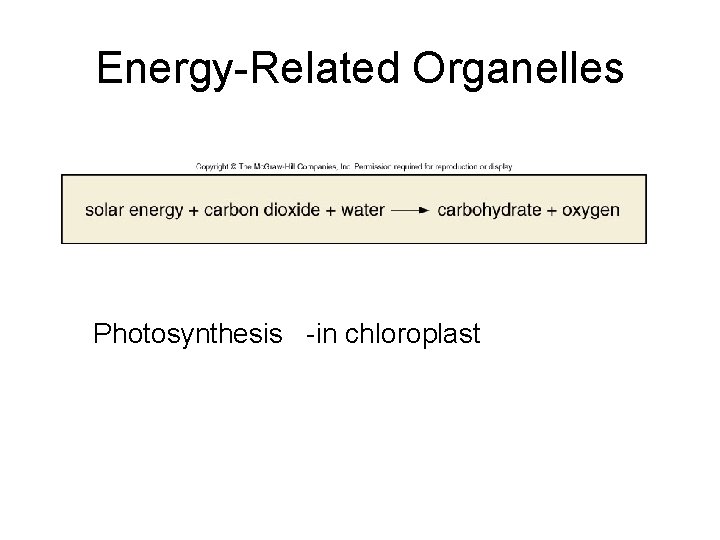
Energy-Related Organelles Photosynthesis -in chloroplast
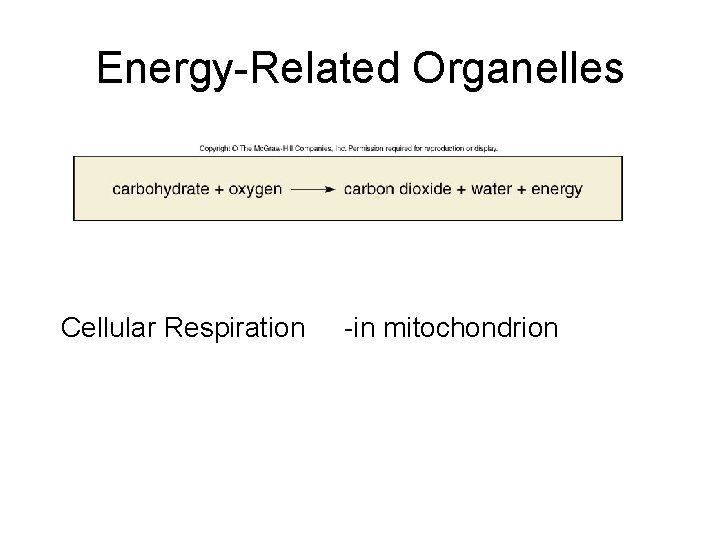
Energy-Related Organelles Cellular Respiration -in mitochondrion
- Slides: 46