
BIOLOGY 12 POWERPOINT NOTES BIOLOGICAL MOLECULES Chapter 2

BIOLOGY 12 – POWERPOINT NOTES BIOLOGICAL MOLECULES Chapter 2 MR. J. MUNRO – HIGHROAD ACADEMY
Synthesis & Hydrolysis of Polymers - most important biological compounds are polymers - Poly means "many"

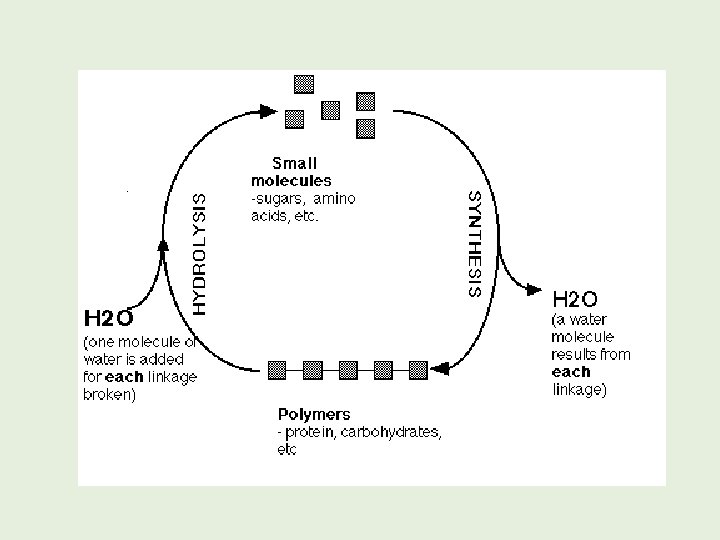
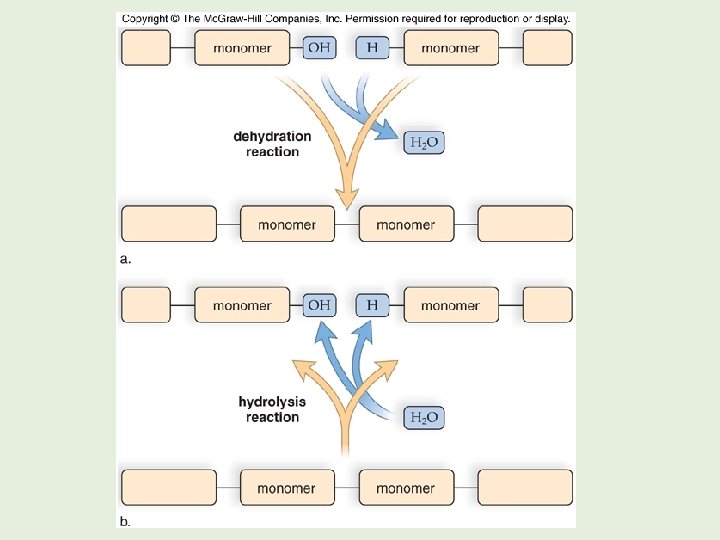
Polymers - a many piece chain of subunits - Subunits are; sugars, amino-acids, nucleotides, or fatty acids, and glycerol. - these are made (synthesis) or broken down (hydrolysis) over and over in living cells

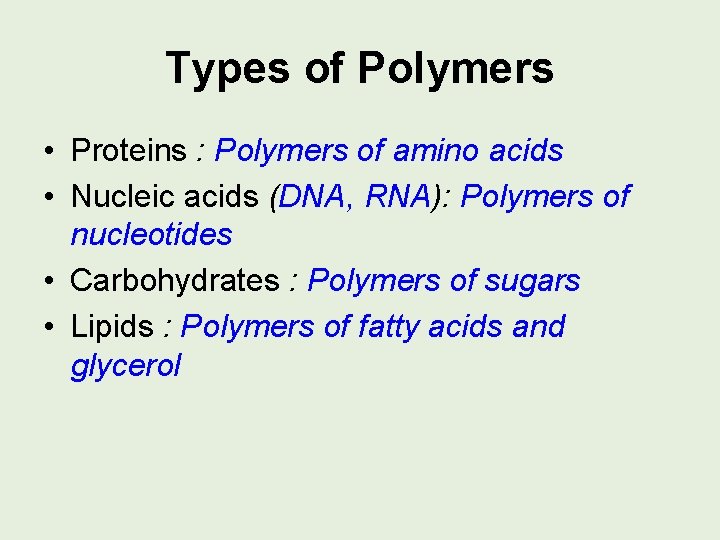
Types of Polymers • Proteins : Polymers of amino acids • Nucleic acids (DNA, RNA): Polymers of nucleotides • Carbohydrates : Polymers of sugars • Lipids : Polymers of fatty acids and glycerol
Carbohydrates
Carbohydrates - Empirical formula (CH 20)n • Simple Carbohydrates – Monosaccharides: sugars with 3 - 7 carbon atoms – Pentose refers to a 5 -carbon sugar – Hexose refers to a 6 -carbon sugar • Complex Carbohydrates – Repeating chain of sugars (saccharide) – polysaccharides - many saccharides linked together
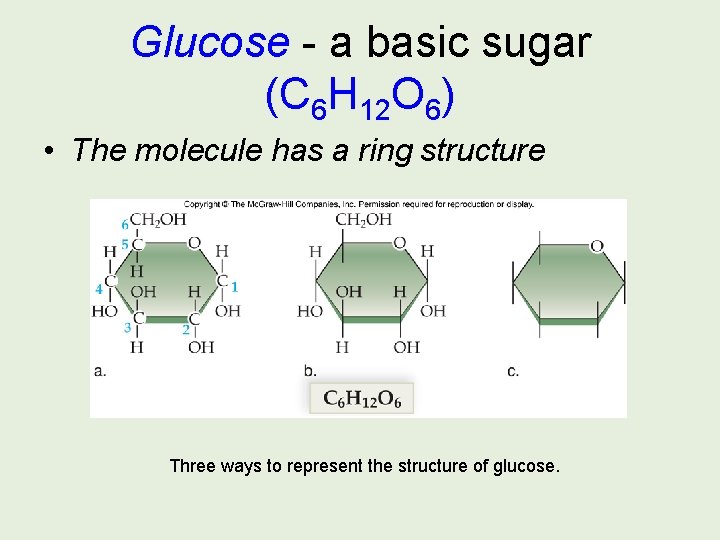
Glucose - a basic sugar (C 6 H 12 O 6) • The molecule has a ring structure Three ways to represent the structure of glucose.
Carbohydrates • This is a mono (one) saccharide • others include fructose, ribose, deoxyribose, etc. • Disaccharide – two sugars joined together • Disaccharides contain two monosaccharides. • Polysaccharides are long polymers that contain many glucose subunits.
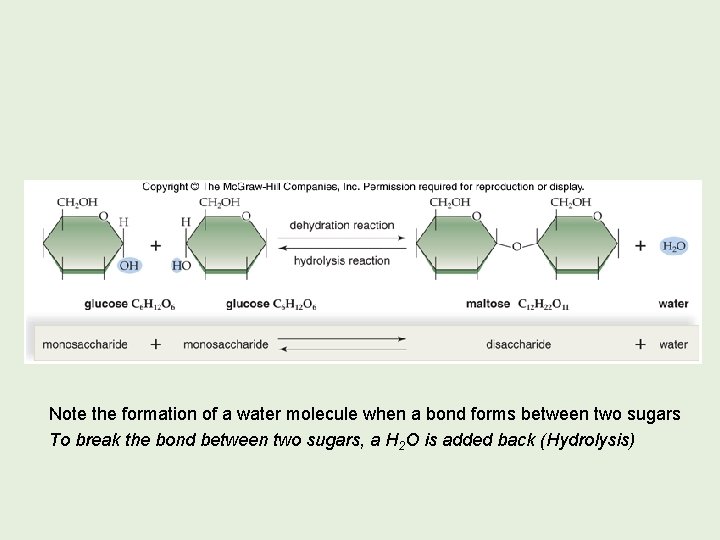
Note the formation of a water molecule when a bond forms between two sugars To break the bond between two sugars, a H 2 O is added back (Hydrolysis)
Examples of disaccharides : – maltose (two glucose) – sucrose (a glucose and fructose) – lactose (galactose and glucose)
The Main Functions of Carbohydrates are: • Energy: – Bonds between Carbon atoms can be broken, the Hydrogen atoms stripped off and the energy released can be used by cells
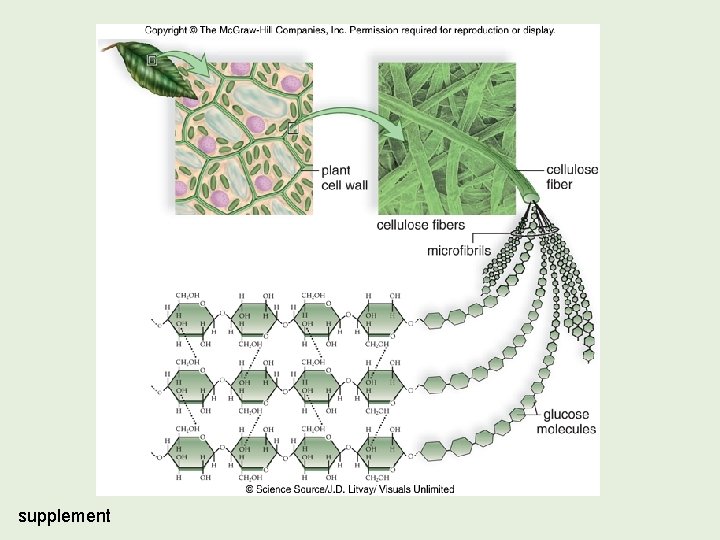
The Main Functions of Carbohydrates are: • Structural: -Cellulose is the major structural compound in plants • used in the cell wall of plants
• Summary of Carbohydrate Functions: – Quick fuel – Short-term energy storage – Structure of organisms – Cell to cell recognition

Three important Polysaccharides
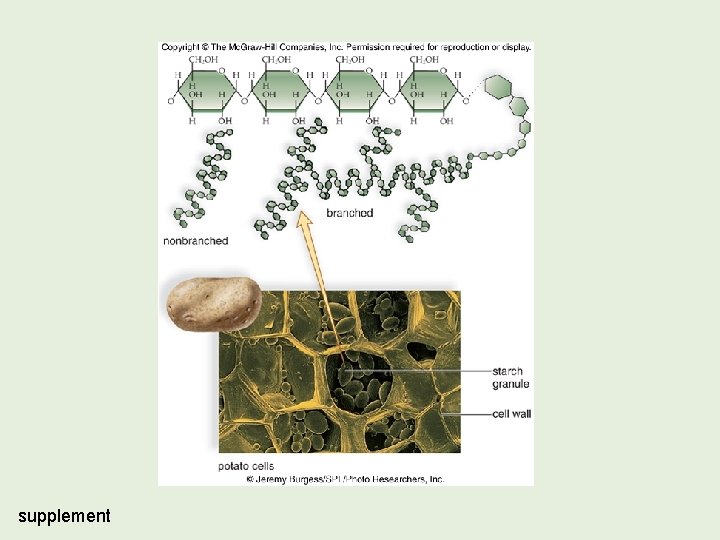
• Starch - The main storage form of sugar in plants • Few side chains • Many glucose molecules linked together
supplement
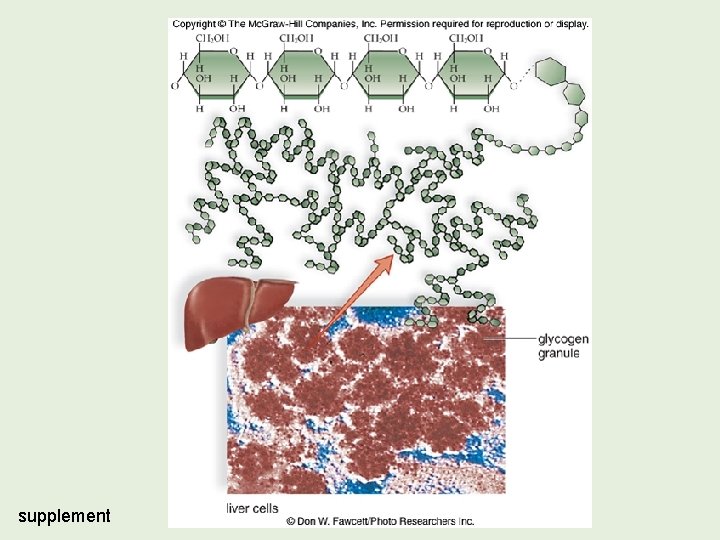
• Glycogen - Main sugar storage in animals • - Many side chains • - linkage between C atoms is same as for starch
supplement
• Cellulose - structural (cell walls) • - long chains • - linkage between C atoms of adjacent chains sugars is different than I and II above • - no mammal can break this bond
supplement
Lipids (Fats)
Lipids • Some Functions: – Long-term energy storage » More compact energy storage than protein or carbohydrate – Main component of the plasma membrane – Component of steroid hormones – Insulation against heat loss – Protection of major organs
Lipids are non-polar Lipids do not dissolve in water Lipids are electrically neutral
Lipids • Fats and Oils – Fats • Usually of animal origin • Solid at room temperature – Oils • Usually of plant origin • Liquid at room temperature
3 IMPORTANT TYPES OF LIPIDS • Neutral Fat. • Phospholipids • Steroids
TYPES: • Neutral Fat - A glycerol (3 Carbon) backbone with 3 fatty acids attached.
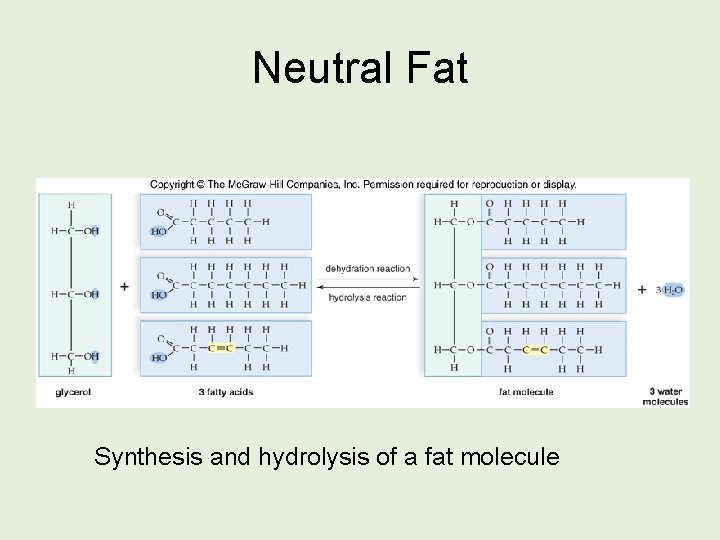
Neutral Fat Synthesis and hydrolysis of a fat molecule
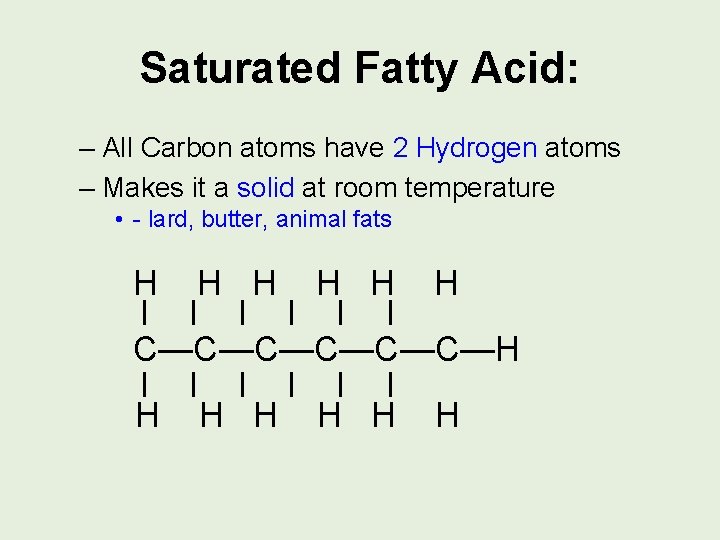
Saturated Fatty Acid: – All Carbon atoms have 2 Hydrogen atoms – Makes it a solid at room temperature • - lard, butter, animal fats H H H C—C—C—H H H H
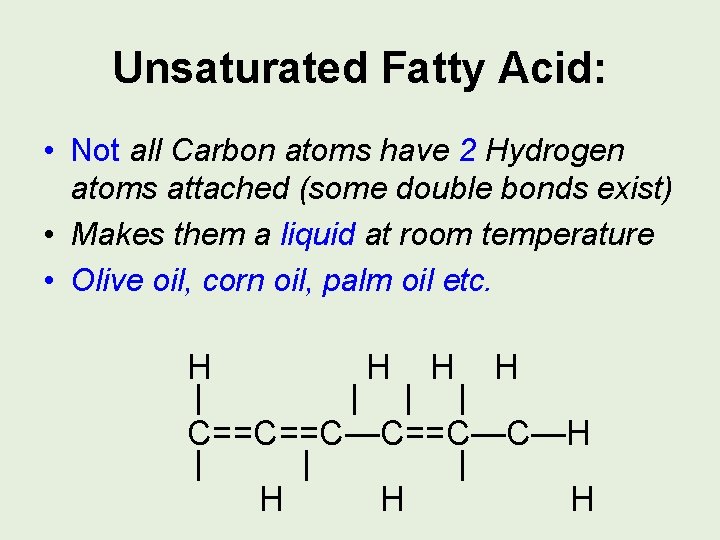
Unsaturated Fatty Acid: • Not all Carbon atoms have 2 Hydrogen atoms attached (some double bonds exist) • Makes them a liquid at room temperature • Olive oil, corn oil, palm oil etc. H H C==C==C—C—H H
• Monounsaturated Fatty Acid: – 1 Carbon atom not saturated • Polyunsaturated: – Many double bonds – Fewer hydrogen atoms
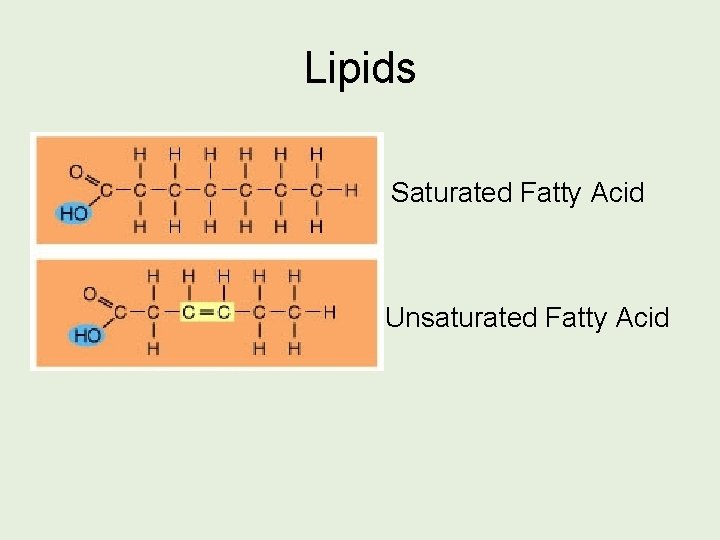
Lipids Saturated Fatty Acid Unsaturated Fatty Acid
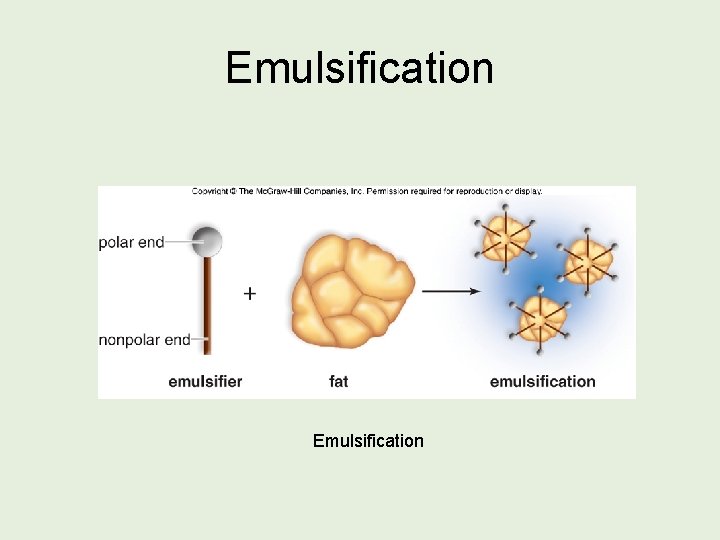
TYPES: • Phospholipids – The third fatty acid group is replaced by a phosphorous group – This makes the phospholipid molecule polar • The head can dissolve in water while the tails cannot – Main component of cell membranes
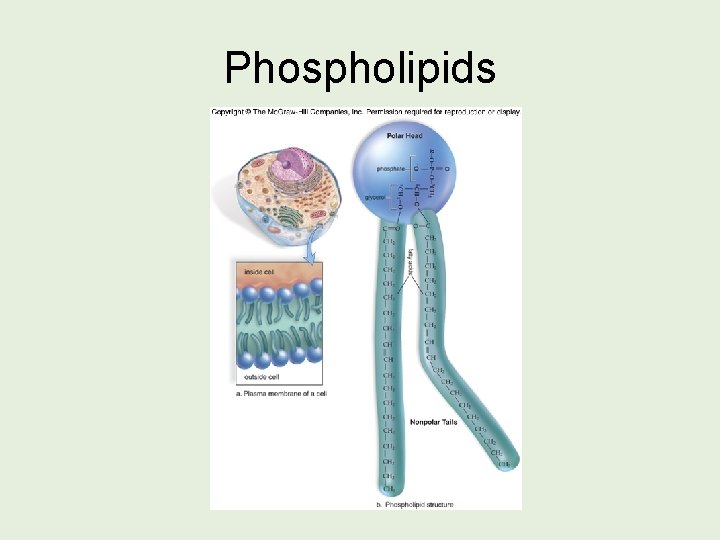
Phospholipids
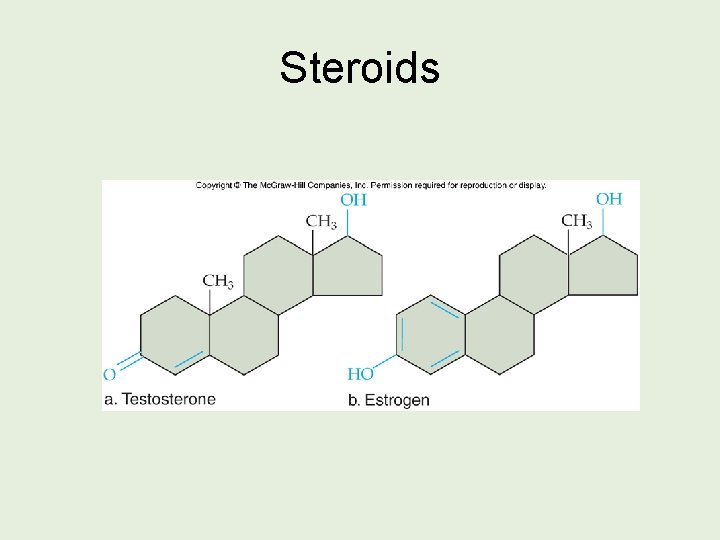
TYPES Steroids – – – All steroids have four adjacent rings. 5 or 6 carbon in each ring fused together used as sex hormones constructed from cell membranes Made in smooth endoplasmic reticulum – Examples: § Cholesterol § Testosterone § Estrogen
Steroids
Emulsification
Proteins
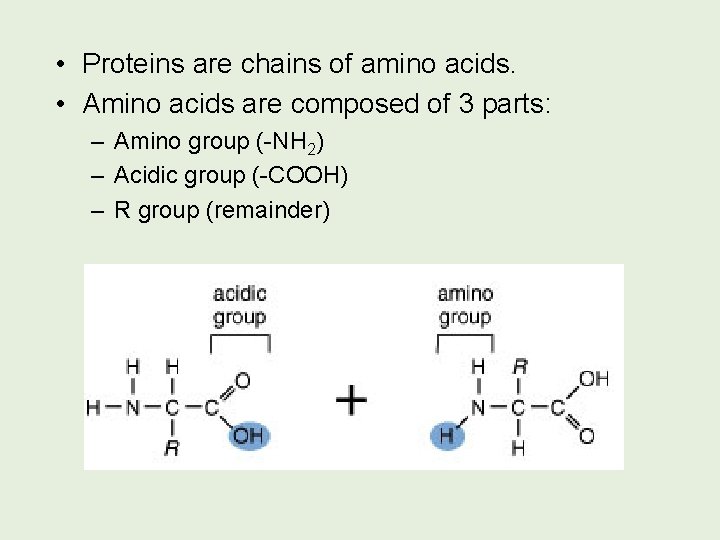
• Proteins are chains of amino acids. • Amino acids are composed of 3 parts: – Amino group (-NH 2) – Acidic group (-COOH) – R group (remainder)
The R - group • Distinguishes one amino acid from another • Can vary from a a single Hydrogen atom (H) to a complicated ring structure • 20 different amino acids in human body
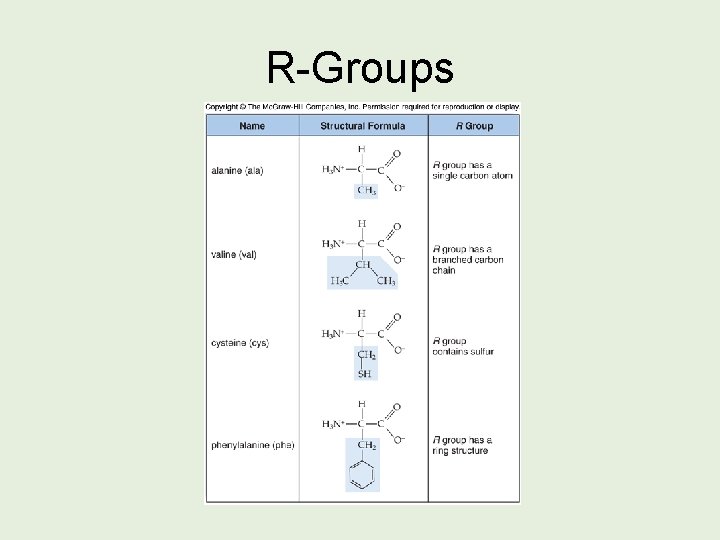
R-Groups
Peptide Bond • The bond linking 2 amino acids forming a Dipeptide • Dehydration synthesis forms this bond • H 2 O is given off (bond between C and N) to form this bond
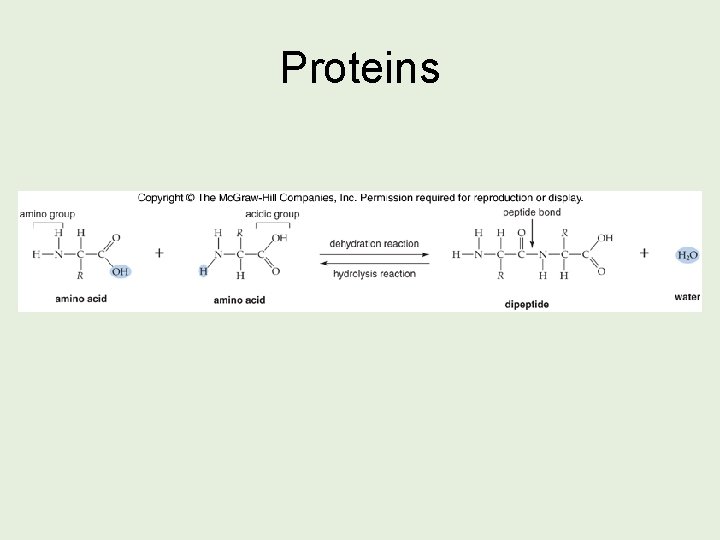
Proteins
Peptide Bond: • 2 Amino acids linked together -- Di peptide • 3 Amino acids linked together -- Tri peptide • Many Amino acids linked together -- Poly peptide – (30 to 30, 000 amino acids)
Protein Functions • Proteins have important functions in cells. – Proteins such as keratin and collagen have structural roles. – Proteins are also enzymes that speed up the chemical reactions of metabolism. – Proteins such as hemoglobin are responsible for the transport of substances within the body. – Proteins also transport substances across cell membranes.
• Proteins have important functions in cells. – Proteins form the antibodies of the immune system that defend the body from disease. – Proteins such as insulin are hormones that regulate cellular function. – Contractile proteins such as actin and myosin allow parts of cells to move and muscles to contract.
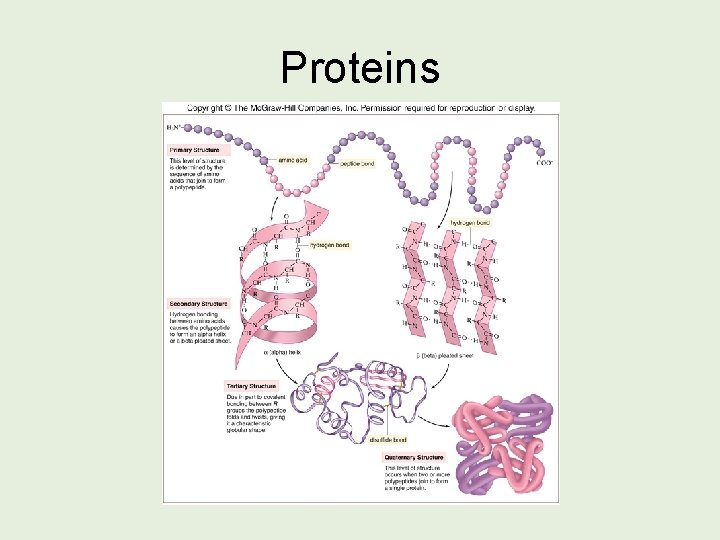
Proteins • Levels of Protein Organization – The structure of a protein has three or four levels of organization. – The final shape of a protein is very important to its function.
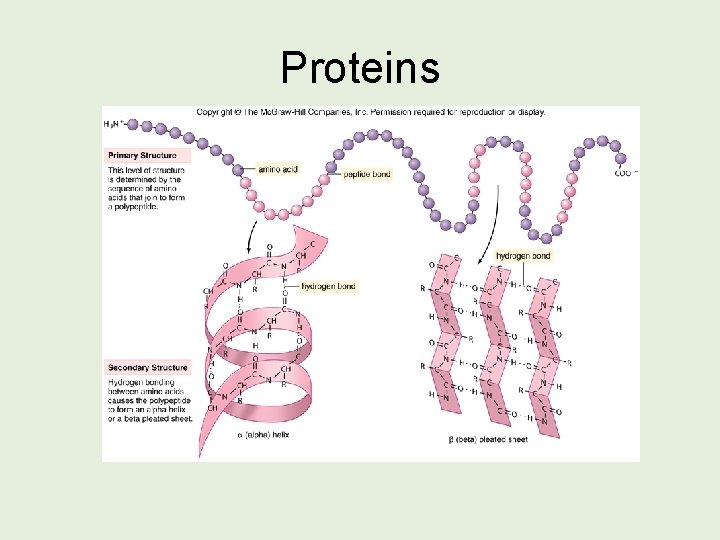
Primary Structure: • A simple chain of amino acids • The order of amino acids.
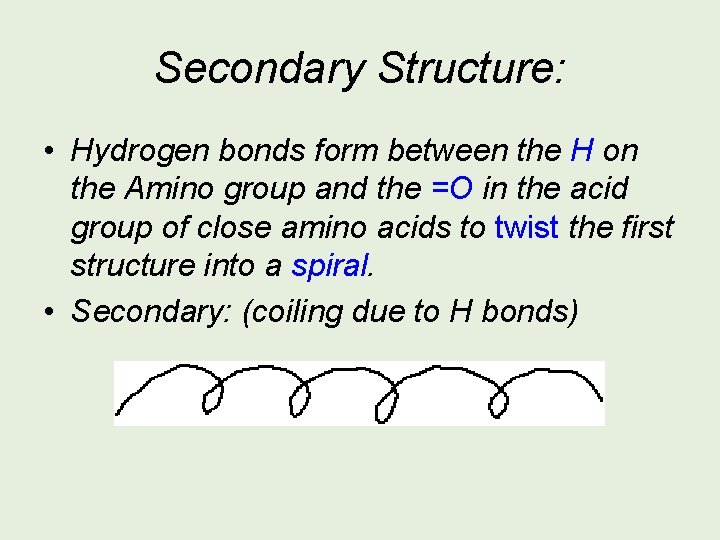
Secondary Structure: • Hydrogen bonds form between the H on the Amino group and the =O in the acid group of close amino acids to twist the first structure into a spiral. • Secondary: (coiling due to H bonds)
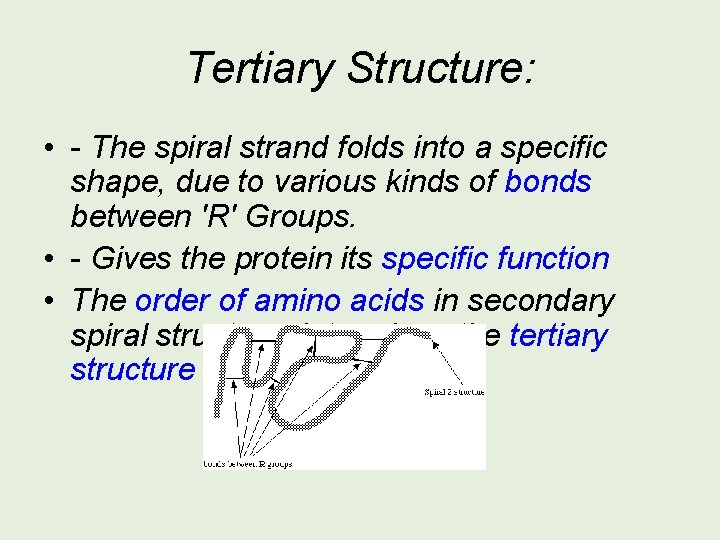
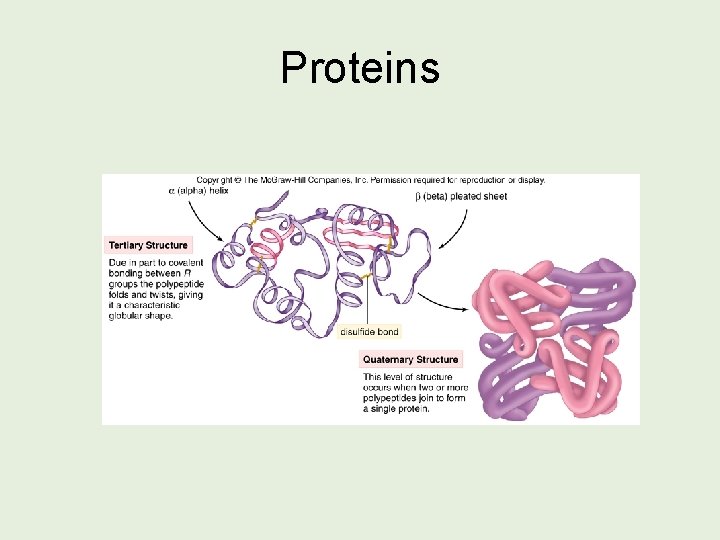
Tertiary Structure: • - The spiral strand folds into a specific shape, due to various kinds of bonds between 'R' Groups. • - Gives the protein its specific function • The order of amino acids in secondary spiral structure determines the tertiary structure
Quaternary structure • some proteins (fairly often) are actually 2 or more molecules (tert. structure) joined to form a functional protein • eg): – Insulin - 2 subunits (poly peptides) – Hemoglobin - 3 subunits – Collagen - 3 helical subunits coiled together
Proteins
Proteins
Proteins
Denaturing: • - loss of protein's tertiary structure by breaking R group bonds • - protein loses function, becoming useless • High temperature; p. H changes – Example: - egg white cooked • - heavy metals (mercury, lead etc. ) bind preferentially with the S in Cystine, breaking the tertiary structure.
Nucleic Acids • DNA (deoxyribonucleic acid) • RNA (ribonucleic acid)
Nucleic Acid Functions: • DNA stores genetic information. • DNA codes for the order of amino acids in a protein. • RNA is an intermediary in the sequencing of amino acids into a protein.
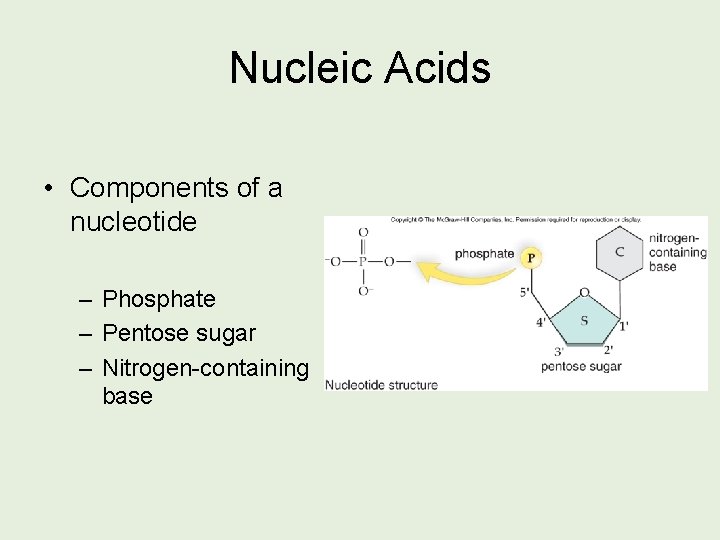
Nucleic Acids • Components of a nucleotide – Phosphate – Pentose sugar – Nitrogen-containing base
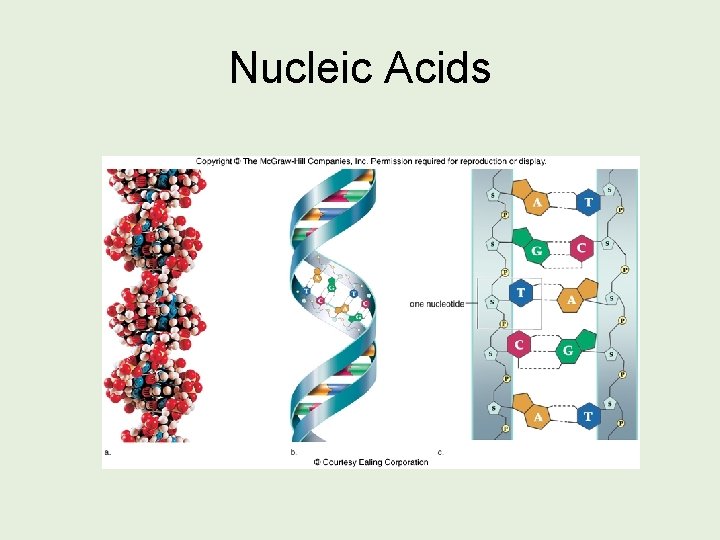
Nucleic Acids DNA Structure
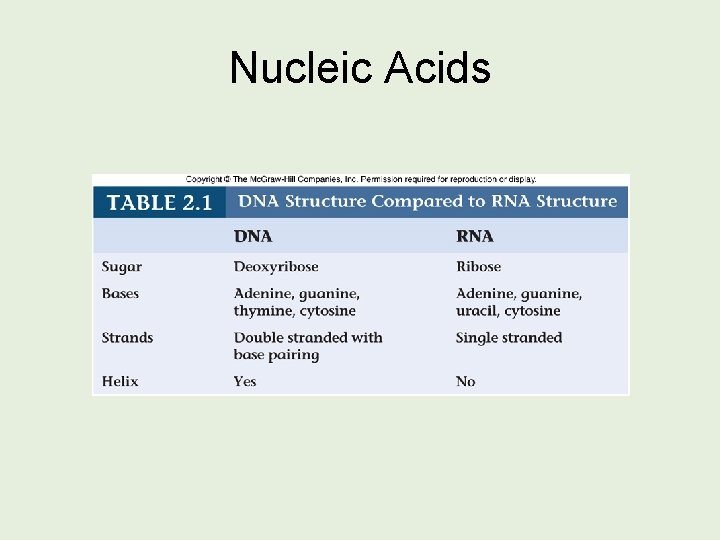
Nucleic Acids
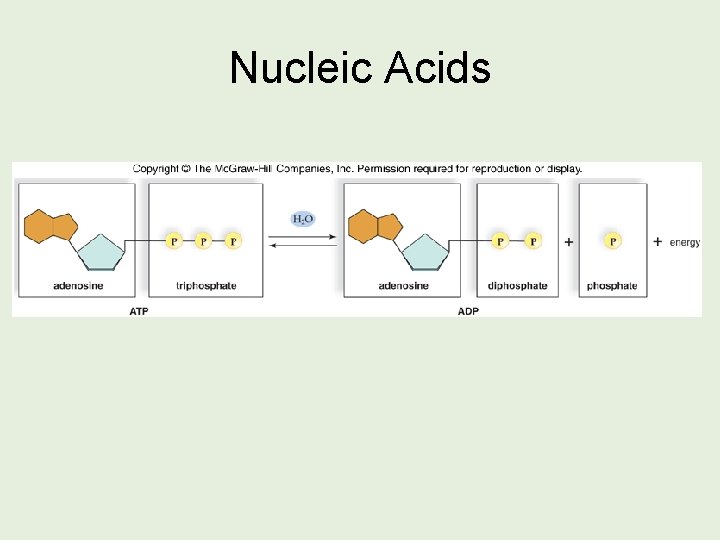
Nucleic Acids • ATP (Adenosine Triphosphate) – A high energy molecule – Energy rich bond between second and third phosphorus – Transport and storage form of energy – ATP undergoes hydrolysis (bond breaks) and energy is released – Produced by mitochondria
Nucleic Acids
- Slides: 64