
Biology 110 Introduction to the Study of Life
Biology 110 Introduction to the Study of Life • What is life? • How do we organize life? • Intro to evolution of life. • Intro to the scientific method.
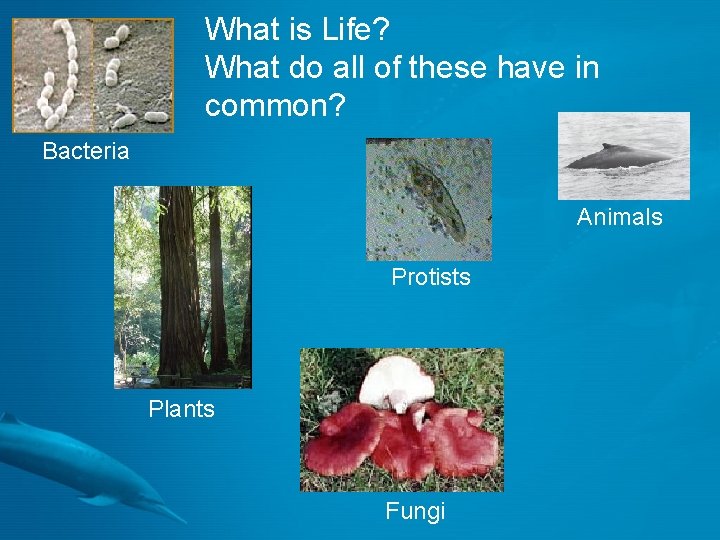
What is Life? What do all of these have in common? Bacteria Animals Protists Plants Fungi
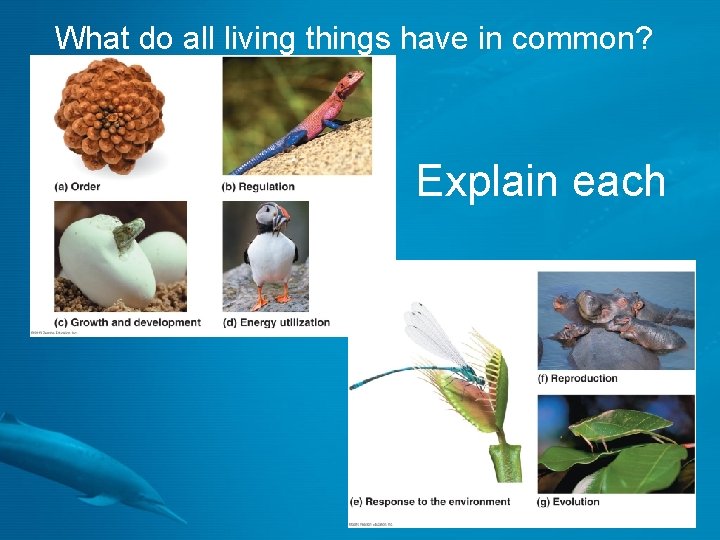
What do all living things have in common? Explain each
Common Problems of all living things They all need… • Nutrition • Gas Exchange • Internal Transport • Mode of Reproduction • Responses to stimuli • Chemical Control • Internal Defense
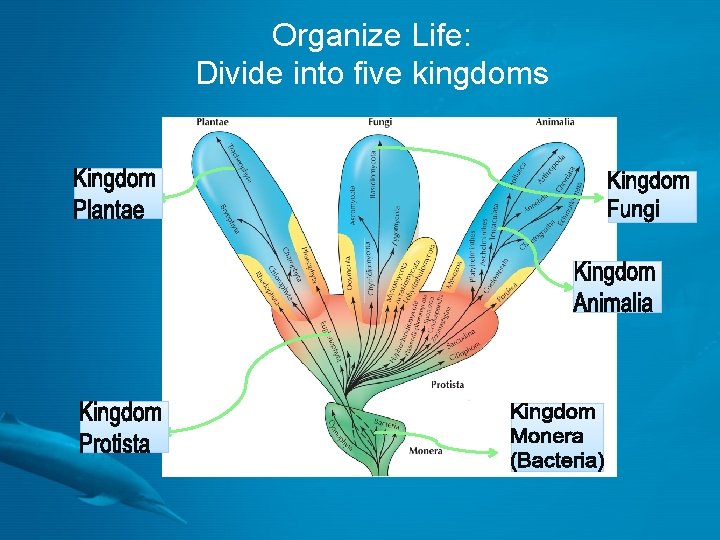
Organize Life: Divide into five kingdoms
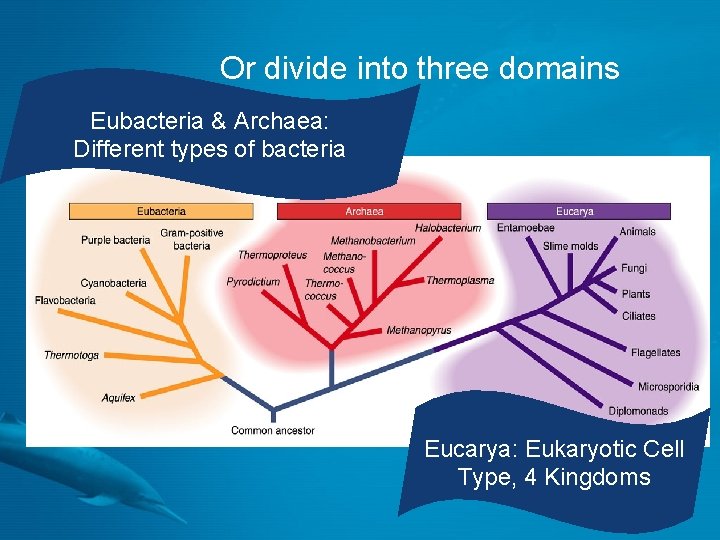
Or divide into three domains Eubacteria & Archaea: Different types of bacteria Eucarya: Eukaryotic Cell Type, 4 Kingdoms
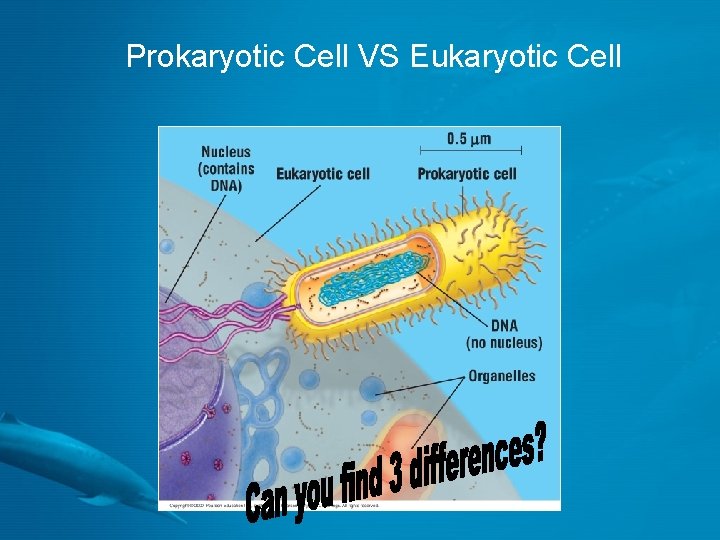
Prokaryotic Cell VS Eukaryotic Cell
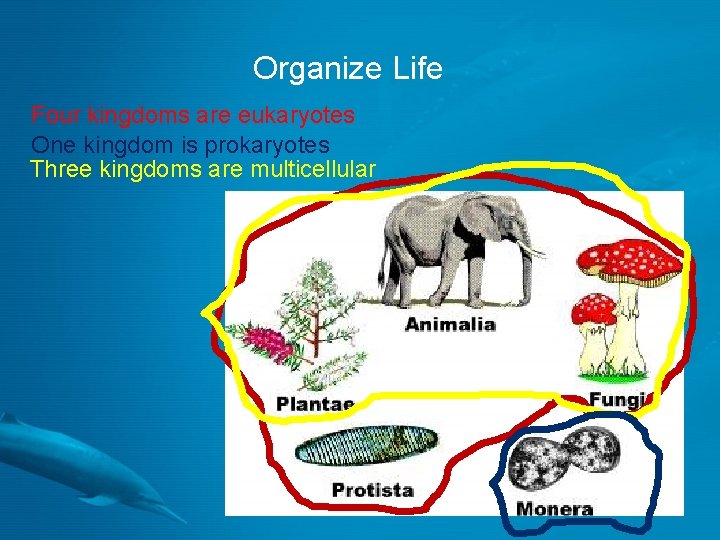
Organize Life Four kingdoms are eukaryotes One kingdom is prokaryotes Three kingdoms are multicellular
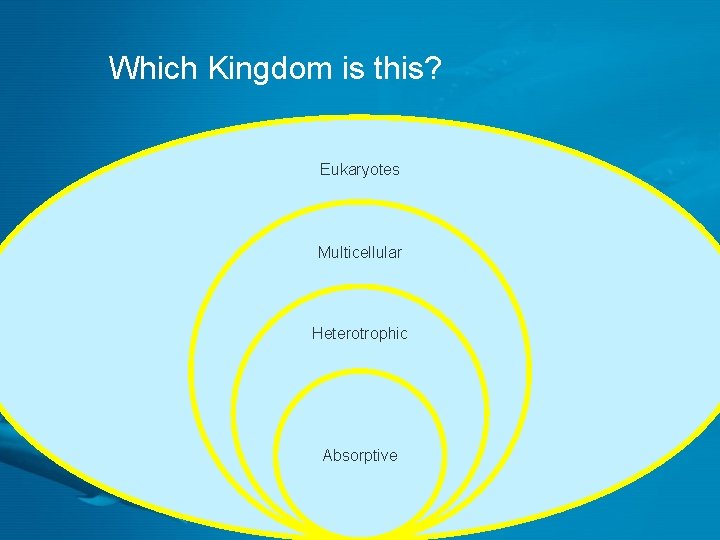
Which Kingdom is this? Eukaryotes Multicellular Heterotrophic Absorptive
Which Kingdom is this?
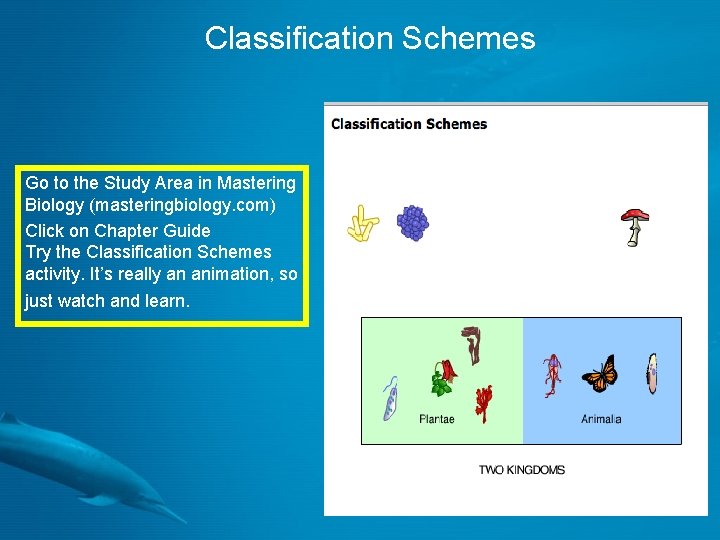
Classification Schemes Go to the Study Area in Mastering Biology (masteringbiology. com) Click on Chapter Guide Try the Classification Schemes activity. It’s really an animation, so just watch and learn.
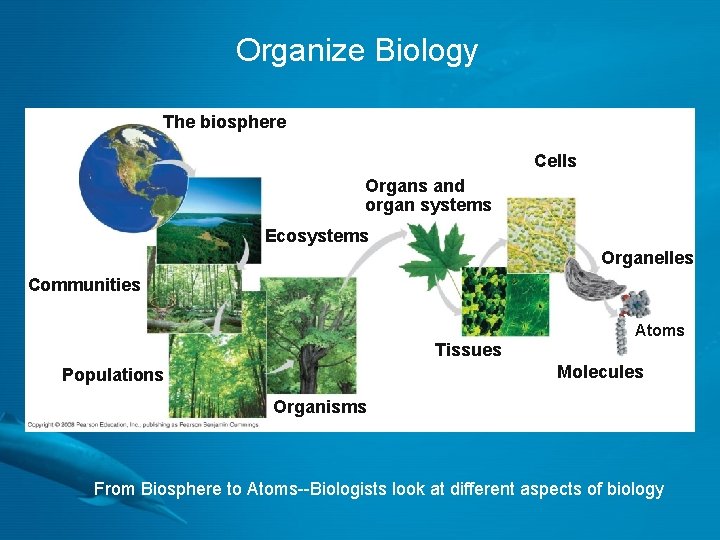
Organize Biology The biosphere Cells Organs and organ systems Ecosystems Organelles Communities Atoms Tissues Molecules Populations Organisms From Biosphere to Atoms--Biologists look at different aspects of biology
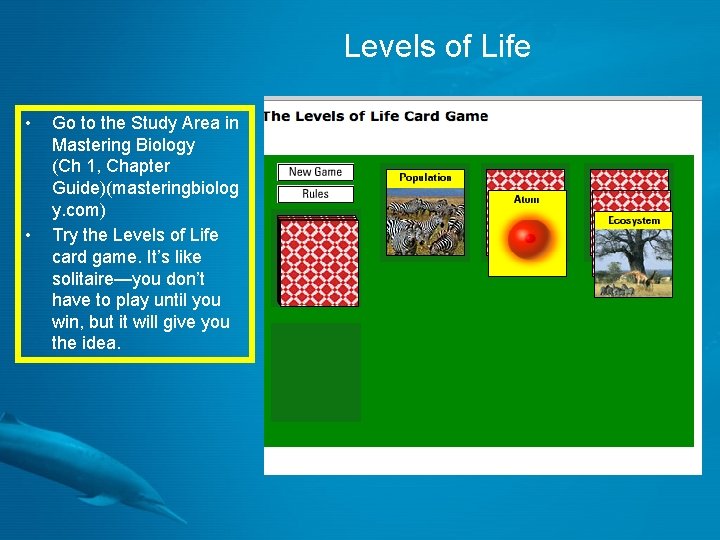
Levels of Life • • Go to the Study Area in Mastering Biology (Ch 1, Chapter Guide)(masteringbiolog y. com) Try the Levels of Life card game. It’s like solitaire—you don’t have to play until you win, but it will give you the idea.
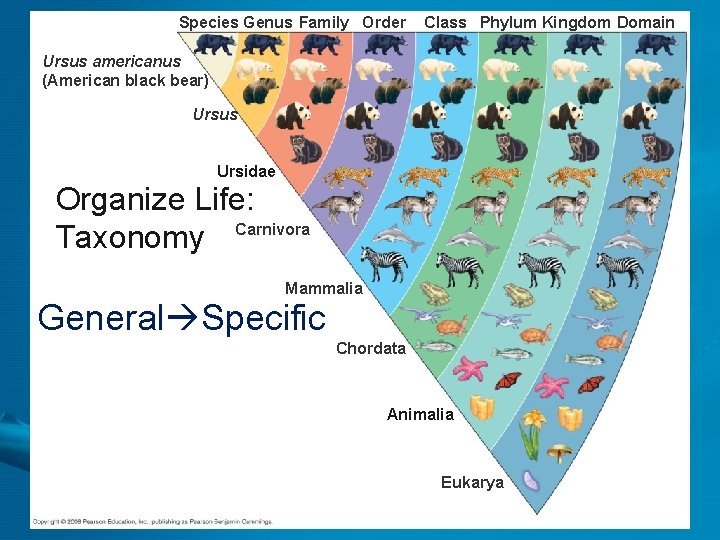
Species Genus Family Order Class Phylum Kingdom Domain Ursus americanus (American black bear) Ursus Ursidae Organize Life: Carnivora Taxonomy Mammalia General Specific Chordata Animalia Eukarya
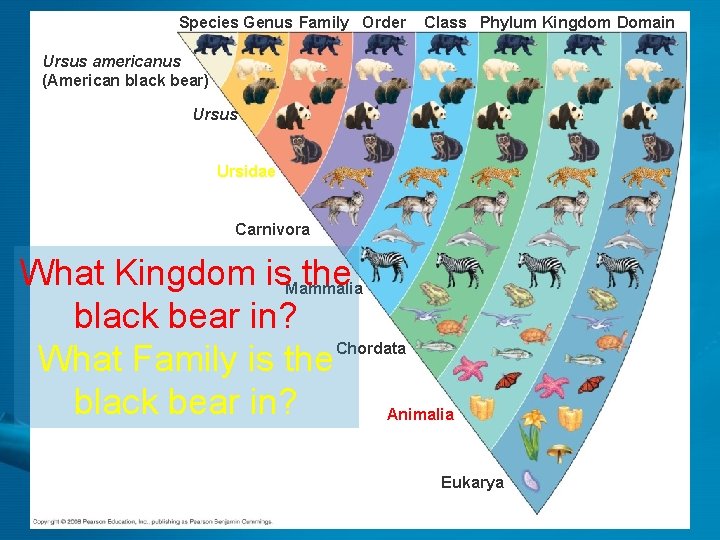
Species Genus Family Order Class Phylum Kingdom Domain Ursus americanus (American black bear) Ursus Ursidae Carnivora What Kingdom is. Mammalia the black bear in? Chordata What Family is the black bear in? Animalia Eukarya
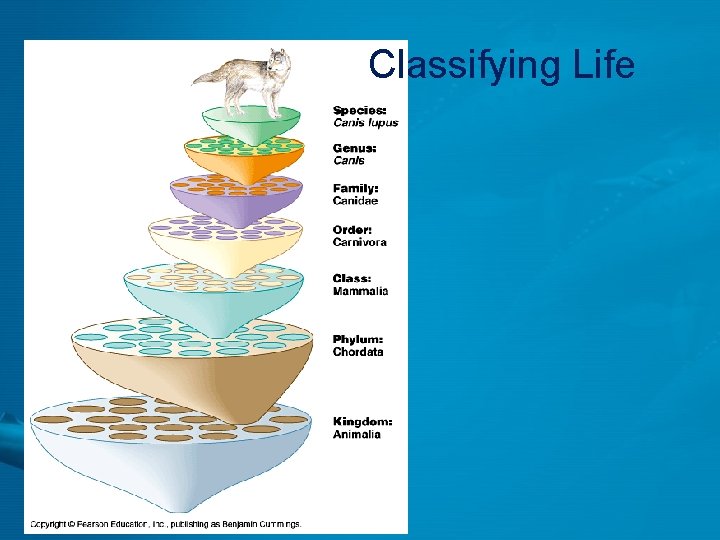
Classifying Life
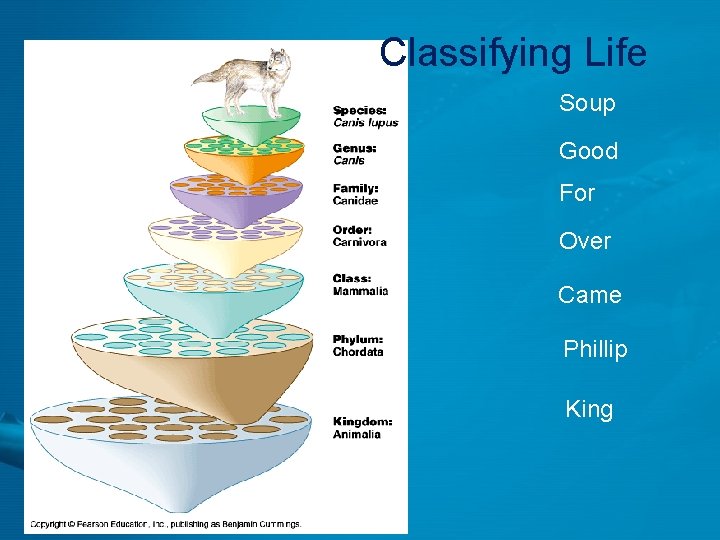
Classifying Life Soup Good For Over Came Phillip King
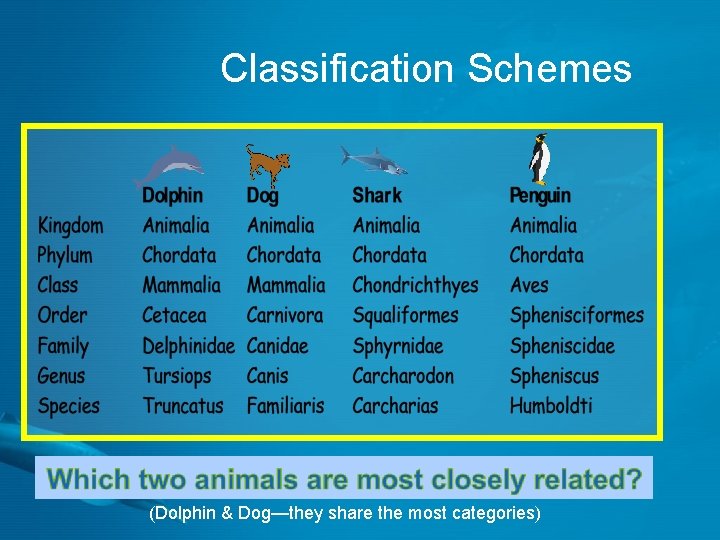
Classification Schemes (Dolphin & Dog—they share the most categories)
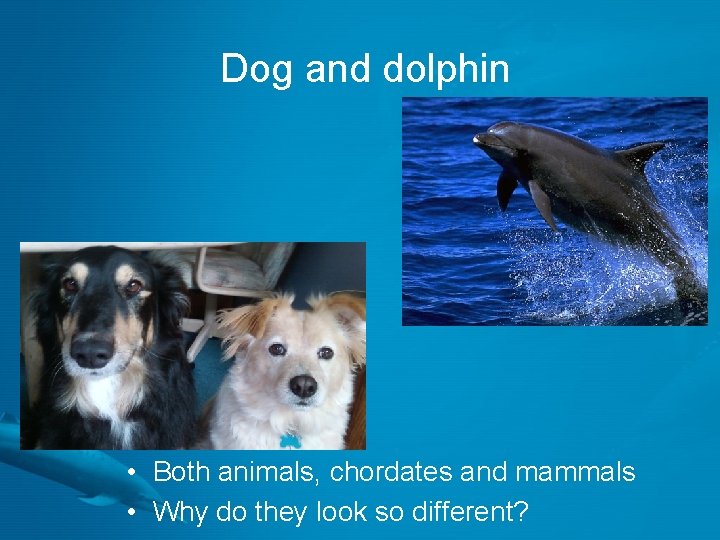
Dog and dolphin • Both animals, chordates and mammals • Why do they look so different?
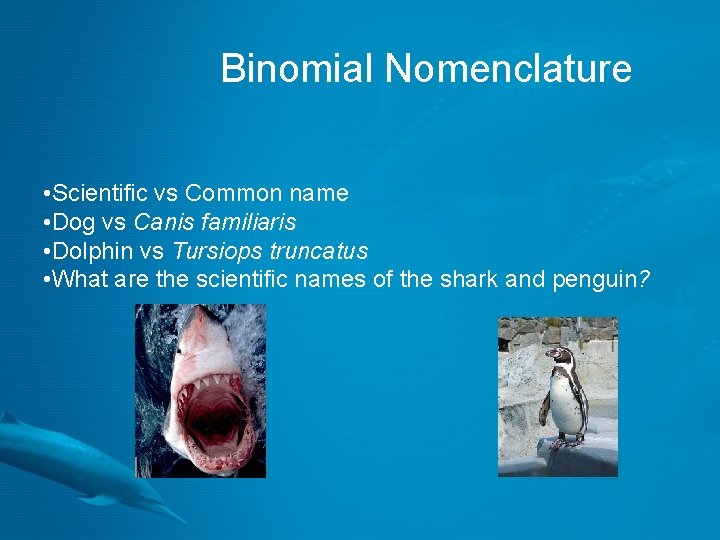
Binomial Nomenclature • Scientific vs Common name • Dog vs Canis familiaris • Dolphin vs Tursiops truncatus • What are the scientific names of the shark and penguin?
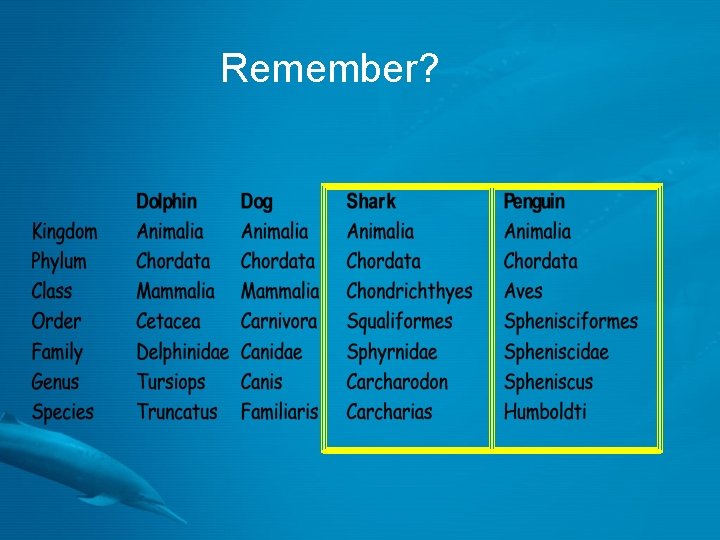
Remember?
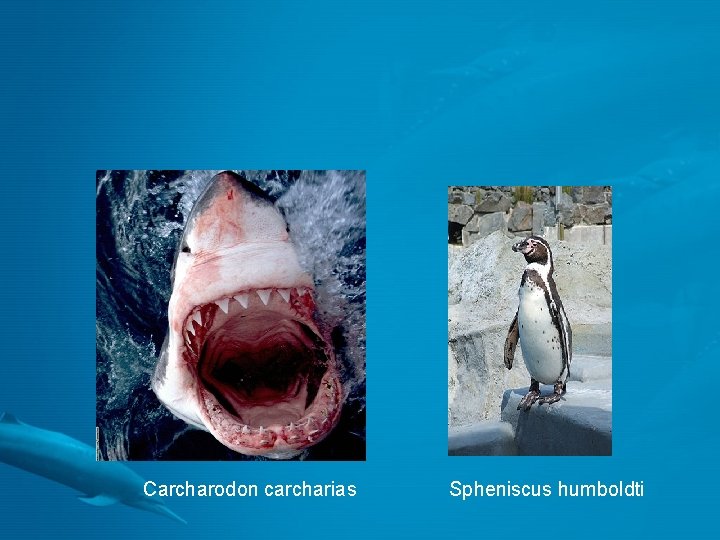
Scientific names Carcharodon carcharias Spheniscus humboldti
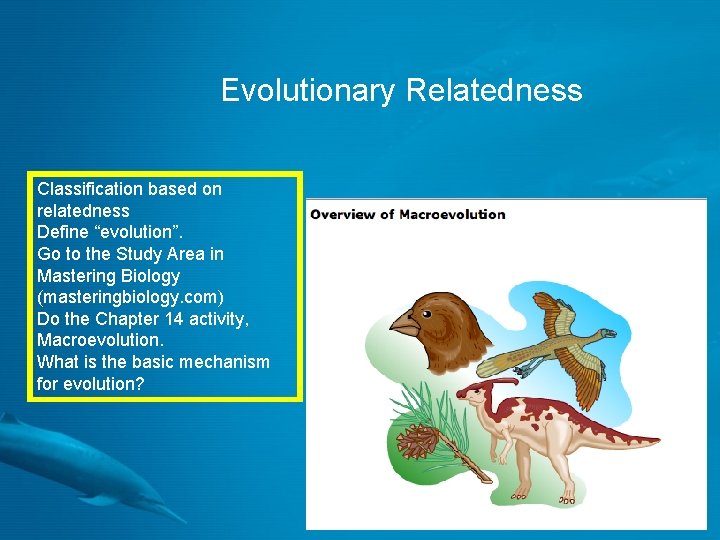
Evolutionary Relatedness Classification based on relatedness Define “evolution”. Go to the Study Area in Mastering Biology (masteringbiology. com) Do the Chapter 14 activity, Macroevolution. What is the basic mechanism for evolution?
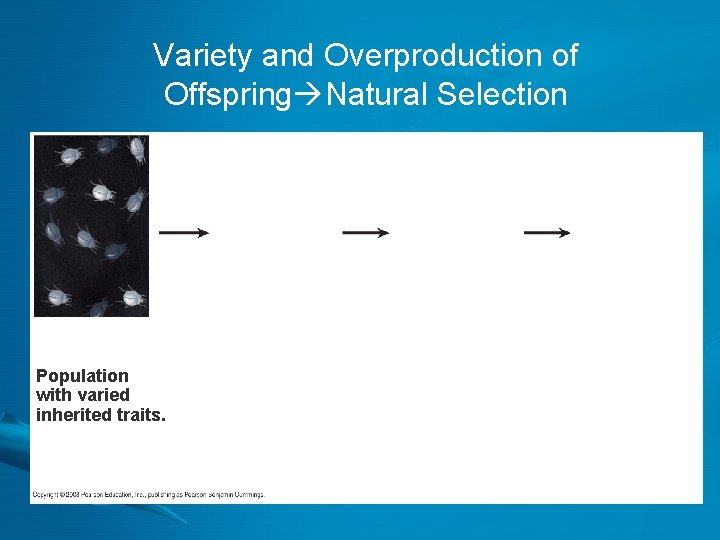
Variety and Overproduction of Offspring Natural Selection Population with varied inherited traits.
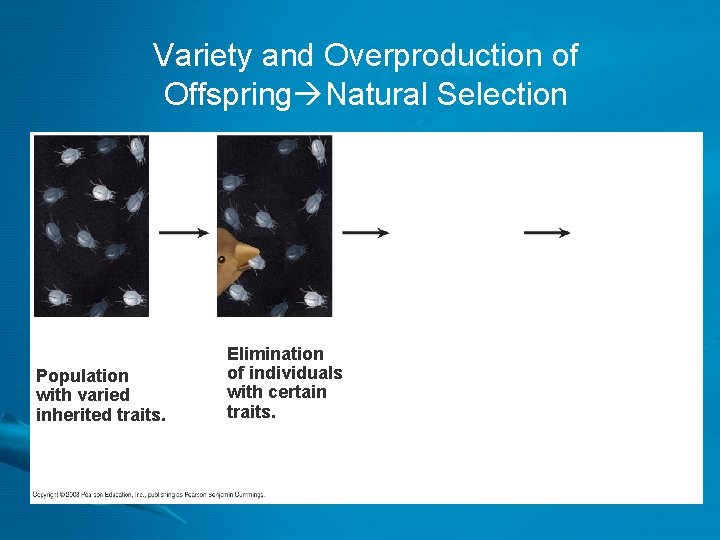
Variety and Overproduction of Offspring Natural Selection Population with varied inherited traits. Elimination of individuals with certain traits.
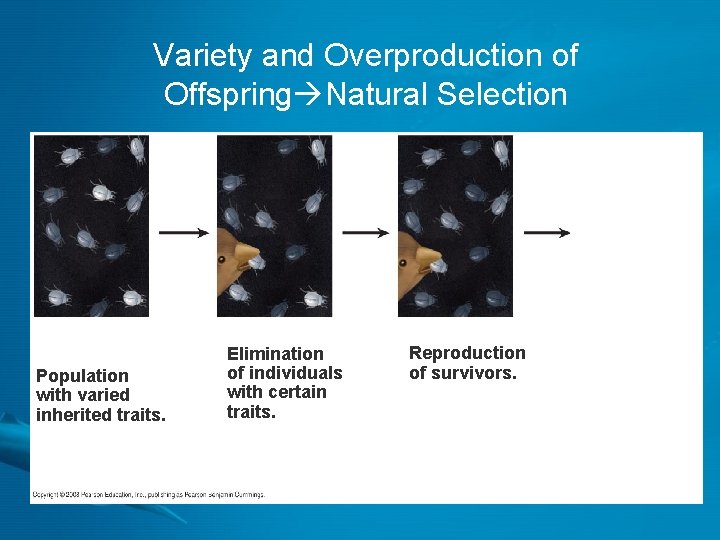
Variety and Overproduction of Offspring Natural Selection Population with varied inherited traits. Elimination of individuals with certain traits. Reproduction of survivors.
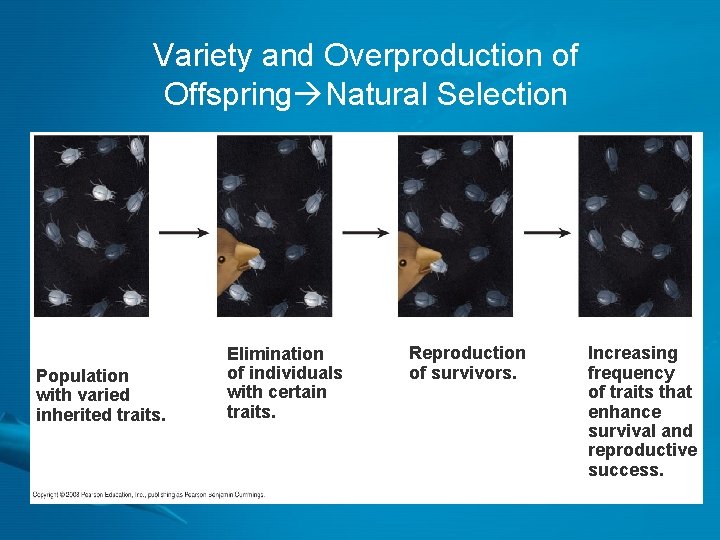
Variety and Overproduction of Offspring Natural Selection Population with varied inherited traits. Elimination of individuals with certain traits. Reproduction of survivors. Increasing frequency of traits that enhance survival and reproductive success.
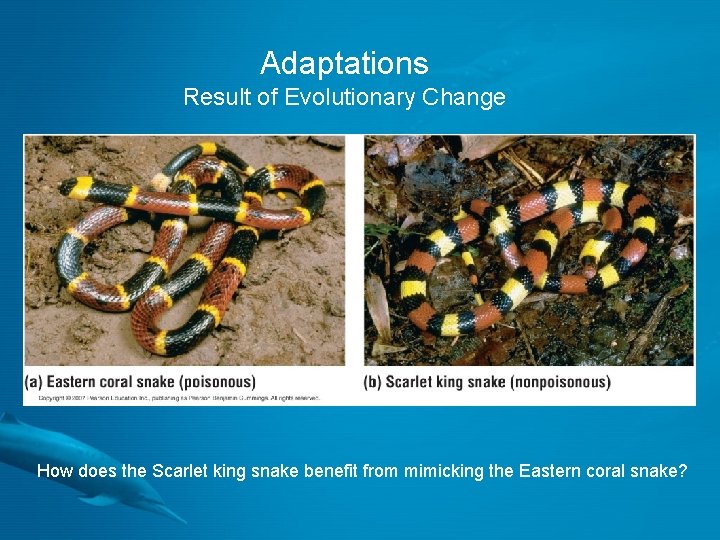
Adaptations Result of Evolutionary Change How does the Scarlet king snake benefit from mimicking the Eastern coral snake?
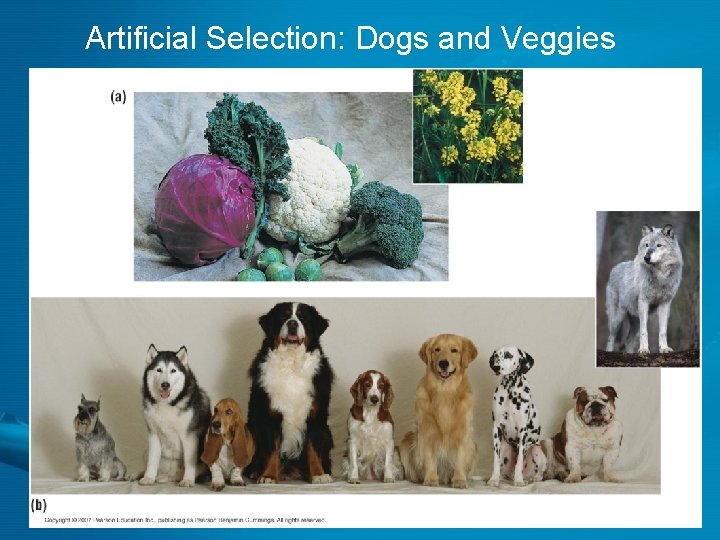
Artificial Selection: Dogs and Veggies
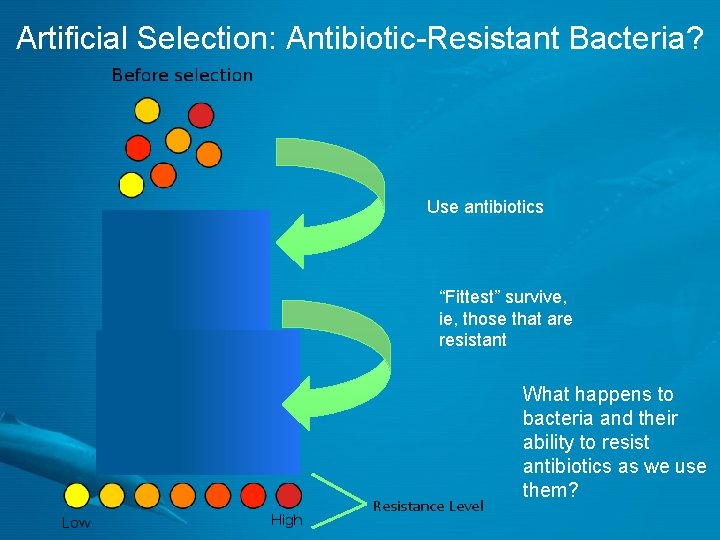
Artificial Selection: Antibiotic-Resistant Bacteria? Use antibiotics “Fittest” survive, ie, those that are resistant Resistance Level What happens to bacteria and their ability to resist antibiotics as we use them?
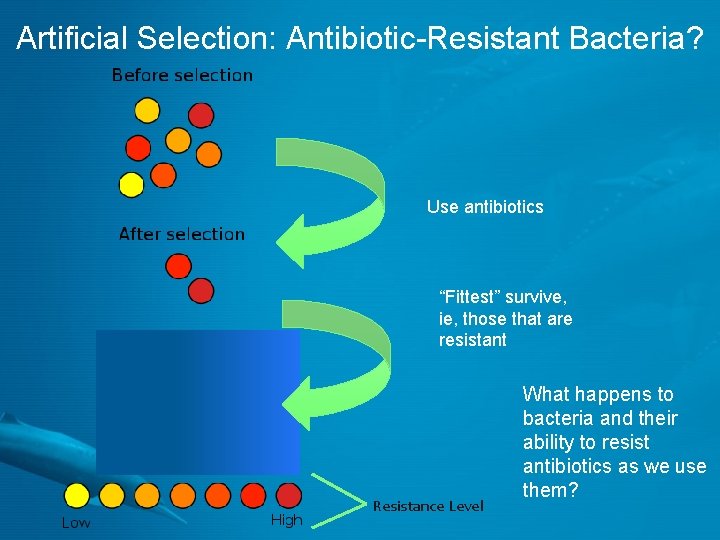
Artificial Selection: Antibiotic-Resistant Bacteria? Use antibiotics “Fittest” survive, ie, those that are resistant Resistance Level What happens to bacteria and their ability to resist antibiotics as we use them?
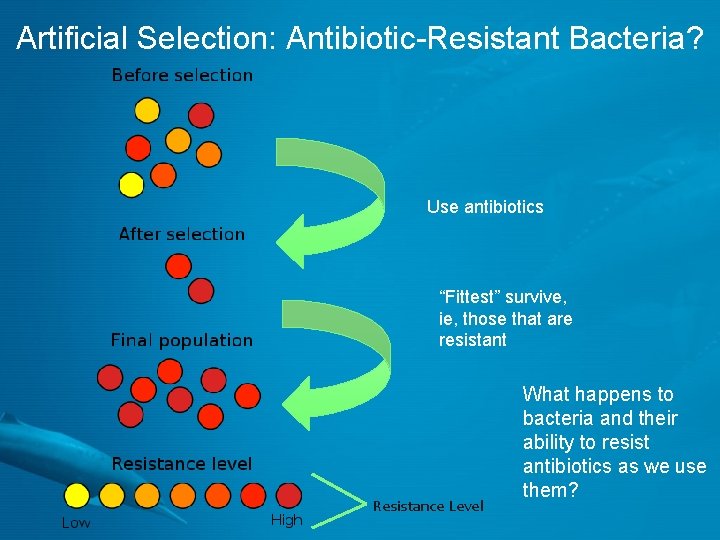
Artificial Selection: Antibiotic-Resistant Bacteria? Use antibiotics “Fittest” survive, ie, those that are resistant Resistance Level What happens to bacteria and their ability to resist antibiotics as we use them?
- Slides: 32