
Biology 11 Unit 4 Investigating Kingdom Animalia Invertebrates
Biology 11 • Unit 4 – Investigating Kingdom Animalia • Invertebrates – Earth worm dissection • Vertebrates – Sea star – Frog dissection – Fetal pig dissection – 4 ish weeks long – Last ~5 classes we’ll have our exam broken up over a couple classes • There will be very little in class review – begin to prepare now • Including a lab component
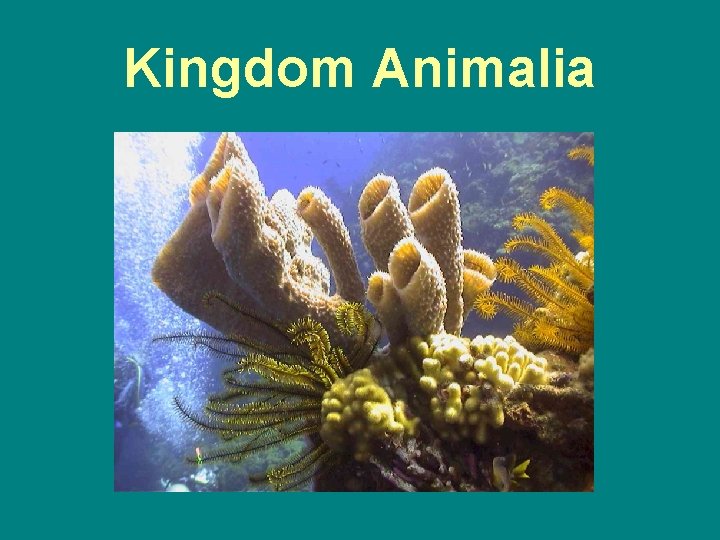
Kingdom Animalia
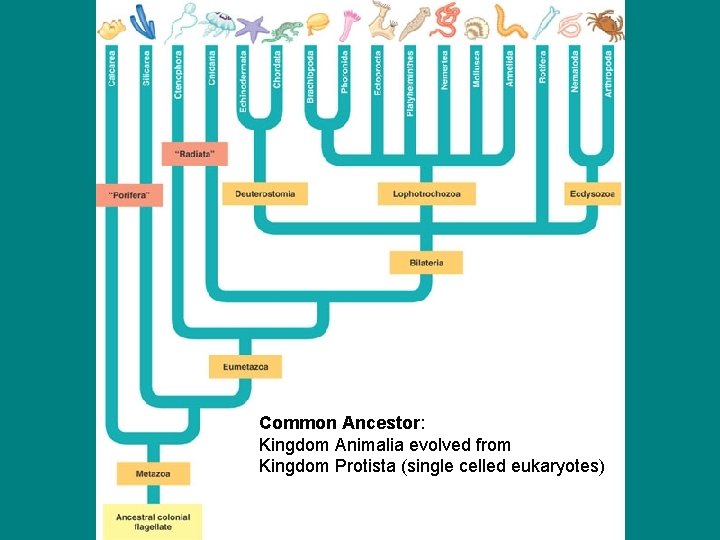
Common Ancestor: Kingdom Animalia evolved from Kingdom Protista (single celled eukaryotes)
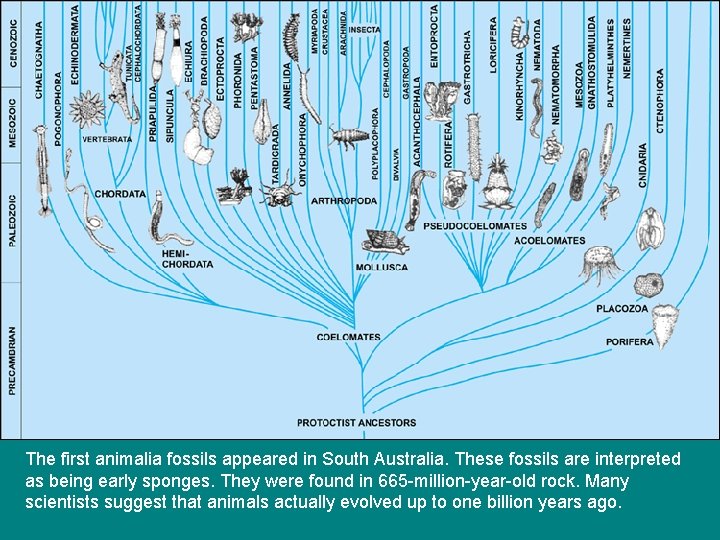
The first animalia fossils appeared in South Australia. These fossils are interpreted as being early sponges. They were found in 665 -million-year-old rock. Many scientists suggest that animals actually evolved up to one billion years ago.
Characteristics of all Animals • Multicellular eukaryotes – Most have ‘evolved’ tissues • • Heterotrophic Most are motile Nearly all reproduce sexually Ex/ sponges, jellyfish, insects, humans
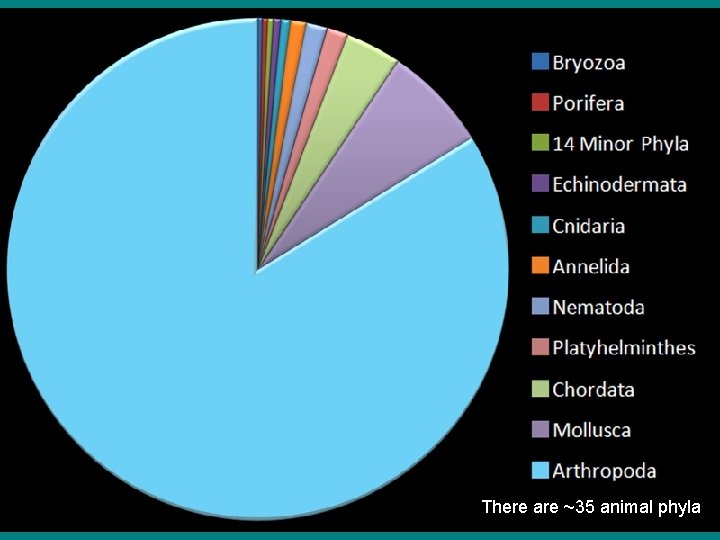
There are ~35 animal phyla
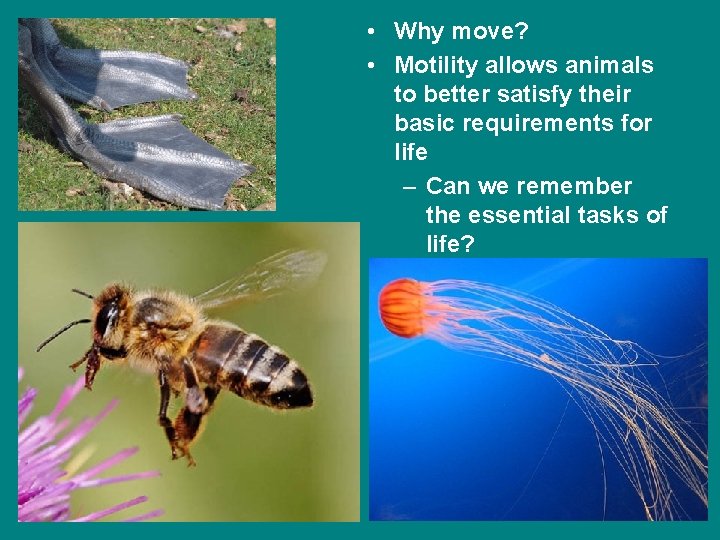
• Why move? • Motility allows animals to better satisfy their basic requirements for life – Can we remember the essential tasks of life?
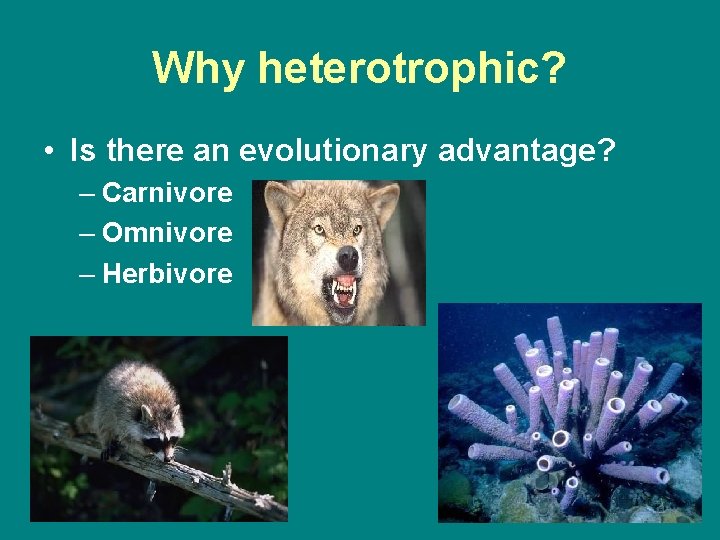
Why heterotrophic? • Is there an evolutionary advantage? – Carnivore – Omnivore – Herbivore
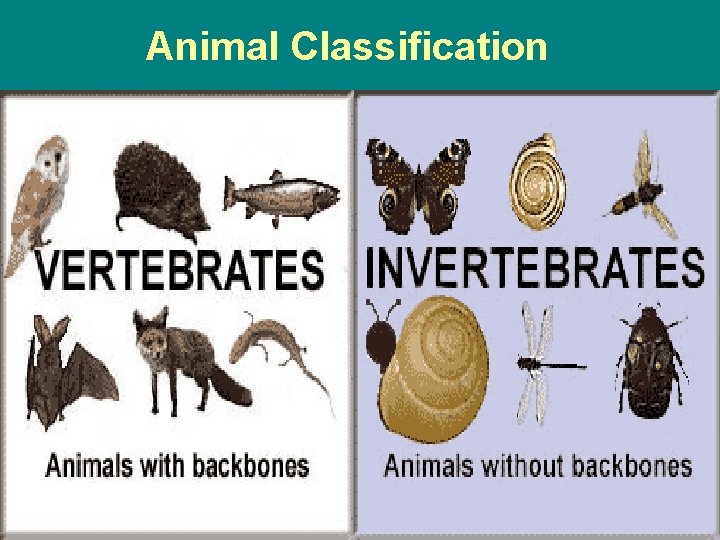
Animal Classification
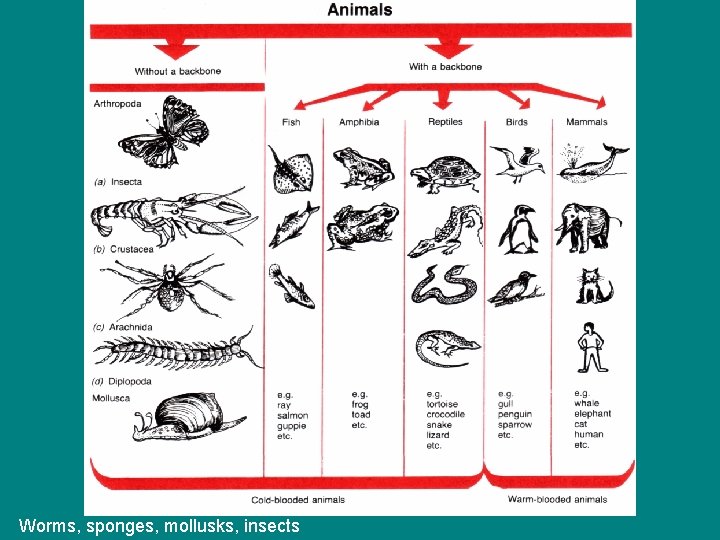
Worms, sponges, mollusks, insects
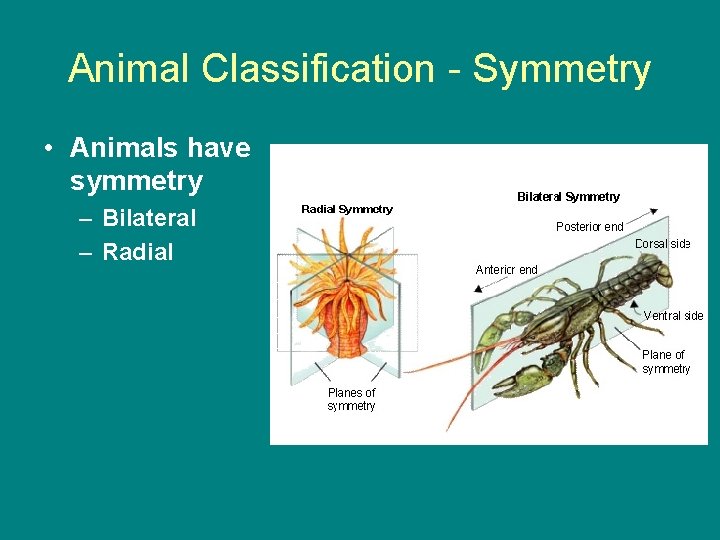
Animal Classification - Symmetry • Animals have symmetry – Bilateral – Radial
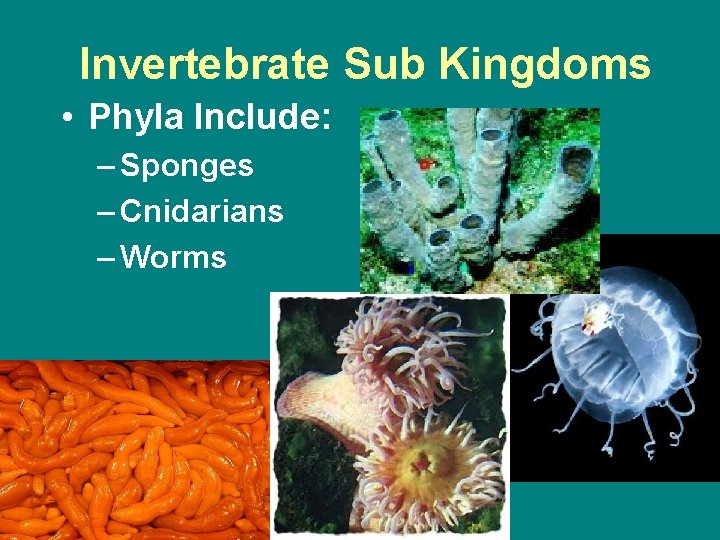
Invertebrate Sub Kingdoms • Phyla Include: – Sponges – Cnidarians – Worms
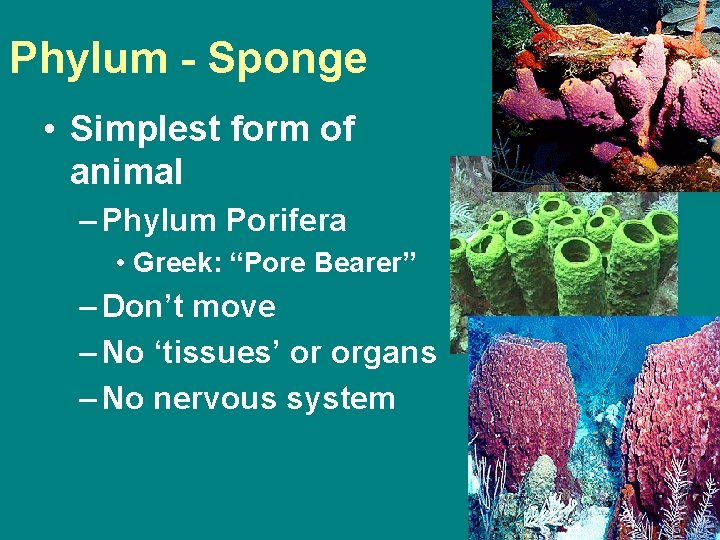
Phylum - Sponge • Simplest form of animal – Phylum Porifera • Greek: “Pore Bearer” – Don’t move – No ‘tissues’ or organs – No nervous system
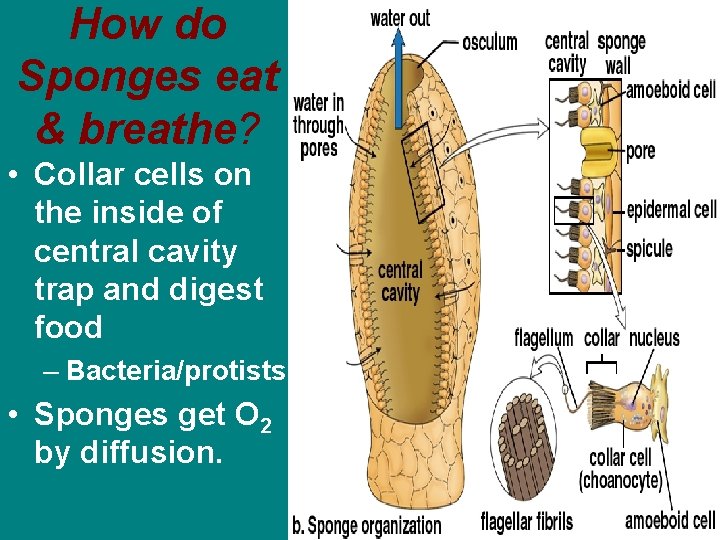
How do Sponges eat & breathe? • Collar cells on the inside of central cavity trap and digest food – Bacteria/protists • Sponges get O 2 by diffusion.
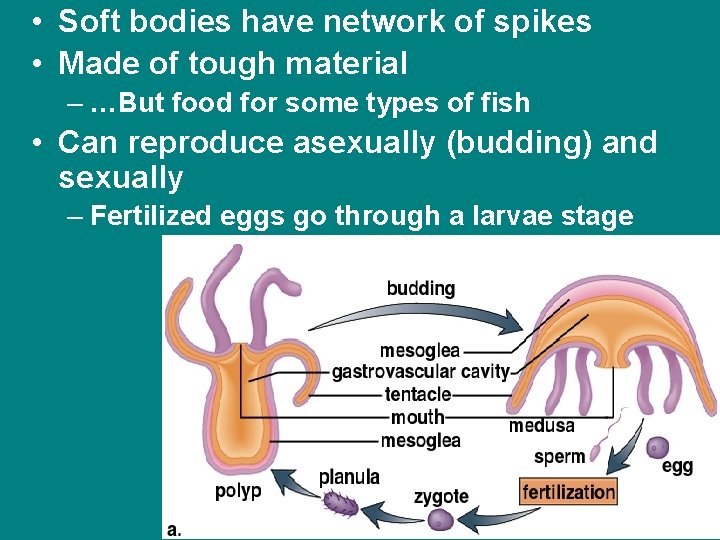
• Soft bodies have network of spikes • Made of tough material – …But food for some types of fish • Can reproduce asexually (budding) and sexually – Fertilized eggs go through a larvae stage
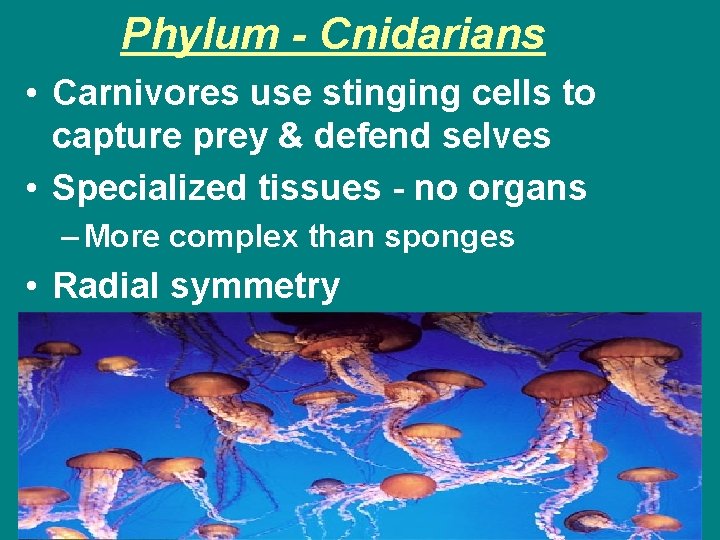
Phylum - Cnidarians • Carnivores use stinging cells to capture prey & defend selves • Specialized tissues - no organs – More complex than sponges • Radial symmetry
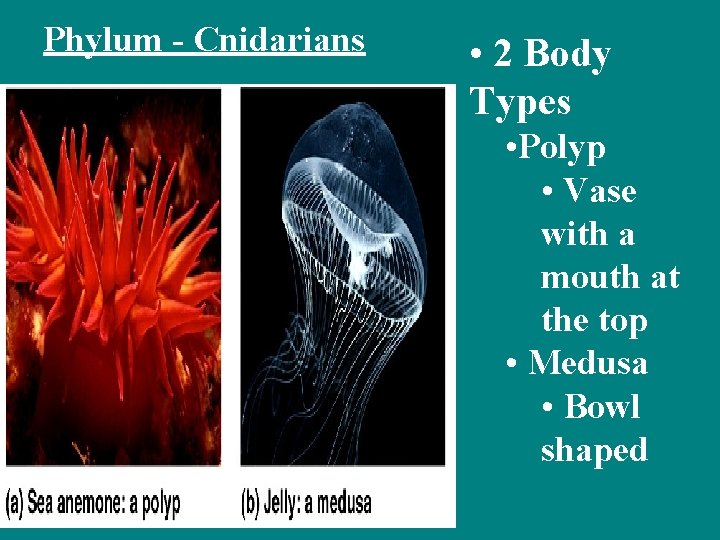
Phylum - Cnidarians • 2 Body Types • Polyp • Vase with a mouth at the top • Medusa • Bowl shaped
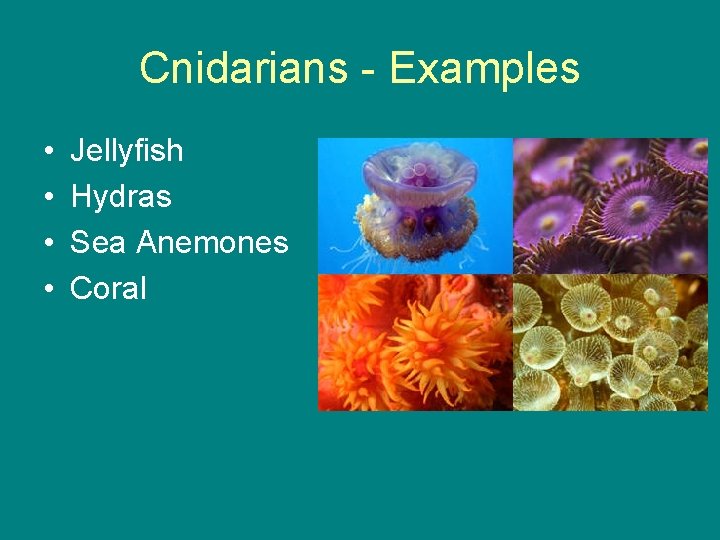
Cnidarians - Examples • • Jellyfish Hydras Sea Anemones Coral
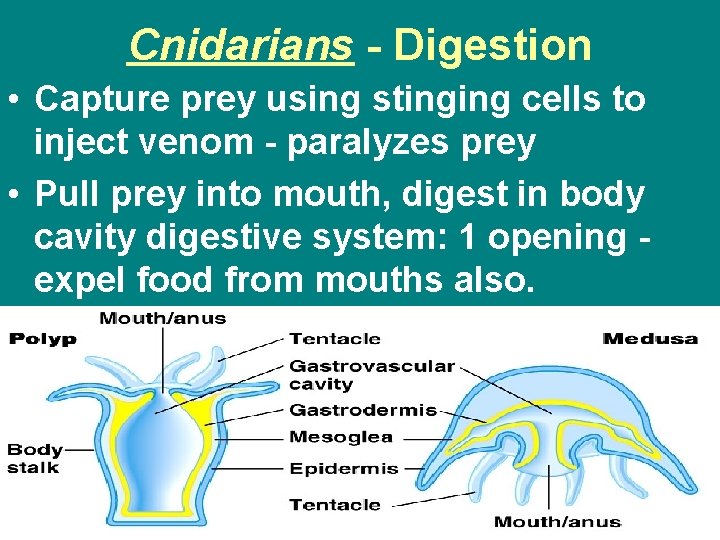
Cnidarians - Digestion • Capture prey using stinging cells to inject venom - paralyzes prey • Pull prey into mouth, digest in body cavity digestive system: 1 opening expel food from mouths also.
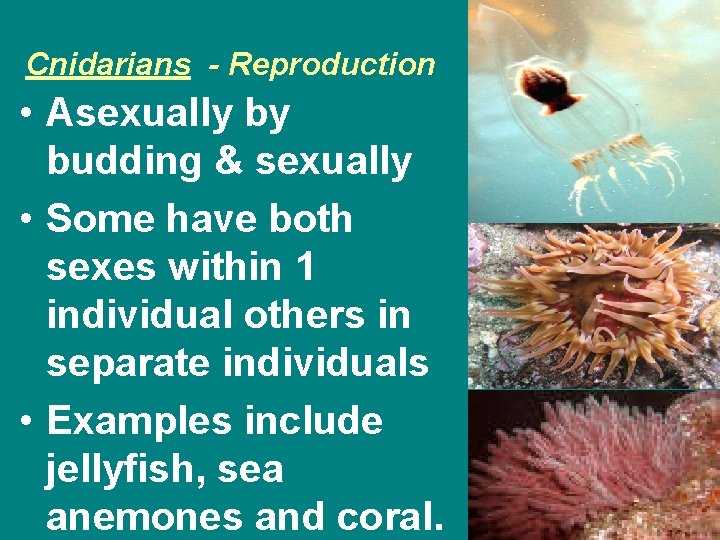
Cnidarians - Reproduction • Asexually by budding & sexually • Some have both sexes within 1 individual others in separate individuals • Examples include jellyfish, sea anemones and coral.
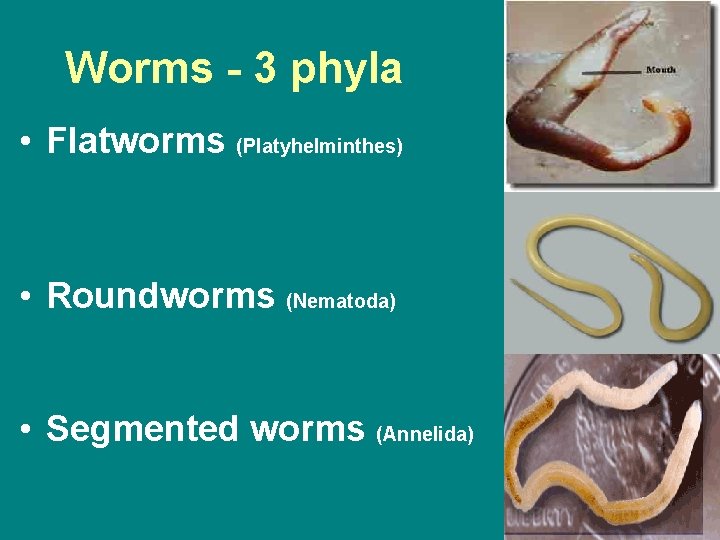
Worms - 3 phyla • Flatworms (Platyhelminthes) • Roundworms (Nematoda) • Segmented worms (Annelida)
All Worms… • Have tissues, organs and organ systems • Have bilateral symmetry • Have a brain • Reproduce both sexually and asexually • Can replace parts by a process called regeneration
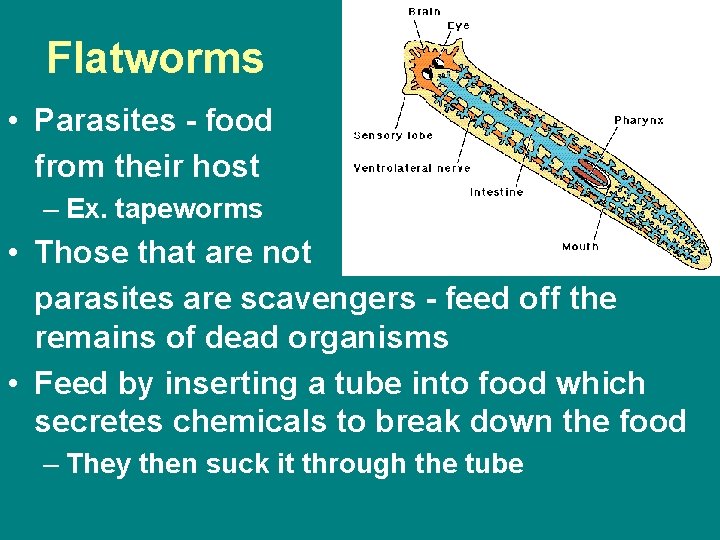
Flatworms • Parasites - food from their host – Ex. tapeworms • Those that are not parasites are scavengers - feed off the remains of dead organisms • Feed by inserting a tube into food which secretes chemicals to break down the food – They then suck it through the tube
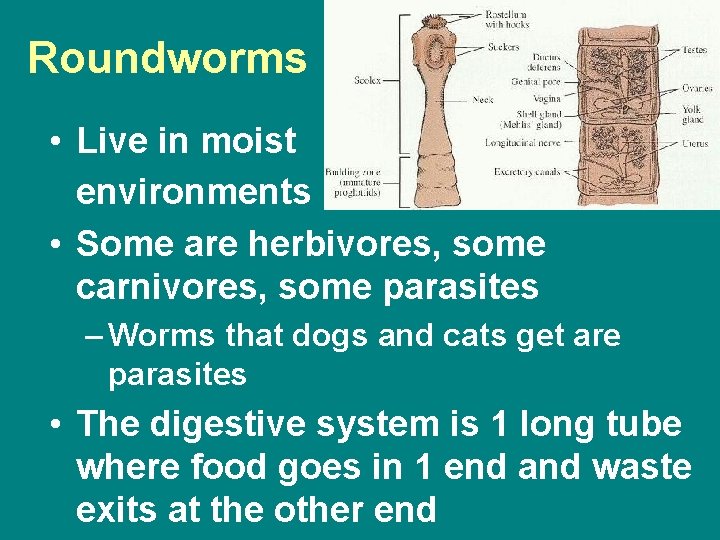
Roundworms • Live in moist environments • Some are herbivores, some carnivores, some parasites – Worms that dogs and cats get are parasites • The digestive system is 1 long tube where food goes in 1 end and waste exits at the other end
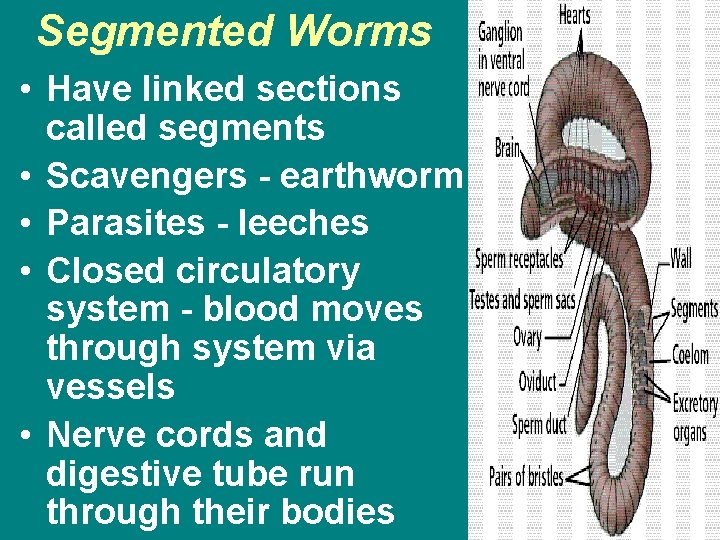
Segmented Worms • Have linked sections called segments • Scavengers - earthworm • Parasites - leeches • Closed circulatory system - blood moves through system via vessels • Nerve cords and digestive tube run through their bodies
Take Home Points • Animals evolved from Protists • Animals have certain characteristics • We are dividing the Animal kingdom into two categories – Invertebrates (most of the animal kingdom) • Porifera • Cnidarians • Worms 3 phyla – Vertebrates (small part of animal kingdom)

Shape of Life - Origins • http: //www. youtube. com/watch? v=rqj. F 7 ZY k. Hp 4
- Slides: 27