
Biology 11 Kingdom Animalia Phylum Mollusca The Soft
Biology 11 Kingdom Animalia Phylum Mollusca: The Soft Bodies
Phylum Mollusca Objectives �State why Molluscs are more advanced than Nematods �Describe the 3 defining characteristics of Molluscs �Describe the 4 Classes and example animals �Know squid anatomy
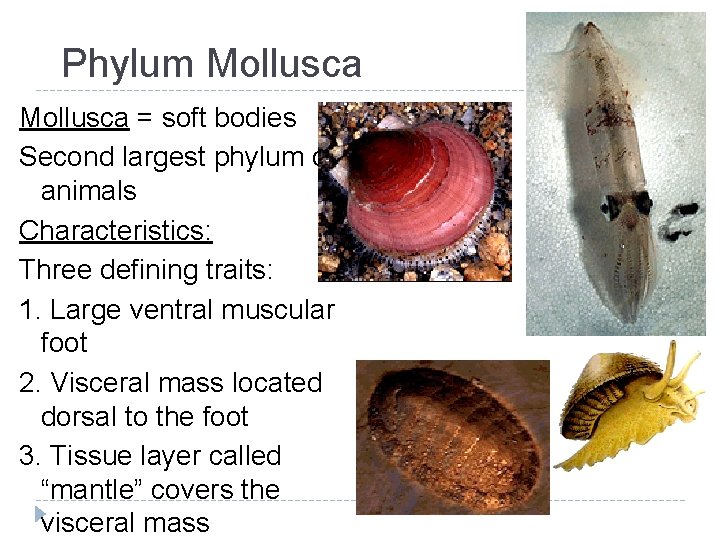
Phylum Mollusca = soft bodies Second largest phylum of animals Characteristics: Three defining traits: 1. Large ventral muscular foot 2. Visceral mass located dorsal to the foot 3. Tissue layer called “mantle” covers the visceral mass

Phylum Mollusca Evolution Likely from annelid like ancestor, due to: 1. Same type of larvae (Trochophore Larvae) 2. Evidence of segmentation seen in larvae and primitive members of this phylum
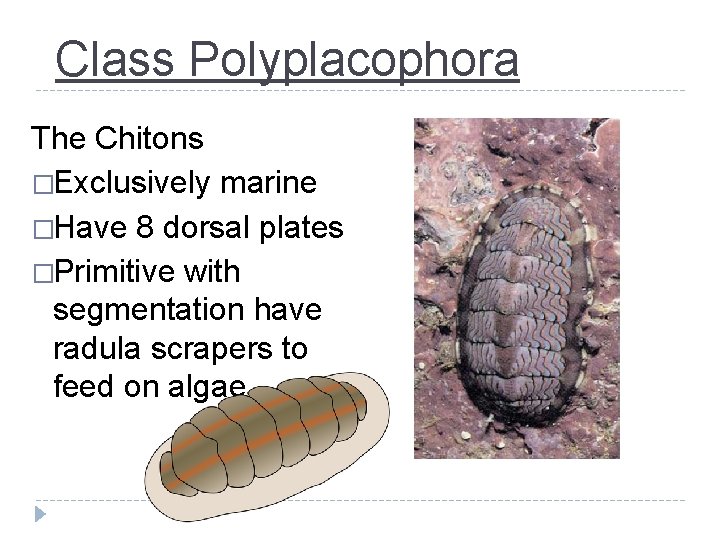
Class Polyplacophora The Chitons �Exclusively marine �Have 8 dorsal plates �Primitive with segmentation have radula scrapers to feed on algae

The Radula

Class Gastropoda Nudibranch Banana Slug �Largest class. �May or may not have a shell (slugs) �Live in fresh, salt water, and land �Contains single spiral shell �Well developed senses �Snails, slugs & nudibranchs
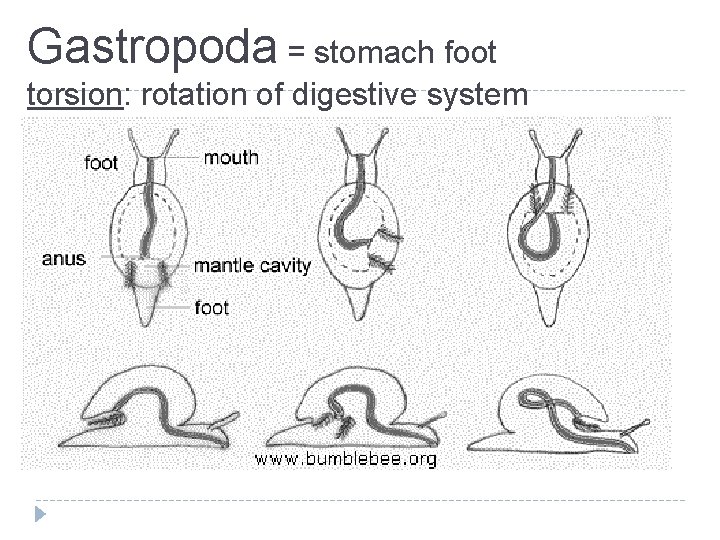
Gastropoda = stomach foot torsion: rotation of digestive system
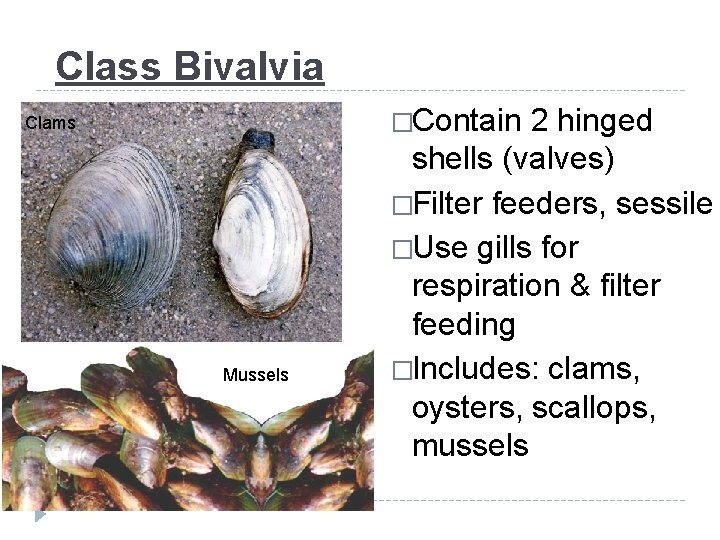
Class Bivalvia �Contain Clams Mussels 2 hinged shells (valves) �Filter feeders, sessile �Use gills for respiration & filter feeding �Includes: clams, oysters, scallops, mussels
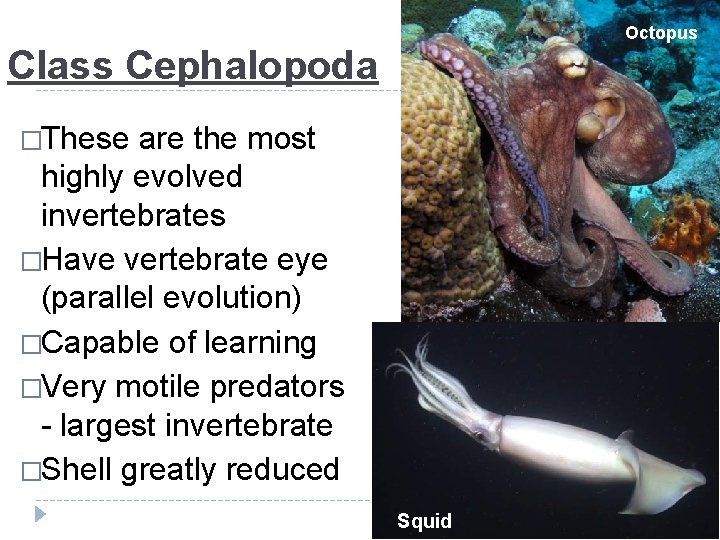
Octopus Class Cephalopoda �These are the most highly evolved invertebrates �Have vertebrate eye (parallel evolution) �Capable of learning �Very motile predators - largest invertebrate �Shell greatly reduced Squid
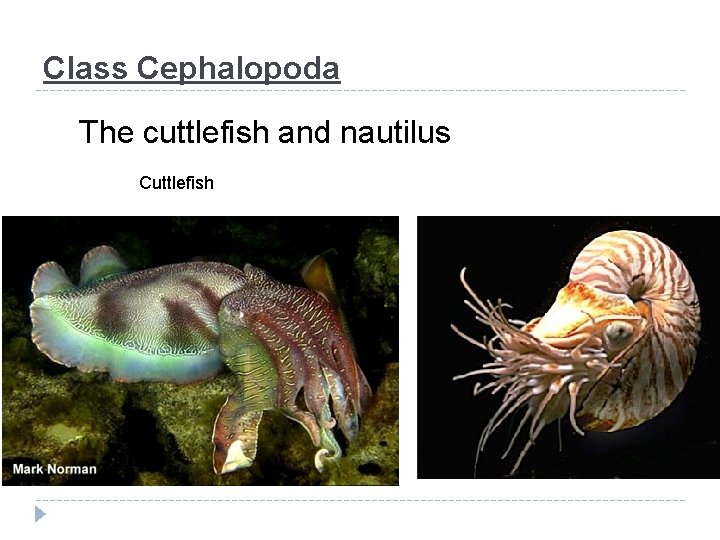
Class Cephalopoda The cuttlefish and nautilus Cuttlefish
- Slides: 11