
Biology 1 B Plant Lab Practical Practice Number
Biology 1 B Plant Lab Practical Practice Number 1 1
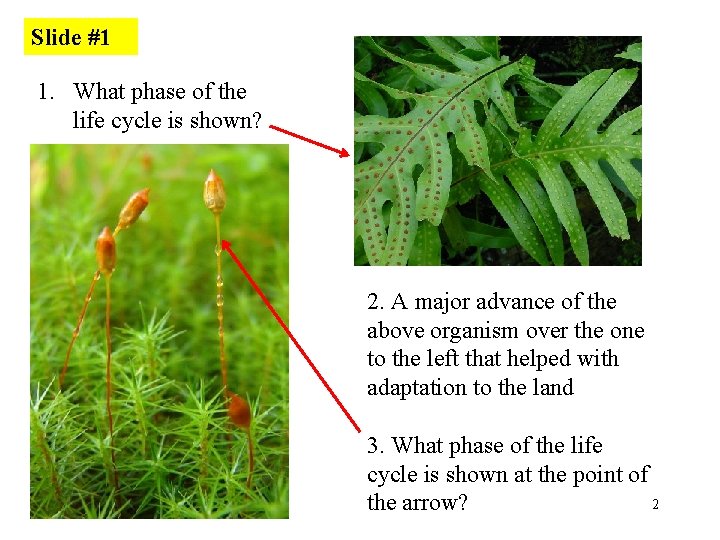
Slide #1 1. What phase of the life cycle is shown? 2. Where does meiosis occur on this organism? 2. A major advance of the above organism over the one to the left that helped with adaptation to the land 3. What phase of the life cycle is shown at the point of 2 the arrow?
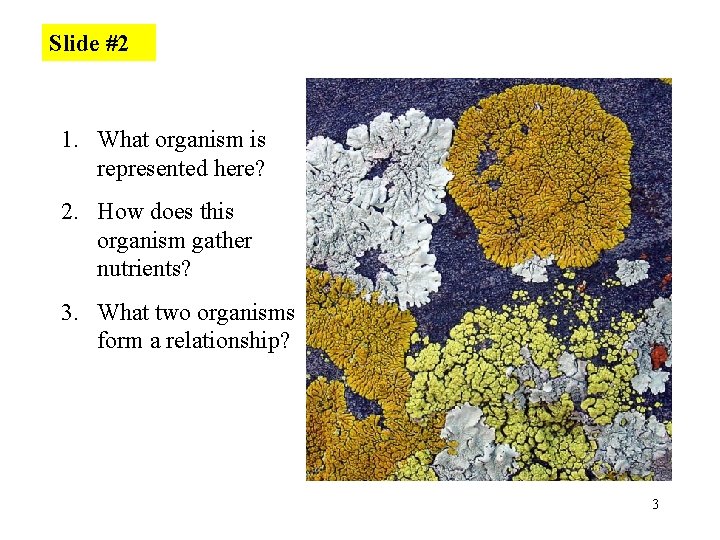
Slide #2 1. What organism is represented here? 2. How does this organism gather nutrients? 3. What two organisms form a relationship? 3
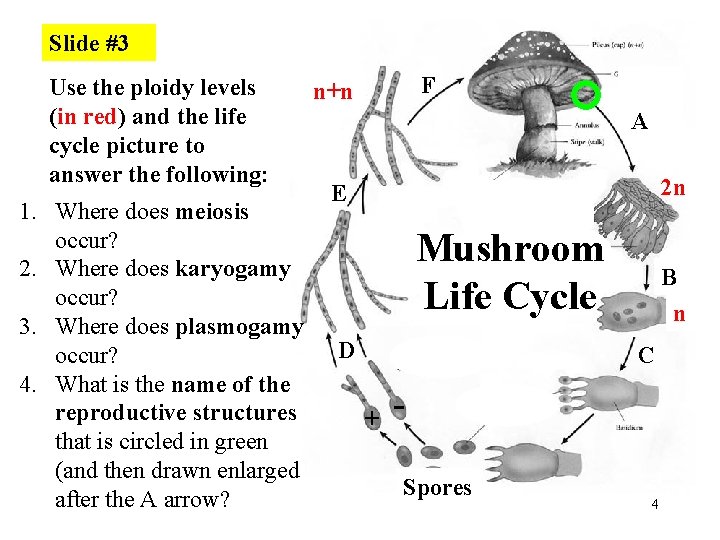
Slide #3 Use the ploidy levels (in red) and the life cycle picture to answer the following: 1. Where does meiosis occur? 2. Where does karyogamy occur? 3. Where does plasmogamy occur? 4. What is the name of the reproductive structures that is circled in green (and then drawn enlarged after the A arrow? F n+n A 2 n E Mushroom Life Cycle D B n C + Spores 4
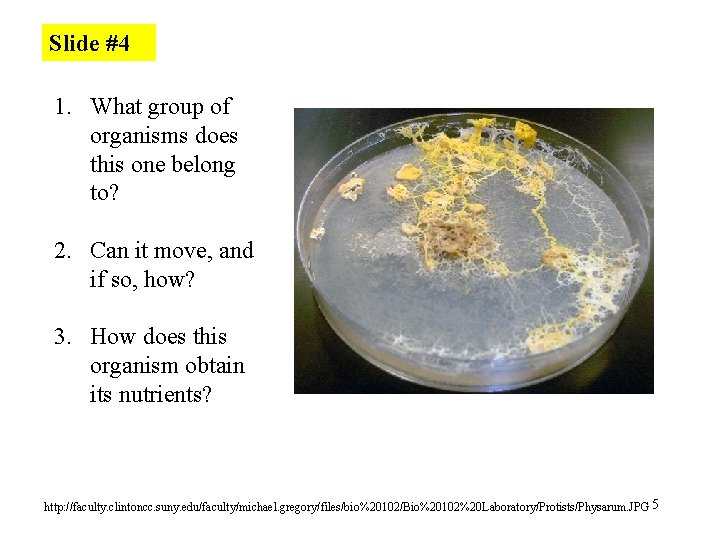
Slide #4 1. What group of organisms does this one belong to? 2. Can it move, and if so, how? 3. How does this organism obtain its nutrients? http: //faculty. clintoncc. suny. edu/faculty/michael. gregory/files/bio%20102/Bio%20102%20 Laboratory/Protists/Physarum. JPG 5
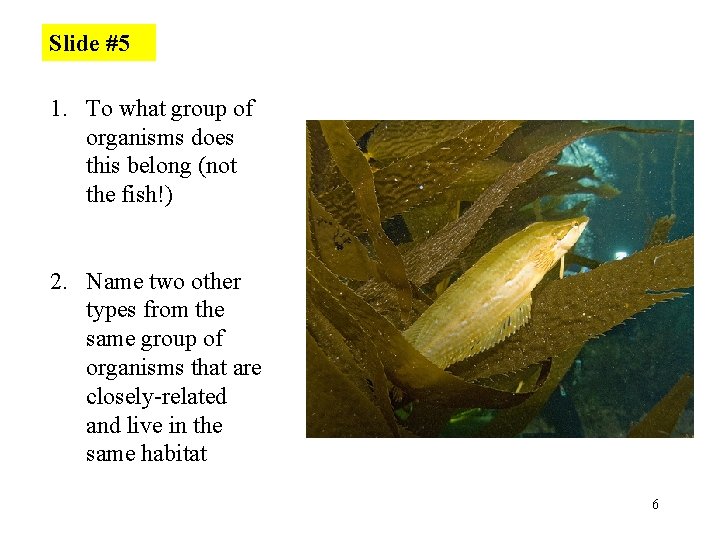
Slide #5 1. To what group of organisms does this belong (not the fish!) 2. Name two other types from the same group of organisms that are closely-related and live in the same habitat 6
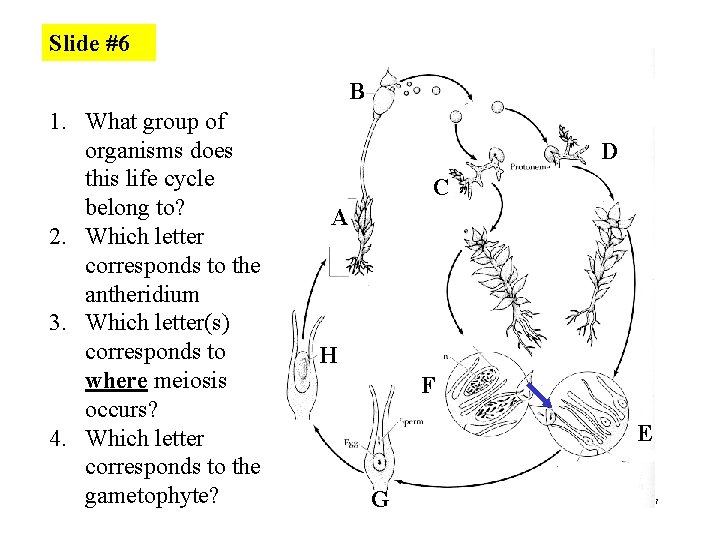
Slide #6 B 1. What group of organisms does this life cycle belong to? 2. Which letter corresponds to the antheridium 3. Which letter(s) corresponds to where meiosis occurs? 4. Which letter corresponds to the gametophyte? D C A H F E G 7
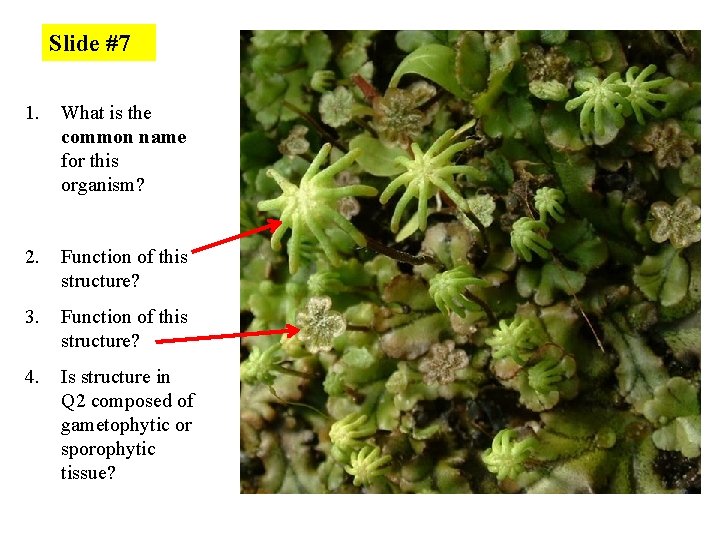
Slide #7 1. What is the common name for this organism? 2. Function of this structure? 3. Function of this structure? 4. Is structure in Q 2 composed of gametophytic or sporophytic tissue? 1
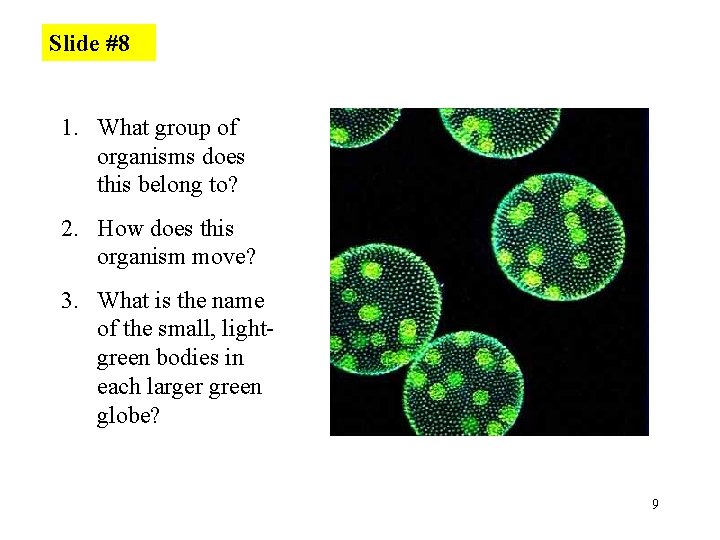
Slide #8 1. What group of organisms does this belong to? 2. How does this organism move? 3. What is the name of the small, lightgreen bodies in each larger green globe? 9
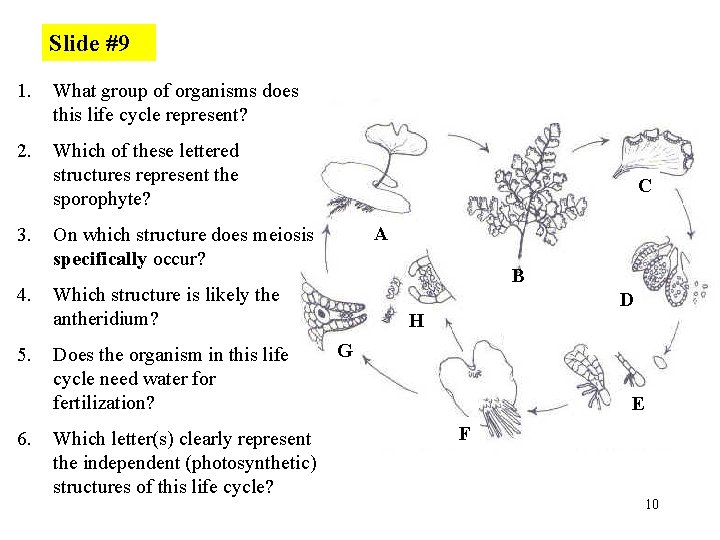
Slide #9 1. What group of organisms does this life cycle represent? 2. Which of these lettered structures represent the sporophyte? 3. 4. 5. 6. C A On which structure does meiosis specifically occur? B Which structure is likely the antheridium? Does the organism in this life cycle need water for fertilization? Which letter(s) clearly represent the independent (photosynthetic) structures of this life cycle? D H G E F 10
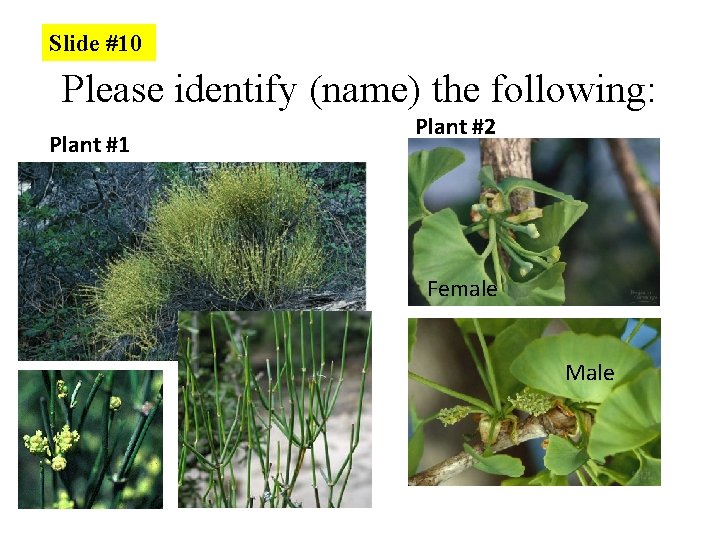
Slide #10 Please identify (name) the following: Plant #1 Plant #2 Female Male
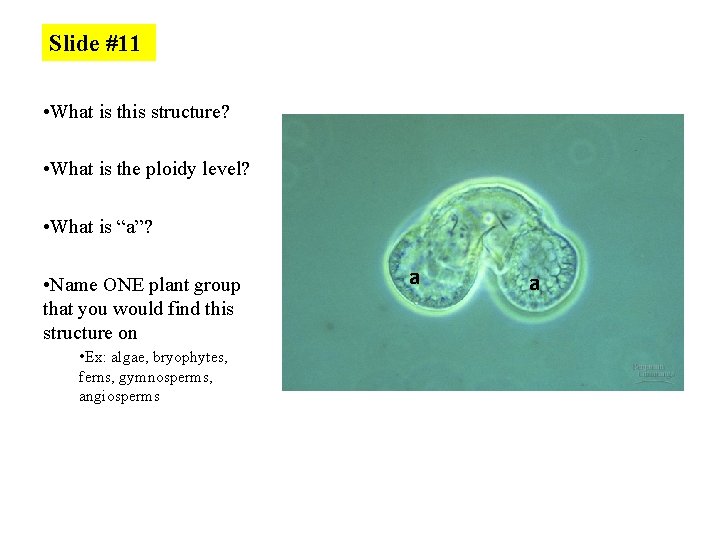
Slide #11 • What is this structure? • What is the ploidy level? • What is “a”? • Name ONE plant group that you would find this structure on • Ex: algae, bryophytes, ferns, gymnosperms, angiosperms a a
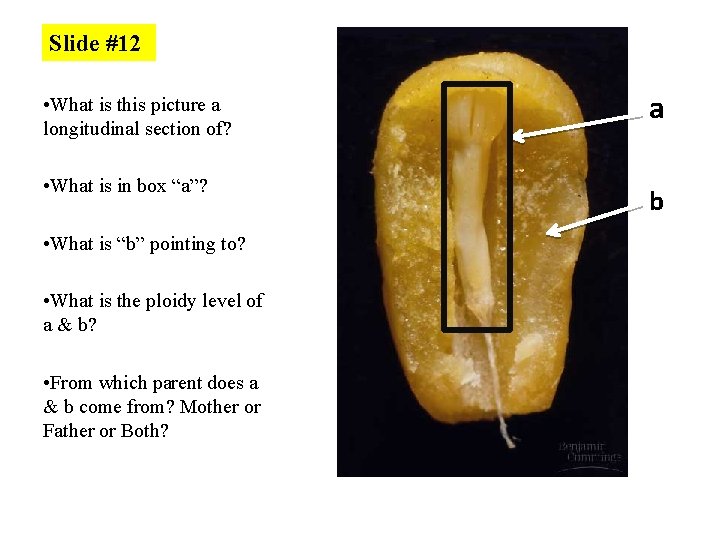
Slide #12 • What is this picture a longitudinal section of? a • What is in box “a”? b • What is “b” pointing to? • What is the ploidy level of a & b? • From which parent does a & b come from? Mother or Father or Both?
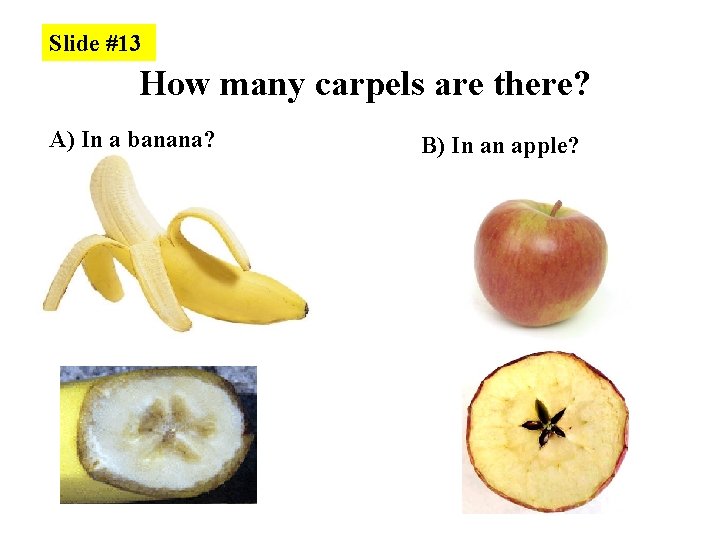
Slide #13 How many carpels are there? A) In a banana? B) In an apple?
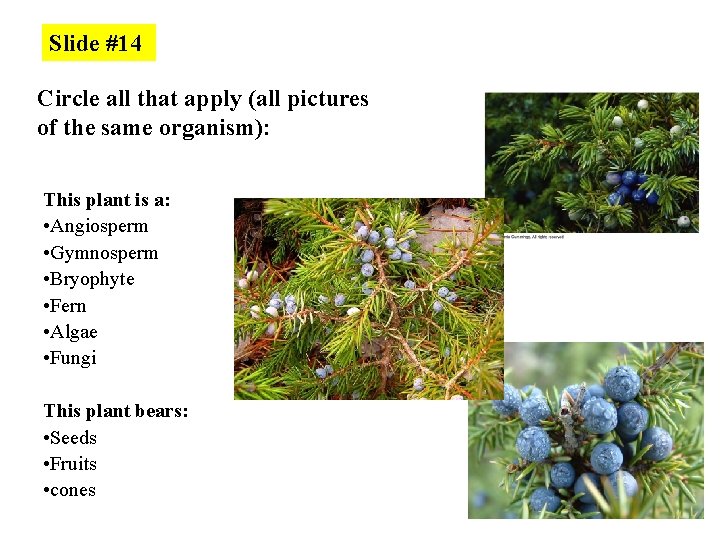
Slide #14 Circle all that apply (all pictures are of the same organism): This plant is a: • Angiosperm • Gymnosperm • Bryophyte • Fern • Algae • Fungi This plant bears: • Seeds • Fruits • cones
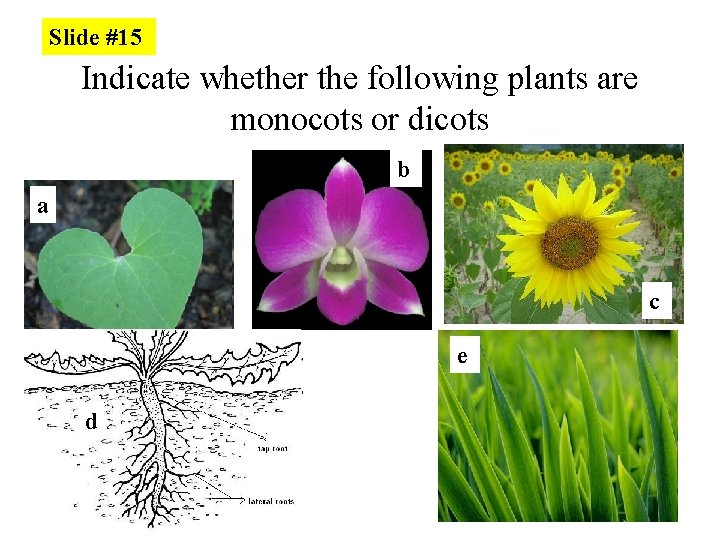
Slide #15 Indicate whether the following plants are monocots or dicots b a c e d f
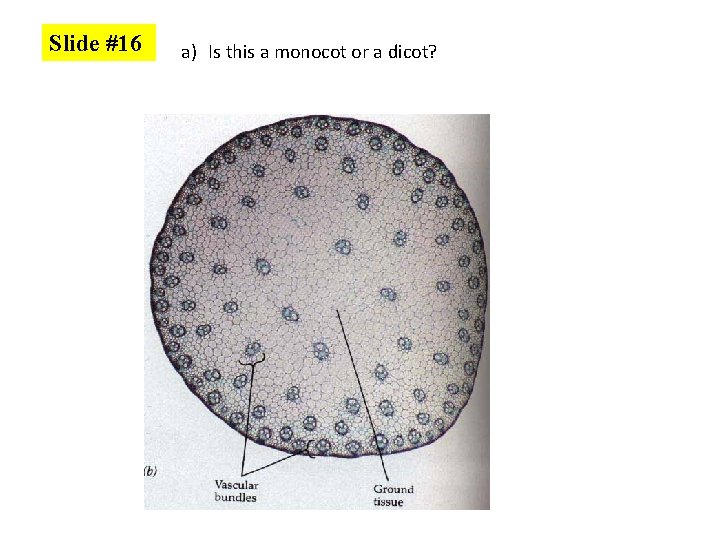
Slide #16 a) Is this a monocot or a dicot?
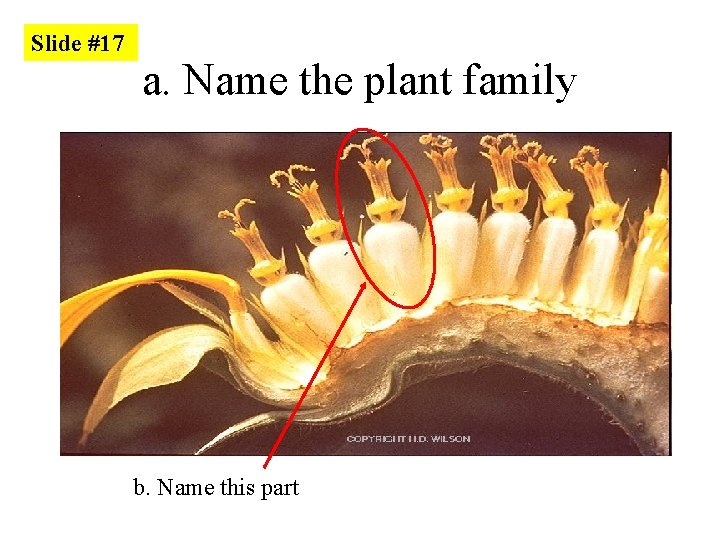
Slide #17 a. Name the plant family b. Name this part
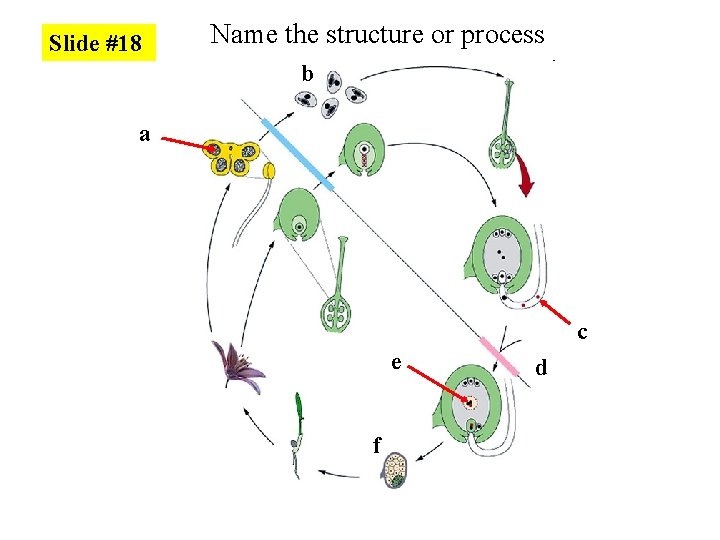
Slide #18 Name the structure or process b a c e f d
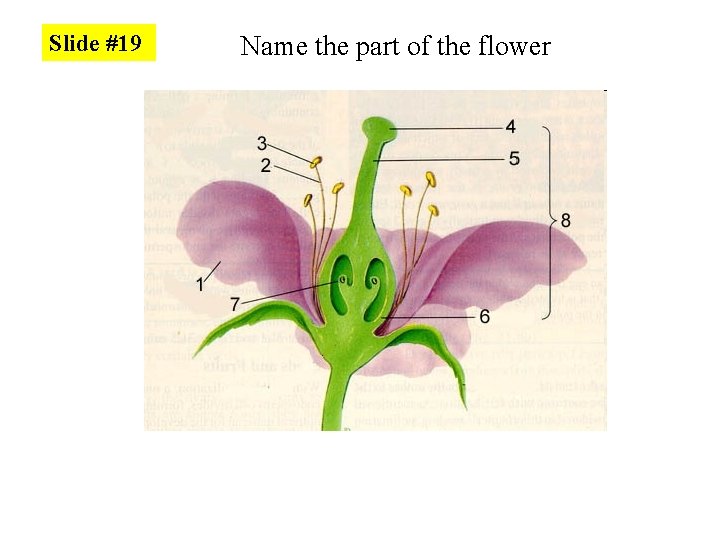
Slide #19 Name the part of the flower
- Slides: 20