
Biology 1 4 Mechanisms for the Diversity of

Biology 1 -4 Mechanisms for the Diversity of Life

1 -4 A: Mutations • Genetic mutations can occur when a mistake is made in duplicating and transmitting genetic information. • Mutations can be beneficial (positive), harmful (negative) or unnoticed (neutral)

Examples of Mutations: Examples of Positive Mutations: Examples of Negative Mutations: Examples of Neutral Mutations:
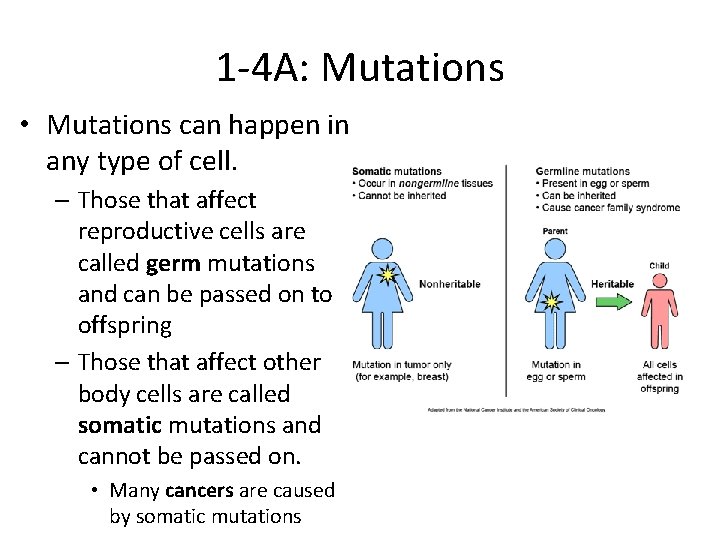
1 -4 A: Mutations • Mutations can happen in any type of cell. – Those that affect reproductive cells are called germ mutations and can be passed on to offspring – Those that affect other body cells are called somatic mutations and cannot be passed on. • Many cancers are caused by somatic mutations

1 -4 A: Mutations • Both somatic and germ mutations can happen at two levels: – Chromosomal – Gene

1 -4 A: Mutations • One example of a chromosomal mutation is trisomy 21 (also known as Down syndrome) – It occurs when there is an extra copy of the 21 st chromosome

1 -4 A: Mutations • Gene mutations can happen in different ways:

1 -4 B: Mutagens • Mutagens are chemicals or other factors that can cause genetic mutations. – One example of this is a carcinogen, which is a mutagen that causes cancer. – Some carcinogens directly cause changes in DNA, and others simply affect cell division, increasing the chances that DNA mutations will occur

1 -4 B: Mutagens • Examples of carcinogens are: – Radiation (may be from radioactive substances or UV rays from the sun) – Chemicals in cigarettes such as benzene – Chemicals in food production, such as nitrites present in cured meats like bacon.

- Slides: 10