
biological treatments for psychological disorders Dr James Hawkins
biological treatments for psychological disorders Dr James Hawkins www. goodmedicine. org. uk
key points of this workshop Ø intro & your hopes for the day Ø overview, psychotherapy’s improvable outcomes, progress monitoring & a contextual model Ø medication, herbs & supplements Ø diet, alcohol, smoking & exercise Ø when add biological methods? early on/strengths, later/augmnt Ø sleep (poor, apnea, restrict), light (box, alarm), ect, yoga, acupuncture, botox, heat, etc
a variety of resources at www. goodmedicine. org. uk Ø the blog section – for a complete downloadable copy of all today’s slides & an evolving sequence of blog posts about the workshop Ø the tag cloud (top right) – for more details & possibly handouts about many of today’s topics Ø facebook, twitter, g+ & scoop. it Ø for research updates on psycho- therapy, depression, mindfulness & compassion, positive psycho-logy, and healthy lifestyle, sign up for free trimonthly newsletter
my background Ø personal fascination with what is involved in leading a really full, Ø Ø Ø worthwhile, “good” life – read philosophy at cambridge 1970 changed to medicine, took up yoga & meditation and (in ‘ 72) began exploring humanistic psychology & groupwork late ‘ 70/early ‘ 80’s developed complimentary medical skills – chinese acupuncture, hypnosis, osteopathy, healing became increasingly evidence-based and focused broadly on pain & stress – trained in cognitive-behavioural therapy, psychosexual medicine, emotion-focused therapy, etc worked through own charity, shifted to working with stress & using the newly emerging evidence on wellbeing now one-to-one work, run groups (life skills & opening up), teach, supervise & newsletter (www. stressedtozest. com)
key points of this workshop Ø intro & your hopes for the day Ø overview, psychotherapy’s improvable outcomes, progress monitoring & a contextual model Ø medication, herbs & supplements Ø diet, alcohol, smoking & exercise Ø when add biological methods? early on/strengths, later/augmnt Ø sleep (poor, apnea, restrict), light (box, alarm), transcranial, ect, acupuncture, botox, heat …
exercise 1: your hopes for today? what two questions about ‘biological’ treatment approaches for psychological disorders would you most like answers for today? ► solo … jot down ► pairs. . . share ► group. . . names/write
key points of this workshop ü intro & your hopes for the day Ø overview, psychotherapy’s improvable outcomes, progress monitoring & a contextual model Ø medication, herbs & supplements Ø diet, alcohol, smoking & exercise Ø when add biological methods? early on/strengths, later/augmnt Ø sleep (poor, apnea, restrict), light (box, alarm), ect, yoga, acupuncture, botox, heat, etc
reasons to be pleased ² 100’s of psychotherapy meta-analyses show effect sizes of approximately 0. 6 (0. 4 to 0. 8) ² in the social sciences, this is a ‘medium’ to ‘strong’ effect size (for Cohen’s d) ² it makes psychotherapy as or more potent than many well established EBM procedures including (for example) almost all intervent-ions in asthma, geriatrics, and cardiology Canadian centre for evidence-based medicine “Number needed to treat – effectiveness of medical specialities” http: //ktclearinghouse. ca/cebm/glossary/nnt Lambert, M. J. (2013). “The efficacy and effectiveness of psychotherapy” in M. J. Lambert (ed) “Handbook of psychotherapy and behavior change (6 th ed)”
reasons to be pleased ² reductions in relapse rates compared to medication or no treatment – so for depression a meta-analysis by De Maat et al (2006) reported a relapse rate of 27% for psychotherapy but a rate of 57% for pharmacotherapy (if medication was discontinued) ² there is also a growing research literature (Smith & Williams, 2013) highlighting reductions in medical & psychological treatment costs and reductions in time off work achievable with psychological interventions De Maat, S. , et al. (2006). "Relative efficacy of psychotherapy and pharmacotherapy in the treatment of depression: A meta-analysis. " Psychotherapy Research 16(5): 566 -578 Smith, T. W. & P. Williams (2013). “Behavioral medicine and clinical health psychology. ” in M. J. Lambert (ed) “Handbook of psychotherapy and behavior change (6 th ed)”
reasons to be pleased disappointed ² 100’s of psychotherapy meta-analyses show effect sizes of approximately 0. 6 (0. 4 to 0. 8) ² but since Smith, Glass & Miller’s estimate of an 0. 85 effect size from a meta-analysis of 475 studies in 1980, there has been no general effectiveness increase over the next 35 years ² in fact improved statistical methods suggest we have been over-estimating effectiveness Lambert, M. J. (2013). “The efficacy and effectiveness of psychotherapy” in M. J. Lambert (ed) “Handbook of psychotherapy and behavior change (6 th ed)”
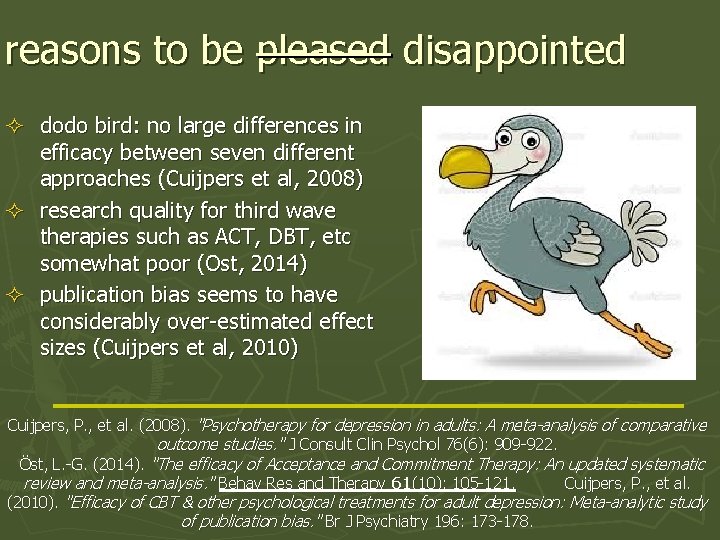
reasons to be pleased disappointed ² dodo bird: no large differences in efficacy between seven different approaches (Cuijpers et al, 2008) ² research quality for third wave therapies such as ACT, DBT, etc somewhat poor (Ost, 2014) ² publication bias seems to have considerably over-estimated effect sizes (Cuijpers et al, 2010) Cuijpers, P. , et al. (2008). "Psychotherapy for depression in adults: A meta-analysis of comparative outcome studies. " J Consult Clin Psychol 76(6): 909 -922. Öst, L. -G. (2014). "The efficacy of Acceptance and Commitment Therapy: An updated systematic review and meta-analysis. " Behav Res and Therapy 61(10): 105 -121. Cuijpers, P. , et al. (2010). "Efficacy of CBT & other psychological treatments for adult depression: Meta-analytic study of publication bias. " Br J Psychiatry 196: 173 -178.
reasons to be pleased ² 100’s of psychotherapy meta-analyses show effect sizes of approximately 0. 6 (0. 4 to 0. 8) ² in the social sciences, this is a ‘medium’ to ‘strong’ effect size (for Cohen’s d) ² it makes psychotherapy as or more potent than many well established EBM procedures including (for example) almost all intervent-ions in asthma, geriatrics, and cardiology Canadian centre for evidence-based medicine “Number needed to treat – effectiveness of medical specialities” http: //ktclearinghouse. ca/cebm/glossary/nnt Lambert, M. J. (2013). “The efficacy and effectiveness of psychotherapy” in M. J. Lambert (ed) “Handbook of psychotherapy and behavior change (6 th ed)”
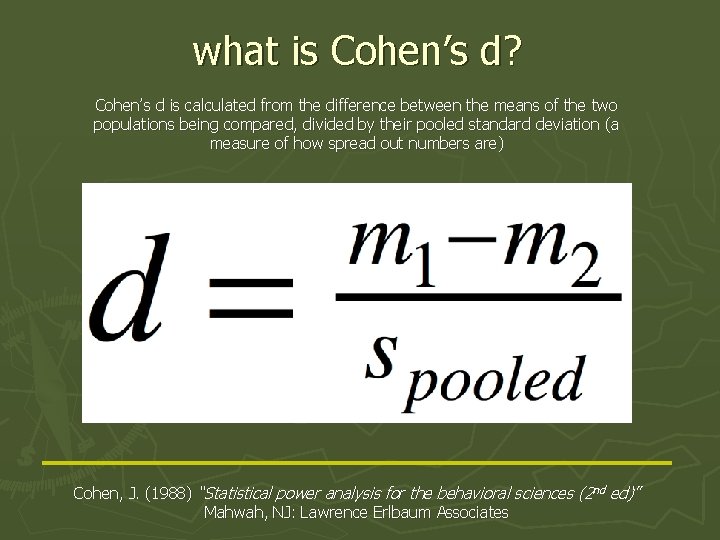
what is Cohen’s d? Cohen’s d is calculated from the difference between the means of the two populations being compared, divided by their pooled standard deviation (a measure of how spread out numbers are) Cohen, J. (1988) “Statistical power analysis for the behavioral sciences (2 nd ed)” Mahwah, NJ: Lawrence Erlbaum Associates
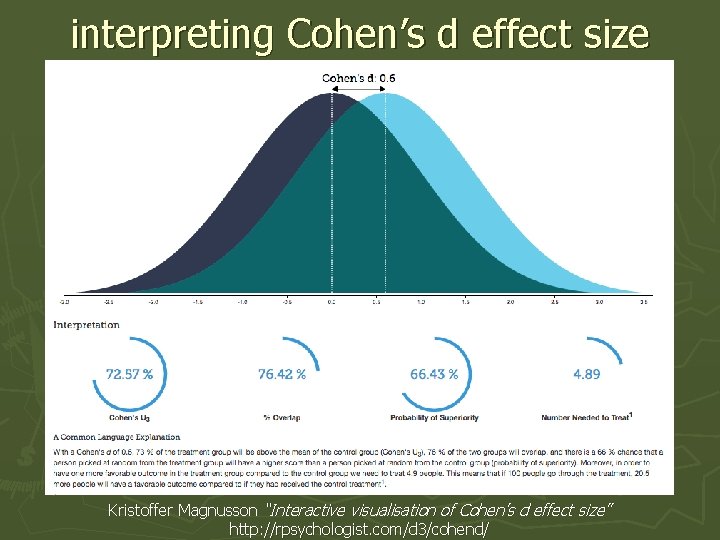
interpreting Cohen’s d effect size Kristoffer Magnusson “Interactive visualisation of Cohen’s d effect size” http: //rpsychologist. com/d 3/cohend/
how can we improve outcomes? Ø use combined psychotherapy & various biological approaches right from the start of therapy Ø use routine outcome monitoring to trigger problem-solving and possible addition of biological treatments if going off track Ø numerous other potential largely therapist focused improvements in selection, training, supervision & cpd
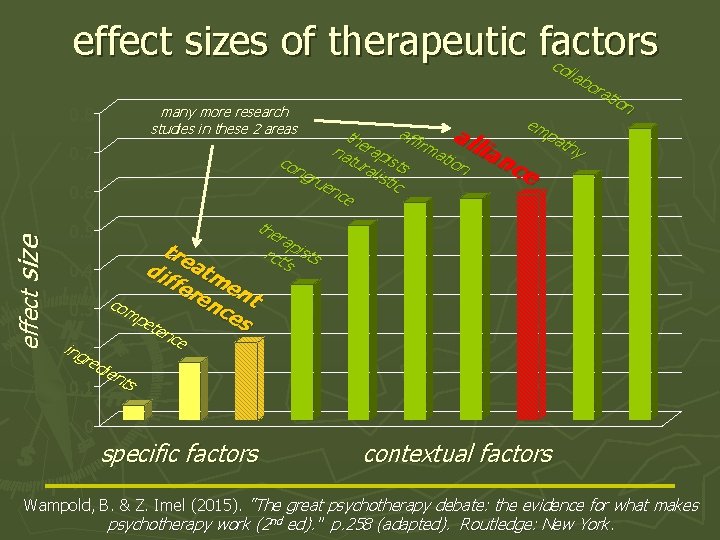
effect sizes of therapeutic factors co many more research studies in these 2 areas 0. 8 em aff pa a the i l thy r l m r i na api a a tio tur sts nc con n a list gru e ic en ce 0. 7 effect size 0. 6 0. 5 tre dif atm 0. 4 fer en en t ce 0. 3 comp et s in 0. 2 gre die n 0. 1 ts 0 llab ora tio n the rap rct ists ’s en ce specific factors contextual factors Wampold, B. & Z. Imel (2015). ”The great psychotherapy debate: the evidence for what makes psychotherapy work (2 nd ed). " p. 258 (adapted). Routledge: New York.
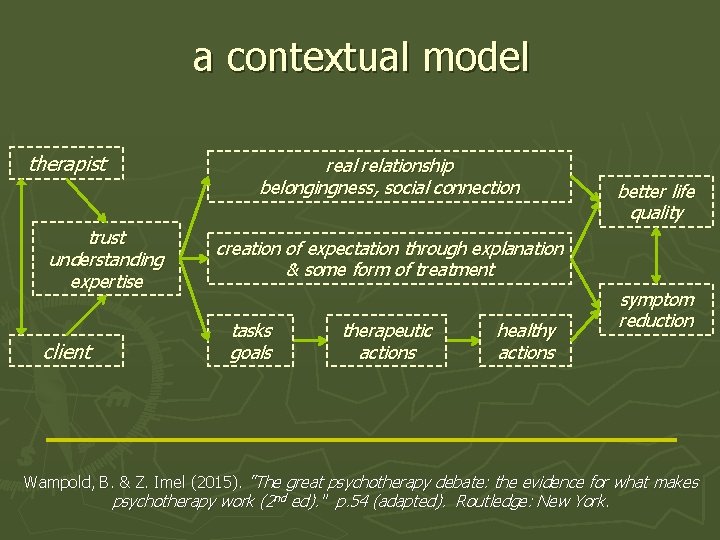
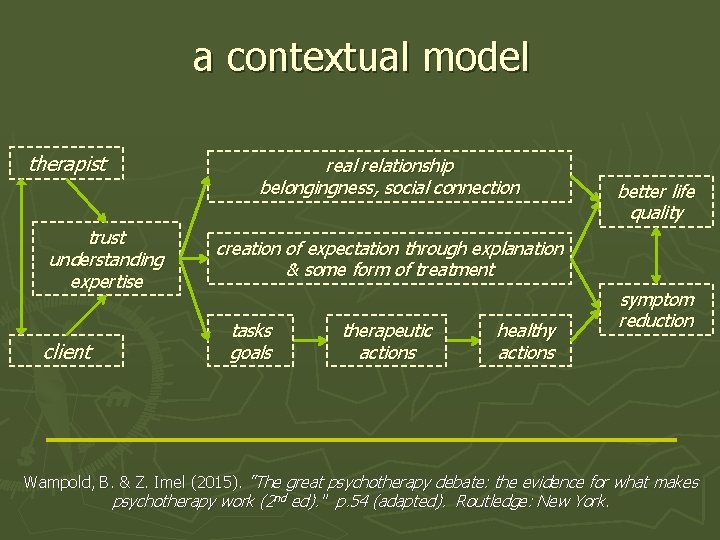
a contextual model therapist trust understanding expertise client real relationship belongingness, social connection better life quality creation of expectation through explanation & some form of treatment tasks goals therapeutic actions healthy actions symptom reduction Wampold, B. & Z. Imel (2015). ”The great psychotherapy debate: the evidence for what makes psychotherapy work (2 nd ed). " p. 54 (adapted). Routledge: New York.

why therapist effects differences? research suggests that differences in therapist effectiveness are NOT due to: type of therapy being used therapist qualifications/training duration of therapist experience therapist age therapist gender Baldwin, S. A. and Z. E. Imel (2013). “Therapist effects: findings and methods” in M. J. Lambert (ed) “Handbook of psychotherapy and behavior change (6 th ed)”
my own (recent) experience with therapy ü chose five therapists with good reputations – cbt, psychodynamic gestalt, and 2 person-centered ü saw each for a few initial sessions (typically 1 to 3) to “see if we click” ü chose one to work with longer term ü importance of empathy, warmth & somatic sense of “trust in their hold”
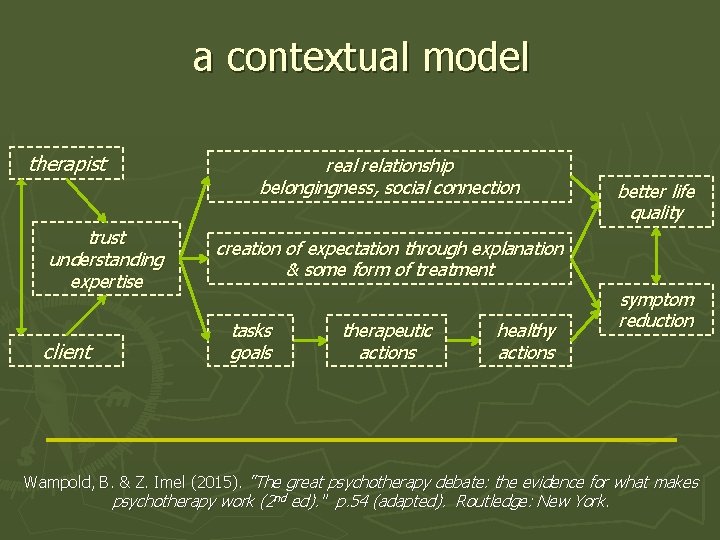
a contextual model therapist trust understanding expertise client real relationship belongingness, social connection better life quality creation of expectation through explanation & some form of treatment tasks goals therapeutic actions healthy actions symptom reduction Wampold, B. & Z. Imel (2015). ”The great psychotherapy debate: the evidence for what makes psychotherapy work (2 nd ed). " p. 54 (adapted). Routledge: New York.
how can we improve outcomes? Ø use combined psychotherapy & various biological approaches right from the start of therapy Ø use routine outcome monitoring to trigger problem-solving and possible addition of biological treatments if going off track Ø numerous other potential largely therapist focused improvements in selection, training, supervision & cpd

helping improve outcomes … especially when non-response risk “ … repeated assessment and immediate feed-back of a patient’s mental health functioning during the course of therapy can alert therapists to patient non-response or negative response, support decisions on treatment planning and strategies (e. g. when and how to repair thera-peutic alliance ruptures) and help determine when treatment has been sufficient. ” Castonguay, L. , M. Barkham, W. Lutz, et al. (2013). “Practice-orientated research. ” in M. J. Lambert (ed) “Handbook of psychotherapy and behavior change (6 th ed)”
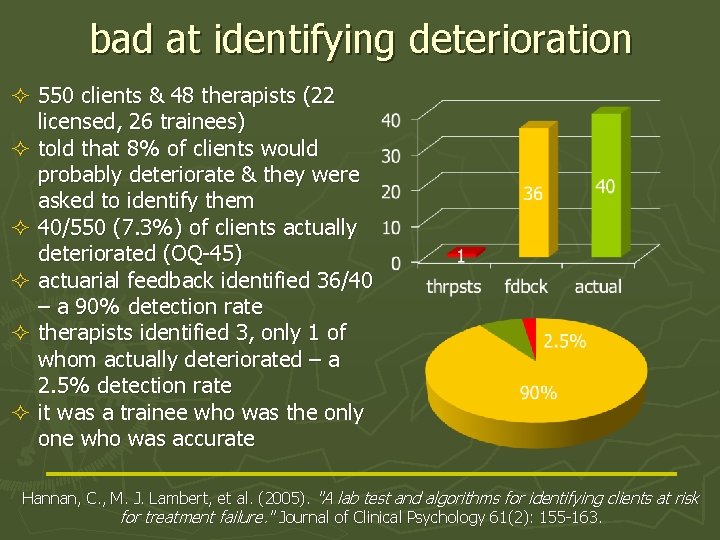
bad at identifying deterioration ² 550 clients & 48 therapists (22 licensed, 26 trainees) ² told that 8% of clients would probably deteriorate & they were asked to identify them ² 40/550 (7. 3%) of clients actually deteriorated (OQ-45) ² actuarial feedback identified 36/40 – a 90% detection rate ² therapists identified 3, only 1 of whom actually deteriorated – a 2. 5% detection rate ² it was a trainee who was the only one who was accurate Hannan, C. , M. J. Lambert, et al. (2005). "A lab test and algorithms for identifying clients at risk for treatment failure. " Journal of Clinical Psychology 61(2): 155 -163.
practice-based evidence “At its heart, practice-based evidence is premised on the adoption and ownership of a bona fide measurement system and its implementation as standard procedure within routine practice. ” ² celesthealth system for mental health & college counseling settings (chs-mh) www. celesthealth. com ² clinical outcomes in routine evaluation (core) www. coreims. co. uk ² outcome questionnaire-45 (oq 45) & linked measures www. oqmeasures. com ² partners for change outcome management system (pcoms) http: //scottdmiller. com & https: //heartandsoulofchange. com ² treatment outcome package (top) www. outcomereferrals. com Castonguay, L. , M. Barkham, W. Lutz, et al. (2013). “Practice-orientated research. ” in M. J. Lambert (ed) “Handbook of psychotherapy and behavior change (6 th ed)”
using regular sessional feedback helps therapists improve outcomes M. Barkham, G. E. Hardy & J. Mellor-Clark (ed’s) (2010) “Developing and delivering practicebased evidence. ” Chichester: John Wiley & Sons. Newnham, E. A. and A. C. Page (2010). "Bridging the gap between best evidence and best practice in mental health. " Clin Psychol Rev 30(1): 127 -142. Shimokawa, K. , M. J. Lambert, et al. (2010). "Enhancing treatment outcome of patients at risk of treatment failure: Meta-analytic and mega-analytic review of a psychotherapy quality assurance system. " J Consult Clin Psychol 78(3): 298 -311. Lambert, M. J. (2010) "Prevention of treatment failure: the use of measuring, monitoring, and feedback in clinical practice". Washington: Am Psych Association Lutz, W. , J. R. Bohnke, et al. (2011). "Lending an ear to feedback systems: Evaluation of recovery and non-response in psychotherapy in a German outpatient setting. " Community Ment Health J 47(3): 311 -317. Whipple, J. L. and M. J. Lambert (2011). "Outcome measures for practice. " Annual review of clinical psychology 7: 87 -111. Carlier, I. V. , D. Meuldijk, et al. (2012). "Routine outcome monitoring & feedback on physical or mental health status: Evidence and theory. " J Eval Clin Pract 18: 104 -110.

to get best results from feedback ² best results typically depend on therapists involved being committed to using feedback ² regular sessional assessment of outcome progress & therapeutic alliance given to both therapist & client for possible discussion ² current evidence suggests this halves client deterioration rates ² there are encouraging increases in treatment gains as well - e. g. using pcoms, reliable improve-ment rates increase by 3. 5 x Castonguay, L. , M. Barkham, W. Lutz, et al. (2013). “Practice-orientated research. ” in M. J. Lambert (ed) “Handbook of psychotherapy and behavior change (6 th ed)”
although caution & further evolution of the ideas is needed Kendrick, T. , et al. (2016). "Routine use of patient reported outcome measures (PROMs) for improving treatment of common mental health disorders in adults. " Cochrane Database of Systematic Reviews 7: 1 -106. Davidson, K. , et al. (2015). "Would continuous feedback of patient's clinical outcomes to practitioners improve NHS psychological therapy services? " Psychology and Psychotherapy: Theory, Research and Practice 88(1): 21 -37. Guo, T. , et al. (2015). "Measurement-Based Care Versus Standard Care for Major Depression: A Randomized Controlled Trial. " Am J Psychiatry 172(10): 1004 -1013. Connolly Gibbons, M. B. , et al. (2015). "The effectiveness of clinician feedback in the treatment of depression in the community mental health system. " J Consult Clin Psychol 83(4): 748 -759. Slone, N. C. , et al. (2015). "Evaluating the efficacy of client feedback in group psychotherapy. " Group Dynamics: Theory, Research, and Practice 19(2): 122 -136. Lutz, W. , et al. (2015). "Feedback and therapist effects in the context of treatment outcome and treatment length. " Psychother Res 25(6): 647 -660. Boswell, J. F. , et al. (2015). "Implementing routine outcome monitoring in clinical practice: Benefits, challenges, & solutions. " Psychotherapy Research 25(1): 6 -19.
partners for change outcome management system (pcoms) http: //scottdmill er. com & https: //heartand soulofchange. co m
partners for change outcome management system (pcoms) http: //scottdmill er. com & https: //heartand soulofchange. co m
a contextual model therapist trust understanding expertise client real relationship belongingness, social connection better life quality creation of expectation through explanation & some form of treatment tasks goals therapeutic actions healthy actions symptom reduction Wampold, B. & Z. Imel (2015). ”The great psychotherapy debate: the evidence for what makes psychotherapy work (2 nd ed). " p. 54 (adapted). Routledge: New York.
how can we improve outcomes? Ø use combined psychotherapy & various biological approaches right from the start of therapy Ø use routine outcome monitoring to trigger problem-solving and possible addition of biological treatments if going off track Ø numerous other potential largely therapist focused improvements in selection, training, supervision & cpd
key points of this workshop ü intro & your hopes for the day ü overview, psychotherapy’s improvable outcomes, progress monitoring & a contextual model Ø medication, herbs & supplements Ø diet, alcohol, smoking & exercise Ø when add biological methods? early on/strengths, later/augmnt Ø sleep (poor, apnea, restrict), light (box, alarm), ect, yoga, acupuncture, botox, heat, etc
exercise 2: what important so far? from this initial ‘setting the scene’ section of today’s seminar, what has been most interesting and potentially useful for you so far? how could you begin to apply this information? ► solo … reflection sheet ► pairs. . . share ► group. . . comments
key points of this workshop ü intro & your hopes for the day ü overview, psychotherapy’s improvable outcomes, progress monitoring & a contextual model Ø medication, herbs & supplements Ø diet, alcohol, smoking & exercise Ø when add biological methods? early on/strengths, later/augmnt Ø sleep (poor, apnea, restrict), light (box, alarm), ect, yoga, acupuncture, botox, heat, etc
medication, herbs & supplements ² how effective are standard psychiatric medications? ² what are some of the problems associated with these medicines? ² what about herbal approaches? ² do dietary supplements produce any worthwhile benefits?
psychiatric medications ² what are psychiatric medicines? ² are they effective? ² how do they work? ² what about side effects? ² do they add to or subtract from the benefits of psychotherapy?
what are psychiatric medications? this is not an exhaustive list, but it gives the main medication types: v anxiety – benzodiazepines, antidepressants, betablockers, pregabalin, antipsychotics v adhd – cns stimulants v bipolar disorder & mania – acute/long term – antipsychotics, lithium, antiepileptics, etc v depression – ssri’s, snri’s, tricyclics, maoi’s, etc v insomnia – hypnotics/z-drugs, anxiolytics v psychoses – 1 st & 2 nd generation antipsychotics v substance abuse – alcohol, nicotine, opioids
psychiatric v’s other medications? “The efficacy of psychopharmacological treatments has been called into question. Psychiatrists are unfamiliar with the effectiveness of common medical drugs. Aims: To put the efficacy of psychiatric drugs into the perspective of that of major medical drugs. Method: We searched Medline and the Cochrane Library for systematic reviews on the efficacy of drugs compared with placebo for common medical and psychiatric disorders, and systematically presented the effect sizes for primary efficacy outcomes. Results: We included 94 meta-analyses (48 drugs in 20 medical diseases, 16 drugs in 8 psychiatric disorders). . the psychiatric drugs were not generally less efficacious than other drugs. ” Medical conditions included hypertension, stroke, multiple sclerosis, ulcerative colitis, among others, as well as antibiotics for several different disorders; the eight psychiatric disorders were schizophrenia, major depressive disorder, acute mania, obsessive-compulsive disorder, panic disorder, dementia, bipolar affective disorder, and ADHD. The median effect size of general medicine medication was 0. 37 and the average was 0. 45. The median effect size for psychiatric medications was 0. 41 and the average was 0. 49. Leucht, S. , et al. (2012). "Putting the efficacy of psychiatric and general medicine medication into perspective: review of meta-analyses. " The British Journal of Psychiatry 200(2): 97 -106.
and medications v’s psychotherapy? “We included 61 meta-analyses on 21 psychiatric disorders, which contained 852 individual trials and 137, 126 participants. The mean effect size of the meta-analyses was medium (mean, 0. 50 ; 95% CI, 0. 41 -0. 59). Effect sizes of psychotherapies vs placebo tended to be higher than those of medication, but direct comparisons, albeit usually based on few trials, did not reveal consistent differences. Individual pharmacotherapy trials were more likely to have large sample sizes, blinding, control groups, and intention-to-treat analyses. In contrast, psychotherapy trials had lower dropout rates and provided follow-up data. In psychotherapy studies, wait-list designs showed larger effects than did comparisons with placebo. ” Huhn, M. , et al. (2014). "Efficacy of pharmacotherapy and psychotherapy for adult psychiatric disorders: a systematic overview of meta-analyses. " JAMA Psychiatry 71(6): 706 -715.
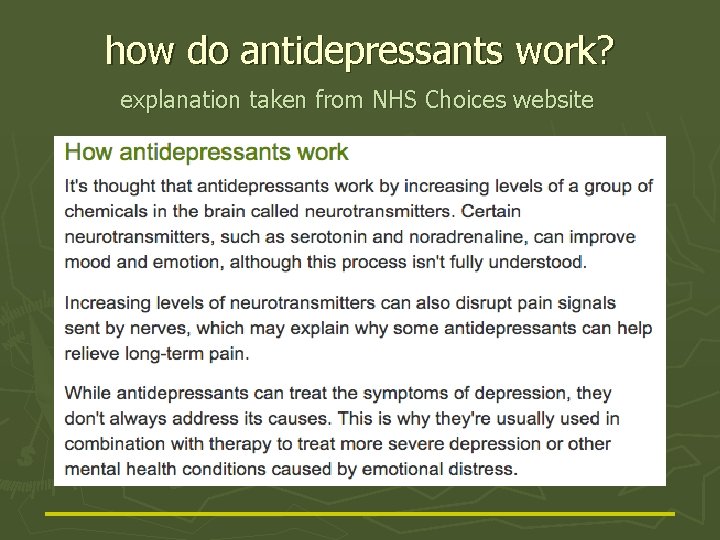
how do antidepressants work? explanation taken from NHS Choices website
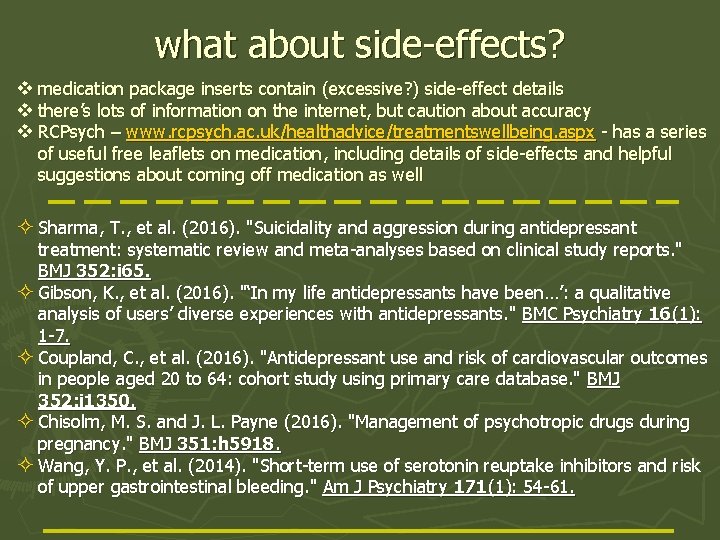
what about side-effects? v medication package inserts contain (excessive? ) side-effect details v there’s lots of information on the internet, but caution about accuracy v RCPsych – www. rcpsych. ac. uk/healthadvice/treatmentswellbeing. aspx - has a series of useful free leaflets on medication, including details of side-effects and helpful suggestions about coming off medication as well ² Sharma, T. , et al. (2016). "Suicidality and aggression during antidepressant treatment: systematic review and meta-analyses based on clinical study reports. " BMJ 352: i 65. ² Gibson, K. , et al. (2016). "‘In my life antidepressants have been…’: a qualitative analysis of users’ diverse experiences with antidepressants. " BMC Psychiatry 16(1): 1 -7. ² Coupland, C. , et al. (2016). "Antidepressant use and risk of cardiovascular outcomes in people aged 20 to 64: cohort study using primary care database. " BMJ 352: i 1350. ² Chisolm, M. S. and J. L. Payne (2016). "Management of psychotropic drugs during pregnancy. " BMJ 351: h 5918. ² Wang, Y. P. , et al. (2014). "Short-term use of serotonin reuptake inhibitors and risk of upper gastrointestinal bleeding. " Am J Psychiatry 171(1): 54 -61.
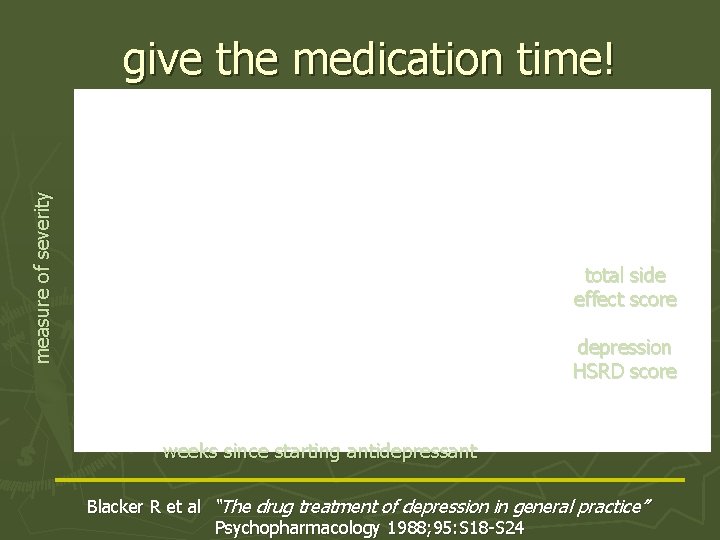
measure of severity give the medication time! total side effect score depression HSRD score weeks since starting antidepressant Blacker R et al “The drug treatment of depression in general practice” Psychopharmacology 1988; 95: S 18 -S 24
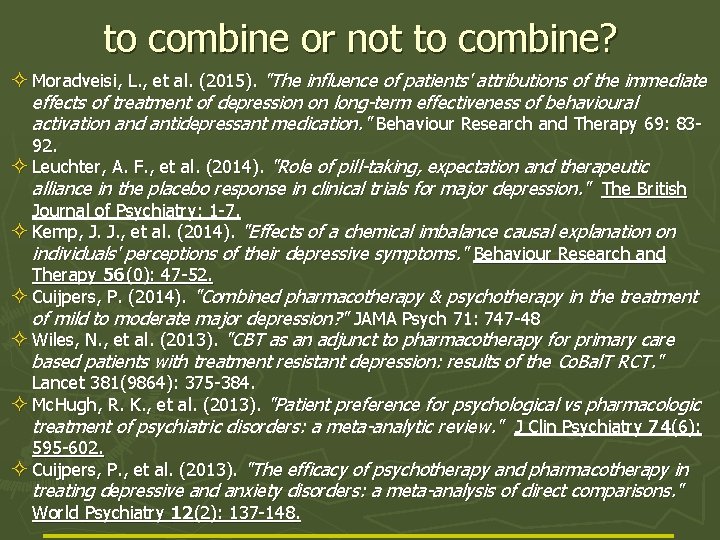
to combine or not to combine? ² Moradveisi, L. , et al. (2015). "The influence of patients' attributions of the immediate effects of treatment of depression on long-term effectiveness of behavioural activation and antidepressant medication. " Behaviour Research and Therapy 69: 83 - 92. ² Leuchter, A. F. , et al. (2014). "Role of pill-taking, expectation and therapeutic alliance in the placebo response in clinical trials for major depression. " The British Journal of Psychiatry: 1 -7. ² Kemp, J. J. , et al. (2014). "Effects of a chemical imbalance causal explanation on individuals' perceptions of their depressive symptoms. " Behaviour Research and Therapy 56(0): 47 -52. ² Cuijpers, P. (2014). "Combined pharmacotherapy & psychotherapy in the treatment of mild to moderate major depression? " JAMA Psych 71: 747 -48 ² Wiles, N. , et al. (2013). "CBT as an adjunct to pharmacotherapy for primary care based patients with treatment resistant depression: results of the Co. Bal. T RCT. " Lancet 381(9864): 375 -384. ² Mc. Hugh, R. K. , et al. (2013). "Patient preference for psychological vs pharmacologic treatment of psychiatric disorders: a meta-analytic review. " J Clin Psychiatry 74(6): 595 -602. ² Cuijpers, P. , et al. (2013). "The efficacy of psychotherapy and pharmacotherapy in treating depressive and anxiety disorders: a meta-analysis of direct comparisons. " World Psychiatry 12(2): 137 -148.
the time course of depression “Method The Netherlands Mental Health Survey and Incidence Study is a prospective epidemiological survey in the adult population (n=7076), using the Composite International Diagnostic Interview. Duration of MDE over 2 years was assessed with a Life Chart Interview. Results The median duration of MDE was 3. 0 months; 50% of participants recovered within 3 months, 63% within 6 months, 76% within 12 months and nearly 20% had not recovered at 24 months. Determinants of persistence were severity of depression and comorbid dysthymia. A recurrent episode predicted shorter duration. Conclusions Although half of those affected with MDE recovered rapidly, risk of chronicity (duration 24 months or more) was considerable. ” Spijker, J. , et al. (2002). "Duration of major depressive episodes in the general population: results from The Netherlands Mental Health Survey and Incidence Study (NEMESIS). " Br J Psychiatry 181: 208 -213
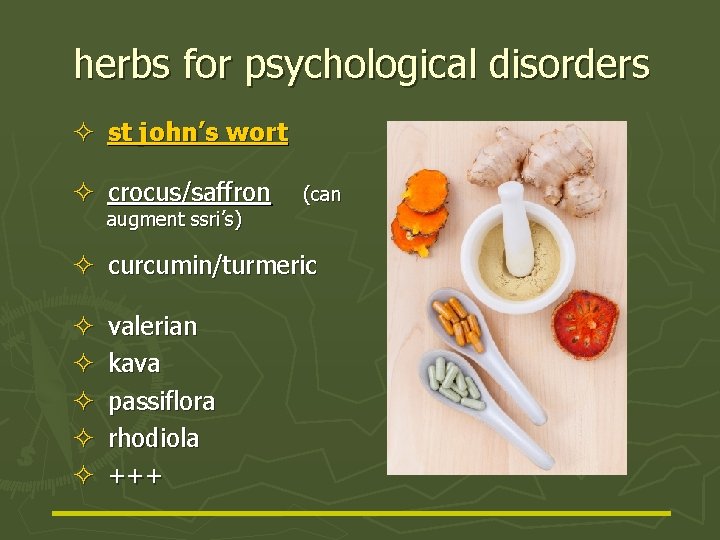
herbs for psychological disorders ² st john’s wort ² crocus/saffron (can augment ssri’s) ² curcumin/turmeric ² ² ² valerian kava passiflora rhodiola +++
herbs for adult depression “We conducted a systematic literature search focusing on systematic reviews and meta-analyses … Recommendations for lines of treatment were based on the quality of evidence and clinical expert consensus …Results … 2 broad categories of complementary and alternative medicine (CAM) interventions: 1) physical and meditative treatments (light therapy, sleep deprivation, exercise, yoga, and acupuncture) and 2) natural health products (St. John’s wort, omega-3 fatty acids; S -adenosyl-L-methionine [SAM-e], dehydroepiandrosterone, folate, Crocus sativus, and others) … Conclusions: For MDD of mild to moderate severity, exercise, light therapy, St. John’s wort, omega-3 fatty acids, SAM-e, and yoga are recommended as first- or second-line treatments. Adjunctive exercise and adjunctive St. John’s wort are second-line recommendations for moderate to severe MDD. Other physical treatments and natural health products have less evidence but may be considered as third-line treatments. CAM treatments are generally well tolerated. Caveats include methodological limitations of studies and paucity of data on long-term outcomes and drug interactions. ” Ravindran, A. V. , et al. (2016). "Canadian Network for Mood and Anxiety Treatments (CANMAT) 2016 Clinical Guidelines for the Management of Adults with Major Depressive Disorder: Section 5. Complementary and Alternative Medicine Treatments. ” Canadian Journal of Psychiatry 61(9): 576 -587.
and more support for st john’s wort “The aim of the study was to investigate the efficacy and safety of St John’s wort extract and selective serotonin reuptake inhibitors (SSRIs) in the treatment of depression. Methods: Databases were searched for studies comparing efficacy and/or safety of St John’s wort extract with SSRIs in depression from 1966 to April 2015. . . Results: Twenty-seven studies met the study entry criteria. A total of 3, 126 patients with depression were included. St John’s wort extract did not differ from SSRIs in clinical response, remission, and mean reduction in Hamilton Rating Scale for Depression score. St John’s wort extract had a significantly lower rate of adverse events compared to SSRIs (summary relative risk: 0. 77; 95% confidence interval: 0. 70, 0. 84, P=0. 00) and had fewer withdrawals due to adverse events. St John’s wort extract had superior safety in the management of patients with depression. Conclusion: Both St John’s wort extract and SSRIs are effective in treating mild-to-moderate depression. St John’s wort extract is safer than SSRIs. ” Cui, Y. -h. and Y. Zheng (2016). "A meta-analysis on the efficacy and safety of St John's wort extract in depression therapy in comparison with selective serotonin reuptake inhibitors in adults. ” Neuropsychiatric disease and treatment 12: 1715 -1723.
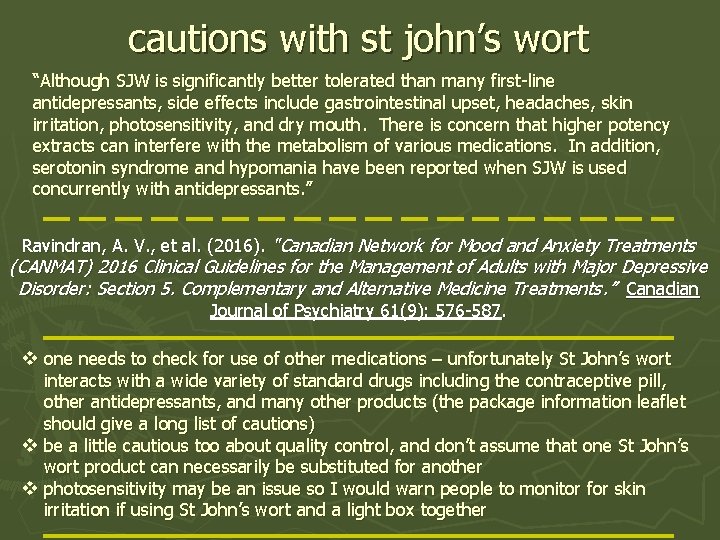
cautions with st john’s wort “Although SJW is significantly better tolerated than many first-line antidepressants, side effects include gastrointestinal upset, headaches, skin irritation, photosensitivity, and dry mouth. There is concern that higher potency extracts can interfere with the metabolism of various medications. In addition, serotonin syndrome and hypomania have been reported when SJW is used concurrently with antidepressants. ” Ravindran, A. V. , et al. (2016). "Canadian Network for Mood and Anxiety Treatments (CANMAT) 2016 Clinical Guidelines for the Management of Adults with Major Depressive Disorder: Section 5. Complementary and Alternative Medicine Treatments. ” Canadian Journal of Psychiatry 61(9): 576 -587. v one needs to check for use of other medications – unfortunately St John’s wort interacts with a wide variety of standard drugs including the contraceptive pill, other antidepressants, and many other products (the package information leaflet should give a long list of cautions) v be a little cautious too about quality control, and don’t assume that one St John’s wort product can necessarily be substituted for another v photosensitivity may be an issue so I would warn people to monitor for skin irritation if using St John’s wort and a light box together
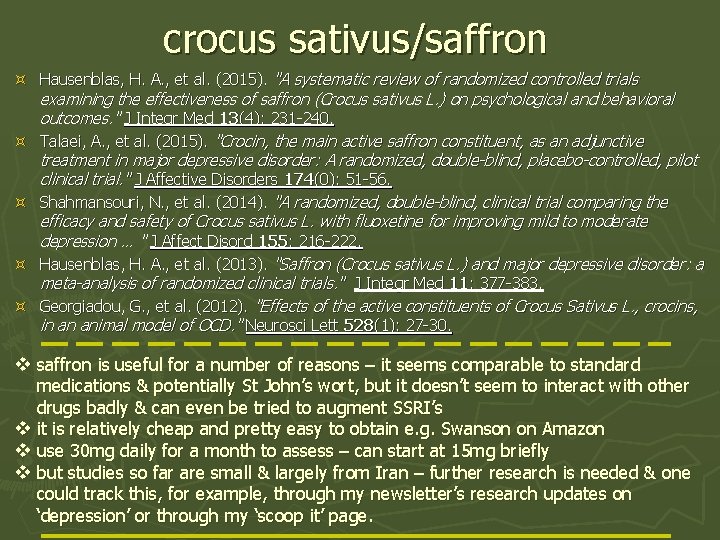
crocus sativus/saffron Hausenblas, H. A. , et al. (2015). "A systematic review of randomized controlled trials examining the effectiveness of saffron (Crocus sativus L. ) on psychological and behavioral outcomes. " J Integr Med 13(4): 231 -240. Talaei, A. , et al. (2015). "Crocin, the main active saffron constituent, as an adjunctive treatment in major depressive disorder: A randomized, double-blind, placebo-controlled, pilot clinical trial. " J Affective Disorders 174(0): 51 -56. Shahmansouri, N. , et al. (2014). "A randomized, double-blind, clinical trial comparing the efficacy and safety of Crocus sativus L. with fluoxetine for improving mild to moderate depression … " J Affect Disord 155: 216 -222. Hausenblas, H. A. , et al. (2013). "Saffron (Crocus sativus L. ) and major depressive disorder: a meta-analysis of randomized clinical trials. " J Integr Med 11: 377 -383. Georgiadou, G. , et al. (2012). "Effects of the active constituents of Crocus Sativus L. , crocins, in an animal model of OCD. " Neurosci Lett 528(1): 27 -30. v saffron is useful for a number of reasons – it seems comparable to standard medications & potentially St John’s wort, but it doesn’t seem to interact with other drugs badly & can even be tried to augment SSRI’s v it is relatively cheap and pretty easy to obtain e. g. Swanson on Amazon v use 30 mg daily for a month to assess – can start at 15 mg briefly v but studies so far are small & largely from Iran – further research is needed & one could track this, for example, through my newsletter’s research updates on ‘depression’ or through my ‘scoop it’ page.
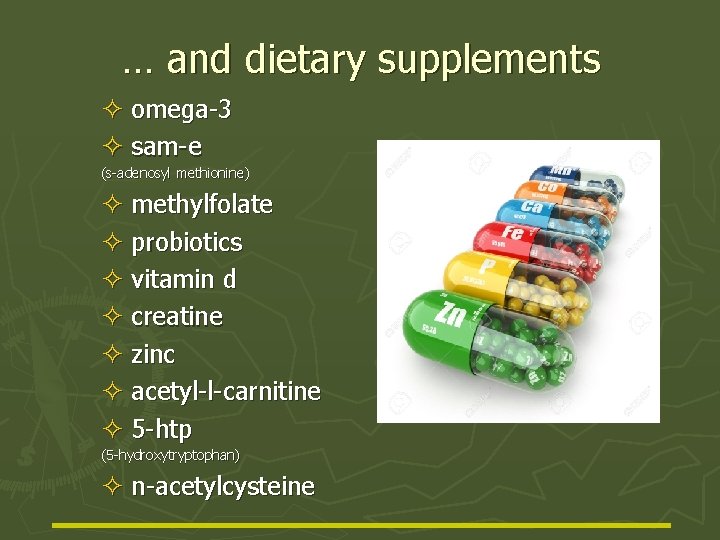
… and dietary supplements ² omega-3 ² sam-e (s-adenosyl methionine) ² methylfolate ² probiotics ² vitamin d ² creatine ² zinc ² acetyl-l-carnitine ² 5 -htp (5 -hydroxytryptophan) ² n-acetylcysteine
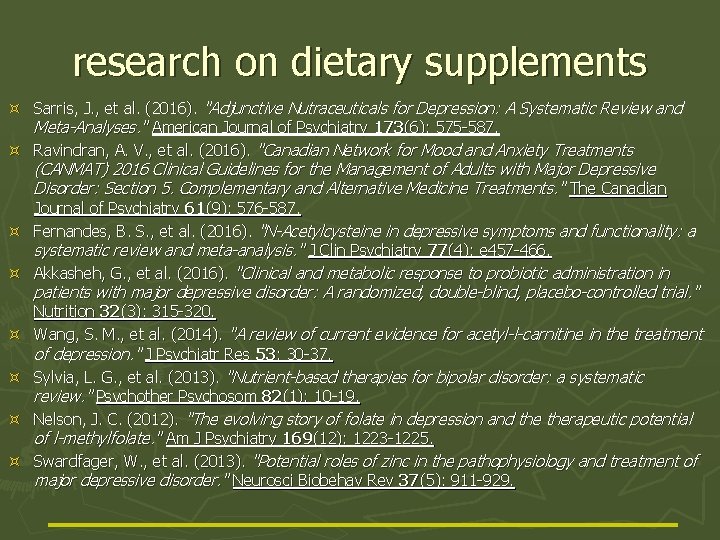
research on dietary supplements Sarris, J. , et al. (2016). "Adjunctive Nutraceuticals for Depression: A Systematic Review and Meta-Analyses. " American Journal of Psychiatry 173(6): 575 -587. Ravindran, A. V. , et al. (2016). "Canadian Network for Mood and Anxiety Treatments (CANMAT) 2016 Clinical Guidelines for the Management of Adults with Major Depressive Disorder: Section 5. Complementary and Alternative Medicine Treatments. " The Canadian Journal of Psychiatry 61(9): 576 -587. Fernandes, B. S. , et al. (2016). "N-Acetylcysteine in depressive symptoms and functionality: a systematic review and meta-analysis. " J Clin Psychiatry 77(4): e 457 -466. Akkasheh, G. , et al. (2016). "Clinical and metabolic response to probiotic administration in patients with major depressive disorder: A randomized, double-blind, placebo-controlled trial. " Nutrition 32(3): 315 -320. Wang, S. M. , et al. (2014). "A review of current evidence for acetyl-l-carnitine in the treatment of depression. " J Psychiatr Res 53: 30 -37. Sylvia, L. G. , et al. (2013). "Nutrient-based therapies for bipolar disorder: a systematic review. " Psychother Psychosom 82(1): 10 -19. Nelson, J. C. (2012). "The evolving story of folate in depression and therapeutic potential of l-methylfolate. " Am J Psychiatry 169(12): 1223 -1225. Swardfager, W. , et al. (2013). "Potential roles of zinc in the pathophysiology and treatment of major depressive disorder. " Neurosci Biobehav Rev 37(5): 911 -929.
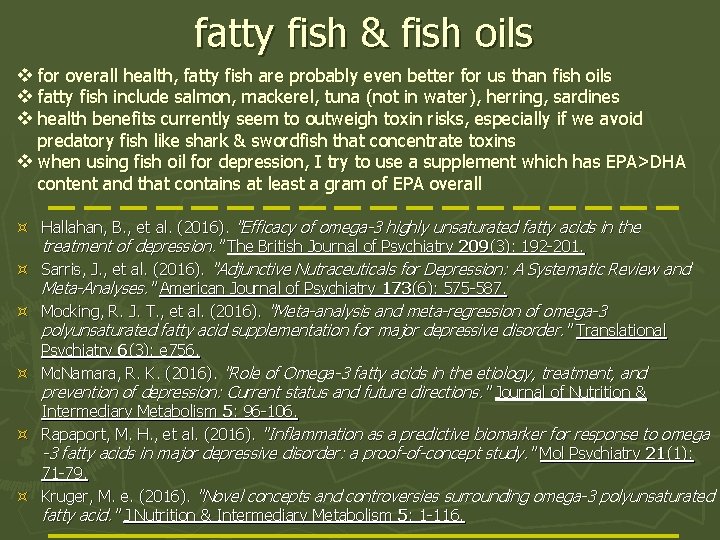
fatty fish & fish oils v for overall health, fatty fish are probably even better for us than fish oils v fatty fish include salmon, mackerel, tuna (not in water), herring, sardines v health benefits currently seem to outweigh toxin risks, especially if we avoid predatory fish like shark & swordfish that concentrate toxins v when using fish oil for depression, I try to use a supplement which has EPA>DHA content and that contains at least a gram of EPA overall Hallahan, B. , et al. (2016). "Efficacy of omega-3 highly unsaturated fatty acids in the treatment of depression. " The British Journal of Psychiatry 209(3): 192 -201. Sarris, J. , et al. (2016). "Adjunctive Nutraceuticals for Depression: A Systematic Review and Meta-Analyses. " American Journal of Psychiatry 173(6): 575 -587. Mocking, R. J. T. , et al. (2016). "Meta-analysis and meta-regression of omega-3 polyunsaturated fatty acid supplementation for major depressive disorder. " Translational Psychiatry 6(3): e 756. Mc. Namara, R. K. (2016). "Role of Omega-3 fatty acids in the etiology, treatment, and prevention of depression: Current status and future directions. " Journal of Nutrition & Intermediary Metabolism 5: 96 -106. Rapaport, M. H. , et al. (2016). "Inflammation as a predictive biomarker for response to omega -3 fatty acids in major depressive disorder: a proof-of-concept study. " Mol Psychiatry 21(1): 71 -79. Kruger, M. e. (2016). "Novel concepts and controversies surrounding omega-3 polyunsaturated fatty acid. " J Nutrition & Intermediary Metabolism 5: 1 -116.
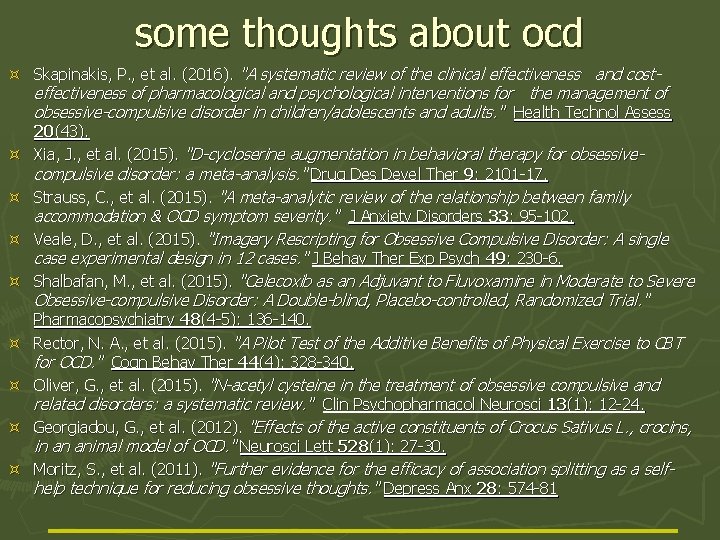
some thoughts about ocd Skapinakis, P. , et al. (2016). "A systematic review of the clinical effectiveness and costeffectiveness of pharmacological and psychological interventions for the management of obsessive-compulsive disorder in children/adolescents and adults. " Health Technol Assess 20(43). Xia, J. , et al. (2015). "D-cycloserine augmentation in behavioral therapy for obsessivecompulsive disorder: a meta-analysis. " Drug Des Devel Ther 9: 2101 -17. Strauss, C. , et al. (2015). "A meta-analytic review of the relationship between family accommodation & OCD symptom severity. " J Anxiety Disorders 33: 95 -102. Veale, D. , et al. (2015). "Imagery Rescripting for Obsessive Compulsive Disorder: A single case experimental design in 12 cases. " J Behav Ther Exp Psych 49: 230 -6. Shalbafan, M. , et al. (2015). "Celecoxib as an Adjuvant to Fluvoxamine in Moderate to Severe Obsessive-compulsive Disorder: A Double-blind, Placebo-controlled, Randomized Trial. " Pharmacopsychiatry 48(4 -5): 136 -140. Rector, N. A. , et al. (2015). "A Pilot Test of the Additive Benefits of Physical Exercise to CBT for OCD. " Cogn Behav Ther 44(4): 328 -340. Oliver, G. , et al. (2015). "N-acetyl cysteine in the treatment of obsessive compulsive and related disorders: a systematic review. " Clin Psychopharmacol Neurosci 13(1): 12 -24. Georgiadou, G. , et al. (2012). "Effects of the active constituents of Crocus Sativus L. , crocins, in an animal model of OCD. " Neurosci Lett 528(1): 27 -30. Moritz, S. , et al. (2011). "Further evidence for the efficacy of association splitting as a selfhelp technique for reducing obsessive thoughts. " Depress Anx 28: 574 -81
exercise 3: sectional review from this medications, herbs and dietary supplements section of the seminar, what has been most interesting and potentially useful for you? how could you begin to apply this information? ► solo … reflection sheet
exercise 4: pills role play! role play in threes (client, therapist & observer) – client chooses 1 of the 3 questions below to ask therapist: ► I’ve read that the pills are no better than placebo ► won’t I get addicted & be unable to come off them? ► only partial response to pills, what to do now?
key points of this workshop ü intro & your hopes for the day ü overview, psychotherapy’s improvable outcomes, progress monitoring & a contextual model ü medication, herbs & supplements Ø diet, alcohol, smoking & exercise Ø when add biological methods? early on/strengths, later/augmnt Ø sleep (poor, apnea, restrict), light (box, alarm), ect, yoga, acupuncture, botox, heat, etc
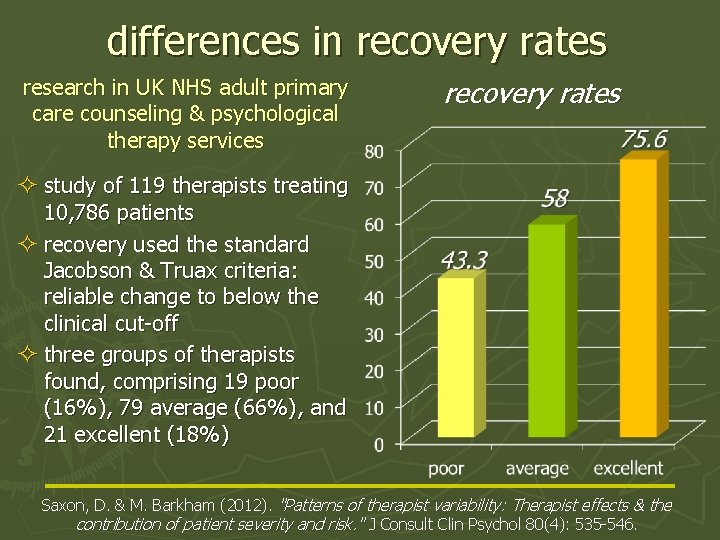
differences in recovery rates research in UK NHS adult primary care counseling & psychological therapy services recovery rates ² study of 119 therapists treating 10, 786 patients ² recovery used the standard Jacobson & Truax criteria: reliable change to below the clinical cut-off ² three groups of therapists found, comprising 19 poor (16%), 79 average (66%), and 21 excellent (18%) Saxon, D. & M. Barkham (2012). "Patterns of therapist variability: Therapist effects & the contribution of patient severity and risk. " J Consult Clin Psychol 80(4): 535 -546.
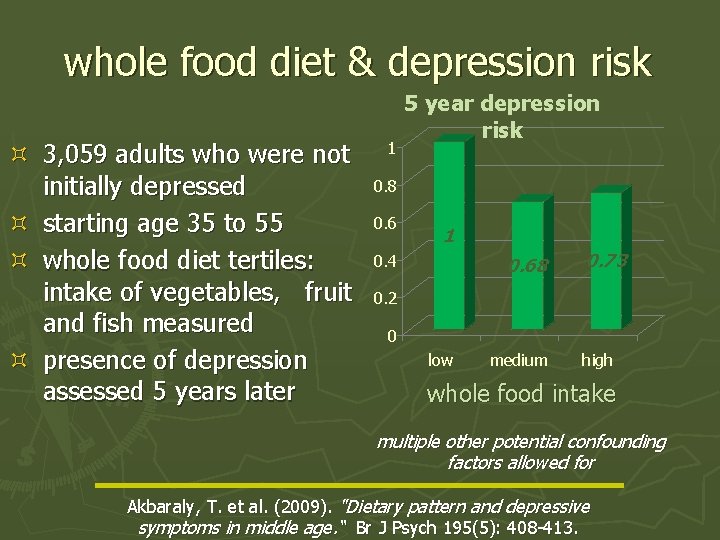
whole food diet & depression risk 3, 059 adults who were not initially depressed starting age 35 to 55 whole food diet tertiles: intake of vegetables, fruit and fish measured presence of depression assessed 5 years later 1 5 year depression risk 0. 8 0. 6 1 0. 4 0. 68 0. 73 0. 2 0 low medium high whole food intake multiple other potential confounding factors allowed for Akbaraly, T. et al. (2009). "Dietary pattern and depressive symptoms in middle age. “ Br J Psych 195(5): 408 -413.
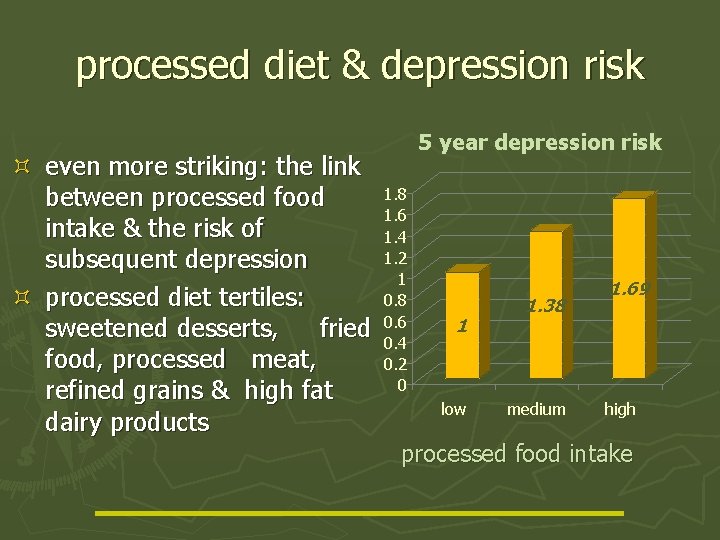
processed diet & depression risk even more striking: the link between processed food intake & the risk of subsequent depression processed diet tertiles: sweetened desserts, fried food, processed meat, refined grains & high fat dairy products 5 year depression risk 1. 8 1. 6 1. 4 1. 2 1 0. 8 0. 6 0. 4 0. 2 0 1 low 1. 38 medium 1. 69 high processed food intake
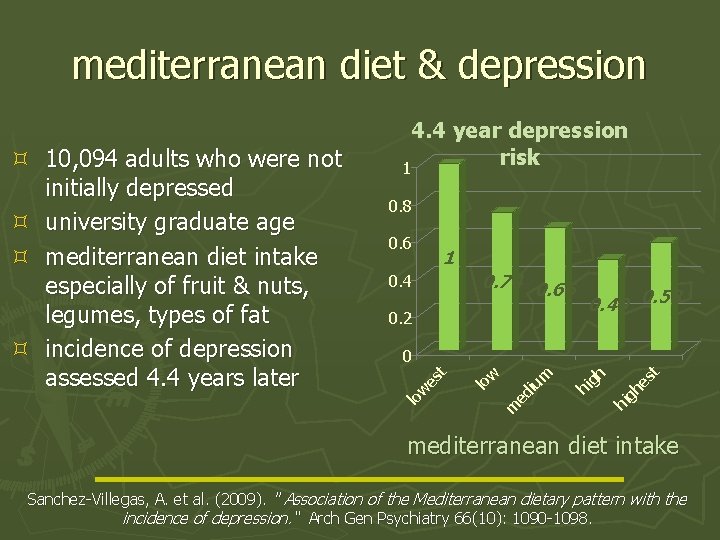
mediterranean diet & depression 0. 8 0. 6 1 0. 74 0. 66 0. 4 0. 2 0. 49 0. 58 t es gh hi gh iu ed m hi m w lo w es t 0 lo 10, 094 adults who were not initially depressed university graduate age mediterranean diet intake especially of fruit & nuts, legumes, types of fat incidence of depression assessed 4. 4 years later 4. 4 year depression risk 1 mediterranean diet intake Sanchez-Villegas, A. et al. (2009). " Association of the Mediterranean dietary pattern with the incidence of depression. “ Arch Gen Psychiatry 66(10): 1090 -1098.
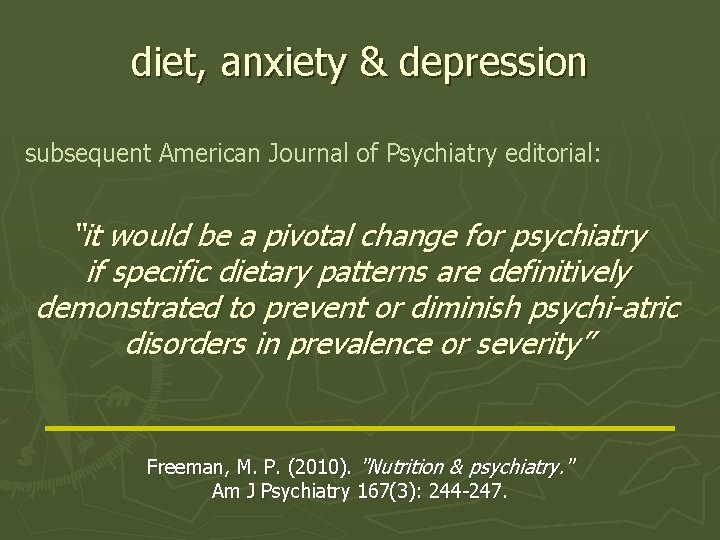
diet, anxiety & depression subsequent American Journal of Psychiatry editorial: “it would be a pivotal change for psychiatry if specific dietary patterns are definitively demonstrated to prevent or diminish psychi-atric disorders in prevalence or severity” Freeman, M. P. (2010). "Nutrition & psychiatry. " Am J Psychiatry 167(3): 244 -247.
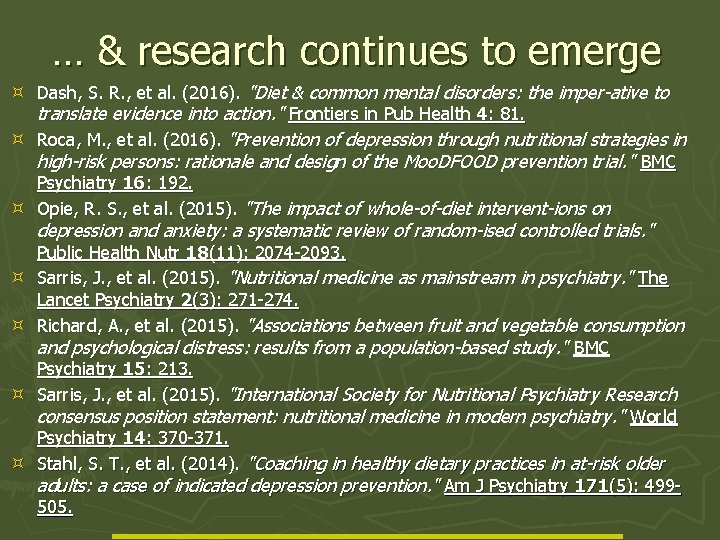
… & research continues to emerge Dash, S. R. , et al. (2016). "Diet & common mental disorders: the imper-ative to translate evidence into action. " Frontiers in Pub Health 4: 81. Roca, M. , et al. (2016). "Prevention of depression through nutritional strategies in high-risk persons: rationale and design of the Moo. DFOOD prevention trial. " BMC Psychiatry 16: 192. Opie, R. S. , et al. (2015). "The impact of whole-of-diet intervent-ions on depression and anxiety: a systematic review of random-ised controlled trials. " Public Health Nutr 18(11): 2074 -2093. Sarris, J. , et al. (2015). "Nutritional medicine as mainstream in psychiatry. " The Lancet Psychiatry 2(3): 271 -274. Richard, A. , et al. (2015). "Associations between fruit and vegetable consumption and psychological distress: results from a population-based study. " BMC Psychiatry 15: 213. Sarris, J. , et al. (2015). "International Society for Nutritional Psychiatry Research consensus position statement: nutritional medicine in modern psychiatry. " World Psychiatry 14: 370 -371. Stahl, S. T. , et al. (2014). "Coaching in healthy dietary practices in at-risk older adults: a case of indicated depression prevention. " Am J Psychiatry 171(5): 499505.
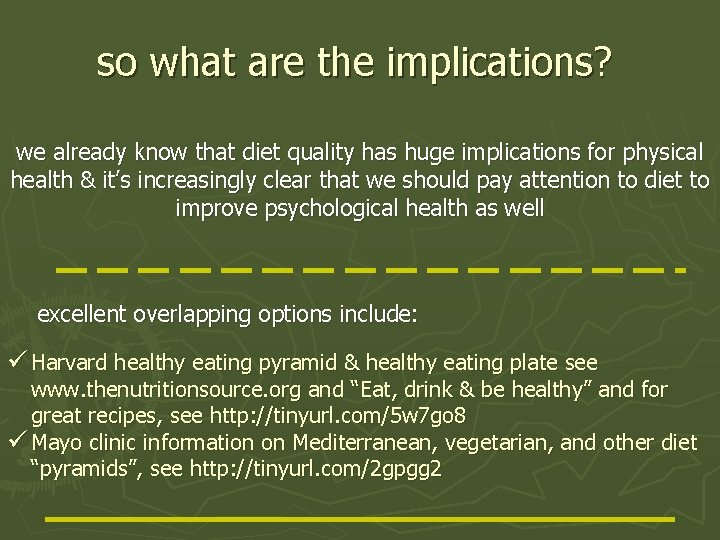
so what are the implications? we already know that diet quality has huge implications for physical health & it’s increasingly clear that we should pay attention to diet to improve psychological health as well excellent overlapping options include: ü Harvard healthy eating pyramid & healthy eating plate see www. thenutritionsource. org and “Eat, drink & be healthy” and for great recipes, see http: //tinyurl. com/5 w 7 go 8 ü Mayo clinic information on Mediterranean, vegetarian, and other diet “pyramids”, see http: //tinyurl. com/2 gpgg 2

alcohol & mental disorders v alcohol/depression interactions are complex & bidirectional, with high alcohol use particularly predisposing to increased risk of depression v moderate alcohol use seems linked with better mental health but, as usual, poorer health of abstainers is linked with prior alcohol problems Bahorik, A. L. , et al. (2016). "The role of hazardous drinking reductions in predicting depression and anxiety symptom improvement among psychiatry patients: A longitudinal study. " Journal of Affective Disorders 206: 169 -173. Hashimoto, E. , et al. (2015). "Influence of comorbid alcohol use disorder on treatment response of depressive patients. " J Neural Transm 122: 301 -306. Briere, F. N. , et al. (2014). "Comorbidity between major depression and alcohol use disorder from adolescence to adulthood. " Compr Psychiatry 55(3): 526 -533. Bell, S. and A. Britton (2014). "An exploration of the dynamic longitudinal relation-ship between mental health and alcohol consumption. " BMC Medicine 12: 91 -91. Velten, J. , et al. (2014). "Lifestyle choices and mental health: a representative population survey. " BMC Psychology 2(55). Gea, A. , et al. (2013). "Alcohol intake, wine consumption and the development of depression: the PREDIMED study. " BMC Medicine 11: 192 -192. Berk, M. , et al. (2013). "Lifestyle management of unipolar depression. " Acta Psychiatr Scand Suppl(443): 38 -54.

smoking & mental disorders v “Smoking cessation is associated with reduced depression, anxiety, and stress and improved positive mood and quality of life compared with continuing to smoke … The effect sizes are equal or larger than those of antidepressant treatment for mood anxiety disorders. ” (Taylor et al) Rodríguez-Cano, R. , et al. (2016). "Smoking cessation and depressive symptoms at 1 -, 3 -, 6 -, and 12 -months follow-up. " Journal of Affective Disorders 191: 94 -99. Goracci, A. , et al. (2016). "Development, acceptability and efficacy of a standardized healthy lifestyle intervention in recurrent depression. " Journal of Affective Disorders 196: 20 -31. Taylor, G. , et al. (2014). "Change in mental health after smoking cessation: systematic review and meta-analysis. " BMJ 348: g 1151. Shahab, L. , et al. (2014). "Changes in prevalence of depression and anxiety following smoking cessation: results from an international cohort study (ATTEMPT). ” Psychological Medicine 44(01): 127 -141. Cavazos-Rehg, P. A. , et al. (2014). "Smoking cessation is associated with lower rates of mood/anxiety and alcohol use disorders. " Psychol Medicine 44: 2523 -35. Leung, J. , et al. (2012). "A longitudinal study of the bi-directional relationship between tobacco smoking and psychological distress in a community sample of young Australian women. " Psychological Medicine 42(06): 1273 -1282.
coffee, tea & depression v Coffee & (to an extent) tea consumption (benefits partly independent of caffeine intake) are linked to decreased risks of depression (& suicide), RTA’s, dementia, various cancers, Parkinson’s disease, and improved overall mortality (optimal dose approx 4 cups/day) – what’s not to like! Grosso, G. , et al. (2016). "Coffee, tea, caffeine and risk of depression: A systematic review and dose–response meta-analysis of observational studies. " Molecular Nutrition & Food Research 60(1): 223 -234. Omagari, K. , et al. (2014). "Coffee consumption is inversely associated with depressive status in Japanese patients with type 2 diabetes. " Journal of Clinical Biochemistry and Nutrition 55(2): 135 -142. Lucas, M. , et al. (2013). "Coffee, caffeine, and risk of completed suicide: Results from three prospective cohorts of American adults. " World J Biol Psychiatry. Dong, X. , et al. (2015). "Tea consumption and the risk of depression: A meta-analysis of observational studies. " Australian and New Zealand Journal of Psychiatry 49(4): 334 -345. Li, F. -D. , et al. (2016). "Tea consumption is inversely associated with depressive symptoms in the elderly: A cross-sectional study in eastern China. " Journal of Affective Disorders 199: 157 -162. Crippa, A. , et al. (2014). "Coffee consumption and mortality from all causes, cardiovascular disease, and cancer. " Am J Epidemiol 180(8): 763 -775.

lifestyle behaviours & depression national sample of 2, 574 US adults (aged 20 -85 yr) healthy diet, exercising, not smoking and reduced chance of depression association not causation each behaviour was independently associated with depression and there was evidence of a dose-response relationship reduced depression risk 1 0. 8 0. 6 1 0. 4 0. 85 0. 33 0. 2 0 none two 0. 18 three healthy lifestyle behaviours Loprinzi, P. D. , et al. (2014). "Concurrent occurrence of multiple positive lifestyle beha-viors & depression among adults in the United States. " J Affect Disord 165: 126 -130.
exercise & psychological disorders ² in general population ² as prevention ² as treatment for stress & illness ² how to go about it

exercise & the general population v research review suggests that poor sleep, negative social interactions, and stressful negative events may temporally precede spikes in depressed mood. In contrast, exercise and positive social interactions have been shown to predict subsequent declines in depressed mood. v there is … high-quality evidence that physical activity reduces depression and anxiety in non-clinical populations. v the more healthy lifestyle choices an individual makes, the higher life satisfaction and lower psychological distress he or she tends to have. v … a hyperbolic dose–response relationship between physical activity & general mental health, with an optimal range of 2. 5 to 7. 5 h per week. Pemberton, R. and M. D. Fuller Tyszkiewicz (2016). "Factors contributing to depressive mood states in everyday life: A systematic review. " Journal of Affective Disorders 200: 103 -110. Rebar, A. L. , et al. (2015). "A meta-analysis of the effect of physical activity on depression and anxiety in non-clinical adult populations. " Health Psychology Review 9(3): 366 -378. Velten, J. , et al. (2014). "Lifestyle choices and mental health: a representative population survey. " BMC Psychology 2(55). Kim, Y. S. , et al. (2012). "Relationship between physical activity and general mental health. " Prev Med 55(5): 458 -463.
exercise as prevention v over the 15 years of the study, active co-twins had a lower risk (OR 0. 80) for using any amount of antidepressants than their inactive co- twins … the lowest odds ratio (0. 51) was seen among MZ pairs after adjusting for BMI, smoking and binge drinking. v over 60 weeks follow-up, the overall percentage of depressive relapses was 6/81 (7. 4%) in the healthy lifestyle intervention (exercise, diet, sleep, smoking) group vs. 20/79 (25. 3%) in the control group. v There was a clear dose-response relationship between the number of positive health characteristics (exercise, diet, bmi, smoking) and all-cause mortality … compared to those with 0 positive health character-istics, those with 1, 2, 3, and 4, respectively, had a 39% (HR = 0. 61), 48% (HR = 0. 52), 62% (HR = 0. 38) and 88% (HR = 0. 12) reduced risk of all-cause mortality. Waller, K. , et al. (2016). "Persistent leisure-time physical activity in adulthood and use of antidepressants: A follow-up study among twins. " Journal of Affective Disorders 200: 172177. Goracci, A. , et al. (2016). "Development, acceptability and efficacy of a standardized healthy lifestyle intervention in recurrent depression. " Journal of Affective Disorders 196: 20 -31. Loprinzi, P. D. (2016). "Health behavior characteristics and all-cause mortality. " Preventive medicine reports 3: 276 -278.
exercise as treatment v Most adjusted analyses suggested publication bias led to an under-estimated SMD (effect size) … Exercise has a large and significant antidepressant effect in people with depression (including MDD). Previous meta-analyses may have underestimated the benefits of exercise due to publication bias. Our data strongly support the claim that exercise is an evidence-based treatment for depression. v Exercise is an effective intervention for depression. It also could be a viable adjunct treatment in combination with antidepressants (g=0. 50) v Psychiatric symptoms were significantly reduced in schizophrenia (SMD=0. 72) with too improved functioning and co-morbid disorders Schuch, F. B. , et al. (2016). "Exercise as a treatment for depression: A meta-analysis adjusting for publication bias. ” Journal of Psychiatric Research 77: 42 -51. Kvam, S. , et al. (2016). "Exercise as a treatment for depression: A meta-analysis. " Journal of Affective Disorders 202: 67 -86. Hearing, C. M. , et al. (2016). "Physical exercise for treatment of mood disorders: A critical review. " Curr Behav Neurosci Rep 3: 350 -359. Firth, J. , et al. (2015). "A systematic review and meta-analysis of exercise interventions in schizophrenia patients. " Psychol Medicine 45(07): 1343 -1361. Asmundson, G. J. , et al. (2013). "Let's get physical: a contemporary review of the anxiolytic effects of exercise for anxiety & its disorders. " Depress Anx 30: 362 -73.
how to go about it v number of high group identifications impact 4 crucial health behaviours (smoking, drinking, exercise, and diet) in a large community sample. v men and women are more likely to make a positive health behavior change if their partner does too, and with a stronger effect than if the partner had been consistently healthy in that domain. v beneficial habits - perhaps more so than effortful inhibition - are an important factor linking self-control with positive life outcomes. v this review suggested that “intrinsic” motivation, or being active for the inherent pleasure it brings, was the type of motivation most strongly associated with sustainability … messages promoting autonomy and intrinsic experiences such as pleasure will better motivate … Sani, F. , et al. (2015). "Greater number of group identifications is associated with healthier behaviour: Evidence from a Scottish community sample. " British Journal of Health Psychology 20(3): 466 -481. Jackson, S. E. , et al. (2015). "The influence of partner’s behavior on health behavior change: The English longitudinal study of ageing. " JAMA Internal Medicine 175(3): 385392. Galla, B. M. and A. L. Duckworth (2015). "More than resisting temptation: Beneficial habits mediate the relationship between self-control and positive life outcomes. " J Pers Soc Psychol 109(3): 508 -525. Segar, M. L. and C. R. Richardson (2014). "Prescribing pleasure and meaning: cultivating walking motivation & maintenance. " Am J Prev Med 47(6): 838 -841.
there are many freely downloadable handouts on the ‘good knowledge’ section of my website here’s one that introduces a simple acronym as a reminder when skilful goal setting
there are many freely downloadable handouts on the ‘good knowledge’ section of my website and here’s another in a sequence on implementation intentions, mental contrasting & wooping!

exercise 5: sectional review from this section of the seminar on diet, alcohol, coffee and exercise, what has been most interesting and potentially useful for you? how could you begin to apply this information? ► solo … reflection sheet
key points of this workshop ü intro & your hopes for the day ü overview, psychotherapy’s improvable outcomes, progress monitoring & a contextual model ü ü Ø medication, herbs & supplements diet, alcohol, smoking & exercise when add biological methods? early on/strengths, later/augmnt Ø sleep (poor, apnea, restrict), light (box, alarm), ect, yoga, acupuncture, botox, heat, etc
when choose pills, when talking? data from a 16 week trial of CBT v’s SSRI for outpatients with moderate to severe depression: For both treatments, four factors predicted worse outcome – greater initial severity & duration of depression, older age, and lower IQ. Five factors predicted differential outcome – patients tended to do better with CBT if they didn’t have significant personality disorder, if they were married or cohabiting, if they had experienced a higher number of recent life events, if they had already had a number of medication trials, and if they were unemployed. 60% of patients were quite clearly separable on these five criteria (PAI>2) and they achieved significantly better results (d=0. 58) if they received their appropriate form of treatment. Derubeis, R. J. , et al. (2014). "The personalized advantage index: translating research on prediction into individualized treatment recommendations. A demonstration. " PLo. S ONE 9(1): e 83875.
the cbt v’s ipt effectiveness puzzle Elkin, I. , M. T. Shea, et al. (1989). "National Institute of Mental Health treatment of depression collaborative research program. General effectiveness of treatments. " Arch Gen Psychiatry 46(11): 971 -982. Jakobsen, J. C. , J. L. Hansen, et al. (2012). "Effects of cognitive therapy versus interpersonal psychotherapy in patients with major depressive disorder: A systematic review of randomized clinical trials with meta-analyses and trial sequential analyses. " Psychological Medicine 42(07): 1343 -1357. Sotsky, S. M. , D. R. Glass, et al. (1991). "Patient predictors of response to psychotherapy and pharmacotherapy: Findings in the NIMH treatment of depression collaborative research program. " American Journal of Psychiatry 148(8): 997 -1008. Mc. Bride, C. , et al. (2006). "Attachment as moderator of treatment outcome in major depression: A randomized control trial of interpersonal psychotherapy versus cognitive behavior therapy. " J Consult Clin Psychol 74(6): 1041 -1054. Joyce, P. R. , J. M. Mc. Kenzie, et al. (2007). "Temperament, character and personality disorders as predictors of response to interpersonal psychotherapy and cognitive-behavioural therapy for depression. " Br J Psychiatry 190: 503 -508. Harkness, K. L. , R. M. Bagby, et al. (2012). "Childhood maltreatment and differential treatment response and recurrence in adult major depressive disorder. " J Consult Clin Psychol 80(3): 342 -353
cautious, balanced response An overview of the CBT v’s IPT for depression literature strongly suggests that, contrary to a more typically “medical” deficit-correction approach, in psychotherapeutic work we may well get better results by building on pre-existing strengths rather than trying to remedy areas of weakness. “The truth is rarely pure and never simple” Oscar Wilde However overviews of treatments for disorders involving excessive anxiety, fear & emotional dysregulation strongly suggest that treatments involving a degree of exposure to distress-producing situations tend to produce better results
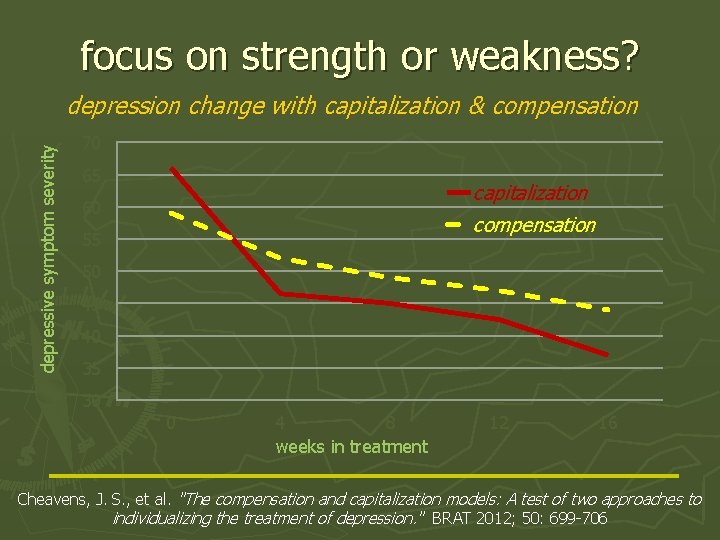
focus on strength or weakness? depressive symptom severity depression change with capitalization & compensation 70 65 capitalization 60 compensation 55 50 45 40 35 30 0 4 8 weeks in treatment 12 16 Cheavens, J. S. , et al. "The compensation and capitalization models: A test of two approaches to individualizing the treatment of depression. " BRAT 2012; 50: 699 -706
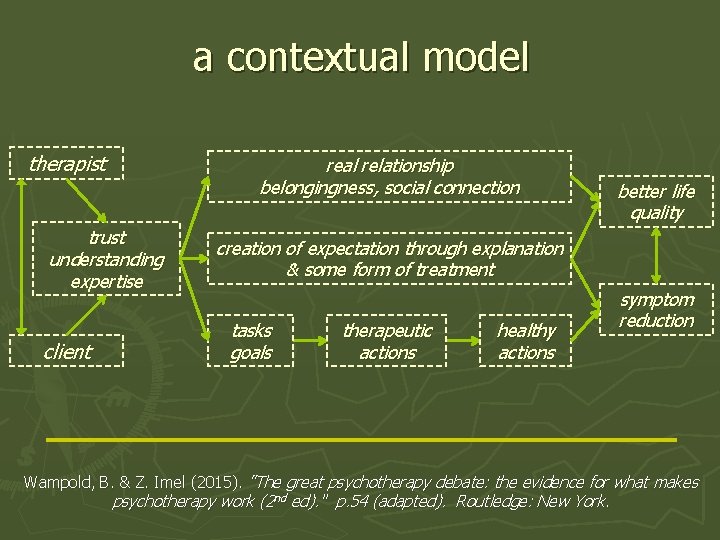
a contextual model therapist trust understanding expertise client real relationship belongingness, social connection better life quality creation of expectation through explanation & some form of treatment tasks goals therapeutic actions healthy actions symptom reduction Wampold, B. & Z. Imel (2015). ”The great psychotherapy debate: the evidence for what makes psychotherapy work (2 nd ed). " p. 54 (adapted). Routledge: New York.
to get best results from feedback ² best results typically depend on therapists involved being committed to using feedback ² regular sessional assessment of outcome progress & therapeutic alliance given to both therapist & client for possible discussion ² current evidence suggests this halves client deterioration rates ² there are encouraging increases in treatment gains as well - e. g. using pcoms, reliable improve-ment rates increase by 3. 5 x Castonguay, L. , M. Barkham, W. Lutz, et al. (2013). “Practice-orientated research. ” in M. J. Lambert (ed) “Handbook of psychotherapy and behavior change (6 th ed)”
partners for change outcome management system (pcoms) http: //scottdmill er. com & https: //heartand soulofchange. co m
partners for change outcome management system (pcoms) http: //scottdmill er. com & https: //heartand soulofchange. co m
exercise 6: strengths role play in threes (client, therapist & observer) – client ‘imagine’ that you have been under particularly severe stress; therapist discuss with client what has worked for them in the past and how they could apply this to their current situation (note if any exercise, diet, sleep, alcohol, etc components to this)
key points of this workshop ü intro & your hopes for the day ü overview, psychotherapy’s improvable outcomes, progress monitoring & a contextual model ü ü ü medication, herbs & supplements diet, alcohol, smoking & exercise when add biological methods? early on/strengths, later/augmnt Ø sleep (poor, apnea, restrict), light (box, alarm), ect, yoga, acupuncture, botox, heat, etc
sleep Christensen, H. , et al. (2016). "Effectiveness of an online insomnia program (SHUTi) for prevention of depressive episodes (the Good. Night Study): a randomised controlled trial. " Lancet Psychiatry 3(4): 333 -341. Heck, T. and M. Zolezzi (2015). "Obstructive sleep apnea: management considerations in psychiatric patients. " Neuropsychiatric disease and treatment 11: 2691 -2698. Gupta, M. A. , et al. (2015). "The effect of treating obstructive sleep apnea with positive airway pressure on depression & other subjective symp-toms: A systematic review & meta-analysis. " Sleep Med Rev 28: 51 -64. Sivertsen, B. , et al. (2014). "Sleep problems & depression in adolescence: results from a large population-based study of Norwegian adolescents aged 16 -18 years. " Eur Child Adolesc Psychiatry 23(8): 681 -689. Martiny, K. , et al. (2015). "Maintained superiority of chronotherapeutics vs. exercise in a 20 -week randomized follow-up trial in major depression. " Acta Psychiatrica Scandinavica 131(6): 446 -457. Martiny, K. , et al. (2013). "The day-to-day acute effect of wake therapy in patients with major depression using the HAM-D 6 as primary outcome measure: results from a RCT. " PLo. S ONE 8(6): e 67264. Troxel, W. M. , et al. (2012). "Insomnia and objectively measured sleep disturbances predict treatment outcome in depressed patients treated with psychotherapy. " J Clin Psychiatry 73(4): 478 -485.

light Al-Karawi, D. and L. Jubair (2016). "Bright light therapy for nonseasonal depression: Meta-analysis of clinical trials. " J Affect Disorders 198: 64 -71. Chojnacka, M. , et al. (2016). "A sham-controlled randomized trial of adjun-ctive light therapy for non-seasonal depression. " J Affect Disord 203: 1 -8. Tseng, P. -T. , et al. (2016). "Light therapy in the treatment of patients with bipolar depression. " European Neuropsychopharmacol 26: 1037 -1047. Lam, R. W. , et al. (2016). "Efficacy of bright light treatment, fluoxetine, and the combination in patients with nonseasonal major depressive disorder: A randomized clinical trial. ” JAMA Psychiatry 73(1): 56 -63. Koukouna, D. , et al. (2016). “Light therapy as a treatment for sexual dysfunction; focus on testosterone levels. ” 29 th European College of Neuropsychopharmacology (ECNP) Congress Vienna. Henriksen, T. E. G. , et al. (2016). "Blue-blocking glasses as additive treatment for mania: a RCT. " Bipolar Disorders 18: 221 -32. Rohan, K. J. , et al. (2015). "Randomized Trial of Cognitive-Behavioral Therapy Versus Light Therapy for Seasonal Affective Disorder: Acute Outcomes. " American Journal of Psychiatry 172(9): 862 -869. Danilenko, K. V. and I. A. Ivanova (2015). "Dawn simulation vs. bright light in seasonal affective disorder: Treatment effects and subjective preference. " Journal of Affective Disorders 180: 87 -89.
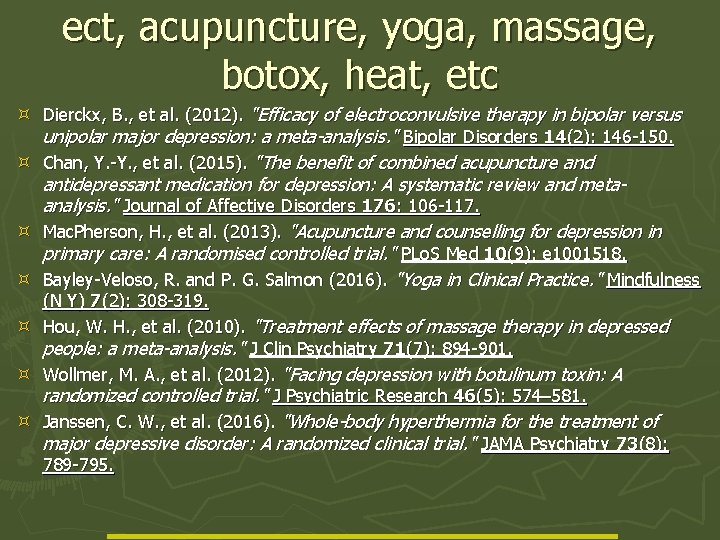
ect, acupuncture, yoga, massage, botox, heat, etc Dierckx, B. , et al. (2012). "Efficacy of electroconvulsive therapy in bipolar versus unipolar major depression: a meta-analysis. " Bipolar Disorders 14(2): 146 -150. Chan, Y. -Y. , et al. (2015). "The benefit of combined acupuncture and antidepressant medication for depression: A systematic review and metaanalysis. " Journal of Affective Disorders 176: 106 -117. Mac. Pherson, H. , et al. (2013). "Acupuncture and counselling for depression in primary care: A randomised controlled trial. " PLo. S Med 10(9): e 1001518. Bayley-Veloso, R. and P. G. Salmon (2016). "Yoga in Clinical Practice. " Mindfulness (N Y) 7(2): 308 -319. Hou, W. H. , et al. (2010). "Treatment effects of massage therapy in depressed people: a meta-analysis. " J Clin Psychiatry 71(7): 894 -901. Wollmer, M. A. , et al. (2012). "Facing depression with botulinum toxin: A randomized controlled trial. " J Psychiatric Research 46(5): 574– 581. Janssen, C. W. , et al. (2016). "Whole-body hyperthermia for the treatment of major depressive disorder: A randomized clinical trial. " JAMA Psychiatry 73(8): 789 -795.
key points of this workshop ü intro & your hopes for the day ü overview, psychotherapy’s improvable outcomes, progress monitoring & a contextual model ü medication, herbs & supplements ü when add biological methods? early on/strengths, later/augmnt ü diet, alcohol, smoking & exercise ü sleep (poor, apnea, restrict), light (box, alarm), ect, yoga, acupuncture, botox, heat, etc
increasingly research shows major differences between therapists Brown, G. S. and E. R. Jones (2005). "Implementation of a feedback system in a managed care environment: What are patients teaching us? " Journal of Clinical Psychology 61(2): 187 -198. Okiishi, J. C. , M. J. Lambert, et al. (2006). "An analysis of therapist treatment effects: Toward providing feedback to individual therapists on their clients' psychotherapy outcome. " Journal of Clinical Psychology 62(9): 1157 -1172 Lutz, W. , S. C. Leon, et al. (2007). "Therapist effects in outpatient psychotherapy: A three-level growth curve approach. " Journal of Counseling Psychology 54: 32 -39. Anderson, T. , B. M. Ogles, et al. (2009). "Therapist effects: Facilitative interpersonal skills as a predictor of therapist success. " J Clinical Psychology 65: 755 -768. Kraus, D. R. , L. Castonguay, et al. (2011). "Therapist effectiveness: Implications for accountability and patient care. " Psychotherapy Research 21(3): 267 -276. Saxon, D. and M. Barkham (2012). "Patterns of therapist variability: Therapist effects & the contribution of patient severity and risk. " J Consult Clin Psychol 80(4): 535 -546. Baldwin, S. A. & Imel, Z. E. (2013). “Therapist effects: Findings and methods” in M. J. Lambert (ed) “Handbook of psychotherapy and behavior change (6 th ed )”
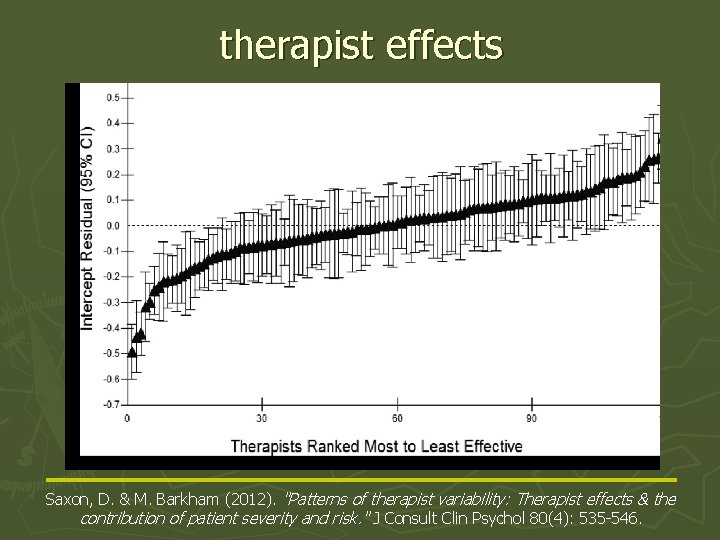
therapist effects Saxon, D. & M. Barkham (2012). "Patterns of therapist variability: Therapist effects & the contribution of patient severity and risk. " J Consult Clin Psychol 80(4): 535 -546.
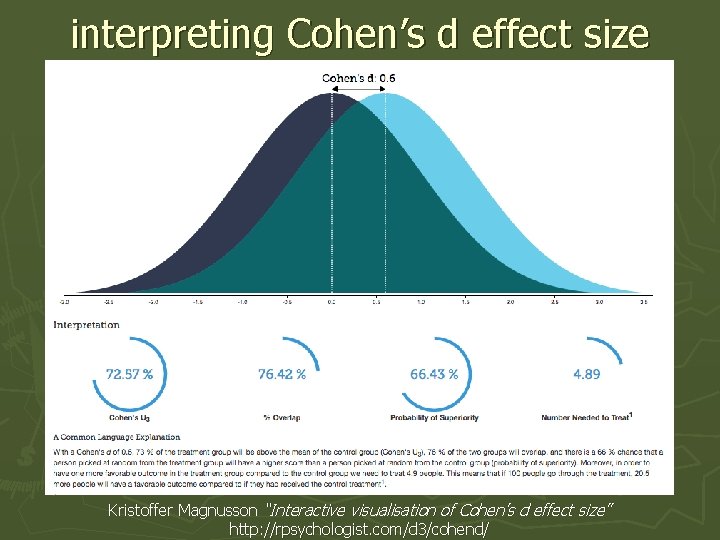
interpreting Cohen’s d effect size Kristoffer Magnusson “Interactive visualisation of Cohen’s d effect size” http: //rpsychologist. com/d 3/cohend/
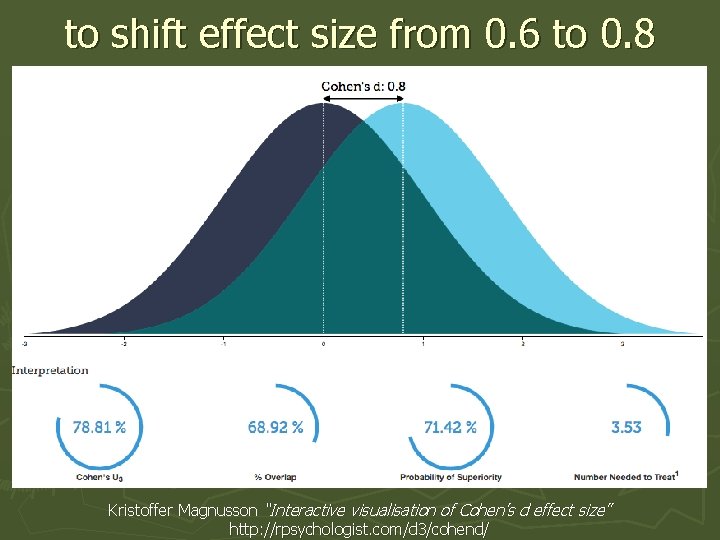
to shift effect size from 0. 6 to 0. 8 Kristoffer Magnusson “Interactive visualisation of Cohen’s d effect size” http: //rpsychologist. com/d 3/cohend/
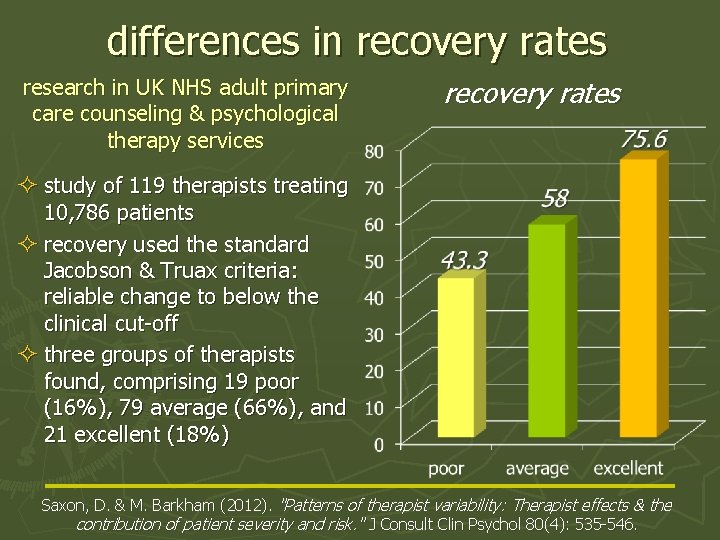
differences in recovery rates research in UK NHS adult primary care counseling & psychological therapy services recovery rates ² study of 119 therapists treating 10, 786 patients ² recovery used the standard Jacobson & Truax criteria: reliable change to below the clinical cut-off ² three groups of therapists found, comprising 19 poor (16%), 79 average (66%), and 21 excellent (18%) Saxon, D. & M. Barkham (2012). "Patterns of therapist variability: Therapist effects & the contribution of patient severity and risk. " J Consult Clin Psychol 80(4): 535 -546.
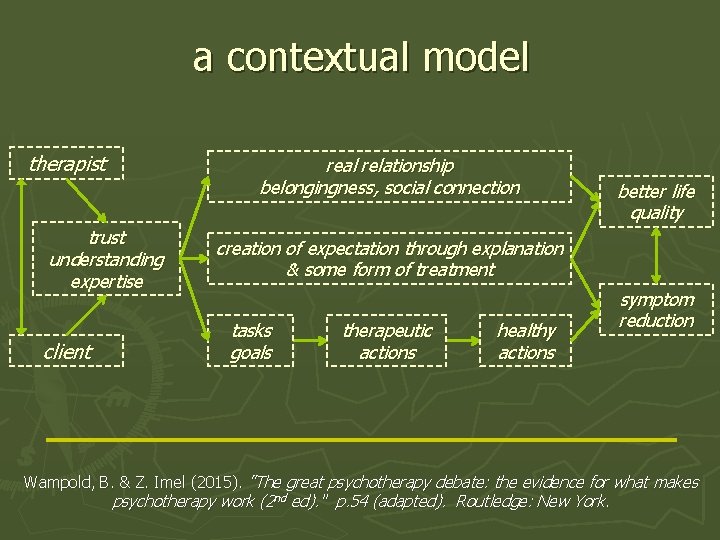
a contextual model therapist trust understanding expertise client real relationship belongingness, social connection better life quality creation of expectation through explanation & some form of treatment tasks goals therapeutic actions healthy actions symptom reduction Wampold, B. & Z. Imel (2015). ”The great psychotherapy debate: the evidence for what makes psychotherapy work (2 nd ed). " p. 54 (adapted). Routledge: New York.
helping improve outcomes … especially when non-response risk “ … repeated assessment and immediate feed-back of a patient’s mental health functioning during the course of therapy can alert therapists to patient non-response or negative response, support decisions on treatment planning and strategies (e. g. when and how to repair thera-peutic alliance ruptures) and help determine when treatment has been sufficient. ” Castonguay, L. , M. Barkham, W. Lutz, et al. (2013). “Practice-orientated research. ” in M. J. Lambert (ed) “Handbook of psychotherapy and behavior change (6 th ed)”
to get best results from feedback ² best results typically depend on therapists involved being committed to using feedback ² regular sessional assessment of outcome progress & therapeutic alliance given to both therapist & client for possible discussion ² current evidence suggests this halves client deterioration rates ² there are encouraging increases in treatment gains as well - e. g. using pcoms, reliable improve-ment rates increase by 3. 5 x Castonguay, L. , M. Barkham, W. Lutz, et al. (2013). “Practice-orientated research. ” in M. J. Lambert (ed) “Handbook of psychotherapy and behavior change (6 th ed)”
how can we improve outcomes? Ø use combined psychotherapy & various biological approaches right from the start of therapy Ø use routine outcome monitoring to trigger problem-solving and possible addition of biological treatments if going off track Ø numerous other potential largely therapist focused improvements in selection, training, supervision & cpd
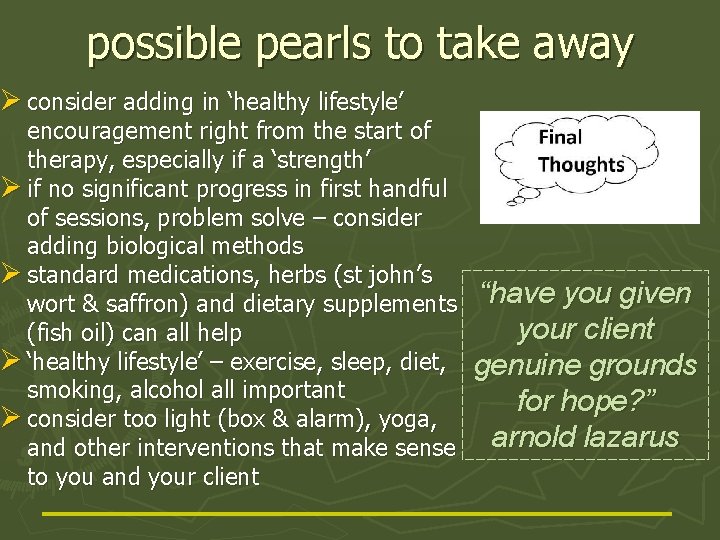
possible pearls to take away Ø consider adding in ‘healthy lifestyle’ encouragement right from the start of therapy, especially if a ‘strength’ Ø if no significant progress in first handful of sessions, problem solve – consider adding biological methods Ø standard medications, herbs (st john’s wort & saffron) and dietary supplements (fish oil) can all help Ø ‘healthy lifestyle’ – exercise, sleep, diet, smoking, alcohol all important Ø consider too light (box & alarm), yoga, and other interventions that make sense to you and your client “have you given your client genuine grounds for hope? ” arnold lazarus
exercise 7: key personal points? what else would you add to your personal ‘interesting & potentially useful’ notes? now looking back over the whole seminar, what have been the key points for you and what would you like to do with this information? ► solo … reflection sheet ► pairs. . . specific intentions
“It’s important to keep an open mind but not so open that your brains fall out. ”
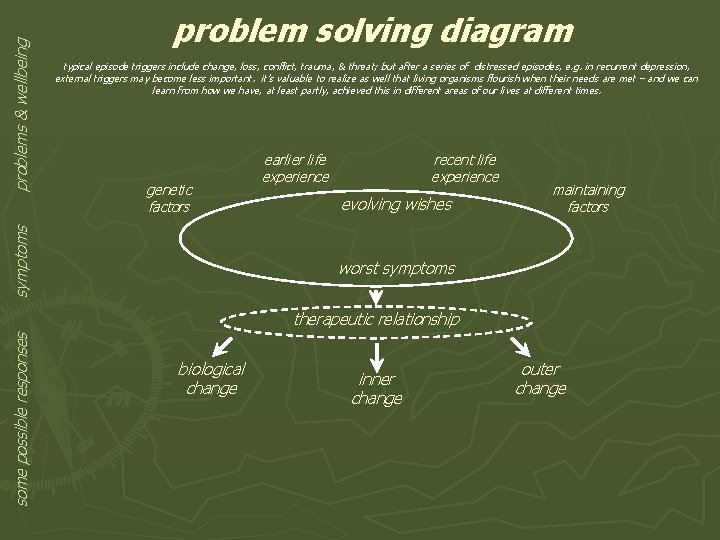
some possible responses symptoms problems & wellbeing problem solving diagram typical episode triggers include change, loss, conflict, trauma, & threat; but after a series of distressed episodes, e. g. in recurrent depression, external triggers may become less important. it’s valuable to realize as well that living organisms flourish when their needs are met – and we can learn from how we have, at least partly, achieved this in different areas of our lives at different times. genetic factors earlier life experience recent life experience evolving wishes maintaining factors worst symptoms therapeutic relationship biological change inner change outer change
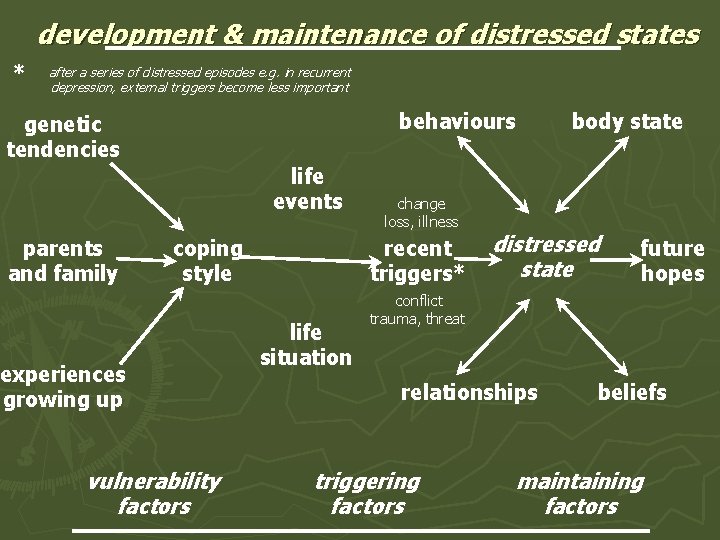
development & maintenance of distressed states * after a series of distressed episodes e. g. in recurrent depression, external triggers become less important behaviours genetic tendencies life events parents and family coping style experiences growing up vulnerability factors change loss, illness recent triggers* life situation body state distressed state future hopes conflict trauma, threat relationships triggering factors beliefs maintaining factors
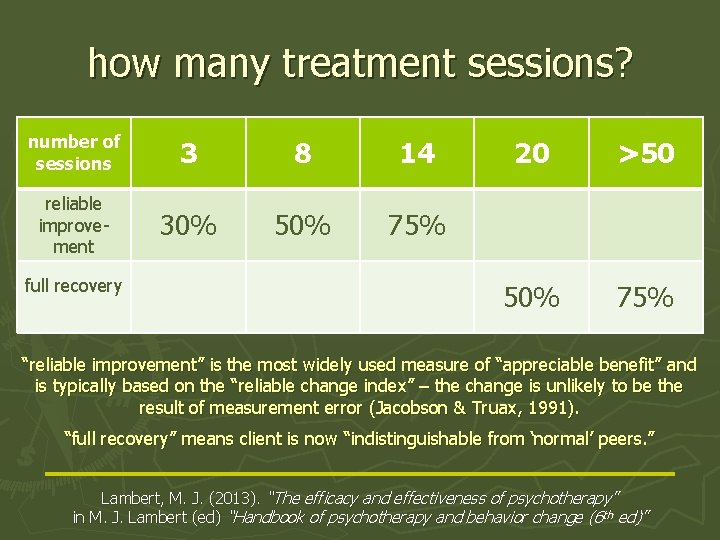
how many treatment sessions? number of sessions 3 8 14 reliable improvement 30% 50% 75% full recovery 20 >50 50% 75% “reliable improvement” is the most widely used measure of “appreciable benefit” and is typically based on the “reliable change index” – the change is unlikely to be the result of measurement error (Jacobson & Truax, 1991). “full recovery” means client is now “indistinguishable from ‘normal’ peers. ” Lambert, M. J. (2013). “The efficacy and effectiveness of psychotherapy” in M. J. Lambert (ed) “Handbook of psychotherapy and behavior change (6 th ed)”
let’s make our own roads! © Copyright 2012, Erik Johansson
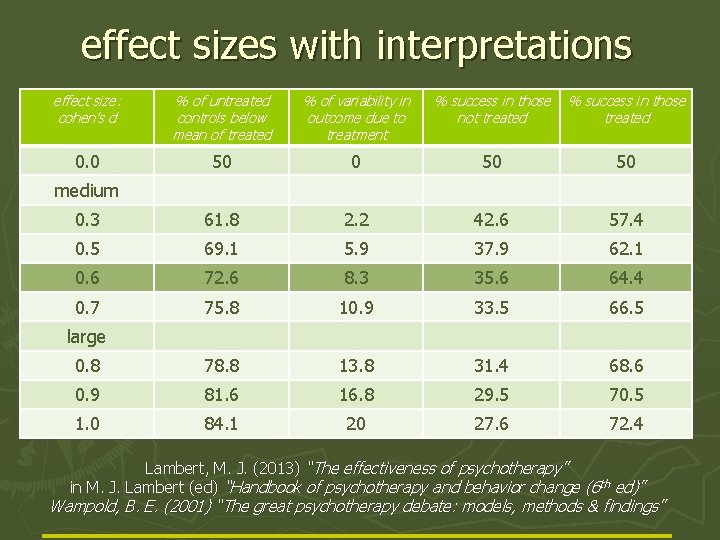
effect sizes with interpretations effect size: cohen’s d % of untreated controls below mean of treated % of variability in outcome due to treatment % success in those not treated 0. 0 50 50 0. 3 61. 8 2. 2 42. 6 57. 4 0. 5 69. 1 5. 9 37. 9 62. 1 0. 6 72. 6 8. 3 35. 6 64. 4 0. 7 75. 8 10. 9 33. 5 66. 5 0. 8 78. 8 13. 8 31. 4 68. 6 0. 9 81. 6 16. 8 29. 5 70. 5 1. 0 84. 1 20 27. 6 72. 4 medium large Lambert, M. J. (2013) “The effectiveness of psychotherapy” in M. J. Lambert (ed) “Handbook of psychotherapy and behavior change (6 th ed)” Wampold, B. E. (2001) “The great psychotherapy debate: models, methods & findings”
14 qualities of effective therapists 1. a sophisticated set of interpersonal skills including fluency, perceptiveness, modulation/expressiveness, warmth/acceptance, empathy, & focus on the other 2. clients feel understood, trust therapist & believe therapist can help them 3. able to form a working alliance with broad range of clients 4. provide an acceptable and adaptive explanation for the client’s distress 5. provide a treatment plan that is consistent with the explanation provided to the client 6. is influential, persuasive, and convincing 7. continually monitors client progress in an authentic way Wampold, B. E. (2011). ”Qualities and actions of effective therapists. ” APA Education Directorate: Online Article CE Series pp. 1 -7
14 qualities of effective therapists 8. flexible & will adjust therapy if resistance to the treatment is apparent or the client is not making adequate progress 9. does not avoid difficult material in therapy and uses such difficulties therapeutically 10. the effective therapist communicates hope and optimism 11. aware of the client’s characteristics and context 12. aware of his or her own psychological process 13. the effective therapist is aware of the best research evidence related to the particular client in terms of treatment, problems, social context, and so forth 14. the effective therapist, by definition … achieves expected or more than expected progress with his or her clients, generally, and who is continually improving Wampold, B. E. (2011). ”Qualities and actions of effective therapists. ” APA Education Directorate: Online Article CE Series pp. 1 -7
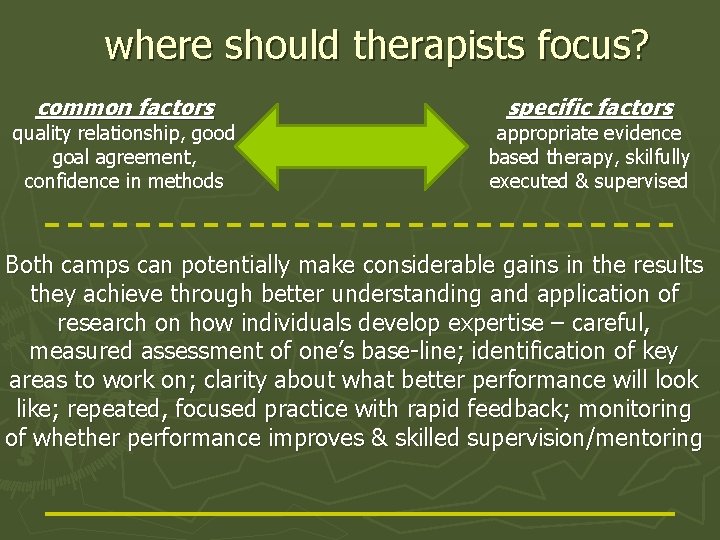
where should therapists focus? common factors quality relationship, good goal agreement, confidence in methods specific factors appropriate evidence based therapy, skilfully executed & supervised Both camps can potentially make considerable gains in the results they achieve through better understanding and application of research on how individuals develop expertise – careful, measured assessment of one’s base-line; identification of key areas to work on; clarity about what better performance will look like; repeated, focused practice with rapid feedback; monitoring of whether performance improves & skilled supervision/mentoring
- Slides: 112