
Biological Trait Theory Its in their blood Introduction
Biological Trait Theory It’s in their blood

Introduction • The belief that some people may have physical or mental traits that make them more prone to committing crime. • Biological makeup • Psychological functioning • Helps to explain why, when faced with the same life situations, one person commits crime, and one obeys the law.
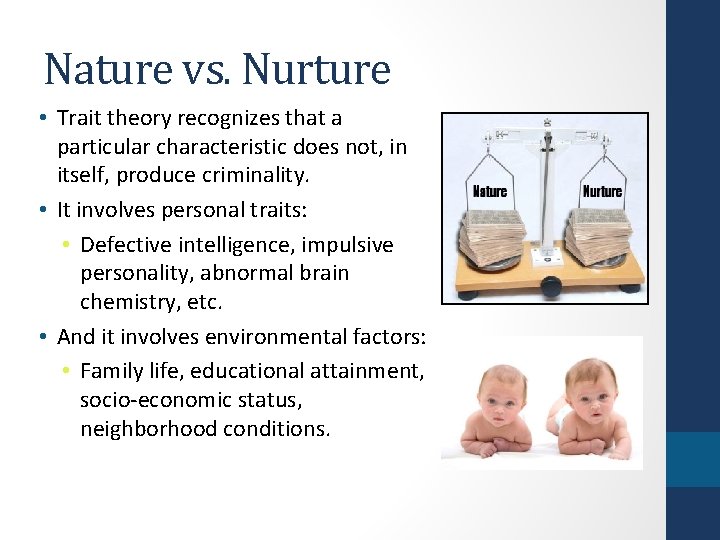
Nature vs. Nurture • Trait theory recognizes that a particular characteristic does not, in itself, produce criminality. • It involves personal traits: • Defective intelligence, impulsive personality, abnormal brain chemistry, etc. • And it involves environmental factors: • Family life, educational attainment, socio-economic status, neighborhood conditions.
Biochemical Conditions • Both genetically predetermined and those acquired through diet and environment may influence antisocial behavior. • Minimal levels of minerals and chemicals are needed for normal brain function and growth. • Deficiencies can lead to depression, mania, cognitive problems, memory loss and abnormal behavior.
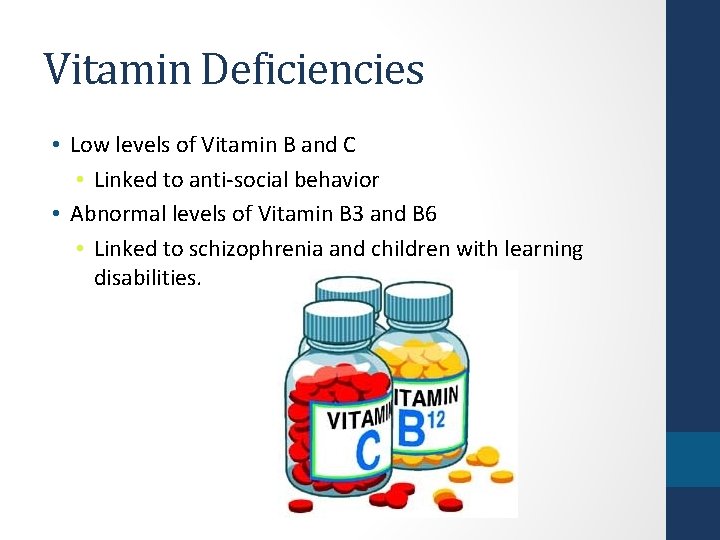
Vitamin Deficiencies • Low levels of Vitamin B and C • Linked to anti-social behavior • Abnormal levels of Vitamin B 3 and B 6 • Linked to schizophrenia and children with learning disabilities.
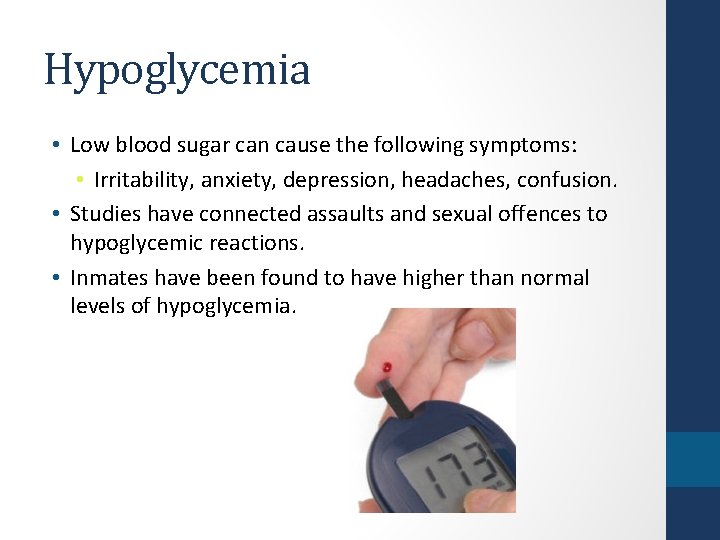
Hypoglycemia • Low blood sugar can cause the following symptoms: • Irritability, anxiety, depression, headaches, confusion. • Studies have connected assaults and sexual offences to hypoglycemic reactions. • Inmates have been found to have higher than normal levels of hypoglycemia.
Hormonal Influences • Abnormal levels of androgens (male sex hormones) can produce the following symptoms: • Aggressive behavior, sensation seeking, impulsivity, dominance and reduced verbal skills • Helps explain high violence rates amongst teenage males who are more prone to hormonal changes. • Testosterone (most abundant androgen) also linked to criminality • High levels can permanently alter behavior. • Females have less testosterone, may be biologically protected from deviant behavior. • Also helps explain the “aging-out” process.
Hormonal Influences • Premenstrual syndrome has also been linked to delinquency. • Onset of menstrual cycle triggers excessive amounts of female androgens. • Studies suggest women are more likely to commit suicide, be aggressive and act anti-socially just before or during menstruation. • Large percentage of incarcerated females committed their crime during pre-menstrual phase. • Link between PMS and deviance still debated.
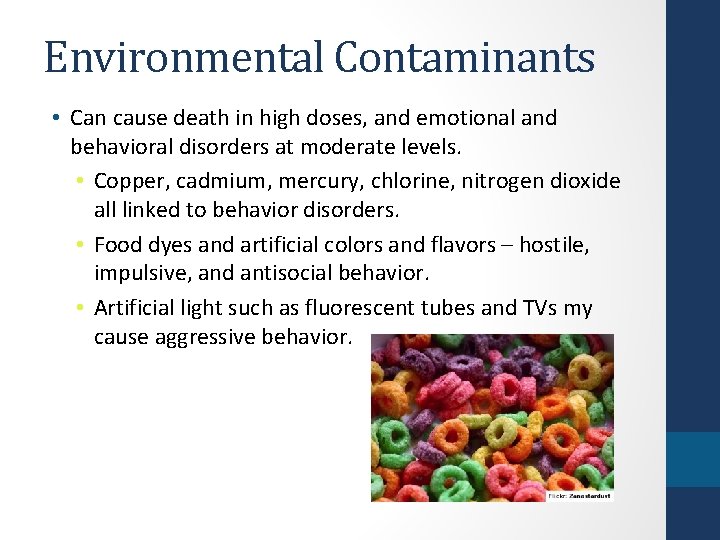
Environmental Contaminants • Can cause death in high doses, and emotional and behavioral disorders at moderate levels. • Copper, cadmium, mercury, chlorine, nitrogen dioxide all linked to behavior disorders. • Food dyes and artificial colors and flavors – hostile, impulsive, and antisocial behavior. • Artificial light such as fluorescent tubes and TVs my cause aggressive behavior.
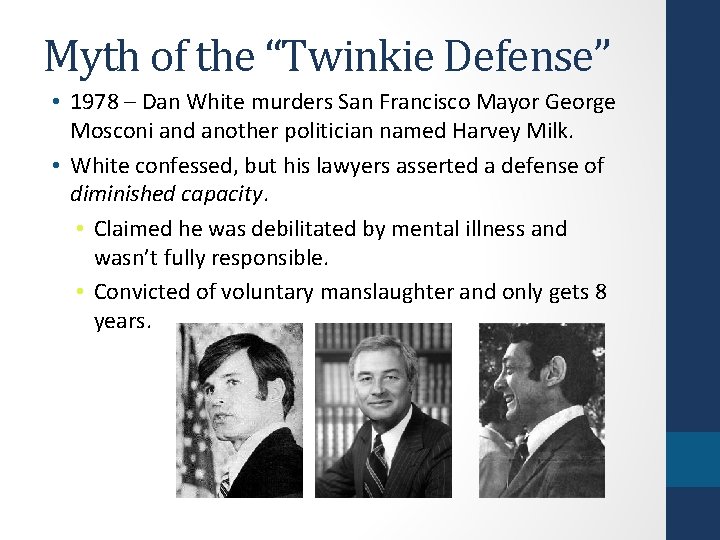
Myth of the “Twinkie Defense” • 1978 – Dan White murders San Francisco Mayor George Mosconi and another politician named Harvey Milk. • White confessed, but his lawyers asserted a defense of diminished capacity. • Claimed he was debilitated by mental illness and wasn’t fully responsible. • Convicted of voluntary manslaughter and only gets 8 years.
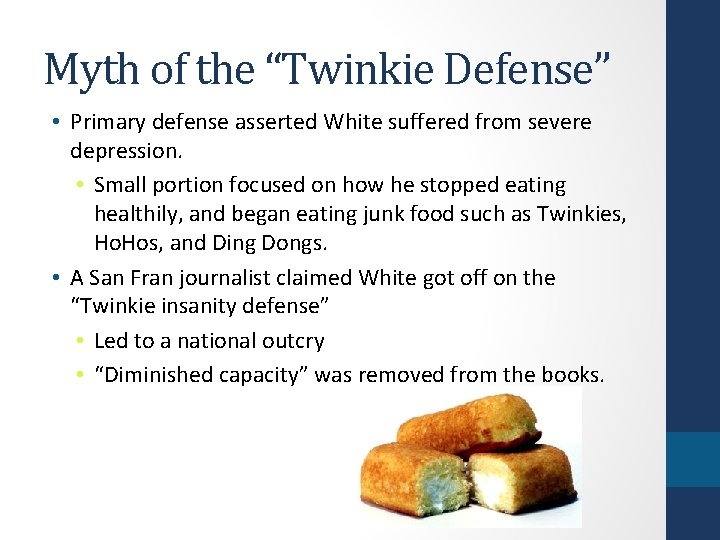
Myth of the “Twinkie Defense” • Primary defense asserted White suffered from severe depression. • Small portion focused on how he stopped eating healthily, and began eating junk food such as Twinkies, Ho. Hos, and Ding Dongs. • A San Fran journalist claimed White got off on the “Twinkie insanity defense” • Led to a national outcry • “Diminished capacity” was removed from the books.
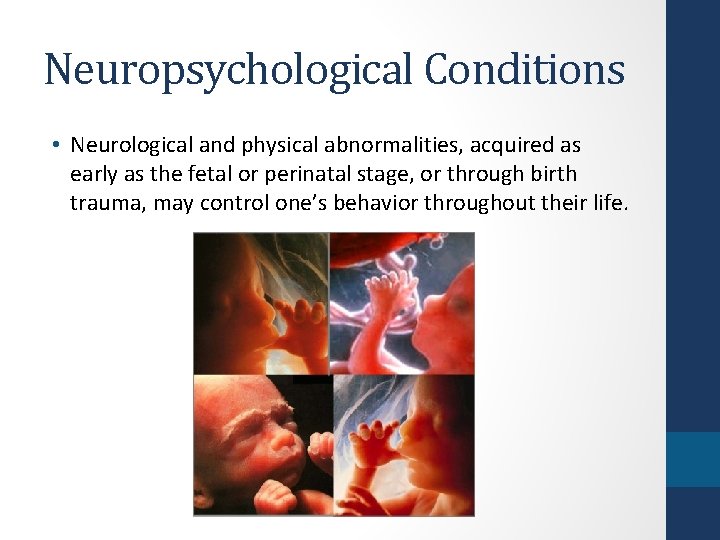
Neuropsychological Conditions • Neurological and physical abnormalities, acquired as early as the fetal or perinatal stage, or through birth trauma, may control one’s behavior throughout their life.
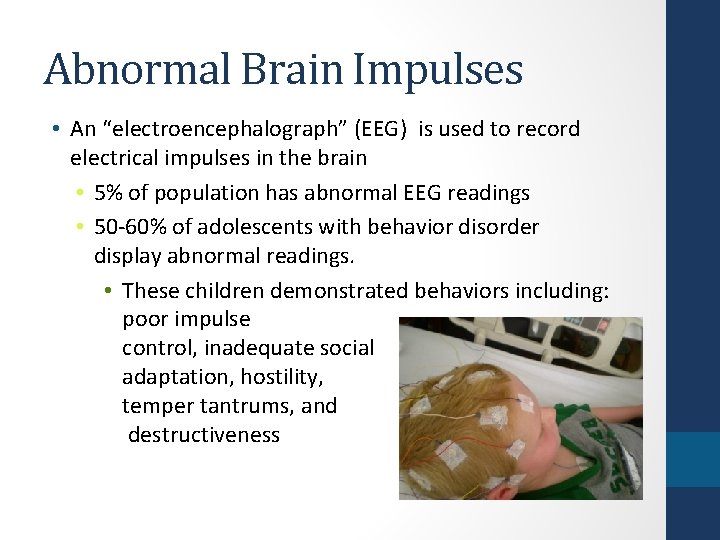
Abnormal Brain Impulses • An “electroencephalograph” (EEG) is used to record electrical impulses in the brain • 5% of population has abnormal EEG readings • 50 -60% of adolescents with behavior disorder display abnormal readings. • These children demonstrated behaviors including: poor impulse control, inadequate social adaptation, hostility, temper tantrums, and destructiveness
Low IQ • 1977 study found that delinquents tended to have lower IQs than non-delinquents. • Also more likely to commit another felony within three years of being released from prison. • Counter argument: • Low IQ leads to poor school performance, which weakens ties to positive institutions and to society, in turn leading to criminality. • High IQ children are more likely to succeed in school and have more job opportunities. • IQ tests can also be culturally biased.
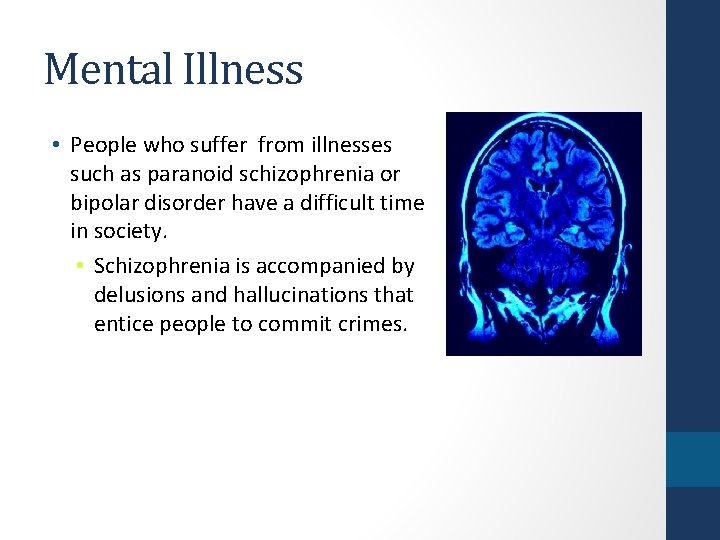
Mental Illness • People who suffer from illnesses such as paranoid schizophrenia or bipolar disorder have a difficult time in society. • Schizophrenia is accompanied by delusions and hallucinations that entice people to commit crimes.
Personality Disorder • Personality disorder – rigid patterns of behavior and belief that differ markedly from society’s expectations. • Caused by family influences, environment, diet, lack of attachment to institutions, delinquent friends, brain chemistry, genetics, drugs and alcohol abuse. • Antisocial personality disorder – by nature, someone who demonstrates a “pervasive pattern of disregard for and violation of the rights of others. ” • Narcissistic personality disorder – someone who lacks empathy, is arrogant, and has an exaggerated sense of entitlement.
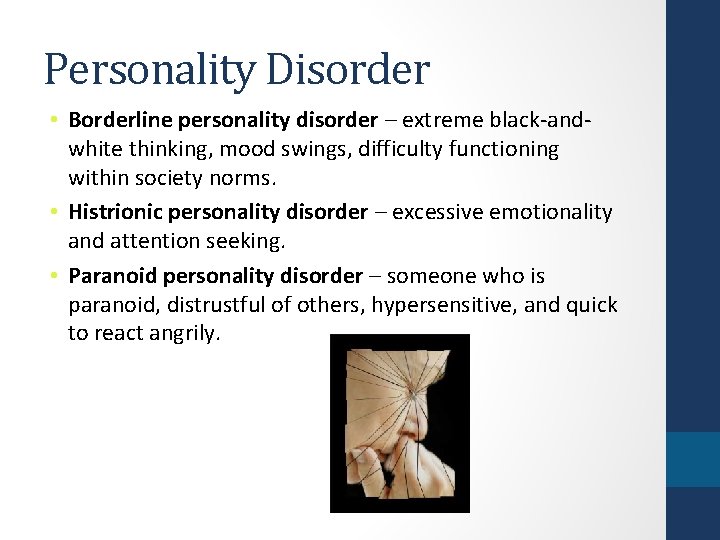
Personality Disorder • Borderline personality disorder – extreme black-andwhite thinking, mood swings, difficulty functioning within society norms. • Histrionic personality disorder – excessive emotionality and attention seeking. • Paranoid personality disorder – someone who is paranoid, distrustful of others, hypersensitive, and quick to react angrily.
Genetics • A person may be genetically predisposed to certain activities or emotions such as anxiety, aggressiveness, or learning impairments, but a “crime gene” has not been proven. • Criminal kids may come from criminal parents, for a variety of reasons: • Kids learn criminal behavior from their parents. • Criminal parents are poor parents • Criminal parents are less likely to emphasize education • Criminal parents my be more likely to allow kids to hang out with other delinquents, which reinforces criminal values.
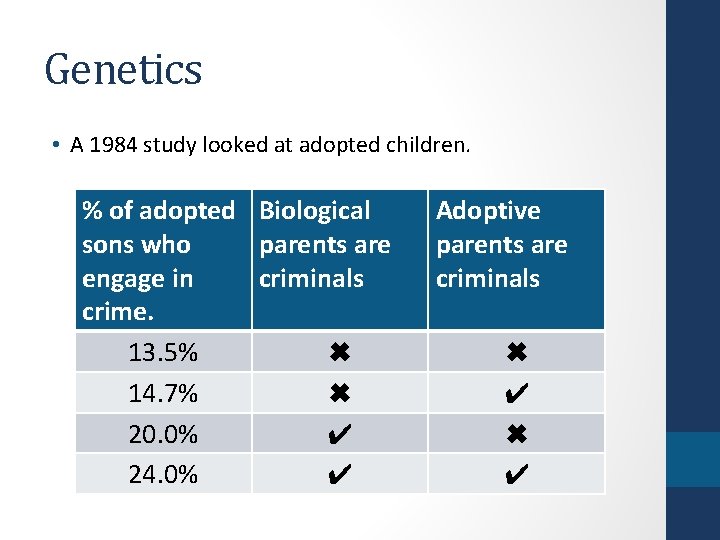
Genetics • A 1984 study looked at adopted children. % of adopted Biological sons who parents are engage in criminals crime. 13. 5% ✖ 14. 7% ✖ 20. 0% ✔ 24. 0% ✔ Adoptive parents are criminals ✖ ✔
Evolutionary Factors • Biologically, men and women have different needs and desires, which have an influence on crime. • To ensure the survival of the species, it is beneficial for a male to mate with as many females as possible • The most aggressive males, will naturally mate the most often, producing the most offspring. • These aggressive males have then had the greatest impact on the gene pool and could account for the disproportionate amount of male aggression and violence.
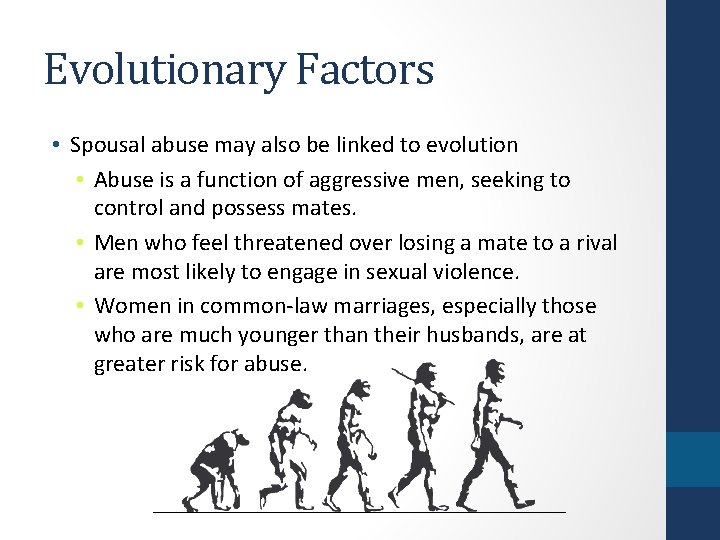
Evolutionary Factors • Spousal abuse may also be linked to evolution • Abuse is a function of aggressive men, seeking to control and possess mates. • Men who feel threatened over losing a mate to a rival are most likely to engage in sexual violence. • Women in common-law marriages, especially those who are much younger than their husbands, are at greater risk for abuse.
The “Cheater Theory” • Suggests there is a subpopulation of men who are not inclined to be parents, yet are sexually aggressive, and use deceit for sexual conquest. • Under normal circumstances, women would not choose them. • These men mimic the behavior of stable men, to gain sexual access. • Deceitful reproductive strategies linked to deceitful lifestyle. • These men are attractive to younger, less intelligent women. • Short courtships produce children with low IQ scores, aggressive personalities, and poor socialization. • The make up an ever expanding supply of cheaters.
Limits of Trait Theory • Some argue it is racist • If biological explanations are used for street crimes, then the poor and minority group members, who commit the majority of these crimes, a biologically different, flawed, or inferior. • Many of the claims trait theorists make, need more empirical data. • Trait theorists argue that people are not born as criminals or non-criminals, but some people carry a greater potential.
- Slides: 23