
Biological Theories of Aging Many Theories Non Genetic
Biological Theories of Aging
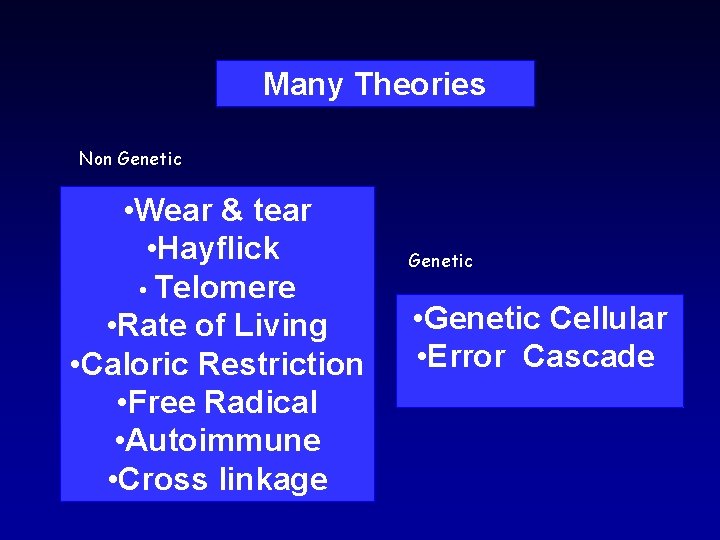
Many Theories Non Genetic • Wear & tear • Hayflick • Telomere • Rate of Living • Caloric Restriction • Free Radical • Autoimmune • Cross linkage Genetic • Genetic Cellular • Error Cascade
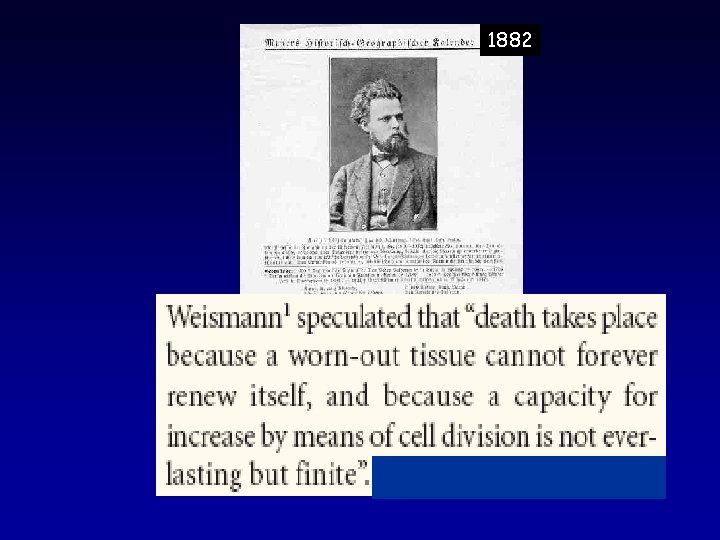
1882
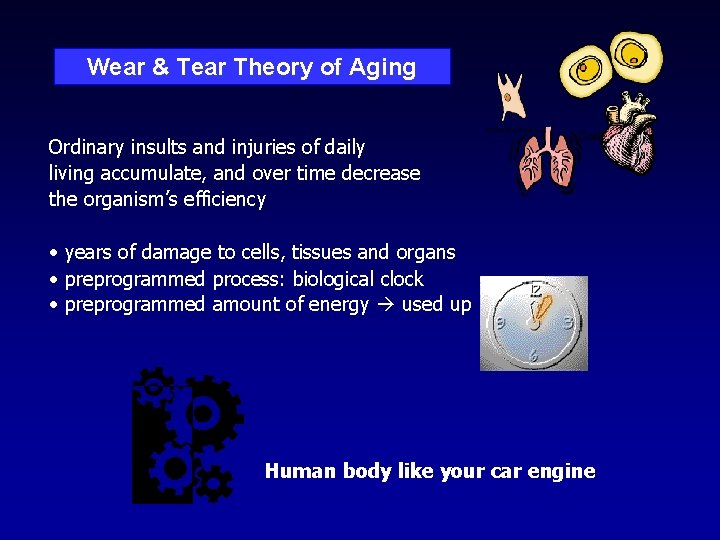
Wear & Tear Theory of Aging Ordinary insults and injuries of daily living accumulate, and over time decrease the organism’s efficiency • years of damage to cells, tissues and organs • preprogrammed process: biological clock • preprogrammed amount of energy used up Human body like your car engine
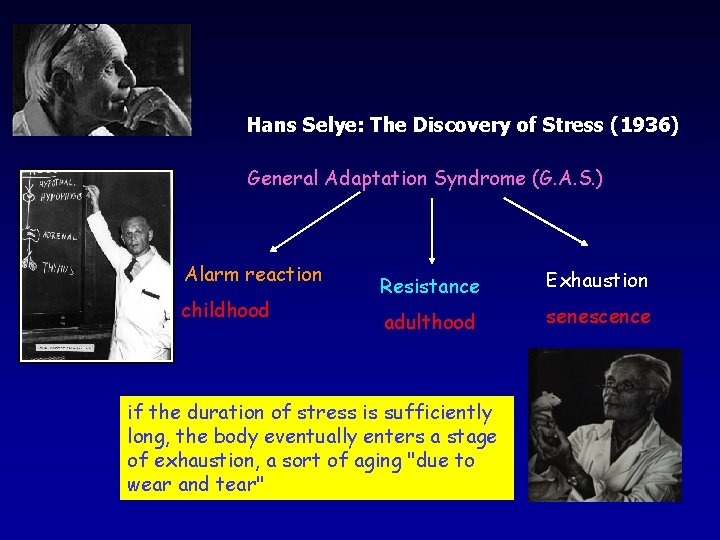
Hans Selye: The Discovery of Stress (1936) General Adaptation Syndrome (G. A. S. ) Alarm reaction childhood Resistance Exhaustion adulthood senescence if the duration of stress is sufficiently long, the body eventually enters a stage of exhaustion, a sort of aging "due to wear and tear"
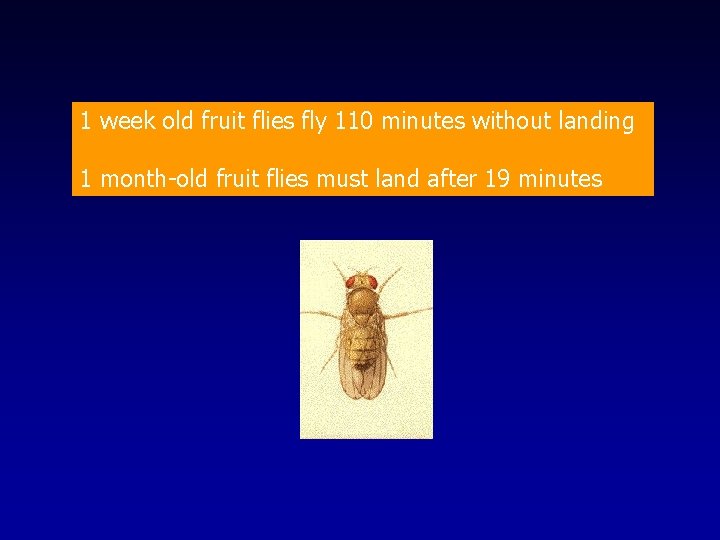
1 week old fruit flies fly 110 minutes without landing 1 month-old fruit flies must land after 19 minutes
Theory is weak… – Animals raised in a protective environment still age – Wear and tear could easily be viewed as a result of aging and not a cause of it – The theory is outdated because it does not deal with specific cellular and molecular mechanisms
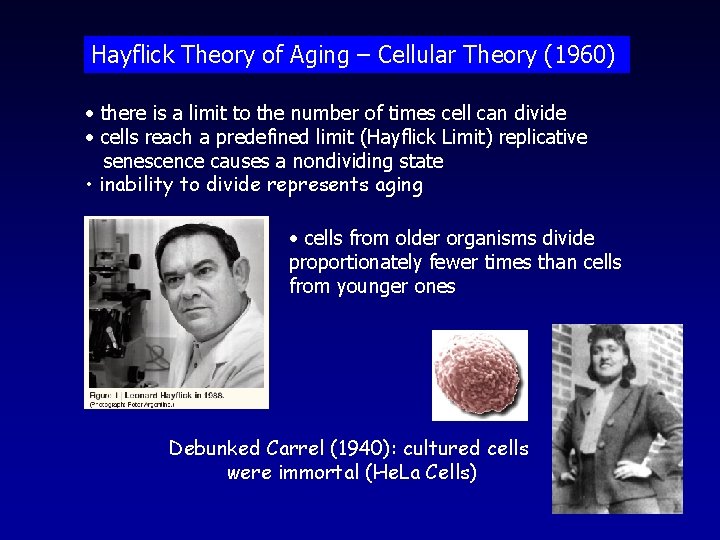
Hayflick Theory of Aging – Cellular Theory (1960) • there is a limit to the number of times cell can divide • cells reach a predefined limit (Hayflick Limit) replicative senescence causes a nondividing state • inability to divide represents aging • cells from older organisms divide proportionately fewer times than cells from younger ones Debunked Carrel (1940): cultured cells were immortal (He. La Cells)
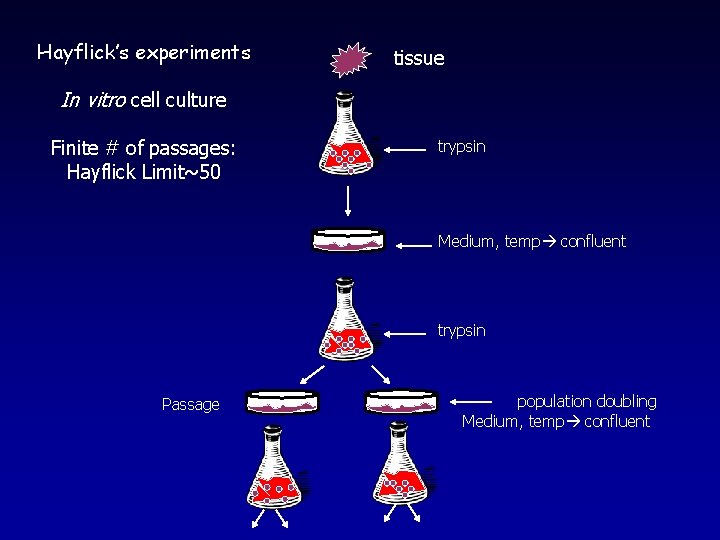
Hayflick’s experiments tissue In vitro cell culture Finite # of passages: Hayflick Limit~50 trypsin Medium, temp confluent trypsin Passage population doubling Medium, temp confluent
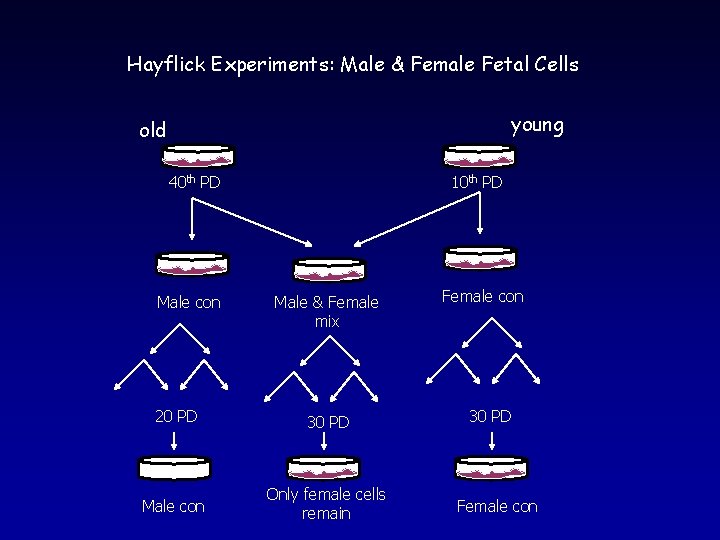
Hayflick Experiments: Male & Female Fetal Cells young old 40 th PD Male con 10 th PD Male & Female mix 20 PD 30 PD Male con Only female cells remain Female con 30 PD Female con
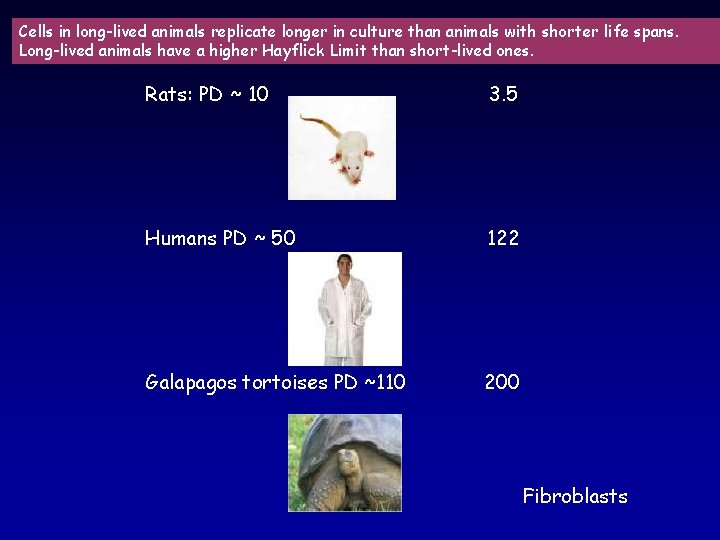
Cells in long-lived animals replicate longer in culture than animals with shorter life spans. Long-lived animals have a higher Hayflick Limit than short-lived ones. Rats: PD ~ 10 3. 5 Humans PD ~ 50 122 Galapagos tortoises PD ~110 200 Fibroblasts
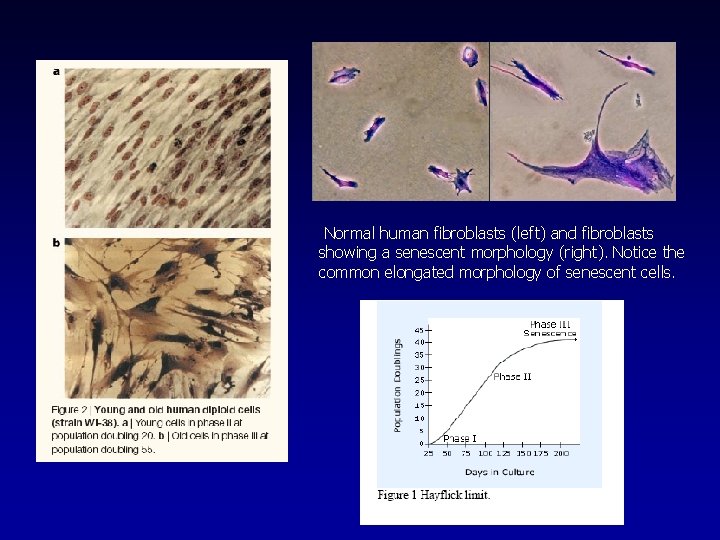
Normal human fibroblasts (left) and fibroblasts showing a senescent morphology (right). Notice the common elongated morphology of senescent cells.
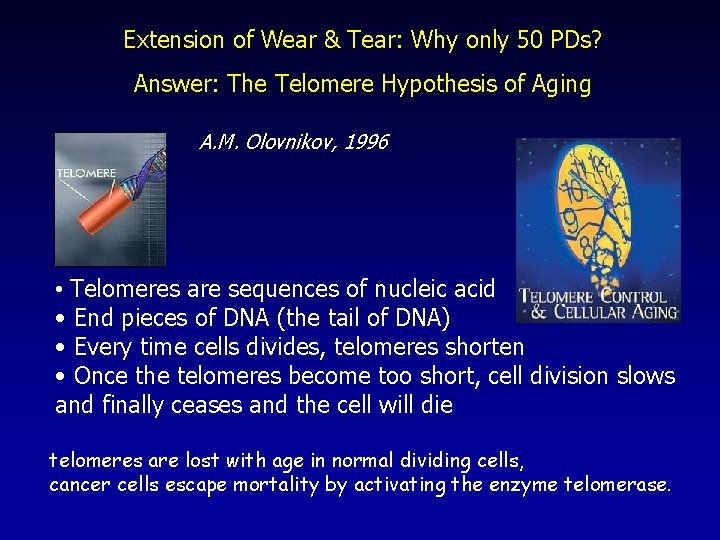
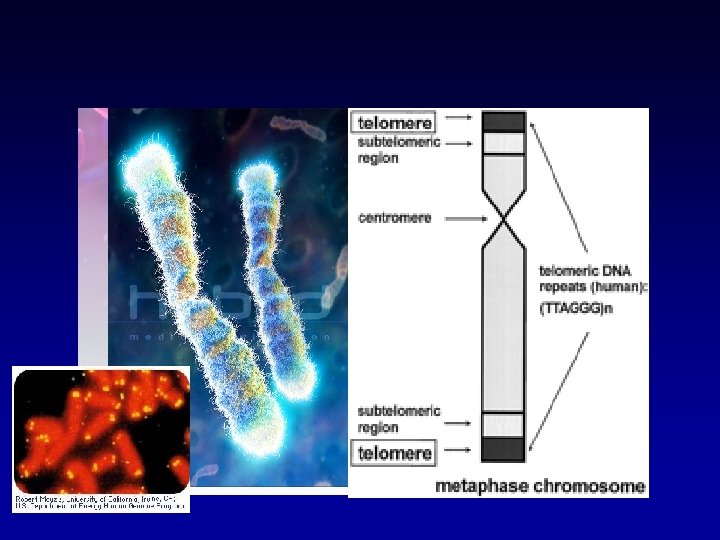
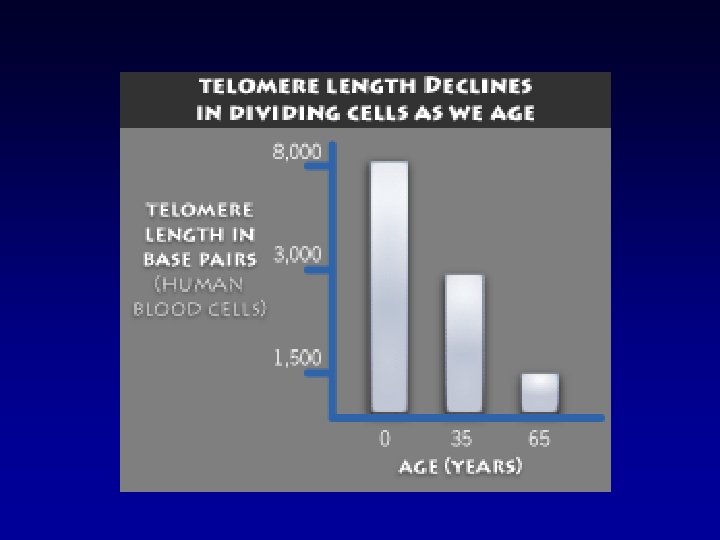
Extension of Wear & Tear: Why only 50 PDs? Answer: The Telomere Hypothesis of Aging A. M. Olovnikov, 1996 • Telomeres are sequences of nucleic acid • End pieces of DNA (the tail of DNA) • Every time cells divides, telomeres shorten • Once the telomeres become too short, cell division slows and finally ceases and the cell will die telomeres are lost with age in normal dividing cells, cancer cells escape mortality by activating the enzyme telomerase.
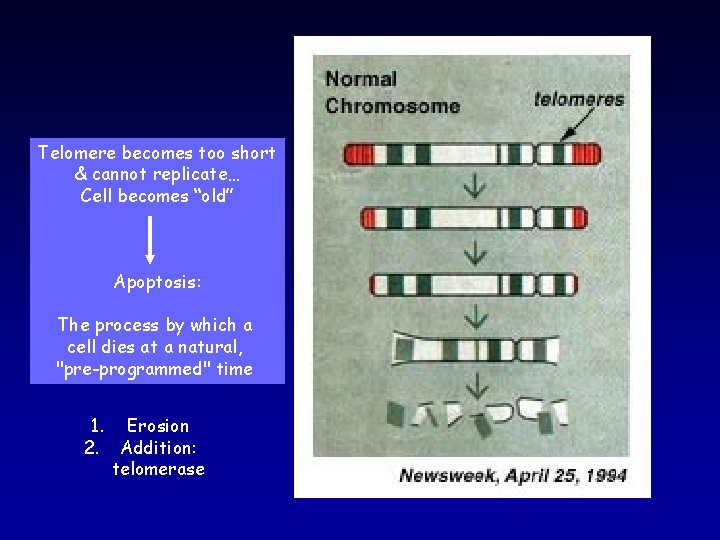
Telomere becomes too short & cannot replicate… Cell becomes “old” Apoptosis: The process by which a cell dies at a natural, "pre-programmed" time 1. Erosion 2. Addition: telomerase
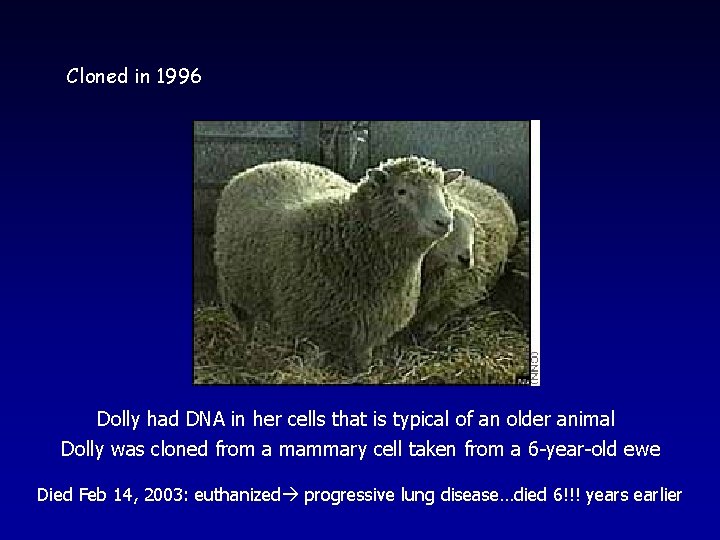
Cloned in 1996 Dolly had DNA in her cells that is typical of an older animal Dolly was cloned from a mammary cell taken from a 6 -year-old ewe Died Feb 14, 2003: euthanized progressive lung disease…died 6!!! years earlier

Rate of Living Theory of Aging – (1908) The energy an animal burns in an hour Max Rubner (1908) discovered the relationship among metabolic rate, body size and survival rate • Born with a limited amount of energy • If we use energy slowly rate of aging is slowed • If the energy is consumed quickly aging speeds up nearly all mammals expire after anywhere from 1 billion to 2 billion heartbeats
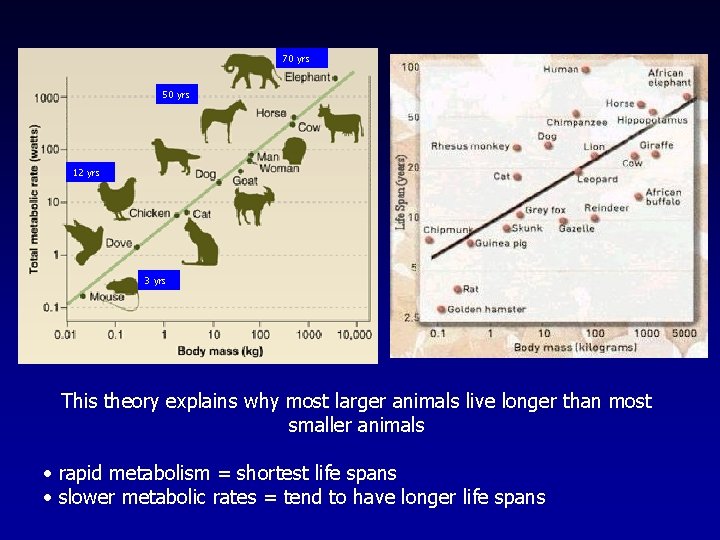
70 yrs 50 yrs 12 yrs 3 yrs This theory explains why most larger animals live longer than most smaller animals • rapid metabolism = shortest life spans • slower metabolic rates = tend to have longer life spans
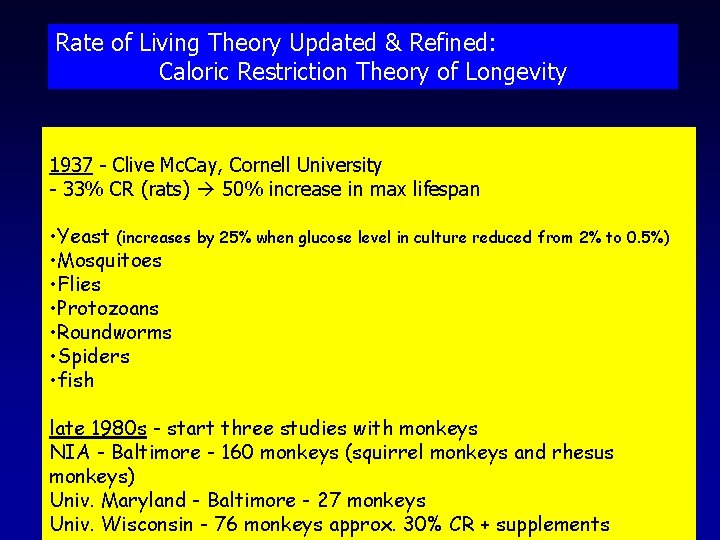
Rate of Living Theory Updated & Refined: Caloric Restriction Theory of Longevity 1937 - Clive Mc. Cay, Cornell University - 33% CR (rats) 50% increase in max lifespan • Yeast (increases by 25% when glucose level in culture reduced from 2% to 0. 5%) • Mosquitoes • Flies • Protozoans • Roundworms • Spiders • fish late 1980 s - start three studies with monkeys NIA - Baltimore - 160 monkeys (squirrel monkeys and rhesus monkeys) Univ. Maryland - Baltimore - 27 monkeys Univ. Wisconsin - 76 monkeys approx. 30% CR + supplements
"To lengthen thy life, lessen thy meals. " Benjamin Franklin
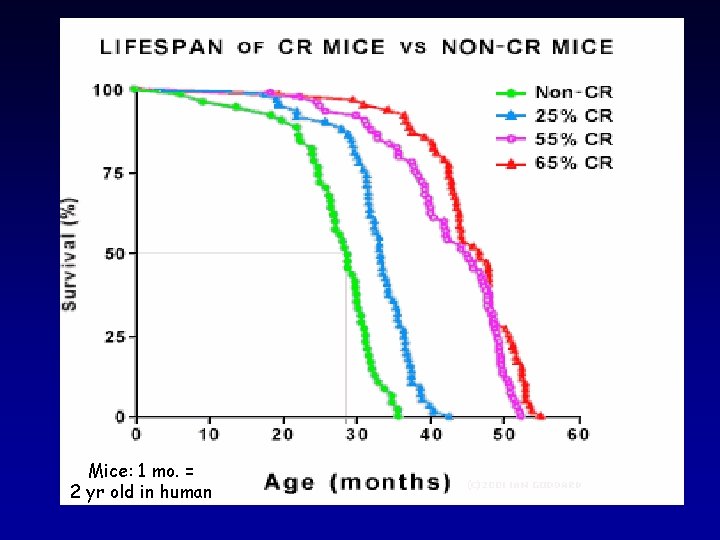
Mice: 1 mo. = 2 yr old in human
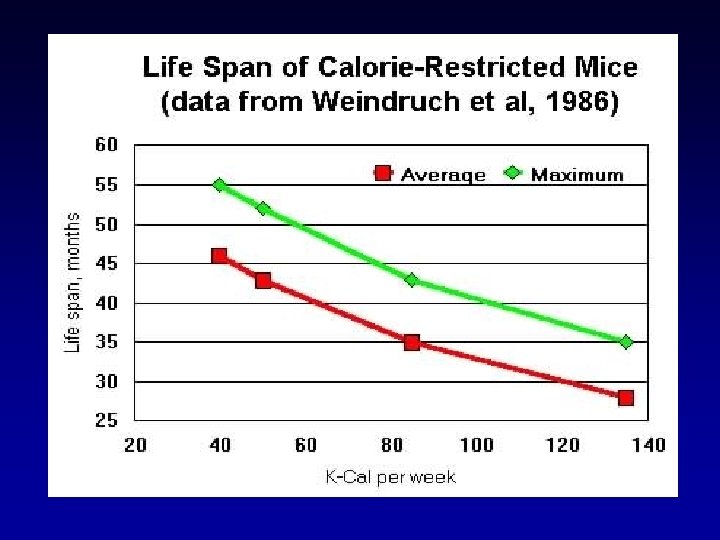
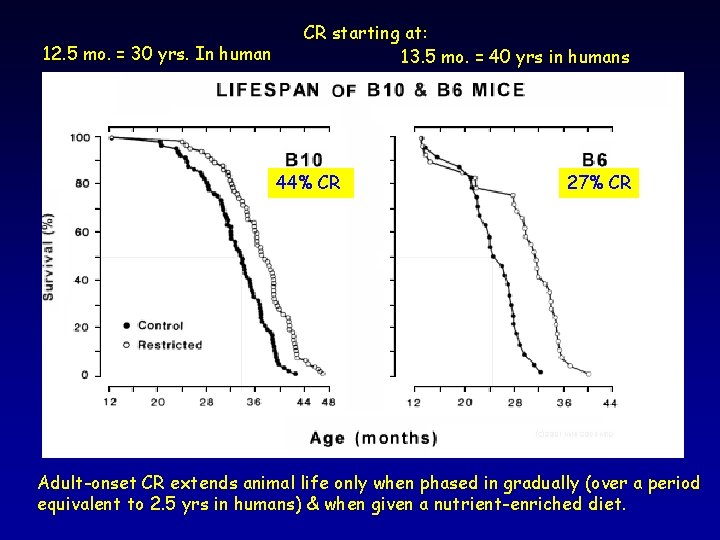
12. 5 mo. = 30 yrs. In human CR starting at: 13. 5 mo. = 40 yrs in humans 44% CR 27% CR Adult-onset CR extends animal life only when phased in gradually (over a period equivalent to 2. 5 yrs in humans) & when given a nutrient-enriched diet.
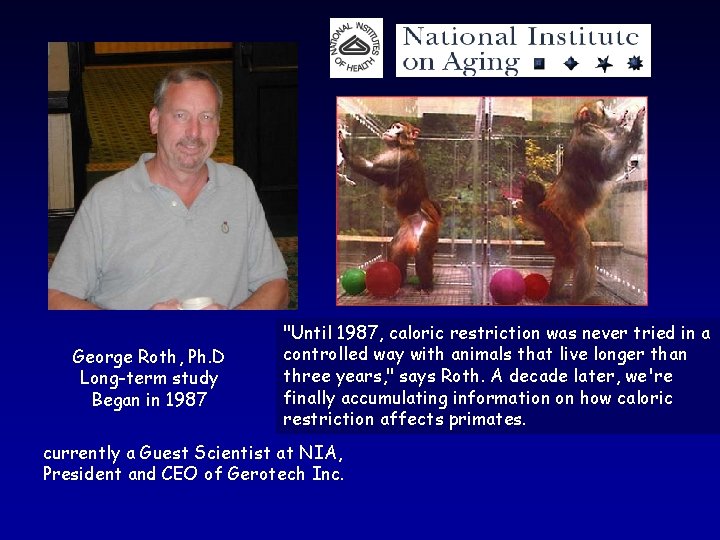
George Roth, Ph. D Long-term study Began in 1987 "Until 1987, caloric restriction was never tried in a controlled way with animals that live longer than three years, " says Roth. A decade later, we're finally accumulating information on how caloric restriction affects primates. currently a Guest Scientist at NIA, President and CEO of Gerotech Inc.
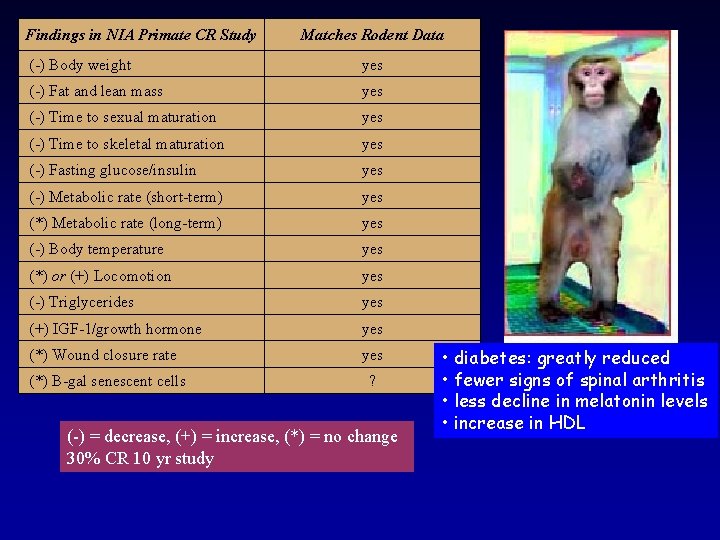
Findings in NIA Primate CR Study Matches Rodent Data (-) Body weight yes (-) Fat and lean mass yes (-) Time to sexual maturation yes (-) Time to skeletal maturation yes (-) Fasting glucose/insulin yes (-) Metabolic rate (short-term) yes (*) Metabolic rate (long-term) yes (-) Body temperature yes (*) or (+) Locomotion yes (-) Triglycerides yes (+) IGF-1/growth hormone yes (*) Wound closure rate yes (*) B-gal senescent cells ? (-) = decrease, (+) = increase, (*) = no change 30% CR 10 yr study • diabetes: greatly reduced • fewer signs of spinal arthritis • less decline in melatonin levels • increase in HDL
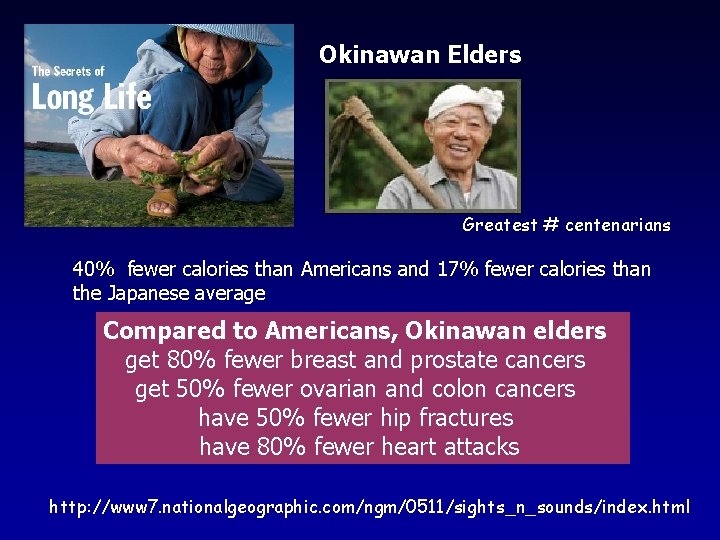
Okinawan Elders Greatest # centenarians 40% fewer calories than Americans and 17% fewer calories than the Japanese average Compared to Americans, Okinawan elders get 80% fewer breast and prostate cancers get 50% fewer ovarian and colon cancers have 50% fewer hip fractures have 80% fewer heart attacks http: //www 7. nationalgeographic. com/ngm/0511/sights_n_sounds/index. html
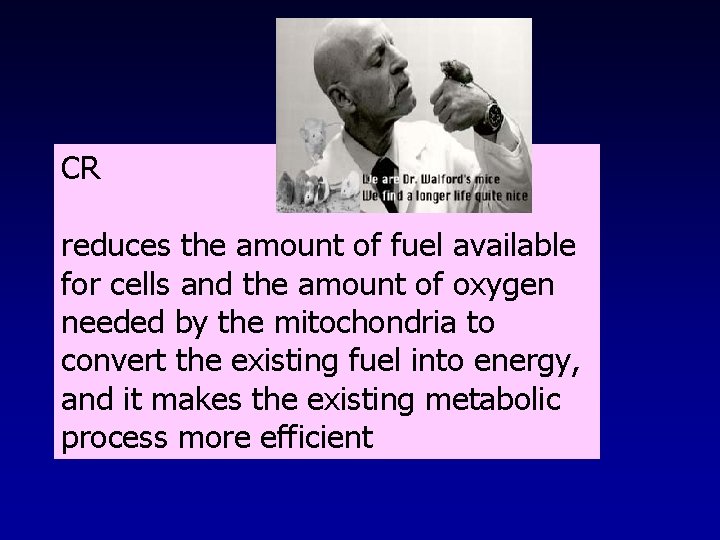
CR reduces the amount of fuel available for cells and the amount of oxygen needed by the mitochondria to convert the existing fuel into energy, and it makes the existing metabolic process more efficient

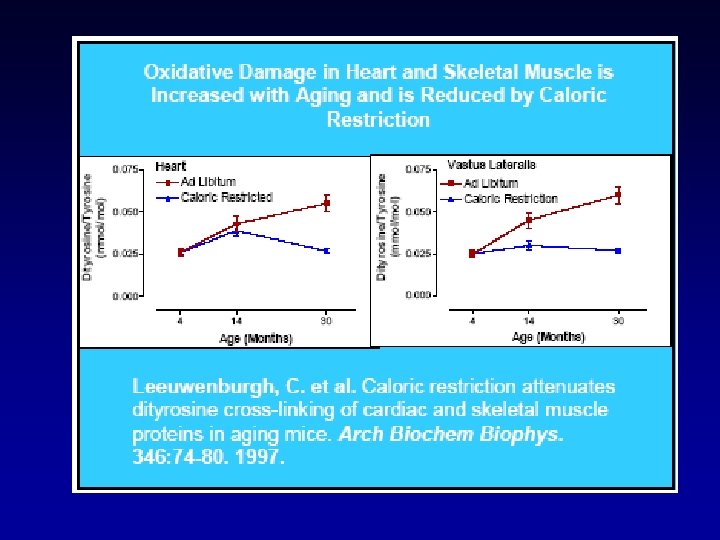
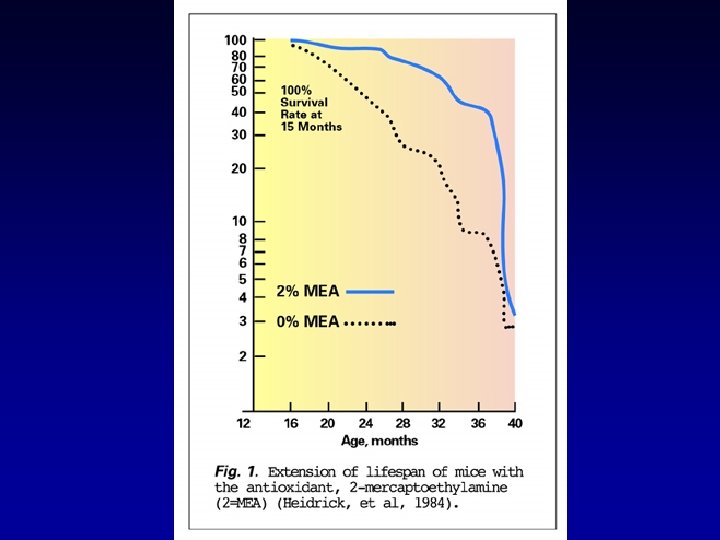
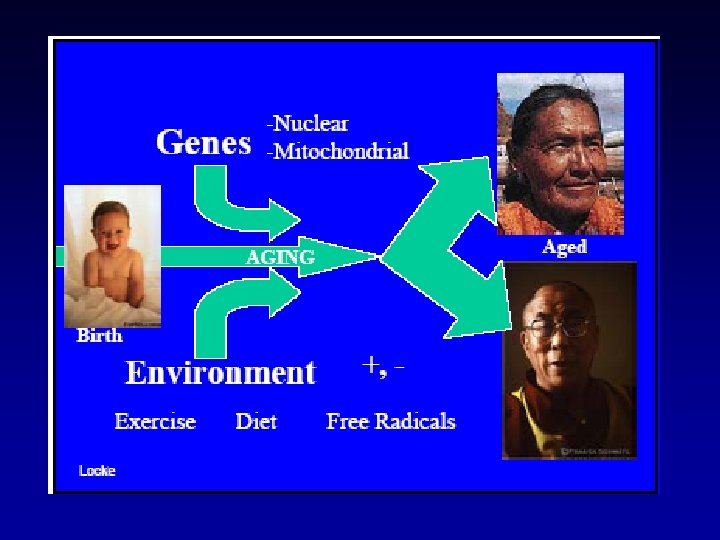
Free Radical Theory of Aging (1954) Denham Harman, Ph. D, M. D, • Aging is a result of oxidative damage caused by free radicals generated by the metabolic system • Free radicals are unstable organic molecules that appear as a byproduct of oxygen metabolism in cells • Free radicals are any number of chemical species that are highly reactive because they possess an odd number of electrons and seek to combine with other molecules to pair off their free electron • Damage: lipids, protein, carbohydrates, nucleic acids, various other cell components • Supported by caloric restriction studies: caloric restriction extends life expectancy by
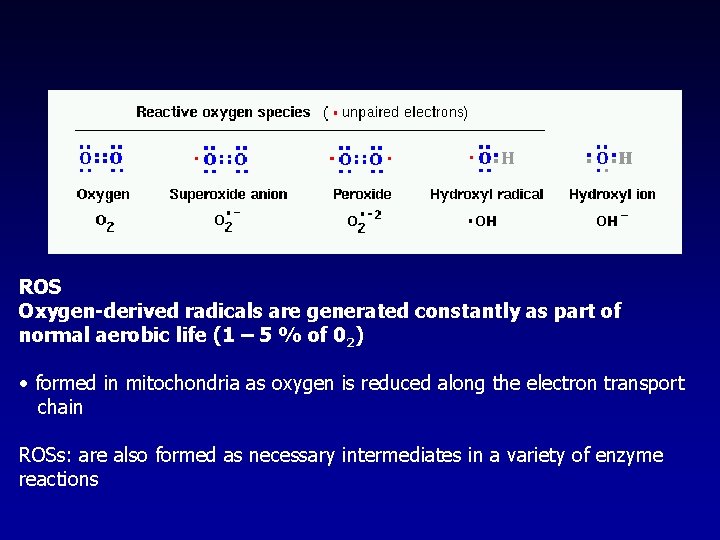
ROS Oxygen-derived radicals are generated constantly as part of normal aerobic life (1 – 5 % of 02) • formed in mitochondria as oxygen is reduced along the electron transport chain ROSs: are also formed as necessary intermediates in a variety of enzyme reactions
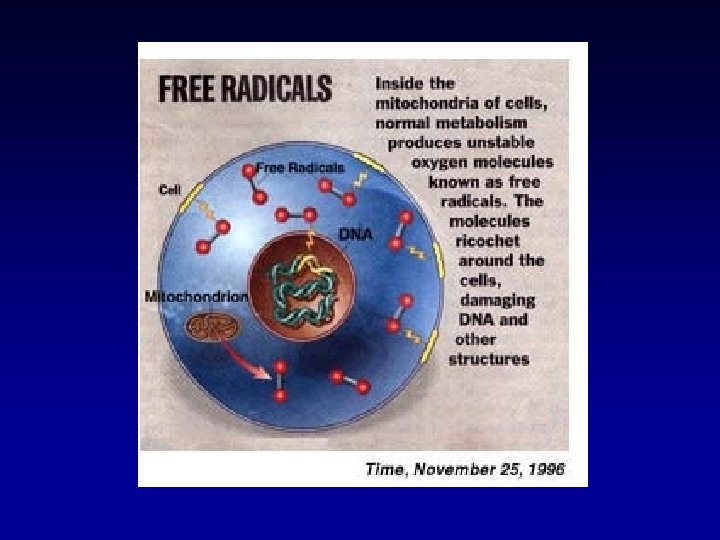
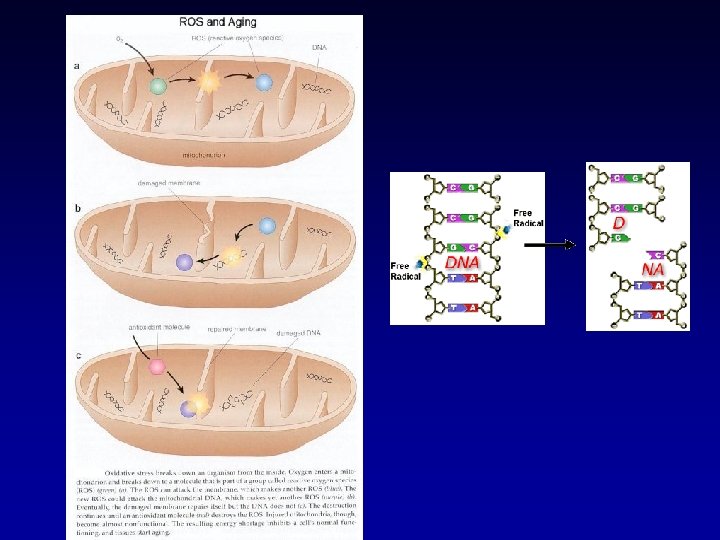
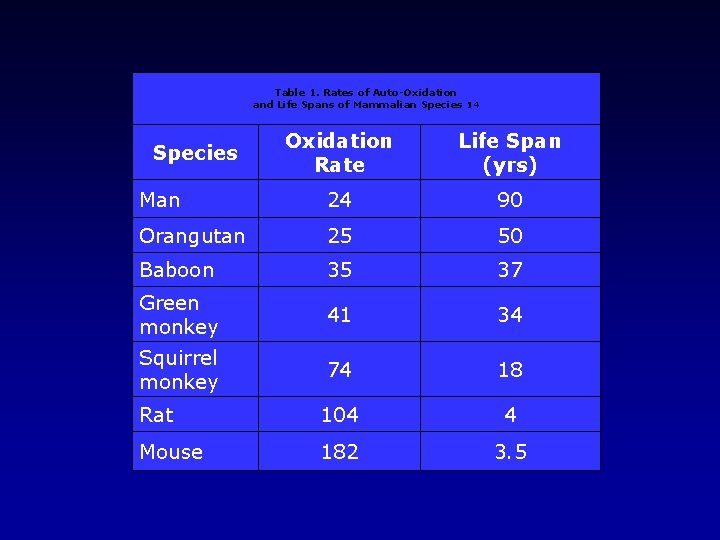
Table 1. Rates of Auto-Oxidation and Life Spans of Mammalian Species 14 Oxidation Rate Life Span (yrs) Man 24 90 Orangutan 25 50 Baboon 35 37 Green monkey 41 34 Squirrel monkey 74 18 Rat 104 4 Mouse 182 3. 5 Species
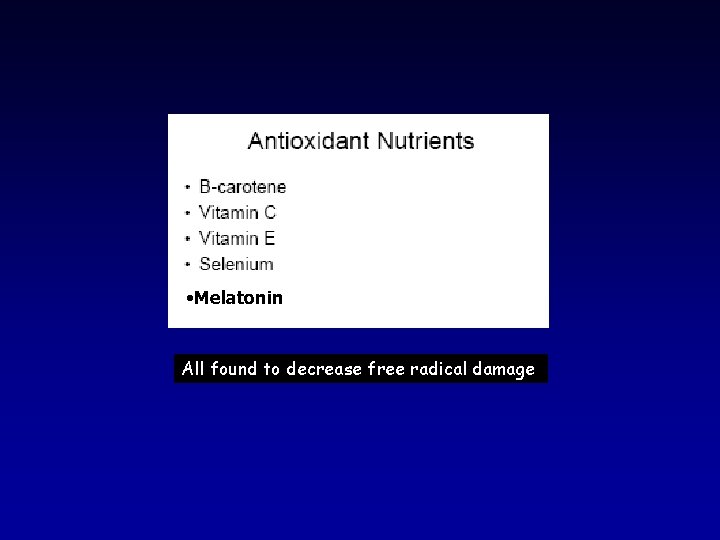
• Melatonin All found to decrease free radical damage
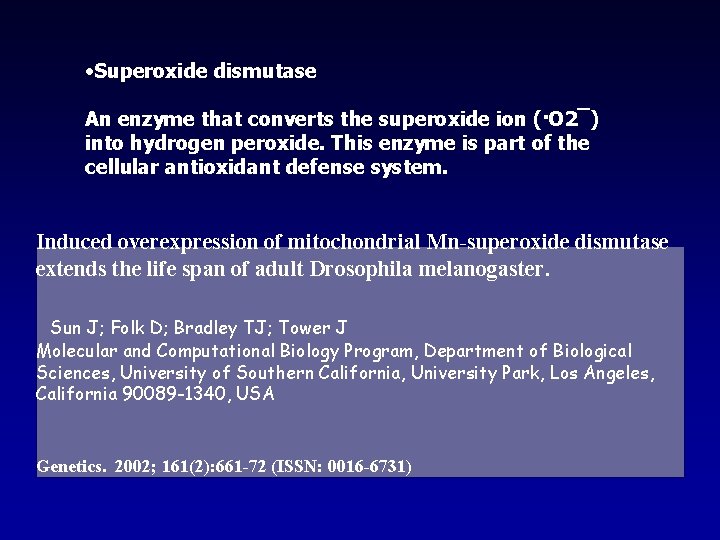
• Superoxide dismutase An enzyme that converts the superoxide ion (·O 2¯) into hydrogen peroxide. This enzyme is part of the cellular antioxidant defense system. Induced overexpression of mitochondrial Mn-superoxide dismutase extends the life span of adult Drosophila melanogaster. Sun J; Folk D; Bradley TJ; Tower J Molecular and Computational Biology Program, Department of Biological Sciences, University of Southern California, University Park, Los Angeles, California 90089 -1340, USA Genetics. 2002; 161(2): 661 -72 (ISSN: 0016 -6731)
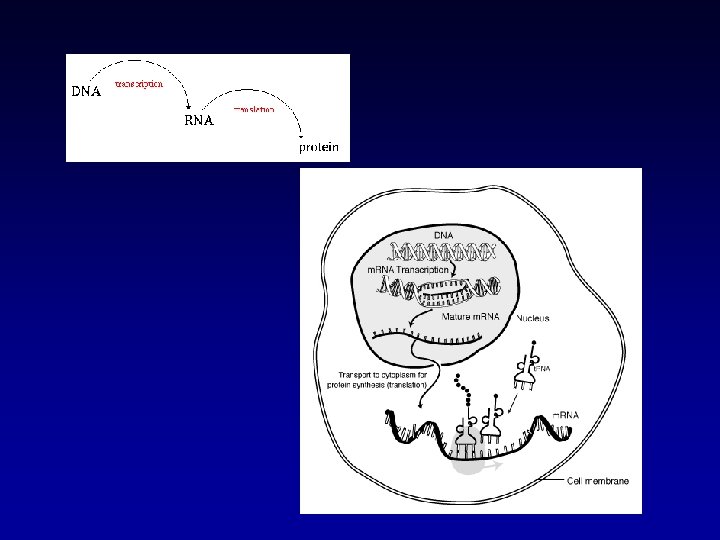
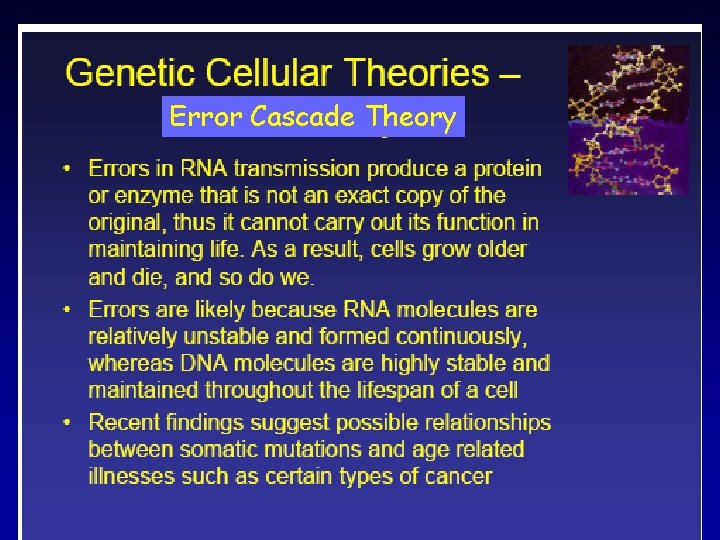
Error Cascade Theory
Autoimmune Theory: • immune system begins to decline after adolescence • vulnerability to disease and a sluggish response to some tumor cells • system so weakened that it can no longer distinguish between the body’s own and foreign tissues, i. e. the body may begin to attack itself. Cross-Linkage Theory: • Connective tissue looses elasticity with age (wrinkles, cataracts) • Loss of elasticity results from accumulation of cross-linking compounds that cause the collagen to become stiff • Some of this cross-linking may be caused by free radicals
- Slides: 46