
Biological Sciences 318 Parasitology Lab Platyhelminthes 2 Kingdom
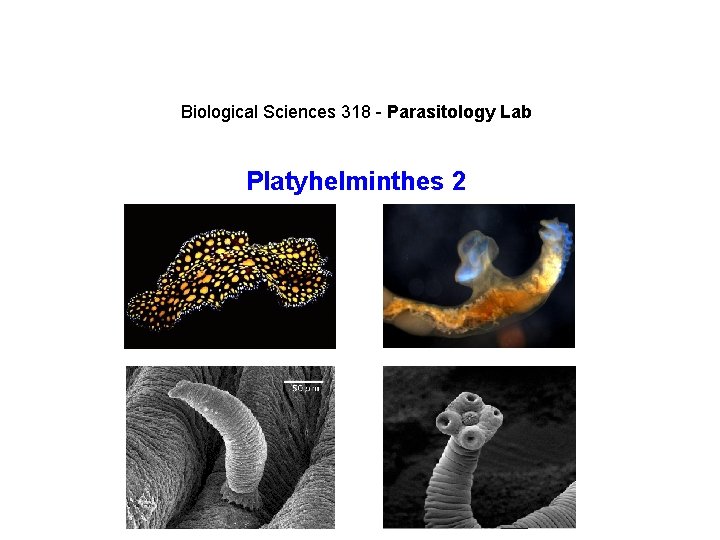
Biological Sciences 318 - Parasitology Lab Platyhelminthes 2
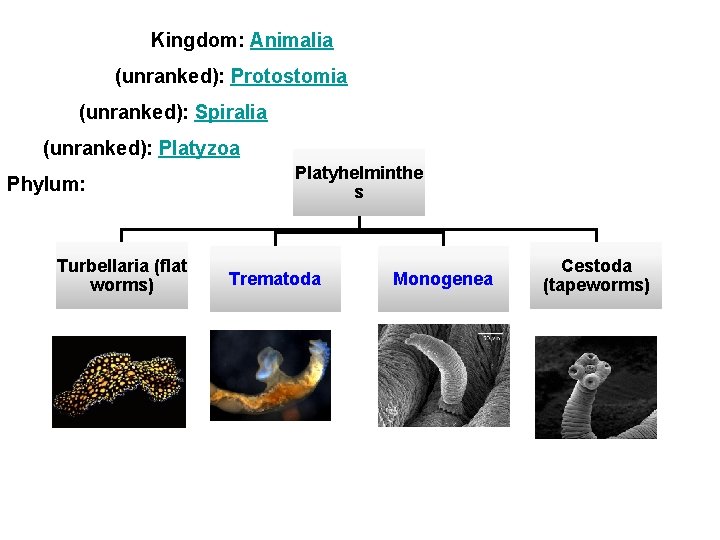
Kingdom: Animalia (unranked): Protostomia (unranked): Spiralia (unranked): Platyzoa Phylum: Turbellaria (flat worms) Platyhelminthe s Trematoda Monogenea Cestoda (tapeworms)
Platyhelminthes Characteristics: 1) simplest bilaterally symmetrical animals 2) 3 layers fundamental cell layers (ectoderm, endoderm, mesoderm) 3) Body contains no internal cavity 4) Dorsoventrally flattened (diffusion) 5) Possess a blind gut (i. e. it has a mouth but no anus) 6) Protonephridial excretory organs (flame cell) 7) Elaborate nervous system (allows for invasion of a variety of habitats) 8) Reproduction mostly sexual as hermaphrodites 9) Inability to synthesize fatty acids (commensals or parasites)
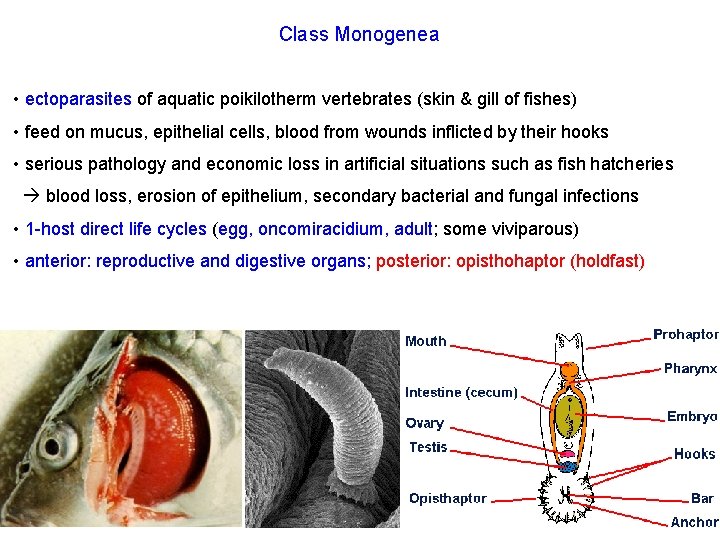
Class Monogenea • ectoparasites of aquatic poikilotherm vertebrates (skin & gill of fishes) • feed on mucus, epithelial cells, blood from wounds inflicted by their hooks • serious pathology and economic loss in artificial situations such as fish hatcheries blood loss, erosion of epithelium, secondary bacterial and fungal infections • 1 -host direct life cycles (egg, oncomiracidium, adult; some viviparous) • anterior: reproductive and digestive organs; posterior: opisthohaptor (holdfast)

Class Trematoda Parasitic flukes Subclass Digenea 2+ hosts, 1 st intermediate mollusc Aspidogastria one host, mainly molluscs Didymozoidea tissue dwelling parasites of fish • oral suckers for attachment to their vertebrate hosts /sometimes with hooks • all trematodes are parasitic, and most adult trematodes parasitize vertebrates • dorso-ventrally flattened (adults) • sexual and asexual reproductive phases (adults) • entire interior is occupied by the reproductive system

Trematoda Parasitic flukes Digenea 2+ hosts, 1 st intermediate mollusc Aspidogastria Didymozoidea one host, mainly molluscs tissue dwelling parasites of fish • largest and most medically and economically important group • blood flukes (Schistosomes most serious helminth human parasite), liver flukes (Fasciola), intestinal flukes (Echinostomes), lung flukes (Paragonimus) • complex life cycles involving number of juvenile stages that are parasitic in one, two, or more intermediate hosts before reaching adulthood, at which time they parasitize a definitive host (vertebrate; bile ducts, alimentary & respiratory tract, blood vessels) • diet consists of blood, mucus and surface epithelial cells
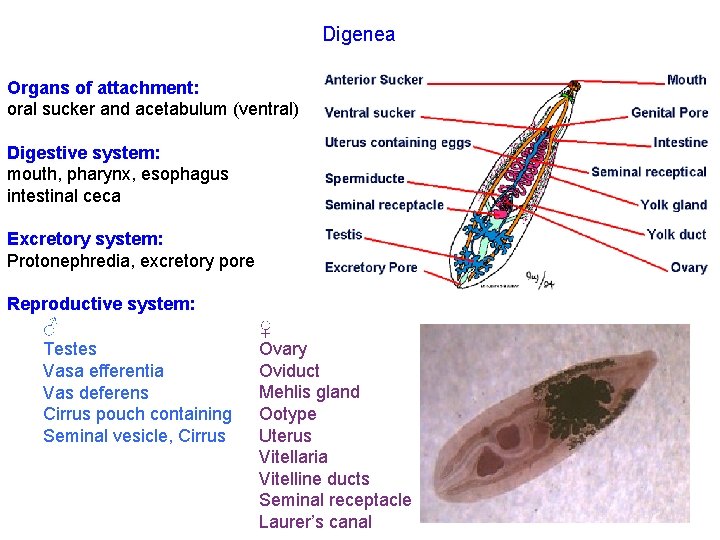
Digenea Organs of attachment: oral sucker and acetabulum (ventral) Digestive system: mouth, pharynx, esophagus intestinal ceca Excretory system: Protonephredia, excretory pore Reproductive system: ♂ Testes Vasa efferentia Vas deferens Cirrus pouch containing Seminal vesicle, Cirrus ♀ Ovary Oviduct Mehlis gland Ootype Uterus Vitellaria Vitelline ducts Seminal receptacle Laurer’s canal

Digenea Basic digenean life cycle: Egg miracidium sporocyst or redia---daughter sporocystscercariae metacercariae adults • 1 -4 intermediate hosts (1 st mollusc; asexual reproduction) • The molluscan host is almost always castrated: --physically (rediae) --chemically (sporocysts) • sexual reproduction in vertebrate definitive host
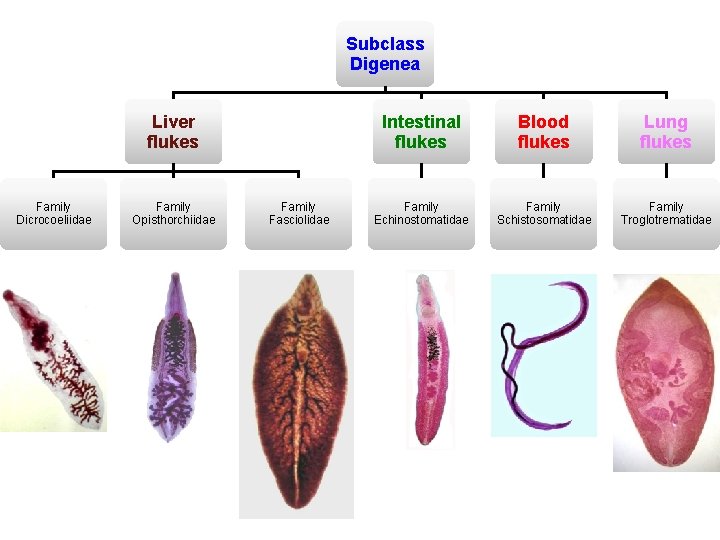
Subclass Digenea Liver flukes Family Dicrocoeliidae Family Opisthorchiidae Family Fasciolidae Intestinal flukes Blood flukes Lung flukes Family Echinostomatidae Family Schistosomatidae Family Troglotrematidae

Learning Objectives 1. Know general characteristics - Compare monogenea and digenea 2. Monogenea - One host simple life cycle - Host, life cycle stages, anatomy - Dactylogyrus: host, host tissue, economic importance, visual id 3. Digenea - 2+ hosts, complicated life cycle, 1 st intermediate: mollusc - General morphology and function: reproductive organs vary and can be used for identification - Larval stages: anatomy, form and function, hosts, visual id 4. Family Dicrocoeliidae (liver flukes) - Dicrocoelium dendriticum - General characteristics - Tissue in definitive host - Life cycle - How does this species alter its intermediate host behavior to increase chance of transmission - Visual id 5. Family Opisthorchiidae (liver flukes) - Chlonorchis sinensis - General characteristics - Life cycle - Tissue infected - Visual id 6. Family Echinostomatidae (intestinal flukes) - Know that they are spinous - Echinostoma revolutum slide - Hosts: low host specificity - Tissues infected - Visual id 7. Family Fasciolidae - General characteristics as they apply to the two species - Visual id, life cycles, compare and contrast F. hepatica and F. buski 8. Family Schistosomatidae (blood flukes) - Dioecious with sexual dimorphism - General characteristics - Schistosoma mansoni: tissue in definitive host - Visual id: male, female, in copula - find eggs in intestine and liver - Know that these eggs cause the pathology - Life cycle - Other examples of Schistosomes, diagnostic feature (eggs) and pathologies 9. Family Troglotrematidae (lung flukes) - Tissue infected in definitive host, visual id , life cycle, host, Paragonimus westermani Vocabulary Monoecious Dioecious Oncomiracidium Opisthaptor Prohaptor Acetabulum Operculum Miracidia Sporocyst Rediae Cercariae Metacercariae
- Slides: 10