
BIOLOGICAL RHYTHMS CHRONOBIOLOGY The imperceptible movement of plants
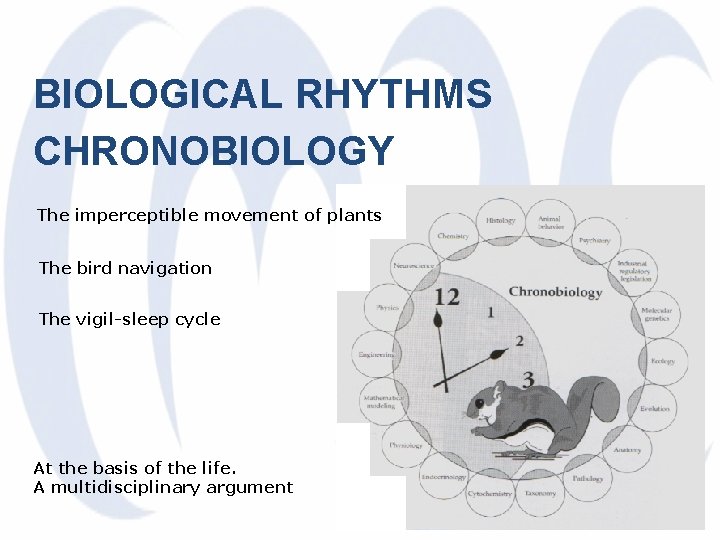
BIOLOGICAL RHYTHMS CHRONOBIOLOGY The imperceptible movement of plants The bird navigation The vigil-sleep cycle At the basis of the life. A multidisciplinary argument
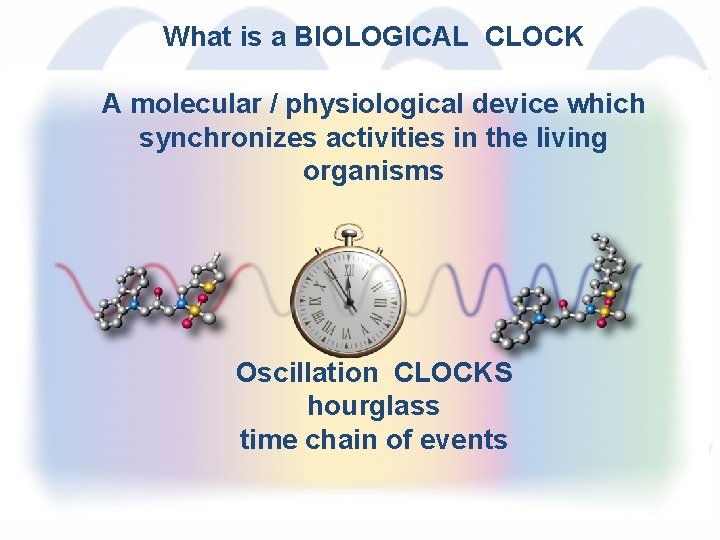
What is a BIOLOGICAL CLOCK A molecular / physiological device which synchronizes activities in the living organisms Oscillation CLOCKS hourglass time chain of events
BIOLOGICAL CLOCKS OSCILLATING CLOCKS autochthonous pacemaker (to measure time), generates and checks automatically the endogenous rhythms (infra-, circa-, ultra-diane) independently by environmental messages.
BIOLOGICAL CLOCKS HOURGLASSES measure time intervals, need environmental signals which periodically switch they on
BIOLOGICAL CLOCKS Oscillating Clocks Many have different oscillatory frequencies. They can be classified on the basis of the living organisms on the basis of • Environmental time scale (temperature compensated) • Biological time scale (not temperature compensated) Oscillating Clocks Hourglasses – they define a time span (e. g. embryo development, pregnancy, etc. ) Multiple clocks • Mixed oscillating/hourglass [some cellular functions] • Mixed periodicity (endogenous/exogenous)
INFRADIAN RHYTHMS YEAR, SEASON, MONTH, WEEK Germination : 1 year (plants) Lethargy : in Citellus lateralis of 324 -329 days Migrations : in Silvidae (Passeriformes) Menstruation 29. 57 days (moon cycle 29. 59 days)
CIRCADIAN RHYTHMS About 24 h Independent from external stimuli Free runners, when independent from environmental regulators Examples: Vigil-sleep cycle Body temperature cycle
ULTRADIAN RHYTHMS From unicellular organisms to mammalians, from physiological to cognitive processes Rhythmic phenomena independent from the circadian, with which they probably interact Periods of 1. 5 – 3 hours are very common They reflect an economy principle avoiding to spend energy continuously, with a rest – recharge cycle.
The spontaneous (locomotion) activity is a parameter useful for chronobiology studies. Each biological clock should have the following features: • Rhythm persistence • Period temperature – compensated • A mechanism conservative among species techniques used for the study of the circadian rhythms require a spectral analysis is required (e. g. , the Fourier Analysis)
MATHEMATIC – STATISTICAL ANALYSIS TO STUDY BIOLOGICAL RHYTHMS The Fourier analysis derives from the researches of Jean Baptiste Joseph Fourier (beginning of the XIX century), who demonstrated that each continuous function can be the result of a sum of infinite opportune sinusoidal functions. The series of simple functions which result from the decomposition of a complex function is called the Fourier Series
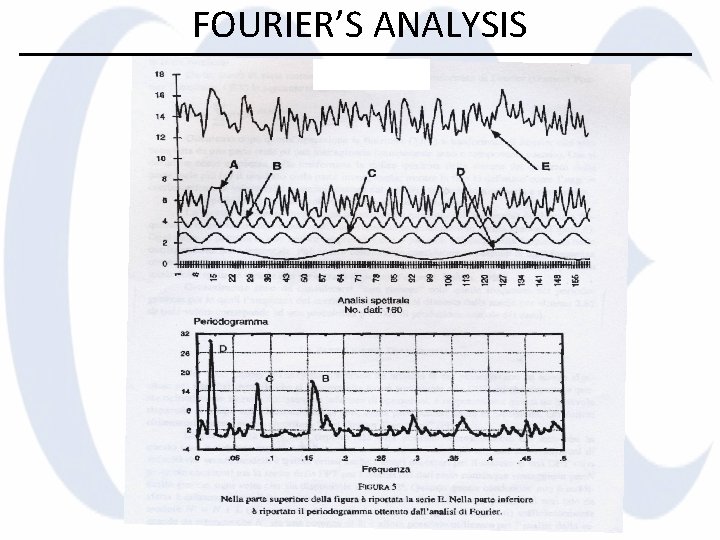
FOURIER’S ANALYSIS
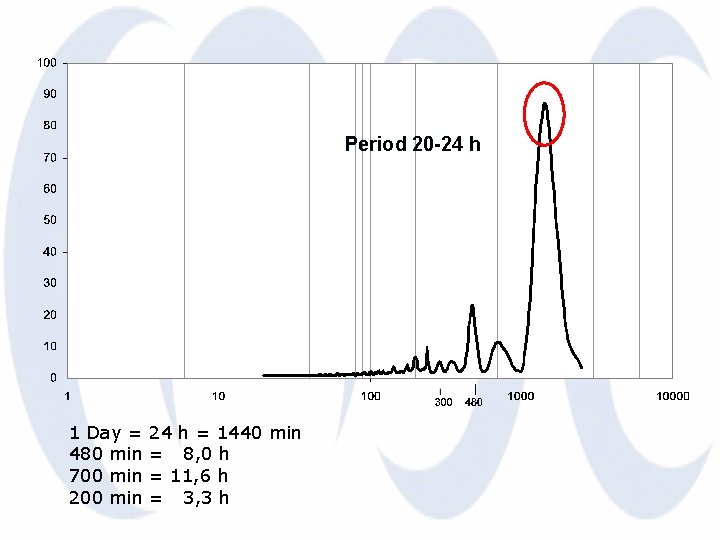
Period 20 -24 h 1 Day = 480 min 700 min 24 h = 1440 min = 8, 0 h = 11, 6 h = 3, 3 h
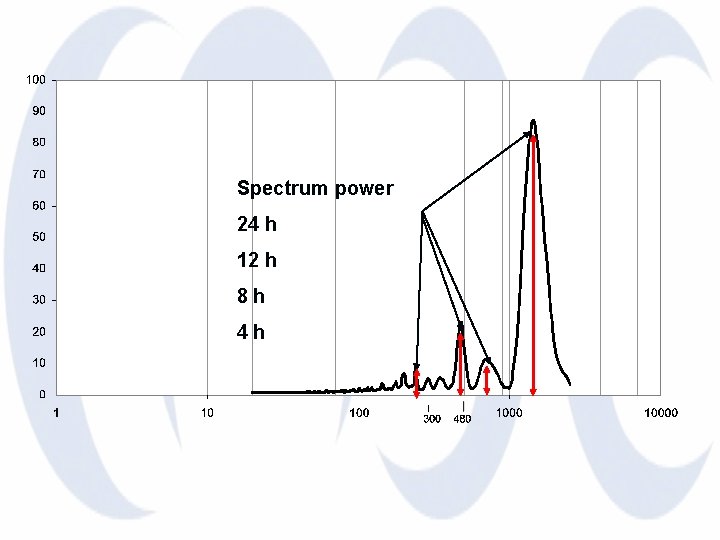
Spectrum power 24 h 12 h 8 h 4 h
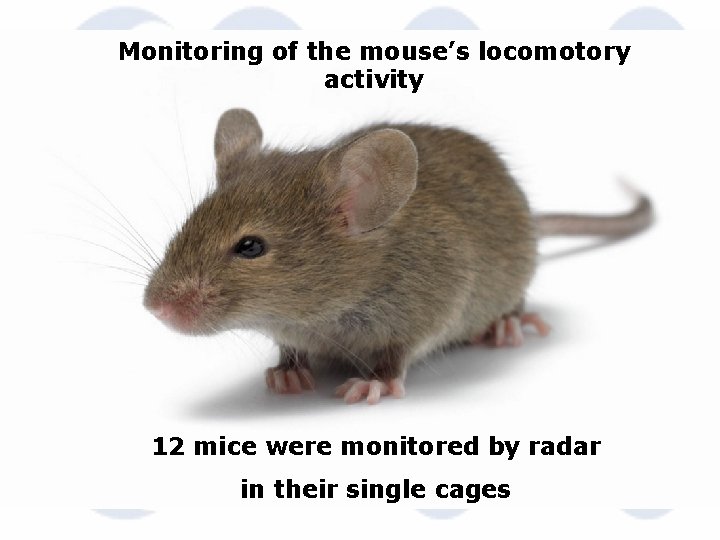
Monitoring of the mouse’s locomotory activity 12 mice were monitored by radar in their single cages
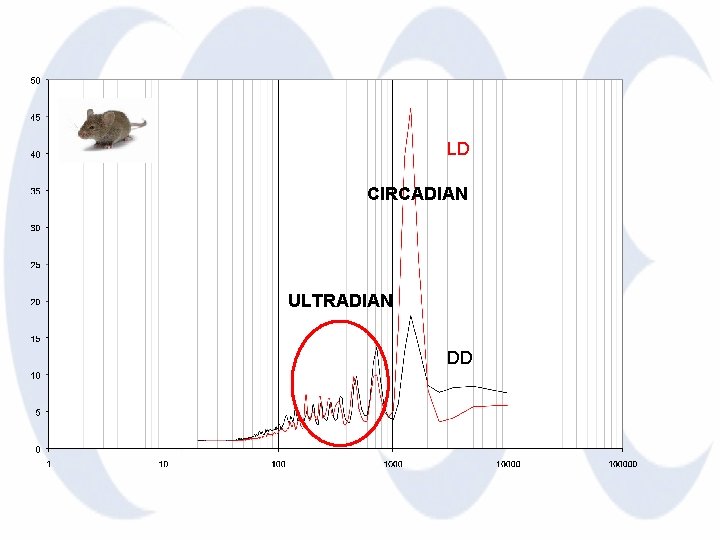
LD CIRCADIAN ULTRADIAN DD
__________________ A JUMP INTO THE DARK
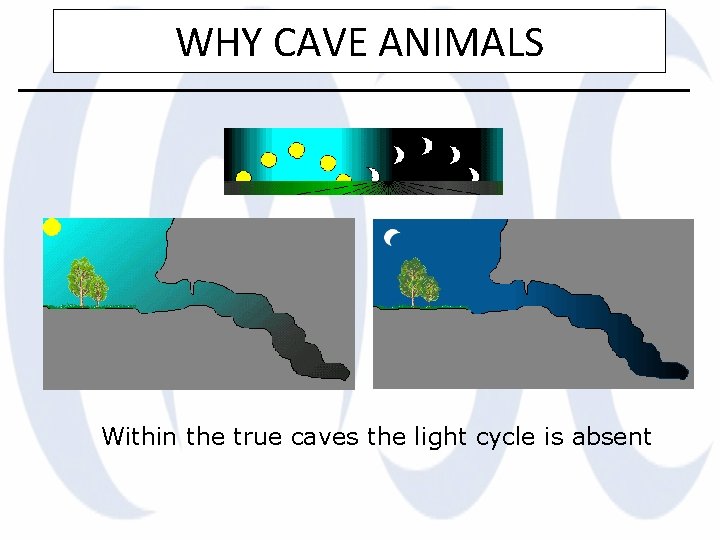
WHY CAVE ANIMALS Within the true caves the light cycle is absent
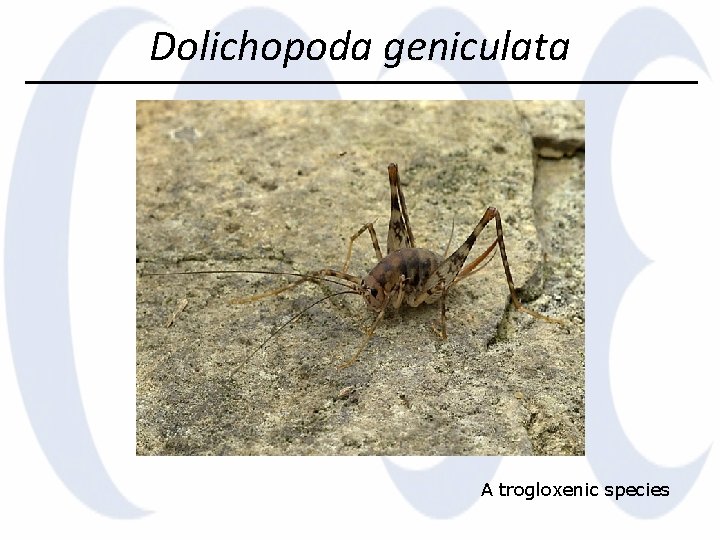
Dolichopoda geniculata A trogloxenic species
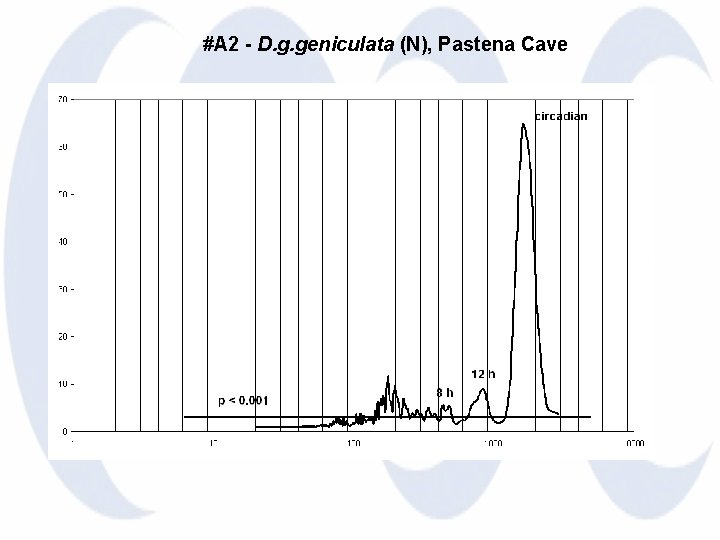
#A 2 - D. g. geniculata (N), Pastena Cave
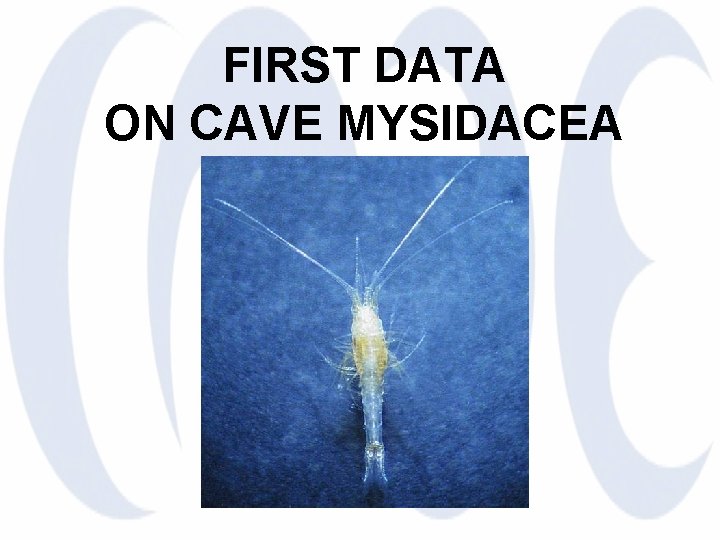
FIRST DATA ON CAVE MYSIDACEA
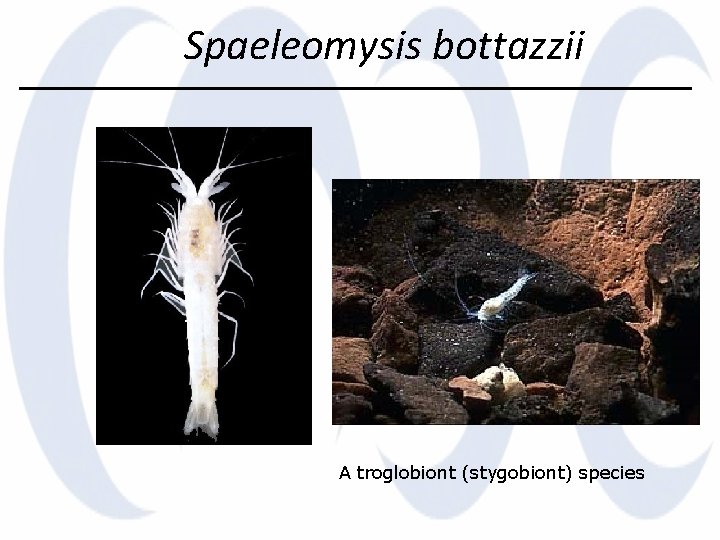
Spaeleomysis bottazzii A troglobiont (stygobiont) species
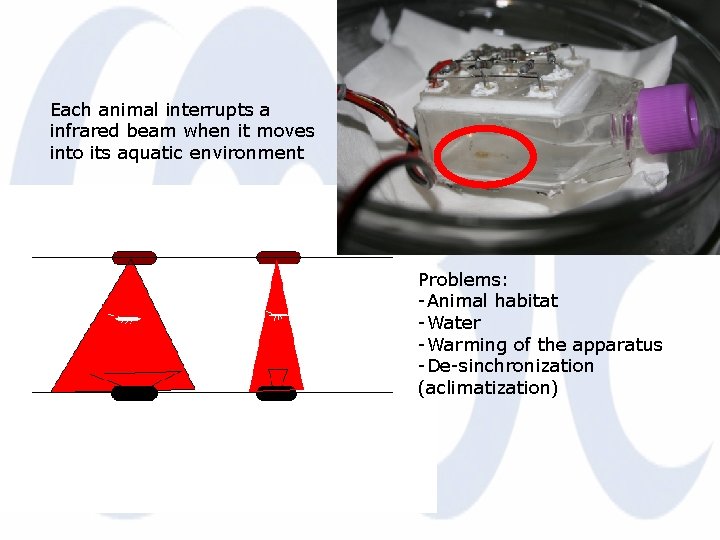
Each animal interrupts a infrared beam when it moves into its aquatic environment Problems: -Animal habitat -Water -Warming of the apparatus -De-sinchronization (aclimatization)
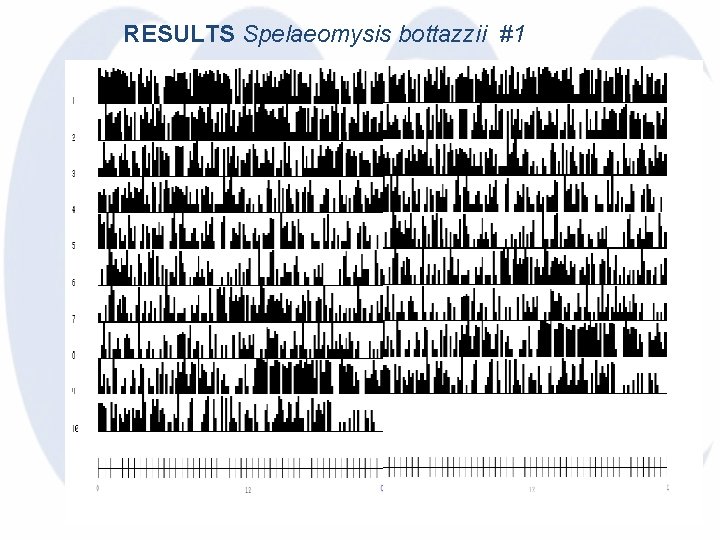
RESULTS Spelaeomysis bottazzii #1
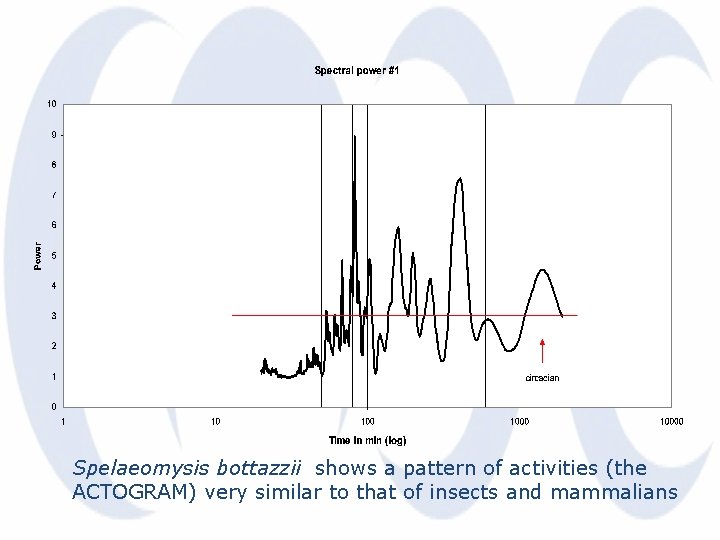
Spelaeomysis bottazzii shows a pattern of activities (the ACTOGRAM) very similar to that of insects and mammalians
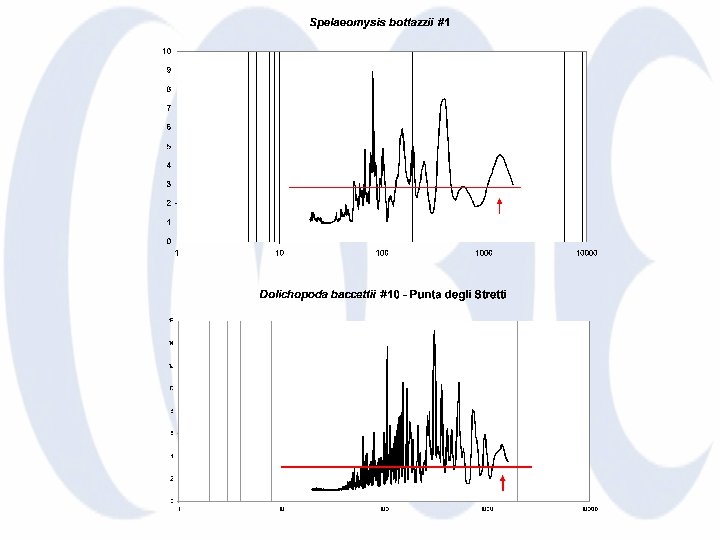
CONCLUSIONS • The circa-dian is not the only rhythm for the mobility activity of animals • The ultra-dian components do not depend from the circadian ones • The ultra-dian components are not regulated by photoperiod, but they show higher amplitudes when the circadian is isolated from any photoperiods • They are temperature compensated • They stay even in troglobionts (as mysidaceans)
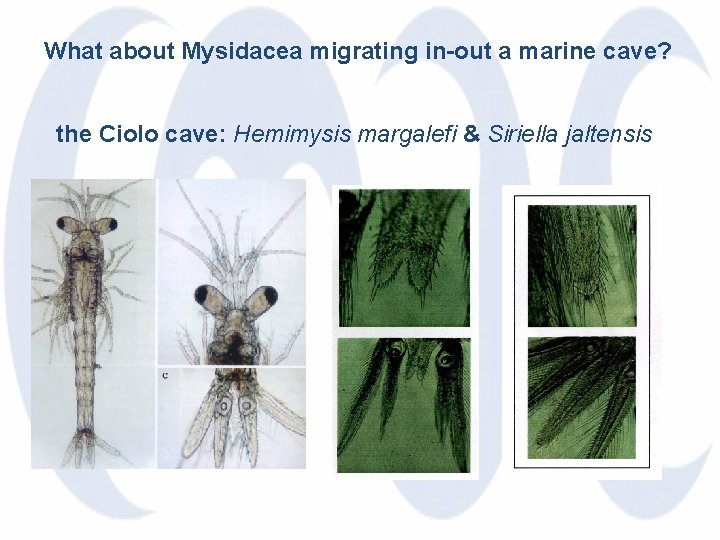
What about Mysidacea migrating in-out a marine cave? the Ciolo cave: Hemimysis margalefi & Siriella jaltensis
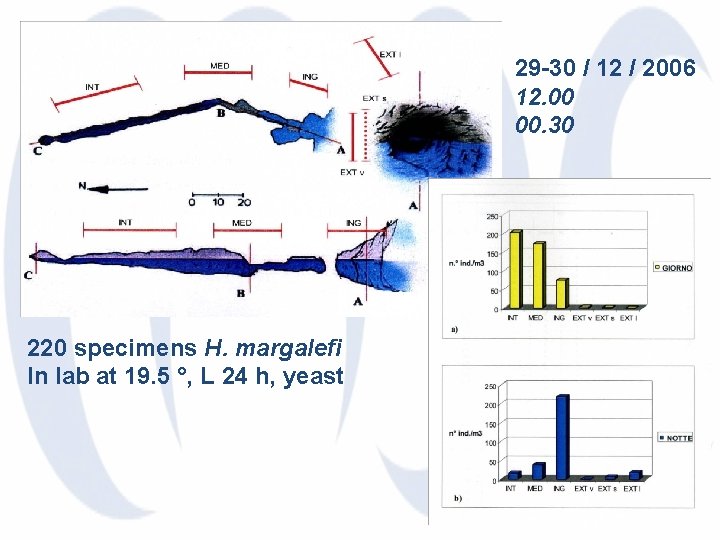
29 -30 / 12 / 2006 12. 00 00. 30 220 specimens H. margalefi In lab at 19. 5 °, L 24 h, yeast
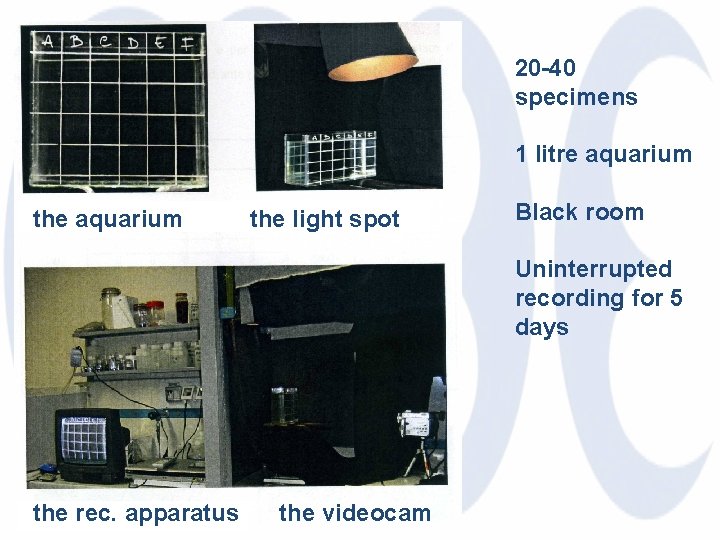
20 -40 specimens 1 litre aquarium the light spot Black room Uninterrupted recording for 5 days the rec. apparatus the videocam
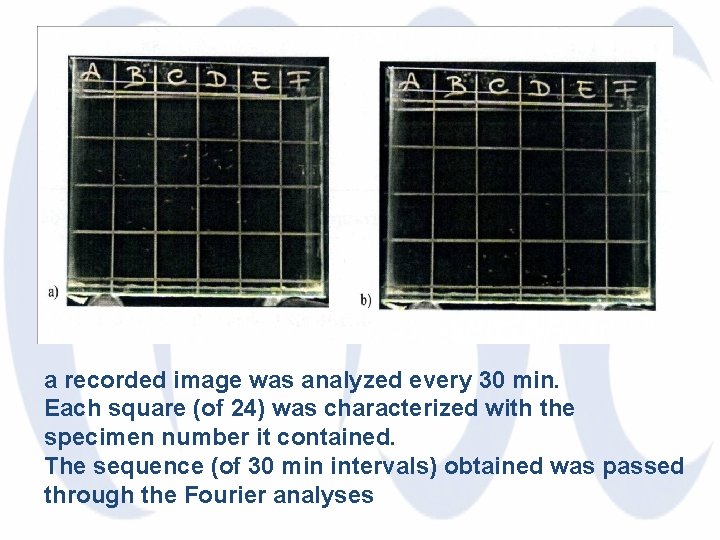
a recorded image was analyzed every 30 min. Each square (of 24) was characterized with the specimen number it contained. The sequence (of 30 min intervals) obtained was passed through the Fourier analyses
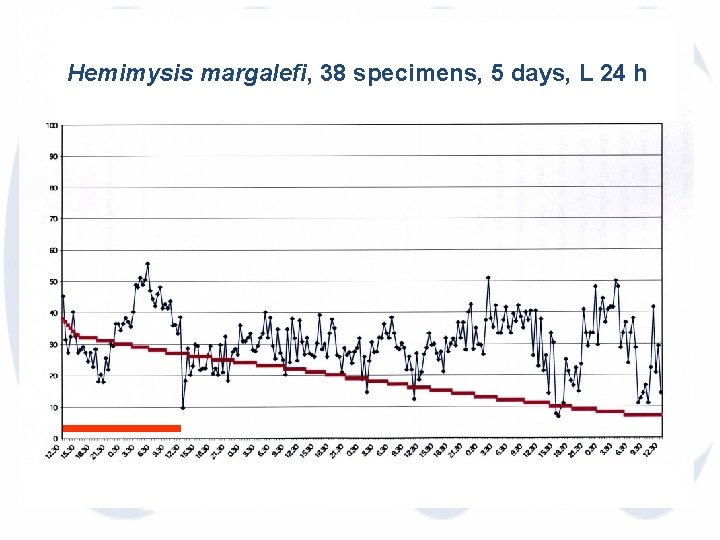
Hemimysis margalefi, 38 specimens, 5 days, L 24 h
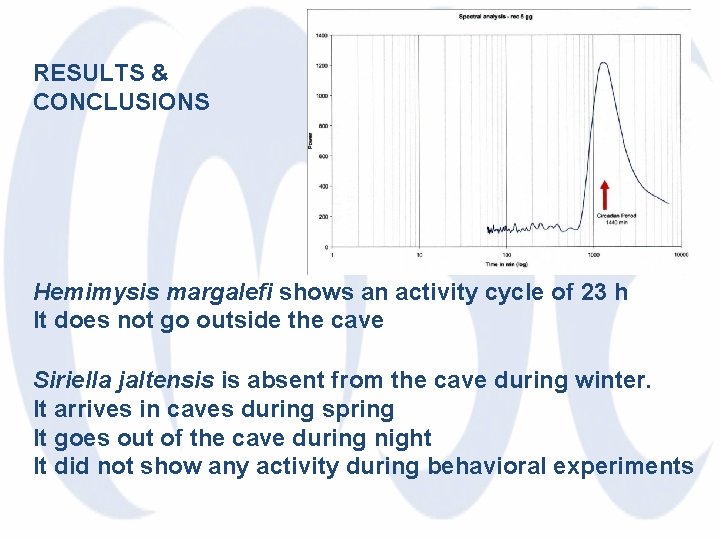
RESULTS & CONCLUSIONS Hemimysis margalefi shows an activity cycle of 23 h It does not go outside the cave Siriella jaltensis is absent from the cave during winter. It arrives in caves during spring It goes out of the cave during night It did not show any activity during behavioral experiments
- Slides: 32