
Biological Processes MAS S 62 FAB 2 242
Biological Processes MAS. S 62 FAB 2 24/2 = 12 How Biology Builds and … How to Build with Biology Outline: • Programming Biology • Hierarchy of Complexity • Building Biology • DNA Origami • Synthetic Organisms J. Jacobson jacobson@media. mit. edu
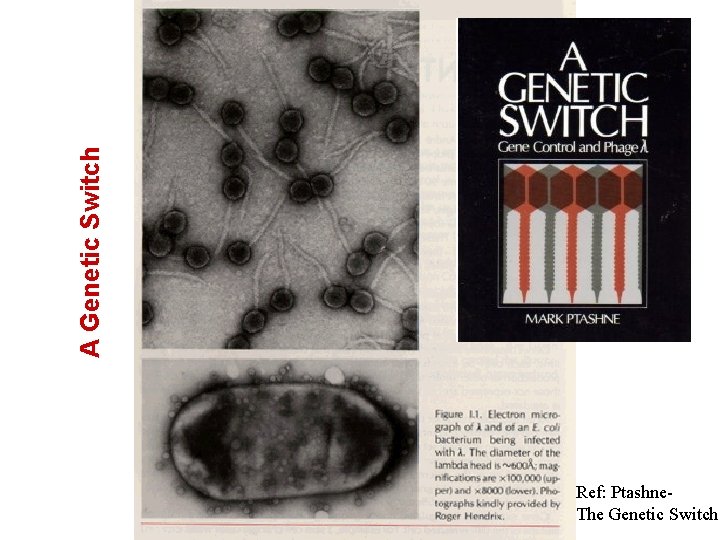
A Genetic Switch Ref: Ptashne. The Genetic Switch
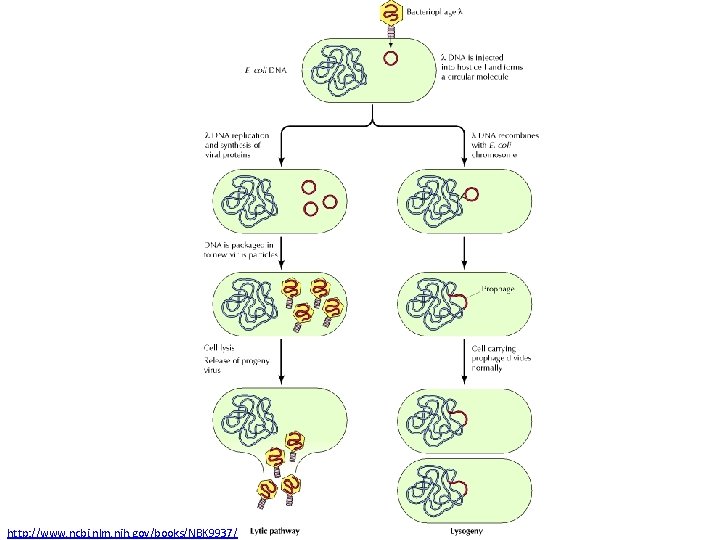
http: //www. ncbi. nlm. nih. gov/books/NBK 9937/
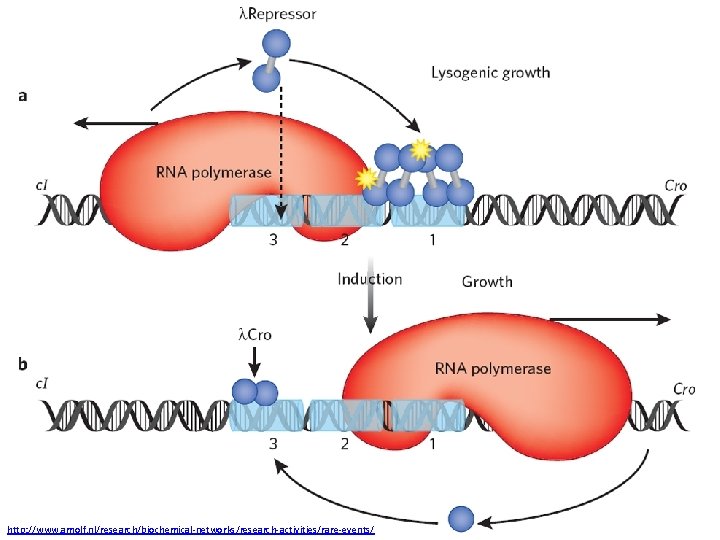
http: //www. amolf. nl/research/biochemical-networks/research-activities/rare-events/
Polymerase http: //www. youtube. com/watch? v=I 9 Ar. IJWYZHI
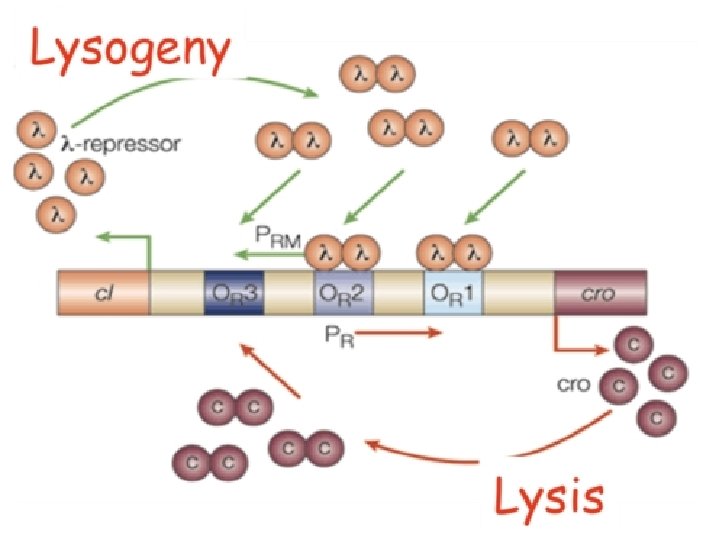
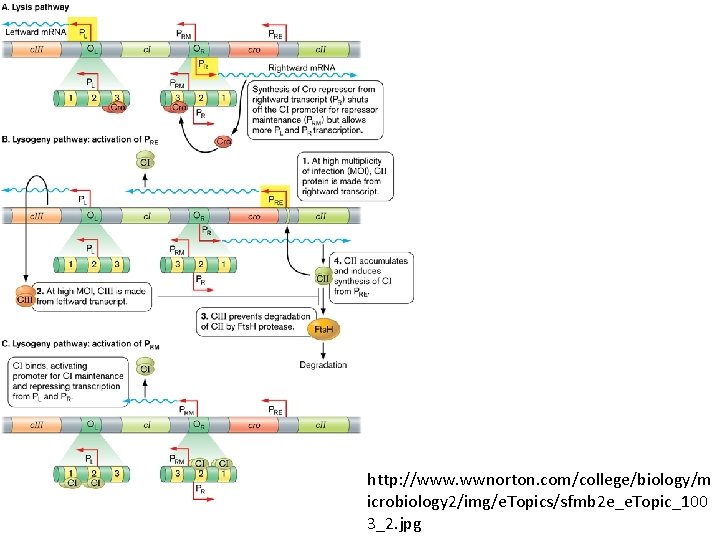
http: //www. wwnorton. com/college/biology/m icrobiology 2/img/e. Topics/sfmb 2 e_e. Topic_100 3_2. jpg
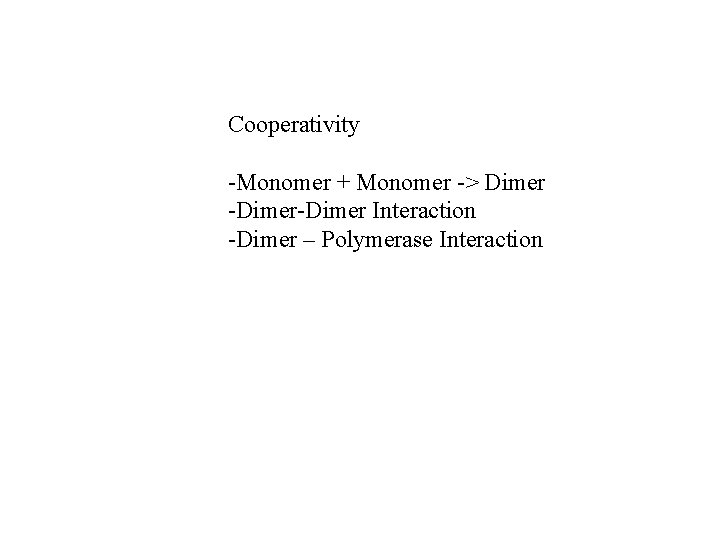
Cooperativity -Monomer + Monomer -> Dimer -Dimer Interaction -Dimer – Polymerase Interaction
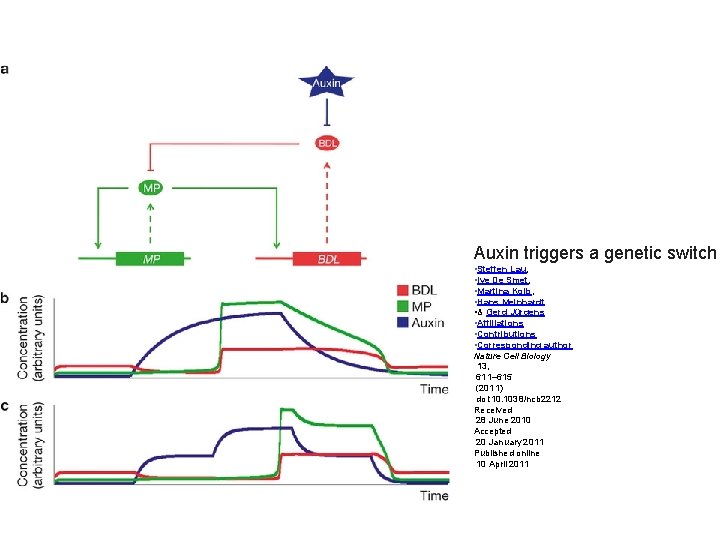
Auxin triggers a genetic switch • Steffen Lau, • Ive De Smet, • Martina Kolb, • Hans Meinhardt • & Gerd Jürgens • Affiliations • Contributions • Corresponding author Nature Cell Biology 13, 611– 615 (2011) doi: 10. 1038/ncb 2212 Received 28 June 2010 Accepted 20 January 2011 Published online 10 April 2011
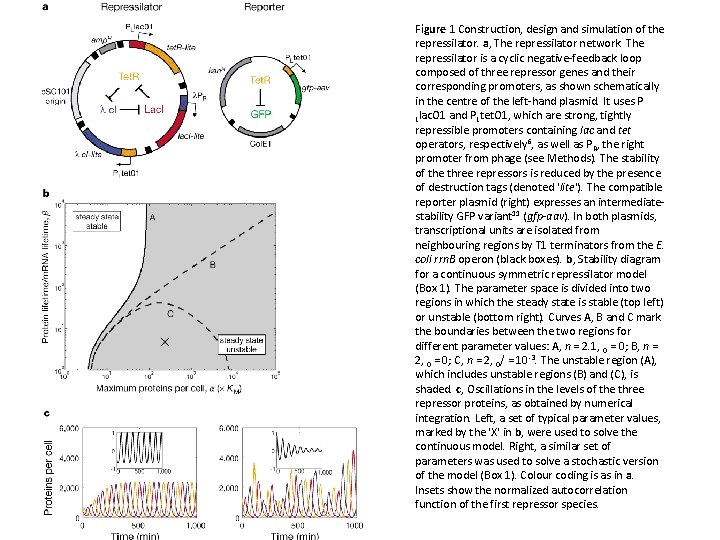
Figure 1 Construction, design and simulation of the repressilator. a, The repressilator network. The repressilator is a cyclic negative-feedback loop composed of three repressor genes and their corresponding promoters, as shown schematically in the centre of the left-hand plasmid. It uses P Llac. O 1 and PLtet. O 1, which are strong, tightly repressible promoters containing lac and tet operators, respectively 6, as well as P R, the right promoter from phage (see Methods). The stability of the three repressors is reduced by the presence of destruction tags (denoted 'lite'). The compatible reporter plasmid (right) expresses an intermediatestability GFP variant 11 (gfp-aav). In both plasmids, transcriptional units are isolated from neighbouring regions by T 1 terminators from the E. coli rrn. B operon (black boxes). b, Stability diagram for a continuous symmetric repressilator model (Box 1). The parameter space is divided into two regions in which the steady state is stable (top left) or unstable (bottom right). Curves A, B and C mark the boundaries between the two regions for different parameter values: A, n = 2. 1, 0 = 0; B, n = 2, 0 = 0; C, n = 2, 0/ = 10 -3. The unstable region (A), which includes unstable regions (B) and (C), is shaded. c, Oscillations in the levels of the three repressor proteins, as obtained by numerical integration. Left, a set of typical parameter values, marked by the 'X' in b, were used to solve the continuous model. Right, a similar set of parameters was used to solve a stochastic version of the model (Box 1). Colour coding is as in a. Insets show the normalized autocorrelation function of the first repressor species.
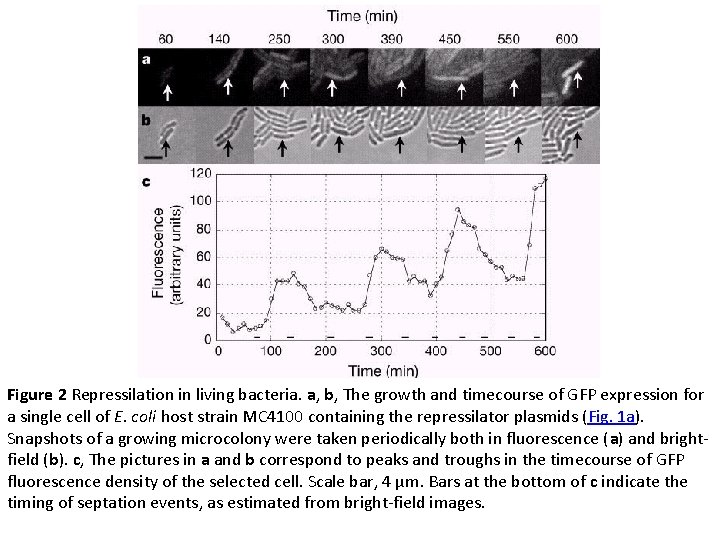
Figure 2 Repressilation in living bacteria. a, b, The growth and timecourse of GFP expression for a single cell of E. coli host strain MC 4100 containing the repressilator plasmids (Fig. 1 a). Snapshots of a growing microcolony were taken periodically both in fluorescence (a) and brightfield (b). c, The pictures in a and b correspond to peaks and troughs in the timecourse of GFP fluorescence density of the selected cell. Scale bar, 4 µm. Bars at the bottom of c indicate the timing of septation events, as estimated from bright-field images.
Bacterial Ring Oscillator http: //elowitz. caltech. edu/
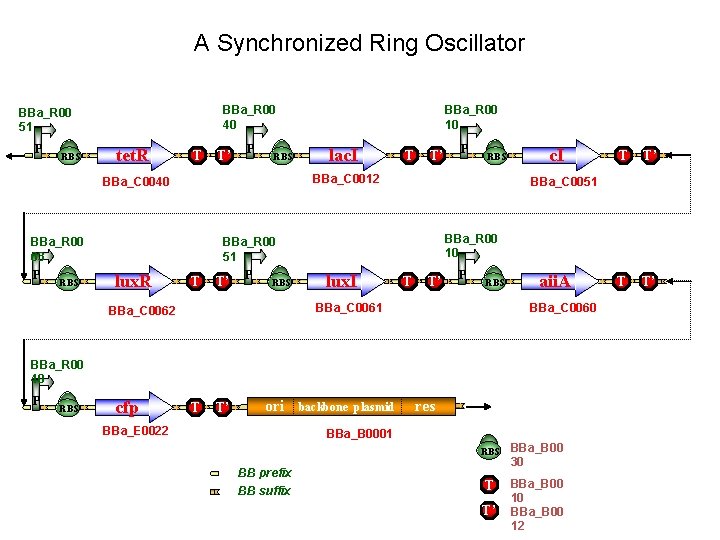
A Synchronized Ring Oscillator BBa_R 00 40 BBa_R 00 51 P RBS tet. R T T’ P RBS BBa_R 00 63 RBS lac. I T T’ RBS T T’ P RBS lux. I T T’ P RBS aii. A BBa_C 0060 BBa_R 00 40 P RBS cfp T T’ ori BBa_E 0022 backbone plasmid res BBa_B 0001 BB prefix BB suffix T T’ BBa_R 00 10 BBa_C 0061 BBa_C 0062 c. I BBa_C 0051 BBa_R 00 51 lux. R P BBa_C 0012 BBa_C 0040 P BBa_R 00 10 RBS BBa_B 00 30 T BBa_B 00 10 BBa_B 00 12 T’
Hasty Group – UCSD Synchronized Repressilator http: //vimeo. com/23292033
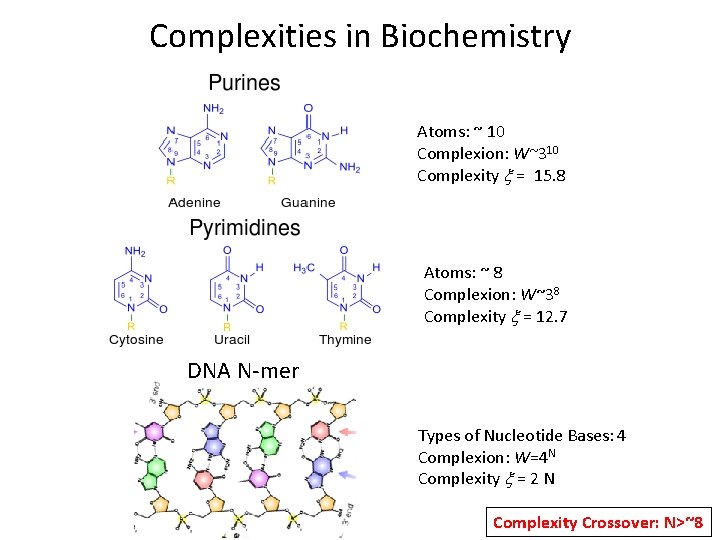
Complexities in Biochemistry Atoms: ~ 10 Complexion: W~310 Complexity x = 15. 8 Atoms: ~ 8 Complexion: W~38 Complexity x = 12. 7 DNA N-mer Types of Nucleotide Bases: 4 Complexion: W=4 N Complexity x = 2 N Complexity Crossover: N>~8
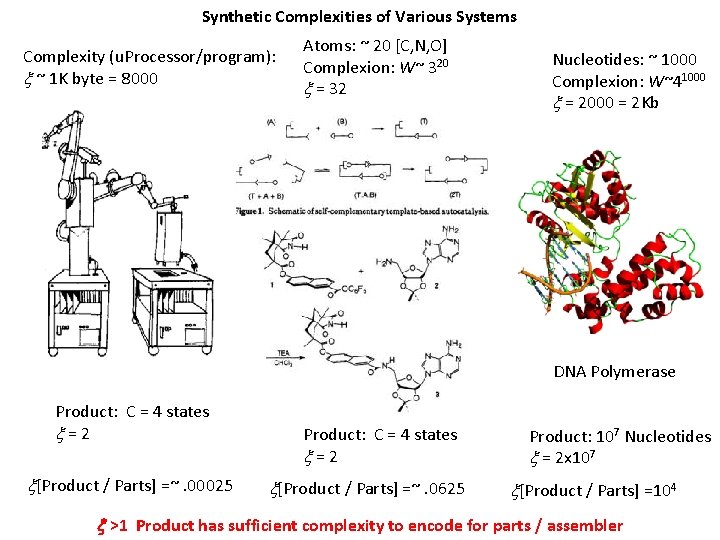
Synthetic Complexities of Various Systems Complexity (u. Processor/program): x ~ 1 K byte = 8000 Atoms: ~ 20 [C, N, O] Complexion: W~ 320 x = 32 Nucleotides: ~ 1000 Complexion: W~41000 x = 2000 = 2 Kb DNA Polymerase Product: C = 4 states x = 2 x[Product / Parts] =~. 00025 Product: C = 4 states x = 2 x[Product / Parts] =~. 0625 Product: 107 Nucleotides x = 2 x 10⁷ x[Product / Parts] =104 x >1 Product has sufficient complexity to encode for parts / assembler
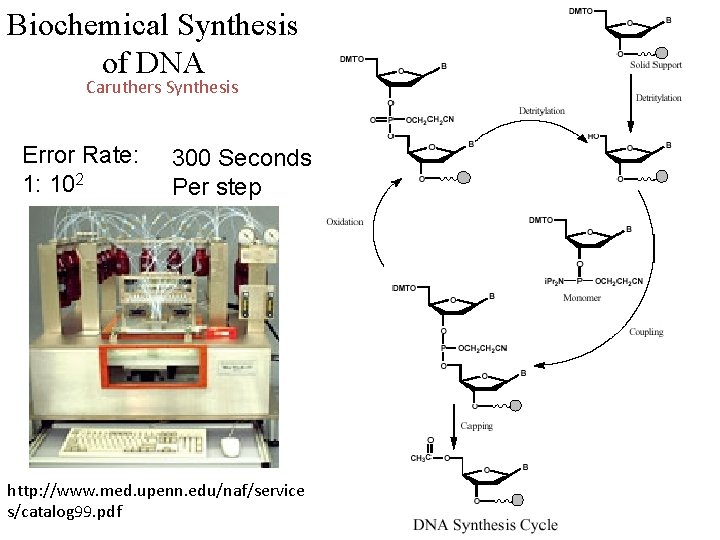
Biochemical Synthesis of DNA Caruthers Synthesis Error Rate: 1: 102 300 Seconds Per step http: //www. med. upenn. edu/naf/service s/catalog 99. pdf
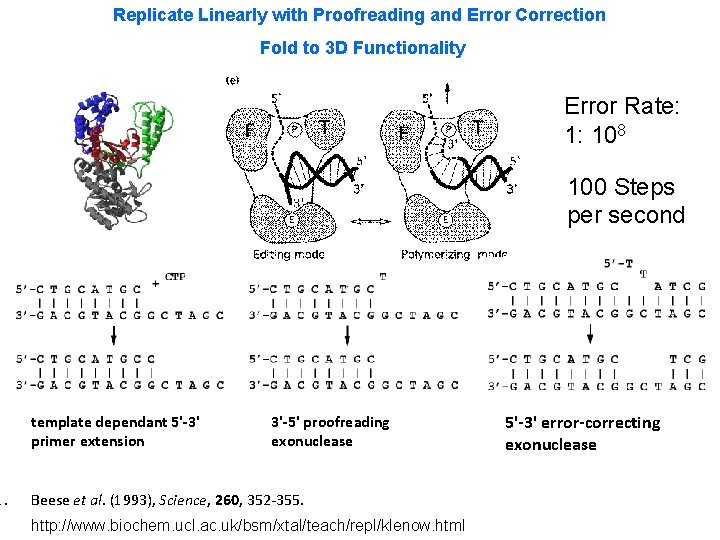
1. Replicate Linearly with Proofreading and Error Correction Fold to 3 D Functionality Error Rate: 1: 108 100 Steps per second template dependant 5'-3' primer extension 3'-5' proofreading exonuclease Beese et al. (1993), Science, 260, 352 -355. http: //www. biochem. ucl. ac. uk/bsm/xtal/teach/repl/klenow. html 5'-3' error-correcting exonuclease
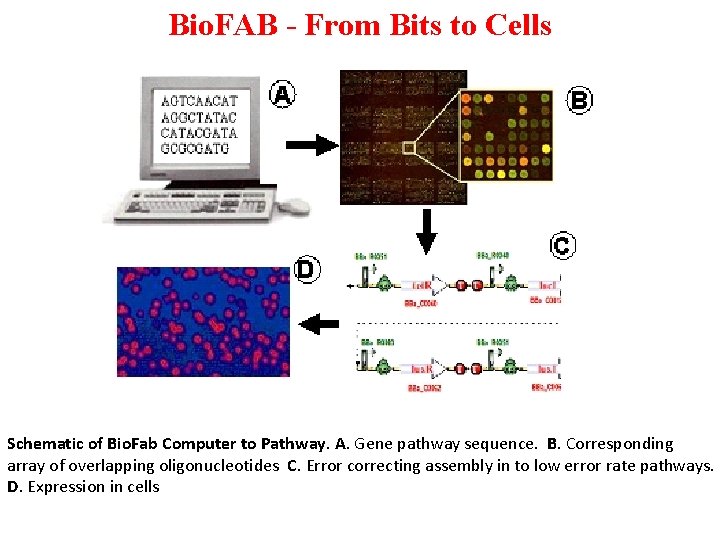
Bio. FAB - From Bits to Cells Schematic of Bio. Fab Computer to Pathway. A. Gene pathway sequence. B. Corresponding array of overlapping oligonucleotides C. Error correcting assembly in to low error rate pathways. D. Expression in cells
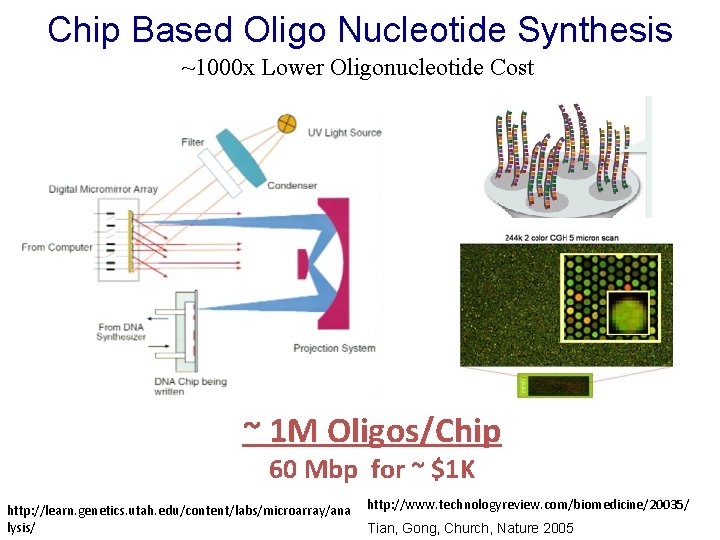
Chip Based Oligo Nucleotide Synthesis ~1000 x Lower Oligonucleotide Cost ~ 1 M Oligos/Chip 60 Mbp for ~ $1 K http: //learn. genetics. utah. edu/content/labs/microarray/ana lysis/ http: //www. technologyreview. com/biomedicine/20035/ Tian, Gong, Church, Nature 2005
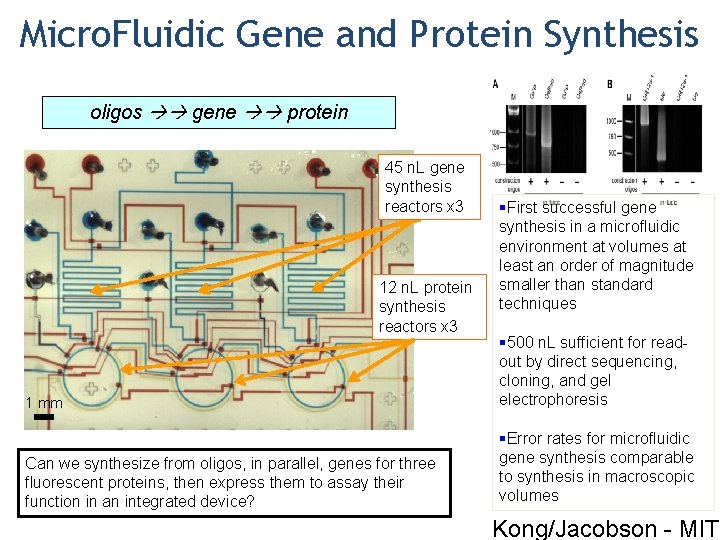
Micro. Fluidic Gene and Protein Synthesis oligos gene protein 45 n. L gene synthesis reactors x 3 12 n. L protein synthesis reactors x 3 §First successful gene synthesis in a microfluidic environment at volumes at least an order of magnitude smaller than standard techniques 1 mm § 500 n. L sufficient for readout by direct sequencing, cloning, and gel electrophoresis Can we synthesize from oligos, in parallel, genes for three fluorescent proteins, then express them to assay their function in an integrated device? §Error rates for microfluidic gene synthesis comparable to synthesis in macroscopic volumes Kong/Jacobson - MIT
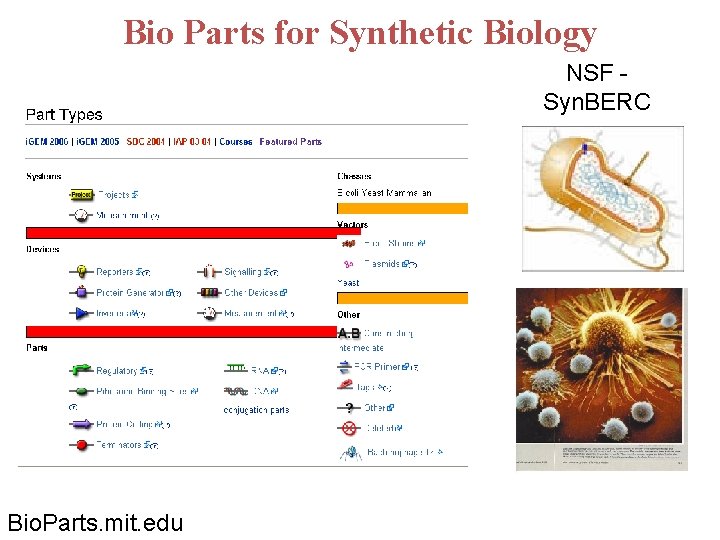
Bio Parts for Synthetic Biology NSF - Syn. BERC Bio. Parts. mit. edu
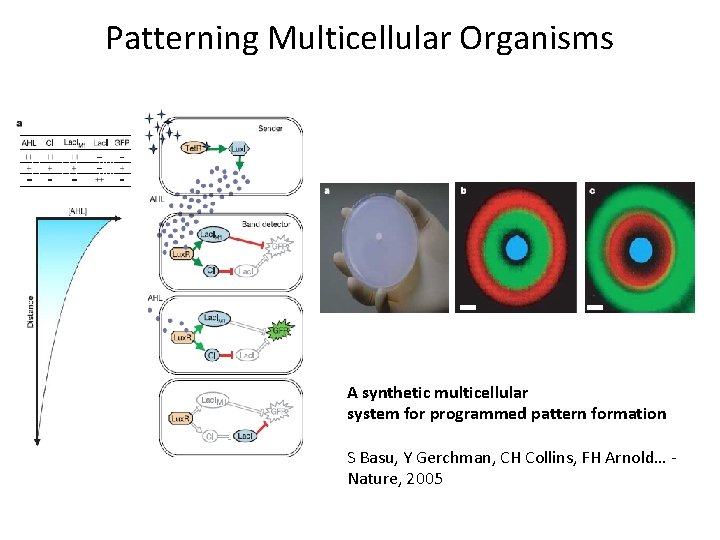
Patterning Multicellular Organisms A synthetic multicellular system for programmed pattern formation S Basu, Y Gerchman, CH Collins, FH Arnold… - Nature, 2005
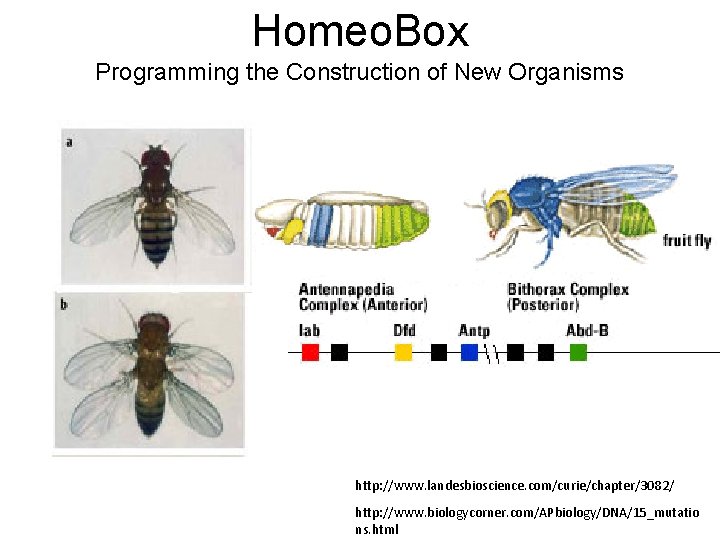
Homeo. Box Programming the Construction of New Organisms http: //www. landesbioscience. com/curie/chapter/3082/ http: //www. biologycorner. com/APbiology/DNA/15_mutatio ns. html
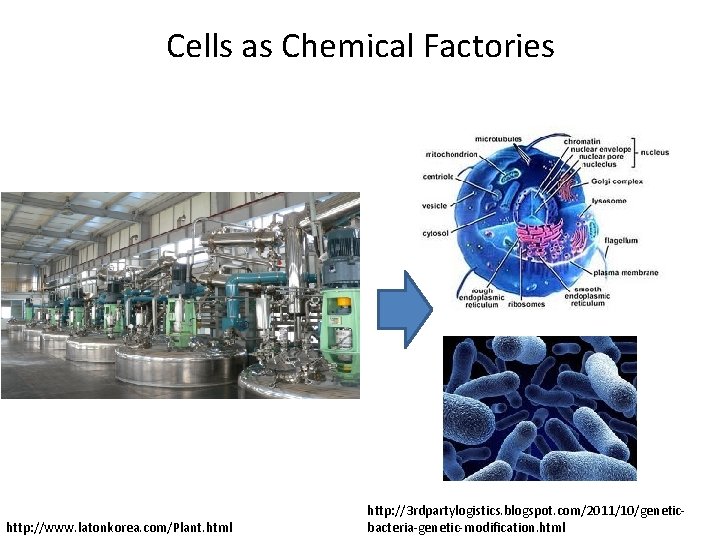
Cells as Chemical Factories http: //www. latonkorea. com/Plant. html http: //3 rdpartylogistics. blogspot. com/2011/10/geneticbacteria-genetic-modification. html
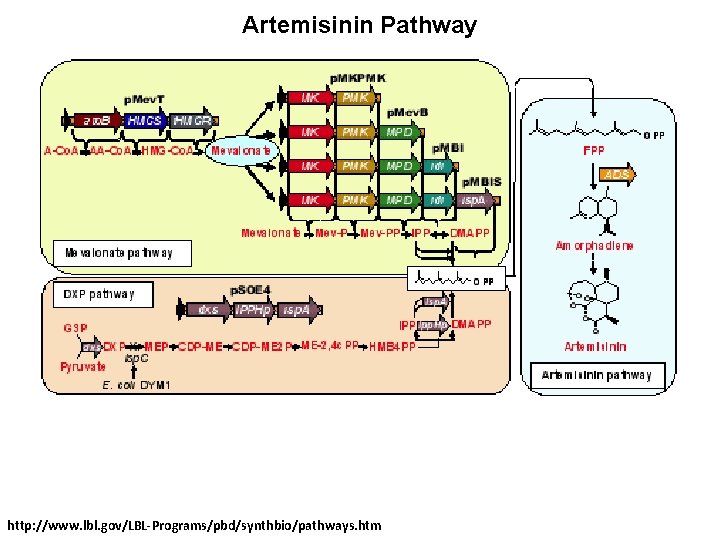
Artemisinin Pathway http: //www. lbl. gov/LBL-Programs/pbd/synthbio/pathways. htm
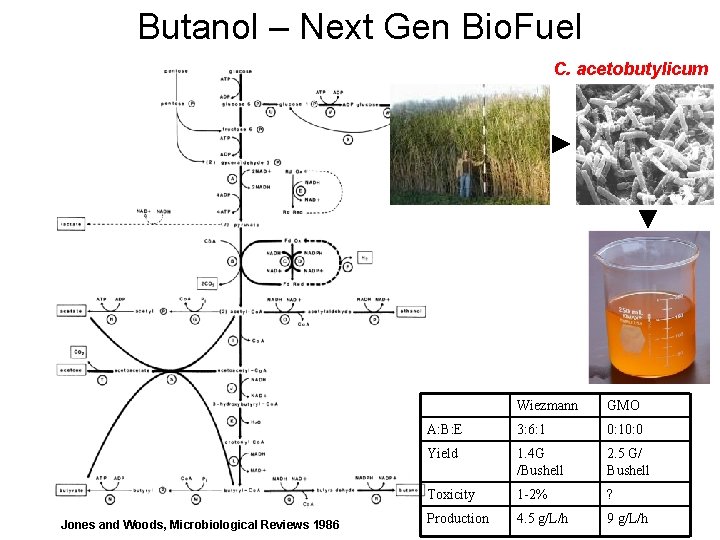
Butanol – Next Gen Bio. Fuel C. acetobutylicum Jones and Woods, Microbiological Reviews 1986 Wiezmann GMO A: B: E 3: 6: 1 0: 10: 0 Yield 1. 4 G /Bushell 2. 5 G/ Bushell Toxicity 1 -2% ? Production 4. 5 g/L/h 9 g/L/h
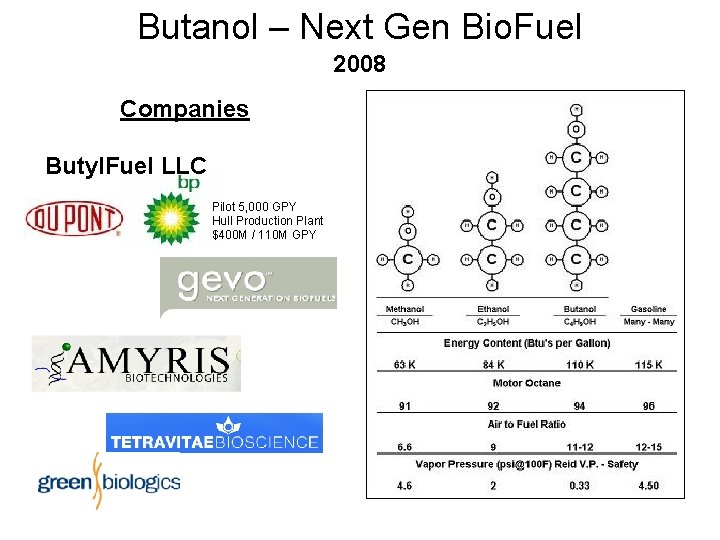
Butanol – Next Gen Bio. Fuel 2008 Companies Butyl. Fuel LLC Pilot 5, 000 GPY Hull Production Plant $400 M / 110 M GPY
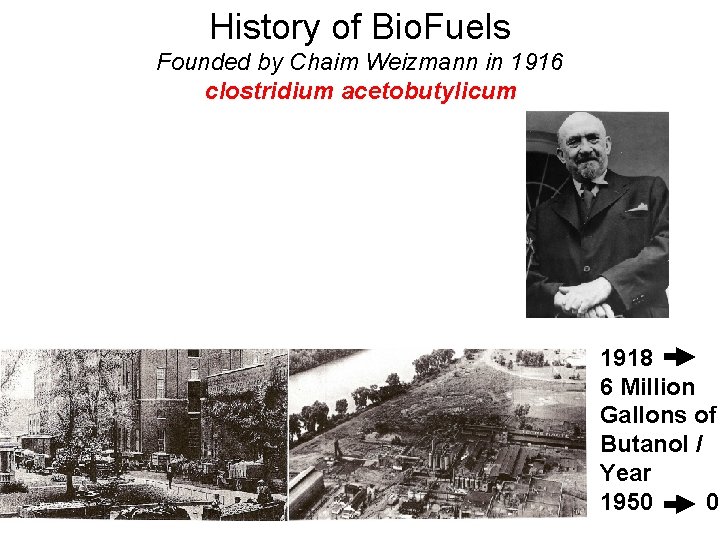
History of Bio. Fuels Founded by Chaim Weizmann in 1916 clostridium acetobutylicum 1918 6 Million Gallons of Butanol / Year 1950 0
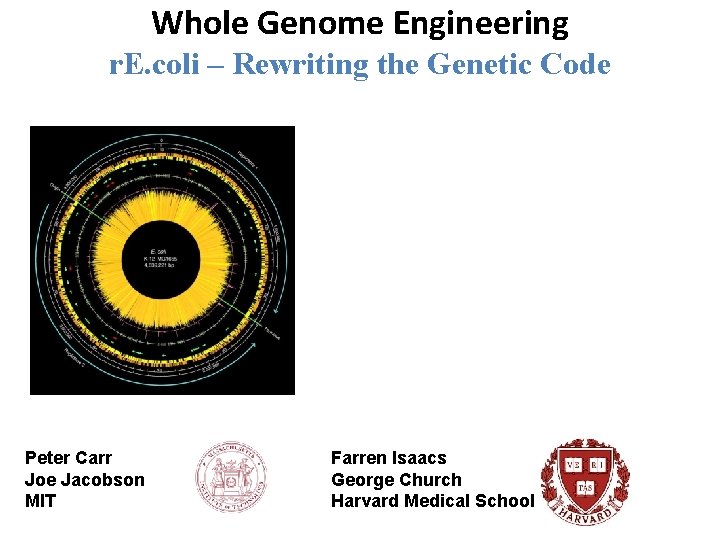
Whole Genome Engineering r. E. coli – Rewriting the Genetic Code Peter Carr Joe Jacobson MIT Farren Isaacs George Church Harvard Medical School
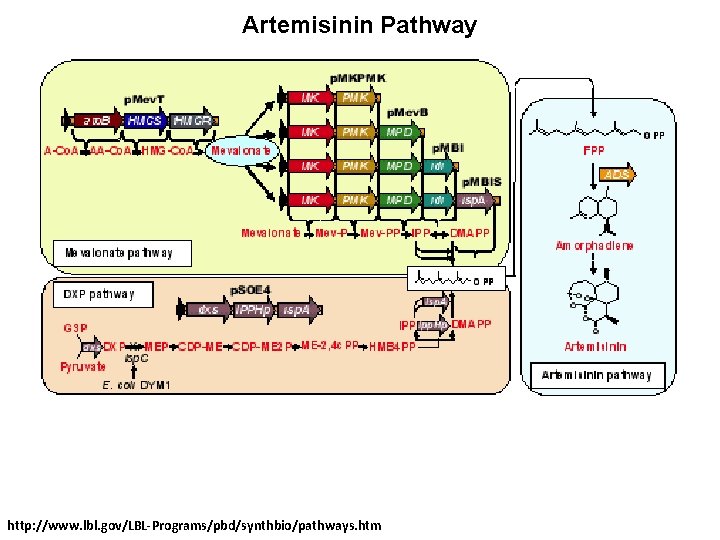
Artemisinin Pathway http: //www. lbl. gov/LBL-Programs/pbd/synthbio/pathways. htm
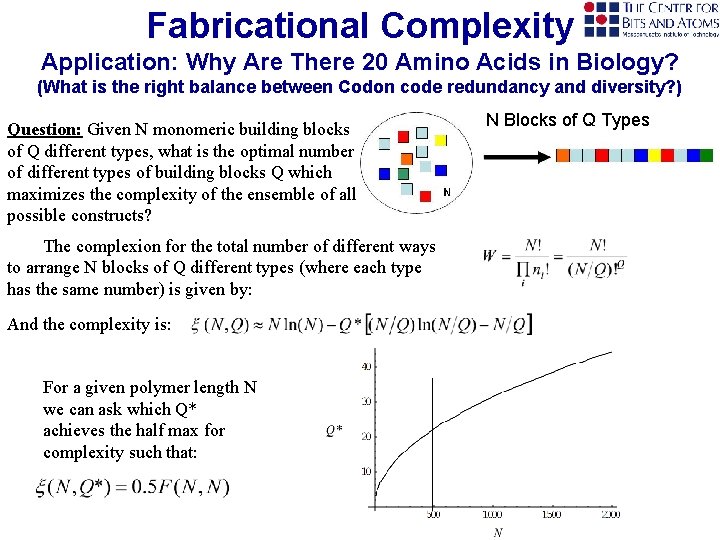
Fabricational Complexity Application: Why Are There 20 Amino Acids in Biology? (What is the right balance between Codon code redundancy and diversity? ) Question: Given N monomeric building blocks of Q different types, what is the optimal number of different types of building blocks Q which maximizes the complexity of the ensemble of all possible constructs? The complexion for the total number of different ways to arrange N blocks of Q different types (where each type. has the same number) is given by: And the complexity is: For a given polymer length N we can ask which Q* achieves the half max for complexity such that: N Blocks of Q Types
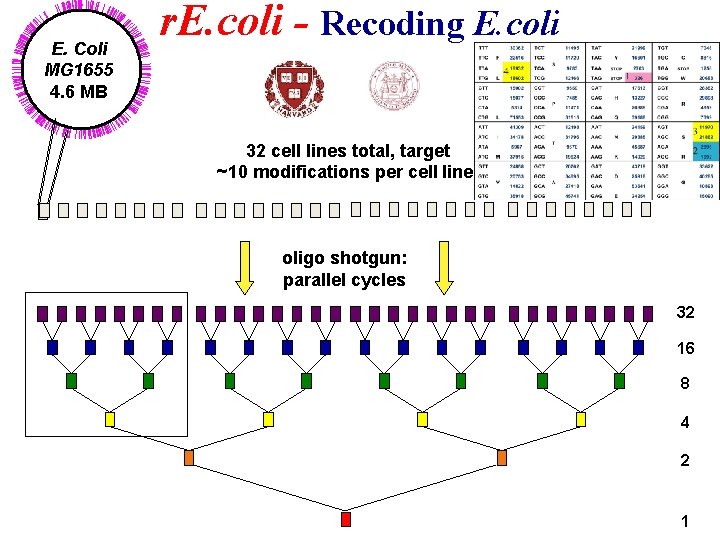
E. Coli MG 1655 4. 6 MB r. E. coli - Recoding E. coli 32 cell lines total, target ~10 modifications per cell line oligo shotgun: parallel cycles 32 16 8 4 2 1
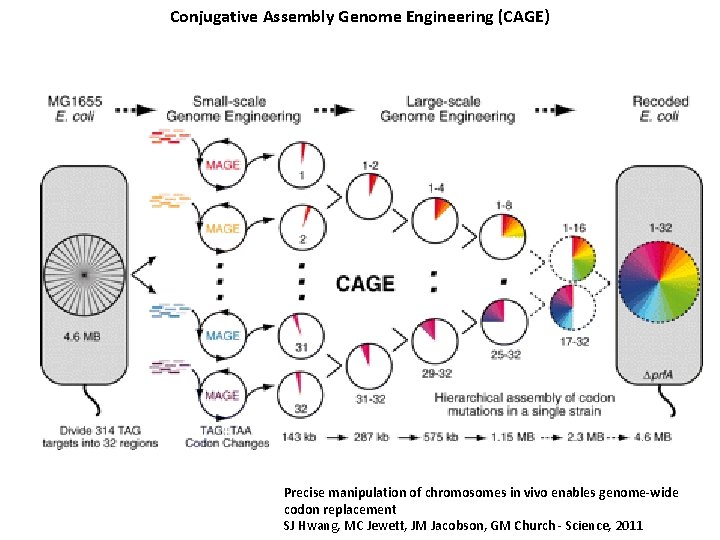
Conjugative Assembly Genome Engineering (CAGE) Precise manipulation of chromosomes in vivo enables genome-wide codon replacement SJ Hwang, MC Jewett, JM Jacobson, GM Church - Science, 2011
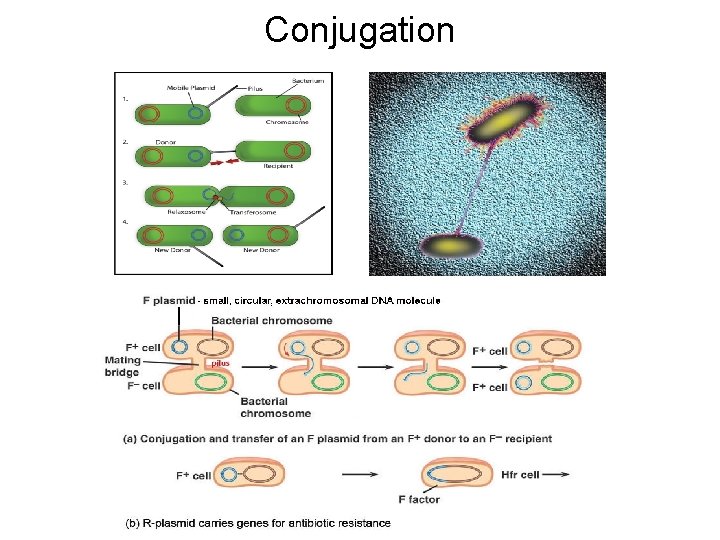
Conjugation
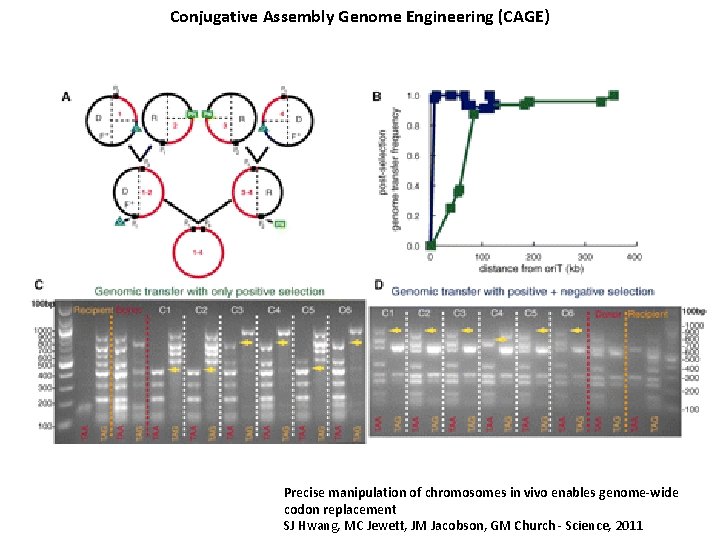
Conjugative Assembly Genome Engineering (CAGE) Precise manipulation of chromosomes in vivo enables genome-wide codon replacement SJ Hwang, MC Jewett, JM Jacobson, GM Church - Science, 2011
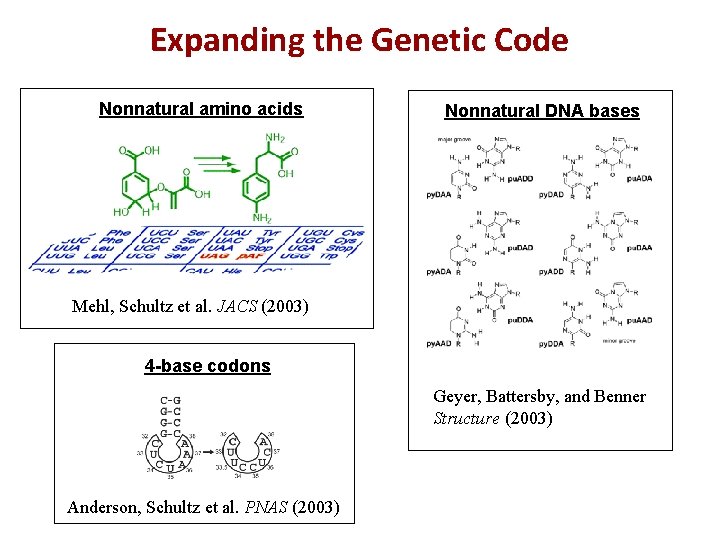
Expanding the Genetic Code Nonnatural amino acids Nonnatural DNA bases Mehl, Schultz et al. JACS (2003) 4 -base codons Geyer, Battersby, and Benner Structure (2003) Anderson, Schultz et al. PNAS (2003)
![Approach 1 b] Redundant Genomes Deinococcus radiodurans (3. 2 Mb, 4 -10 Copies of](http://slidetodoc.com/presentation_image/129dbb1ffadb85d00fded9617e204882/image-39.jpg "Approach 1 b] Redundant Genomes Deinococcus radiodurans (3. 2 Mb, 4 -10 Copies of")
Approach 1 b] Redundant Genomes Deinococcus radiodurans (3. 2 Mb, 4 -10 Copies of Genome ) [Nature Biotechnology 18, 85 -90 (January 2000)] D. radiodurans: E. coli: Uniformed Services University of the Health 1. 7 Million Rads (17 k. Gy) – 200 DS breaks 25 Thousand Rads – 2 or 3 DS breaks http: //www. ornl. gov/hgmis/publicat/microbial/image 3. html
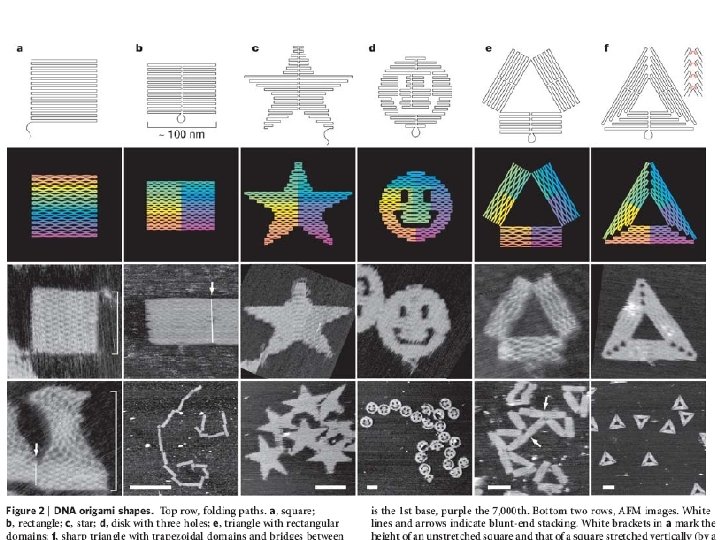
DNA ORIGAMI
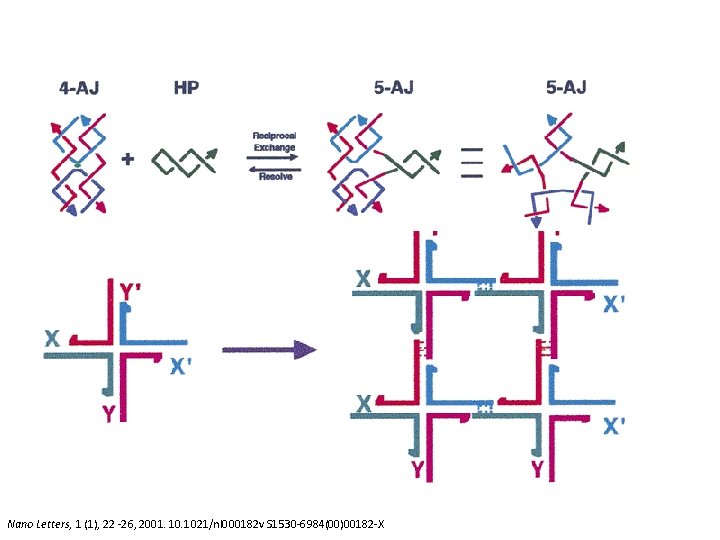
Holliday Junctions Nano Letters, 1 (1), 22 -26, 2001. 1021/nl 000182 v S 1530 -6984(00)00182 -X
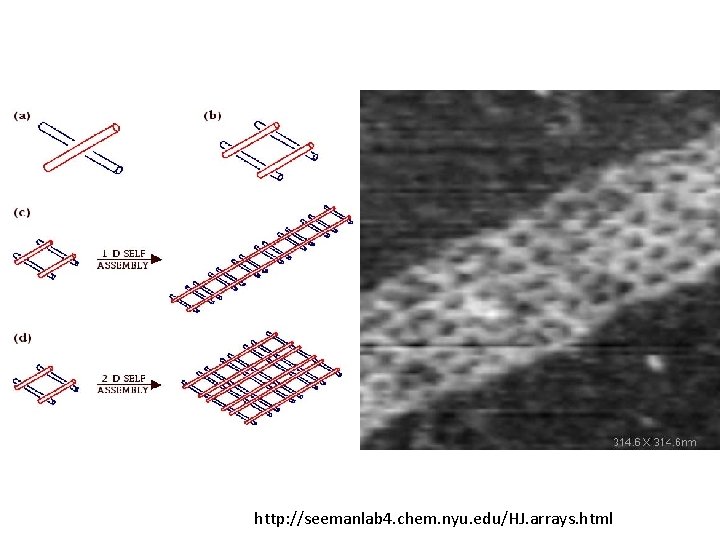
Holliday Junctions http: //seemanlab 4. chem. nyu. edu/HJ. arrays. html
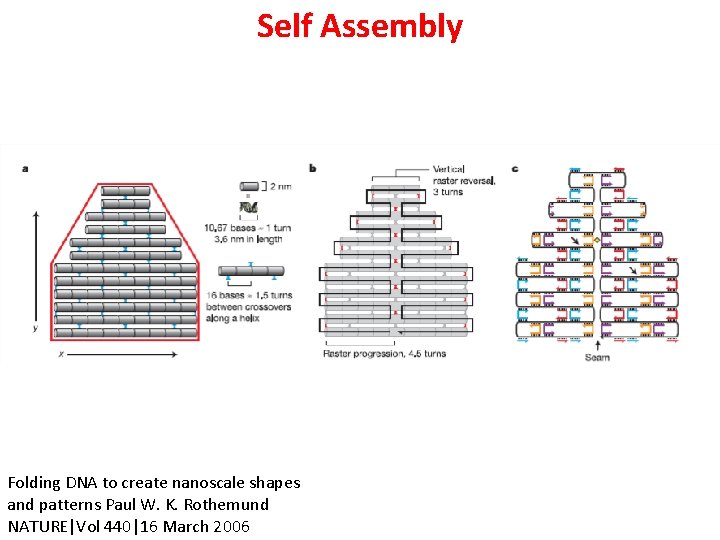
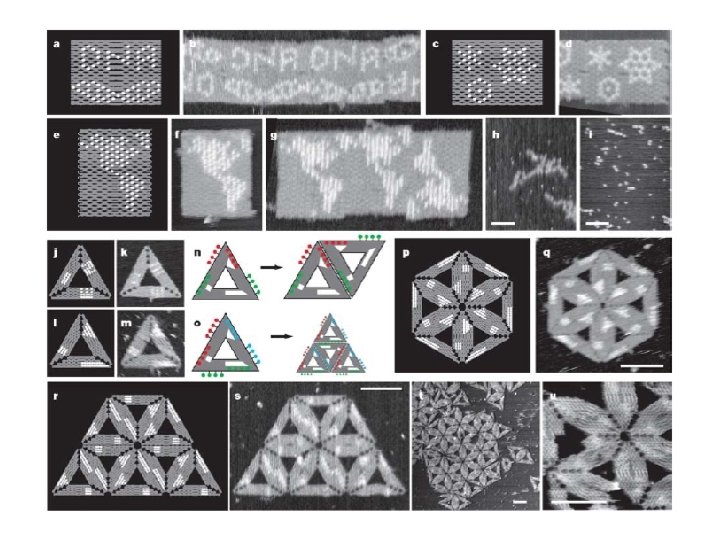
Self Assembly Folding DNA to create nanoscale shapes and patterns Paul W. K. Rothemund NATURE|Vol 440|16 March 2006
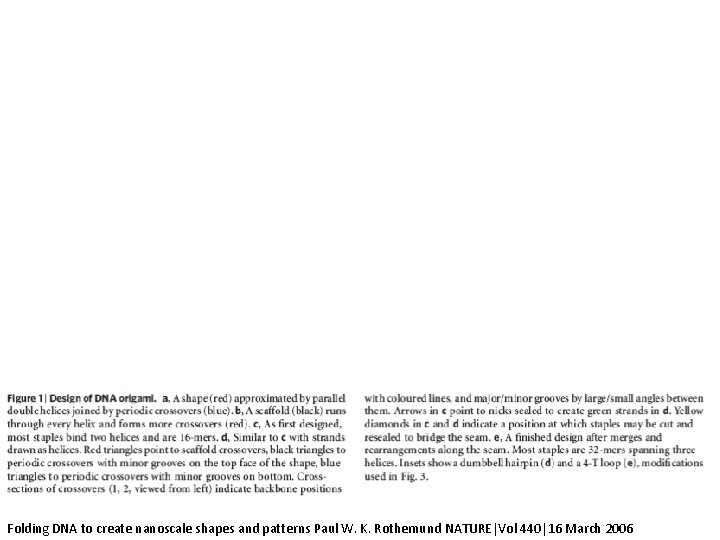
Folding DNA to create nanoscale shapes and patterns Paul W. K. Rothemund NATURE|Vol 440|16 March 2006
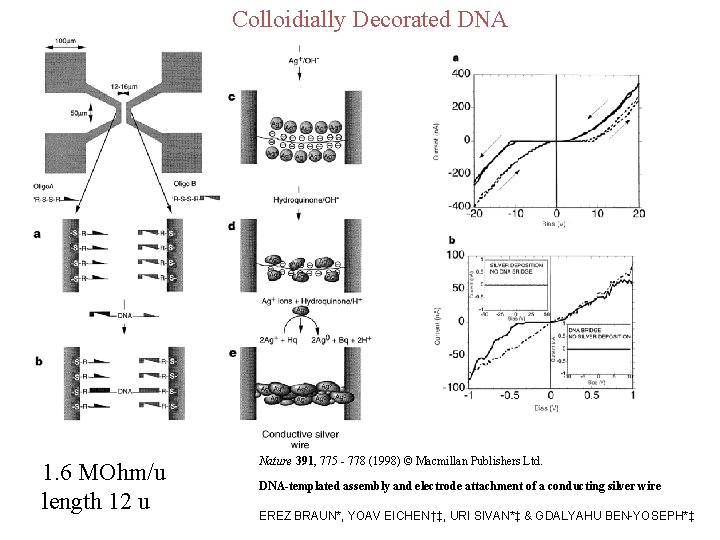
Colloidially Decorated DNA 1. 6 MOhm/u length 12 u Nature 391, 775 - 778 (1998) © Macmillan Publishers Ltd. DNA-templated assembly and electrode attachment of a conducting silver wire EREZ BRAUN*, YOAV EICHEN†‡, URI SIVAN*‡ & GDALYAHU BEN-YOSEPH*‡
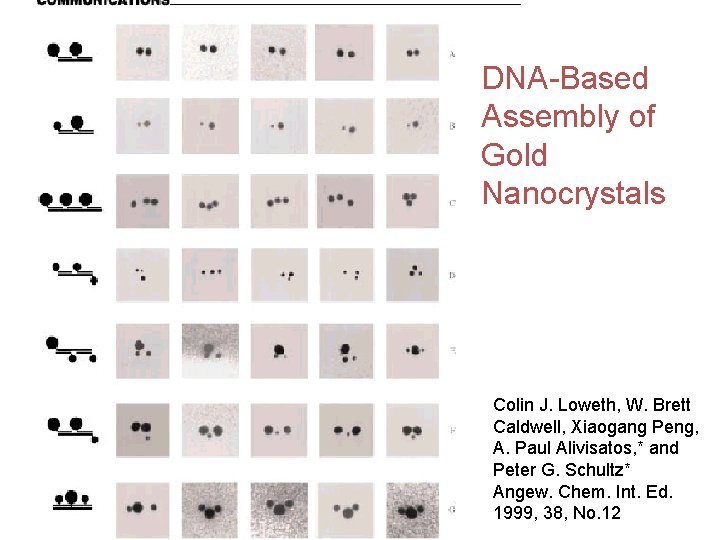
DNA-Based Assembly of Gold Nanocrystals Colin J. Loweth, W. Brett Caldwell, Xiaogang Peng, A. Paul Alivisatos, * and Peter G. Schultz* Angew. Chem. Int. Ed. 1999, 38, No. 12
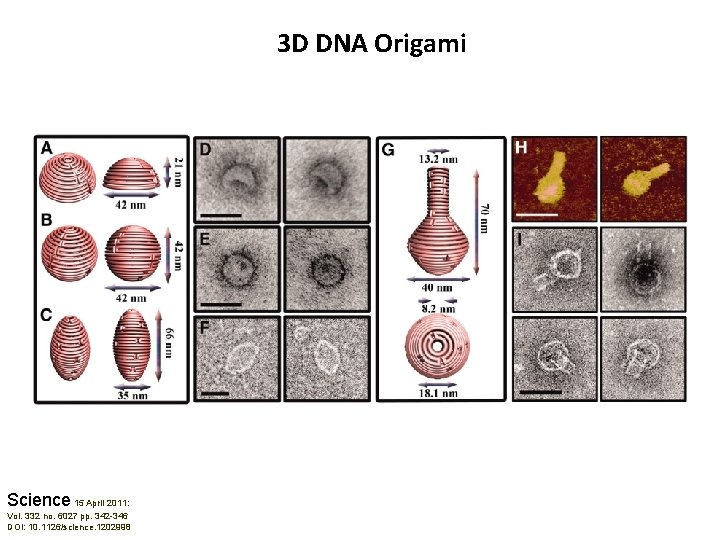
3 D DNA Origami Science 15 April 2011: Vol. 332 no. 6027 pp. 342 -346 DOI: 10. 1126/science. 1202998
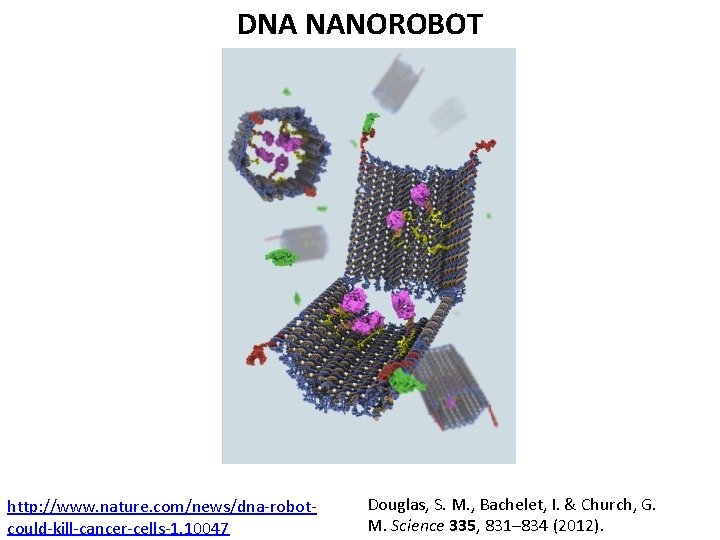
DNA NANOROBOT http: //www. nature. com/news/dna-robotcould-kill-cancer-cells-1. 10047 Douglas, S. M. , Bachelet, I. & Church, G. M. Science 335, 831– 834 (2012).
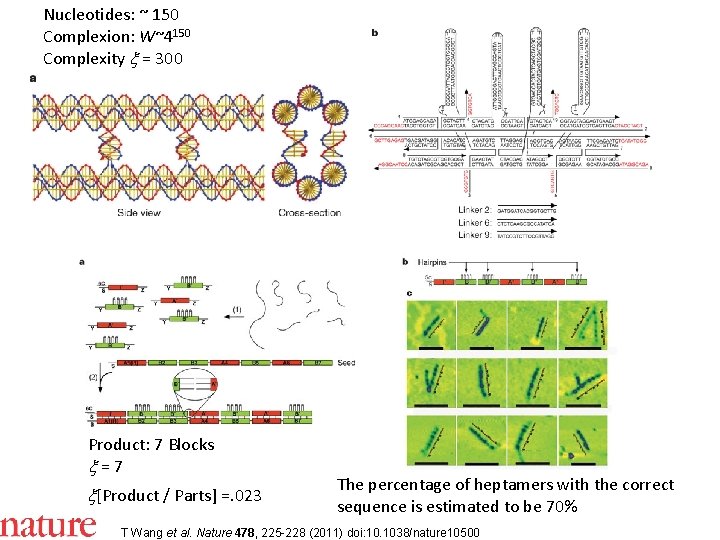
Nucleotides: ~ 150 Complexion: W~4150 Complexity x = 300 Product: 7 Blocks x = 7 x[Product / Parts] =. 023 The percentage of heptamers with the correct sequence is estimated to be 70% T Wang et al. Nature 478, 225 -228 (2011) doi: 10. 1038/nature 10500
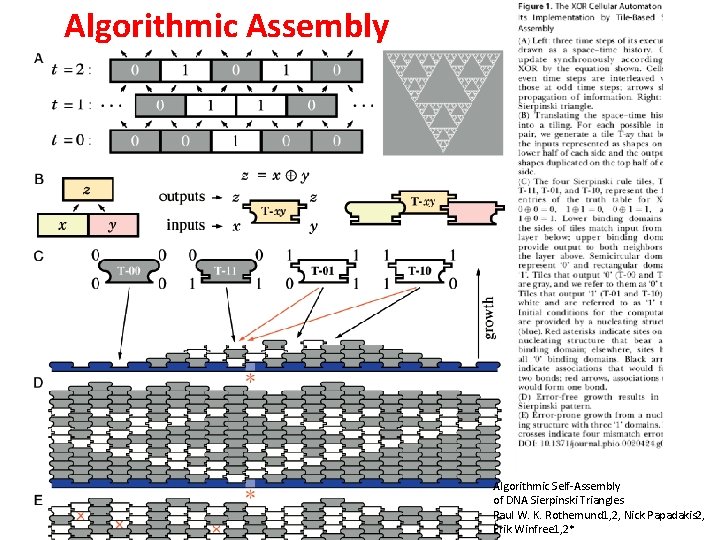
Algorithmic Assembly Algorithmic Self-Assembly of DNA Sierpinski Triangles Paul W. K. Rothemund 1, 2, Nick Papadakis 2, Erik Winfree 1, 2*
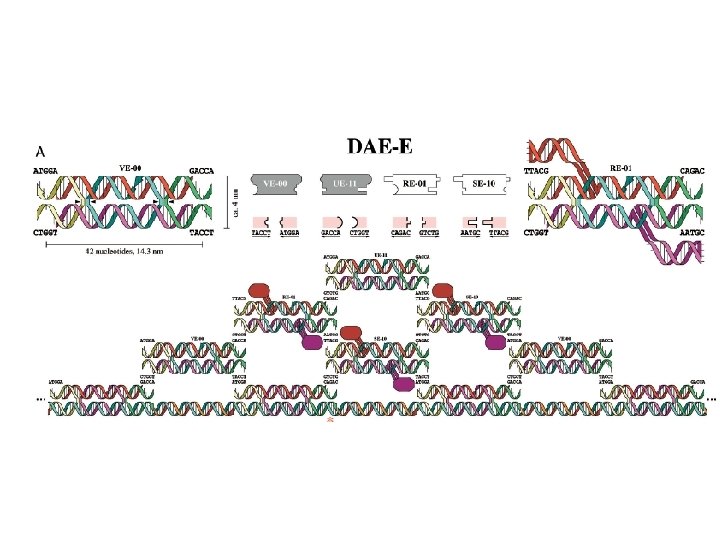
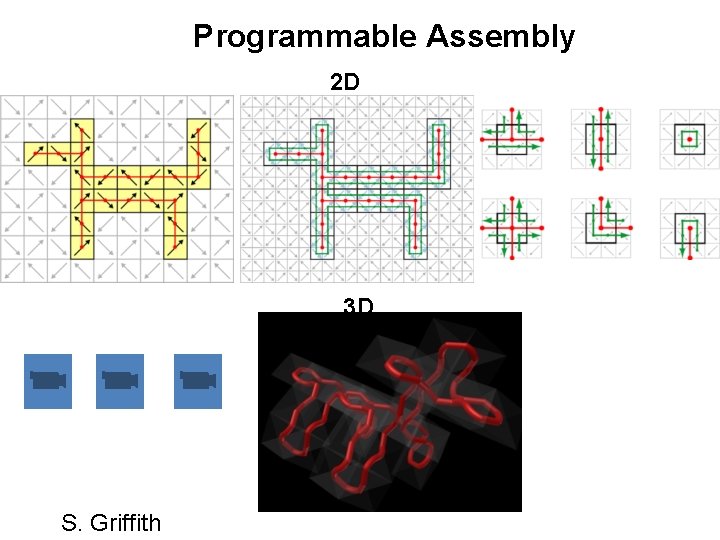
Programmable Assembly 2 D 3 D S. Griffith
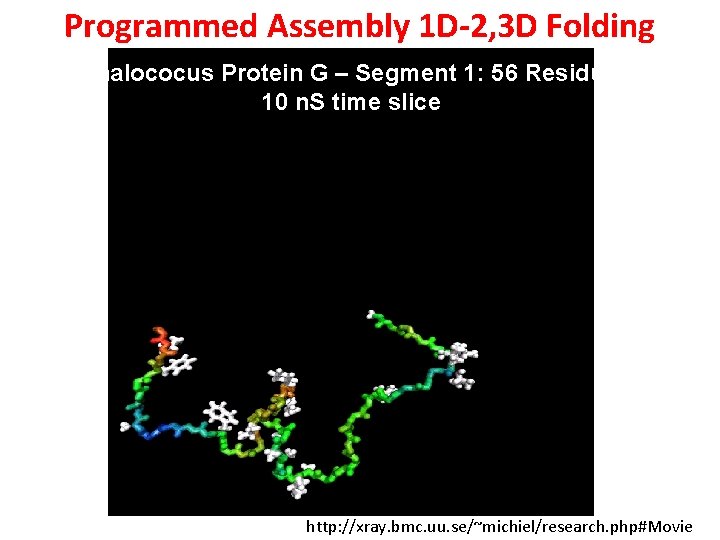
Programmed Assembly 1 D-2, 3 D Folding Staphalococus Protein G – Segment 1: 56 Residues – 10 n. S time slice http: //xray. bmc. uu. se/~michiel/research. php#Movie
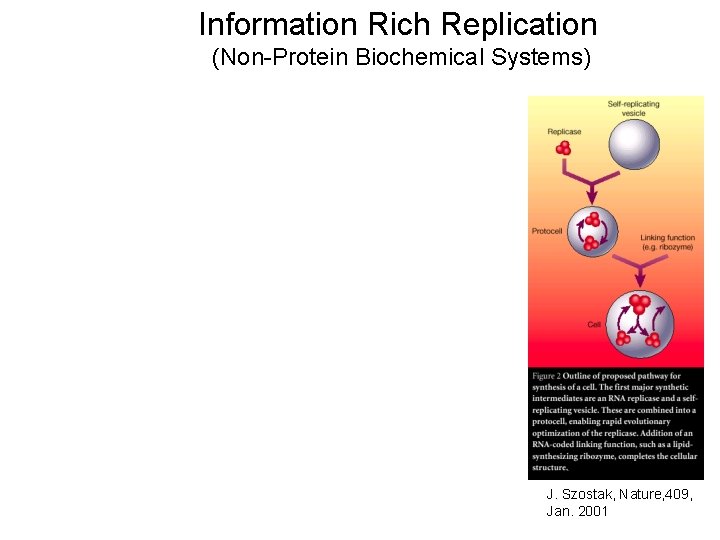
Information Rich Replication (Non-Protein Biochemical Systems) J. Szostak, Nature, 409, Jan. 2001
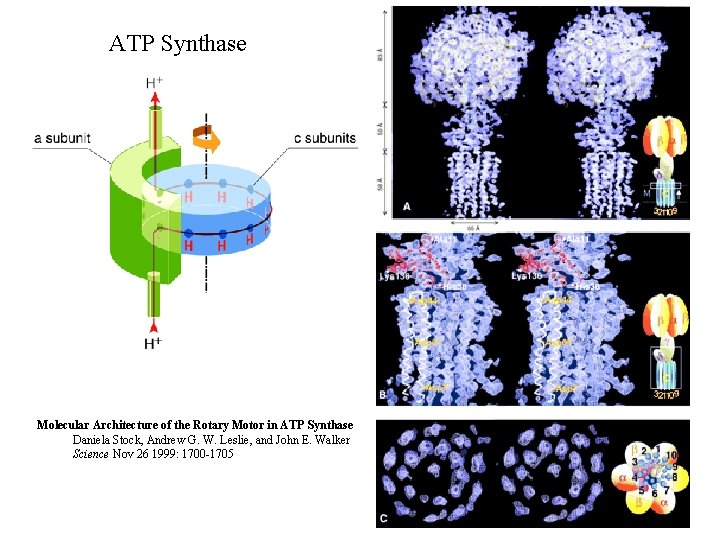
ATP Synthase Molecular Architecture of the Rotary Motor in ATP Synthase Daniela Stock, Andrew G. W. Leslie, and John E. Walker Science Nov 26 1999: 1700 -1705
- Slides: 59