
Biological Organic Molecules Major Components of a Cell
Biological (Organic) Molecules
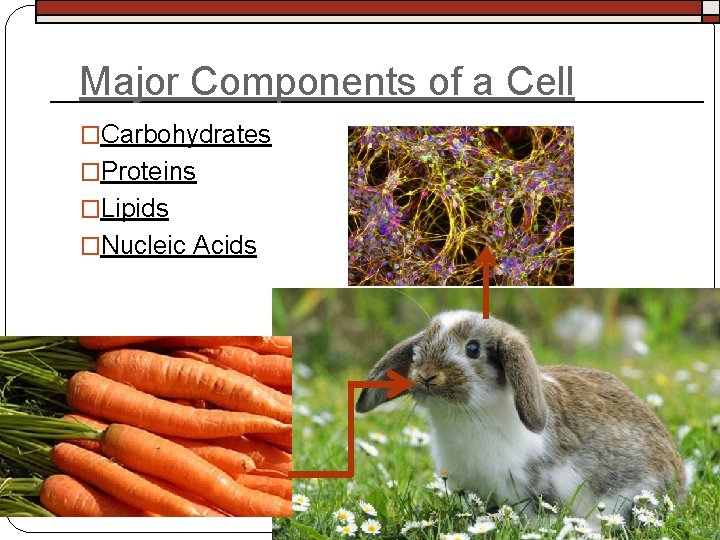
Major Components of a Cell �Carbohydrates �Proteins �Lipids �Nucleic Acids
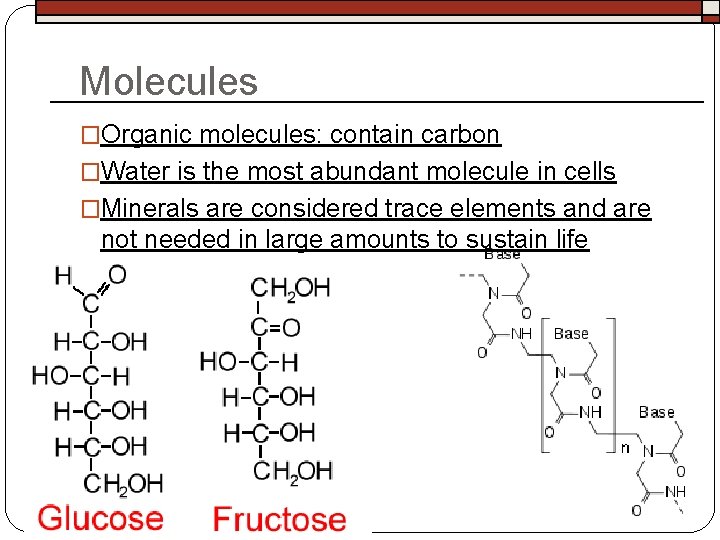
Molecules �Organic molecules: contain carbon �Water is the most abundant molecule in cells �Minerals are considered trace elements and are not needed in large amounts to sustain life
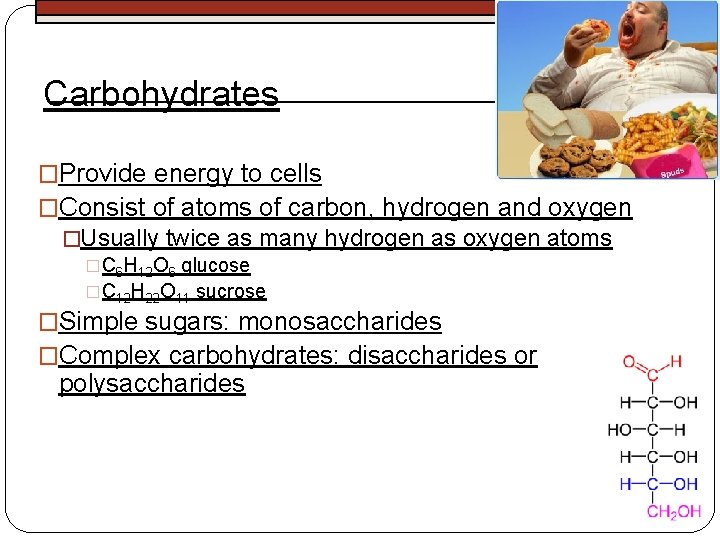
Carbohydrates �Provide energy to cells �Consist of atoms of carbon, hydrogen and oxygen �Usually twice as many hydrogen as oxygen atoms �C 6 H 12 O 6 glucose �C 12 H 22 O 11 sucrose �Simple sugars: monosaccharides �Complex carbohydrates: disaccharides or polysaccharides
Carbohydrates �Stimulate the immune system �Play a role in binding viruses and bacterial pathogens �Provide cell structure
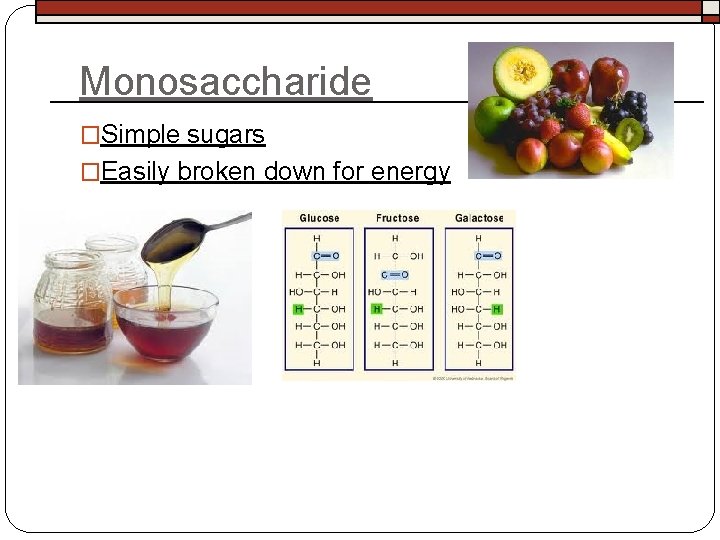
Monosaccharide �Simple sugars �Easily broken down for energy
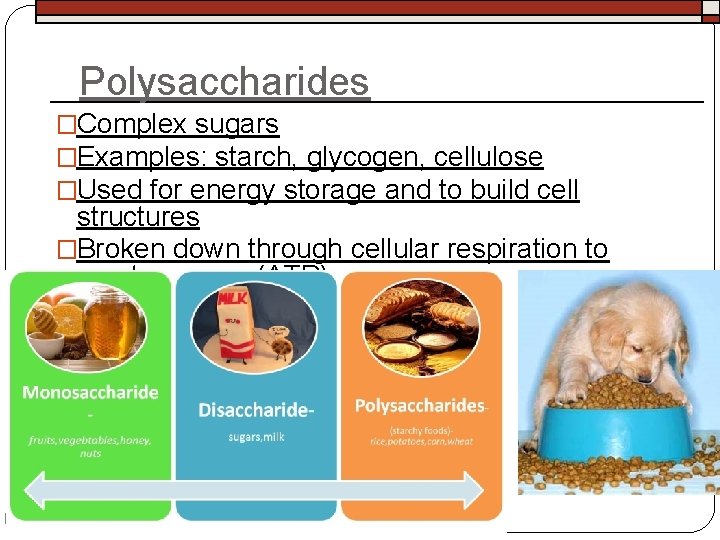
Polysaccharides �Complex sugars �Examples: starch, glycogen, cellulose �Used for energy storage and to build cell structures �Broken down through cellular respiration to create energy (ATP)
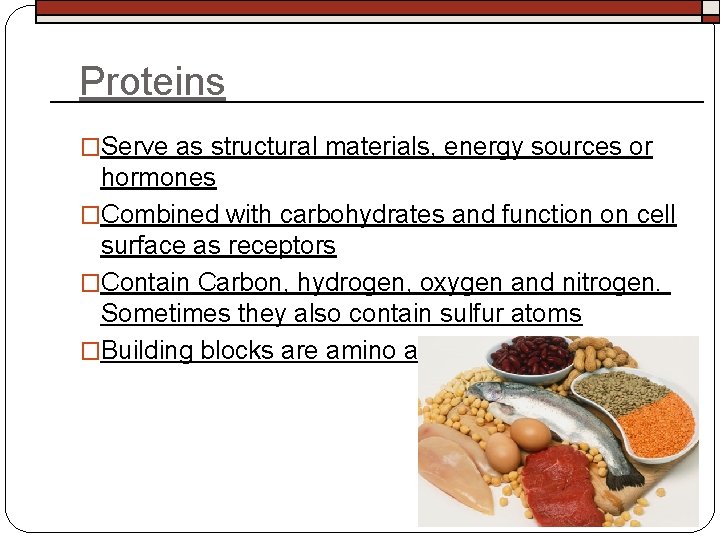
Proteins �Serve as structural materials, energy sources or hormones �Combined with carbohydrates and function on cell surface as receptors �Contain Carbon, hydrogen, oxygen and nitrogen. Sometimes they also contain sulfur atoms �Building blocks are amino acids
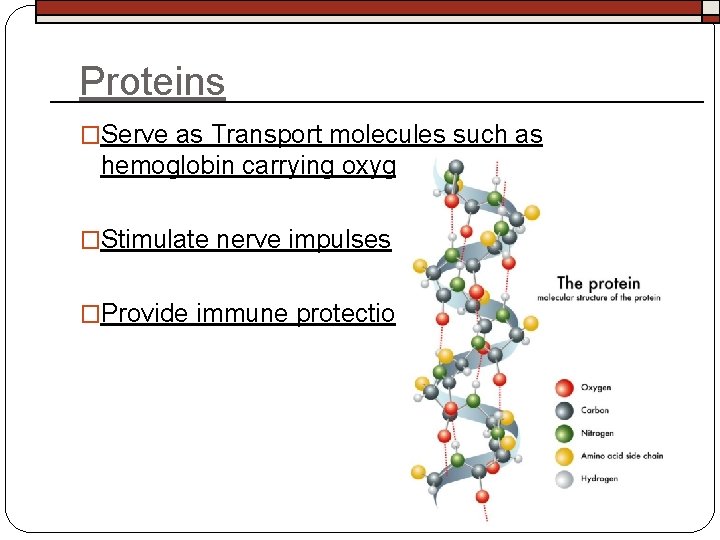
Proteins �Serve as Transport molecules such as hemoglobin carrying oxygen in rbc. �Stimulate nerve impulses �Provide immune protection
Protein Categories �Build Cell Structure �Transport molecules between cells �Relay messages – hormones �Speed up reactions – enzymes
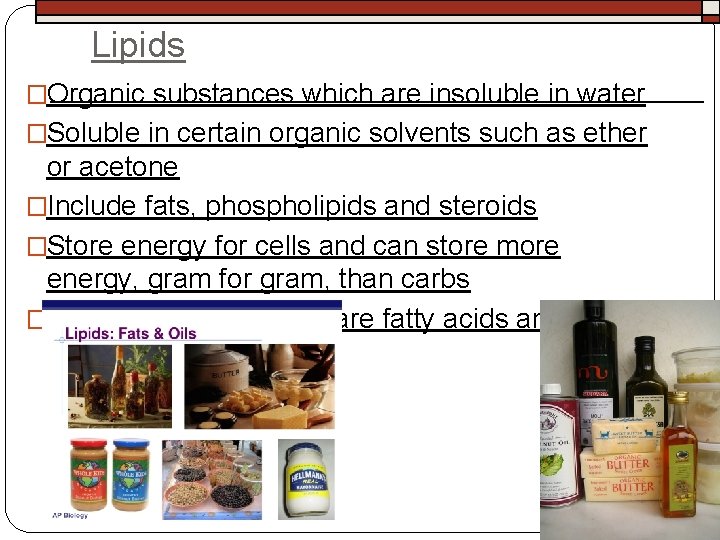
Lipids �Organic substances which are insoluble in water �Soluble in certain organic solvents such as ether or acetone �Include fats, phospholipids and steroids �Store energy for cells and can store more energy, gram for gram, than carbs �Building blocks for fats are fatty acids and glycerol.
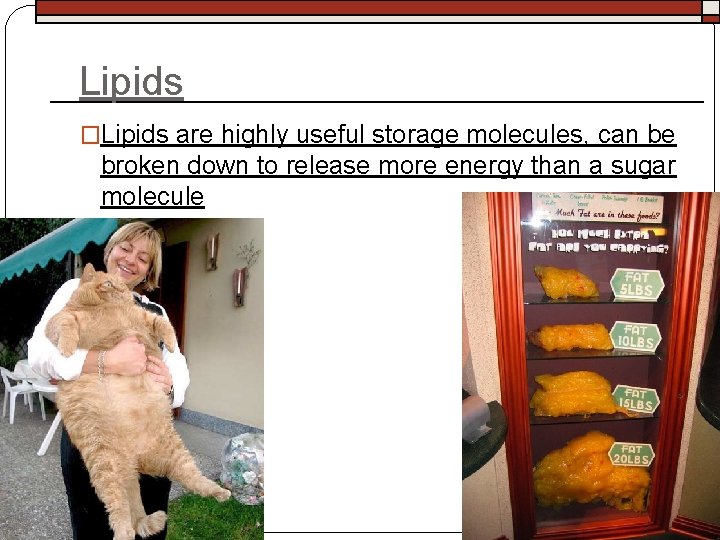
Lipids �Lipids are highly useful storage molecules, can be broken down to release more energy than a sugar molecule
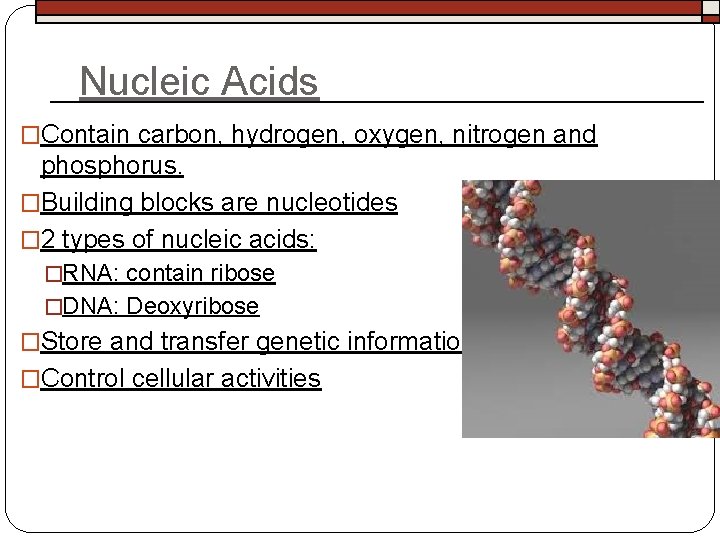
Nucleic Acids �Contain carbon, hydrogen, oxygen, nitrogen and phosphorus. �Building blocks are nucleotides � 2 types of nucleic acids: �RNA: contain ribose �DNA: Deoxyribose �Store and transfer genetic information �Control cellular activities
Nucleic Acids �Provide instruction for making proteins which direct the structure and activity of the cell �Ex. RNA, DNA, NAD �DNA is the most important of these molecules because it makes the organism what it is
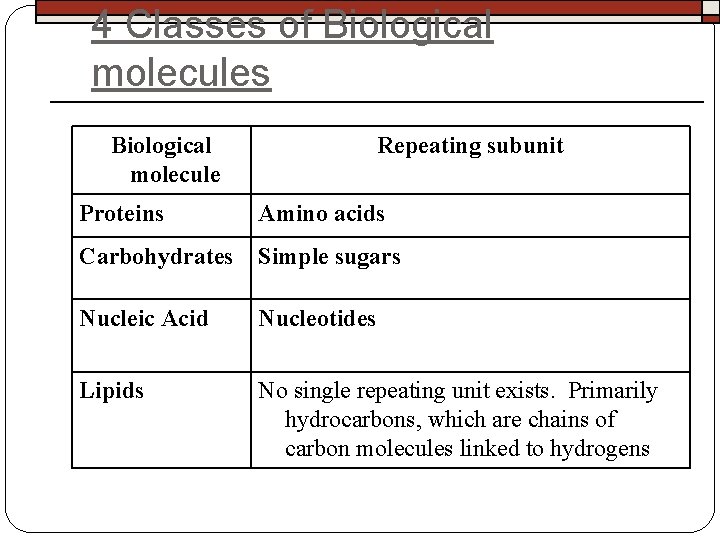
4 Classes of Biological molecules Biological molecule Repeating subunit Proteins Amino acids Carbohydrates Simple sugars Nucleic Acid Nucleotides Lipids No single repeating unit exists. Primarily hydrocarbons, which are chains of carbon molecules linked to hydrogens
- Slides: 15