
Biological molecules and cells Inorganic compounds compounds that
Biological molecules and cells • Inorganic compounds- compounds that do not contain carbon or do contain carbon, but only carbon bound to elements other than hydrogen. • ex. NH 3, Na. CL, H 2 O, and CO 2 • Organic compounds- compounds that have carbon-carbon and carbon-hydrogen bonds.
Biological molecules and cells • Carbohydrates- compounds composed of carbon, hydrogen, and oxygen atoms. Ex. C 6 H 12 O 6 • Proteins- made up of long chains of nitrogen-containing organic molecules called amino acids. • Nucleic Acids- organic compounds found in all living cells. • • DNA • RNA Lipids- smaller biological molecules that do not mix with water. Ex. fats, waxes and steroids.
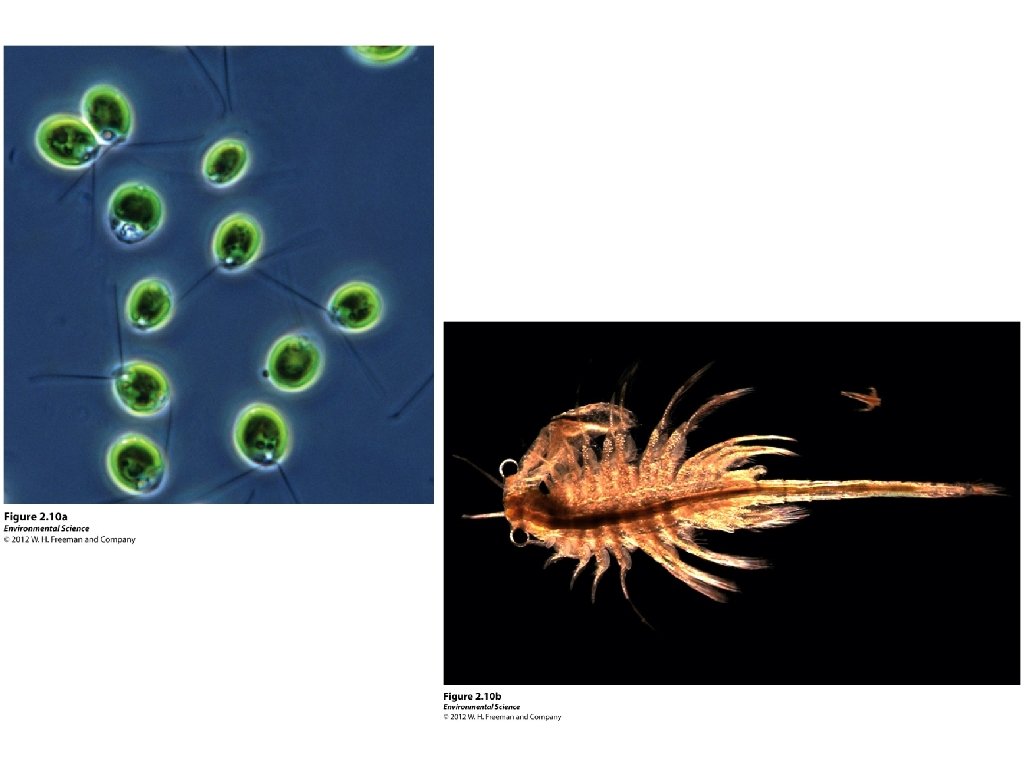
Biological molecules and cells • Cells- the smallest structural and functional component of organisms. • single cells- Ex. bacteria and some algae • multicellular- Ex. bring shrimp
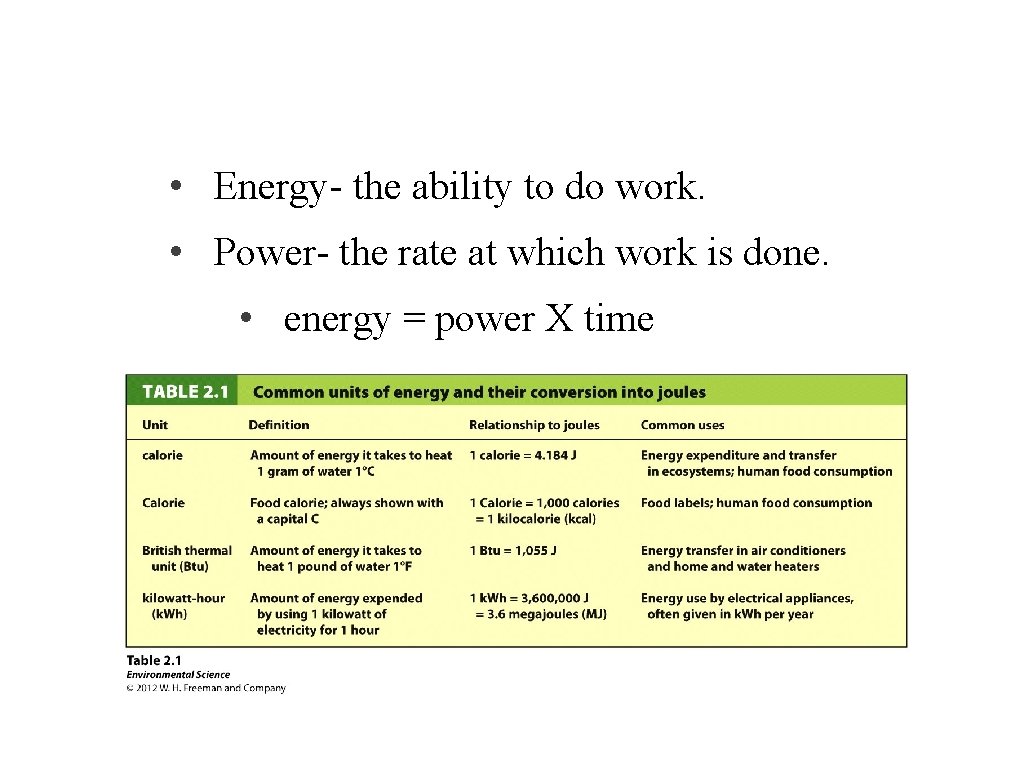
Forms of Energy • Energy- the ability to do work. • Power- the rate at which work is done. • energy = power X time
Forms of Energy • Kinetic energy- energy of motion. • Potential energy- energy that is stored. • Chemical energy- potential stored in chemical bonds. • Temperature- the measure of the average kinetic energy of a substance.

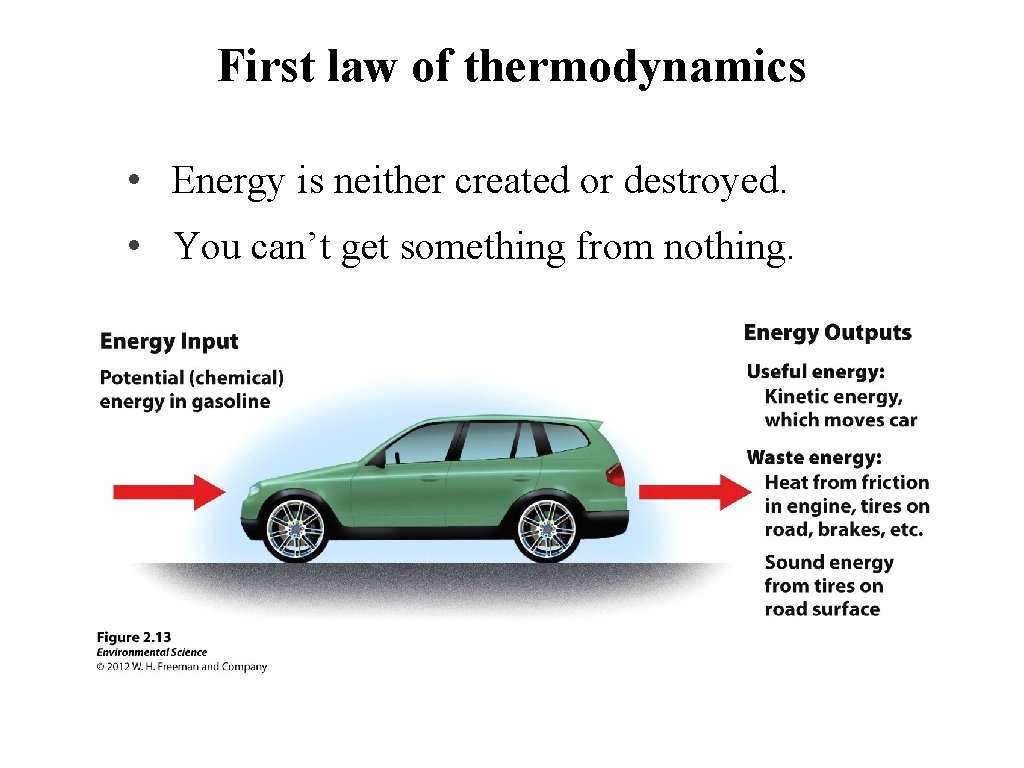
First law of thermodynamics • Energy is neither created or destroyed. • You can’t get something from nothing.
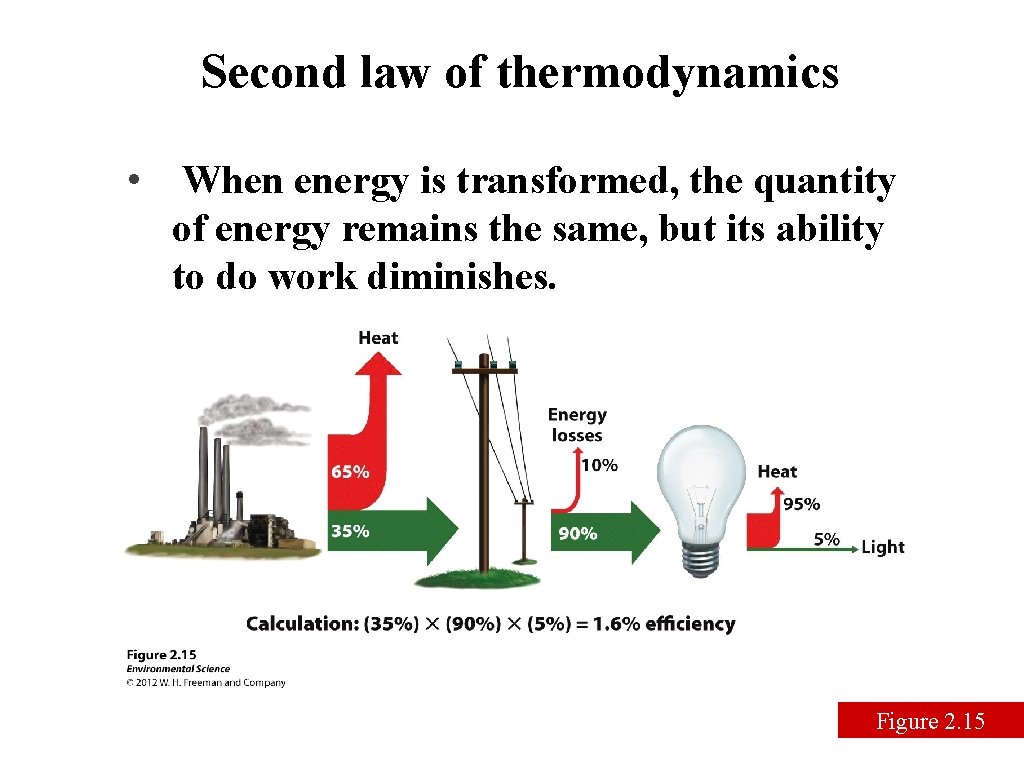
Second law of thermodynamics • When energy is transformed, the quantity of energy remains the same, but its ability to do work diminishes. Figure 2. 15
Second law of thermodynamics • Energy Efficiency- the ratio of the amount of work that is done to the total amount of energy that is introduced into the system.
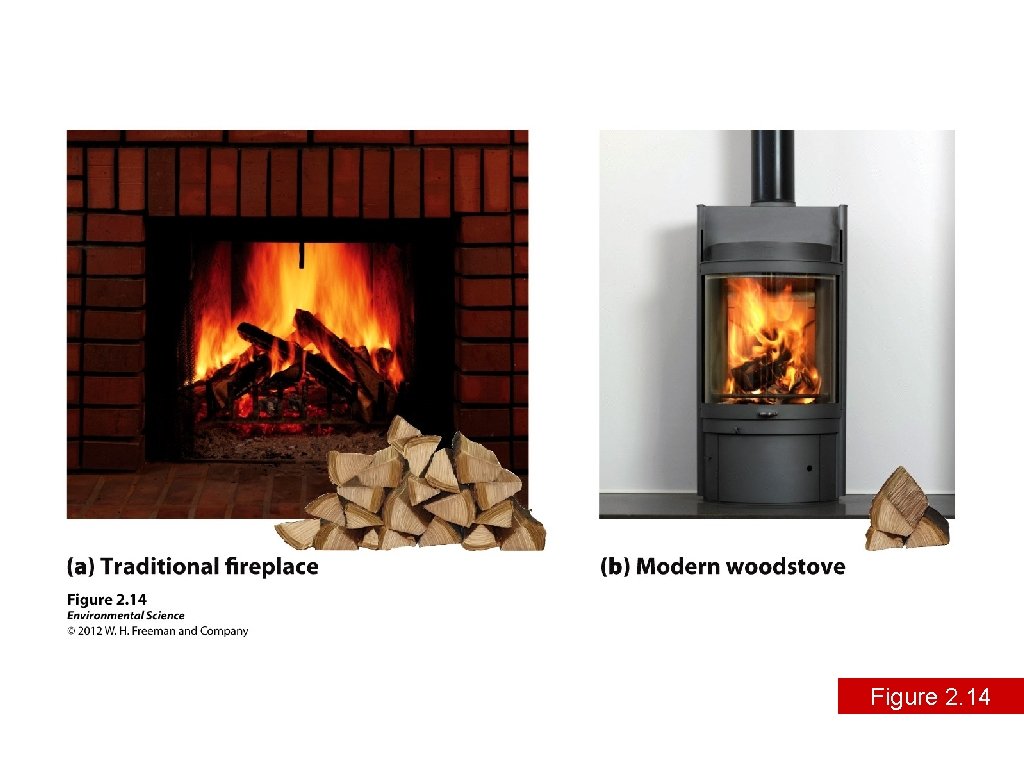
Figure 2. 14
Second law of thermodynamics • Energy quality- the ease with which an energy source can be used for work. • Entropy- all systems move toward randomness rather than toward order. • This randomness is always increasing in a system, unless new energy from the outside of the system is added to create order.
Think of your bedroom as a system. At the start of the week, your books may in the bookcase and your clothes are in the closet or drawers. However, as the week goes on, you don’t expend the energy to keep the things in their proper places, so your room gets messy. If you don’t add energy to the system to fix the mess, your room will remain a rats nest.
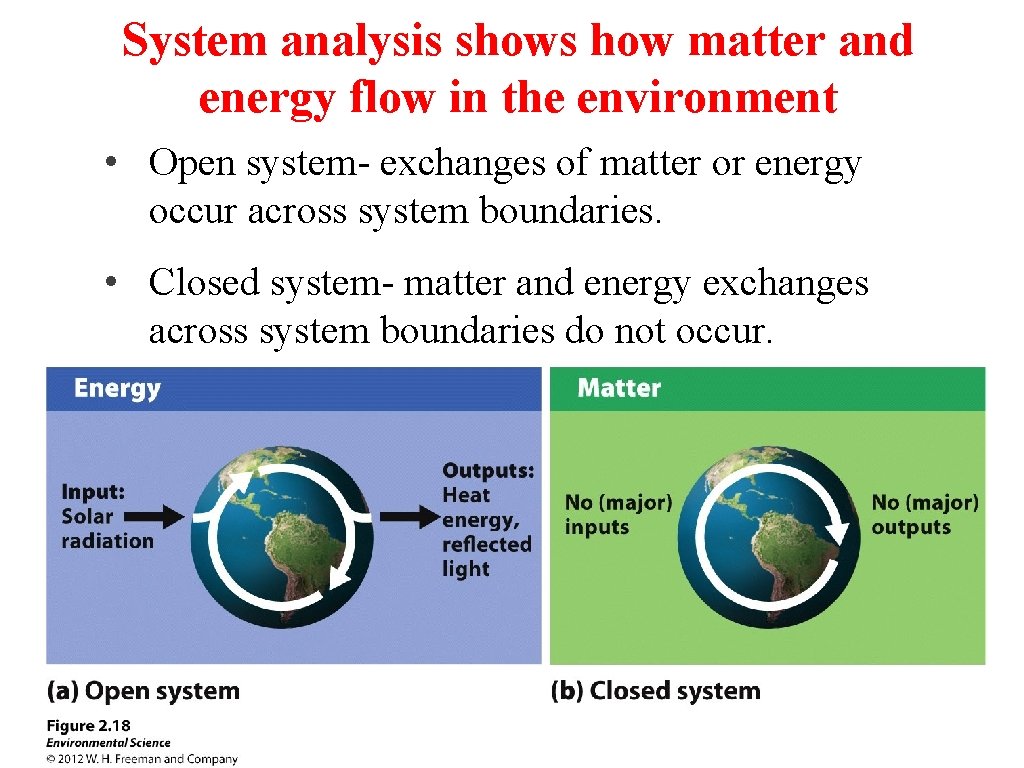
System analysis shows how matter and energy flow in the environment • Open system- exchanges of matter or energy occur across system boundaries. • Closed system- matter and energy exchanges across system boundaries do not occur.
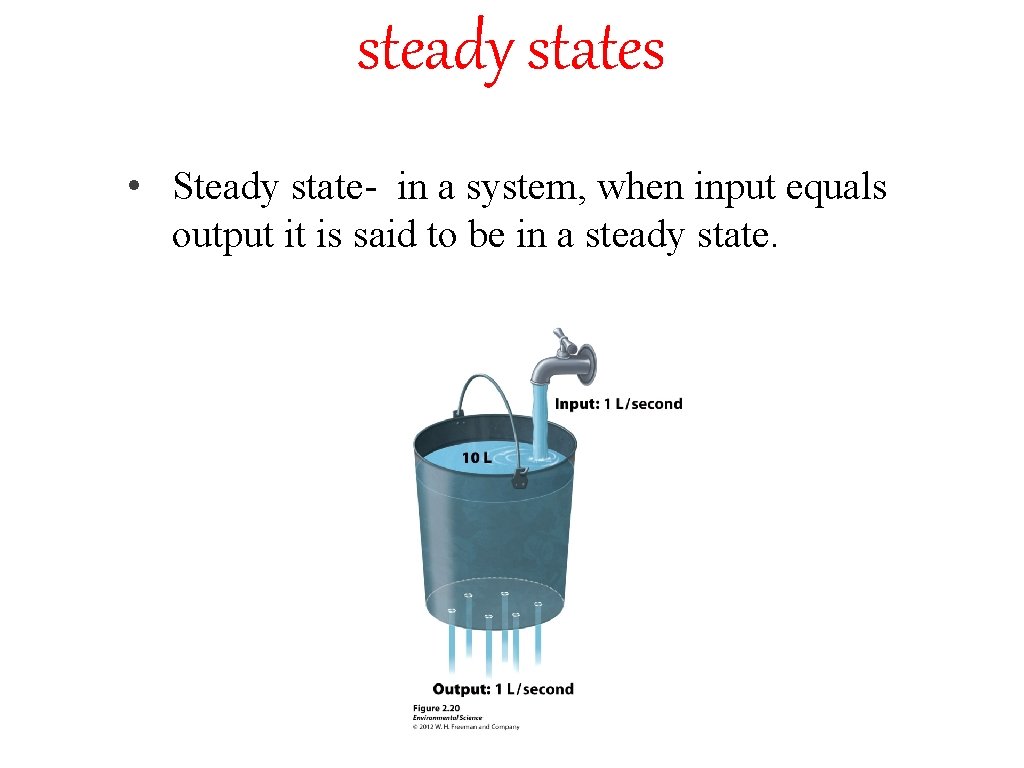
steady states • Steady state- in a system, when input equals output it is said to be in a steady state.
Steady States • Negative feedback loops- when a system responds to change by returning to its original state, or at least by decreasing the rate at which the change is occurring. -Thermostat • Positive feedback loops- when a system responds to change by increasing the rate at which the change is occurring. - Labor contractions
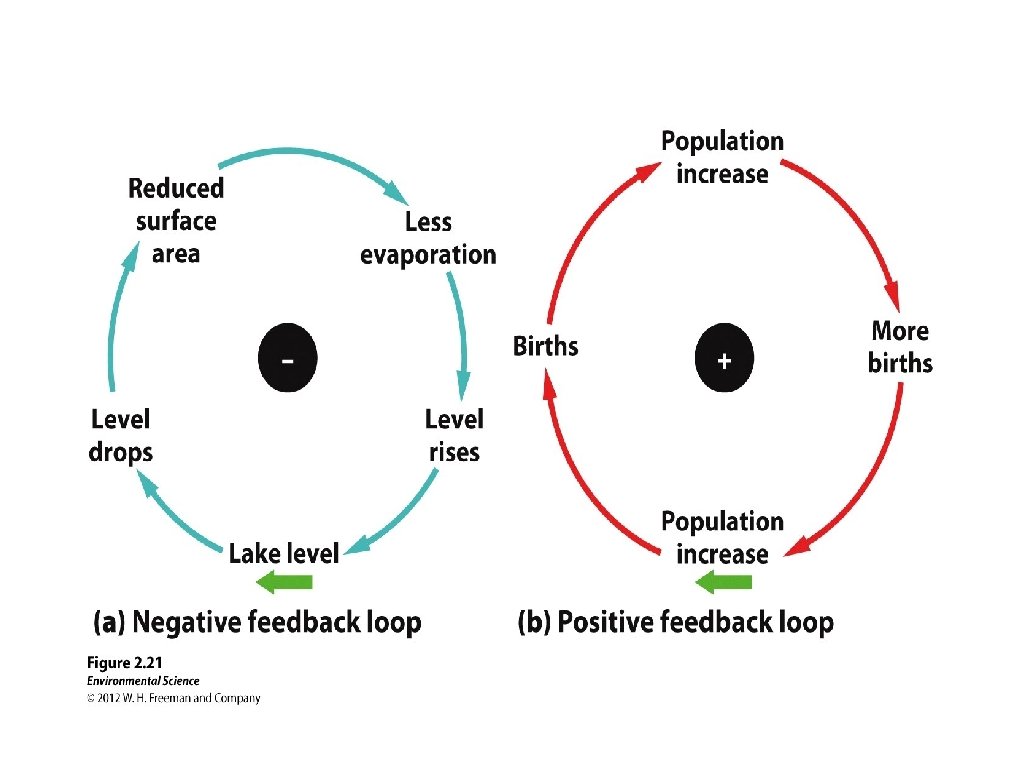
Blood sugar, body temperature, population growth, melting of permafrost that releases methane, blood pressure • Negative: • Positive:
- Slides: 18