
Biological Membranes Sections 5 1 5 3 Learning
Biological Membranes Sections 5. 1 -5. 3
Learning Objectives O Explain the significance of the selectively permeable membrane to the transport of molecules O Describe the structure of the cell membrane using the fluid-mosaic model and relate it to the semipermeable membrane O Relate the properties of the lipid bilayer to the properties & functions of cell membranes O Describe ways that membrane proteins associate with the lipid bilayer & their functions & give examples
Plasma Membrane O Plasma membrane = cell membrane O Forms boundary between inside & outside cell O Controls movement of molecules into & out of the cell O Takes up substances the cell needs O Disposes of the cell’s wastes O Is selectively permeable = allows some substances to cross more easily than others
Why Selectively Permeable? O By controlling what crosses the plasma membrane, a cell controls its volume and its internal composition O Inside the cell can be very different from the surrounding environment
Phospholipids Bilayers O Phospholipids are the main structural component of the cell membrane O Made up of a glycerol, phosphate group, and two fatty acids O Amphipathic = one side is hydrophobic and one side is hydrophilic O Head is polar & hydrophilic (water loving) O Tails are nonpolar & hydrophobic (water fearing)
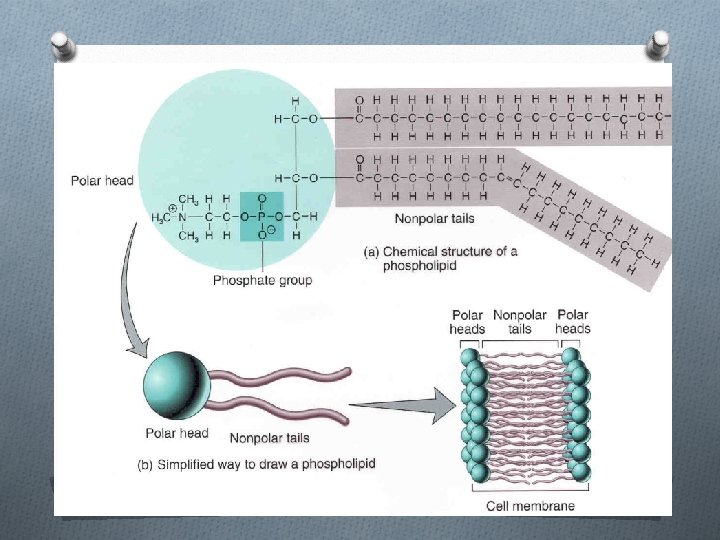
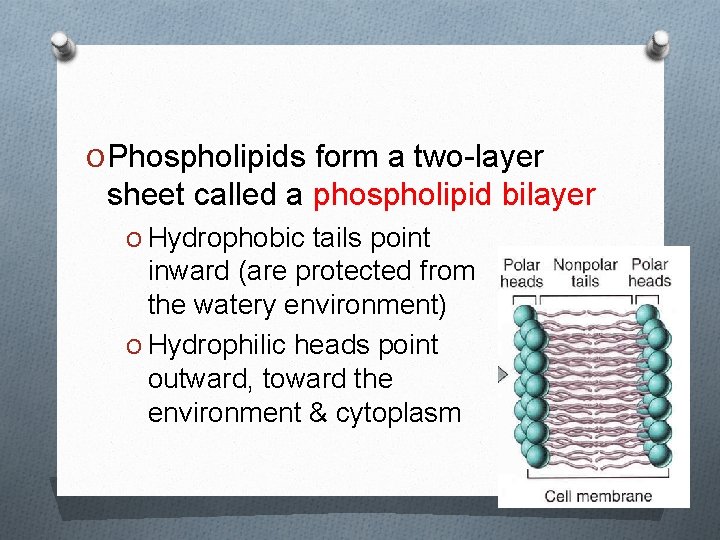
O Phospholipids form a two-layer sheet called a phospholipid bilayer O Hydrophobic tails point inward (are protected from the watery environment) O Hydrophilic heads point outward, toward the environment & cytoplasm
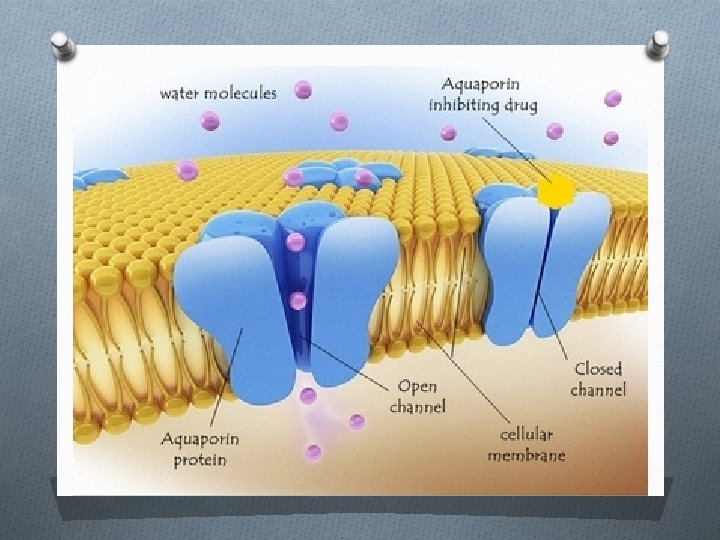
O Hydrophobic middle of the cell membrane is why it’s selectively permeable O Nonpolar, hydrophobic molecules O Soluble in lipids O Can easily pass through the membrane O Polar, hydrophilic molecules & ions O Not soluble in lipids O Need a transport protein to pass through the membrane O Ex. Aquaporins = channel transport proteins that allow water to cross the cell membrane
Fluid Mosaic Model O Fluid mosaic model = states that the cell membrane is made up of many parts that are in constant motion O Mosaic = picture made up of many smaller tiles O The plasma membrane has many different proteins embedded in the phospholipid bilayer O Fluid = not solid, can flow & move O Most proteins & phospholipids can move laterally, & phospholipids can also flip to the opposite layer


Membrane Fluidity O The plasma membrane needs to stay fluid & flexible to function properly O Unsaturated fatty acid tails of phospholipids O Kinks stop phospholipids from packing too tightly together O Cholesterol is embedded in the membrane of animal cells O High temps: Holds phospholipids together O Low temps: Holds phospholipids apart to keep the membrane fluid
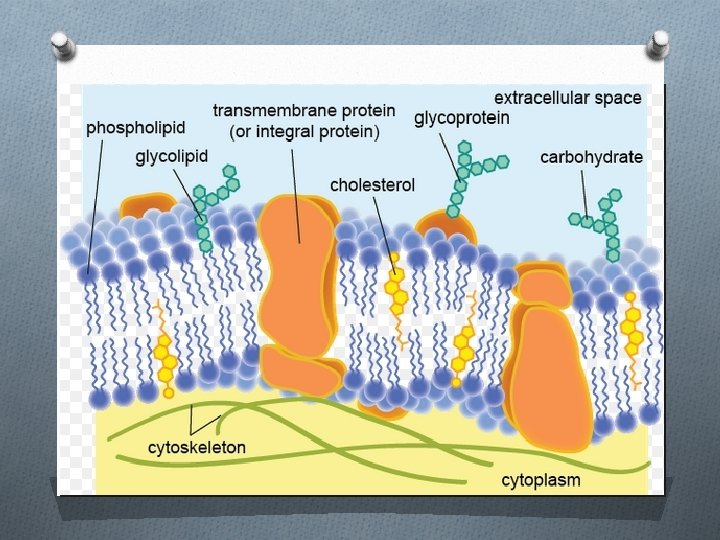
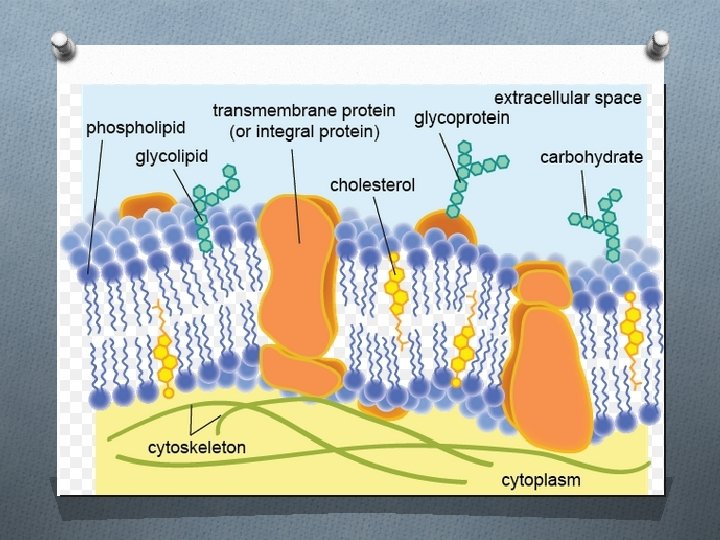
Membrane Composition O Mostly made of phospholipids O Different types of proteins as well O Integral membrane proteins = proteins that are embedded (stuck in) the membrane O Transmembrane proteins = integral proteins that extend completely through the membrane (stick out both sides)
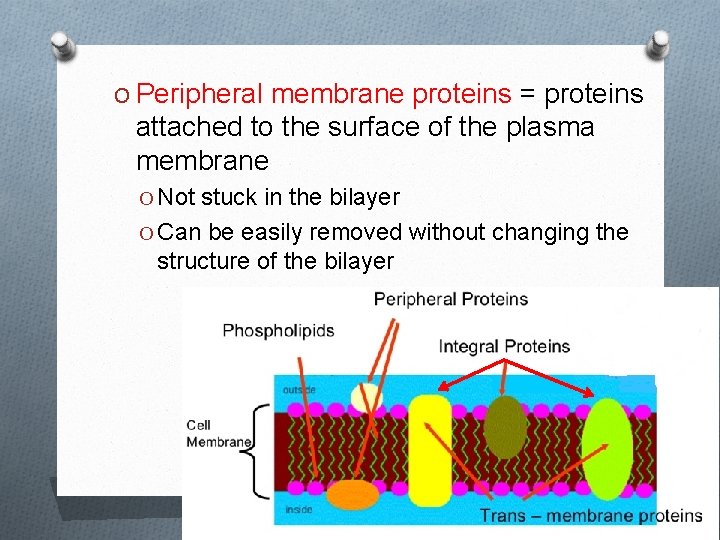
O Peripheral membrane proteins = proteins attached to the surface of the plasma membrane O Not stuck in the bilayer O Can be easily removed without changing the structure of the bilayer
Membrane Proteins O Proteins perform most of the functions of a membrane O Activities of the membrane are varied O Each type of cell has a different set of proteins O Membranes within a cell also have different sets of proteins
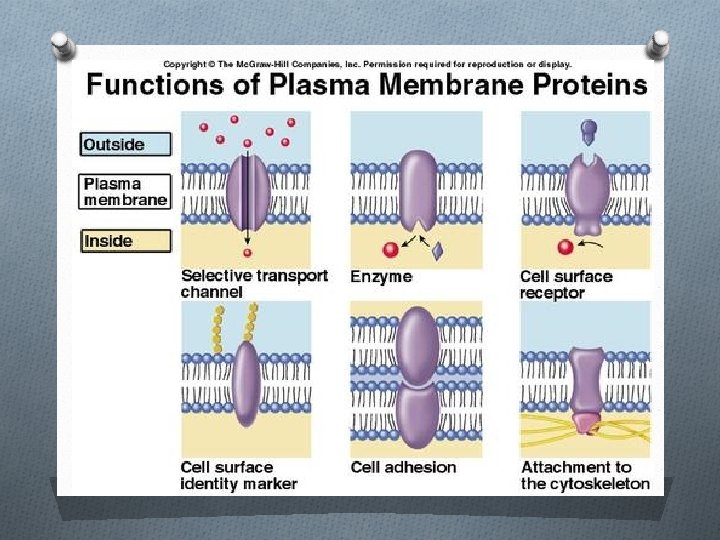
O Membrane also contains molecules used for cell identification O Glycoprotein = protein with sugars attached O Glycolipid = lipid with sugars attached
- Slides: 20