
Biological Lipids and Bilayers Lipids are nearly insoluble
Biological Lipids and Bilayers • Lipids are nearly insoluble in Water – Form Biological membranes – Regulate solute flow and signalling – Provide concentrated energy stores • Structure, Classification and Nomenclature – Fatty acids, polar headgroups, steroids and eicosanoids • Lipid Bilayers – Micelles, bilayers and vesicles – Fluidity

Fatty Acids • Carboxylic Acid at C 1 • Acyl chain – Usually 14 - 20 carbons (including C 1) – Usually even # -- built from C 2 (acetyl) units – Saturated (no double bonds) • Strong interactions between parallel acyl chains High MP. – Un. Saturated (double bonds) • Almost always cis, Often at C 9 • Weak interactions between parallel acyl chains Low MP. – Polyunsaturated • Usually not conjugated
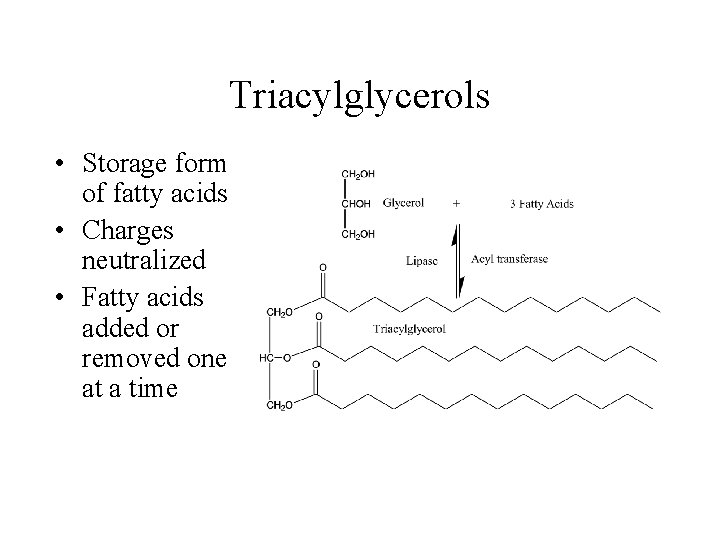
Triacylglycerols • Storage form of fatty acids • Charges neutralized • Fatty acids added or removed one at a time
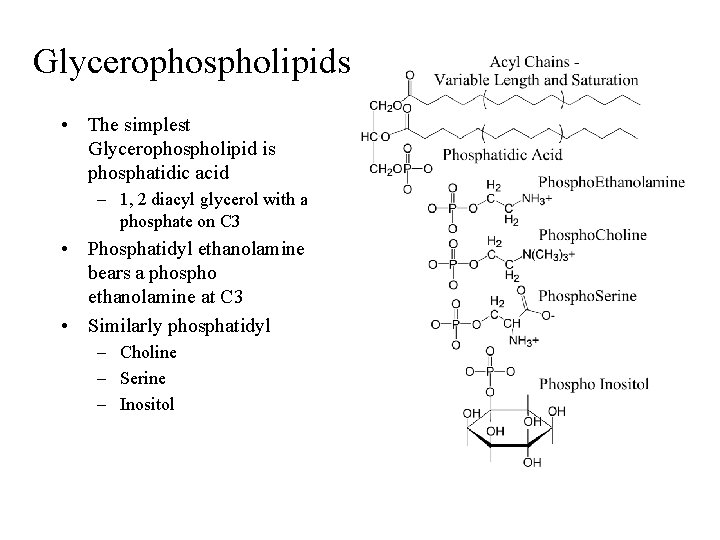
Glycerophospholipids • The simplest Glycerophospholipid is phosphatidic acid – 1, 2 diacyl glycerol with a phosphate on C 3 • Phosphatidyl ethanolamine bears a phospho ethanolamine at C 3 • Similarly phosphatidyl – Choline – Serine – Inositol
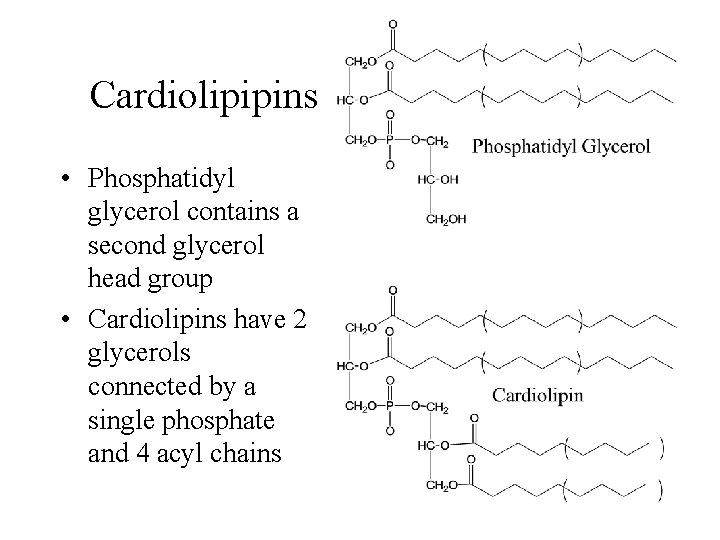
Cardiolipipins • Phosphatidyl glycerol contains a second glycerol head group • Cardiolipins have 2 glycerols connected by a single phosphate and 4 acyl chains
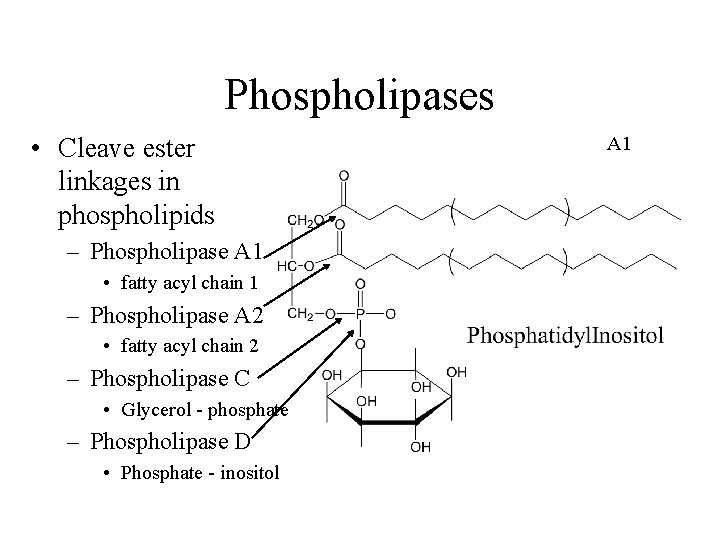
Phospholipases • Cleave ester linkages in phospholipids – Phospholipase A 1 • fatty acyl chain 1 – Phospholipase A 2 • fatty acyl chain 2 – Phospholipase C • Glycerol - phosphate – Phospholipase D • Phosphate - inositol A 1
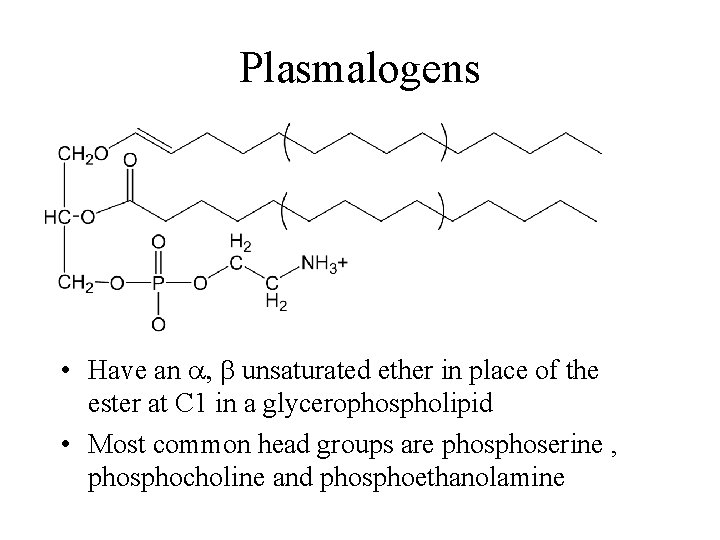
Plasmalogens • Have an a, b unsaturated ether in place of the ester at C 1 in a glycerophospholipid • Most common head groups are phoserine , phosphocholine and phosphoethanolamine
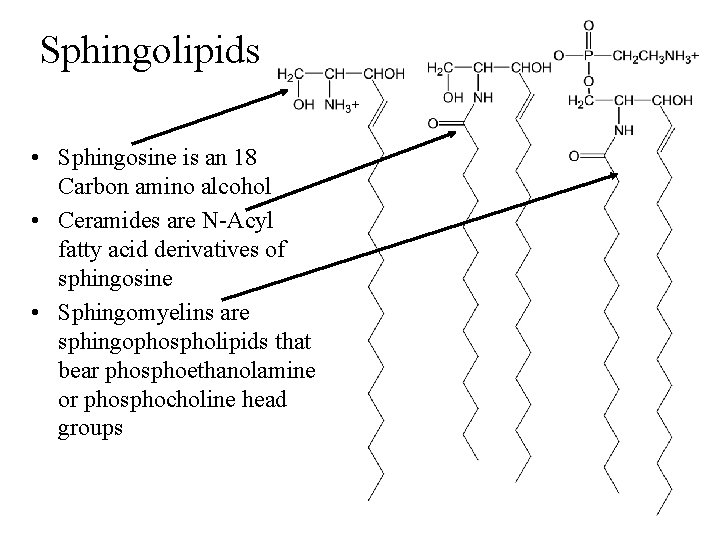
Sphingolipids • Sphingosine is an 18 Carbon amino alcohol • Ceramides are N-Acyl fatty acid derivatives of sphingosine • Sphingomyelins are sphingophospholipids that bear phosphoethanolamine or phosphocholine head groups
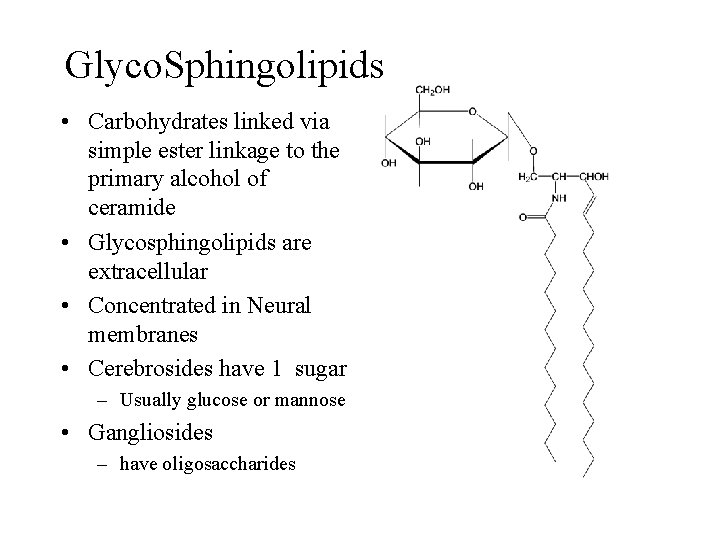
Glyco. Sphingolipids • Carbohydrates linked via simple ester linkage to the primary alcohol of ceramide • Glycosphingolipids are extracellular • Concentrated in Neural membranes • Cerebrosides have 1 sugar – Usually glucose or mannose • Gangliosides – have oligosaccharides
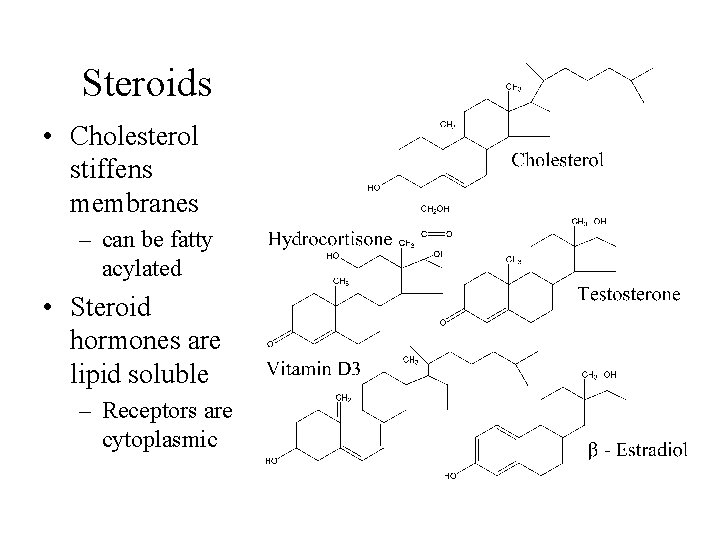
Steroids • Cholesterol stiffens membranes – can be fatty acylated • Steroid hormones are lipid soluble – Receptors are cytoplasmic
Steroid Hormones • Glucocorticoids – Regulate metabolism and inflammation • Mineralocorticoids – Regulate Salt and Osmotic balance in Kidney • Androgens - Male hormones • Estrogens - Female hormones • Vitamin D derivatives – UV light can cleave C 9 -C 10 – Regulates Ca 2+ metabolism esp bone growth and repair
Eicosanoids • C 20 Fatty acids – membrane localized, short term signalling molecules • Precursor is arachidonic acid – 5, 8, 11, 14, Eicosatetraeneoic acid • Prostaglandins – Pain and fever • Prostacyclins – Stimulate vasodilation, free flow of blood • Thromboxanes – Stimulate vasoconstriction, clotting • Leukotrienes – Inflammation, asthma
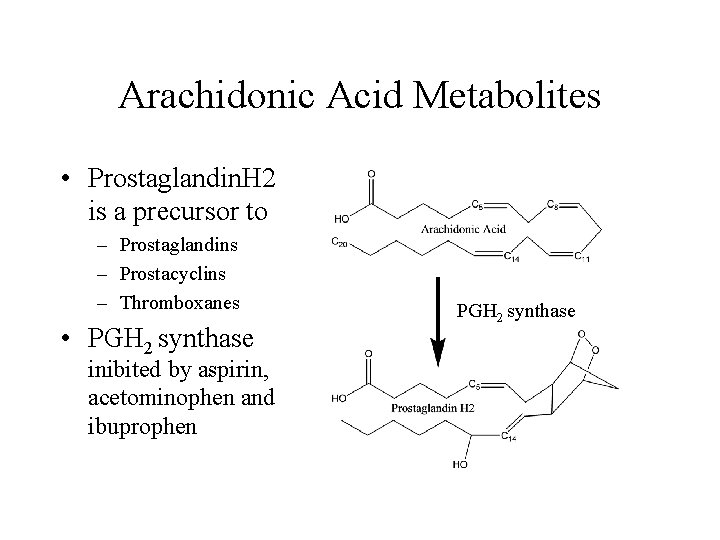
Arachidonic Acid Metabolites • Prostaglandin. H 2 is a precursor to – Prostaglandins – Prostacyclins – Thromboxanes • PGH 2 synthase inibited by aspirin, acetominophen and ibuprophen PGH 2 synthase
- Slides: 13