
BIOLOGICAL EFFECTS OF IONIZING RADIATION AT MOLECULAR AND
BIOLOGICAL EFFECTS OF IONIZING RADIATION AT MOLECULAR AND CELLULAR LEVELS Module VIII-a

Historical background Module Medical VIII. 2
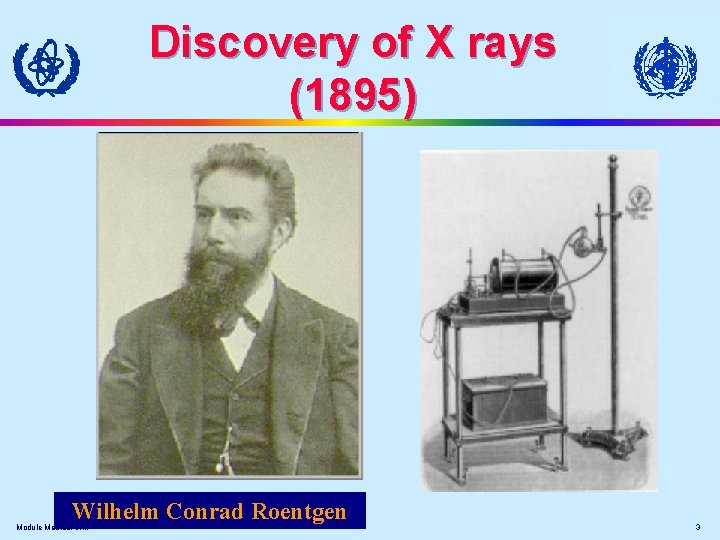
Discovery of X rays (1895) Wilhelm Conrad Roentgen Module Medical VIII. 3
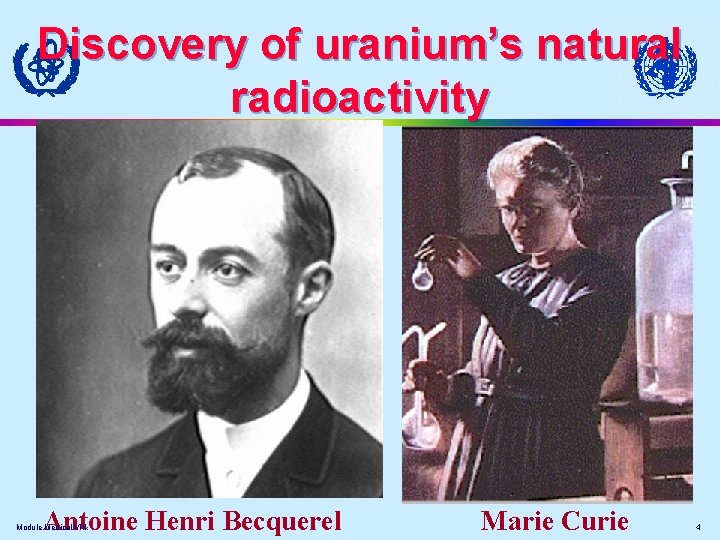
Discovery of uranium’s natural radioactivity Antoine Henri Becquerel Module Medical VIII. Marie Curie 4
First reports on harmful effects of radiation • First radiation-induced skin cancer reported in 1902 • First radiation-induced leukemia described in 1911 • 1920 s: bone cancer radium dial painters among • 1930 s: liver cancer and leukemia due to Throtrast administration • 1940 s: excess leukemia among first radiologists Module Medical VIII. 5
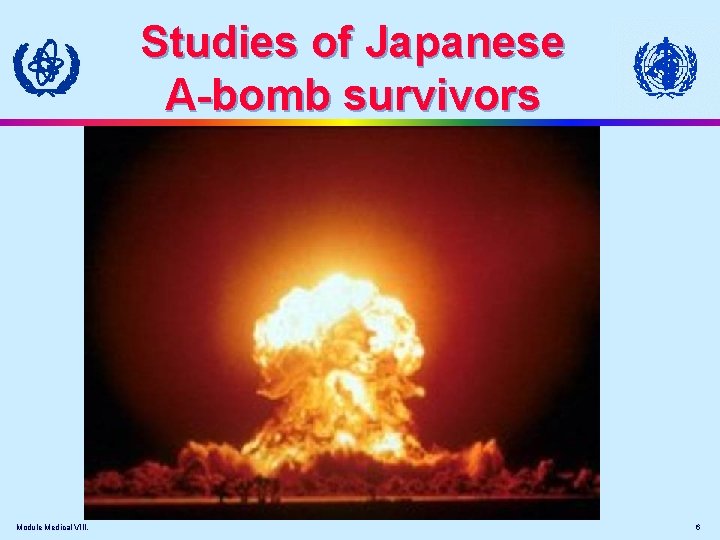
Studies of Japanese A-bomb survivors Module Medical VIII. 6
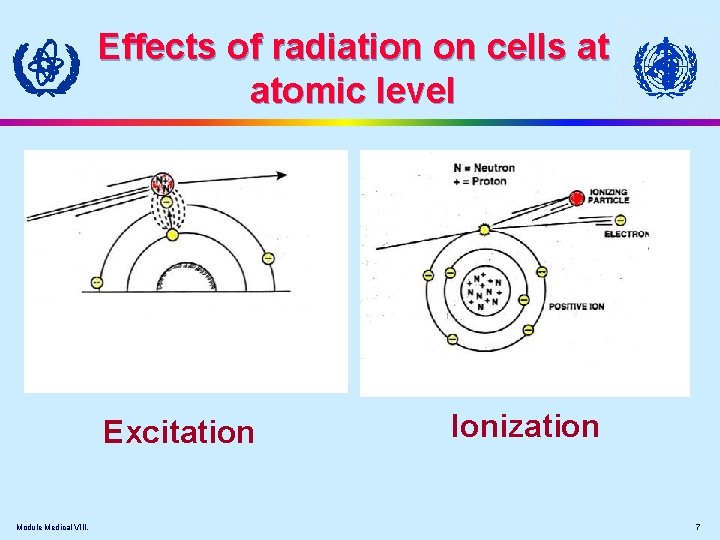
Effects of radiation on cells at atomic level Excitation Module Medical VIII. Ionization 7
Mechananisms of damage at molecular level Module Medical VIII. 8
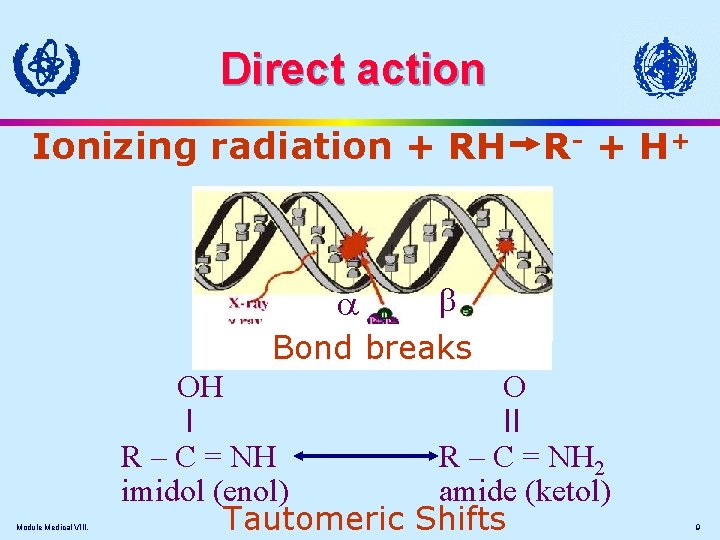
Direct action Ionizing radiation + RH R - + H+ Bond breaks Module Medical VIII. OH O I II R – C = NH 2 imidol (enol) amide (ketol) Tautomeric Shifts 9
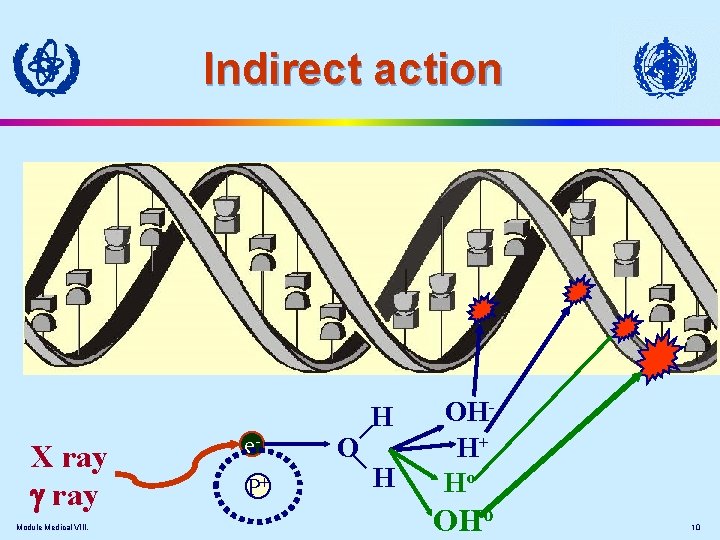
Indirect action Module Medical VIII. P+ O H X ray e- H OHH+ Ho OHo 10
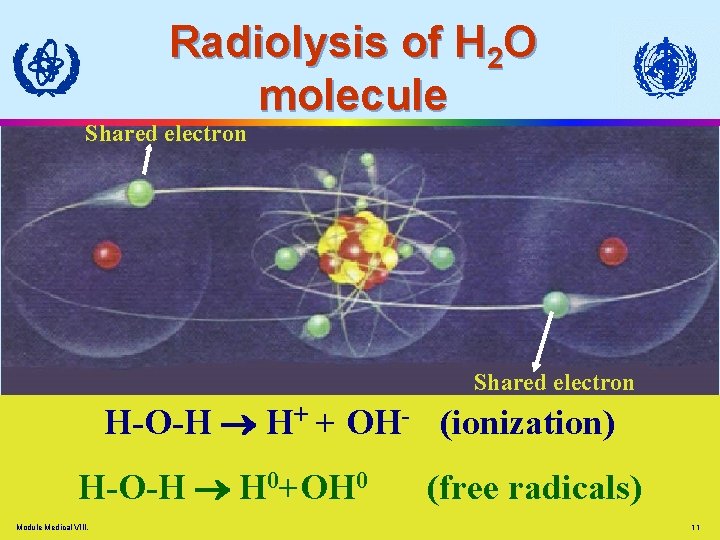
Radiolysis of H 2 O molecule Shared electron H-O-H H+ + OH- (ionization) H-O-H H 0+OH 0 Module Medical VIII. (free radicals) 11
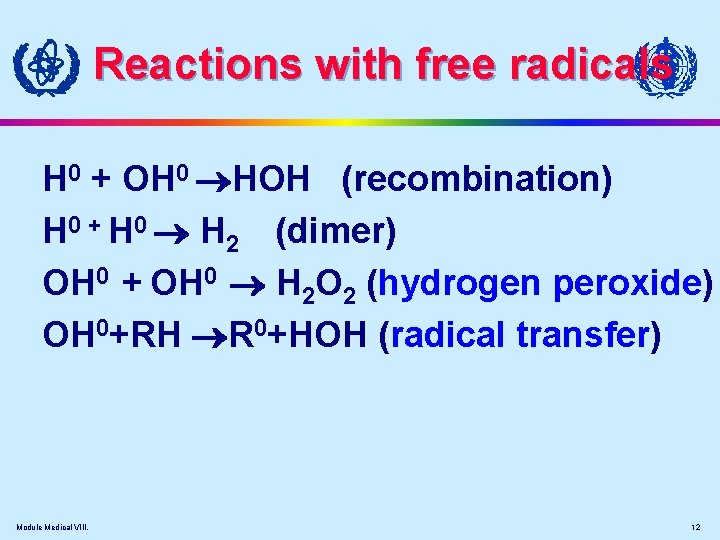
Reactions with free radicals H 0 + OH 0 HOH (recombination) H 0 + H 0 H 2 (dimer) OH 0 + OH 0 H 2 O 2 (hydrogen peroxide) OH 0+RH R 0+HOH (radical transfer) Module Medical VIII. 12
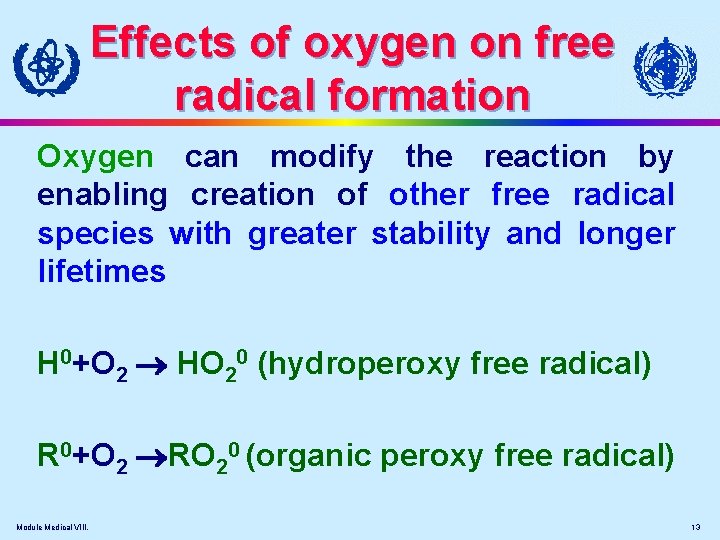
Effects of oxygen on free radical formation Oxygen can modify the reaction by enabling creation of other free radical species with greater stability and longer lifetimes H 0+O 2 HO 20 (hydroperoxy free radical) R 0+O 2 RO 20 (organic peroxy free radical) Module Medical VIII. 13
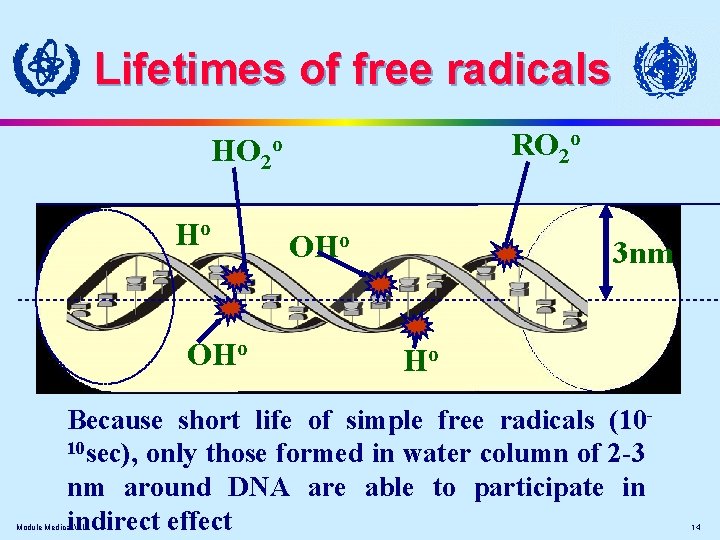
Lifetimes of free radicals HO 2 Ho OHo RO 2 o o OHo 3 nm Ho Because short life of simple free radicals (1010 sec), only those formed in water column of 2 -3 nm around DNA are able to participate in indirect effect Module Medical VIII. 14

Relation between LET and action type Direct action is predominant with high LET radiation, e. g. alpha particles and neutrons Indirect action is predominant with low LET radiation, e. g. X and gamma rays Module Medical VIII. 15
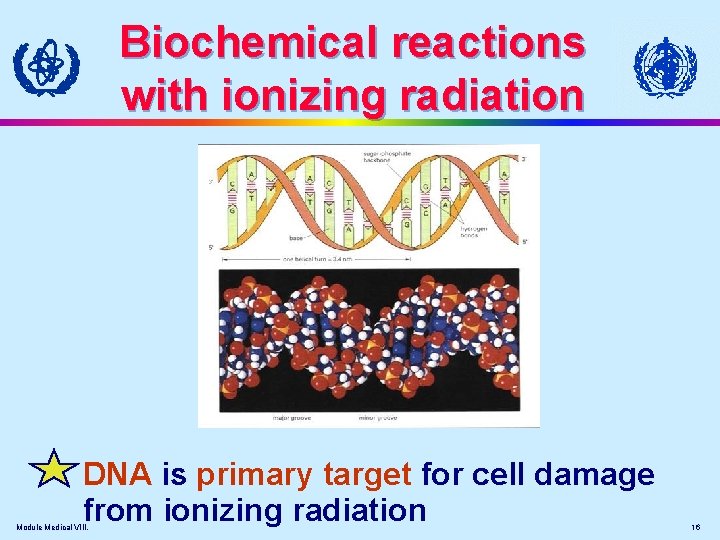
Biochemical reactions with ionizing radiation DNA is primary target for cell damage from ionizing radiation Module Medical VIII. 16
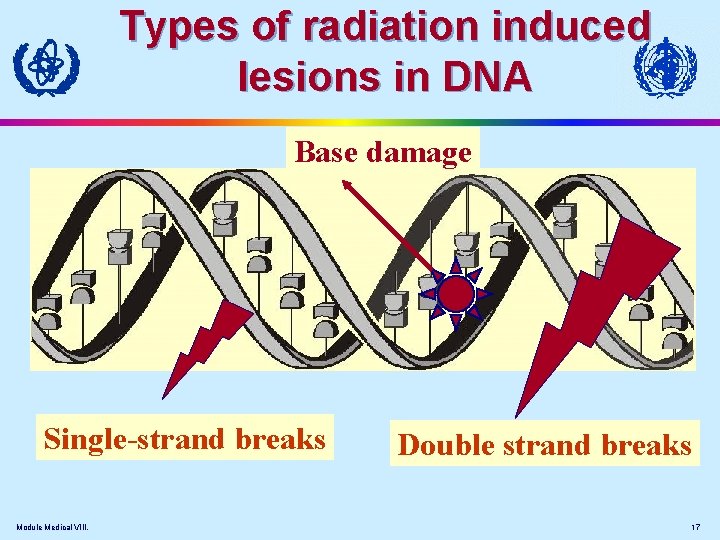
Types of radiation induced lesions in DNA Base damage Single-strand breaks Module Medical VIII. Double strand breaks 17
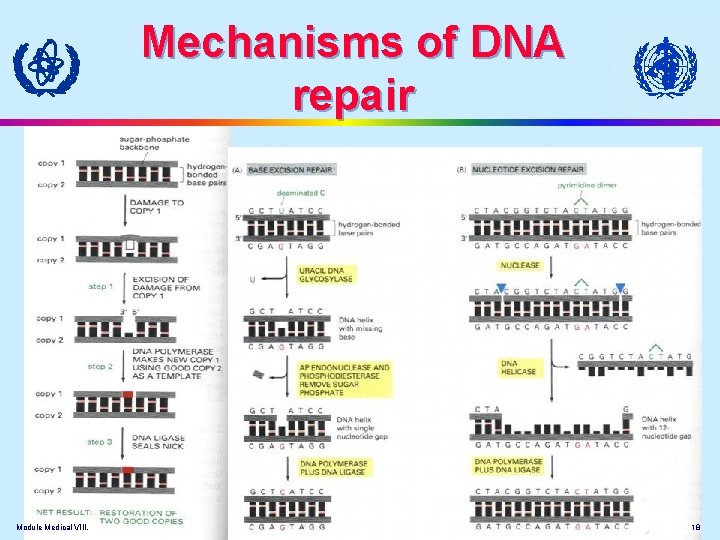
Mechanisms of DNA repair Module Medical VIII. 18
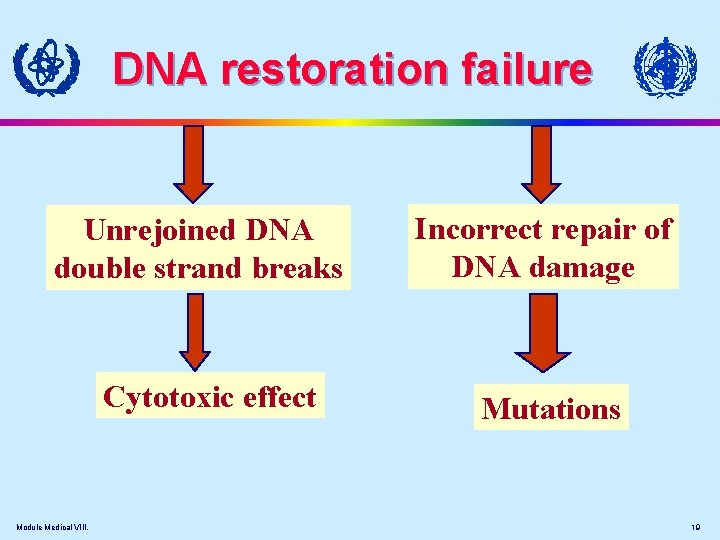
DNA restoration failure Unrejoined DNA double strand breaks Cytotoxic effect Module Medical VIII. Incorrect repair of DNA damage Mutations 19
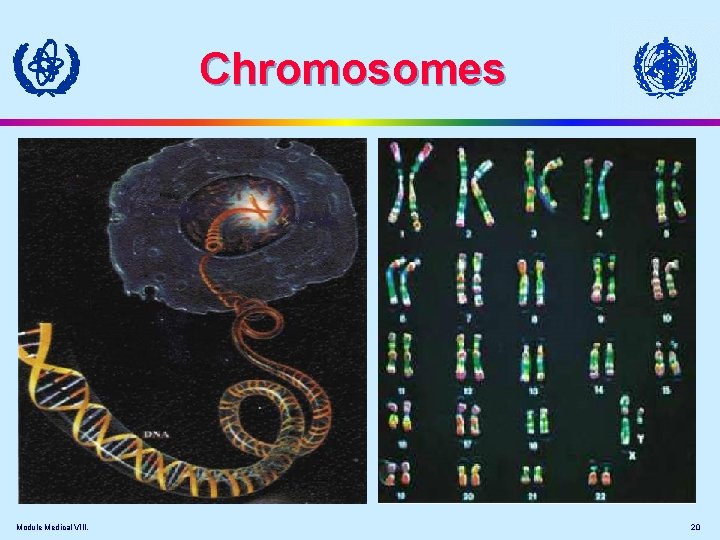
Chromosomes Module Medical VIII. 20
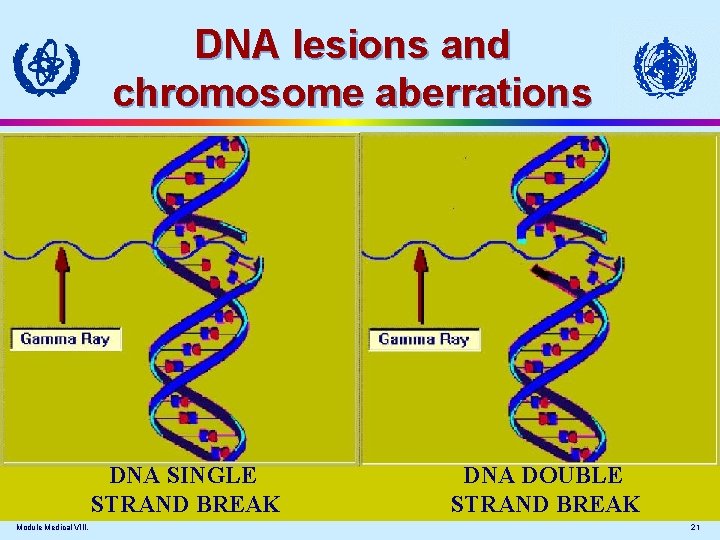
DNA lesions and chromosome aberrations DNA SİNGLE STRAND BREAK Module Medical VIII. DNA DOUBLE STRAND BREAK 21
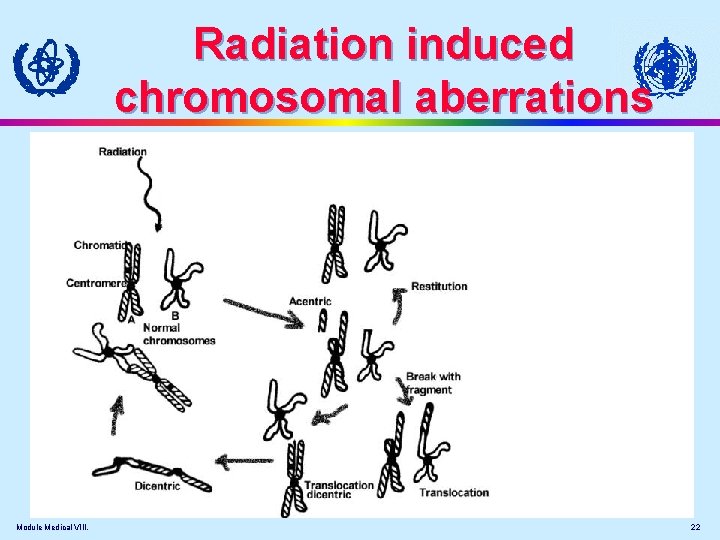
Radiation induced chromosomal aberrations Module Medical VIII. 22
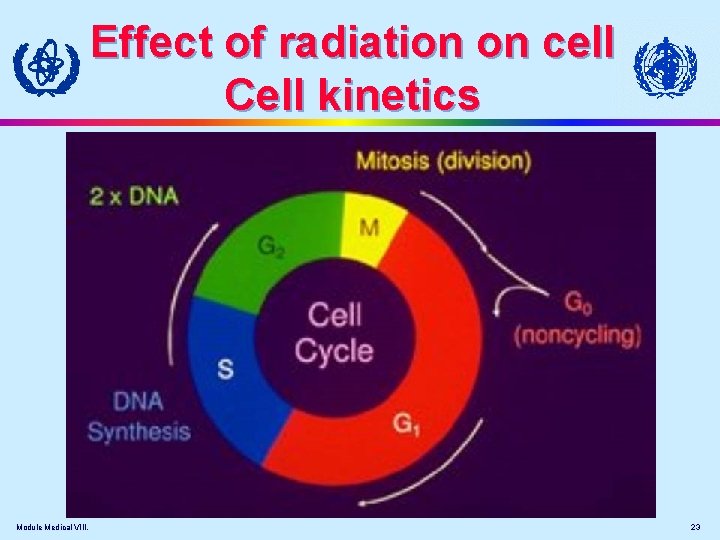
Effect of radiation on cell Cell kinetics Module Medical VIII. 23
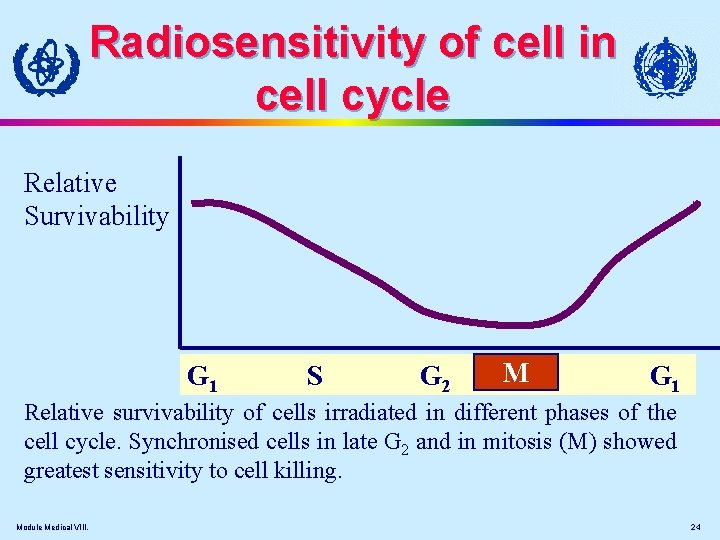
Radiosensitivity of cell in cell cycle Relative Survivability G 1 S G 2 M G 1 Relative survivability of cells irradiated in different phases of the cell cycle. Synchronised cells in late G 2 and in mitosis (M) showed greatest sensitivity to cell killing. Module Medical VIII. 24
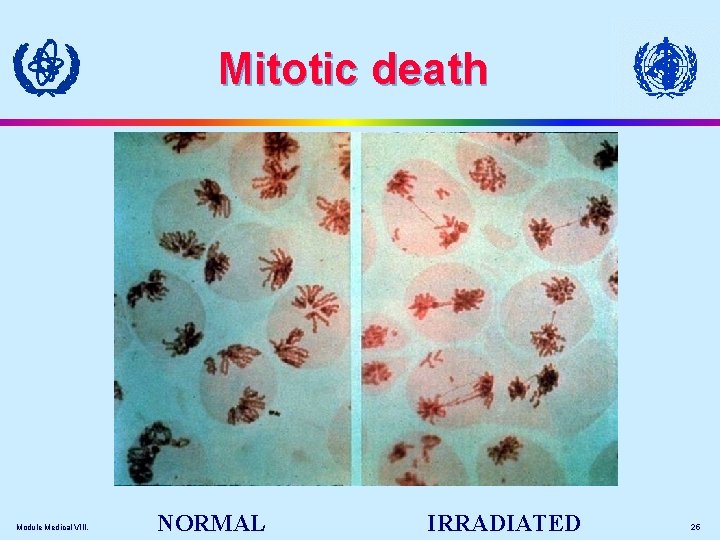
Mitotic death Module Medical VIII. NORMAL IRRADIATED 25
Bergonié and Tribondeaus’ ‘law’ (1906) Ø The most ‘radiosensitive’ cells are Ø actively proliferating/dividing at the time of exposure Ø undifferentiated (non-specialized in structure and function) Module Medical VIII. 26
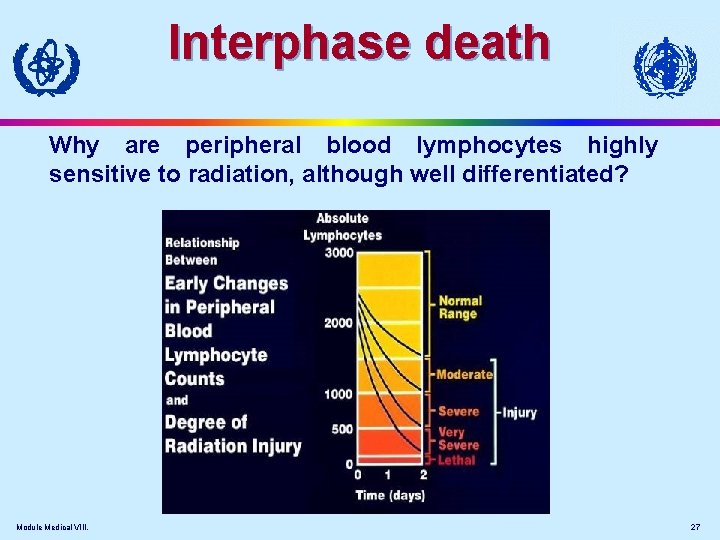
Interphase death Why are peripheral blood lymphocytes highly sensitive to radiation, although well differentiated? Module Medical VIII. 27
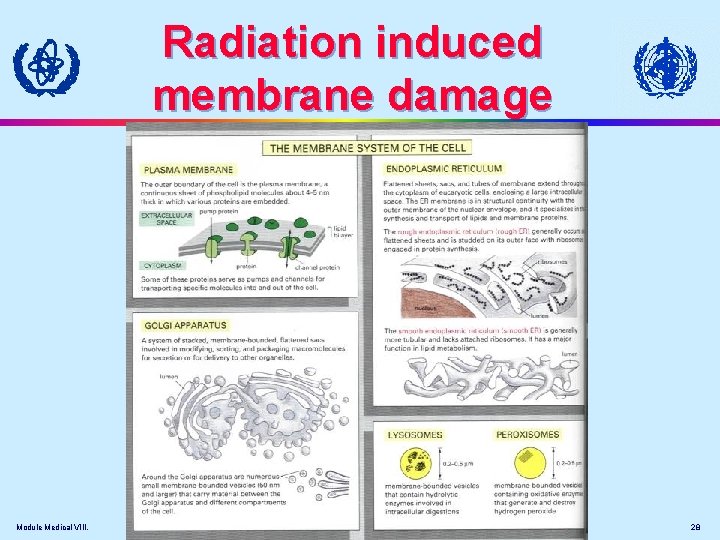
Radiation induced membrane damage Module Medical VIII. 28
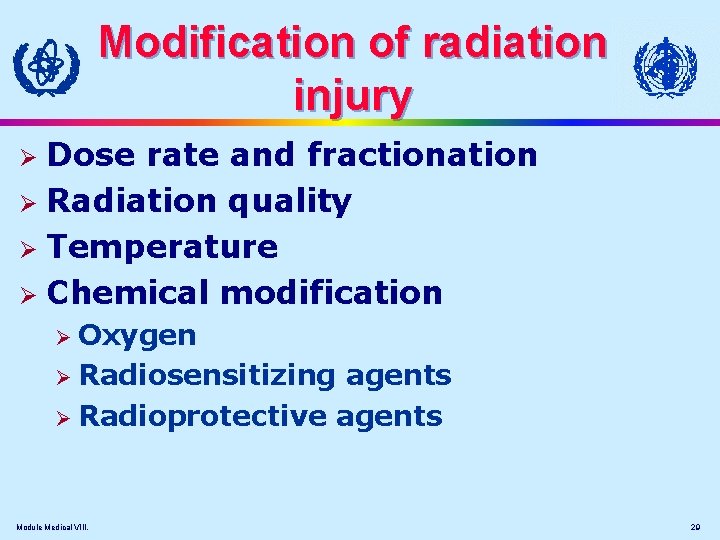
Modification of radiation injury Dose rate and fractionation Ø Radiation quality Ø Temperature Ø Chemical modification Ø Ø Oxygen Ø Radiosensitizing agents Ø Radioprotective agents Module Medical VIII. 29
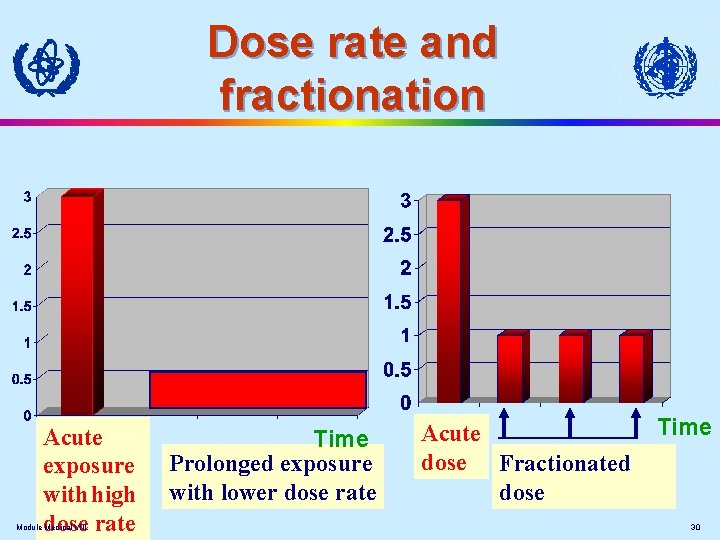
Dose rate and fractionation Acute exposure with high dose rate Module Medical VIII. Time Prolonged exposure with lower dose rate Acute dose Fractionated dose Time 30
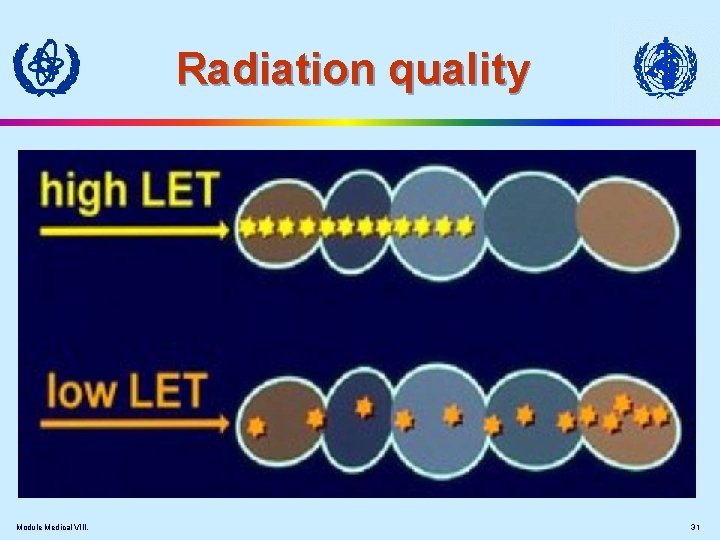
Radiation quality Module Medical VIII. 31
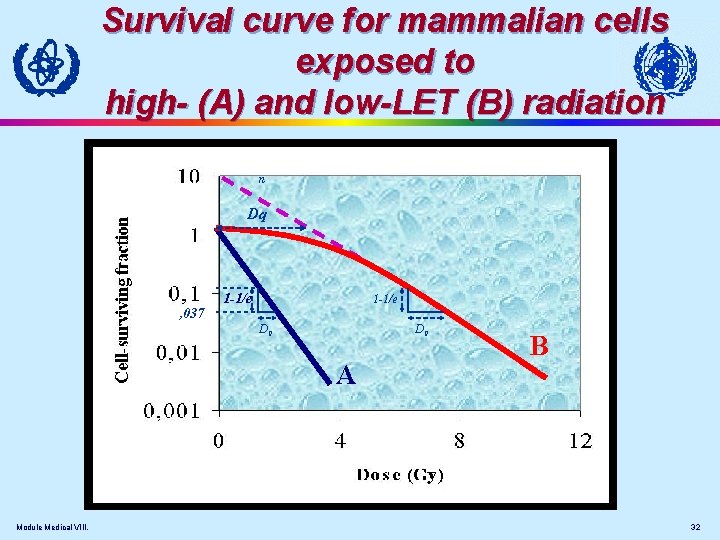
Survival curve for mammalian cells exposed to high- (A) and low-LET (B) radiation n Dq , 037 1 -1/e D 0 A Module Medical VIII. B 32
Temperature ØFor cell kiling effects, tissues are more radiosensitive at higher temperatures Ø Chromosome aberrations increase at lower temperatures (suppression of repair process) Module Medical VIII. 33
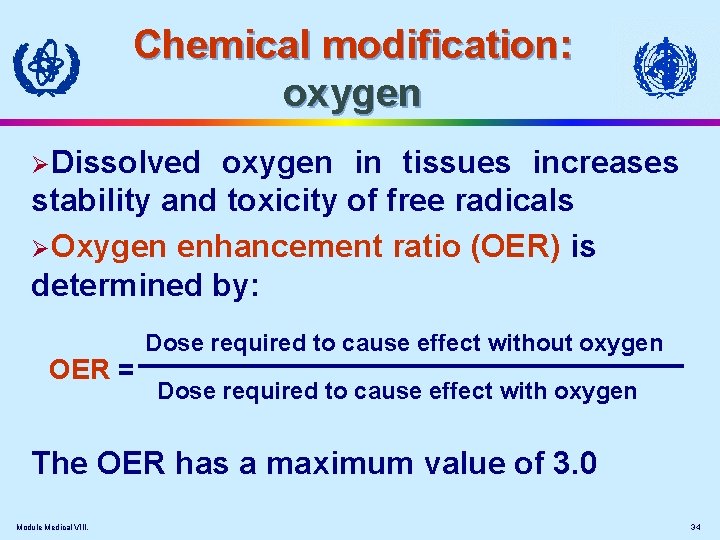
Chemical modification: oxygen ØDissolved oxygen in tissues increases stability and toxicity of free radicals ØOxygen enhancement ratio (OER) is determined by: OER = Dose required to cause effect without oxygen Dose required to cause effect with oxygen The OER has a maximum value of 3. 0 Module Medical VIII. 34
Radiosensitizing agents ØHalogenated and substituted analoges of DNA bases: 5 -bromouracil and 6 -thio-guanine ØElectroaffinic compounds: Nitroimidazoles (misonidazole, nitroimidazole, and nitrofuran) sensitization enhancement ratio (SER) of 1. 2 to 1. 4 Module Medical VIII. 35
Radioprotective agents ØThiols (cysteine, 2 -mercaptoethylamine, cystamine and thiourea). Thiols have dose reduction factor (DRF) ratio of 1. 4 to 2. 0 They are thought to protect cells by Øscavenging free radicals Øproducing hypoxia Øtemporarily inhibiting DNA synthesis, allowing time for the repair enzymes to complete repair of sublethal damage Øforming disulphide bonds in proteins, thereby strengthening them Module Medical VIII. 36
- Slides: 36