
Biological Diversity Section 1 1 Ecosystems Species and
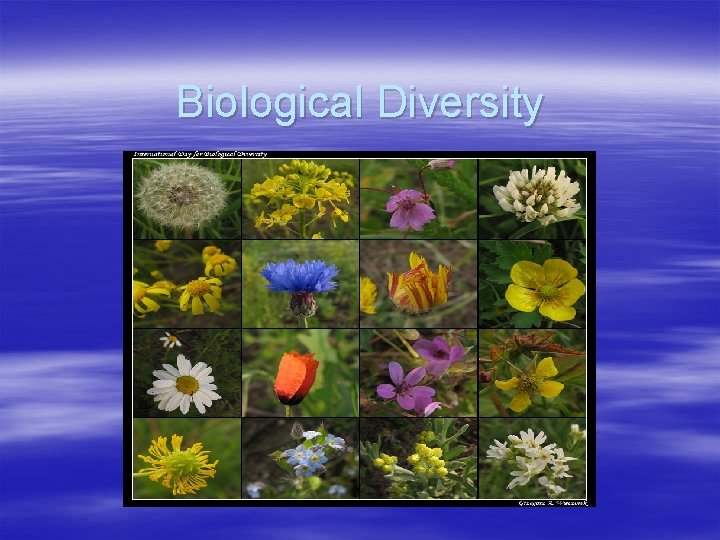
Biological Diversity
Section 1. 1 - Ecosystems, Species and Genetic Diversity § A species is a particular group of organisms that have the same structure and can reproduce with each other. § Of the 30 - 100 million possible different species of living things, there are over 1. 5 million species of animals and 350 000 species of plants that have been identified by biologists. § The most successful life form seems to be the insect.
Review from Grade 7 § All living things are made up of cells, need energy, grow and develop, reproduce and have adaptations which suit them to the specific habitat in which they live.
Biodiversity § The entire collection of living organisms, each with their own unique characteristics, make up the Earth's biodiversity. § "Biological diversity” refers to the variety of species and ecosystems on the Earth and the ecological processes of they are a part of.
The main components of biodiversity are: § Ecosystem diversity - the different types of living communities and the environments, such as marshes, lakes, streams and forests, in which they are found § Community (populations of different species living in the same area) § Members of a species that live in a specific area and share the same resources. § Species diversity - occurs within individual organisms of the same species
The main components of biodiversity cont… § Genetic diversity - occurs within organisms at a cellular level, as it describes the variety of genetic material in all living things. § Species Distribution - Plant and animal species are not distributed evenly throughout the various ecoregions of the world. Most of the different species of plants and animals can be found in tropical regions and, more specifically, in the rainforests. As you move closer to the poles of the Earth, there is less biological diversity.
Classification of Species § Scientists earlier had developed a system which classifies all organisms, based on their structural differences, into 5 Kingdoms. § Animalia (animals) § Plantae (plants) § Fungi (yeasts, moulds and mushrooms) § Protista ( mostly single-celled organisms) § Monera (bacteria)
Classification of Species § The 5 kingdom classification system can be further subdivided, with each sub-division having its own name. § Kingdom § phylum § class § order § family § genus § species King, Phillip, Cant, Order, For, Goodness, Sakes

Classification Example § http: //classes. entom. wsu. edu/348/classificati on. htm
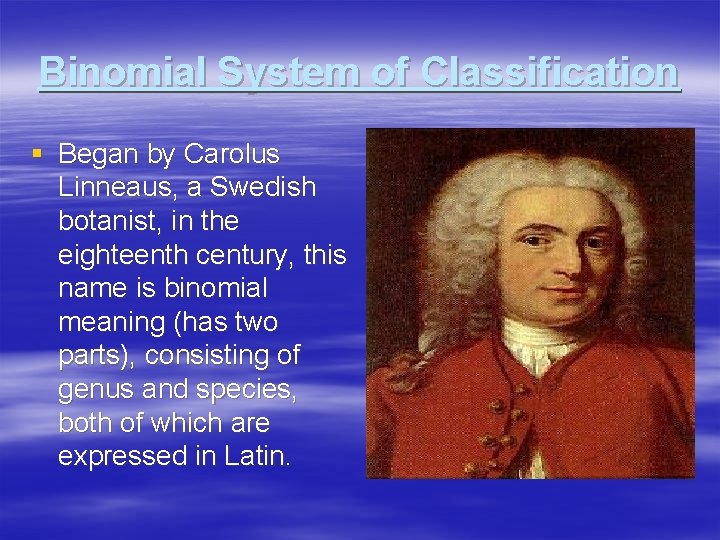
Binomial System of Classification § Began by Carolus Linneaus, a Swedish botanist, in the eighteenth century, this name is binomial meaning (has two parts), consisting of genus and species, both of which are expressed in Latin.
Binomial Naming System Cont. . § The genus or generic name is a noun which usually names some aspect of a plant, such as Coffea, the Latinized form of the Arabic word for beverage, kahwah. § The species or specific name is usually an adjective that describes the genus. In the case of coffee, the species is arabica, indicating that the plant was thought to originate in Arabia. § Coffea arabica, Its botanical name is unique to that particular plant the world over.
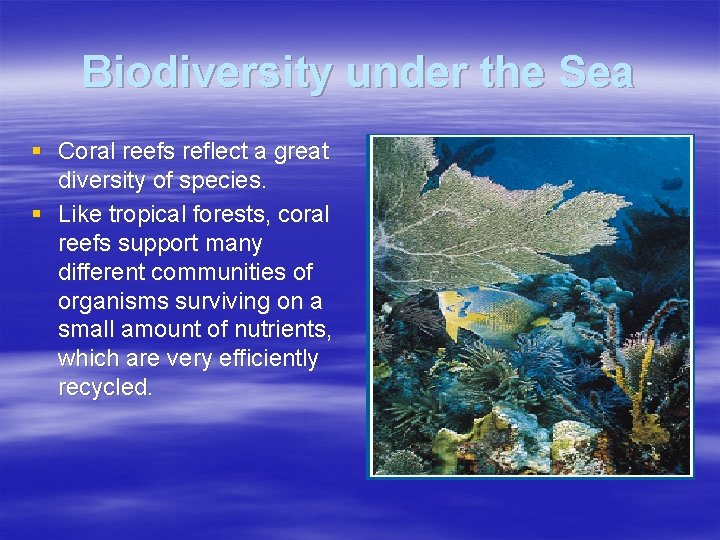
Biodiversity under the Sea § Coral reefs reflect a great diversity of species. § Like tropical forests, coral reefs support many different communities of organisms surviving on a small amount of nutrients, which are very efficiently recycled.
- Slides: 12