
Biological Diversity Classification Classification is the grouping of
Biological Diversity
Classification � Classification is the grouping of living organisms according to similar structures and functions

History of Classification � Aristotle grouped animals according to the way they moved � Today’s system developed by Carolus Linnaeus � Organization of Biological Diversity: ◦ ◦ ◦ ◦ Domain (often not even used) Kingdom Phylum Class Order Family Genus Species
Domain �A taxonomic category that is based on fundamental differences among organisms � Three main domains: ◦ Bacteria ◦ Archaea ◦ Eukarya
Kingdom � Taxonomic category made up of related phyla � Six kingdoms currently recognized for living organisms ◦ ◦ ◦ Bacteria Archaea Protista Plantae Animalia Fungi
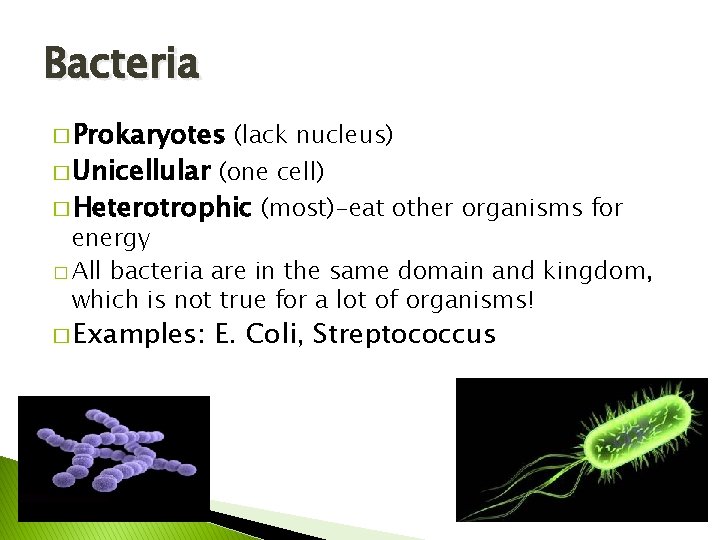
Bacteria � Prokaryotes � Unicellular (lack nucleus) (one cell) � Heterotrophic (most)-eat other organisms for energy � All bacteria are in the same domain and kingdom, which is not true for a lot of organisms! � Examples: E. Coli, Streptococcus
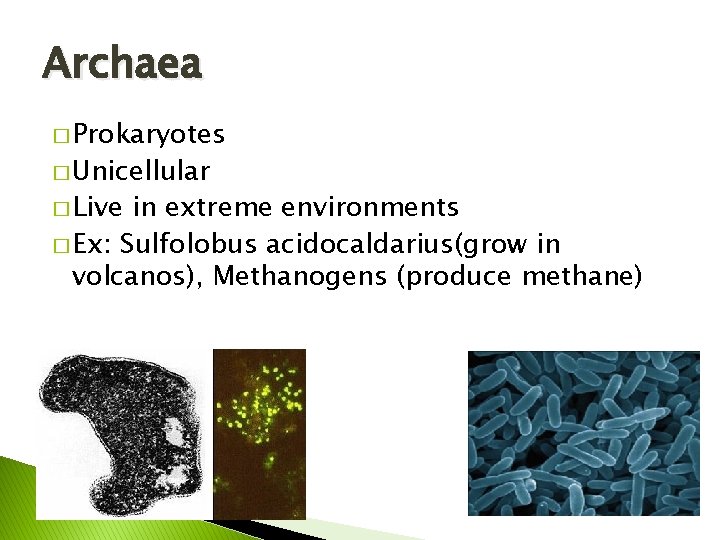
Archaea � Prokaryotes � Unicellular � Live in extreme environments � Ex: Sulfolobus acidocaldarius(grow in volcanos), Methanogens (produce methane)
Eukarya � Eukaryotes (contain nuclei) � Multicellular (multiple cells making up organism) � Four kingdoms in this domain ◦ ◦ Protista Animalia Fungi Plantae
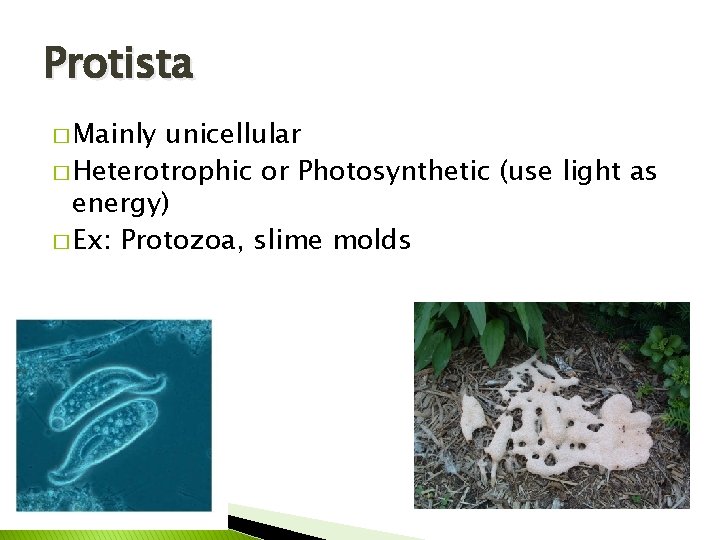
Protista � Mainly unicellular � Heterotrophic or Photosynthetic (use light as energy) � Ex: Protozoa, slime molds
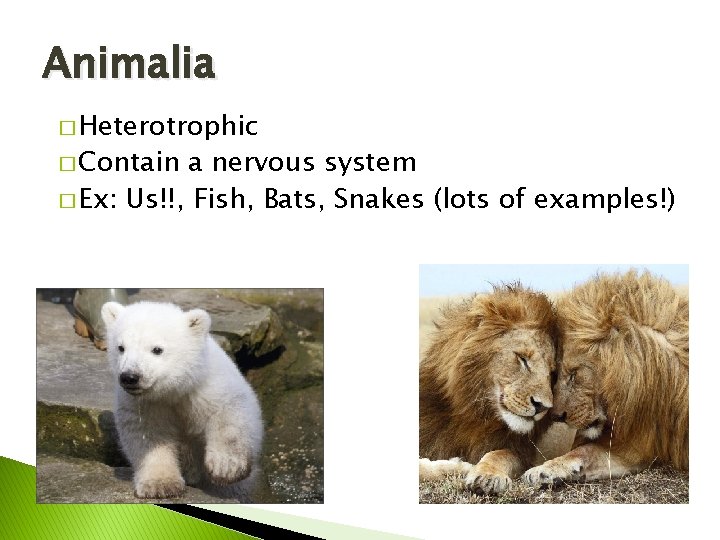
Animalia � Heterotrophic � Contain a nervous system � Ex: Us!!, Fish, Bats, Snakes (lots of examples!)
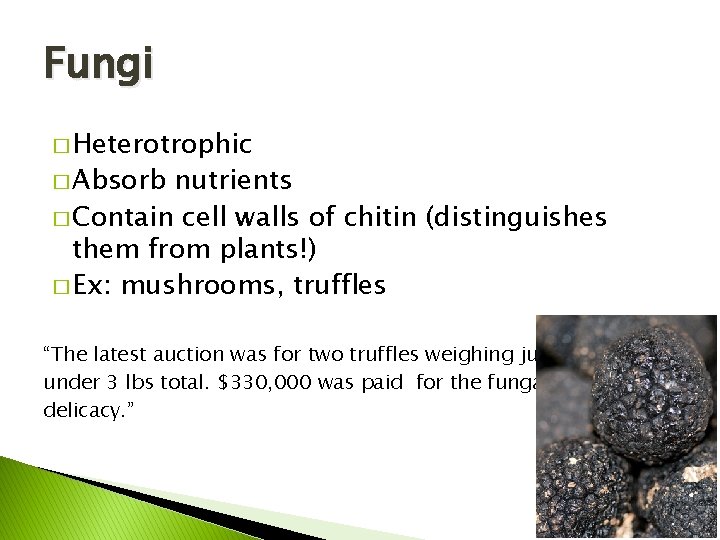
Fungi � Heterotrophic � Absorb nutrients � Contain cell walls of chitin (distinguishes them from plants!) � Ex: mushrooms, truffles “The latest auction was for two truffles weighing just under 3 lbs total. $330, 000 was paid for the fungal delicacy. ”
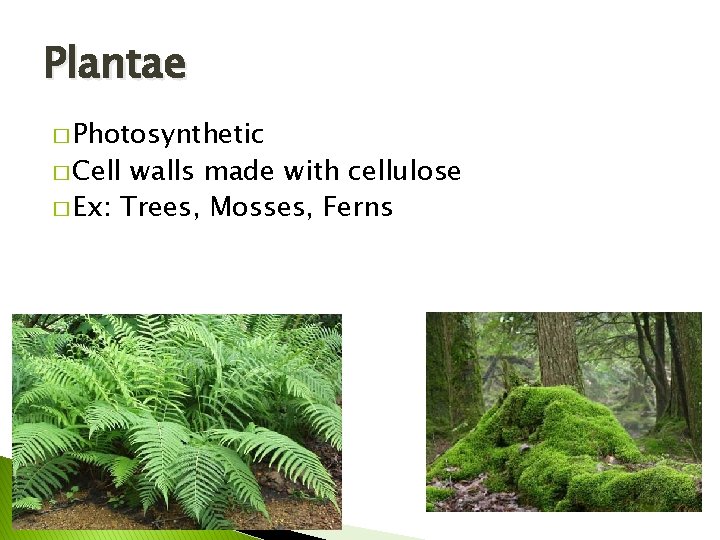
Plantae � Photosynthetic � Cell walls made with cellulose � Ex: Trees, Mosses, Ferns
This Kingdom will be our focus for this class! � Now that we know how living organisms are organized, let’s look at the differences in the microscope! � While looking at the samples, I would like you to note: ◦ Differences between organisms/cells in different kingdoms ◦ Differences in organisms/cells in similar kingdoms ◦ Common features in plant slides
- Slides: 13