
Biological Diversity biodiversity refers to all the different
Biological Diversity • biodiversity refers to all the different kinds of life (or different species) on Earth – there are over 3 million species on Earth… but half a million have not been classified • species is a group of similar organisms that can reproduce together to produce viable offspring – there is variation within species though… e. g. different hair or eye color, height… – variation improves survivability
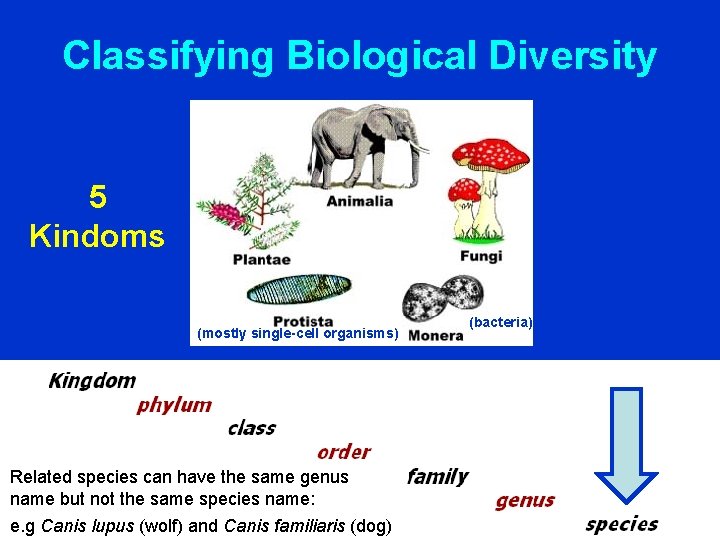
Classifying Biological Diversity 5 Kindoms (mostly single-cell organisms) Related species can have the same genus name but not the same species name: e. g Canis lupus (wolf) and Canis familiaris (dog) (bacteria)
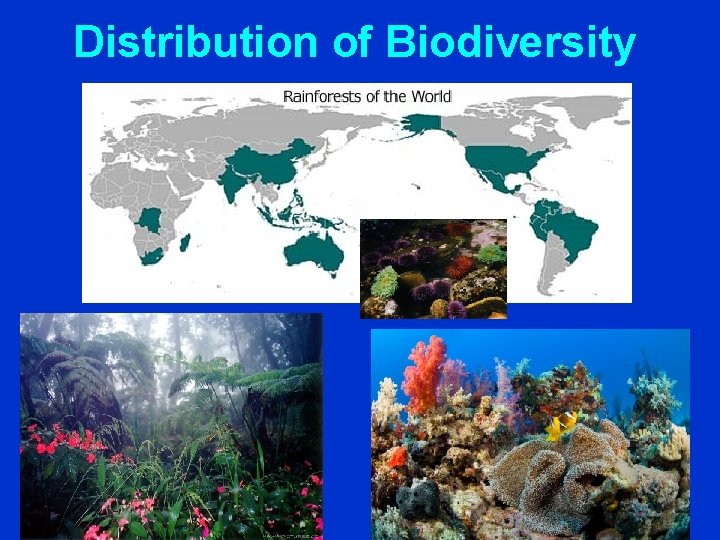
Distribution of Biodiversity
Ecosystems 2: 48 • the whole Earth’s surface consists of a series of interconnected ecosystems • an ecosystem is an area where climate, landscape, plants and animals all interact together in a unique way • ecosystems consist of 2 components – abiotic: non living features of the area – biotic: living organisms in the area

• Broad Niche (Generalists) • Narrow Niche (Specialists)
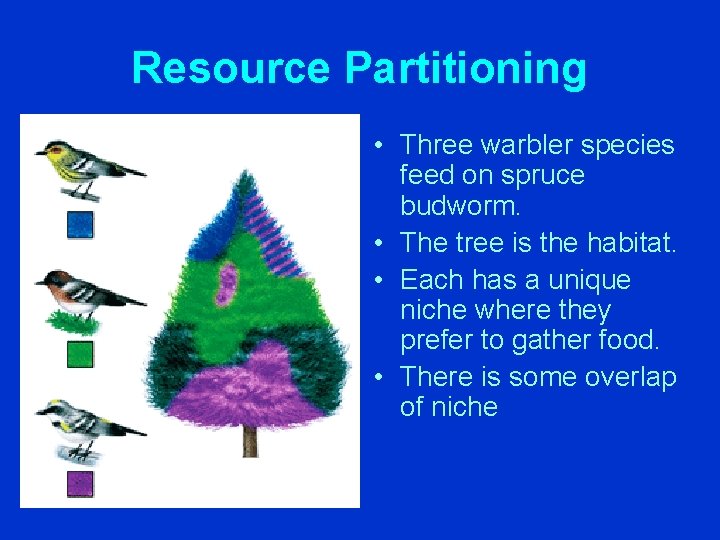
Resource Partitioning • Three warbler species feed on spruce budworm. • The tree is the habitat. • Each has a unique niche where they prefer to gather food. • There is some overlap of niche
Populations & Communities • a population is all the members of a species that are living in the same area and sharing resources • a community is populations of different species that share a common area 6: 40
Competition and Sharing • species are continuously interacting with each other within their environments – food chains represent this interaction • most interactions between species are brief… generally for the purpose of getting food • but some species have longer term relationships → these are called symbiotic relationships
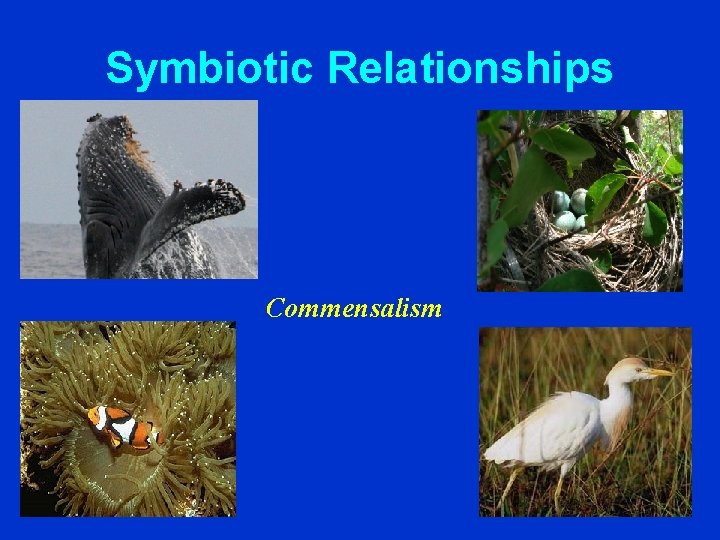
Symbiotic Relationships Commensalism
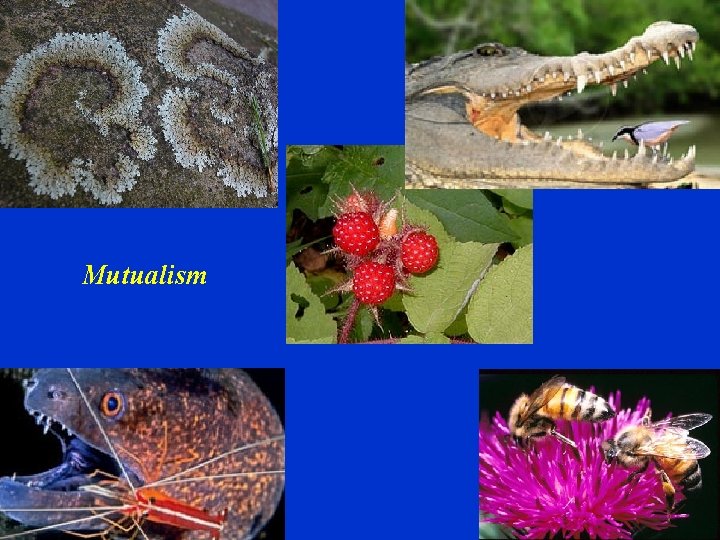
Mutualism
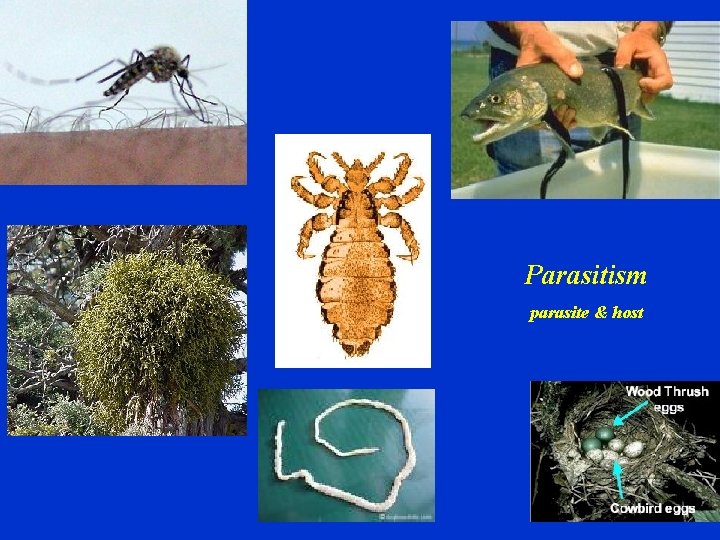
Parasitism parasite & host
- Slides: 11